UNIT 8
Topic: Online learning
Writing genre: A comparison/contrast
essay
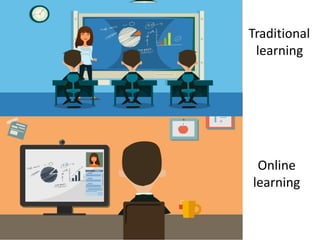
Traditional
learning
Online
learning
Vocabulary
• Online learning
• E-learning
• Distance learning
• Distance education
• Virtual classroom
• Internet-based
classroom
• Web-based classroom
• Online classroom
• Traditional classroom
• Brick-and-mortal
classroom
• Physical classroom
• On-campus learning
• On-site learning
• Offline learning
• Real-time learning
• Face-to-face classroom
Points/aspects/criteria to consider
• Purposes
• Time and place
• Class size
• Learning materials
• Roles of teacher and students
• Classroom interaction
• Student engagement
• Learning pace
• Motivation and discipline
• Teaching techniques
• Tuition cost
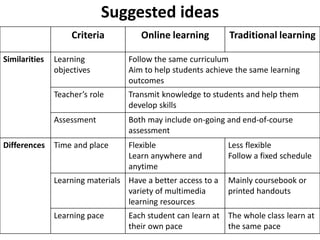
Suggested ideas
Criteria Online learning Traditional learning
Similarities Learning
objectives
Follow the same curriculum
Aim to help students achieve the same learning
outcomes
Teacher’s role Transmit knowledge to students and help them
develop skills
Assessment Both may include on-going and end-of-course
assessment
Differences Time and place Flexible
Learn anywhere and
anytime
Less flexible
Follow a fixed schedule
Learning materials Have a better access to a
variety of multimedia
learning resources
Mainly coursebook or
printed handouts
Learning pace Each student can learn at
their own pace
The whole class learn at
the same pace
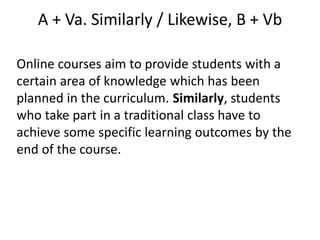
A + Va. Similarly / Likewise, B + Vb
Online courses aim to provide students with a
certain area of knowledge which has been
planned in the curriculum. Similarly, students
who take part in a traditional class have to
achieve some specific learning outcomes by the
end of the course.
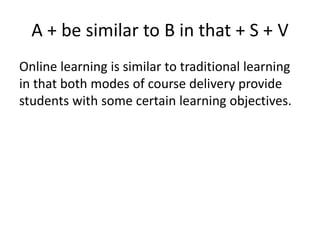
A + be similar to B in that + S + V
Online learning is similar to traditional learning
in that both modes of course delivery provide
students with some certain learning objectives.
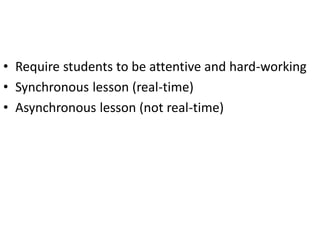
• Require students to be attentive and hard-working
• Synchronous lesson (real-time)
• Asynchronous lesson (not real-time)
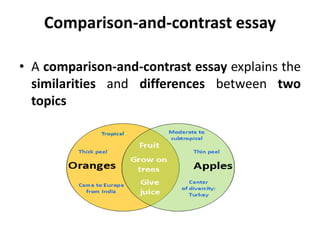
Comparison-and-contrast essay
• A comparison-and-contrast essay explains the
similarities and differences between two
topics
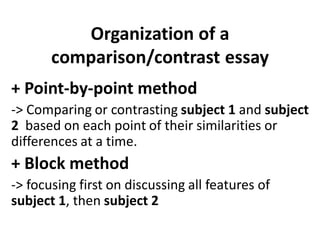
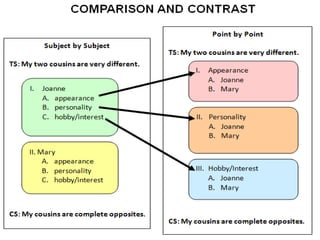
Organization of a
comparison/contrast essay
+ Point-by-point method
-> Comparing or contrasting subject 1 and subject
2 based on each point of their similarities or
differences at a time.
+ Block method
-> focusing first on discussing all features of
subject 1, then subject 2
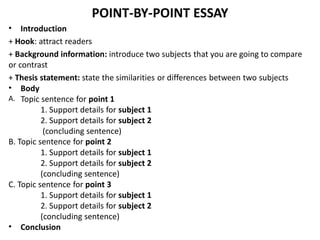
POINT-BY-POINT ESSAY
• Introduction
+ Hook: attract readers
+ Background information: introduce two subjects that you are going to compare
or contrast
+ Thesis statement: state the similarities or differences between two subjects
• Body
A. Topic sentence for point 1
1. Support details for subject 1
2. Support details for subject 2
(concluding sentence)
B. Topic sentence for point 2
1. Support details for subject 1
2. Support details for subject 2
(concluding sentence)
C. Topic sentence for point 3
1. Support details for subject 1
2. Support details for subject 2
(concluding sentence)
• Conclusion
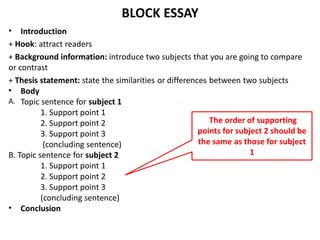
BLOCK ESSAY
• Introduction
+ Hook: attract readers
+ Background information: introduce two subjects that you are going to compare
or contrast
+ Thesis statement: state the similarities or differences between two subjects
• Body
A. Topic sentence for subject 1
1. Support point 1
2. Support point 2
3. Support point 3
(concluding sentence)
B. Topic sentence for subject 2
1. Support point 1
2. Support point 2
3. Support point 3
(concluding sentence)
• Conclusion
The order of supporting
points for subject 2 should be
the same as those for subject
1
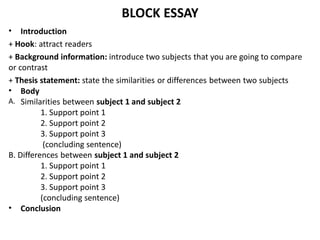
BLOCK ESSAY
• Introduction
+ Hook: attract readers
+ Background information: introduce two subjects that you are going to compare
or contrast
+ Thesis statement: state the similarities or differences between two subjects
• Body
A. Similarities between subject 1 and subject 2
1. Support point 1
2. Support point 2
3. Support point 3
(concluding sentence)
B. Differences between subject 1 and subject 2
1. Support point 1
2. Support point 2
3. Support point 3
(concluding sentence)
• Conclusion
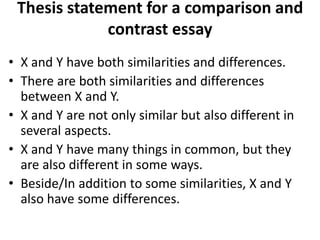
Thesis statement for a comparison and
contrast essay
• X and Y have both similarities and differences.
• There are both similarities and differences
between X and Y.
• X and Y are not only similar but also different in
several aspects.
• X and Y have many things in common, but they
are also different in some ways.
• Beside/In addition to some similarities, X and Y
also have some differences.
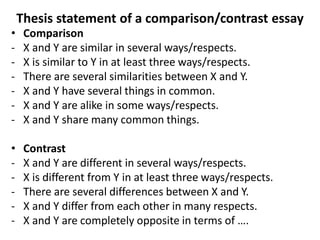
Thesis statement of a comparison/contrast essay
• Comparison
- X and Y are similar in several ways/respects.
- X is similar to Y in at least three ways/respects.
- There are several similarities between X and Y.
- X and Y have several things in common.
- X and Y are alike in some ways/respects.
- X and Y share many common things.
• Contrast
- X and Y are different in several ways/respects.
- X is different from Y in at least three ways/respects.
- There are several differences between X and Y.
- X and Y differ from each other in many respects.
- X and Y are completely opposite in terms of ….
WRITING TASK 8
Write an essay to discuss the
similarities or differences
between online learning and
traditional learning

Unit 8

  • 1.
    UNIT 8 Topic: Onlinelearning Writing genre: A comparison/contrast essay
  • 2.
  • 3.
    Vocabulary • Online learning •E-learning • Distance learning • Distance education • Virtual classroom • Internet-based classroom • Web-based classroom • Online classroom • Traditional classroom • Brick-and-mortal classroom • Physical classroom • On-campus learning • On-site learning • Offline learning • Real-time learning • Face-to-face classroom
  • 4.
    Points/aspects/criteria to consider •Purposes • Time and place • Class size • Learning materials • Roles of teacher and students • Classroom interaction • Student engagement • Learning pace • Motivation and discipline • Teaching techniques • Tuition cost
  • 5.
    Suggested ideas Criteria Onlinelearning Traditional learning Similarities Learning objectives Follow the same curriculum Aim to help students achieve the same learning outcomes Teacher’s role Transmit knowledge to students and help them develop skills Assessment Both may include on-going and end-of-course assessment Differences Time and place Flexible Learn anywhere and anytime Less flexible Follow a fixed schedule Learning materials Have a better access to a variety of multimedia learning resources Mainly coursebook or printed handouts Learning pace Each student can learn at their own pace The whole class learn at the same pace
  • 6.
    A + Va.Similarly / Likewise, B + Vb Online courses aim to provide students with a certain area of knowledge which has been planned in the curriculum. Similarly, students who take part in a traditional class have to achieve some specific learning outcomes by the end of the course.
  • 7.
    A + besimilar to B in that + S + V Online learning is similar to traditional learning in that both modes of course delivery provide students with some certain learning objectives.
  • 8.
    • Require studentsto be attentive and hard-working • Synchronous lesson (real-time) • Asynchronous lesson (not real-time)
  • 9.
    Comparison-and-contrast essay • Acomparison-and-contrast essay explains the similarities and differences between two topics
  • 11.
    Organization of a comparison/contrastessay + Point-by-point method -> Comparing or contrasting subject 1 and subject 2 based on each point of their similarities or differences at a time. + Block method -> focusing first on discussing all features of subject 1, then subject 2
  • 12.
    POINT-BY-POINT ESSAY • Introduction +Hook: attract readers + Background information: introduce two subjects that you are going to compare or contrast + Thesis statement: state the similarities or differences between two subjects • Body A. Topic sentence for point 1 1. Support details for subject 1 2. Support details for subject 2 (concluding sentence) B. Topic sentence for point 2 1. Support details for subject 1 2. Support details for subject 2 (concluding sentence) C. Topic sentence for point 3 1. Support details for subject 1 2. Support details for subject 2 (concluding sentence) • Conclusion
  • 13.
    BLOCK ESSAY • Introduction +Hook: attract readers + Background information: introduce two subjects that you are going to compare or contrast + Thesis statement: state the similarities or differences between two subjects • Body A. Topic sentence for subject 1 1. Support point 1 2. Support point 2 3. Support point 3 (concluding sentence) B. Topic sentence for subject 2 1. Support point 1 2. Support point 2 3. Support point 3 (concluding sentence) • Conclusion The order of supporting points for subject 2 should be the same as those for subject 1
  • 14.
    BLOCK ESSAY • Introduction +Hook: attract readers + Background information: introduce two subjects that you are going to compare or contrast + Thesis statement: state the similarities or differences between two subjects • Body A. Similarities between subject 1 and subject 2 1. Support point 1 2. Support point 2 3. Support point 3 (concluding sentence) B. Differences between subject 1 and subject 2 1. Support point 1 2. Support point 2 3. Support point 3 (concluding sentence) • Conclusion
  • 16.
    Thesis statement fora comparison and contrast essay • X and Y have both similarities and differences. • There are both similarities and differences between X and Y. • X and Y are not only similar but also different in several aspects. • X and Y have many things in common, but they are also different in some ways. • Beside/In addition to some similarities, X and Y also have some differences.
  • 17.
    Thesis statement ofa comparison/contrast essay • Comparison - X and Y are similar in several ways/respects. - X is similar to Y in at least three ways/respects. - There are several similarities between X and Y. - X and Y have several things in common. - X and Y are alike in some ways/respects. - X and Y share many common things. • Contrast - X and Y are different in several ways/respects. - X is different from Y in at least three ways/respects. - There are several differences between X and Y. - X and Y differ from each other in many respects. - X and Y are completely opposite in terms of ….
  • 18.
    WRITING TASK 8 Writean essay to discuss the similarities or differences between online learning and traditional learning