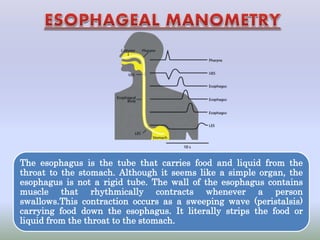
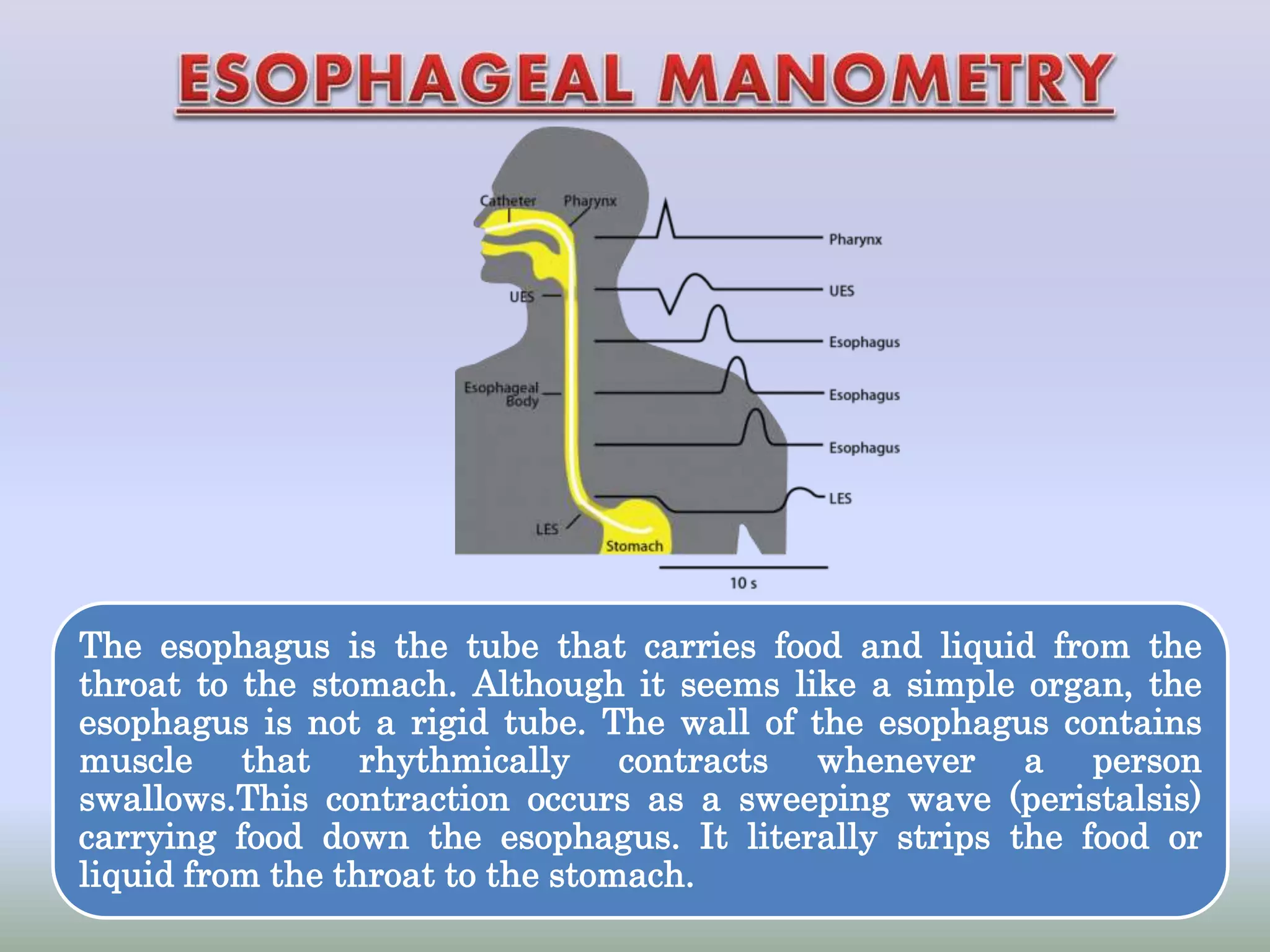
The esophagus is the tube that carries food and liquid from the
throat to the stomach. Although it seems like a simple organ, the
esophagus is not a rigid tube. The wall of the esophagus contains
muscle that rhythmically contracts whenever a person
swallows.This contraction occurs as a sweeping wave (peristalsis)
carrying food down the esophagus. It literally strips the food or
liquid from the throat to the stomach.
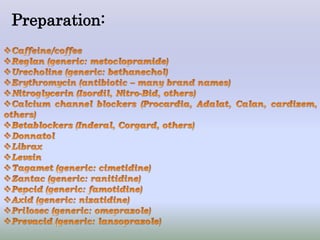
Preparation:
Equipment
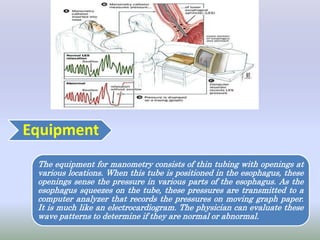
The equipment for manometry consists of thin tubing with openings at
various locations. When this tube is positioned in the esophagus, these
openings sense the pressure in various parts of the esophagus. As the
esophagus squeezes on the tube, these pressures are transmitted to a
computer analyzer that records the pressures on moving graph paper.
It is much like an electrocardiogram. The physician can evaluate these
wave patterns to determine if they are normal or abnormal.
Benefits
The primary benefit of the exam is that the physician has clear
documentation of the muscle function of the esophagus. With this
information, a specific treatment program can be outlined or
reassurance provided if the exam is normal.

Esophageal manometry

  • 1.
    The esophagus isthe tube that carries food and liquid from the throat to the stomach. Although it seems like a simple organ, the esophagus is not a rigid tube. The wall of the esophagus contains muscle that rhythmically contracts whenever a person swallows.This contraction occurs as a sweeping wave (peristalsis) carrying food down the esophagus. It literally strips the food or liquid from the throat to the stomach.
  • 2.
  • 3.
    Equipment The equipment formanometry consists of thin tubing with openings at various locations. When this tube is positioned in the esophagus, these openings sense the pressure in various parts of the esophagus. As the esophagus squeezes on the tube, these pressures are transmitted to a computer analyzer that records the pressures on moving graph paper. It is much like an electrocardiogram. The physician can evaluate these wave patterns to determine if they are normal or abnormal.
  • 4.
    Benefits The primary benefitof the exam is that the physician has clear documentation of the muscle function of the esophagus. With this information, a specific treatment program can be outlined or reassurance provided if the exam is normal.