E-SIGNATURE
VS.
DIGITAL SIGNATURE
Electronic Signature and Digital
Signature are often used
interchangeably in conversation, but in
reality, each carries a distinct set of
defining features and functions
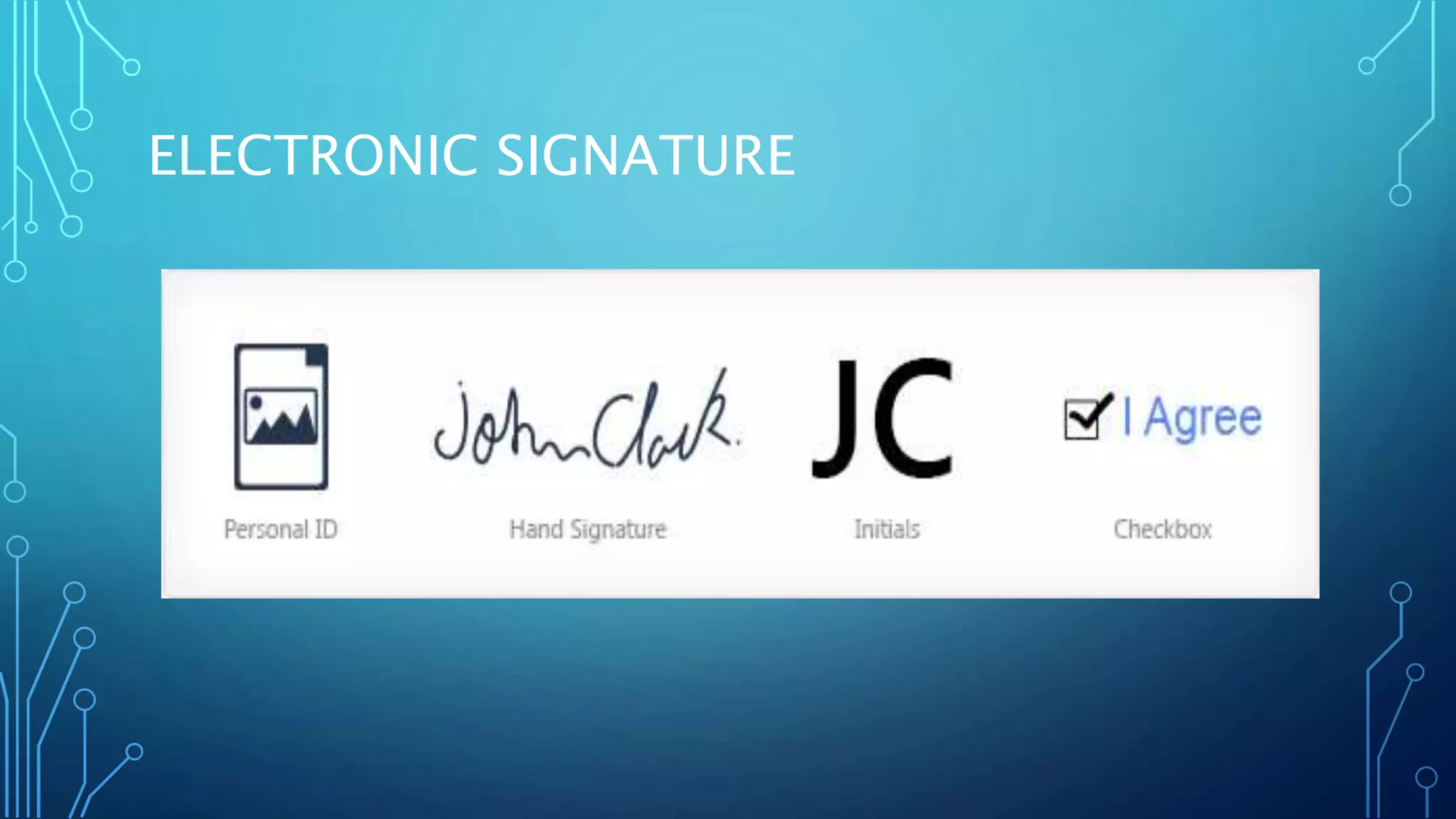
ELECTRONIC SIGNATURE
DEFINING FEATURES – ELECTRONIC
SIGNATURE
DEFINING FEATURES – ELECTRONIC
SIGNATURE
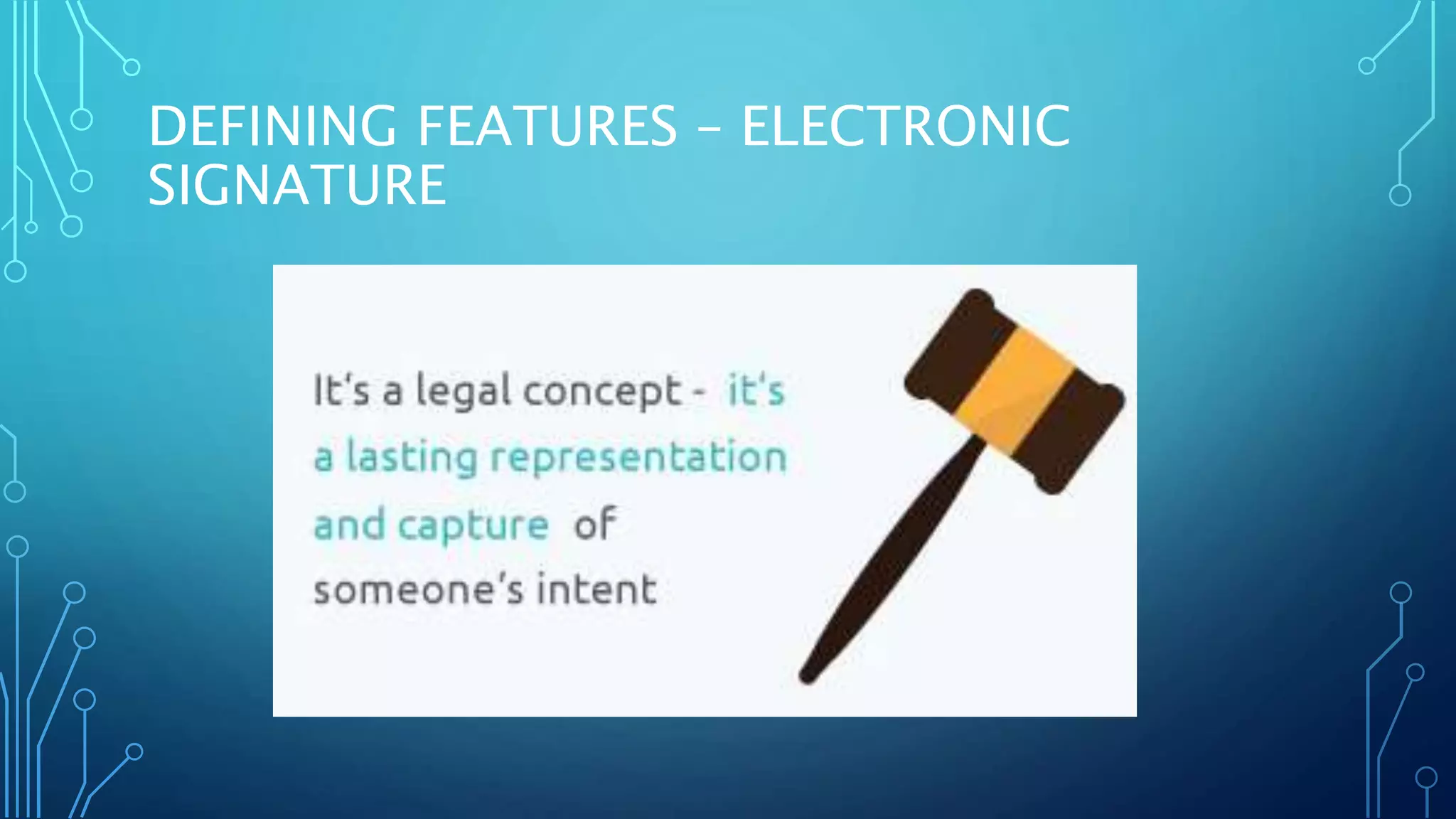
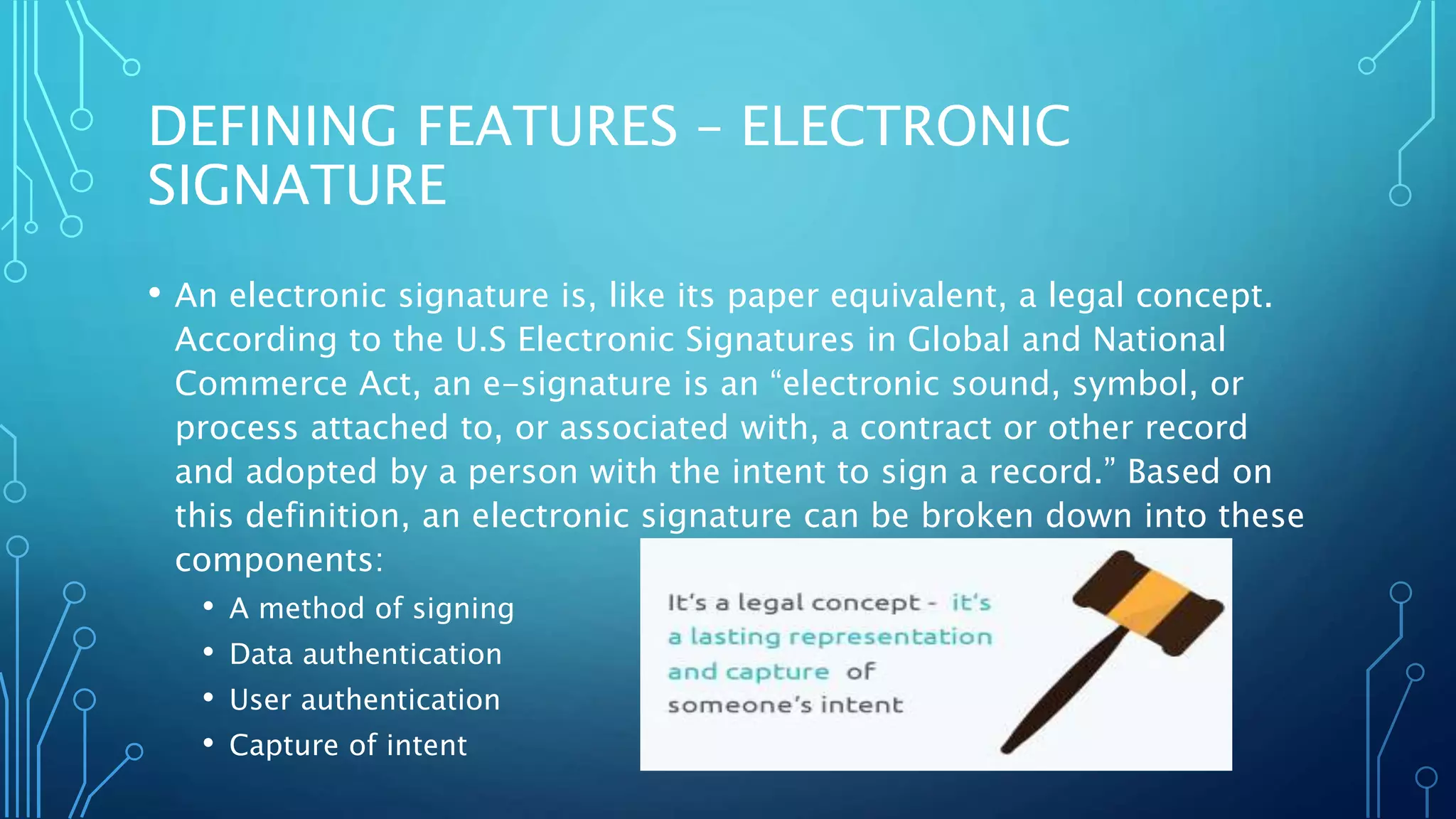
• An electronic signature is, like its paper equivalent, a legal concept.
According to the U.S Electronic Signatures in Global and National
Commerce Act, an e-signature is an “electronic sound, symbol, or
process attached to, or associated with, a contract or other record
and adopted by a person with the intent to sign a record.” Based on
this definition, an electronic signature can be broken down into these
components:
• A method of signing
• Data authentication
• User authentication
• Capture of intent
FUNCTIONS – ELECTRONIC SIGNATURE
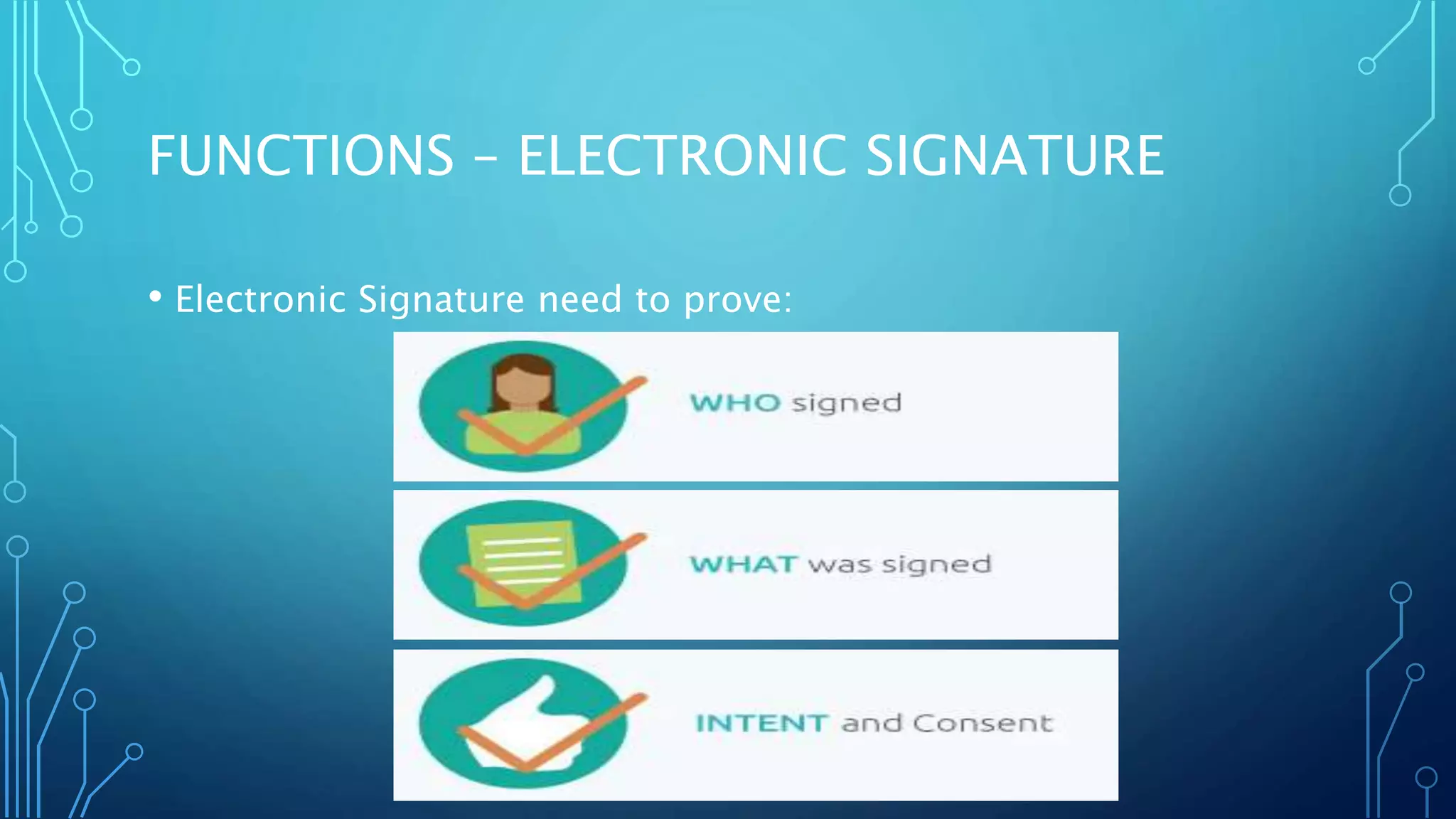
• Electronic Signature need to prove:
DIGITAL SIGNATURE
DEFINING FEATURES – DIGITAL SIGNATURE
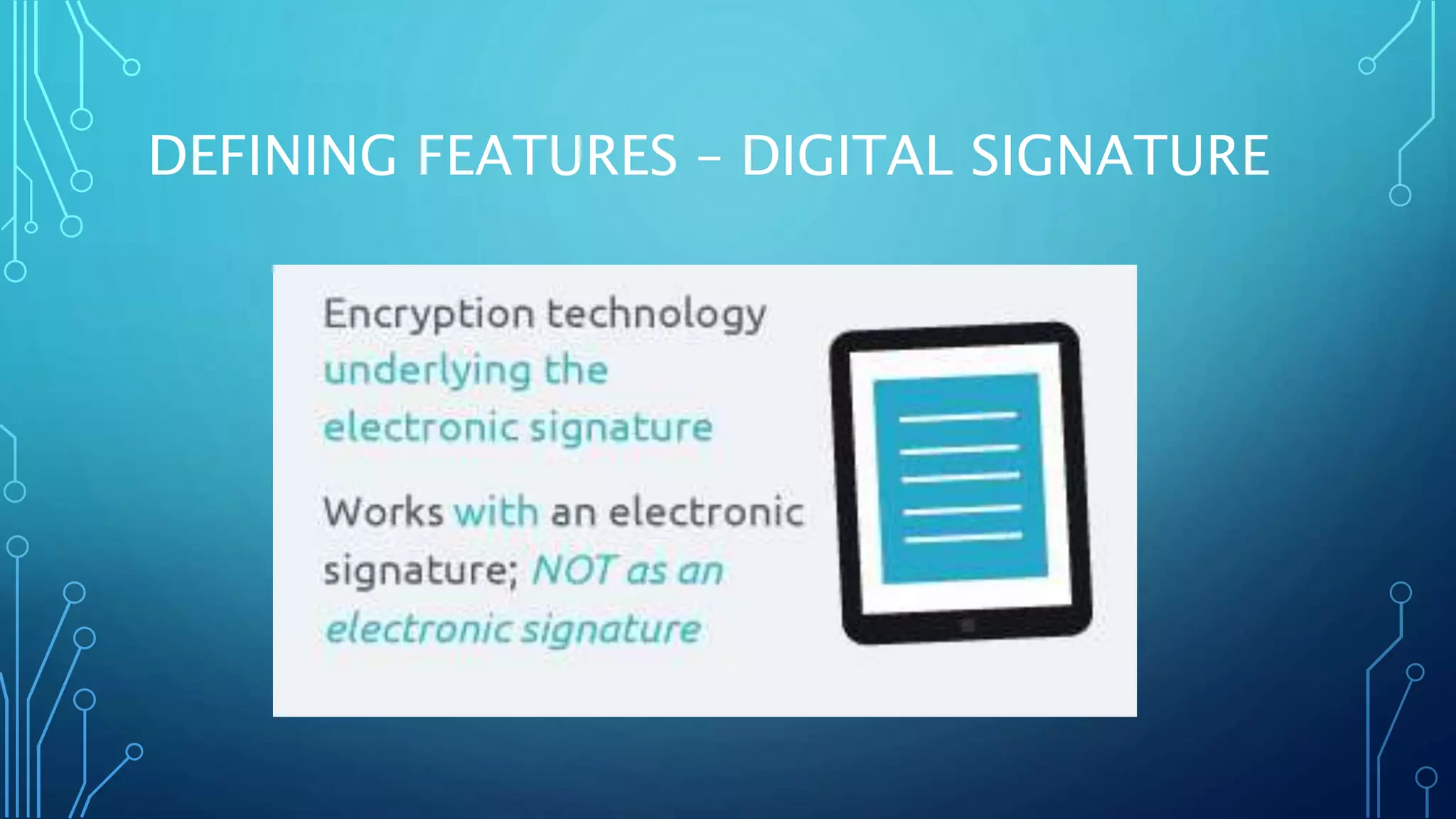
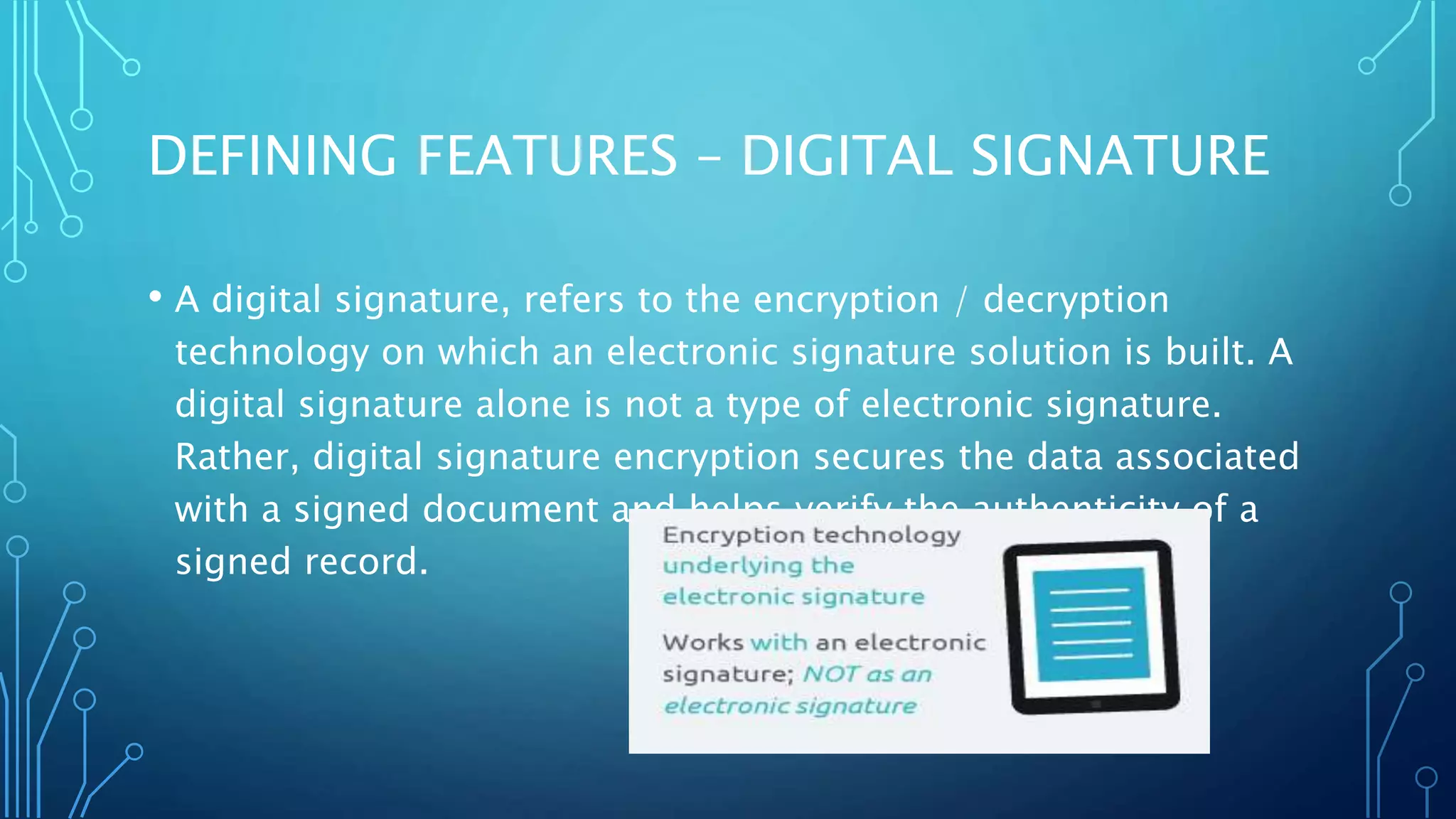
• A digital signature, refers to the encryption / decryption
technology on which an electronic signature solution is built. A
digital signature alone is not a type of electronic signature.
Rather, digital signature encryption secures the data associated
with a signed document and helps verify the authenticity of a
signed record.
FUNCTIONS – DIGITAL SIGNATURE
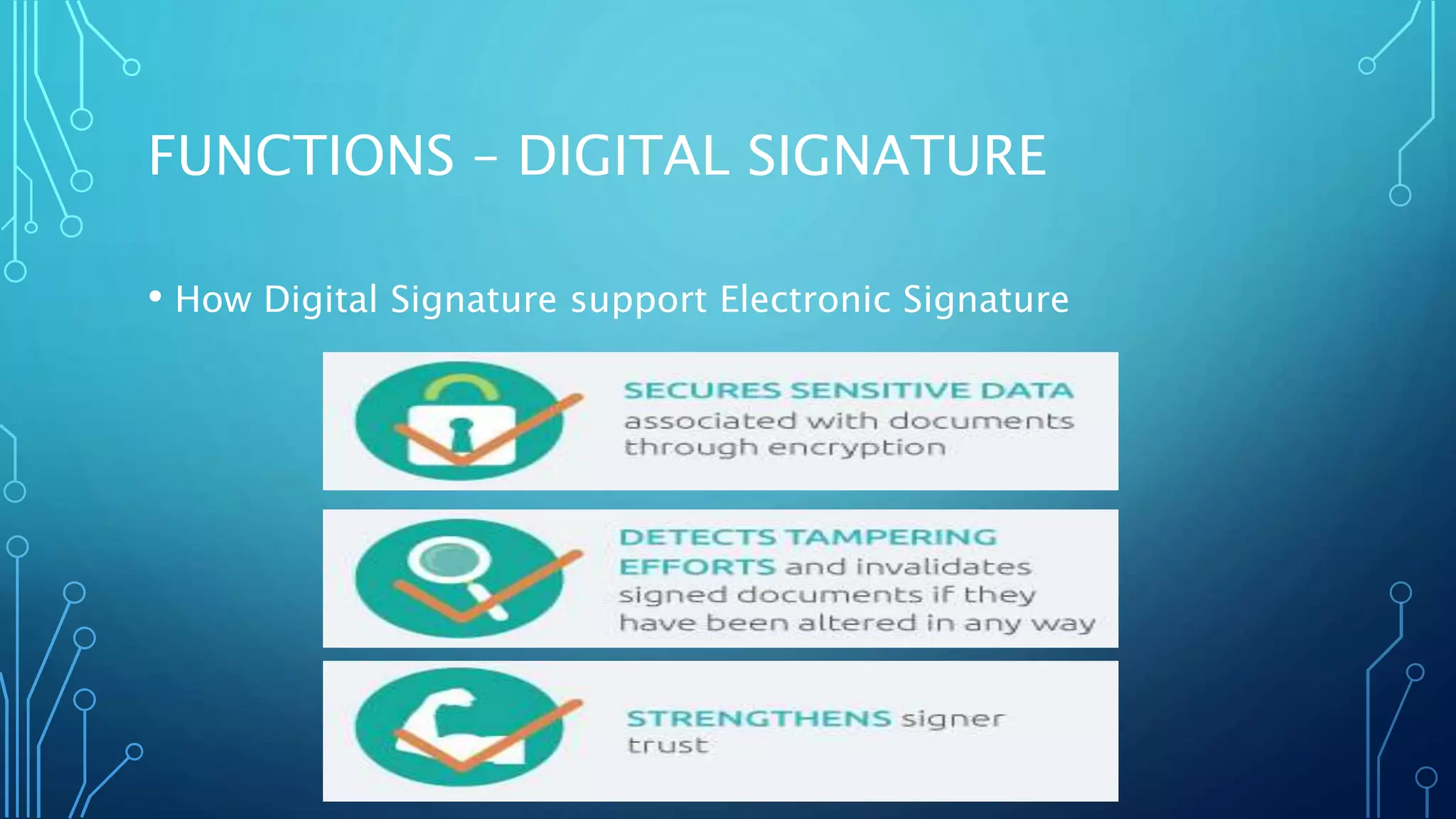
• How Digital Signature support Electronic Signature
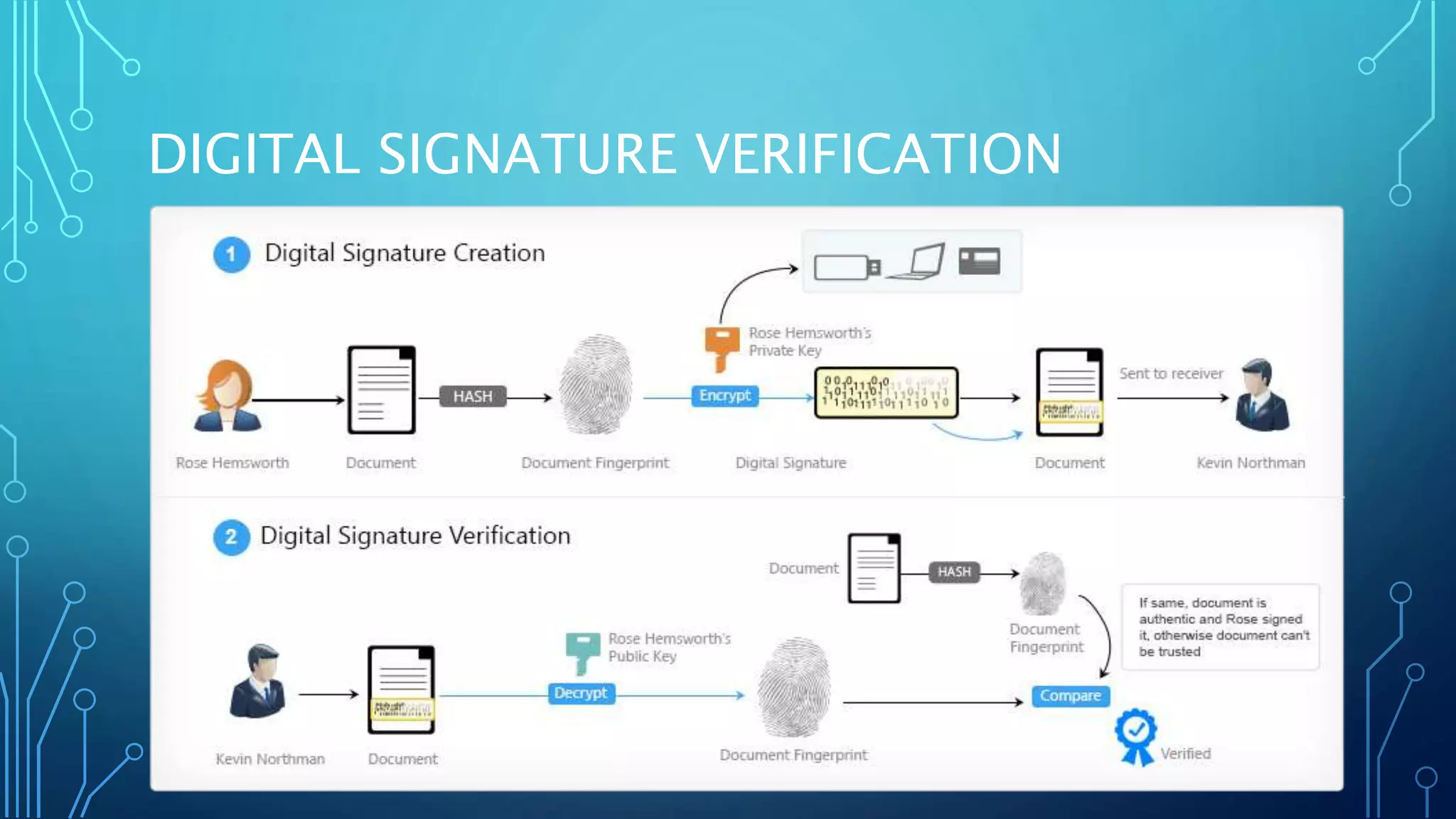
DIGITAL SIGNATURE VERIFICATION
HOW THEY ARE USED?
HOW THEY ARE USED?
• E-Signatures and Digital Signatures collect very
different types of information.
• An e-signature contains who signed an electronic
document, the processes they followed to do it and
their intent to act based on that agreement.
• Digital signatures, on the other hand, secure sensitive
data, protect against tampering and contain other key
background information that backs the e-signature.
HOW THEY ARE USED?
• The electronic signature makes it much simpler and
easier for users to sign agreements and complete
other online transactions.
• Digital signatures provide a key layer of security and
authenticity to those simplified signatures. Digital
signatures do not, however, ensure security.
• Instead, you have to make sure you are using the
digital signatures to effectively support e-signatures
to ensure they provide the protection you need.
BETTER TOGETHER
BETTER TOGETHER
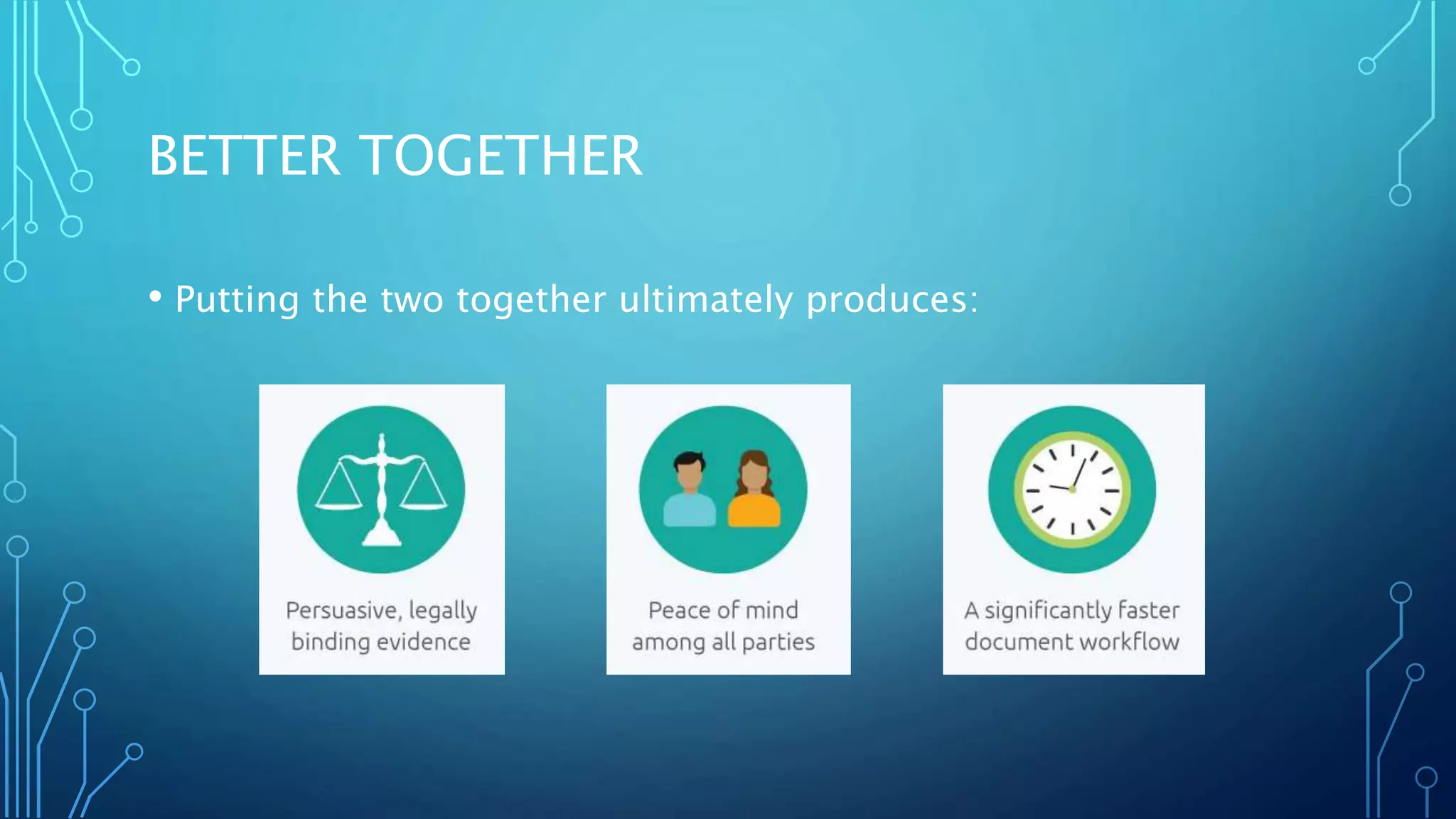
• Putting the two together ultimately produces:
BETTER TOGETHER
• When combined, e-signatures and digital signatures
form a holistic solution to document agreements and
ensure the source file that preserves the record is
safe, secure and verifiable.
• turning to e-signatures backed by digital signatures
helps organizations keep up with the way their
workers are getting the job done without sacrificing

E-Signature Vs. Digital Signature

  • 1.
  • 2.
    Electronic Signature andDigital Signature are often used interchangeably in conversation, but in reality, each carries a distinct set of defining features and functions
  • 3.
  • 4.
    DEFINING FEATURES –ELECTRONIC SIGNATURE
  • 5.
    DEFINING FEATURES –ELECTRONIC SIGNATURE • An electronic signature is, like its paper equivalent, a legal concept. According to the U.S Electronic Signatures in Global and National Commerce Act, an e-signature is an “electronic sound, symbol, or process attached to, or associated with, a contract or other record and adopted by a person with the intent to sign a record.” Based on this definition, an electronic signature can be broken down into these components: • A method of signing • Data authentication • User authentication • Capture of intent
  • 6.
    FUNCTIONS – ELECTRONICSIGNATURE • Electronic Signature need to prove:
  • 7.
  • 8.
    DEFINING FEATURES –DIGITAL SIGNATURE
  • 9.
    DEFINING FEATURES –DIGITAL SIGNATURE • A digital signature, refers to the encryption / decryption technology on which an electronic signature solution is built. A digital signature alone is not a type of electronic signature. Rather, digital signature encryption secures the data associated with a signed document and helps verify the authenticity of a signed record.
  • 10.
    FUNCTIONS – DIGITALSIGNATURE • How Digital Signature support Electronic Signature
  • 11.
  • 12.
  • 13.
    HOW THEY AREUSED? • E-Signatures and Digital Signatures collect very different types of information. • An e-signature contains who signed an electronic document, the processes they followed to do it and their intent to act based on that agreement. • Digital signatures, on the other hand, secure sensitive data, protect against tampering and contain other key background information that backs the e-signature.
  • 14.
    HOW THEY AREUSED? • The electronic signature makes it much simpler and easier for users to sign agreements and complete other online transactions. • Digital signatures provide a key layer of security and authenticity to those simplified signatures. Digital signatures do not, however, ensure security. • Instead, you have to make sure you are using the digital signatures to effectively support e-signatures to ensure they provide the protection you need.
  • 15.
  • 16.
    BETTER TOGETHER • Puttingthe two together ultimately produces:
  • 17.
    BETTER TOGETHER • Whencombined, e-signatures and digital signatures form a holistic solution to document agreements and ensure the source file that preserves the record is safe, secure and verifiable. • turning to e-signatures backed by digital signatures helps organizations keep up with the way their workers are getting the job done without sacrificing