Visionet Systems Inc. 
www.VisionetSystems.com 
www.VsiApparel.com 
ESF.NET 
Accelerated Framework for 
Enterprise System Re-engineering
Legacy Application Issues 
Application Centric Architecture has resulted in Monolithic Business 
Applications acting as information silos, with the following challenges: 
ƒ High management cost due to disparate technologies, architectures and designs 
ƒ Lack of Flexibility and Adaptability to meet the needs of ever changing business 
processes 
ƒ Minimal room for reusability and leveraging of existing assets during new application 
development due to design and architectural incompatibility among different system 
ƒ Inability to incorporate modern high efficiency trends like Workflow Automation, 
and SOA for improving flexibility, productivity, visibility and integration. 
ƒ B2B or In-house Integration with other systems further increases development and 
maintenance costs 
ƒ Application Distribution Costs for Global Companies are higher due to the 
necessity of additional third party technology like terminal servers 
A Strategic application re-engineering initiative MUST envision a paradigm 
shift in IT architecture to eliminate these challenges in the future
Challenges in Legacy Modernization Initiatives 
‰ Lack of or Poor Documentation makes it difficult to understand the 
underlying systems architecture and design. 
‰‰ Re-engineering Project Execution Timelines are high compared to 
the business expectations 
‰ High Availability Requirements make it difficult to take the legacy 
system out of service 
‰ Change Management re-learning a new system and achieving the 
previous proficiency level in usage would have a prohibitive attendant 
cost in lost time and money. 
‰ Legacy Design legacy systems have older design concepts such as, 
coupling of software layers, repetitive code, difficult integration. 
Monolithic application design. 
A feasible re-engineering initiative must cut down the project timelines and 
costs through out-of-the-box solution design
Salient Features 
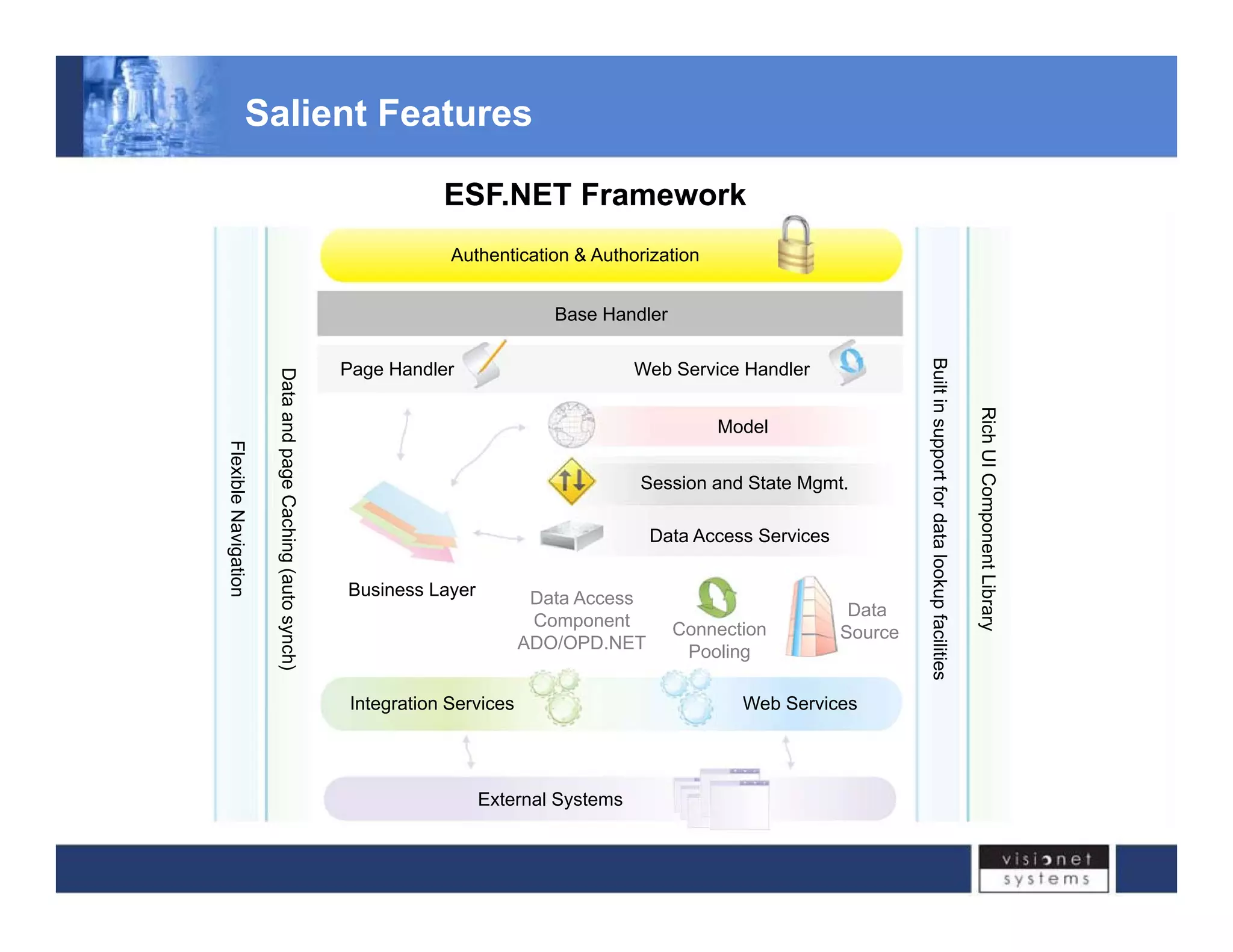
ESF.NET Framework 
Authentication & Authorization 
Base Handler 
Page Handler Web Service Handler 
Data a 
Built in 
R 
Model 
Session and State Mgmt. 
Access Services 
and page Cach 
Flexible Nav 
support for dat 
Rich UI Compon 
Data Business Layer Data Access 
Component 
ADO/OPD.NET 
Connection 
Pooling 
Data 
Source 
hing (auto synch 
vigation 
ta lookup facilit 
nent Library 
Integration Services Web Services 
h) 
ties 
External Systems
ESF .NET – Salient Features 
‰ As opposed to other frameworks ESF .Net is designed for legacy migration 
‰ Makes the work of refactoring the code easy 
‰ Maintains complete separation of data, business from UI layers and other 
technology specific features 
‰ Elaborate Security features addressing, user authentication, role level authorization 
and data level security based on organizational units 
‰‰ Framework layers are modeled to ease conversion of client server/desktop 
application into web based 
‰ Integrated XML serialization will ease web services integration and adoption. SOA 
friendly. 
‰ Configuration Management Console 
‰ Supports both client side and server side validations 
‰ Flexible Error handling and logging 
ESF .Net framework and VSI legacy migration service combine to optimize 
project delivery time-lines and with better quality
The ESF .NET Advantage 
‰ Proven repeated success at multi-billion dollar clients in mortgage and 
apparel industries 
‰ Reduce the overall project timeline by 6 to 8 months by re-using the 
over-arching framework, allowing developers to focus entirely on legacy 
code migration to ESF.NET. 
‰‰ Current and Future system development cost reduction through 
leveraging of existing assets and development of reusable software 
components and services 
‰‰ Future IT Maintenance Cost reduction through architectural and 
technological consistency across the enterprise 
‰ Allowing cross application code usability and workflow integration 
through the use of browser based clients enabled by server side 
business logic components 
‰ IT Strategy for gradual transition towards Services Oriented 
Architecture (SOA)
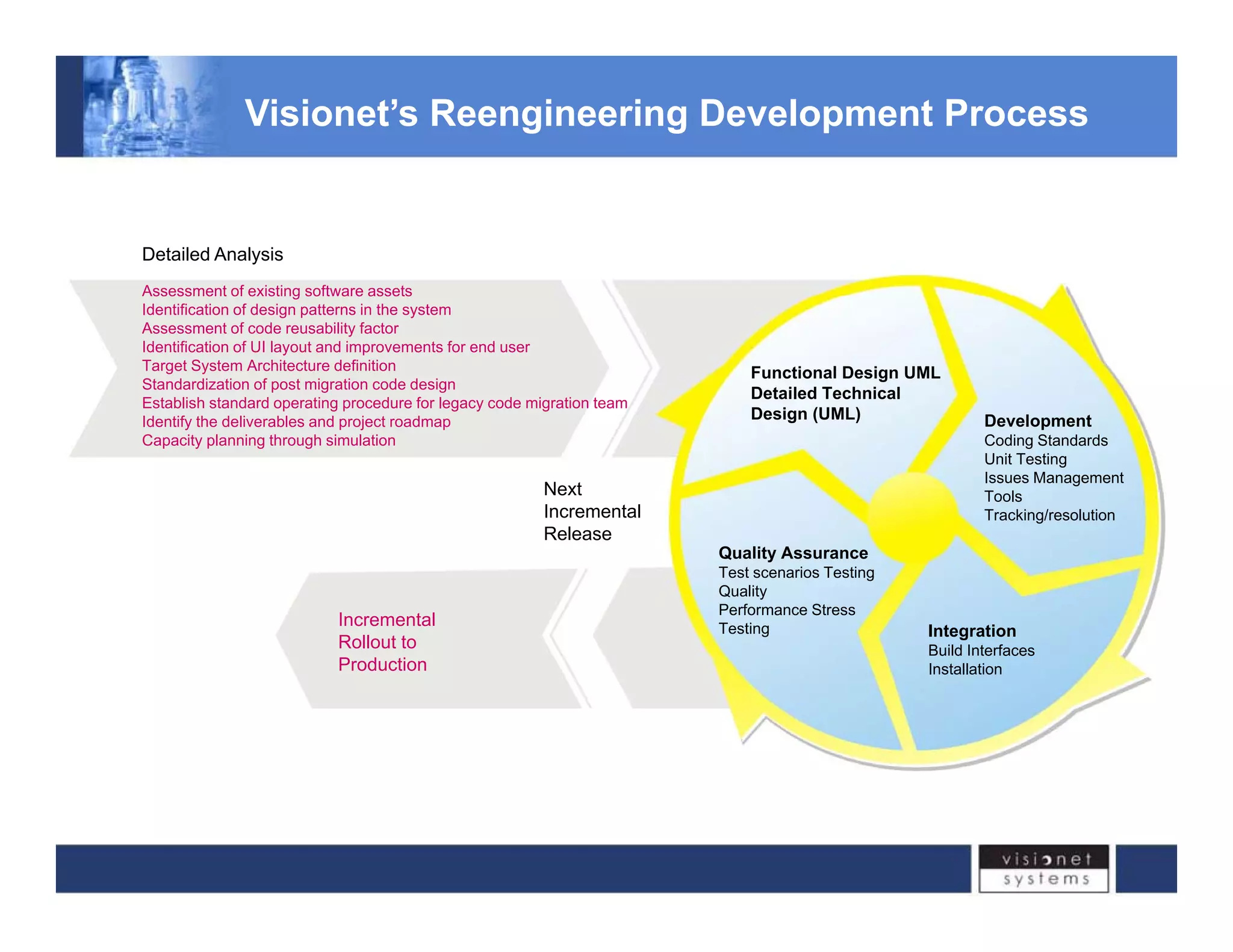
Visionet’s Reengineering Development Process 
Detailed Analysis 
Assessment of existing software assets 
Identification of design patterns in the system 
Assessment of code reusability factor 
Identification of UI layout and improvements for end user 
Target System Architecture definition 
Standardization of post migration code design 
Establish standard operating procedure for legacy code migration team 
Id if h d li bl d j d 
Functional Design UML 
Detailed Technical 
Identify the deliverables and project roadmap UML) D l t 
Capacity planning through simulation 
Next 
Incremental 
Release 
Design (Development 
Coding Standards 
Unit Testing 
Issues Management 
Tools 
Tracking/resolution 
Incremental 
Rollout to 
Quality Assurance 
Test scenarios Testing 
Quality 
Performance Stress 
Testing Integration 
Build Interfaces 
Production 
u d te aces 
Installation
Visionet’s Reengineering Methodology 
‰ Abstraction of data and UI into generic model 
‰ Replacement of UI elements in the business layer by the model 
above 
‰ Removal of direct DML operations from the business layer. 
‰ Identifications of patterns in the business layer. 
‰ Refactoring of business layer to new design 
‰ Conversion of required business components in to compliant SOA 
modules 
‰ Removal of Business layer calls from UI 
‰ Binding UI elements with the generic UI model 
‰‰ Improving the user experience through custom developed rich UI 
controls 
‰ Maintaining the desktop hangover by employing client side caching 
and AJAX call.

ESF .NET - Accelerated Framework for Enterprise System Re-Engineering

  • 1.
    Visionet Systems Inc. www.VisionetSystems.com www.VsiApparel.com ESF.NET Accelerated Framework for Enterprise System Re-engineering
  • 2.
    Legacy Application Issues Application Centric Architecture has resulted in Monolithic Business Applications acting as information silos, with the following challenges: ƒ High management cost due to disparate technologies, architectures and designs ƒ Lack of Flexibility and Adaptability to meet the needs of ever changing business processes ƒ Minimal room for reusability and leveraging of existing assets during new application development due to design and architectural incompatibility among different system ƒ Inability to incorporate modern high efficiency trends like Workflow Automation, and SOA for improving flexibility, productivity, visibility and integration. ƒ B2B or In-house Integration with other systems further increases development and maintenance costs ƒ Application Distribution Costs for Global Companies are higher due to the necessity of additional third party technology like terminal servers A Strategic application re-engineering initiative MUST envision a paradigm shift in IT architecture to eliminate these challenges in the future
  • 3.
    Challenges in LegacyModernization Initiatives ‰ Lack of or Poor Documentation makes it difficult to understand the underlying systems architecture and design. ‰‰ Re-engineering Project Execution Timelines are high compared to the business expectations ‰ High Availability Requirements make it difficult to take the legacy system out of service ‰ Change Management re-learning a new system and achieving the previous proficiency level in usage would have a prohibitive attendant cost in lost time and money. ‰ Legacy Design legacy systems have older design concepts such as, coupling of software layers, repetitive code, difficult integration. Monolithic application design. A feasible re-engineering initiative must cut down the project timelines and costs through out-of-the-box solution design
  • 4.
    Salient Features ESF.NETFramework Authentication & Authorization Base Handler Page Handler Web Service Handler Data a Built in R Model Session and State Mgmt. Access Services and page Cach Flexible Nav support for dat Rich UI Compon Data Business Layer Data Access Component ADO/OPD.NET Connection Pooling Data Source hing (auto synch vigation ta lookup facilit nent Library Integration Services Web Services h) ties External Systems
  • 5.
    ESF .NET –Salient Features ‰ As opposed to other frameworks ESF .Net is designed for legacy migration ‰ Makes the work of refactoring the code easy ‰ Maintains complete separation of data, business from UI layers and other technology specific features ‰ Elaborate Security features addressing, user authentication, role level authorization and data level security based on organizational units ‰‰ Framework layers are modeled to ease conversion of client server/desktop application into web based ‰ Integrated XML serialization will ease web services integration and adoption. SOA friendly. ‰ Configuration Management Console ‰ Supports both client side and server side validations ‰ Flexible Error handling and logging ESF .Net framework and VSI legacy migration service combine to optimize project delivery time-lines and with better quality
  • 6.
    The ESF .NETAdvantage ‰ Proven repeated success at multi-billion dollar clients in mortgage and apparel industries ‰ Reduce the overall project timeline by 6 to 8 months by re-using the over-arching framework, allowing developers to focus entirely on legacy code migration to ESF.NET. ‰‰ Current and Future system development cost reduction through leveraging of existing assets and development of reusable software components and services ‰‰ Future IT Maintenance Cost reduction through architectural and technological consistency across the enterprise ‰ Allowing cross application code usability and workflow integration through the use of browser based clients enabled by server side business logic components ‰ IT Strategy for gradual transition towards Services Oriented Architecture (SOA)
  • 7.
    Visionet’s Reengineering DevelopmentProcess Detailed Analysis Assessment of existing software assets Identification of design patterns in the system Assessment of code reusability factor Identification of UI layout and improvements for end user Target System Architecture definition Standardization of post migration code design Establish standard operating procedure for legacy code migration team Id if h d li bl d j d Functional Design UML Detailed Technical Identify the deliverables and project roadmap UML) D l t Capacity planning through simulation Next Incremental Release Design (Development Coding Standards Unit Testing Issues Management Tools Tracking/resolution Incremental Rollout to Quality Assurance Test scenarios Testing Quality Performance Stress Testing Integration Build Interfaces Production u d te aces Installation
  • 8.
    Visionet’s Reengineering Methodology ‰ Abstraction of data and UI into generic model ‰ Replacement of UI elements in the business layer by the model above ‰ Removal of direct DML operations from the business layer. ‰ Identifications of patterns in the business layer. ‰ Refactoring of business layer to new design ‰ Conversion of required business components in to compliant SOA modules ‰ Removal of Business layer calls from UI ‰ Binding UI elements with the generic UI model ‰‰ Improving the user experience through custom developed rich UI controls ‰ Maintaining the desktop hangover by employing client side caching and AJAX call.