By
Dr.E.M.Roopa Devi
Kongu Engineering College
Technologies for Enterprise-wide SOA
Generic Technologies
Platform-supported Technologies
Standard-based Technologies
Vendor Specific Technologies
Tools from vendor that support generic technologies but offer additional
capabilities for improved productivity and quality
Generic Technologies for service Enablement
 RESTful Web services
-Representative state transfer
-Based on HTTP
-It offer lower overhead in interactions between service providers and
service consumers
SOAP Web Services
-W3C defines web service as software system designed to support
interoperable machine to machine interaction over a network
Web service
It has two objectives
 Enable interoperability between heterogeneous system.
 Standard approach to define service interface independent of technology.
Web services Definition Language (WSDL) based on XML
Main Components of web services
Service Provider
Service registry
Service Consumer
Open standards supported by web services
XML for data interchange
HTTP,FTP and SMTP for transport
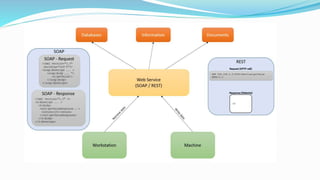
SOAP for Messaging
WSDL for interface description language
UDDI for registry
 XML is text based extensible markup language without fixed tags. An
XML document is always structured with tags defining the items that it
holds and so XML parsers can be used to retrieve the data from it.
 During a web service call, an XML message with application data is
wrapped in a SOAP Envelope,that is a header and trailer is added to
the application data that describes the message structures passed.
 Wire-level security-while the former may be achieved by enabling
HTTPS at web server level
 Message –level security involves security of data in SOAP
messages.WS-security provides a standard approach to encryption and
use of digital signatures headers in SOAP messages.
WSDL(Web service Definition Language)
 Functional
How the service is invoked(abstract interface,concrete implementation)
Non-functional
Why a client invokes the service and who the service provider(policy)
JAX-WS for java EE platform
 JAX-WS stands for java API for XML web service and was formerly known
as JAX RPC.
 Service consumer application creates a proxy object and then invokes
method on this proxy.
 Neither the service provider application nor the service consumer
application is required to generate or parse SOAP messages.
 Web services interoperability technology(WSIT) provides interoperability
between java web services and Microsoft window Communication
Foundation.
Features supported by WSIT
 Bootstrapping communication
 Securing communication
 Optimizing communication
 Enabling reliability
 Enabling atomic transactions
XML web services for .NET platform
There are mainly three ways by which web services
Microsoft WCF
Basic .NET
Web service software Factory
Service Enablement of Relational Databases
 Extensive adoption of web services has incentivized key database
technology providers to develop features that allow web services to be
exposed at database level.
 Service Broker Feature of Microsoft SQL server
 Web service for oracle Database server
 Stored procedure web service feature for IBM DB2 UDB
Technologies for Service Integration
Issues related to while service consumers can directly invoke services based
on the WSDL providers
 It become necessary for a service consumer to use the same protocol as
that of a service provider.
 The message format used by the service consumer for service invocation
may be different from the format required by the service provider.
 A larger number of service providers and consumers may result in
increased complexity due to several point to point connections
Contd..
Products that support the concept of ESB are available from
Application service providers
Middleware Vendors
ERP providers
Open source
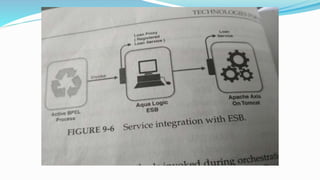
Service integration with ESB
A proxy service is registered in AquaLogic for the Loan Service developed
with Apache Axis and developed on Tomcat server
Business Case for SOA
A business case is developed considering the following
 Stakeholders objectives
 Benefits of SOA
 Cost Savings
 Return on Investment
Stakeholders objectives
A SoA initiative needs to fulfill the objectives of stakeholders
Sponsors
SOA initiatives are sponsored by CXOs,The strategic advantages that the
sponsors of SOA look for include
Alignment of business and It
Reduced time to market
Agility
Vendor independence
Competitive Edge through leverage of new Technologies
 Business
Enterprise have business units that deliver products and services and IT
departments that provides hardware and software infrastructure to enable
business through implementation of their business process.
 IT
With the availability of IT infrastructure that enables externalizing of
business process and the maturity of packed application platform.
Benefits of SOA
 Business Agility
 Shorter Development cycles
 Reduced time to market
 Lower total cost of ownership
 Strategic Architecture
 Alignment of IT and business
 Interoperability
 Effective Integration
 Improved Efficiency
Cost Savings
The cost saving can be computed as
Development cost savings=[(N*R)/100]*(C*A)
N-number of services that are reusable
R(%)-Degree of reuse
C=Complexity of services(average no of functions or objects points per
service)
A=Average cost per function point or object point
Return on Investment(ROI)
 Approval of a business case by decision makers in an enterprise.
 ROI three dimensions as reuse,integration and agility.
ROI=(DCS-EXP)/EXP
DCS-Development Cost Savings(due to reuse & integration)
EXP-Expenditure towards hardware,software,network and
development support
Build a case for SOA
The primary drivers for SOA vision are IT cost savings, customer service
improvement and faster time to market.
Three areas of impact as result of soa
 Customer service improvement
 faster time to market
 information visibility
Four main roadblocks for justifying SOA in organizations
 Lack of confidence
 Securing funding

Unit 3-SOA Technologies

  • 1.
  • 2.
    Technologies for Enterprise-wideSOA Generic Technologies Platform-supported Technologies Standard-based Technologies Vendor Specific Technologies Tools from vendor that support generic technologies but offer additional capabilities for improved productivity and quality
  • 3.
    Generic Technologies forservice Enablement  RESTful Web services -Representative state transfer -Based on HTTP -It offer lower overhead in interactions between service providers and service consumers SOAP Web Services -W3C defines web service as software system designed to support interoperable machine to machine interaction over a network
  • 4.
    Web service It hastwo objectives  Enable interoperability between heterogeneous system.  Standard approach to define service interface independent of technology. Web services Definition Language (WSDL) based on XML Main Components of web services Service Provider Service registry Service Consumer
  • 5.
    Open standards supportedby web services XML for data interchange HTTP,FTP and SMTP for transport SOAP for Messaging WSDL for interface description language UDDI for registry
  • 6.
     XML istext based extensible markup language without fixed tags. An XML document is always structured with tags defining the items that it holds and so XML parsers can be used to retrieve the data from it.  During a web service call, an XML message with application data is wrapped in a SOAP Envelope,that is a header and trailer is added to the application data that describes the message structures passed.  Wire-level security-while the former may be achieved by enabling HTTPS at web server level  Message –level security involves security of data in SOAP messages.WS-security provides a standard approach to encryption and use of digital signatures headers in SOAP messages.
  • 8.
    WSDL(Web service DefinitionLanguage)  Functional How the service is invoked(abstract interface,concrete implementation) Non-functional Why a client invokes the service and who the service provider(policy)
  • 9.
    JAX-WS for javaEE platform  JAX-WS stands for java API for XML web service and was formerly known as JAX RPC.  Service consumer application creates a proxy object and then invokes method on this proxy.  Neither the service provider application nor the service consumer application is required to generate or parse SOAP messages.  Web services interoperability technology(WSIT) provides interoperability between java web services and Microsoft window Communication Foundation.
  • 10.
    Features supported byWSIT  Bootstrapping communication  Securing communication  Optimizing communication  Enabling reliability  Enabling atomic transactions
  • 11.
    XML web servicesfor .NET platform There are mainly three ways by which web services Microsoft WCF Basic .NET Web service software Factory
  • 12.
    Service Enablement ofRelational Databases  Extensive adoption of web services has incentivized key database technology providers to develop features that allow web services to be exposed at database level.  Service Broker Feature of Microsoft SQL server  Web service for oracle Database server  Stored procedure web service feature for IBM DB2 UDB
  • 13.
    Technologies for ServiceIntegration Issues related to while service consumers can directly invoke services based on the WSDL providers  It become necessary for a service consumer to use the same protocol as that of a service provider.  The message format used by the service consumer for service invocation may be different from the format required by the service provider.  A larger number of service providers and consumers may result in increased complexity due to several point to point connections
  • 14.
    Contd.. Products that supportthe concept of ESB are available from Application service providers Middleware Vendors ERP providers Open source Service integration with ESB A proxy service is registered in AquaLogic for the Loan Service developed with Apache Axis and developed on Tomcat server
  • 16.
    Business Case forSOA A business case is developed considering the following  Stakeholders objectives  Benefits of SOA  Cost Savings  Return on Investment
  • 17.
    Stakeholders objectives A SoAinitiative needs to fulfill the objectives of stakeholders Sponsors SOA initiatives are sponsored by CXOs,The strategic advantages that the sponsors of SOA look for include Alignment of business and It Reduced time to market Agility Vendor independence Competitive Edge through leverage of new Technologies
  • 18.
     Business Enterprise havebusiness units that deliver products and services and IT departments that provides hardware and software infrastructure to enable business through implementation of their business process.  IT With the availability of IT infrastructure that enables externalizing of business process and the maturity of packed application platform.
  • 19.
    Benefits of SOA Business Agility  Shorter Development cycles  Reduced time to market  Lower total cost of ownership  Strategic Architecture  Alignment of IT and business  Interoperability  Effective Integration  Improved Efficiency
  • 20.
    Cost Savings The costsaving can be computed as Development cost savings=[(N*R)/100]*(C*A) N-number of services that are reusable R(%)-Degree of reuse C=Complexity of services(average no of functions or objects points per service) A=Average cost per function point or object point
  • 21.
    Return on Investment(ROI) Approval of a business case by decision makers in an enterprise.  ROI three dimensions as reuse,integration and agility. ROI=(DCS-EXP)/EXP DCS-Development Cost Savings(due to reuse & integration) EXP-Expenditure towards hardware,software,network and development support
  • 22.
    Build a casefor SOA The primary drivers for SOA vision are IT cost savings, customer service improvement and faster time to market. Three areas of impact as result of soa  Customer service improvement  faster time to market  information visibility Four main roadblocks for justifying SOA in organizations  Lack of confidence  Securing funding