ERROR CORRECTION-
CAN IT BE MADE FUN?
ELTchat Summary for 20th May 2015
What is Error
Correction?
What are errors?
Are we correcting:
something said in the heat of the moment?
something written as part of an exercise or
task?
= Both. But different techniques may be used
in the context of the situation.
 Strictly speaking we should be discussing
mistakes , which are performance errors
and can be corrected. Real errors are
things which have not necessarily been
taught yet, and therefore are not easily
self-corrected. D. Brown
Could we call
them something
else?
Tongue –in-cheek from Marisa_C:
 Deviations ?
 Unfortunate episodes?
 Things we can improve on…
 Things we can say in a different
way… (ShaunWilden)
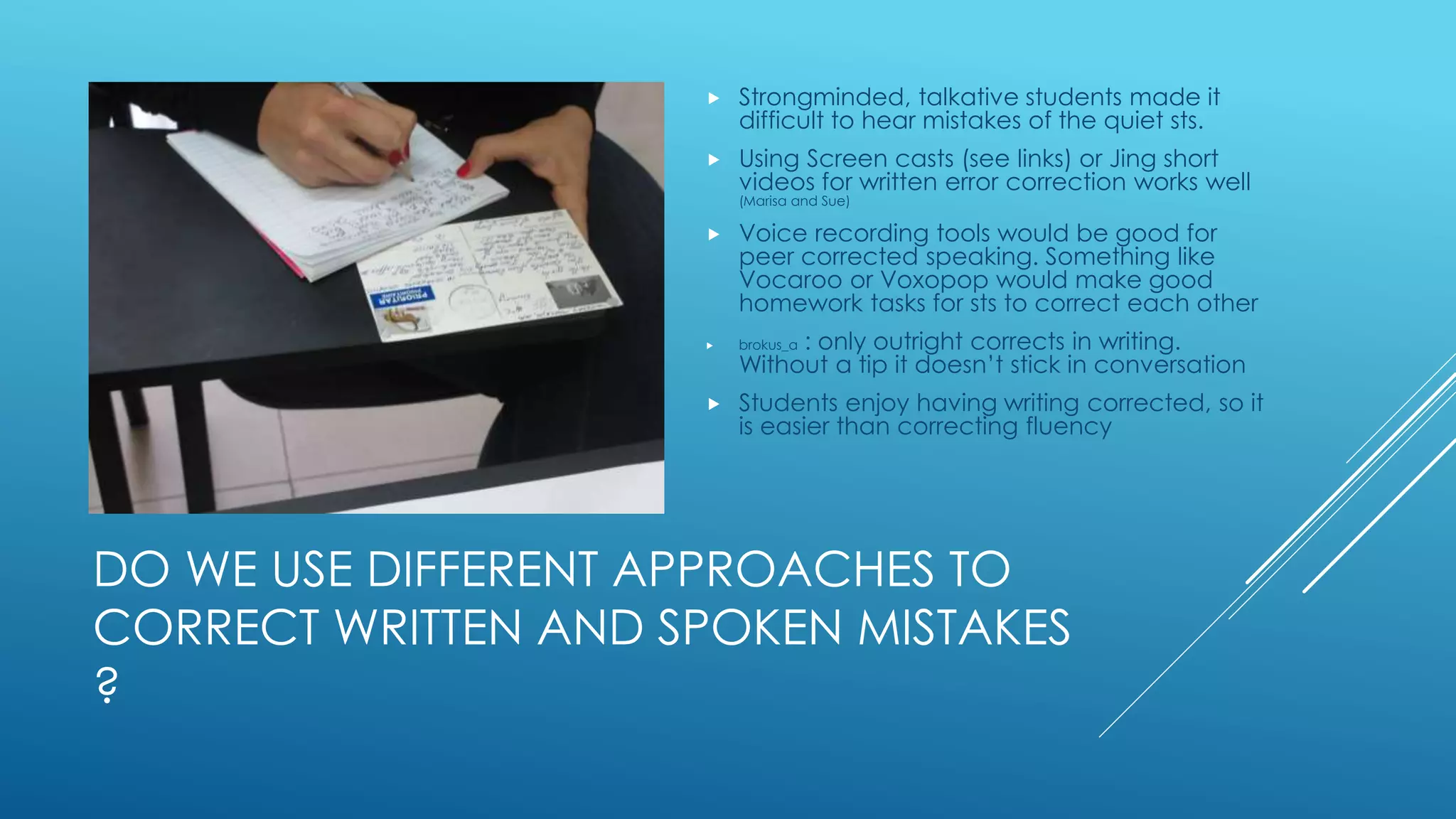
DO WE USE DIFFERENT APPROACHES TO
CORRECT WRITTEN AND SPOKEN MISTAKES
?
 Strongminded, talkative students made it
difficult to hear mistakes of the quiet sts.
 Using Screen casts (see links) or Jing short
videos for written error correction works well
(Marisa and Sue)
 Voice recording tools would be good for
peer corrected speaking. Something like
Vocaroo or Voxopop would make good
homework tasks for sts to correct each other
 brokus_a : only outright corrects in writing.
Without a tip it doesn’t stick in conversation
 Students enjoy having writing corrected, so it
is easier than correcting fluency
RETHINK THE TEACHER’S ATTITUDE TO
ERRORS
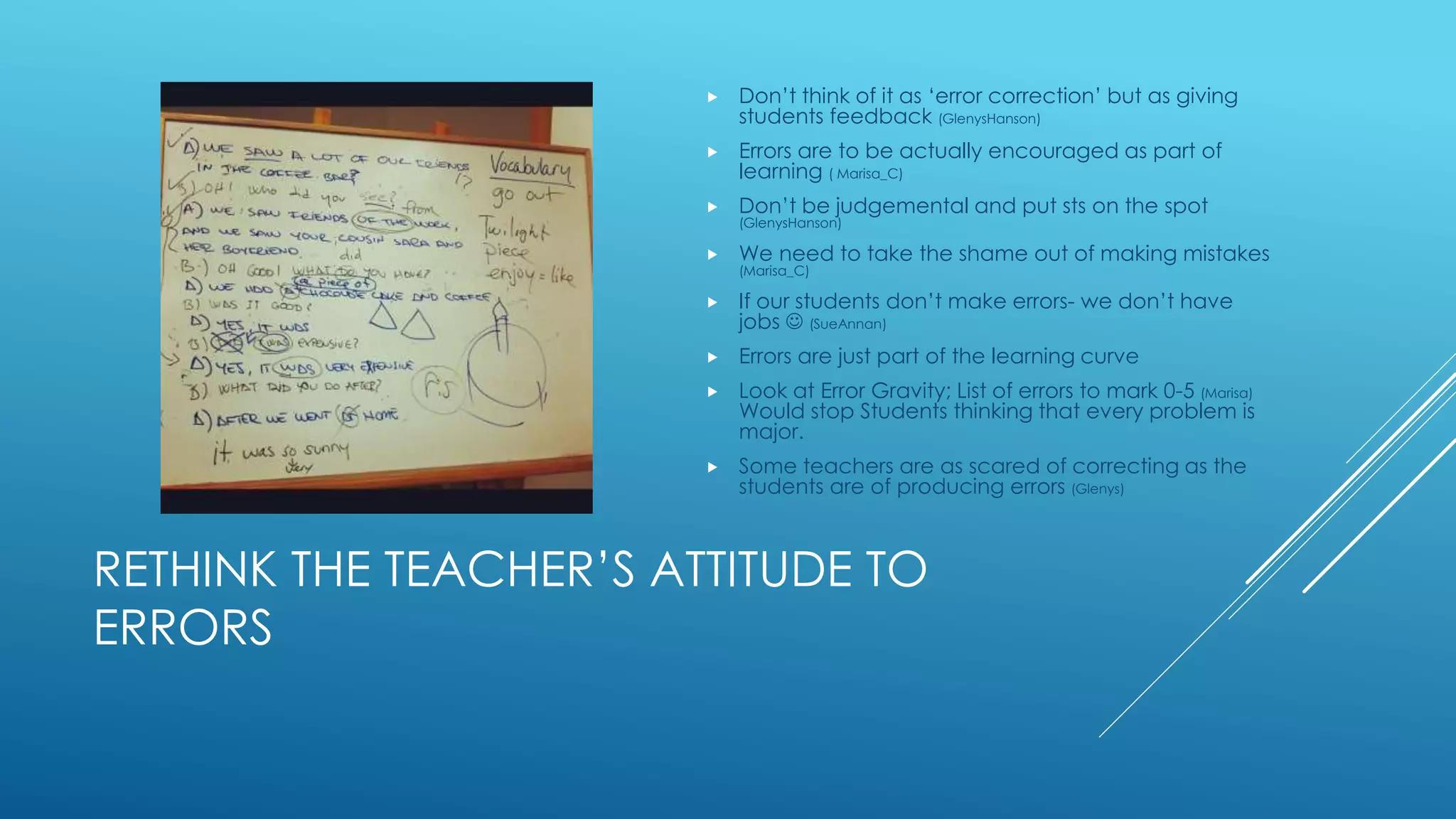
 Don’t think of it as ‘error correction’ but as giving
students feedback (GlenysHanson)
 Errors are to be actually encouraged as part of
learning ( Marisa_C)
 Don’t be judgemental and put sts on the spot
(GlenysHanson)
 We need to take the shame out of making mistakes
(Marisa_C)
 If our students don’t make errors- we don’t have
jobs  (SueAnnan)
 Errors are just part of the learning curve
 Look at Error Gravity; List of errors to mark 0-5 (Marisa)
Would stop Students thinking that every problem is
major.
 Some teachers are as scared of correcting as the
students are of producing errors (Glenys)
HOW DO STUDENTS FEEL?
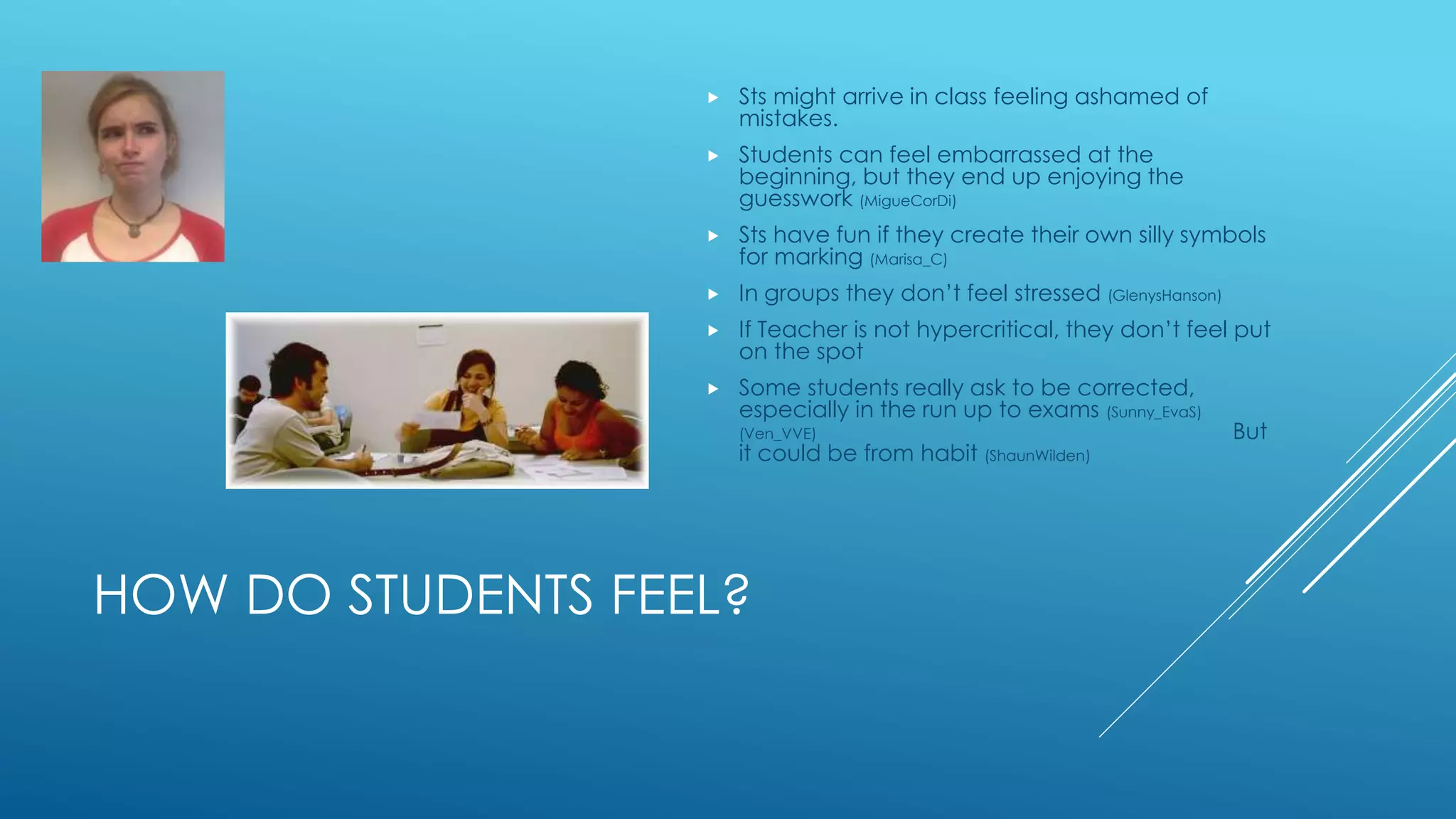
 Sts might arrive in class feeling ashamed of
mistakes.
 Students can feel embarrassed at the
beginning, but they end up enjoying the
guesswork (MigueCorDi)
 Sts have fun if they create their own silly symbols
for marking (Marisa_C)
 In groups they don’t feel stressed (GlenysHanson)
 If Teacher is not hypercritical, they don’t feel put
on the spot
 Some students really ask to be corrected,
especially in the run up to exams (Sunny_EvaS)
(Ven_VVE) But
it could be from habit (ShaunWilden)
DO STUDENTS ALWAYS WANT TO ‘GET IT
RIGHT’?
 Sometimes they get to Intermediate
level and stagnate (SueAnnan)
 Errors can be caused by lack of
attention (MigueCorDi)
 When speaking it is more important
to students that others understand
their message,
How can we
make error
correction more
fun?
 Take errors from student essays and ask the
class to guess who made them. (MigueCorDi)
 Write up a mix of sentences which are
correct and error-ridden and do a grammar
auction (HanaHainsworth)
 Use colourful markers and give positive
feedback (Sunny_EvaS)
 Colour-code errors- Sts correct in groups
(Marisa_C)
 Put errors on Flipchart on wall for class to
correct (GlenysHanson)
 Take an exercise and turn it into nonsense
works well for LA and amuses students
(Marisa_C)
 The Human Computer technique is fun (see
links)
 Play devil’s advocate. Let them argue
correctness with you (MigueCorDi)
And more
ideas….
 Make a student ‘the expert’ on a
mistake they make frequently. Ask
them for help if someone else
makes the same error. (Glenys)
 Make mistakes, pretend you have
forgotten the correct grammar and
ask students to look it up (Sunny_EvaS)
 Come at the error from a different
direction and make the lesson fun
(brockus_a)
 Get the students to teach the class
(brockus_a) ( Marisa)( Glenys)
What if the same
students are
making all the
mistakes?
 Do delayed correction and respond
to the content, not the student.
 Take care with sts who have low
affective filters (HanaHainsworth)
 Be selective about what you
correct and don’t over-face the
students
 Remember to respond to the quiet
ones- not the over-talkative
students who monopolise.
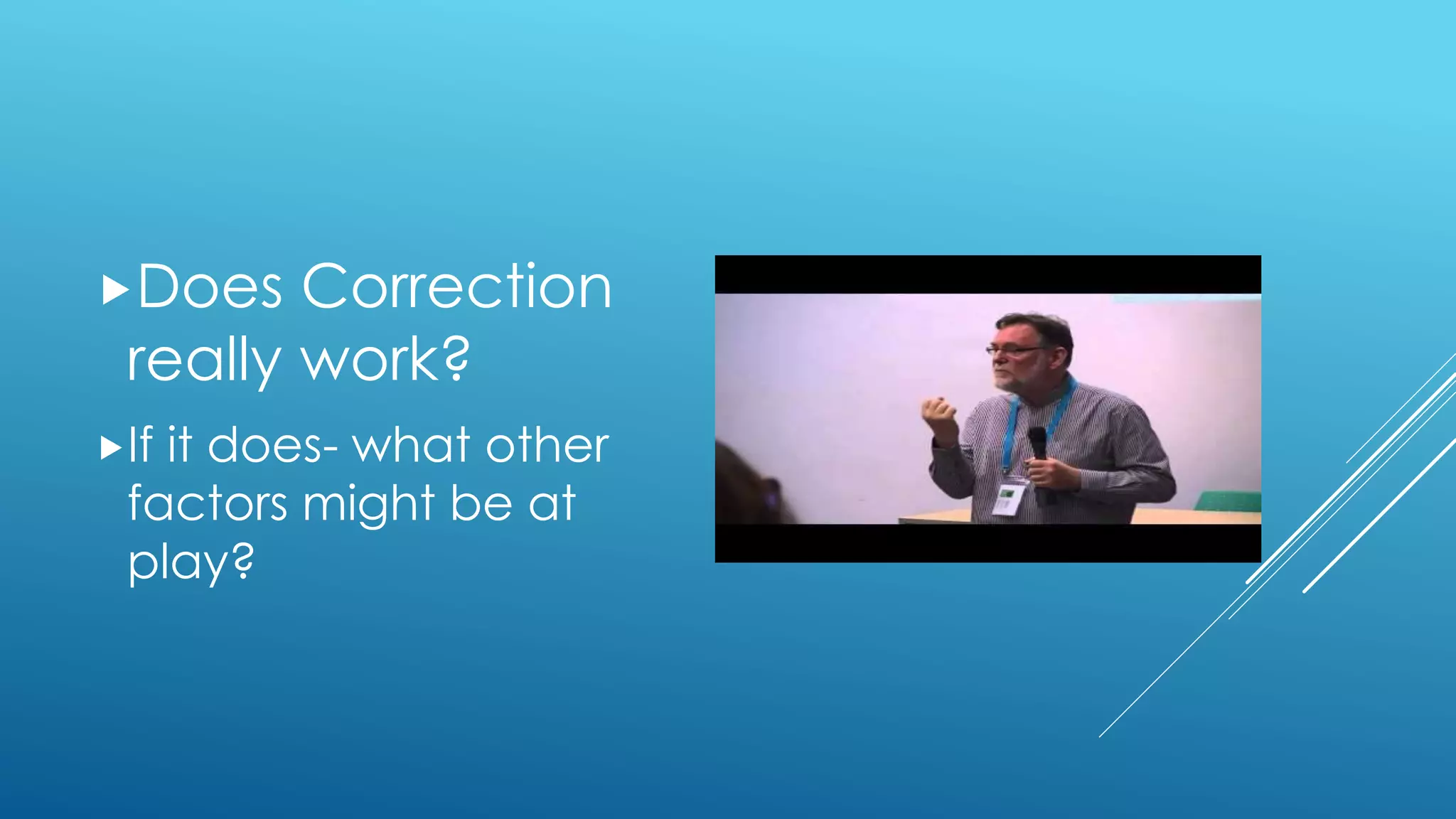
Does Correction
really work?
If it does- what other
factors might be at
play?
LINKS
The Human computer
techniquehttps://www.youtube.com/watch?v=di8TcpLY47g
(watch from around 10 minutes in)
Does Error Correction really work? Jeremy Harmer
http://203.72.145.166/ELT/files/47-4-6.pdf
Marisa’s Pinterest https://www.pinterest.com/celtathens/errors-
error-correction
Screencasting by Russell Stannard
http://www.teachertrainingvideos.com/screen-
casting/jing.html
http://203.72.145.166/ELT/files/47-4-6.pdf Scholarly article
All images taken from CC licensed ELTpics on Twitter by
@Senicko, @SandyMillin and @Karabetca

Error correction can it be made fun?

  • 1.
    ERROR CORRECTION- CAN ITBE MADE FUN? ELTchat Summary for 20th May 2015
  • 2.
    What is Error Correction? Whatare errors? Are we correcting: something said in the heat of the moment? something written as part of an exercise or task? = Both. But different techniques may be used in the context of the situation.  Strictly speaking we should be discussing mistakes , which are performance errors and can be corrected. Real errors are things which have not necessarily been taught yet, and therefore are not easily self-corrected. D. Brown
  • 3.
    Could we call themsomething else? Tongue –in-cheek from Marisa_C:  Deviations ?  Unfortunate episodes?  Things we can improve on…  Things we can say in a different way… (ShaunWilden)
  • 4.
    DO WE USEDIFFERENT APPROACHES TO CORRECT WRITTEN AND SPOKEN MISTAKES ?  Strongminded, talkative students made it difficult to hear mistakes of the quiet sts.  Using Screen casts (see links) or Jing short videos for written error correction works well (Marisa and Sue)  Voice recording tools would be good for peer corrected speaking. Something like Vocaroo or Voxopop would make good homework tasks for sts to correct each other  brokus_a : only outright corrects in writing. Without a tip it doesn’t stick in conversation  Students enjoy having writing corrected, so it is easier than correcting fluency
  • 5.
    RETHINK THE TEACHER’SATTITUDE TO ERRORS  Don’t think of it as ‘error correction’ but as giving students feedback (GlenysHanson)  Errors are to be actually encouraged as part of learning ( Marisa_C)  Don’t be judgemental and put sts on the spot (GlenysHanson)  We need to take the shame out of making mistakes (Marisa_C)  If our students don’t make errors- we don’t have jobs  (SueAnnan)  Errors are just part of the learning curve  Look at Error Gravity; List of errors to mark 0-5 (Marisa) Would stop Students thinking that every problem is major.  Some teachers are as scared of correcting as the students are of producing errors (Glenys)
  • 6.
    HOW DO STUDENTSFEEL?  Sts might arrive in class feeling ashamed of mistakes.  Students can feel embarrassed at the beginning, but they end up enjoying the guesswork (MigueCorDi)  Sts have fun if they create their own silly symbols for marking (Marisa_C)  In groups they don’t feel stressed (GlenysHanson)  If Teacher is not hypercritical, they don’t feel put on the spot  Some students really ask to be corrected, especially in the run up to exams (Sunny_EvaS) (Ven_VVE) But it could be from habit (ShaunWilden)
  • 7.
    DO STUDENTS ALWAYSWANT TO ‘GET IT RIGHT’?  Sometimes they get to Intermediate level and stagnate (SueAnnan)  Errors can be caused by lack of attention (MigueCorDi)  When speaking it is more important to students that others understand their message,
  • 8.
    How can we makeerror correction more fun?  Take errors from student essays and ask the class to guess who made them. (MigueCorDi)  Write up a mix of sentences which are correct and error-ridden and do a grammar auction (HanaHainsworth)  Use colourful markers and give positive feedback (Sunny_EvaS)  Colour-code errors- Sts correct in groups (Marisa_C)  Put errors on Flipchart on wall for class to correct (GlenysHanson)  Take an exercise and turn it into nonsense works well for LA and amuses students (Marisa_C)  The Human Computer technique is fun (see links)  Play devil’s advocate. Let them argue correctness with you (MigueCorDi)
  • 9.
    And more ideas….  Makea student ‘the expert’ on a mistake they make frequently. Ask them for help if someone else makes the same error. (Glenys)  Make mistakes, pretend you have forgotten the correct grammar and ask students to look it up (Sunny_EvaS)  Come at the error from a different direction and make the lesson fun (brockus_a)  Get the students to teach the class (brockus_a) ( Marisa)( Glenys)
  • 10.
    What if thesame students are making all the mistakes?  Do delayed correction and respond to the content, not the student.  Take care with sts who have low affective filters (HanaHainsworth)  Be selective about what you correct and don’t over-face the students  Remember to respond to the quiet ones- not the over-talkative students who monopolise.
  • 11.
    Does Correction really work? Ifit does- what other factors might be at play?
  • 12.
    LINKS The Human computer techniquehttps://www.youtube.com/watch?v=di8TcpLY47g (watchfrom around 10 minutes in) Does Error Correction really work? Jeremy Harmer http://203.72.145.166/ELT/files/47-4-6.pdf Marisa’s Pinterest https://www.pinterest.com/celtathens/errors- error-correction Screencasting by Russell Stannard http://www.teachertrainingvideos.com/screen- casting/jing.html http://203.72.145.166/ELT/files/47-4-6.pdf Scholarly article All images taken from CC licensed ELTpics on Twitter by @Senicko, @SandyMillin and @Karabetca