


Community Health
 and Minorities


   Chapter 10
Introduction
• Strength of America lies in diversity of people
• Race remains an issue in U.S.
• U.S. population
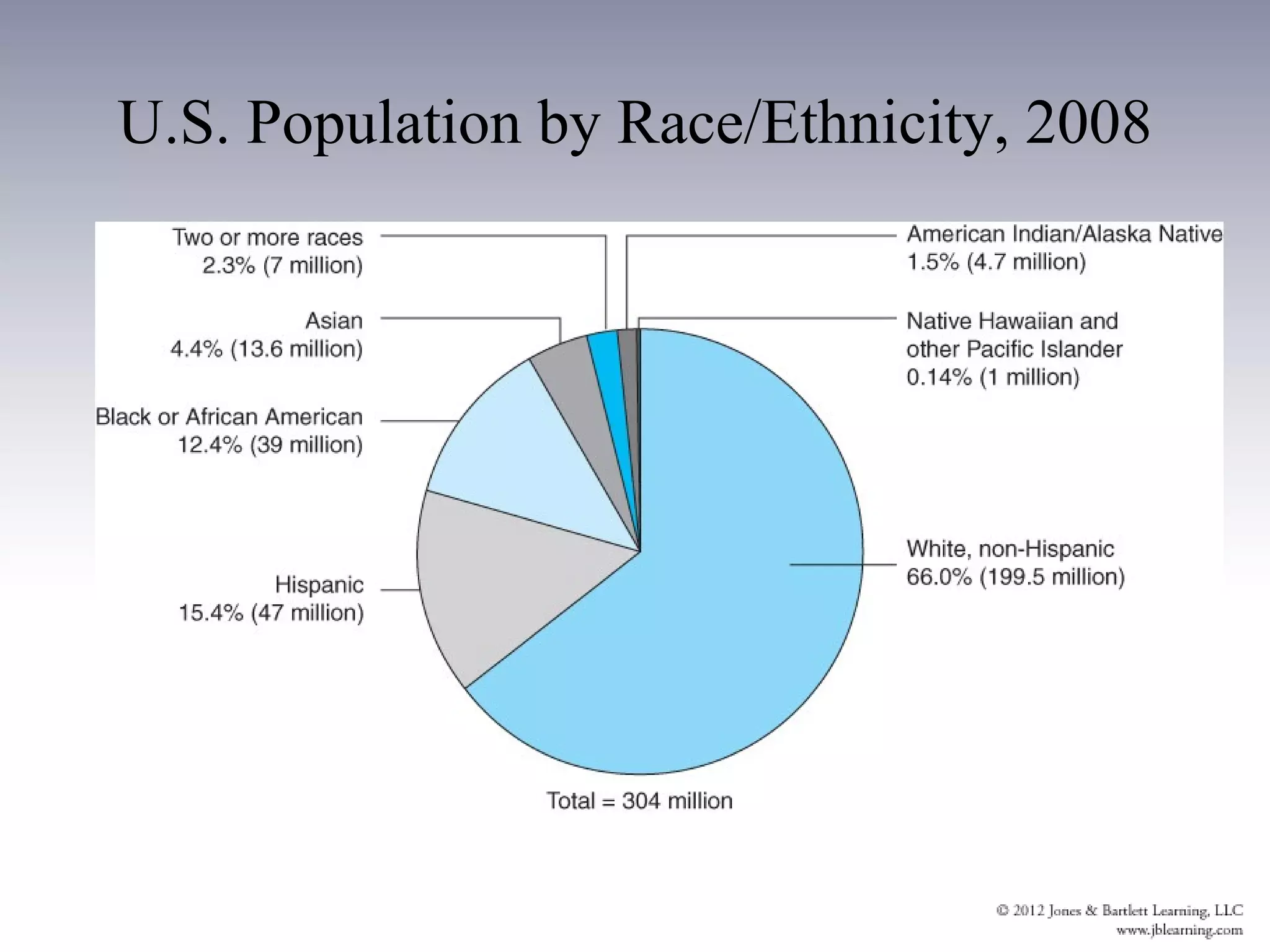
  • Majority – white, non-Hispanic (66%)
  • Racial or ethnic minorities (34%)
• Minority health – morbidity and mortality of
  ethnic minorities
• Define morbidity

• Mortality?
U.S. Population by Race/Ethnicity, 2008
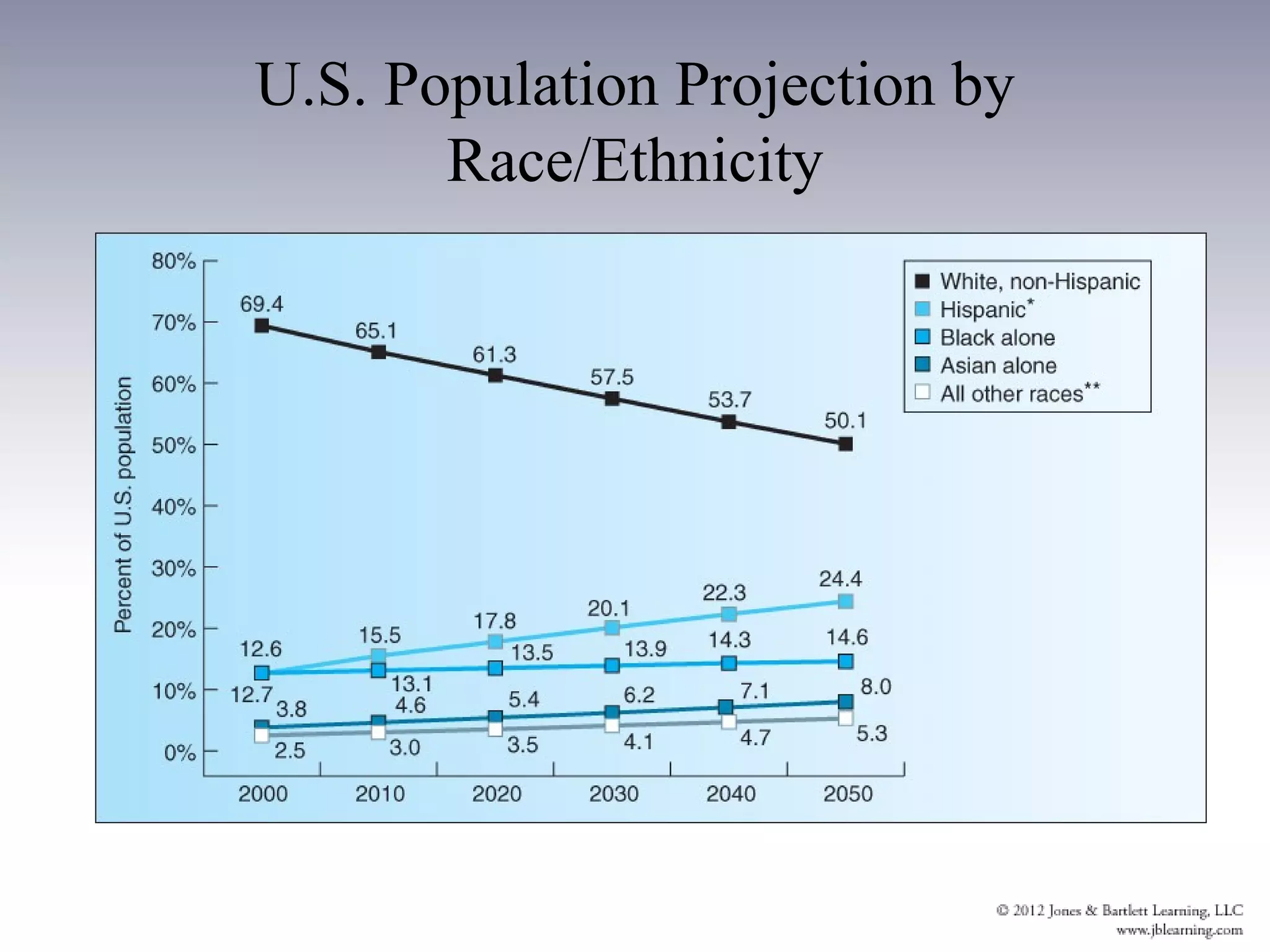
U.S. Population Projection by
       Race/Ethnicity
• Projections in numbers of members of each
  ethnicity by 2050?
Introduction
• Advances in health gains are not equal in U.S.
• Secretary’s Task Force Report on Black and
  Minority Health
• Initiative to Eliminate Racial and Ethnic
  Disparities in Health (Race and Health
  Initiative)
Disparity
• Compare african american
• Hispanic…define
  native american
6 causes of death accounts for 80% of all in
                 minorities
•   Infant mortality
•   Cancer
•   CVD and stroke
•   Diabetes
•   Homicide and accidents
•   Addictive drugs
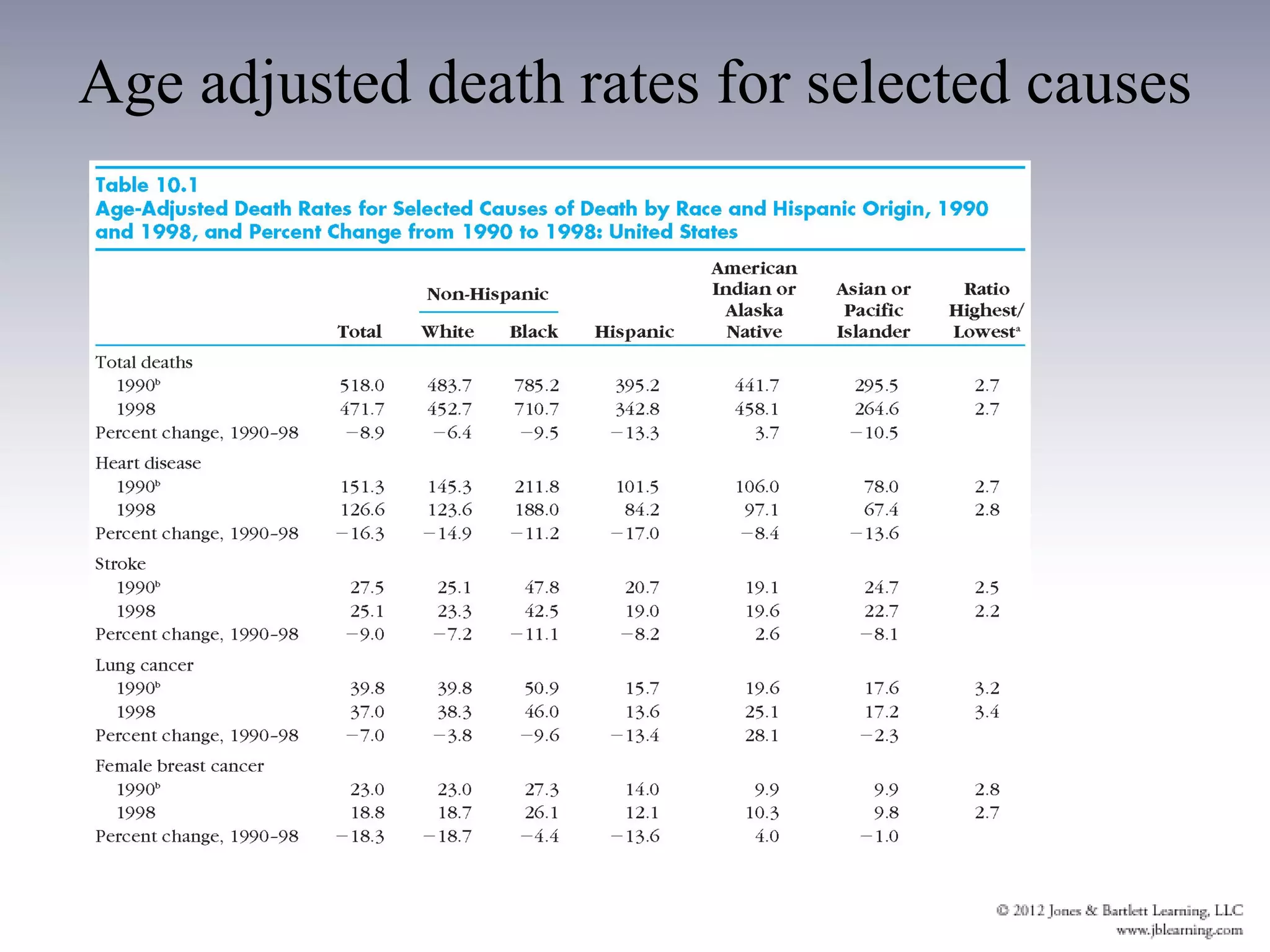
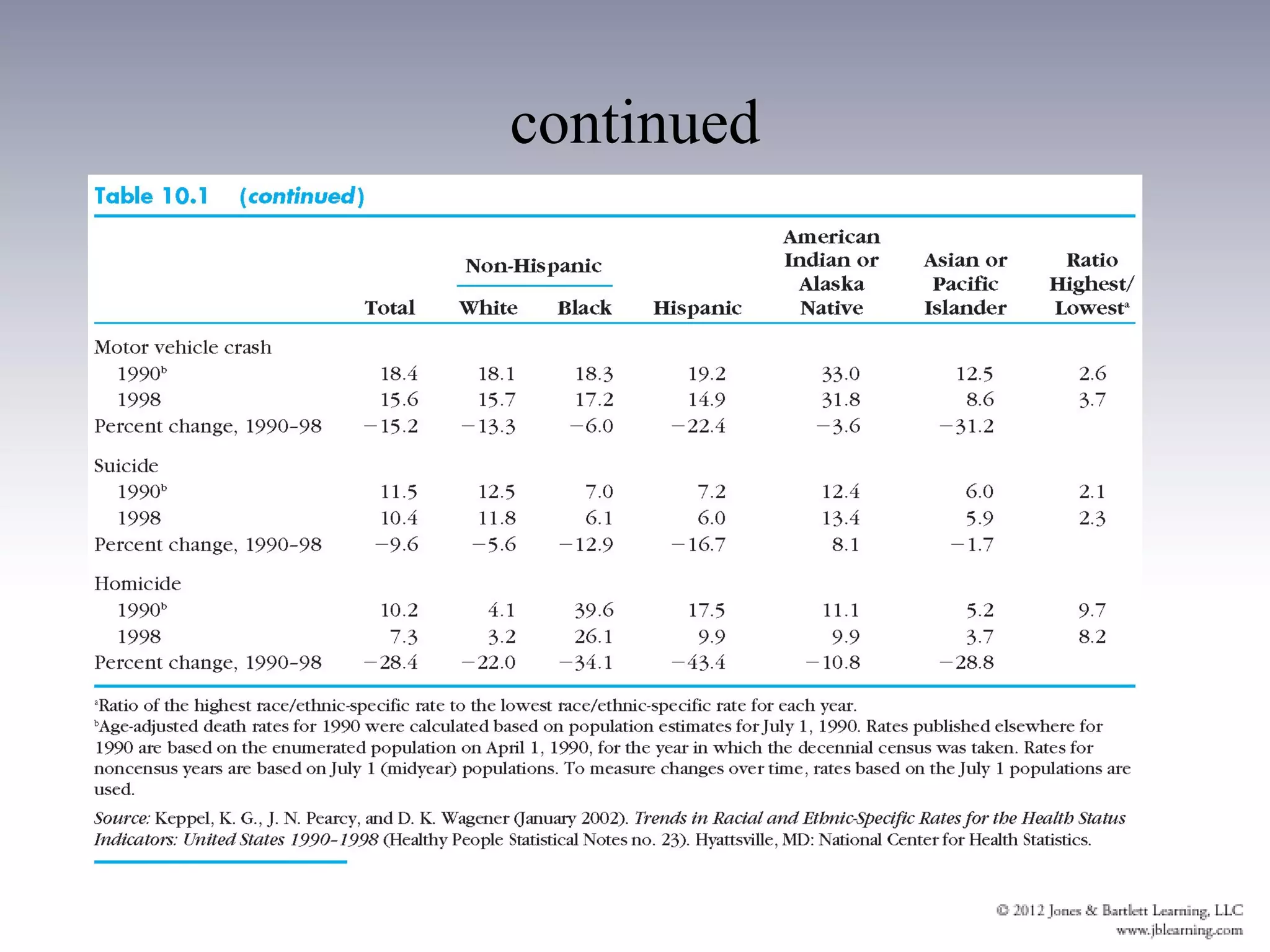
Age adjusted death rates for selected causes
continued
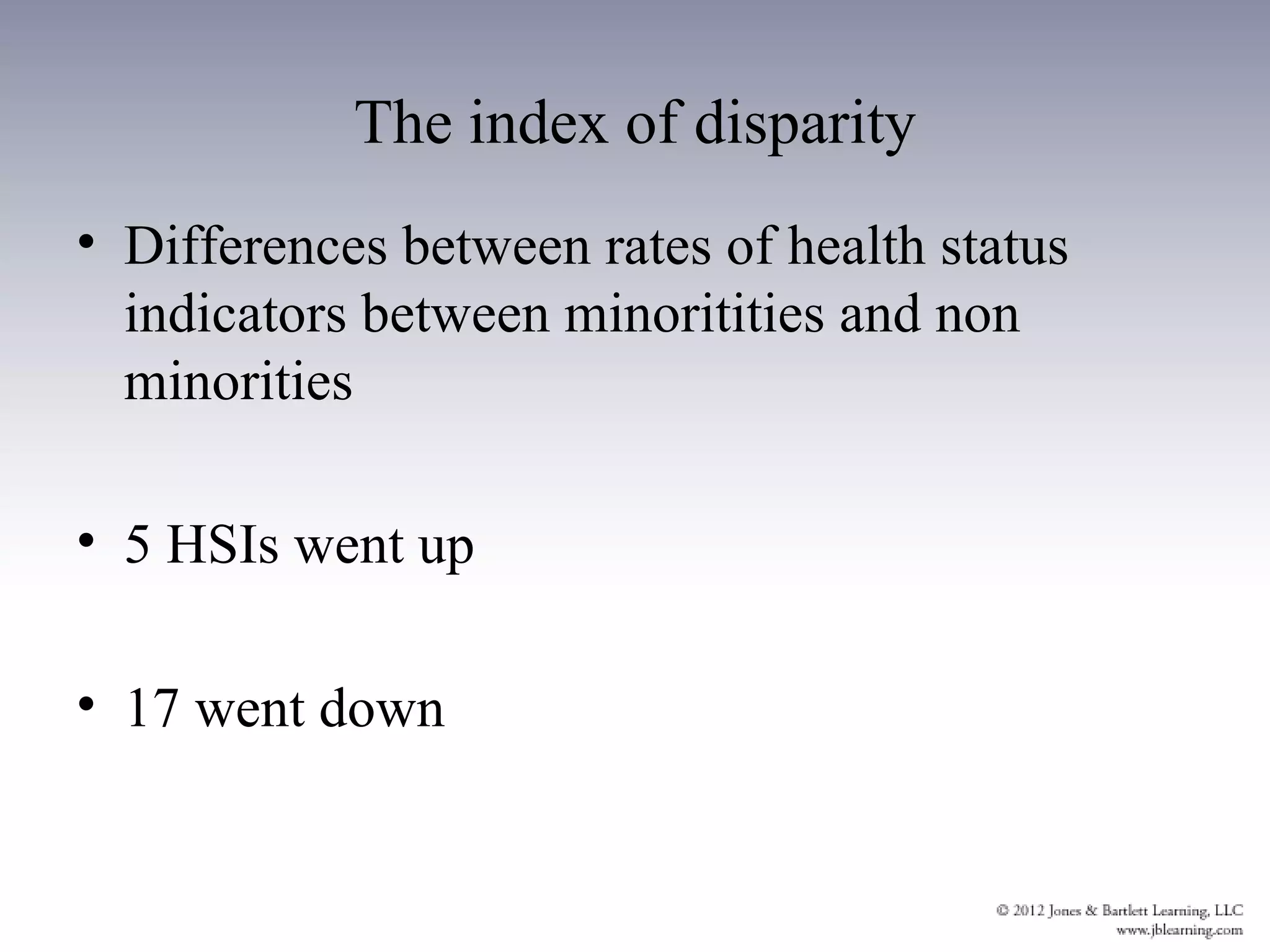
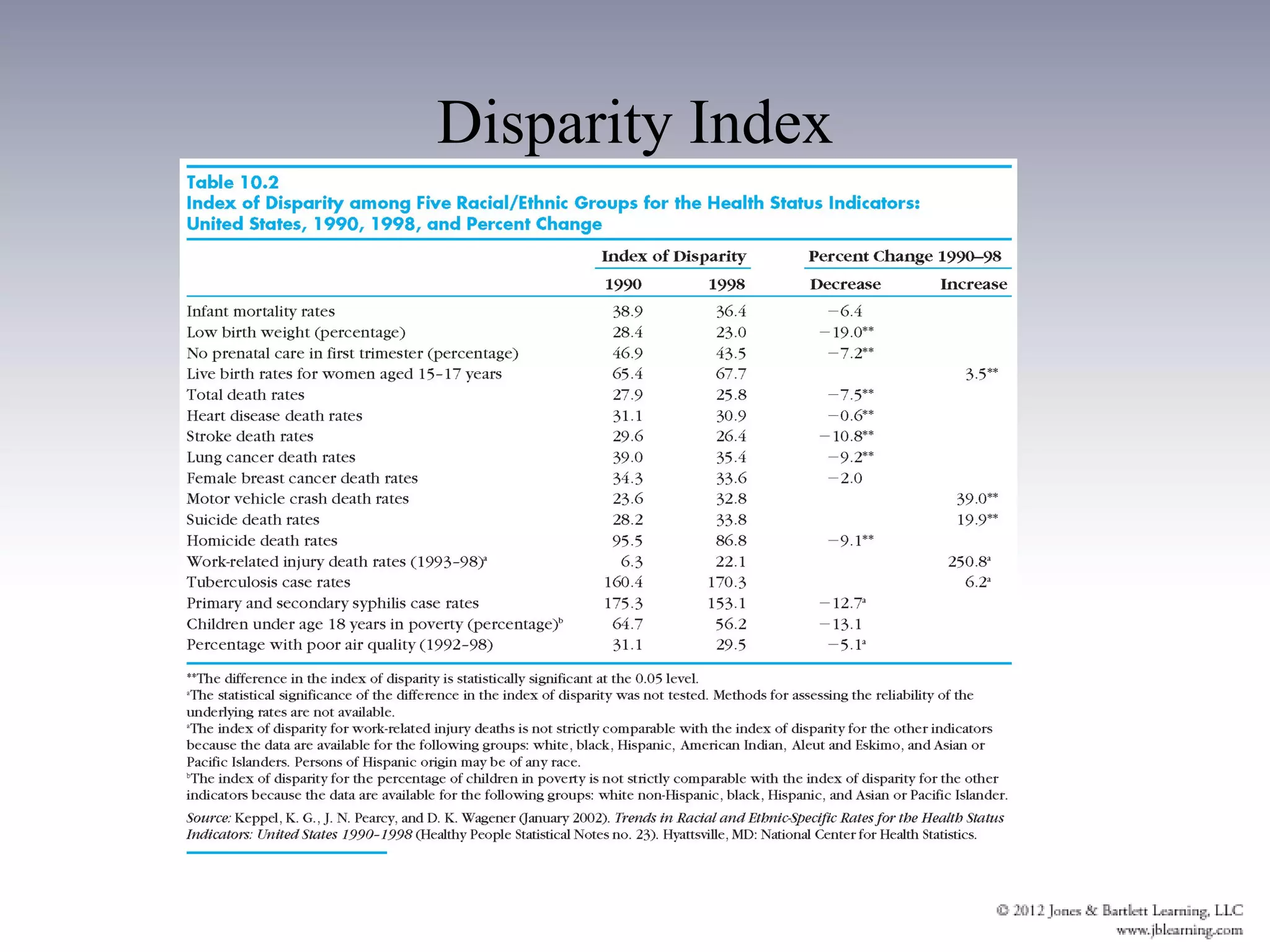
The index of disparity
• Differences between rates of health status
  indicators between minoritities and non
  minorities

• 5 HSIs went up

• 17 went down
Disparity Index
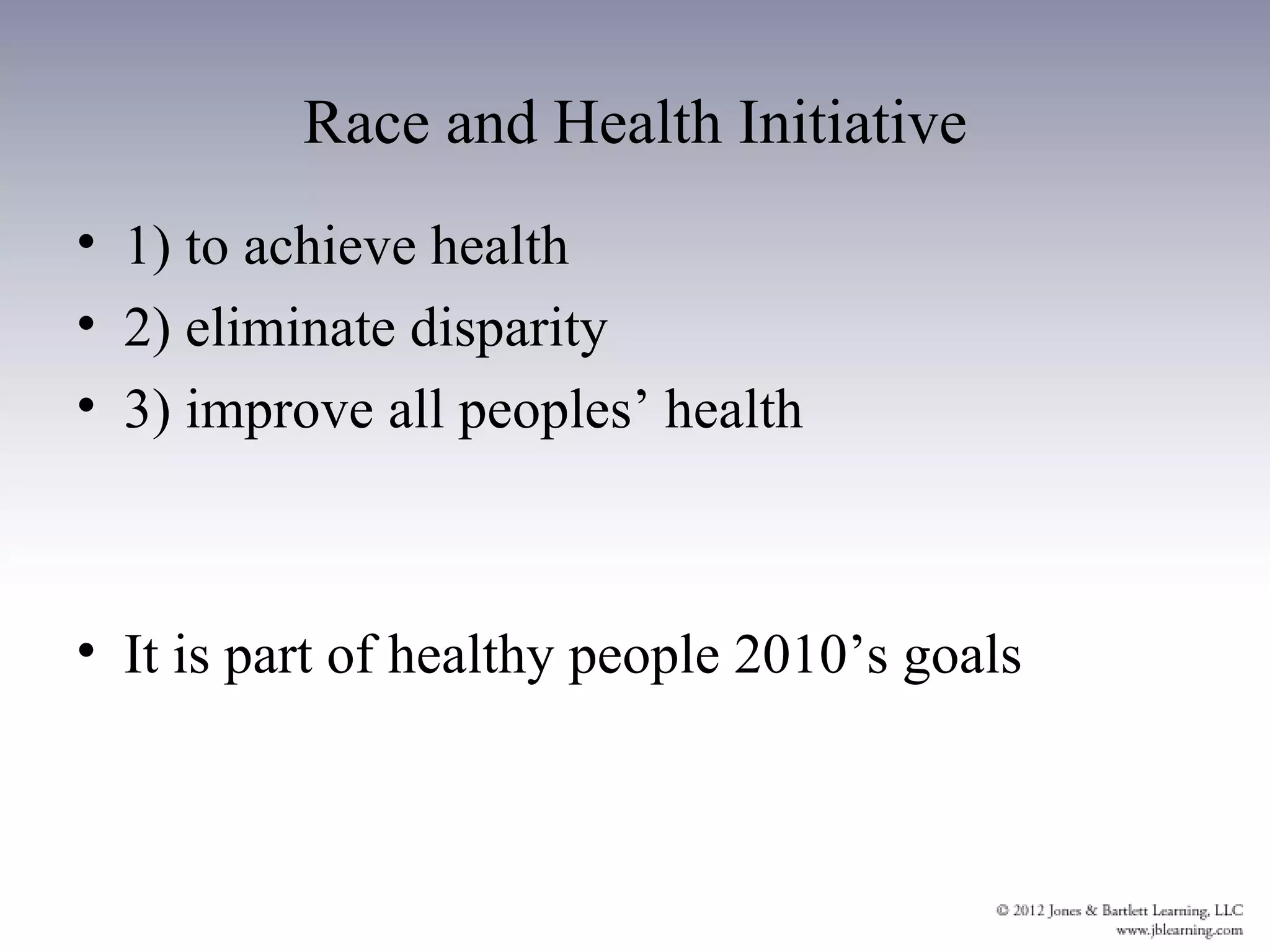
Race and Health Initiative
• 1) to achieve health
• 2) eliminate disparity
• 3) improve all peoples’ health


• It is part of healthy people 2010’s goals
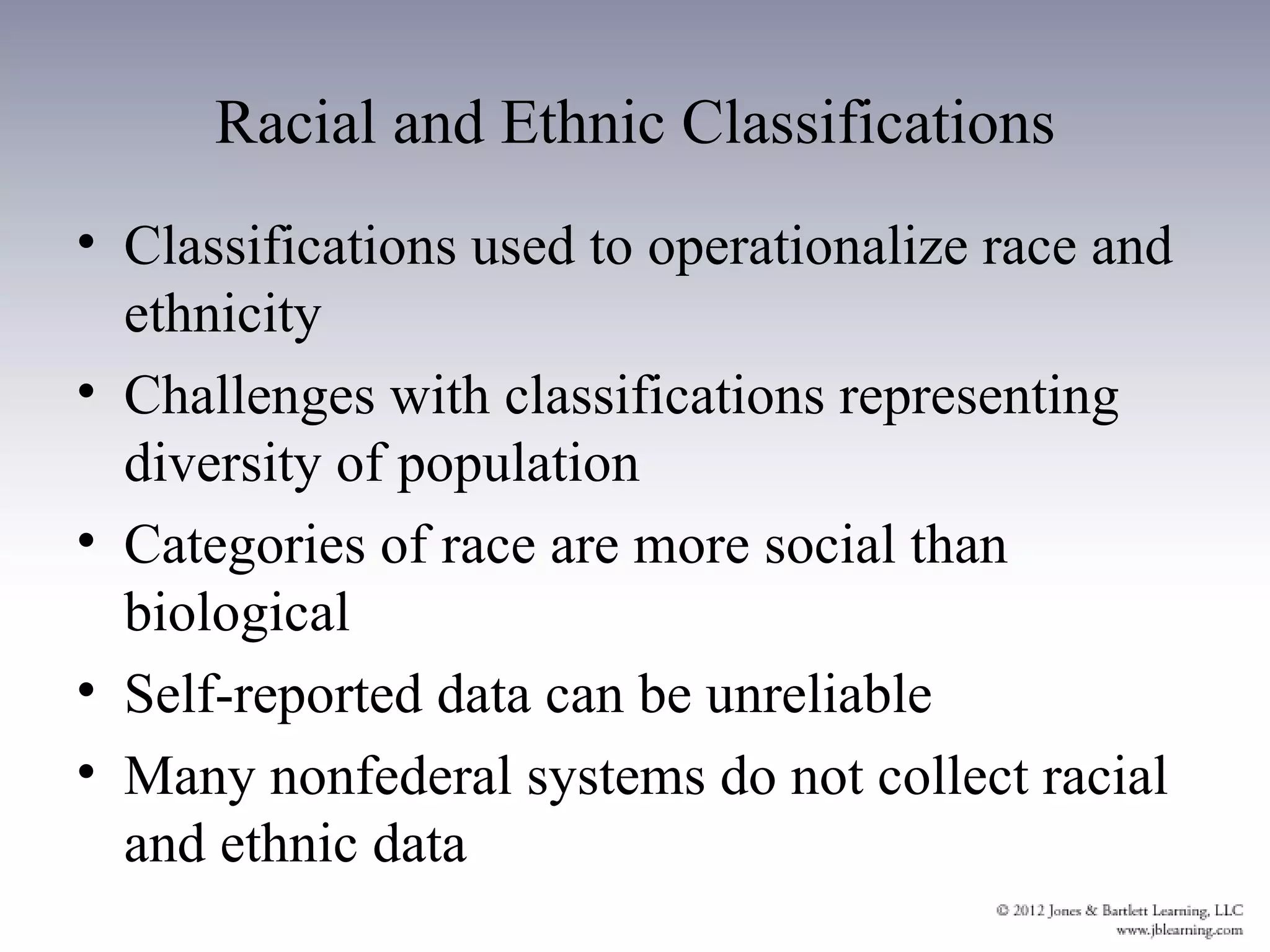
Racial and Ethnic Classifications
• Classifications used to operationalize race and
  ethnicity
• Challenges with classifications representing
  diversity of population
• Categories of race are more social than
  biological
• Self-reported data can be unreliable
• Many nonfederal systems do not collect racial
  and ethnic data
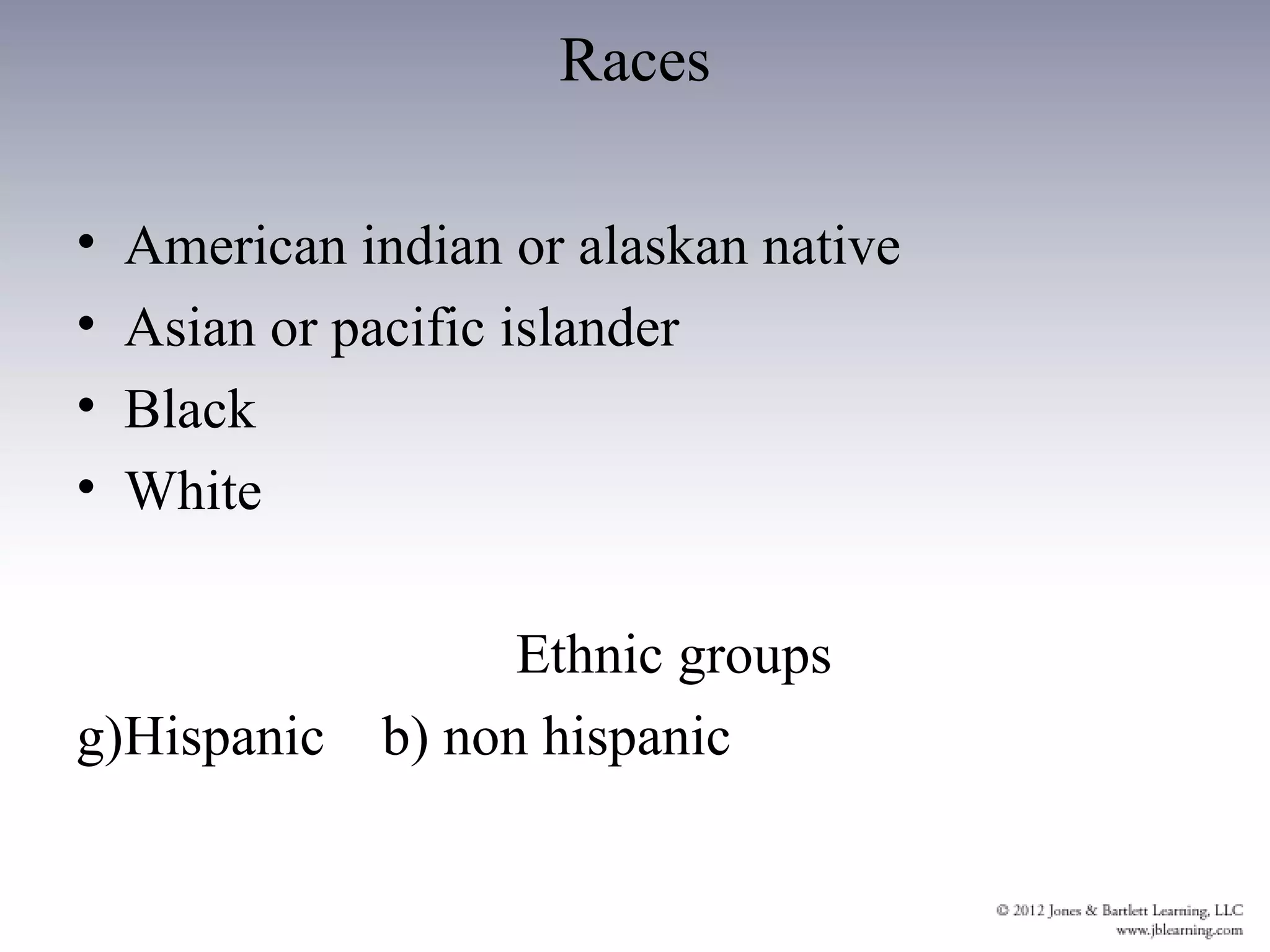
Races

•   American indian or alaskan native
•   Asian or pacific islander
•   Black
•   White

                    Ethnic groups
g)Hispanic    b) non hispanic
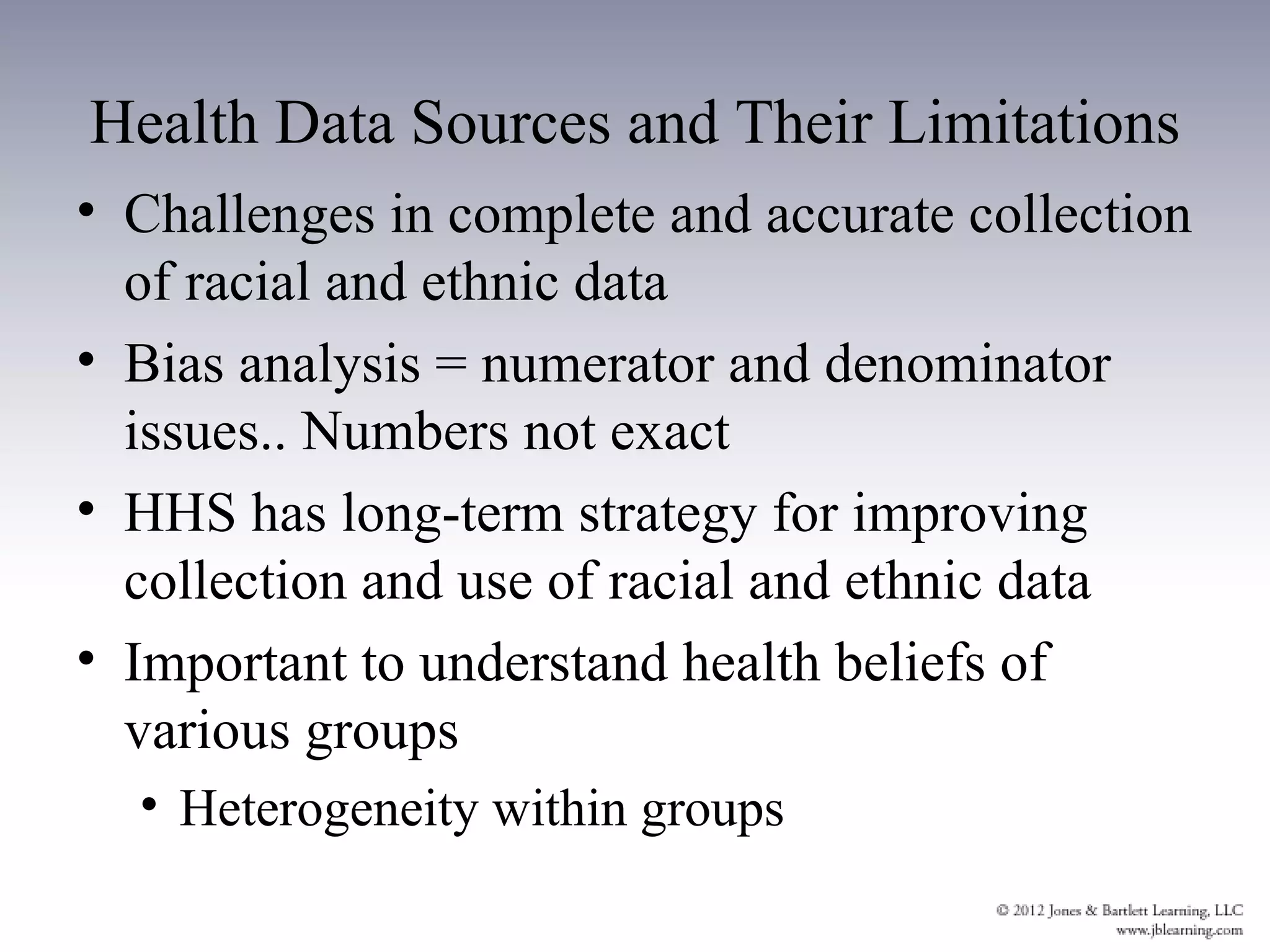
Health Data Sources and Their Limitations
• Challenges in complete and accurate collection
  of racial and ethnic data
• Bias analysis = numerator and denominator
  issues.. Numbers not exact
• HHS has long-term strategy for improving
  collection and use of racial and ethnic data
• Important to understand health beliefs of
  various groups
  • Heterogeneity within groups
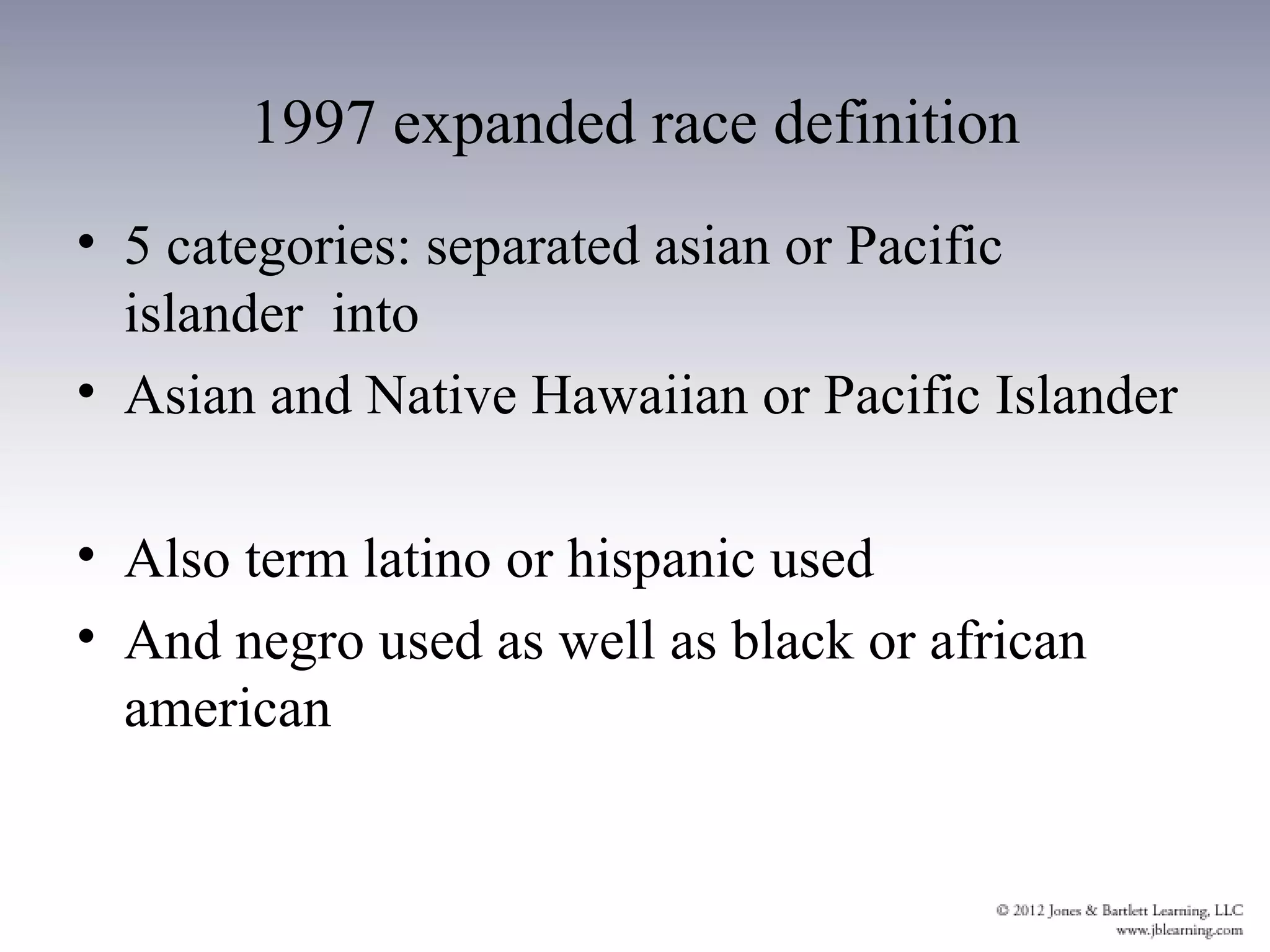
1997 expanded race definition
• 5 categories: separated asian or Pacific
  islander into
• Asian and Native Hawaiian or Pacific Islander

• Also term latino or hispanic used
• And negro used as well as black or african
  american
What is black?
• In south africa?


• In australia?
What is a jew?
• In canada or usa ( Lennie Kravitz)


• In germany WW2? (PARENTAGE)
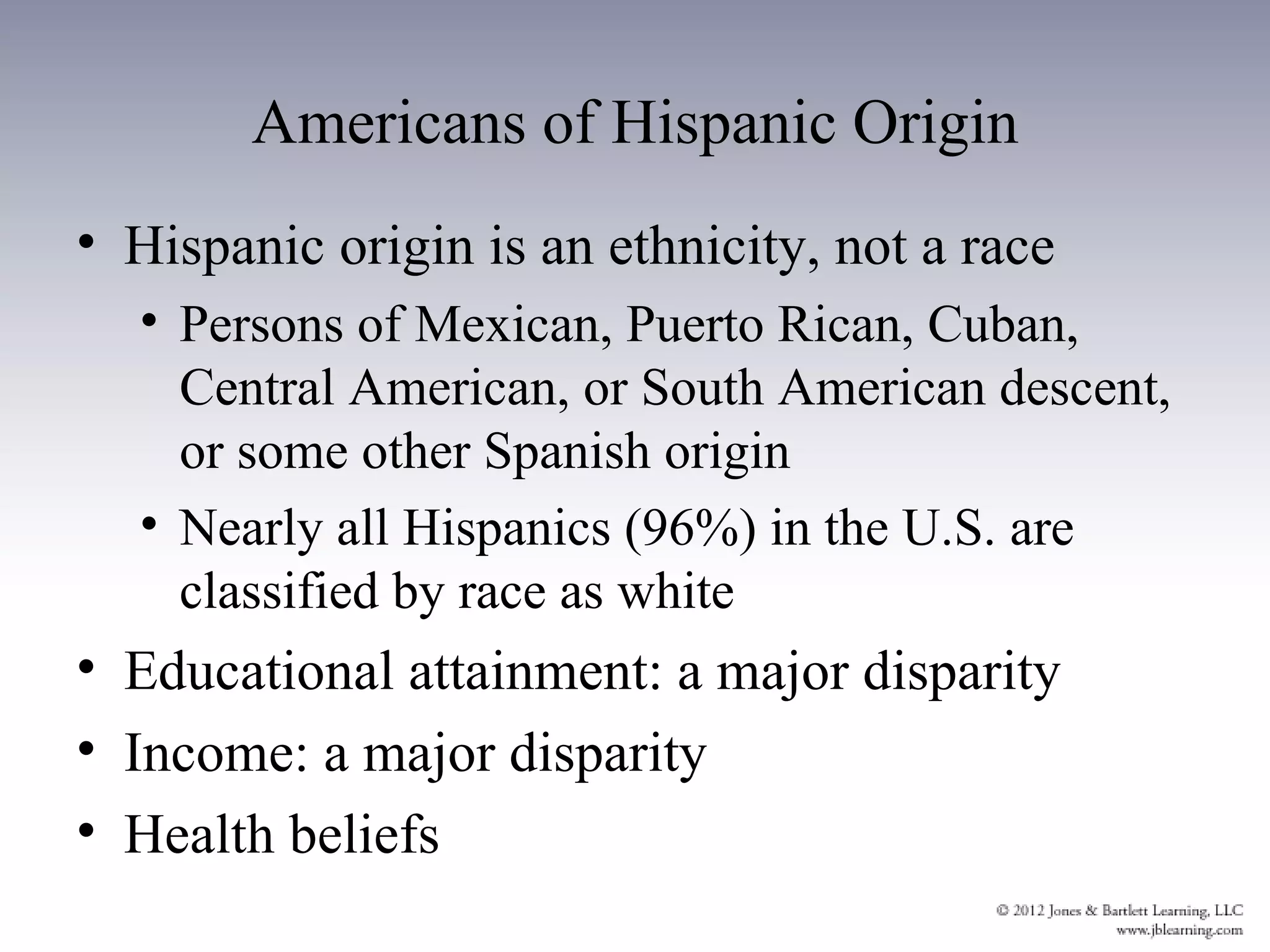
Americans of Hispanic Origin
• Hispanic origin is an ethnicity, not a race
  • Persons of Mexican, Puerto Rican, Cuban,
    Central American, or South American descent,
    or some other Spanish origin
  • Nearly all Hispanics (96%) in the U.S. are
    classified by race as white
• Educational attainment: a major disparity
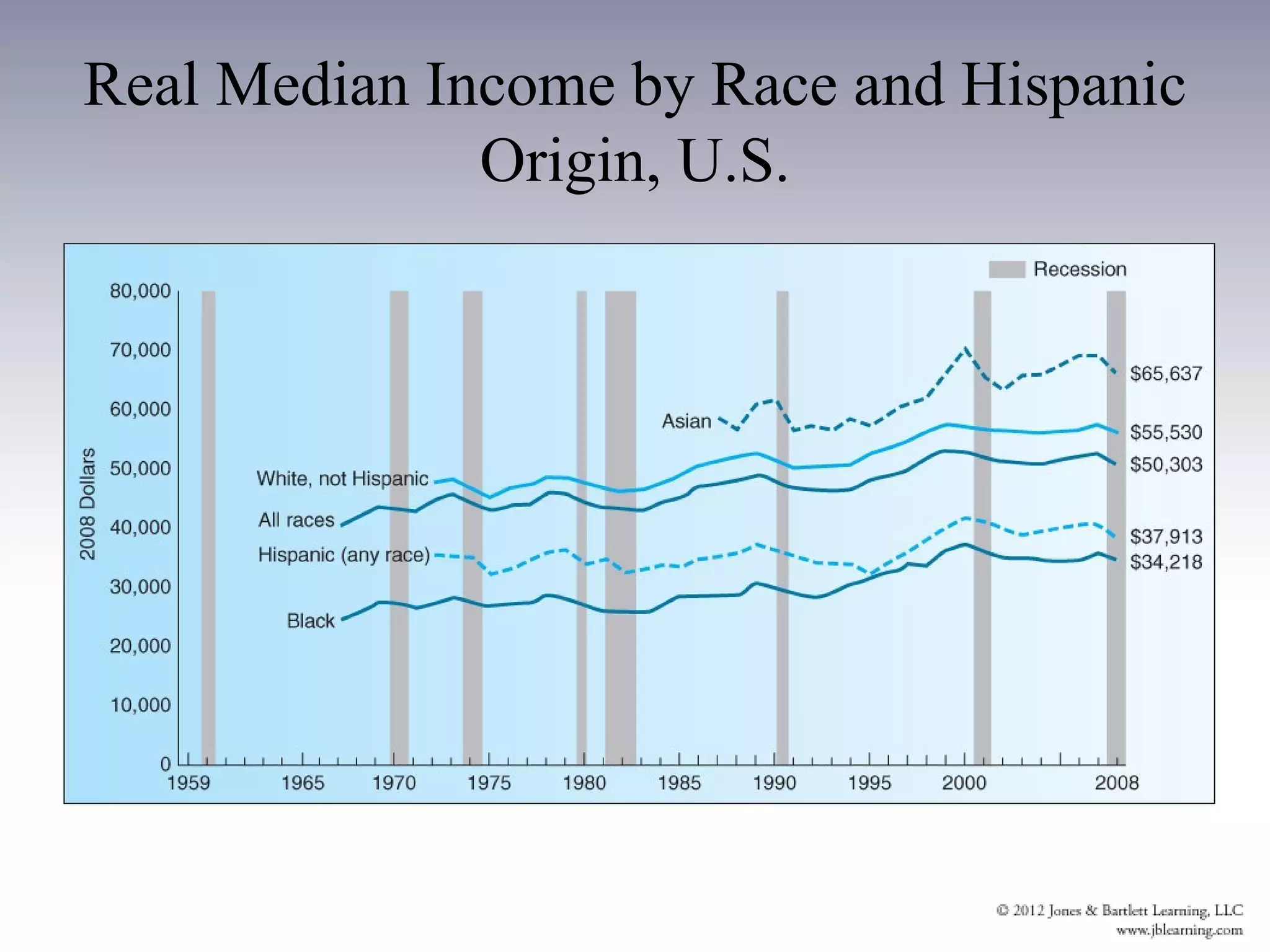
• Income: a major disparity
• Health beliefs
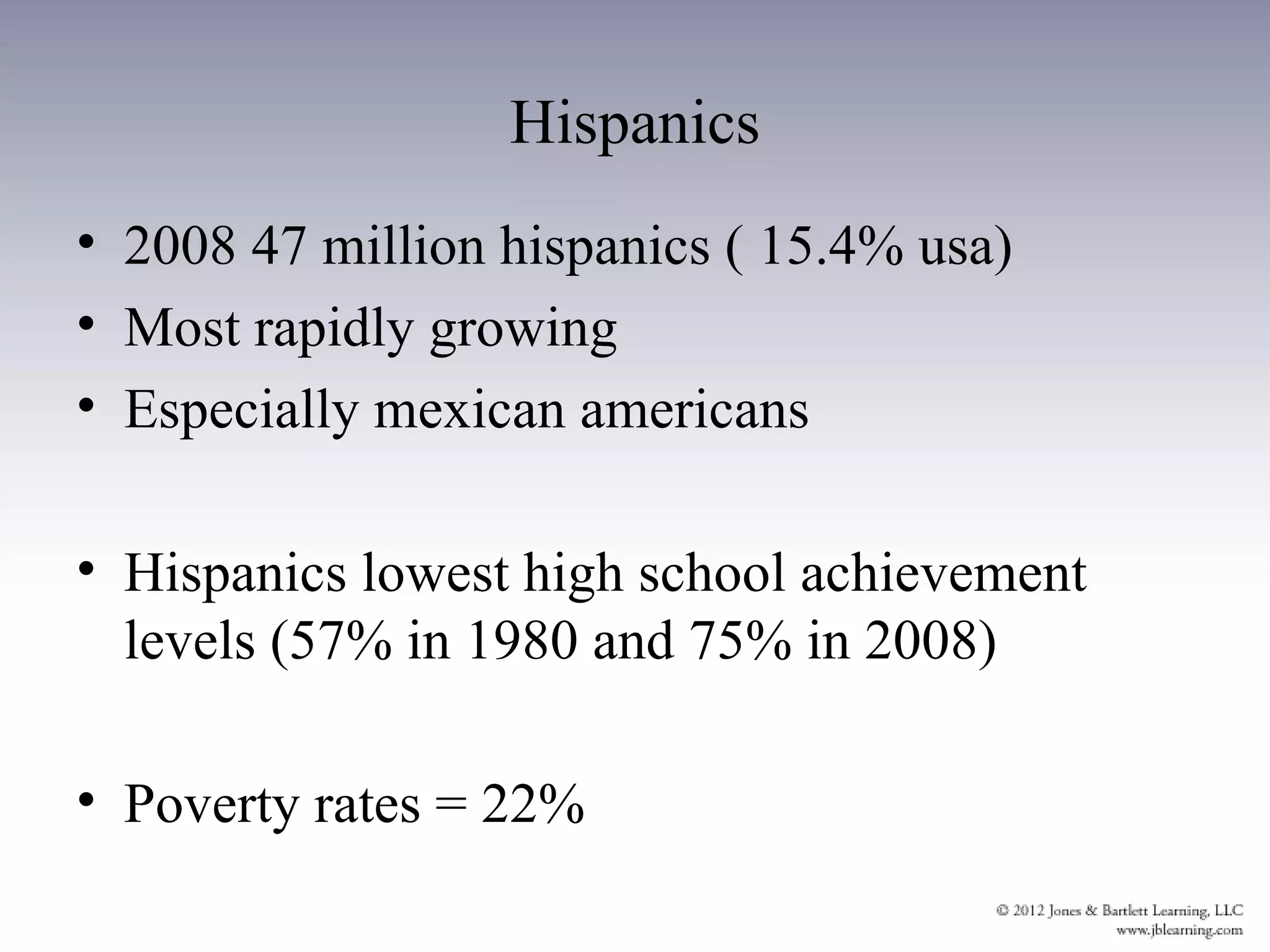
Hispanics
• 2008 47 million hispanics ( 15.4% usa)
• Most rapidly growing
• Especially mexican americans

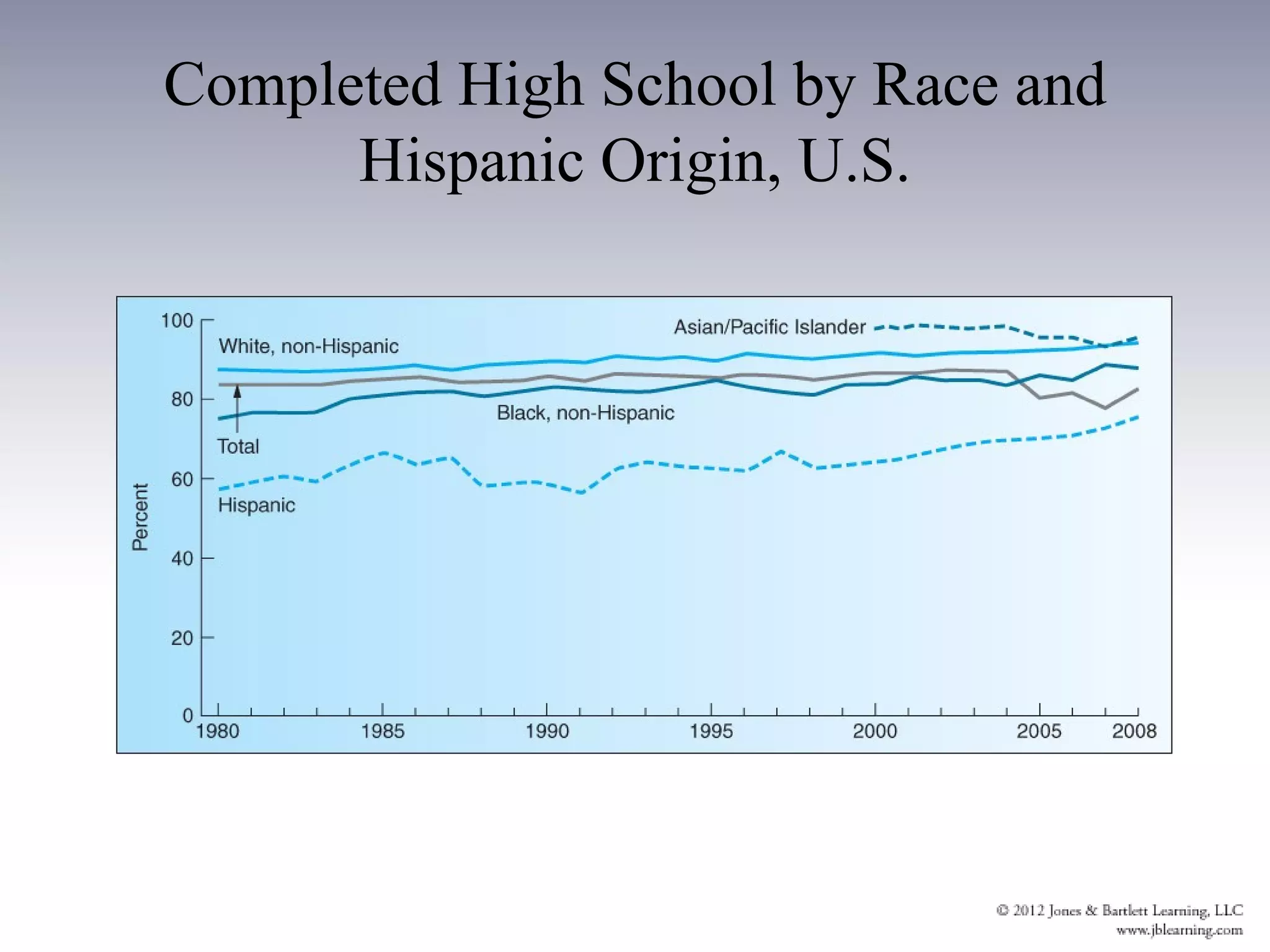
• Hispanics lowest high school achievement
  levels (57% in 1980 and 75% in 2008)

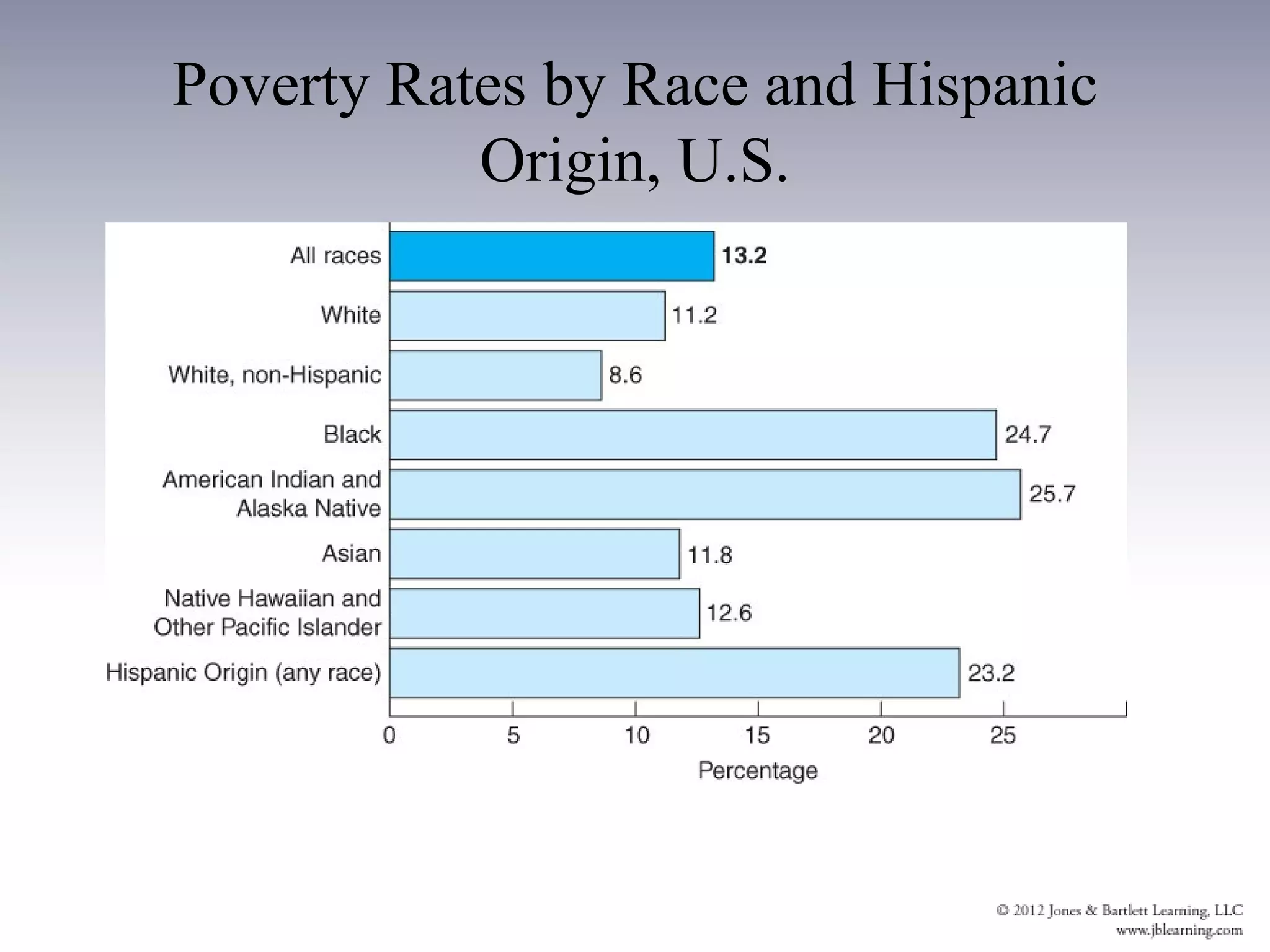
• Poverty rates = 22%
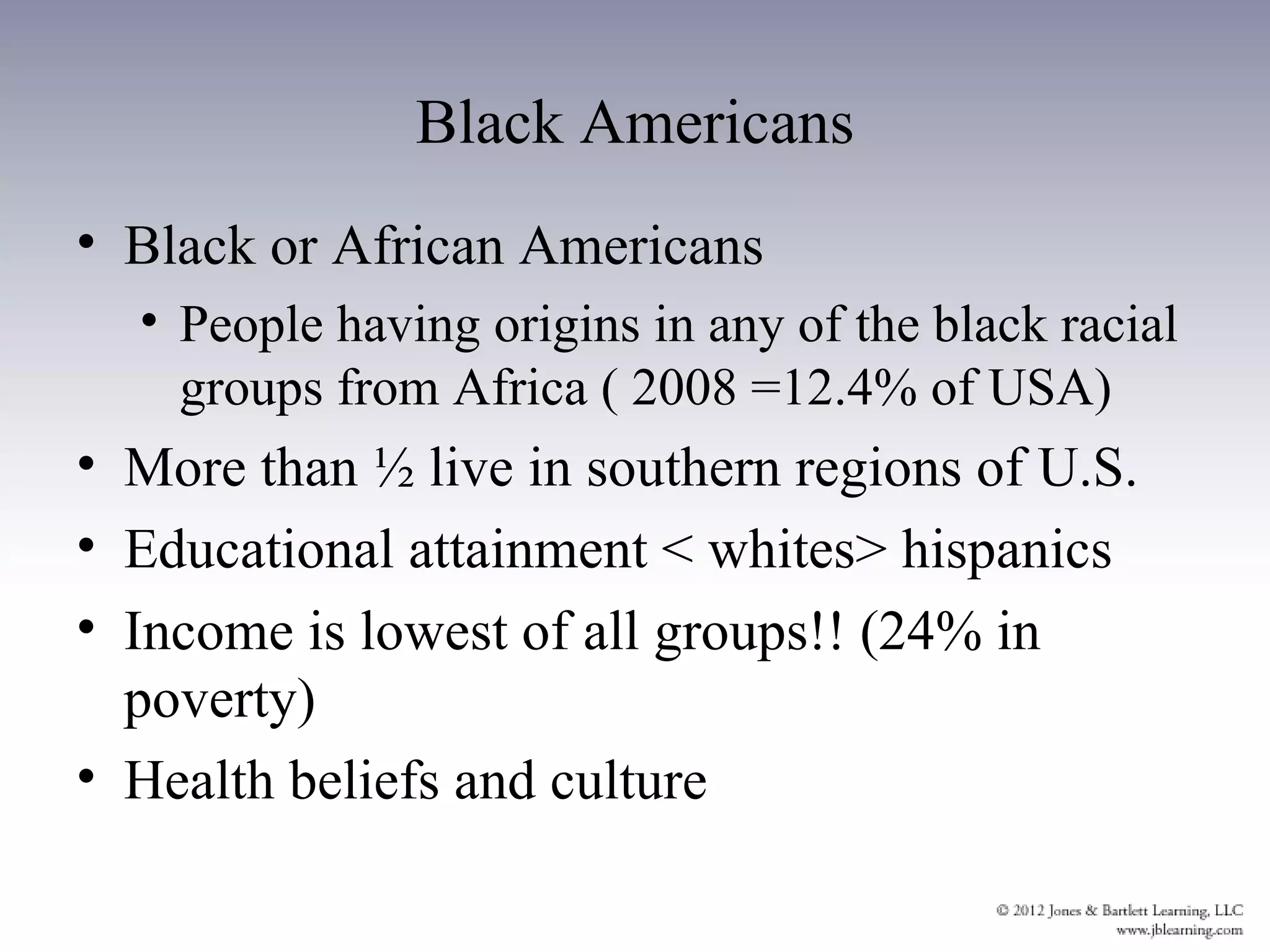
Black Americans
• Black or African Americans
  • People having origins in any of the black racial
    groups from Africa ( 2008 =12.4% of USA)
• More than ½ live in southern regions of U.S.
• Educational attainment < whites> hispanics
• Income is lowest of all groups!! (24% in
  poverty)
• Health beliefs and culture
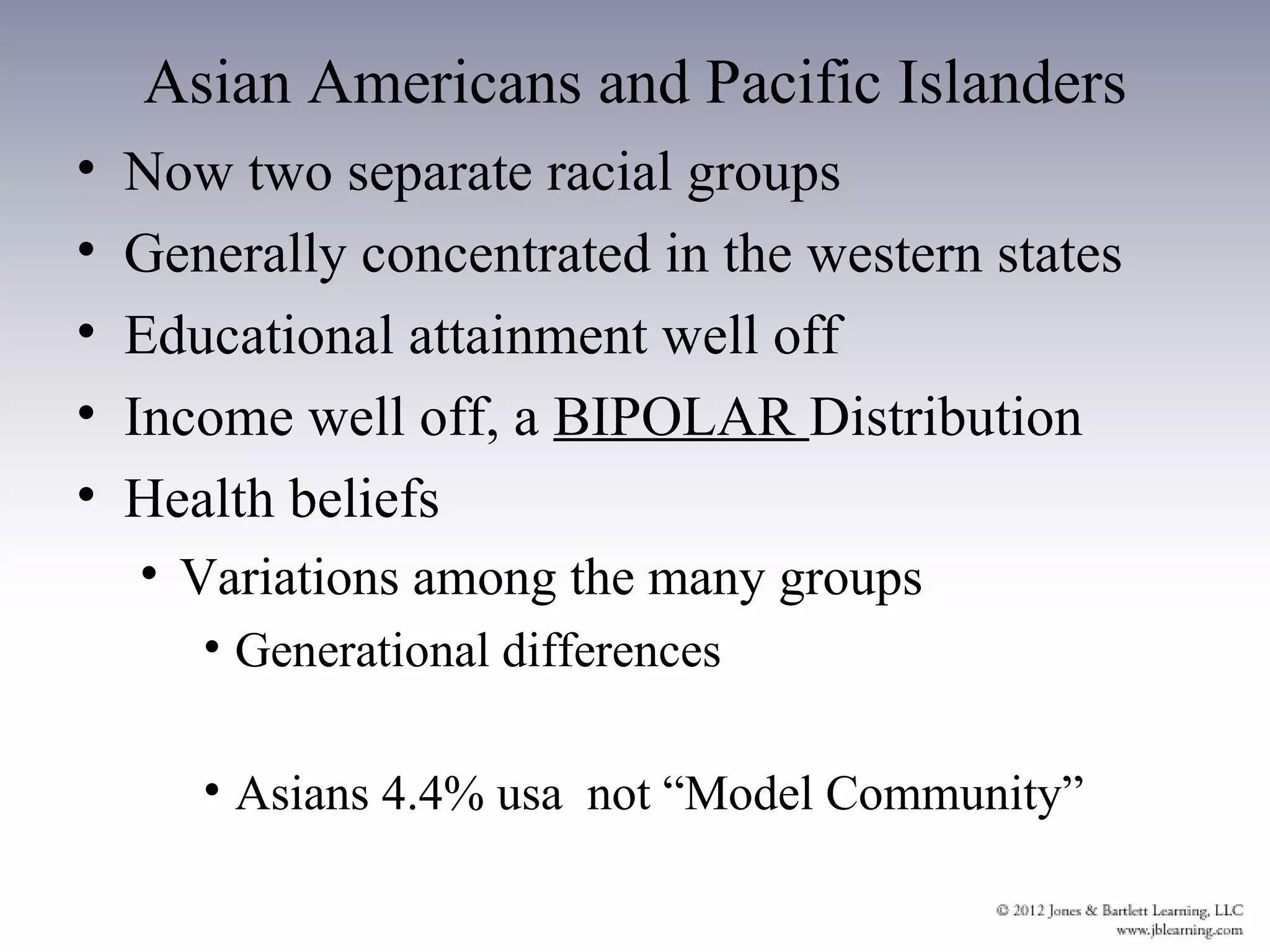
Asian Americans and Pacific Islanders
•   Now two separate racial groups
•   Generally concentrated in the western states
•   Educational attainment well off
•   Income well off, a BIPOLAR Distribution
•   Health beliefs
    • Variations among the many groups
       • Generational differences

       • Asians 4.4% usa not “Model Community”
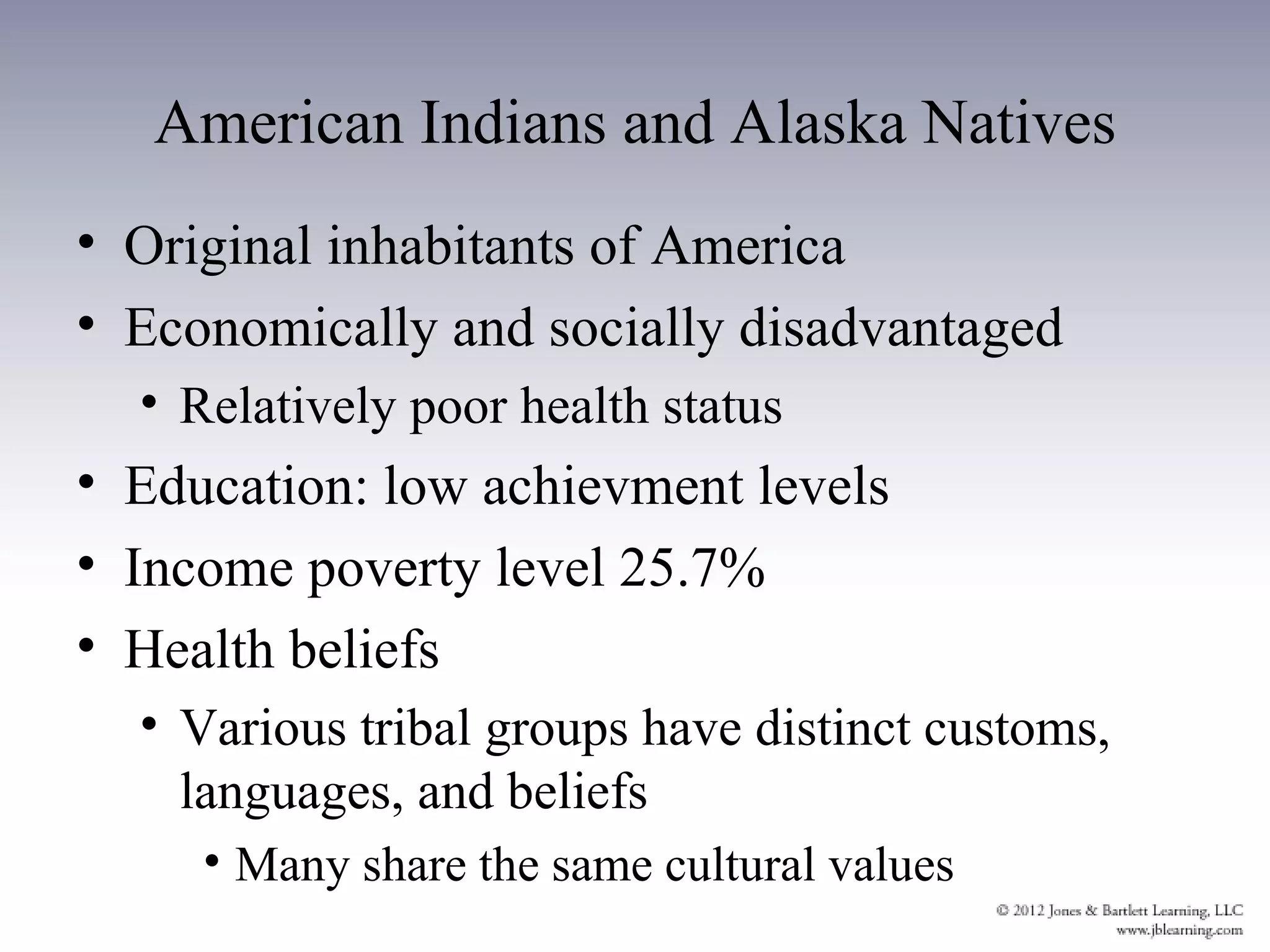
American Indians and Alaska Natives
• Original inhabitants of America
• Economically and socially disadvantaged
  • Relatively poor health status
• Education: low achievment levels
• Income poverty level 25.7%
• Health beliefs
  • Various tribal groups have distinct customs,
    languages, and beliefs
     • Many share the same cultural values
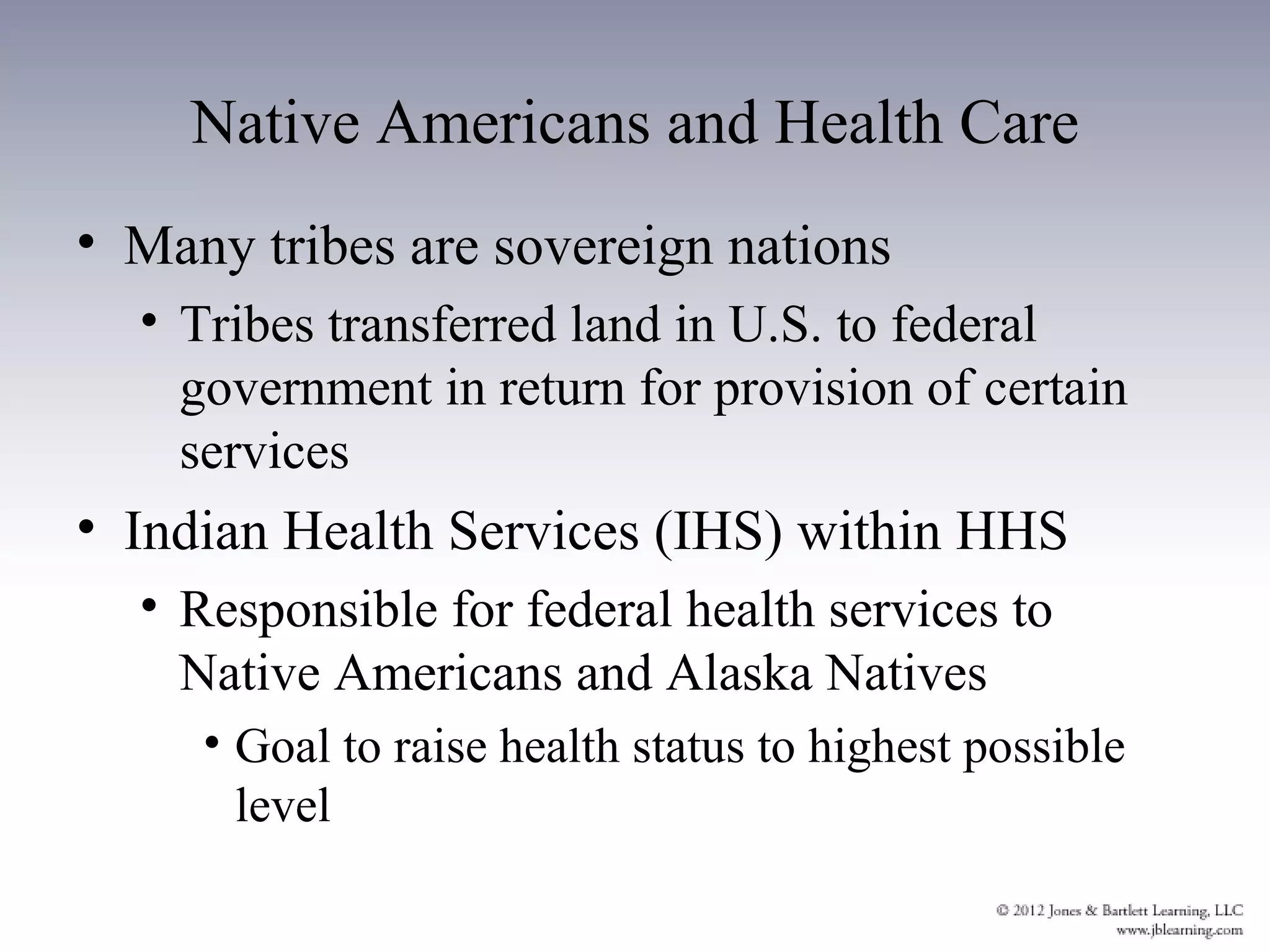
Native Americans and Health Care
• Many tribes are sovereign nations
  • Tribes transferred land in U.S. to federal
    government in return for provision of certain
    services
• Indian Health Services (IHS) within HHS
  • Responsible for federal health services to
    Native Americans and Alaska Natives
     • Goal to raise health status to highest possible
       level
Completed High School by Race and
      Hispanic Origin, U.S.
Real Median Income by Race and Hispanic
              Origin, U.S.
Poverty Rates by Race and Hispanic
           Origin, U.S.
Refugees
•   Refugees
•   Immigrants
•   Aliens
•   Illegal aliens
•   Can be classified into existing racial/ethnic
    groups; as a single group, present special
    concerns
       • Education, health problems, injuries,
         employment, etc.
Race and Health Initiative
• Goal to eliminate disparities among racial and
  ethnic minority populations in six areas of
  health while maintaining progress of overall
  health of American people
     • Infant mortality
     • Cancer screening and management
     • Cardiovascular disease
     • Diabetes
     • HIV/AIDS
     • Adult and child immunization
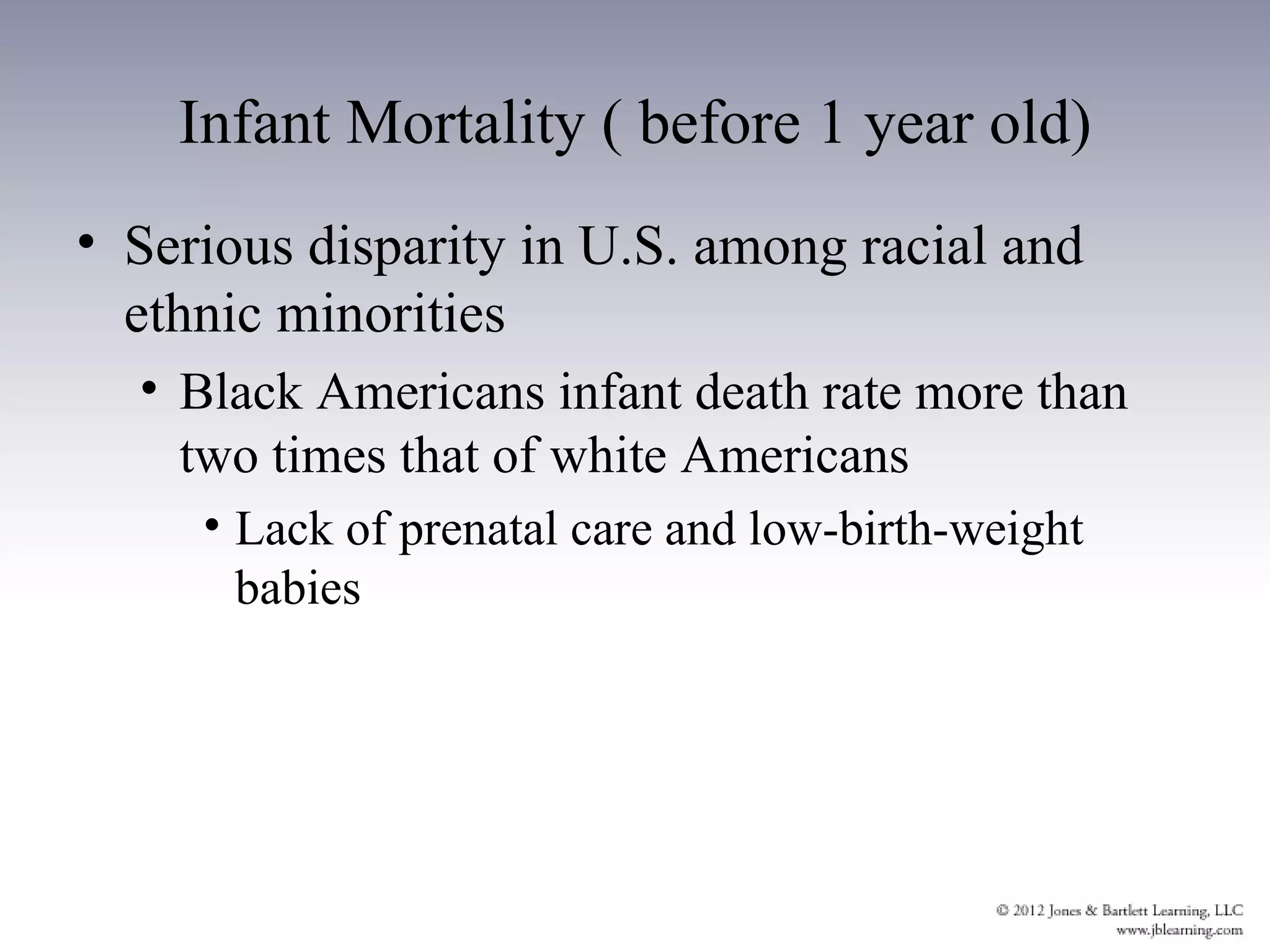
Infant Mortality ( before 1 year old)
• Serious disparity in U.S. among racial and
  ethnic minorities
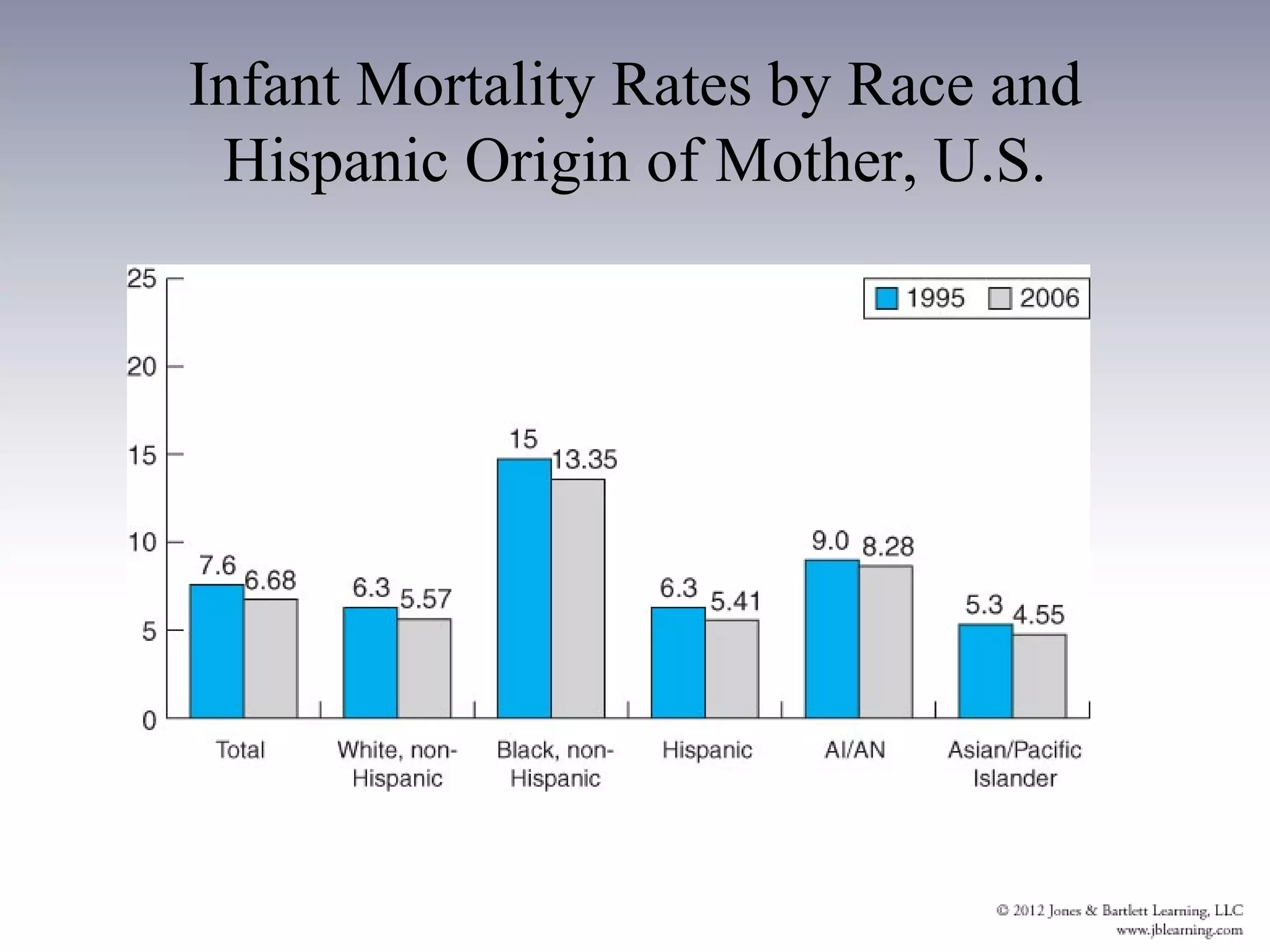
  • Black Americans infant death rate more than
    two times that of white Americans
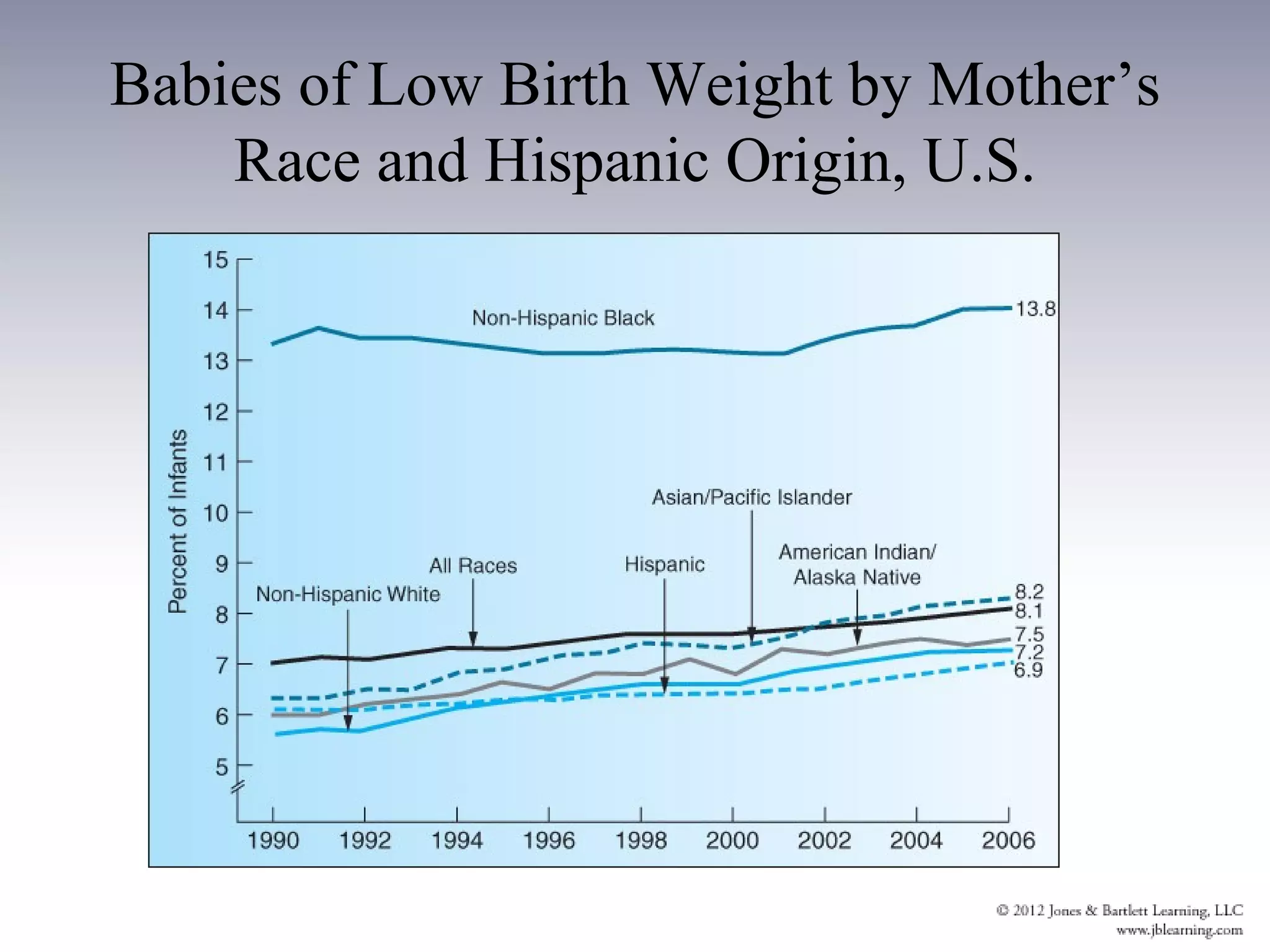
     • Lack of prenatal care and low-birth-weight
       babies
Infant Mortality Rates by Race and
 Hispanic Origin of Mother, U.S.
Babies of Low Birth Weight by Mother’s
    Race and Hispanic Origin, U.S.
Cancer Screening and Management
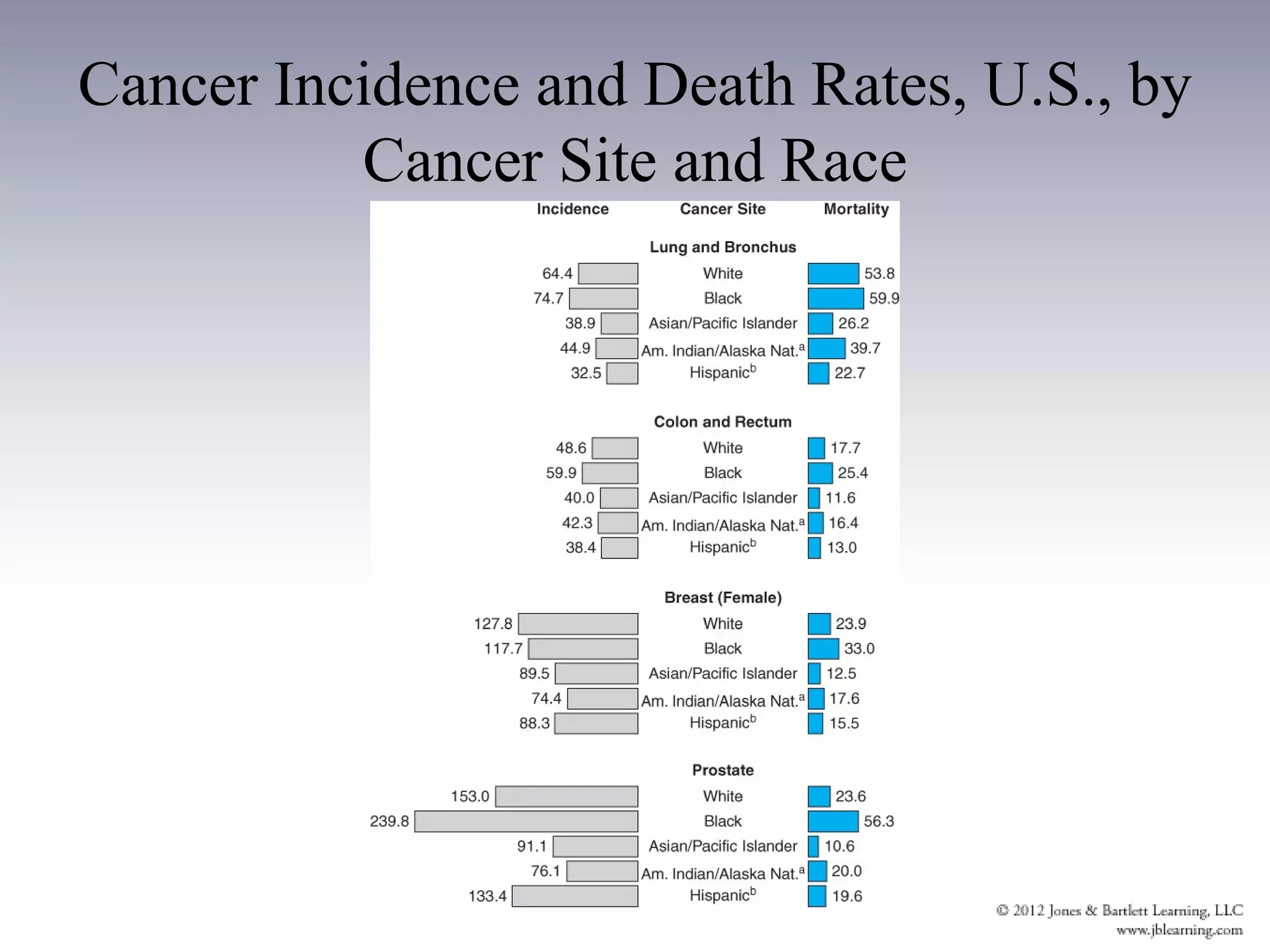
• Incidence and death rates highest among black
  Americans for various types of cancer
  • Many disparities attributed to lifestyle factors,
    late diagnosis, access to health care
• Less primary and secondary prevention in
  various minority groups
• 550,000 cancer deaths/year
• Lung ,rectum, colon and prostate cancer
Examples of primary prevention?
• Hint…….lifestyle


•    Examples of secondary prevention?

• Hint ……..screening tests
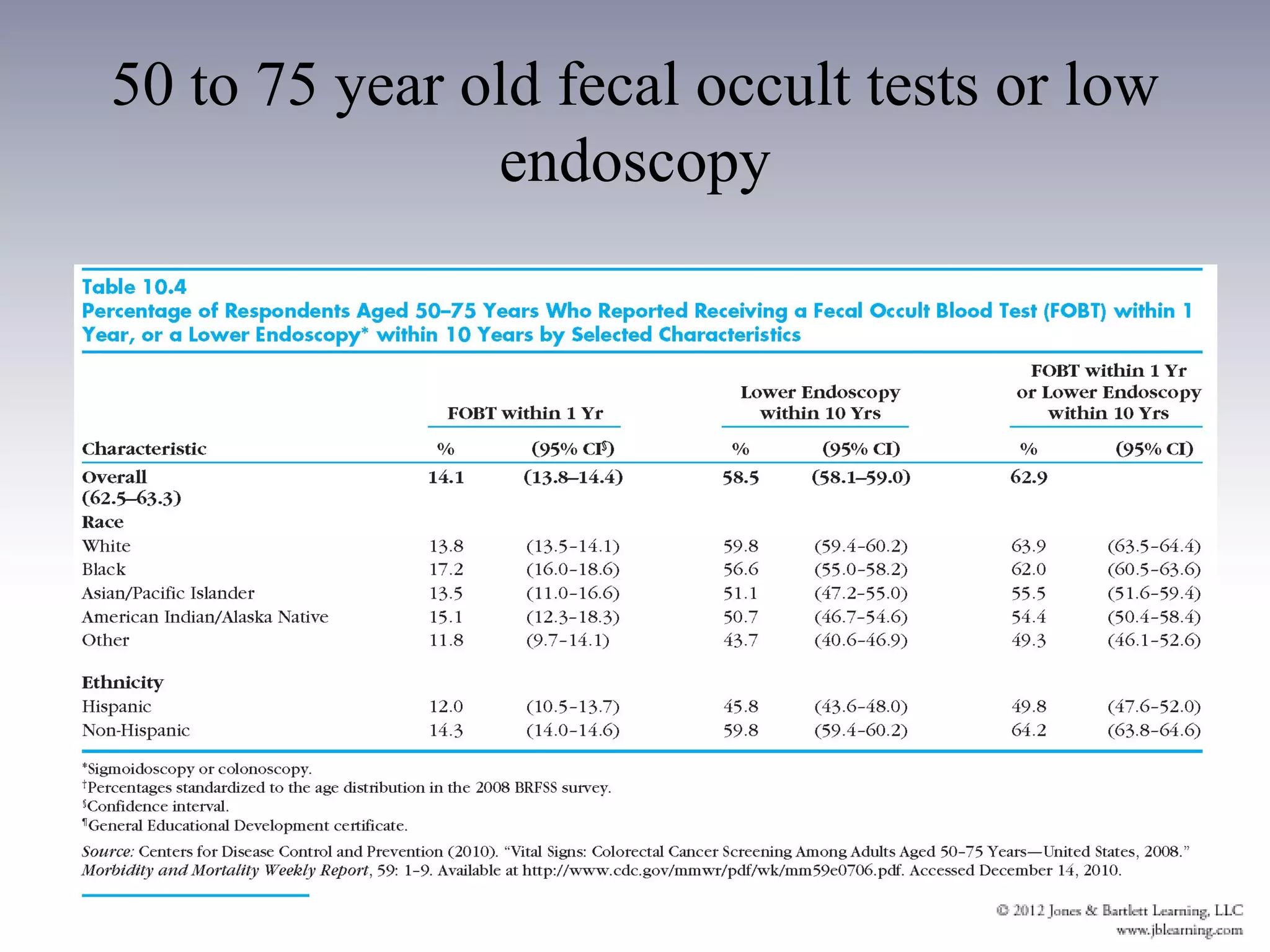
50 to 75 year old fecal occult tests or low
               endoscopy
Cancer Incidence and Death Rates, U.S., by
          Cancer Site and Race
Cardiovascular Diseases ( number 1 killer)

• Death rates vary widely among racial and
  ethnic groups ( coronary and stroke)
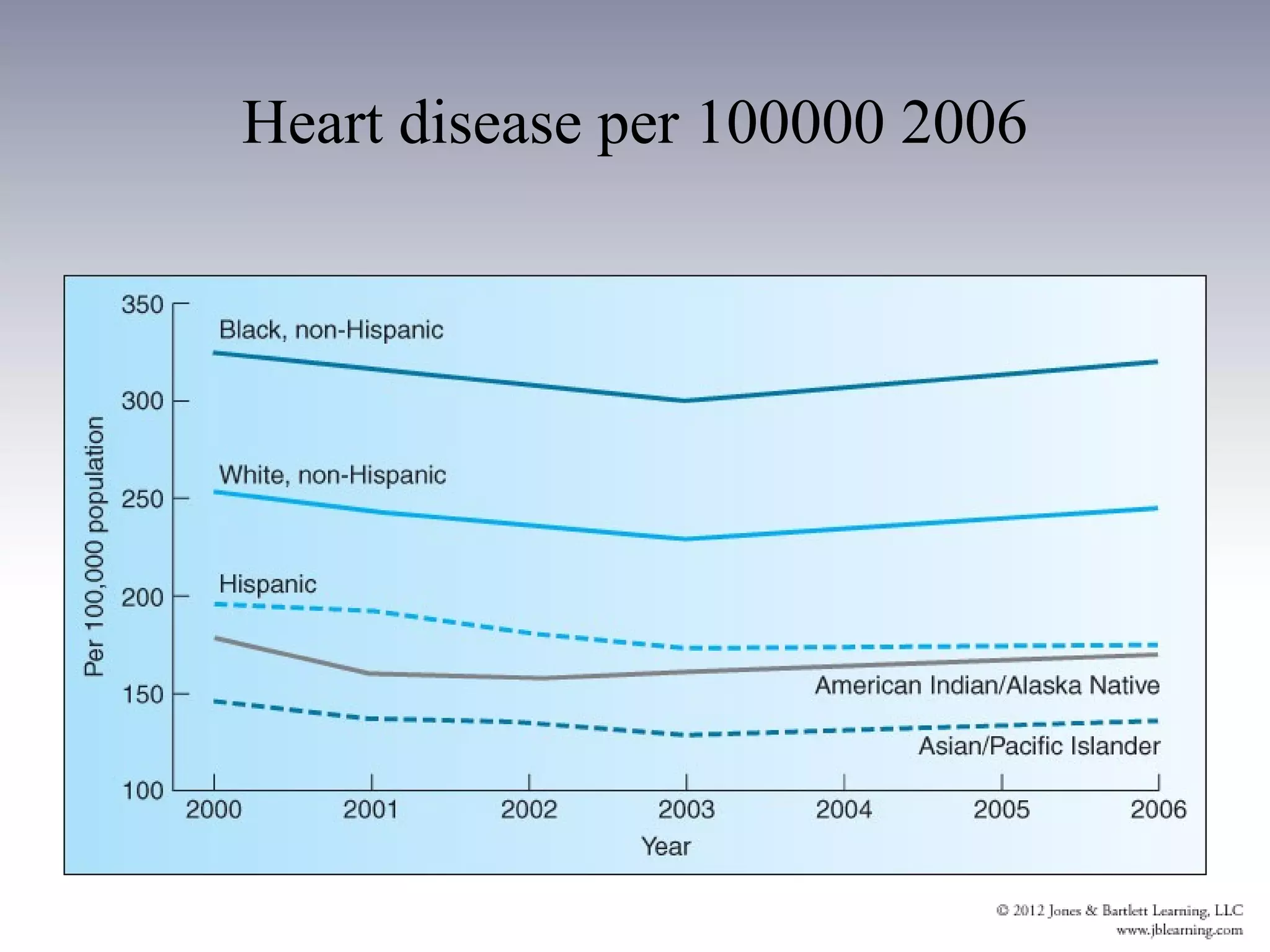
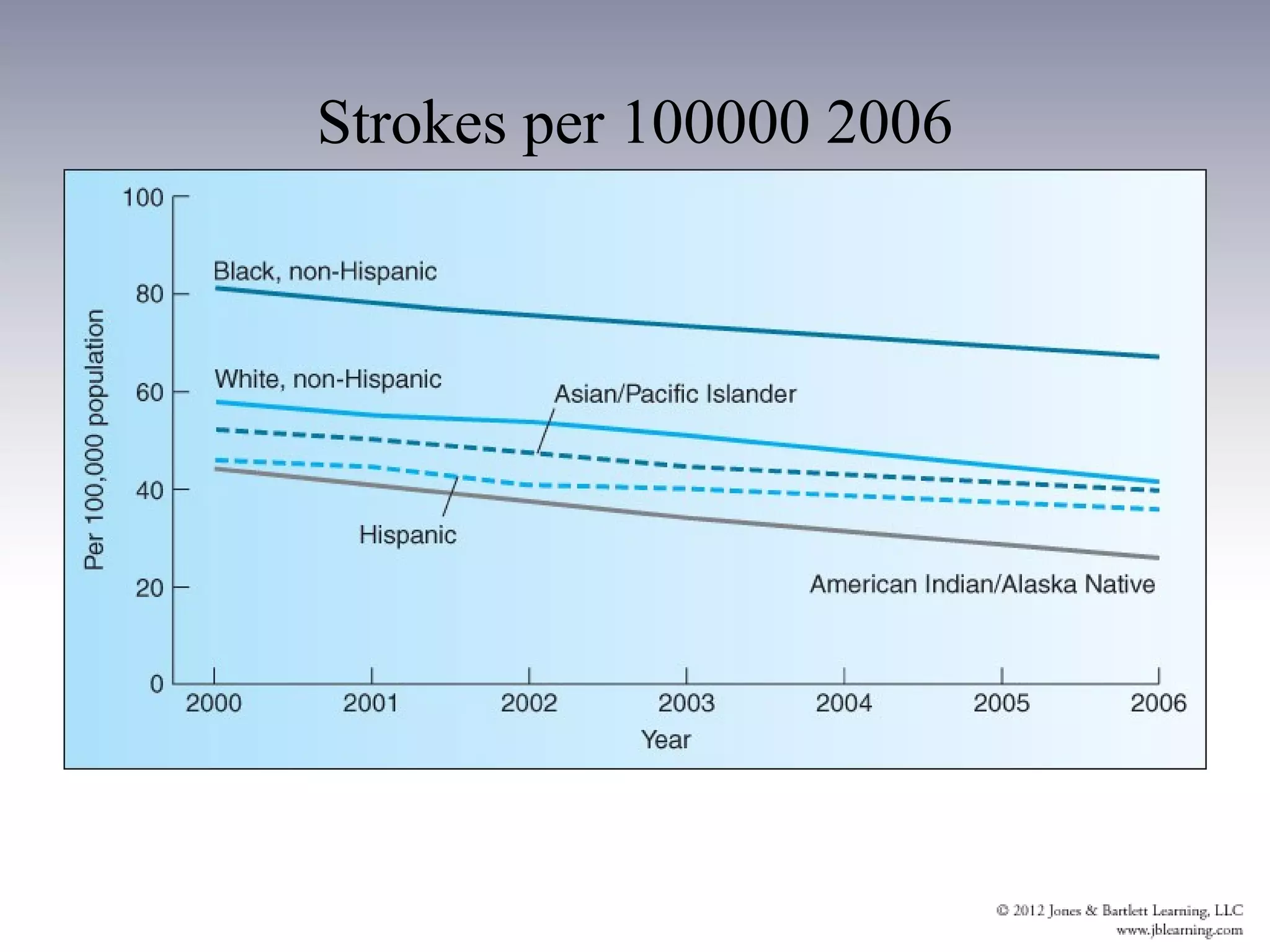
  • Black Americans have higher rates from CHD
    and stroke
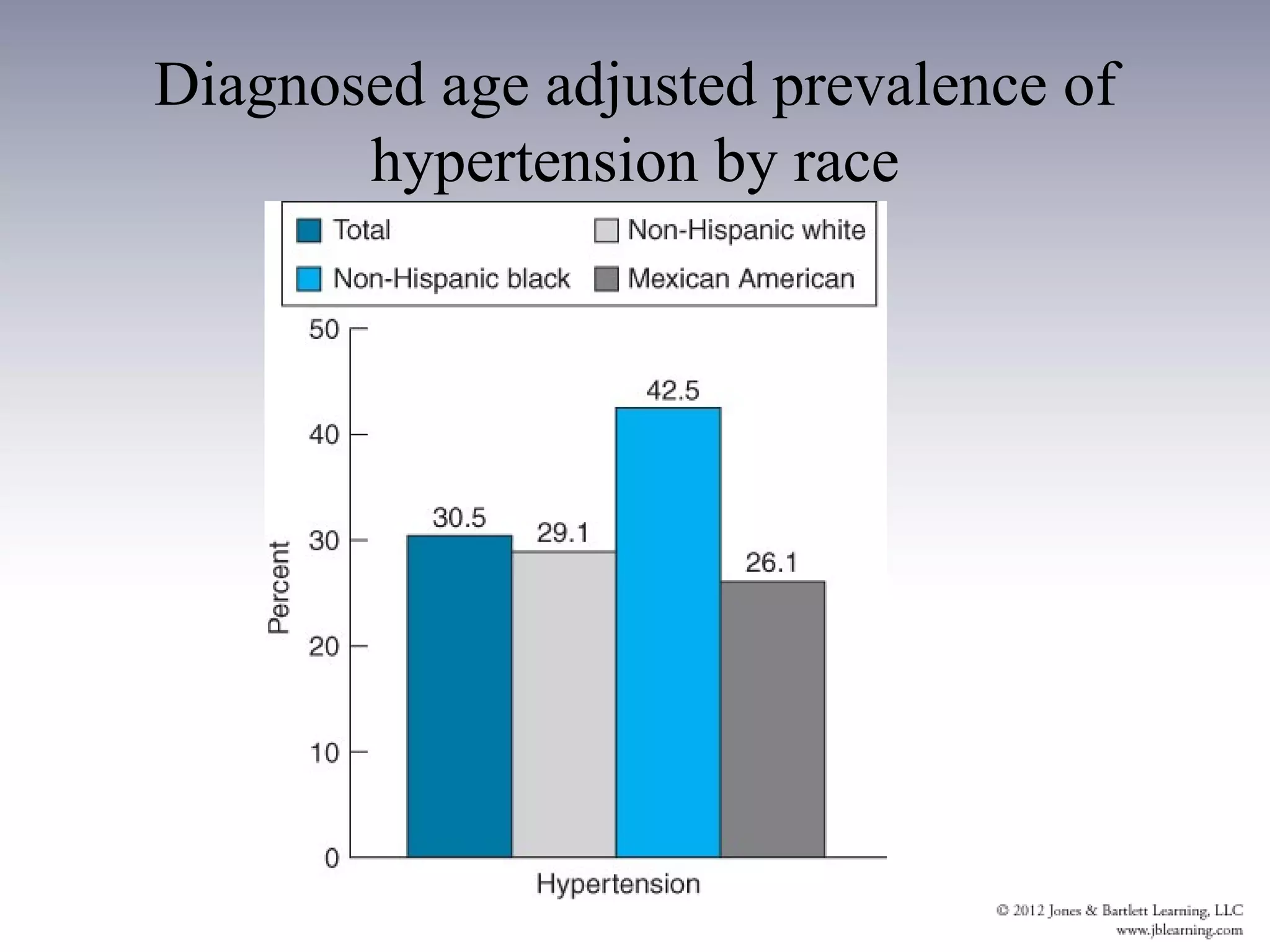
• Hypertension prevalence as a risk factor
  varies according to race/ethnicity
  • Black American tend to develop hypertension
    earlier in life than whites; unknown reason
Heart disease per 100000 2006
Diagnosed age adjusted prevalence of
       hypertension by race
Strokes per 100000 2006
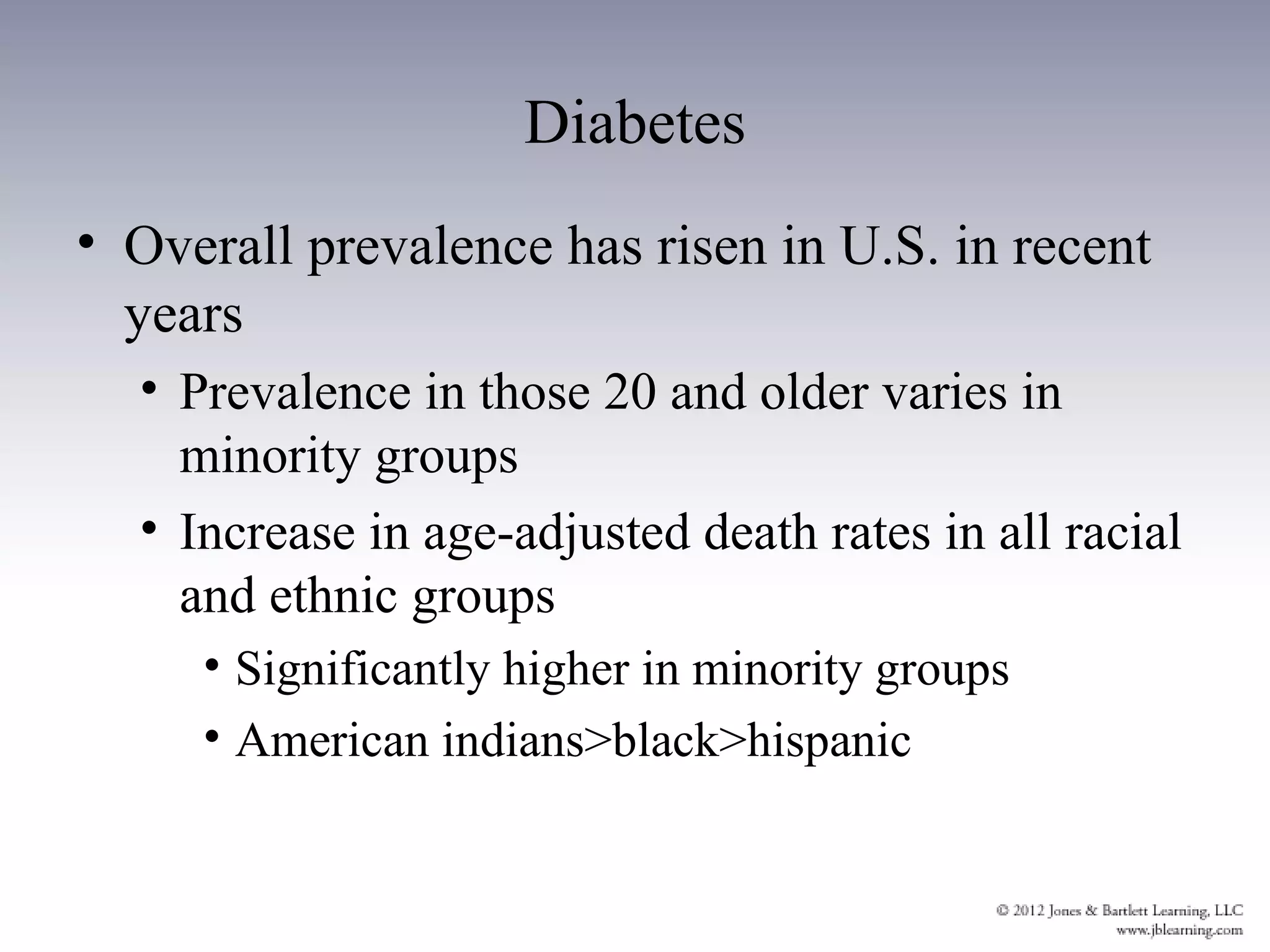
Diabetes
• Overall prevalence has risen in U.S. in recent
  years
  • Prevalence in those 20 and older varies in
    minority groups
  • Increase in age-adjusted death rates in all racial
    and ethnic groups
     • Significantly higher in minority groups
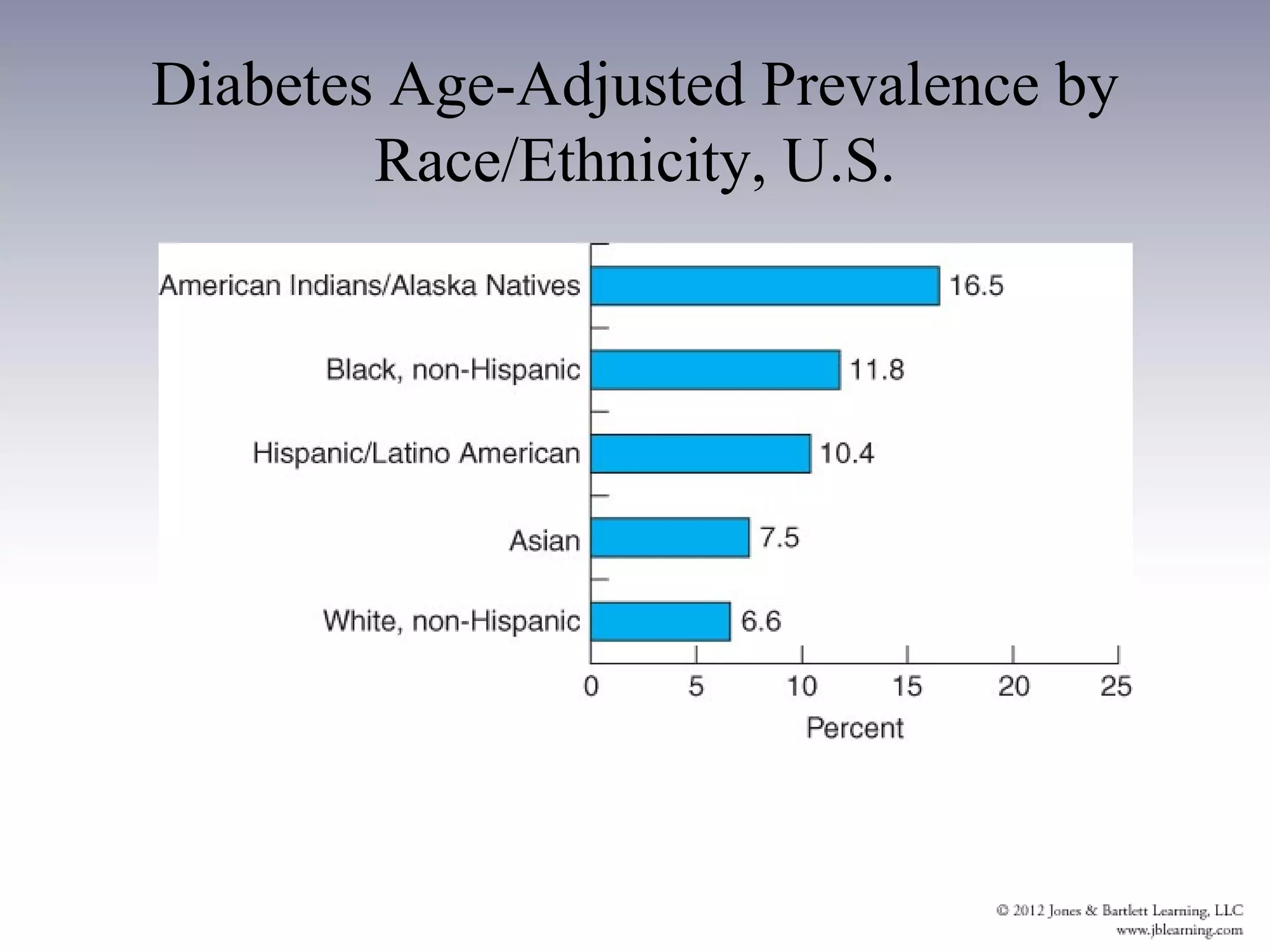
     • American indians>black>hispanic
Diabetes Age-Adjusted Prevalence by
        Race/Ethnicity, U.S.
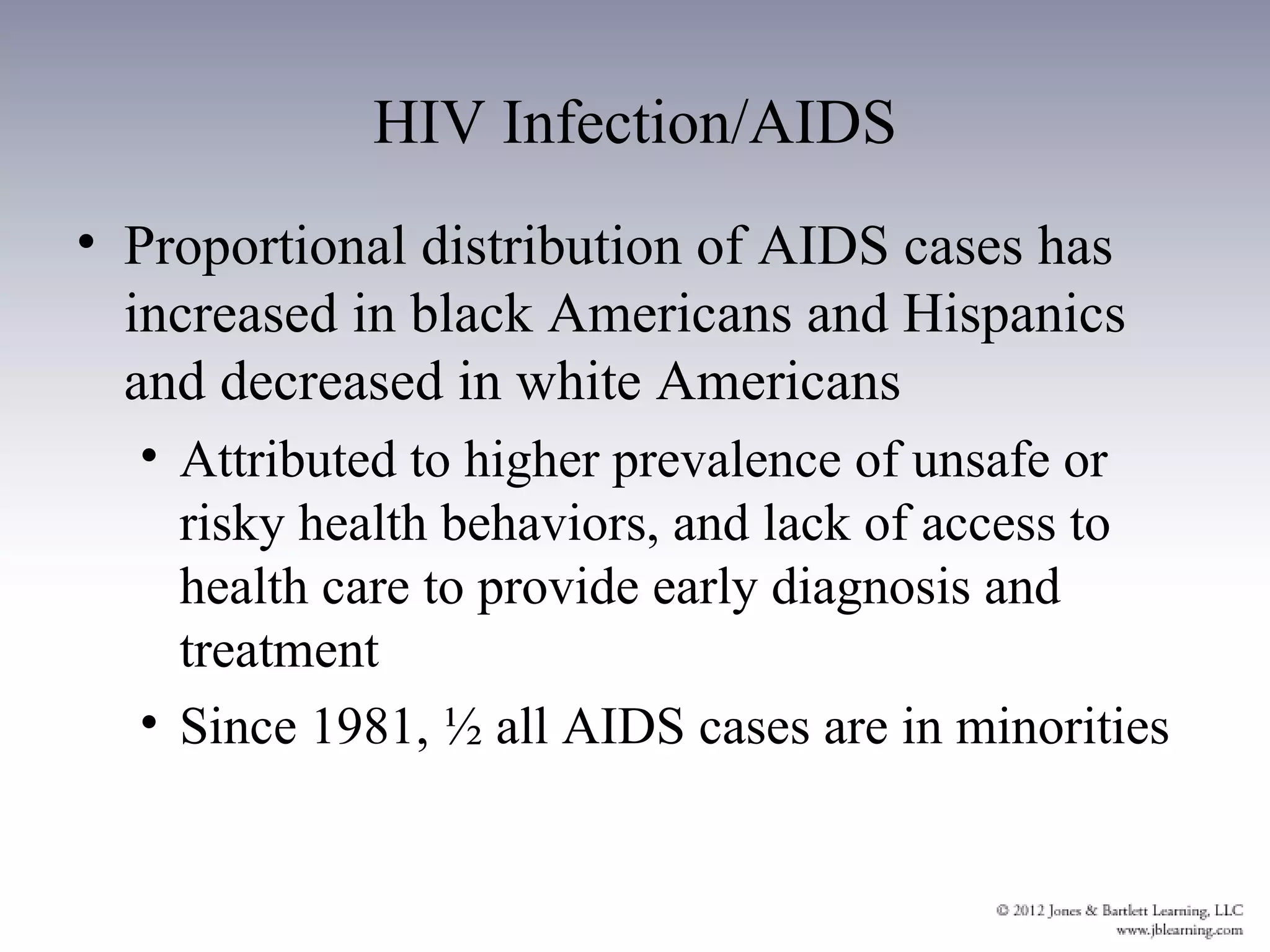
HIV Infection/AIDS
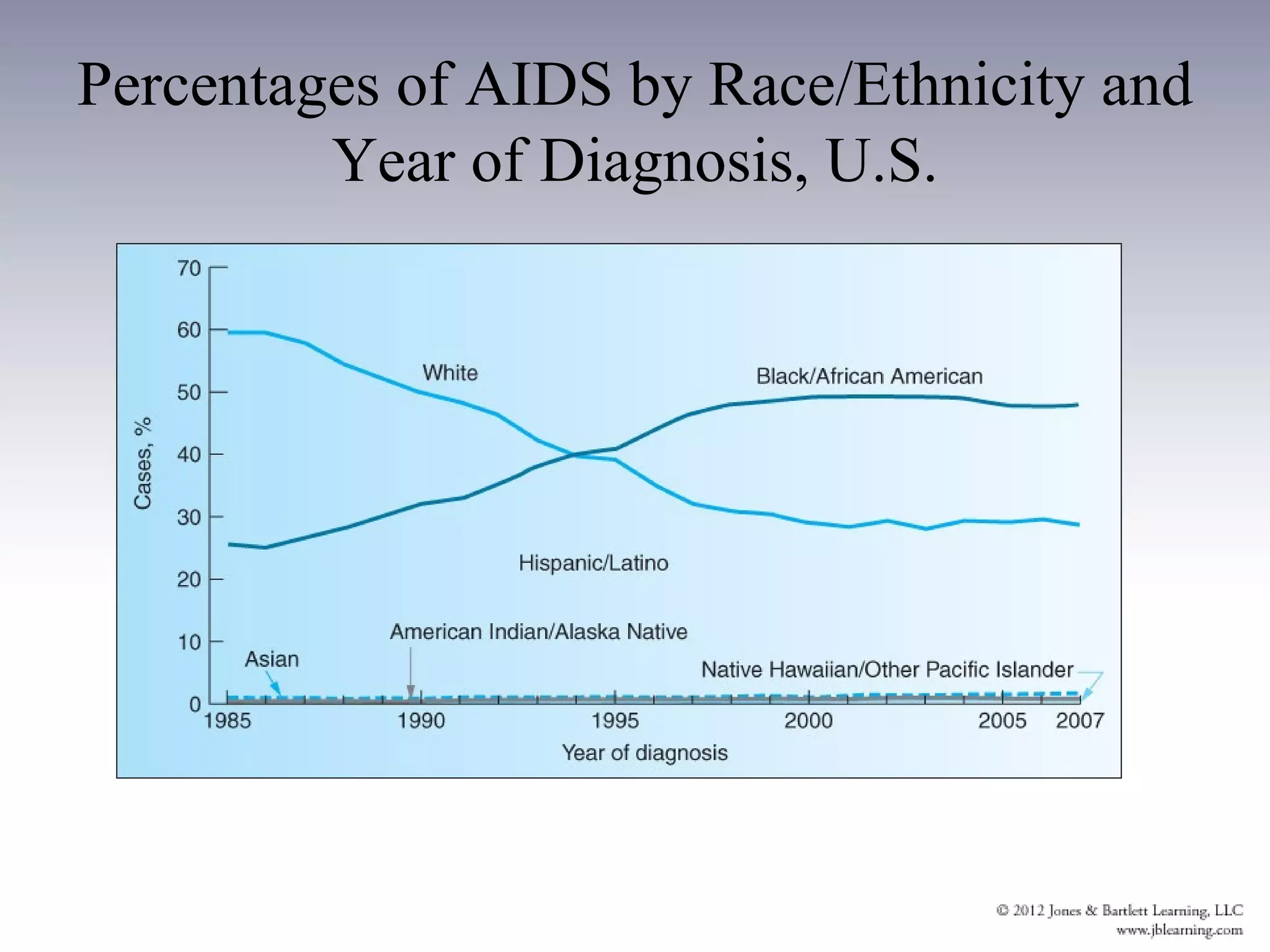
• Proportional distribution of AIDS cases has
  increased in black Americans and Hispanics
  and decreased in white Americans
  • Attributed to higher prevalence of unsafe or
    risky health behaviors, and lack of access to
    health care to provide early diagnosis and
    treatment
  • Since 1981, ½ all AIDS cases are in minorities
Percentages of AIDS by Race/Ethnicity and
         Year of Diagnosis, U.S.
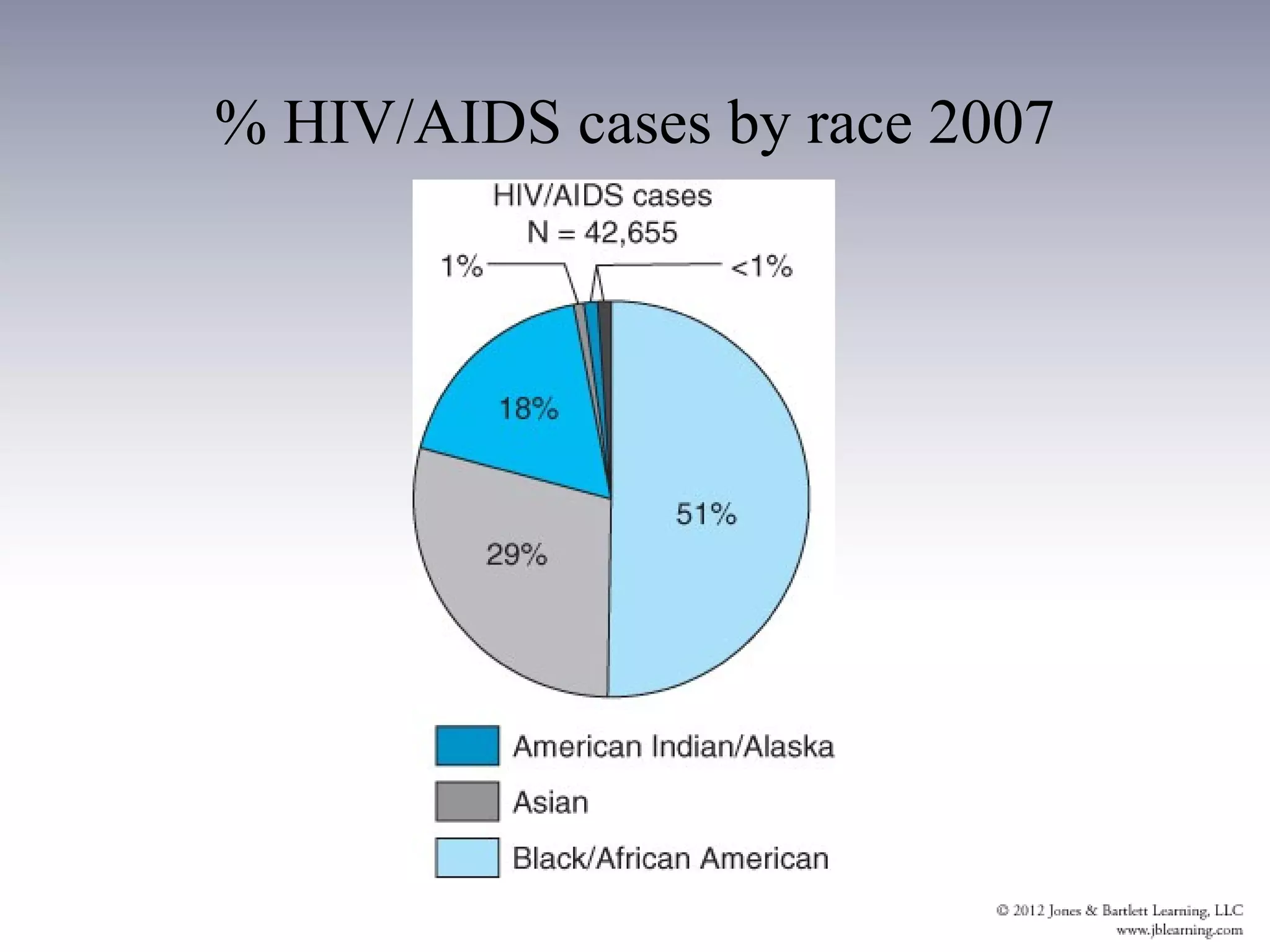
% HIV/AIDS cases by race 2007
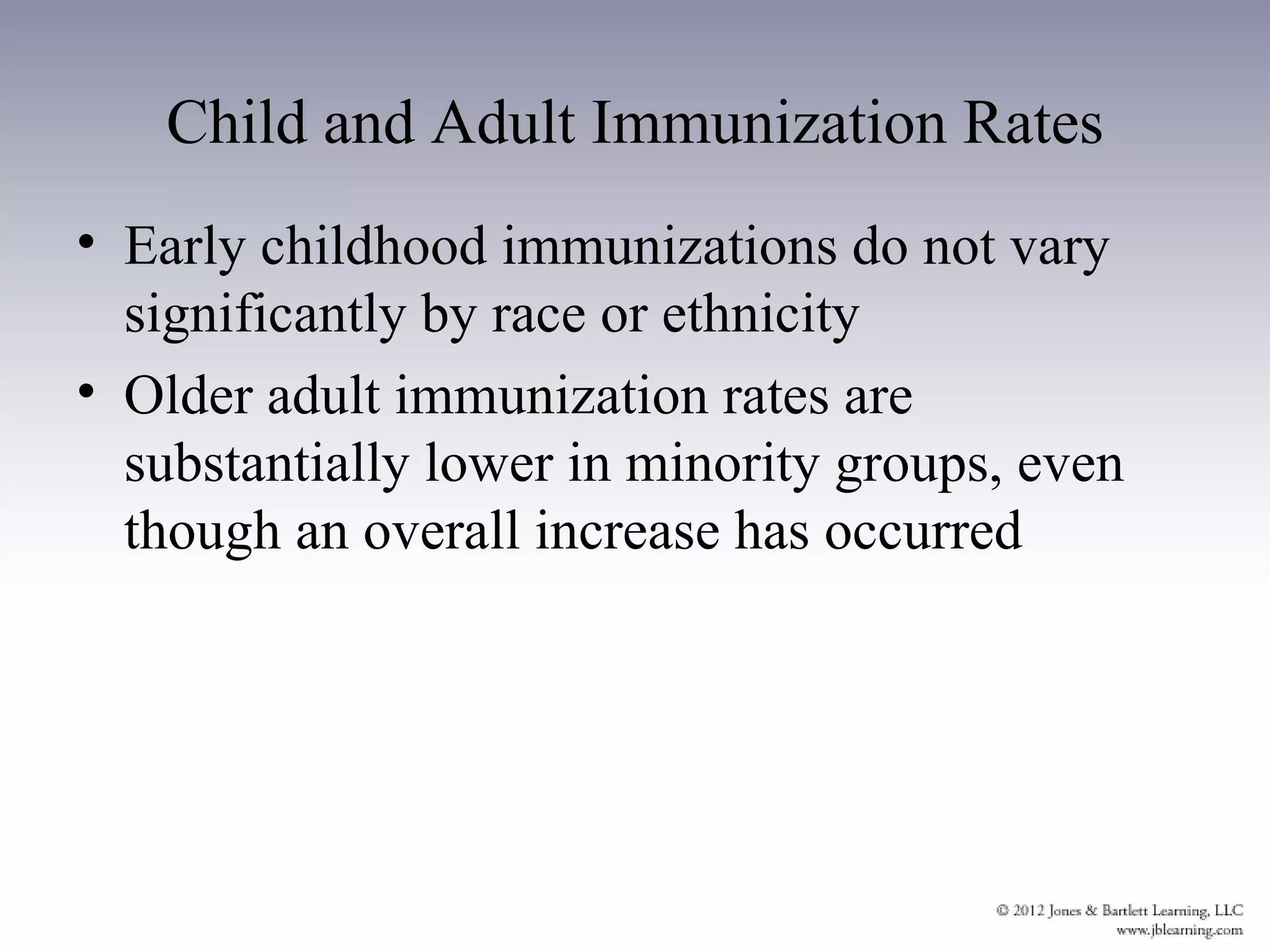
Child and Adult Immunization Rates
• Early childhood immunizations do not vary
  significantly by race or ethnicity
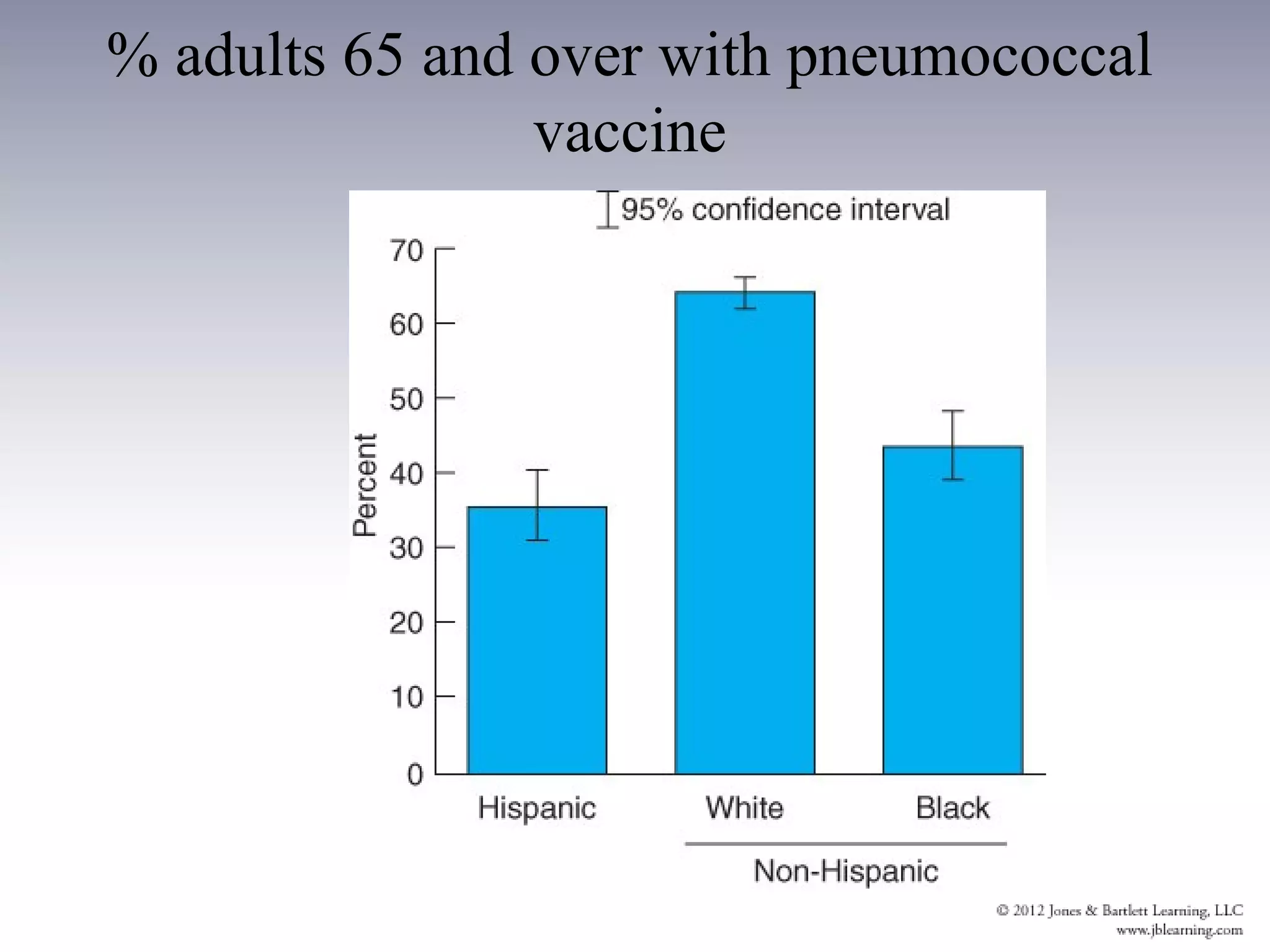
• Older adult immunization rates are
  substantially lower in minority groups, even
  though an overall increase has occurred
Socioeconomic Status and Racial and
       Ethnic Disparities in Health
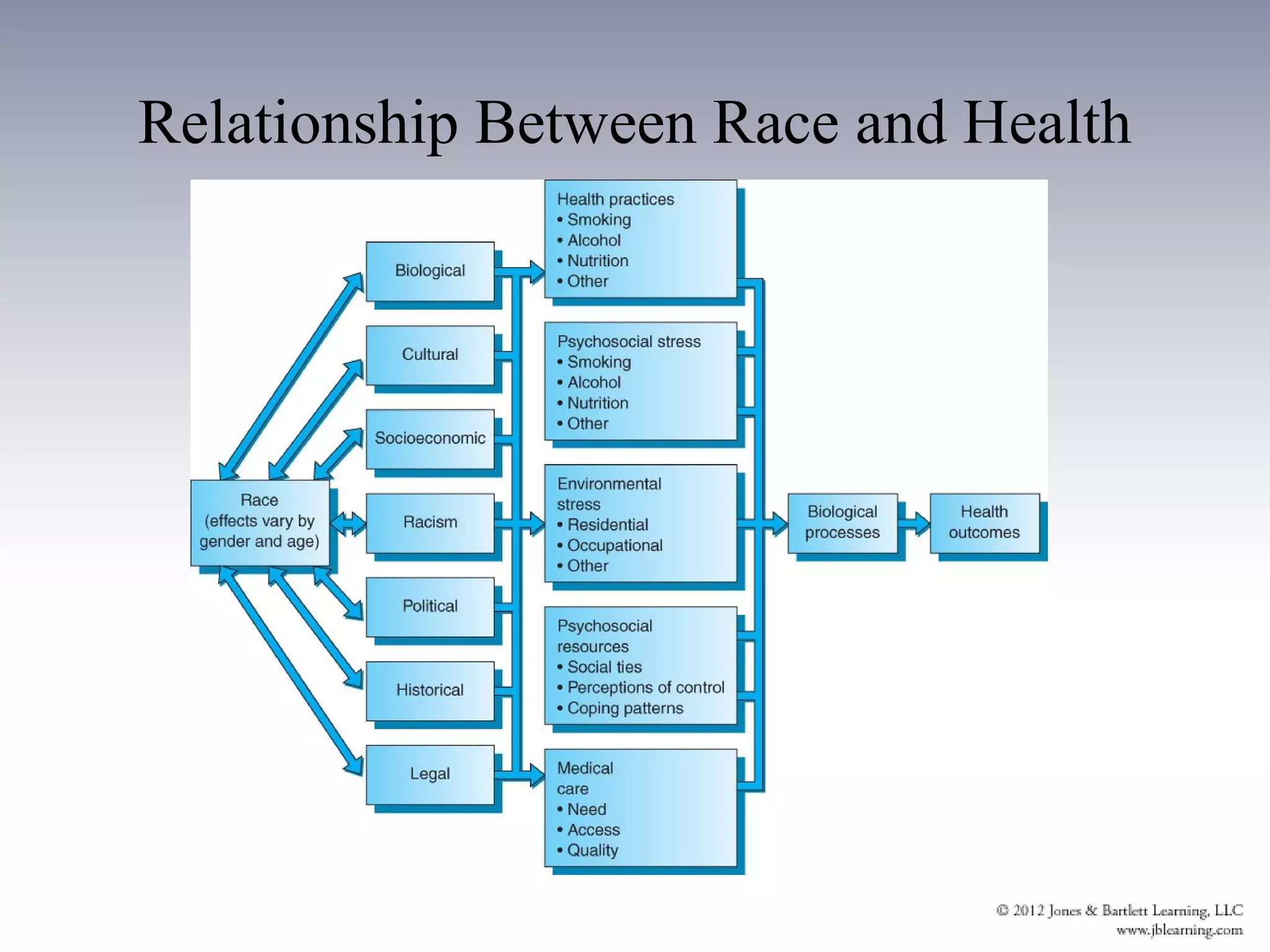
• Many factors contribute to health disparities –
  economic, educational, behavioral, cultural,
  legal, and political
  • Socioeconomic status (SES) considered the
    most influential single contributor to premature
    morbidity and mortality
     • Association between SES and race/ethnicity is
       complicated and cannot fully explain all
       disparity
Indirect causal associations
• Poverty leads to morbidity and mortality
• Circumstances explain most of morbidity
  issues
• Education
• Income
• Social status
% adults 65 and over with pneumococcal
                vaccine
Relationship Between Race and Health
Equity in Minority Health
• Simple solutions unlikely
• Solutions to problems for one group may not
  work for another
• Solutions must be culturally sensitive
Cultural Competence
• A set of congruent behaviors, attitudes, and
  policies that come together in a system,
  agency, or among professionals, that enables
  effective work in cross-cultural situations
• Culture is vital in how community health
  professionals deliver services and how
  community members respond to programs and
  interventions
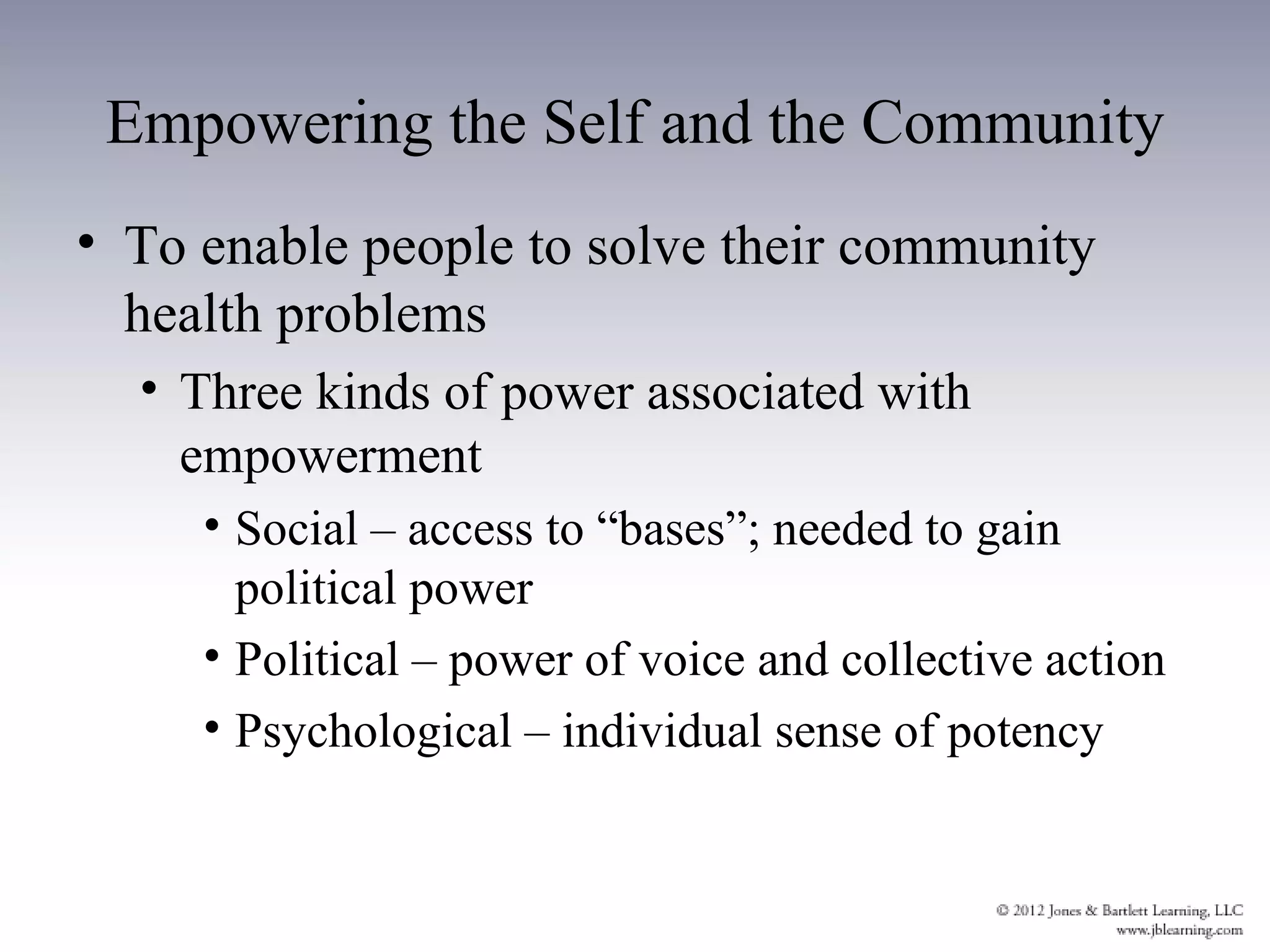
Empowering the Self and the Community
• To enable people to solve their community
  health problems
  • Three kinds of power associated with
    empowerment
     • Social – access to “bases”; needed to gain
       political power
     • Political – power of voice and collective action
     • Psychological – individual sense of potency
Discussion Questions
• Why have there been so many changes to
  racial and ethnic classifications in the United
  States in recent decades?

• How can community health programs
  empower minority groups?

90110 pp tx_ch10

  • 1.
    Community Health andMinorities Chapter 10
  • 4.
    Introduction • Strength ofAmerica lies in diversity of people • Race remains an issue in U.S. • U.S. population • Majority – white, non-Hispanic (66%) • Racial or ethnic minorities (34%) • Minority health – morbidity and mortality of ethnic minorities
  • 5.
  • 6.
    U.S. Population byRace/Ethnicity, 2008
  • 7.
    U.S. Population Projectionby Race/Ethnicity
  • 8.
    • Projections innumbers of members of each ethnicity by 2050?
  • 9.
    Introduction • Advances inhealth gains are not equal in U.S. • Secretary’s Task Force Report on Black and Minority Health • Initiative to Eliminate Racial and Ethnic Disparities in Health (Race and Health Initiative)
  • 10.
    Disparity • Compare africanamerican • Hispanic…define native american
  • 11.
    6 causes ofdeath accounts for 80% of all in minorities • Infant mortality • Cancer • CVD and stroke • Diabetes • Homicide and accidents • Addictive drugs
  • 12.
    Age adjusted deathrates for selected causes
  • 13.
  • 14.
    The index ofdisparity • Differences between rates of health status indicators between minoritities and non minorities • 5 HSIs went up • 17 went down
  • 15.
  • 16.
    Race and HealthInitiative • 1) to achieve health • 2) eliminate disparity • 3) improve all peoples’ health • It is part of healthy people 2010’s goals
  • 17.
    Racial and EthnicClassifications • Classifications used to operationalize race and ethnicity • Challenges with classifications representing diversity of population • Categories of race are more social than biological • Self-reported data can be unreliable • Many nonfederal systems do not collect racial and ethnic data
  • 18.
    Races • American indian or alaskan native • Asian or pacific islander • Black • White Ethnic groups g)Hispanic b) non hispanic
  • 19.
    Health Data Sourcesand Their Limitations • Challenges in complete and accurate collection of racial and ethnic data • Bias analysis = numerator and denominator issues.. Numbers not exact • HHS has long-term strategy for improving collection and use of racial and ethnic data • Important to understand health beliefs of various groups • Heterogeneity within groups
  • 20.
    1997 expanded racedefinition • 5 categories: separated asian or Pacific islander into • Asian and Native Hawaiian or Pacific Islander • Also term latino or hispanic used • And negro used as well as black or african american
  • 21.
    What is black? •In south africa? • In australia?
  • 22.
    What is ajew? • In canada or usa ( Lennie Kravitz) • In germany WW2? (PARENTAGE)
  • 23.
    Americans of HispanicOrigin • Hispanic origin is an ethnicity, not a race • Persons of Mexican, Puerto Rican, Cuban, Central American, or South American descent, or some other Spanish origin • Nearly all Hispanics (96%) in the U.S. are classified by race as white • Educational attainment: a major disparity • Income: a major disparity • Health beliefs
  • 24.
    Hispanics • 2008 47million hispanics ( 15.4% usa) • Most rapidly growing • Especially mexican americans • Hispanics lowest high school achievement levels (57% in 1980 and 75% in 2008) • Poverty rates = 22%
  • 25.
    Black Americans • Blackor African Americans • People having origins in any of the black racial groups from Africa ( 2008 =12.4% of USA) • More than ½ live in southern regions of U.S. • Educational attainment < whites> hispanics • Income is lowest of all groups!! (24% in poverty) • Health beliefs and culture
  • 26.
    Asian Americans andPacific Islanders • Now two separate racial groups • Generally concentrated in the western states • Educational attainment well off • Income well off, a BIPOLAR Distribution • Health beliefs • Variations among the many groups • Generational differences • Asians 4.4% usa not “Model Community”
  • 27.
    American Indians andAlaska Natives • Original inhabitants of America • Economically and socially disadvantaged • Relatively poor health status • Education: low achievment levels • Income poverty level 25.7% • Health beliefs • Various tribal groups have distinct customs, languages, and beliefs • Many share the same cultural values
  • 28.
    Native Americans andHealth Care • Many tribes are sovereign nations • Tribes transferred land in U.S. to federal government in return for provision of certain services • Indian Health Services (IHS) within HHS • Responsible for federal health services to Native Americans and Alaska Natives • Goal to raise health status to highest possible level
  • 29.
    Completed High Schoolby Race and Hispanic Origin, U.S.
  • 30.
    Real Median Incomeby Race and Hispanic Origin, U.S.
  • 31.
    Poverty Rates byRace and Hispanic Origin, U.S.
  • 32.
    Refugees • Refugees • Immigrants • Aliens • Illegal aliens • Can be classified into existing racial/ethnic groups; as a single group, present special concerns • Education, health problems, injuries, employment, etc.
  • 33.
    Race and HealthInitiative • Goal to eliminate disparities among racial and ethnic minority populations in six areas of health while maintaining progress of overall health of American people • Infant mortality • Cancer screening and management • Cardiovascular disease • Diabetes • HIV/AIDS • Adult and child immunization
  • 34.
    Infant Mortality (before 1 year old) • Serious disparity in U.S. among racial and ethnic minorities • Black Americans infant death rate more than two times that of white Americans • Lack of prenatal care and low-birth-weight babies
  • 36.
    Infant Mortality Ratesby Race and Hispanic Origin of Mother, U.S.
  • 37.
    Babies of LowBirth Weight by Mother’s Race and Hispanic Origin, U.S.
  • 39.
    Cancer Screening andManagement • Incidence and death rates highest among black Americans for various types of cancer • Many disparities attributed to lifestyle factors, late diagnosis, access to health care • Less primary and secondary prevention in various minority groups • 550,000 cancer deaths/year • Lung ,rectum, colon and prostate cancer
  • 40.
    Examples of primaryprevention? • Hint…….lifestyle • Examples of secondary prevention? • Hint ……..screening tests
  • 41.
    50 to 75year old fecal occult tests or low endoscopy
  • 42.
    Cancer Incidence andDeath Rates, U.S., by Cancer Site and Race
  • 43.
    Cardiovascular Diseases (number 1 killer) • Death rates vary widely among racial and ethnic groups ( coronary and stroke) • Black Americans have higher rates from CHD and stroke • Hypertension prevalence as a risk factor varies according to race/ethnicity • Black American tend to develop hypertension earlier in life than whites; unknown reason
  • 44.
    Heart disease per100000 2006
  • 45.
    Diagnosed age adjustedprevalence of hypertension by race
  • 46.
  • 47.
    Diabetes • Overall prevalencehas risen in U.S. in recent years • Prevalence in those 20 and older varies in minority groups • Increase in age-adjusted death rates in all racial and ethnic groups • Significantly higher in minority groups • American indians>black>hispanic
  • 48.
    Diabetes Age-Adjusted Prevalenceby Race/Ethnicity, U.S.
  • 49.
    HIV Infection/AIDS • Proportionaldistribution of AIDS cases has increased in black Americans and Hispanics and decreased in white Americans • Attributed to higher prevalence of unsafe or risky health behaviors, and lack of access to health care to provide early diagnosis and treatment • Since 1981, ½ all AIDS cases are in minorities
  • 50.
    Percentages of AIDSby Race/Ethnicity and Year of Diagnosis, U.S.
  • 51.
    % HIV/AIDS casesby race 2007
  • 52.
    Child and AdultImmunization Rates • Early childhood immunizations do not vary significantly by race or ethnicity • Older adult immunization rates are substantially lower in minority groups, even though an overall increase has occurred
  • 53.
    Socioeconomic Status andRacial and Ethnic Disparities in Health • Many factors contribute to health disparities – economic, educational, behavioral, cultural, legal, and political • Socioeconomic status (SES) considered the most influential single contributor to premature morbidity and mortality • Association between SES and race/ethnicity is complicated and cannot fully explain all disparity
  • 54.
    Indirect causal associations •Poverty leads to morbidity and mortality • Circumstances explain most of morbidity issues • Education • Income • Social status
  • 55.
    % adults 65and over with pneumococcal vaccine
  • 56.
  • 57.
    Equity in MinorityHealth • Simple solutions unlikely • Solutions to problems for one group may not work for another • Solutions must be culturally sensitive
  • 58.
    Cultural Competence • Aset of congruent behaviors, attitudes, and policies that come together in a system, agency, or among professionals, that enables effective work in cross-cultural situations • Culture is vital in how community health professionals deliver services and how community members respond to programs and interventions
  • 59.
    Empowering the Selfand the Community • To enable people to solve their community health problems • Three kinds of power associated with empowerment • Social – access to “bases”; needed to gain political power • Political – power of voice and collective action • Psychological – individual sense of potency
  • 61.
    Discussion Questions • Whyhave there been so many changes to racial and ethnic classifications in the United States in recent decades? • How can community health programs empower minority groups?