SMOLENSK STATE MEDICAL
UNIVERSITY
Topic-Acute Strangulated
Intestinal Obstruction
Submitted by- Penothil Bhadra Sudheer Dev
504
INTRODUCTION
• Intestinal obstruction occurs when the passage of
intestinal contents through the lumen is impaired.
• Intestinal obstruction is an interruption in the normal
flow of intestinal contents along the intestinal tract.
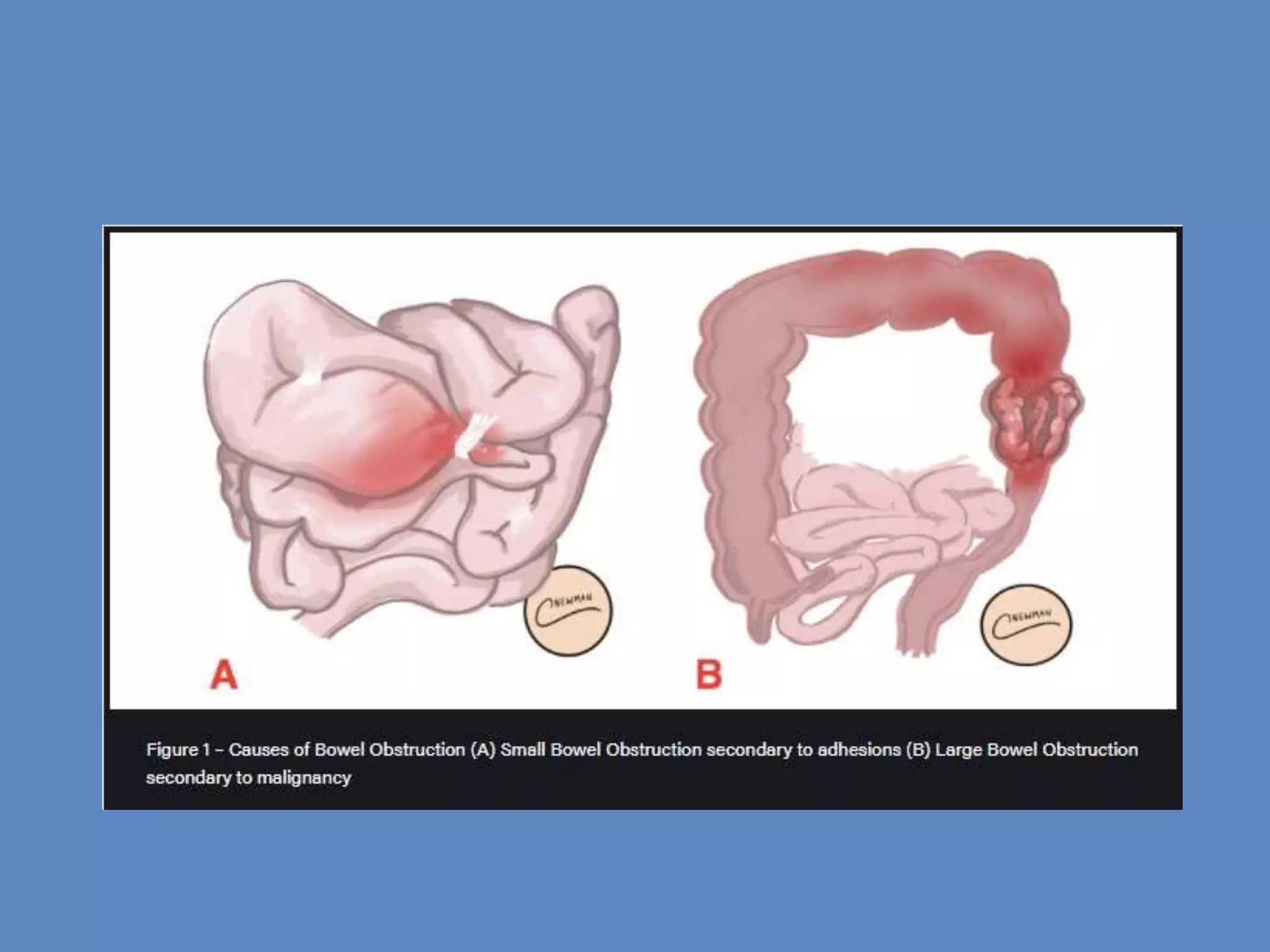
• The block may occur in the small or large intestine, may
be complete or incomplete, may be mechanical or
paralytic, and may or may not compromise the vascular
supply.
• Obstruction most frequently occurs in the young and
the old.
• The small bowel is most commonly affected, with
the ileum as the most common site of obstruction.
• Large bowel obstruction accounts for only 15% of
cases of bowel obstruction and the sigmoid colon is
the most common site of obstruction.
• Types of Intestinal Obstruction:
• Mechanical obstruction
• Paralytic (adynamic, neurogenic) ileus
• Strangulation obstruction
Acute Strangulated Intestinal
Obstruction
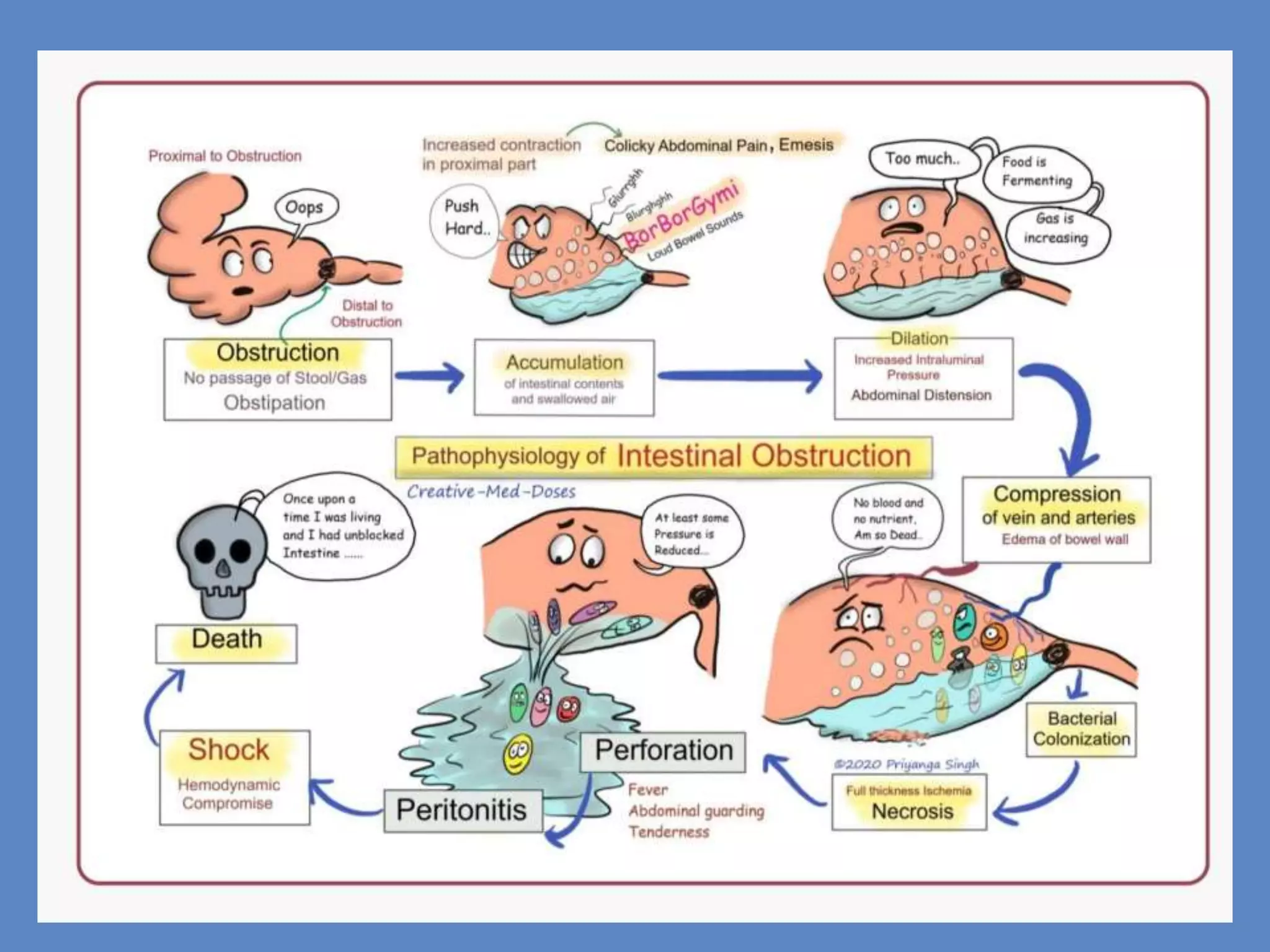
• It compromises blood supply, leading to gangrene of the intestinal
wall,Caused by prolonged mechanical obstruction.
• Physiology:Increased peristalsis, distention by fluid and gas, and
increased bacterial growth proximal to obstruction. The intestine
empties distally.
• Increased secretions into the intestine are associated with
diminution in the bowel's absorptive capacity.
• The accumulation of gases, secretions, and oral intake above the
obstruction causes increasing intraluminal pressure.
• Venous pressure in the affected area increases, and circulatory stasis
and edema result.
• Bowel necrosis may occur because of anoxia and compression of the
terminal branches of the mesenteric artery.
• Bacteria and toxins pass across the intestinal membranes into the
abdominal cavity, thereby leading to peritonitis.
CLINICAL MANIFESTATIONS
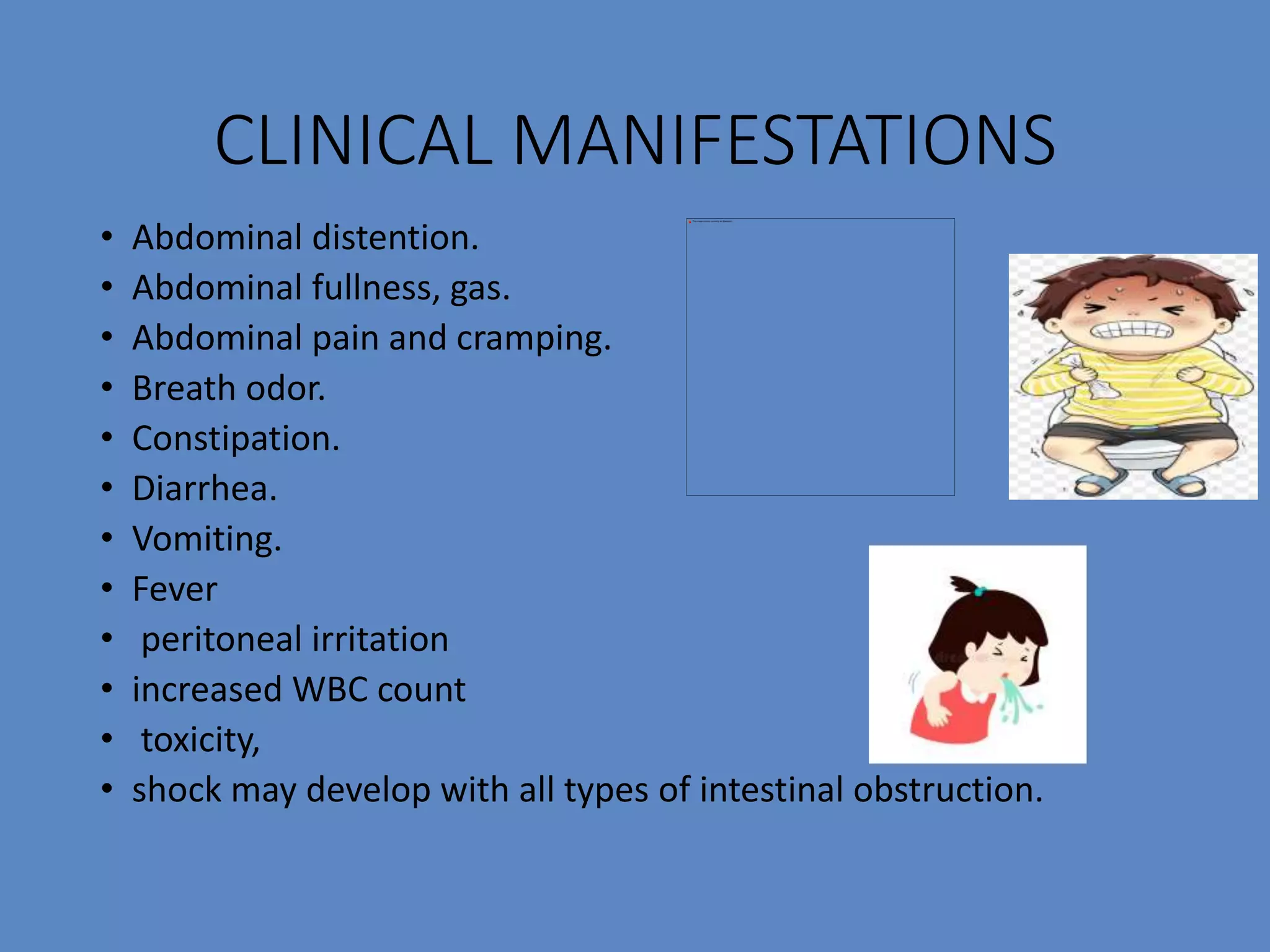
• Abdominal distention.
• Abdominal fullness, gas.
• Abdominal pain and cramping.
• Breath odor.
• Constipation.
• Diarrhea.
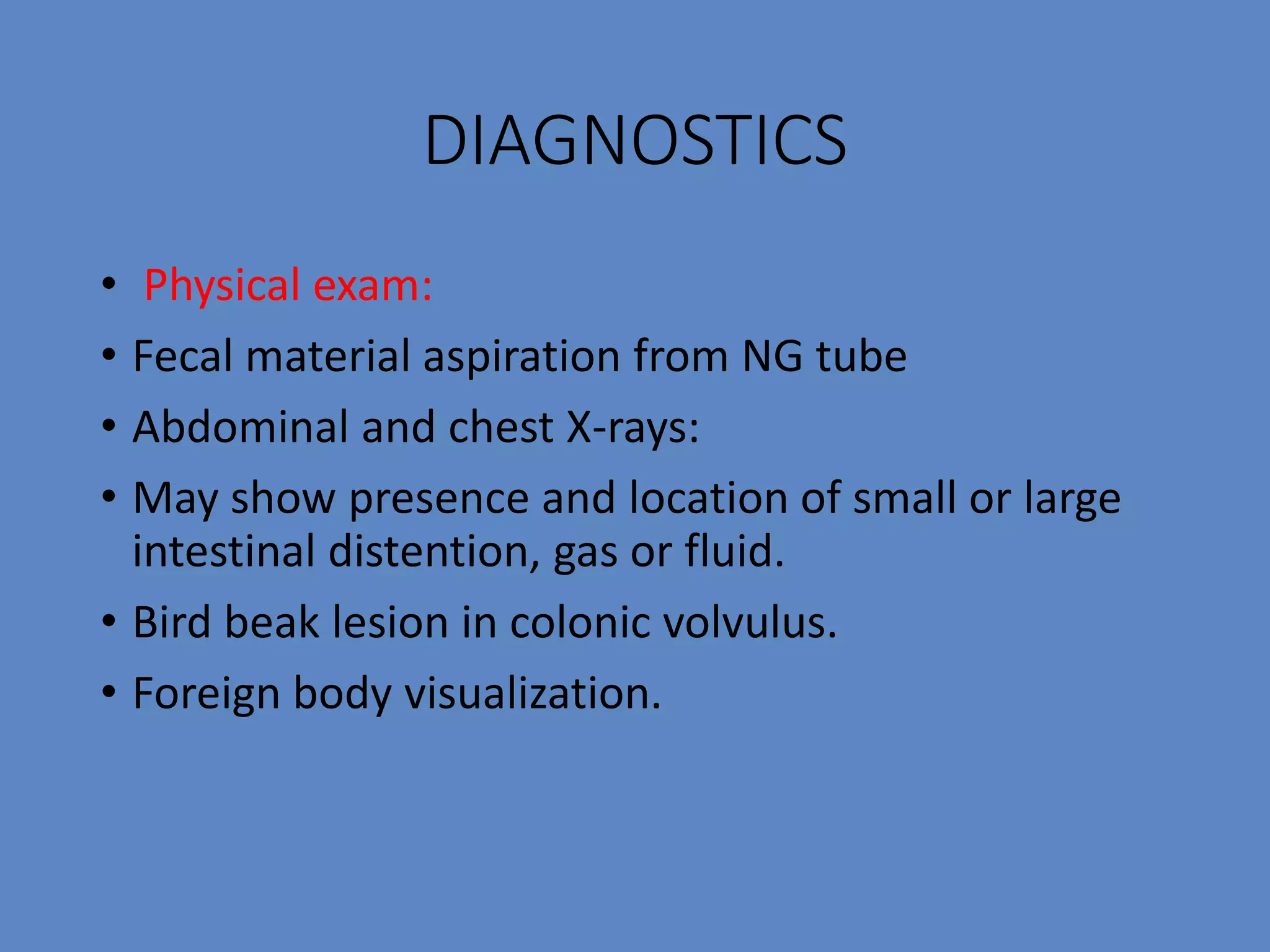
• Vomiting.
• Fever
• peritoneal irritation
• increased WBC count
• toxicity,
• shock may develop with all types of intestinal obstruction.
RISK FACTORS
• Abdominal or pelvic surgery, which often causes
adhesions.
• Crohn's disease.
• Cancer within your abdomen
DIAGNOSTICS
• Physical exam:
• Fecal material aspiration from NG tube
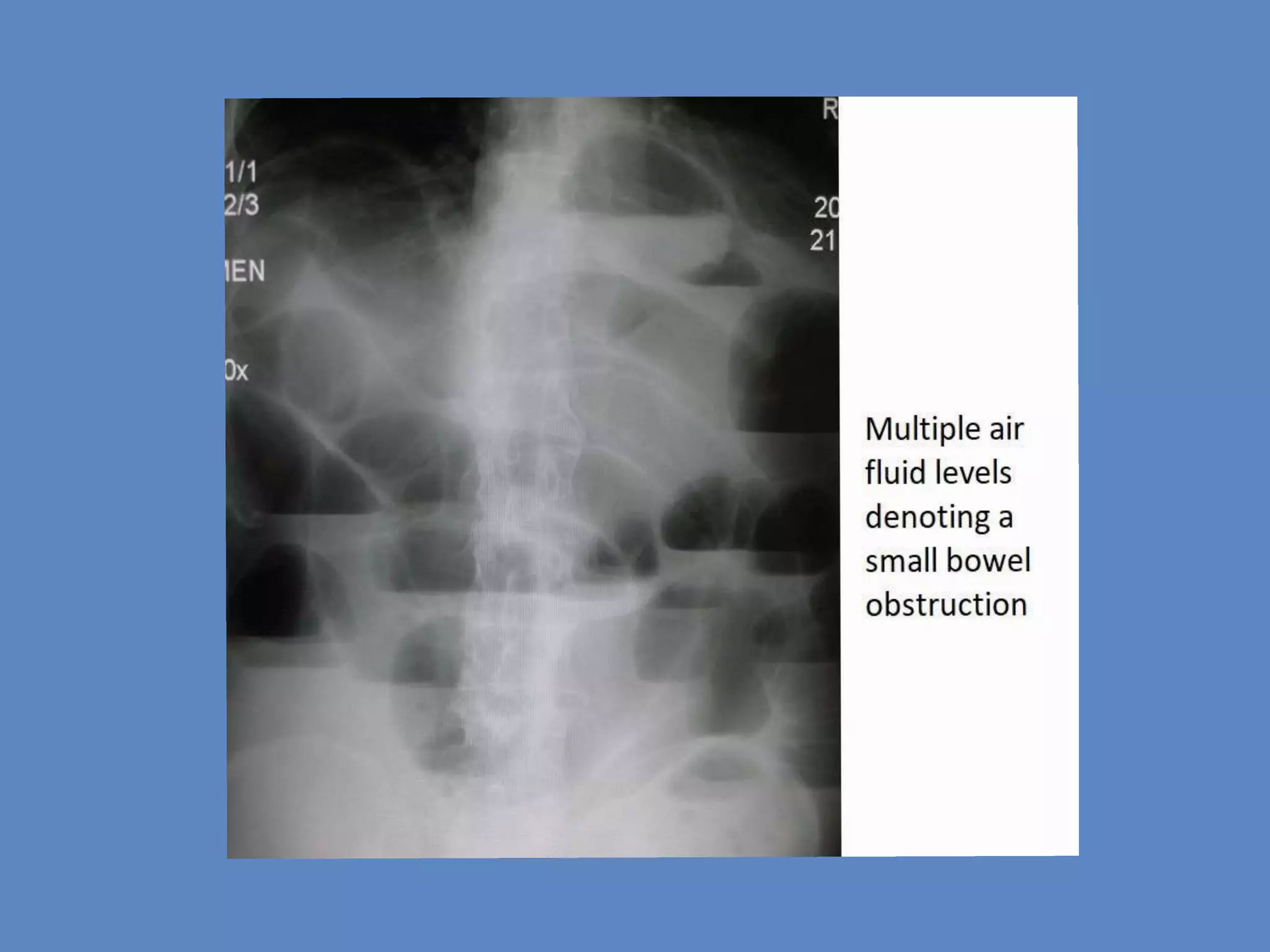
• Abdominal and chest X-rays:
• May show presence and location of small or large
intestinal distention, gas or fluid.
• Bird beak lesion in colonic volvulus.
• Foreign body visualization.
• Laboratory Tests:
• May show decreased sodium, potassium, and
chloride levels due to vomiting.
• Elevated WBC counts due to inflammation; marked
increase with necrosis, strangulation, or peritonitis.
• Serum amylase may be elevated from irritation of
the pancreas by the bowel loop.
• Flexible sigmoidoscopy or colonoscopy may identify
the source of the obstruction such as tumor or
stricture.
SURGICAL TREATMENT
• Closed bowel procedures: lysis of adhesions,
reduction of volvulus, intussusception, or
incarcerated hernia
• Enterotomy for removal of foreign bodies.
• Resection of bowel for obstructing lesions, or
strangulated bowel with end-to-end anastomosis
• Intestinal bypass around obstruction
• Temporary ostomy may be indicated.
COMPLICATIONS
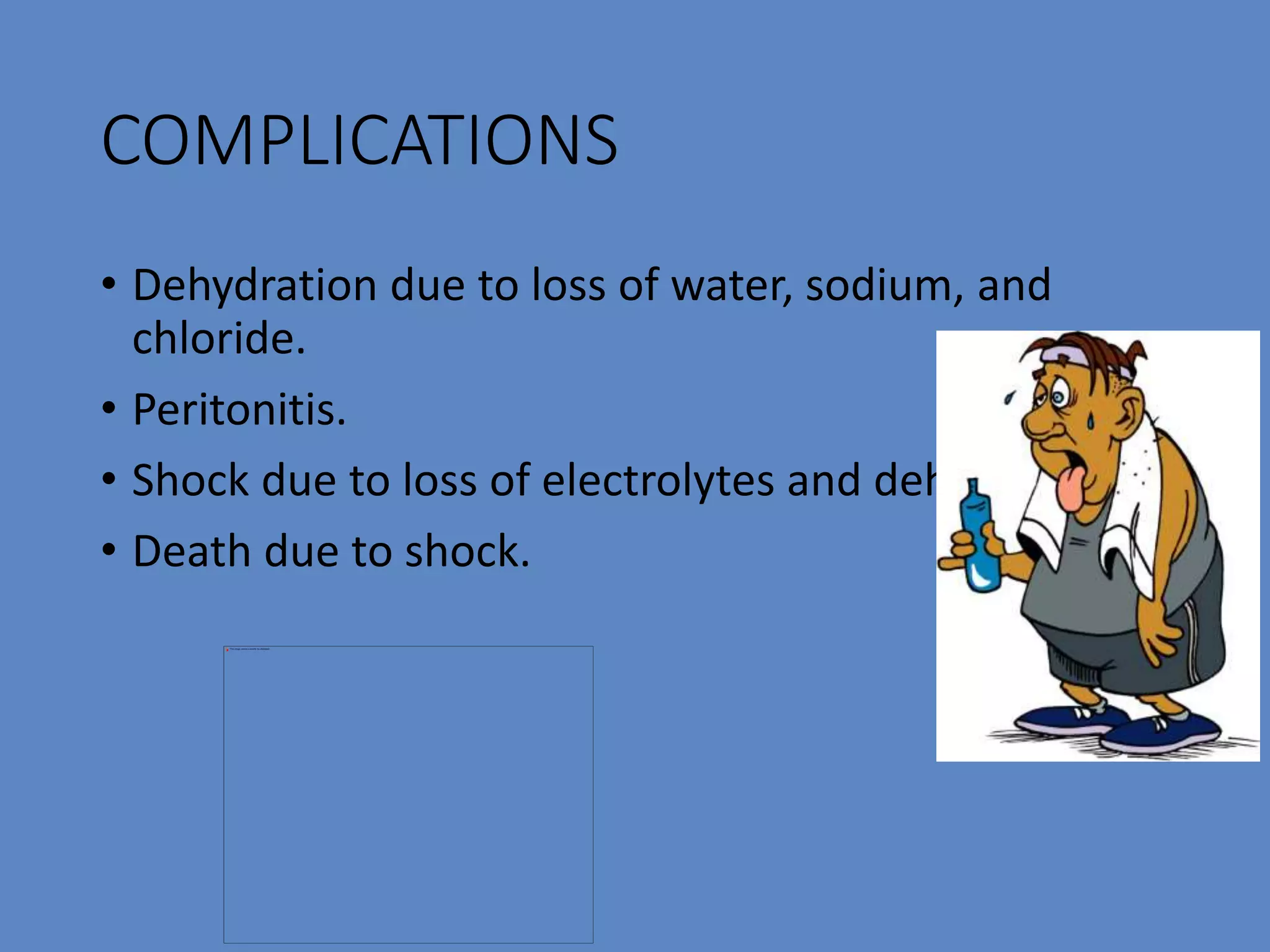
• Dehydration due to loss of water, sodium, and
chloride.
• Peritonitis.
• Shock due to loss of electrolytes and dehydration.
• Death due to shock.
REFERENCE
• Slideplayer https://slideplayer.com/slide/5673035/
•THANK YOU!!!

acute Strangulated Intestinal Obstruction -Bhadra.pptx

  • 1.
    SMOLENSK STATE MEDICAL UNIVERSITY Topic-AcuteStrangulated Intestinal Obstruction Submitted by- Penothil Bhadra Sudheer Dev 504
  • 2.
    INTRODUCTION • Intestinal obstructionoccurs when the passage of intestinal contents through the lumen is impaired. • Intestinal obstruction is an interruption in the normal flow of intestinal contents along the intestinal tract. • The block may occur in the small or large intestine, may be complete or incomplete, may be mechanical or paralytic, and may or may not compromise the vascular supply. • Obstruction most frequently occurs in the young and the old.
  • 3.
    • The smallbowel is most commonly affected, with the ileum as the most common site of obstruction. • Large bowel obstruction accounts for only 15% of cases of bowel obstruction and the sigmoid colon is the most common site of obstruction. • Types of Intestinal Obstruction: • Mechanical obstruction • Paralytic (adynamic, neurogenic) ileus • Strangulation obstruction
  • 5.
    Acute Strangulated Intestinal Obstruction •It compromises blood supply, leading to gangrene of the intestinal wall,Caused by prolonged mechanical obstruction. • Physiology:Increased peristalsis, distention by fluid and gas, and increased bacterial growth proximal to obstruction. The intestine empties distally. • Increased secretions into the intestine are associated with diminution in the bowel's absorptive capacity. • The accumulation of gases, secretions, and oral intake above the obstruction causes increasing intraluminal pressure. • Venous pressure in the affected area increases, and circulatory stasis and edema result. • Bowel necrosis may occur because of anoxia and compression of the terminal branches of the mesenteric artery. • Bacteria and toxins pass across the intestinal membranes into the abdominal cavity, thereby leading to peritonitis.
  • 7.
    CLINICAL MANIFESTATIONS • Abdominaldistention. • Abdominal fullness, gas. • Abdominal pain and cramping. • Breath odor. • Constipation. • Diarrhea. • Vomiting. • Fever • peritoneal irritation • increased WBC count • toxicity, • shock may develop with all types of intestinal obstruction.
  • 8.
    RISK FACTORS • Abdominalor pelvic surgery, which often causes adhesions. • Crohn's disease. • Cancer within your abdomen
  • 9.
    DIAGNOSTICS • Physical exam: •Fecal material aspiration from NG tube • Abdominal and chest X-rays: • May show presence and location of small or large intestinal distention, gas or fluid. • Bird beak lesion in colonic volvulus. • Foreign body visualization.
  • 11.
    • Laboratory Tests: •May show decreased sodium, potassium, and chloride levels due to vomiting. • Elevated WBC counts due to inflammation; marked increase with necrosis, strangulation, or peritonitis. • Serum amylase may be elevated from irritation of the pancreas by the bowel loop. • Flexible sigmoidoscopy or colonoscopy may identify the source of the obstruction such as tumor or stricture.
  • 12.
    SURGICAL TREATMENT • Closedbowel procedures: lysis of adhesions, reduction of volvulus, intussusception, or incarcerated hernia • Enterotomy for removal of foreign bodies. • Resection of bowel for obstructing lesions, or strangulated bowel with end-to-end anastomosis • Intestinal bypass around obstruction • Temporary ostomy may be indicated.
  • 14.
    COMPLICATIONS • Dehydration dueto loss of water, sodium, and chloride. • Peritonitis. • Shock due to loss of electrolytes and dehydration. • Death due to shock.
  • 15.
  • 16.