Epidemiology
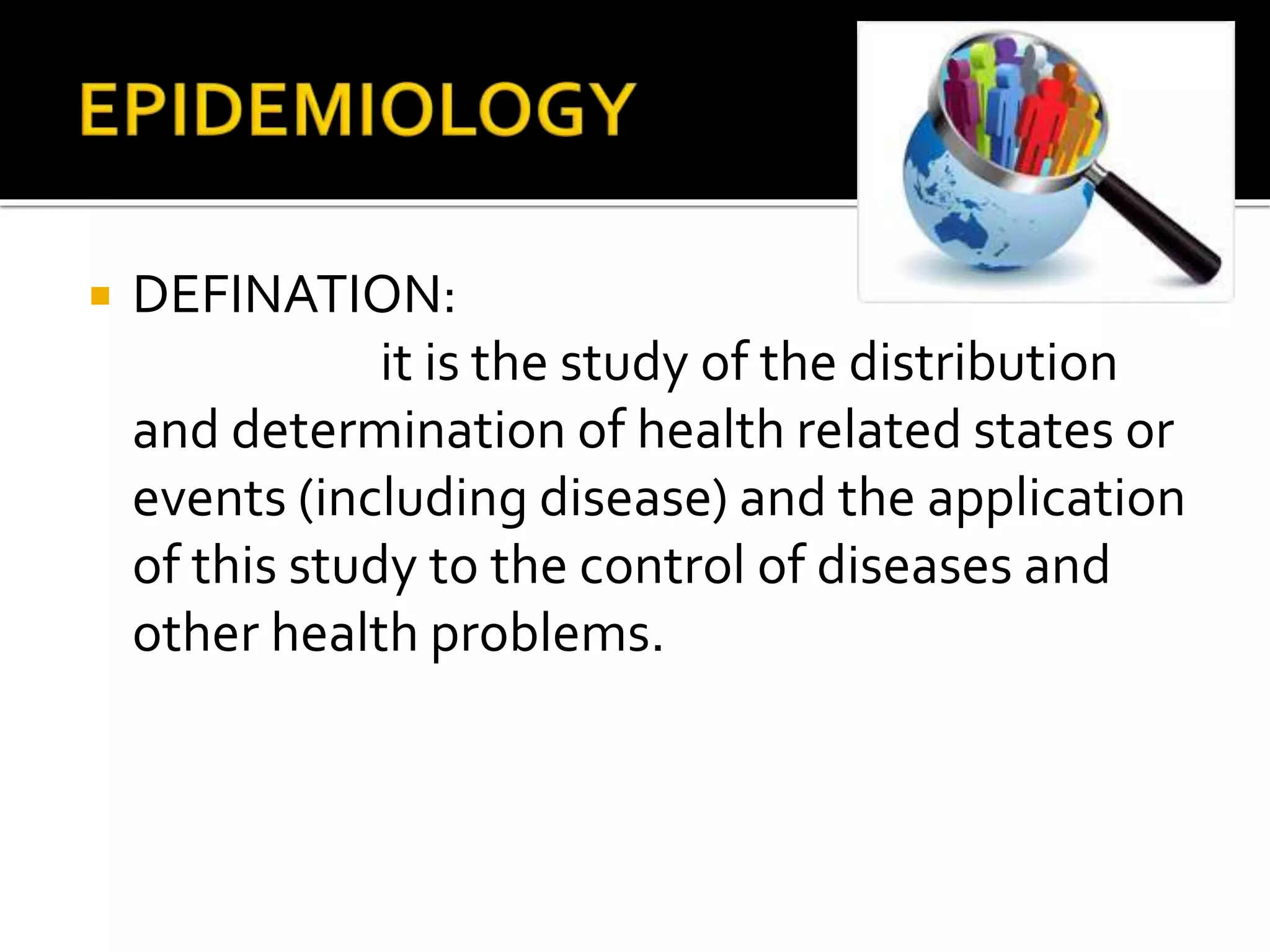
 DEFINATION:
it is the study of the distribution
and determination of health related states or
events (including disease) and the application
of this study to the control of diseases and
other health problems.
 DESCRIPTIVE EPIDEMIOLOGY:
study of the distribution of disease
variables commonly examined are descriptive
of person, place and time.
 ANALYTIC EPIDEMIOLOGY:
use of epidemiologic methods to explain
disease occurrence or elucidate casual
mechanism.
 It is a quantitative science.
 It is an applied science
 Its methods are generally observational.
 It focus is the group or community of person.
 Its methods are systemic and orderly.
 DEFINATION: It is lack of proper nutrition,
caused by not having enough to eat, not eating
enough of right things, or being unable to use
food that one does eat.
 Its most common in developing countries
 According to national health service UK, around
3 millions people are affected by malnutrition.
 According toWHO, malnutrition has largest
contribution to child mortality globally, about
45%.
 Developing countries (food shortage, high food
prices & lack of breast feeding)
 Elderly people, especially who are hospitalized
 Individuals who are socially isolated
 People on low income (poor people)
 People with chronic eating disorders, as bulimia
or anorexia nervosa.
 Digestive disorders like crohns disease or
ulcerative colitis.
 alcoholism
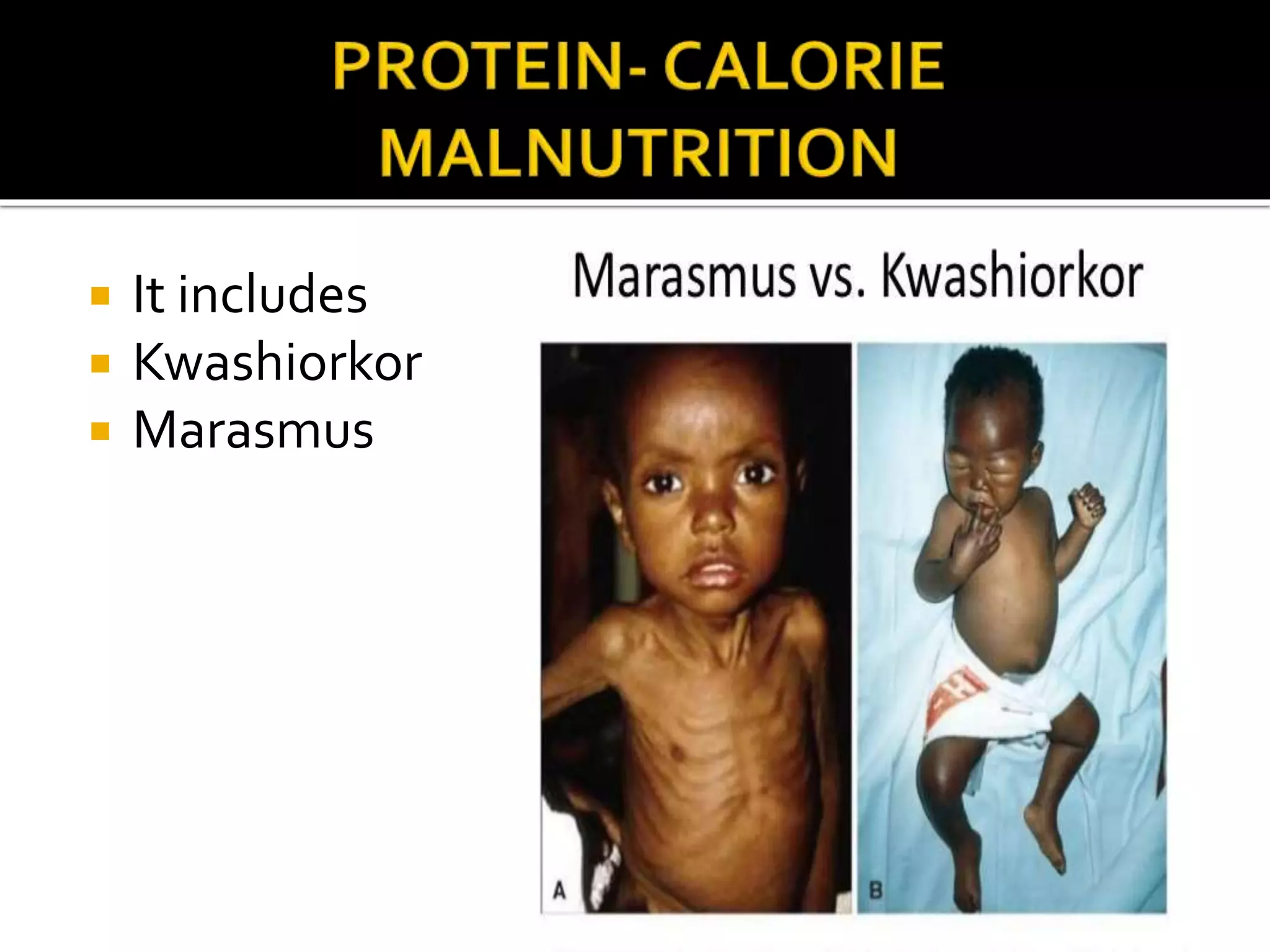
 It includes
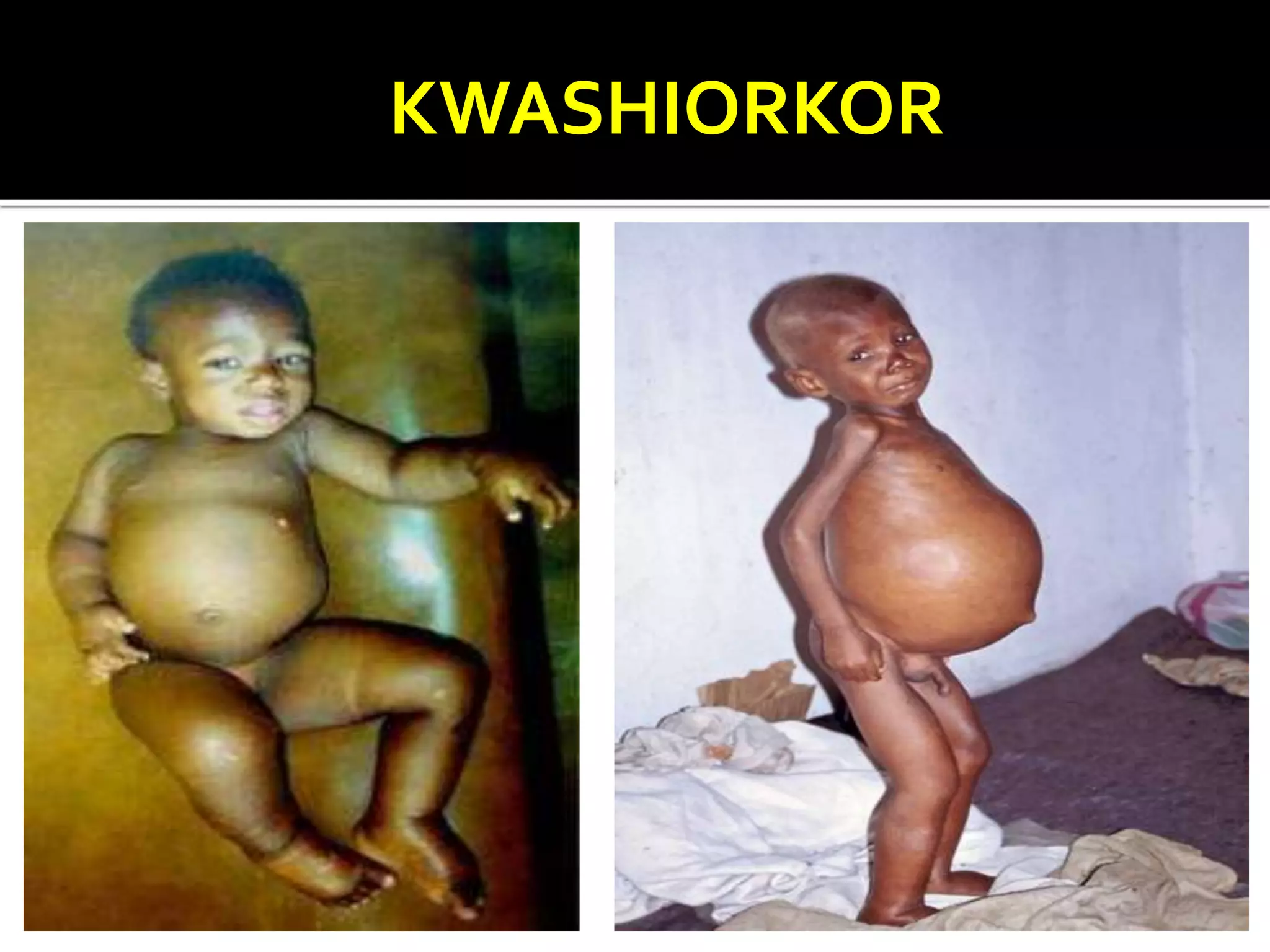
 Kwashiorkor
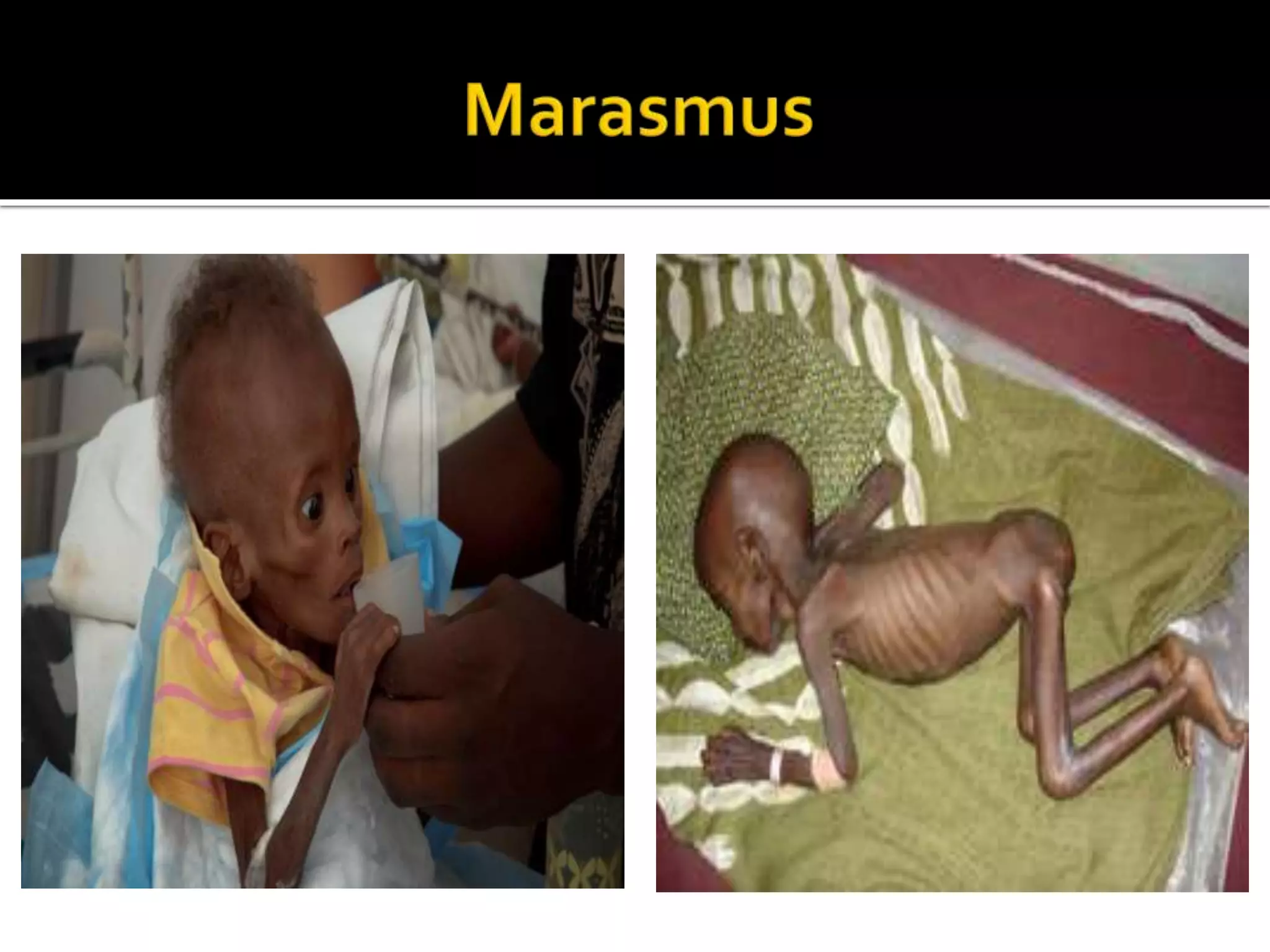
 Marasmus
 It is caused by deficiency of almost all
nutrients, notably protein and calories.
 It often coexists with vitamin deficiency.
 It occurs in children <1 year.
sign/ symptoms:
 Growth retardation
 Loss of muscle & other protein containing
tissue.
 Loss of subcutaneous fat “wasting away”
(monkey face)
 It is caused by protein deficiency but with adequate
caloric intake.
 It is seen in children >1 year, with starch rich and
poor protein diet.
Sign/symptoms:
 Growth retardation
 Muscle wasting with preservation of subcutaneous
fat
 Fatty liver, anemia, malabsorption
 Severe edema
 Depigmented bands with pale streaking in the hair
or skin.
KWASHIORKOR
 Water soluble vitamins like B-complex (B1,
B2, B3, B6, B12), folic acid and vitamin C are
not stored in the body. Its regular intake is
essential except B12.
 Toxicity from excessive intake is rare because
excess vitamin is excreted in urine.
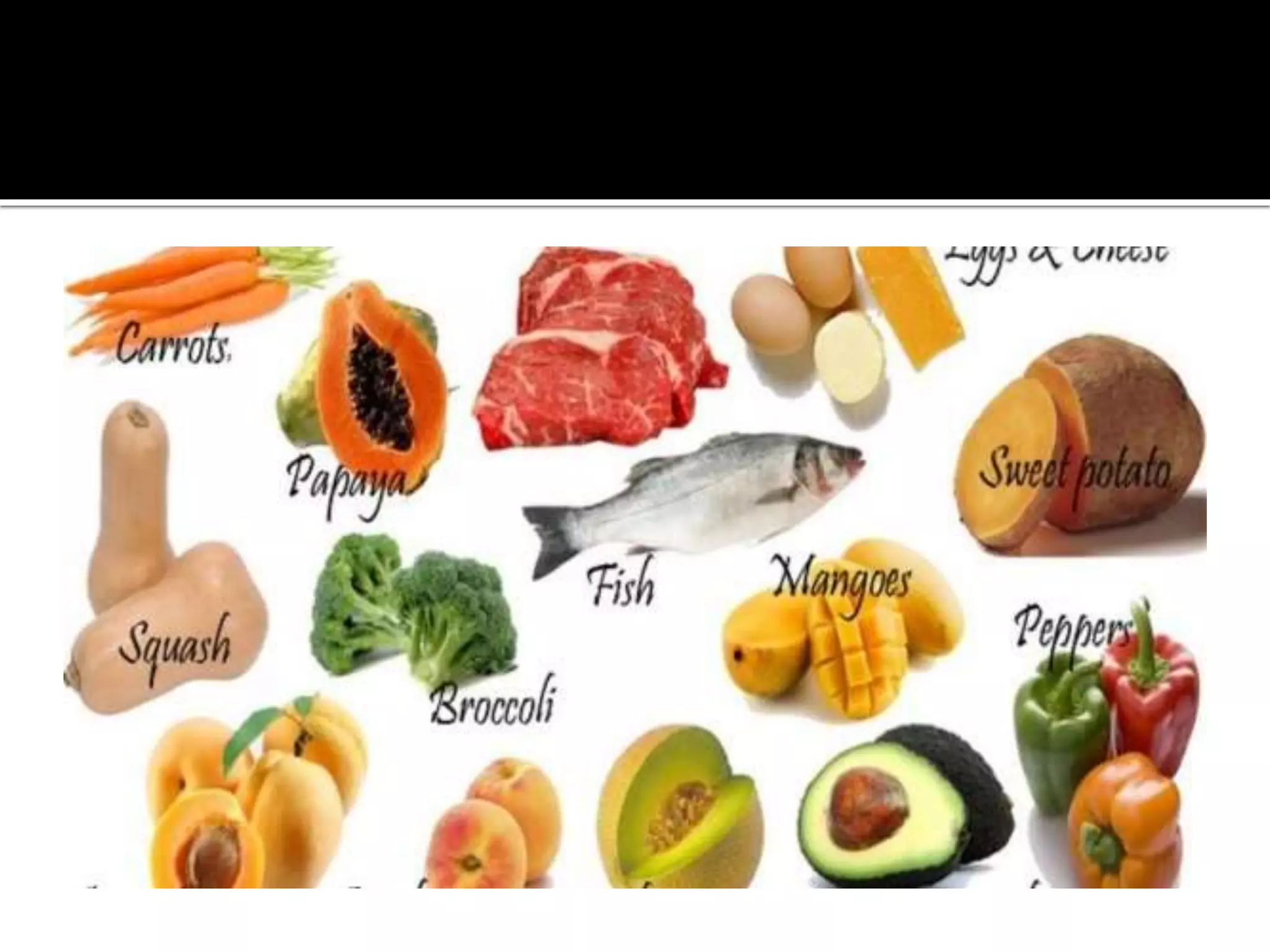
 B-complex (except B12): whole grain
cereals, green leafy vegetables, fish, meat
and dairy foods.
 Vitamin B12: foods of animal origin only
 Folic acid: leafy vegetables, cereals, fruit and
animal products.
 Vitamin C: fruits (especially citrus and
tomatoes), vegetables, various meats & milk.
 It is associated with severe malnutrition,
alcoholism and fad diets.
 It results
1. DRY BERIBERI: associated with peripheral
neuropathy with atrophy of muscles of
extremities.
2. WET BERIBERI: it results high-output cardiac
failure with dilated cardiomyopathy.
3. WERNICKE-KORSAKOFF SYNDROME: it is
seen in alcoholics.
It is characterized by confusion, ataxia and
ophthalmoplegia (wernicke traid).There is
marked memory loss in patients.
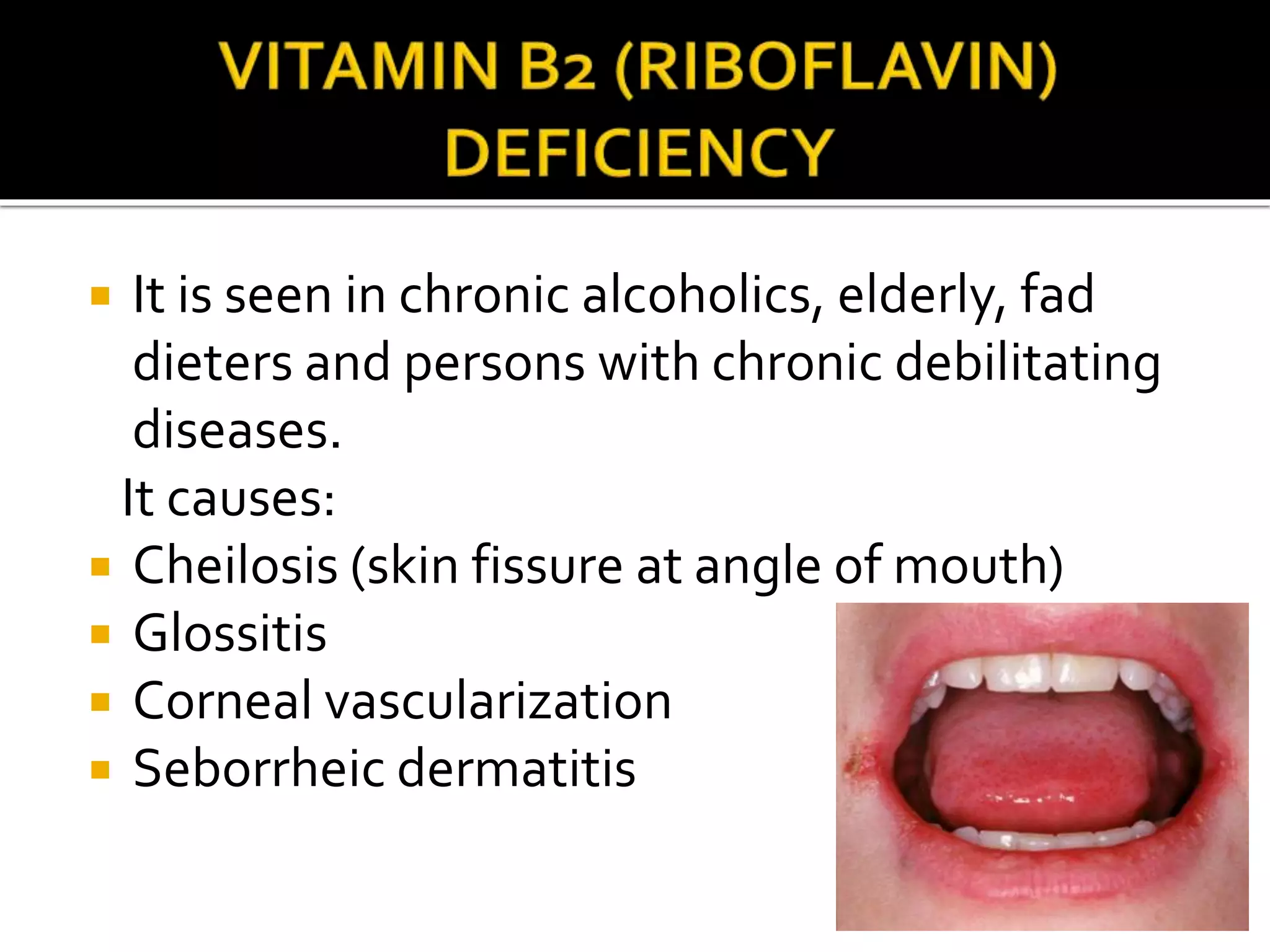
 It is seen in chronic alcoholics, elderly, fad
dieters and persons with chronic debilitating
diseases.
It causes:
 Cheilosis (skin fissure at angle of mouth)
 Glossitis
 Corneal vascularization
 Seborrheic dermatitis
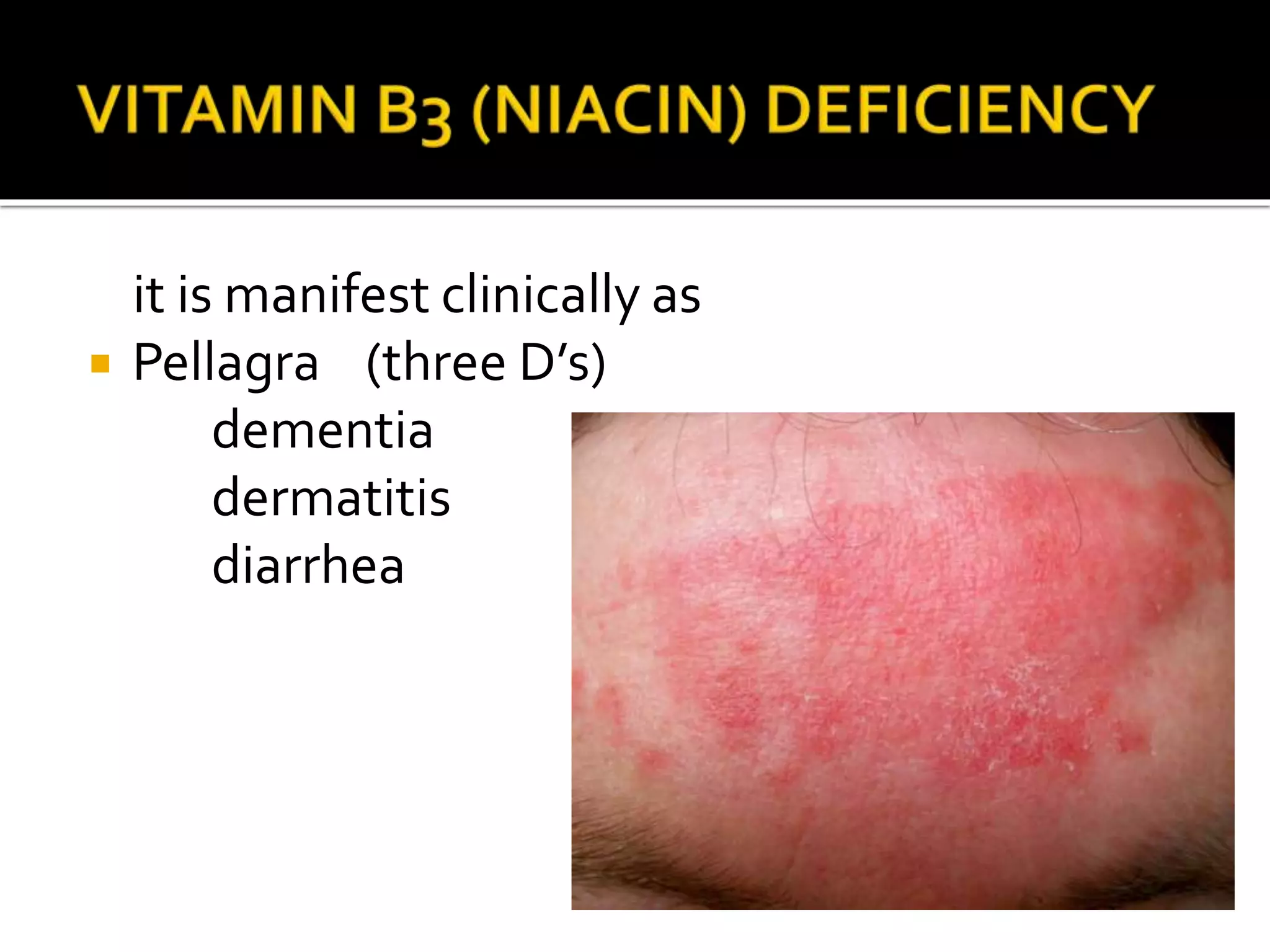
it is manifest clinically as
 Pellagra (three D’s)
dementia
dermatitis
diarrhea
 Its deficiency causes
1. Cheilosis
2. Glossitis
3. Microcytic anemia (reduced heme synthesis)
4. Convulsions in infants
5. Neurological dysfunction
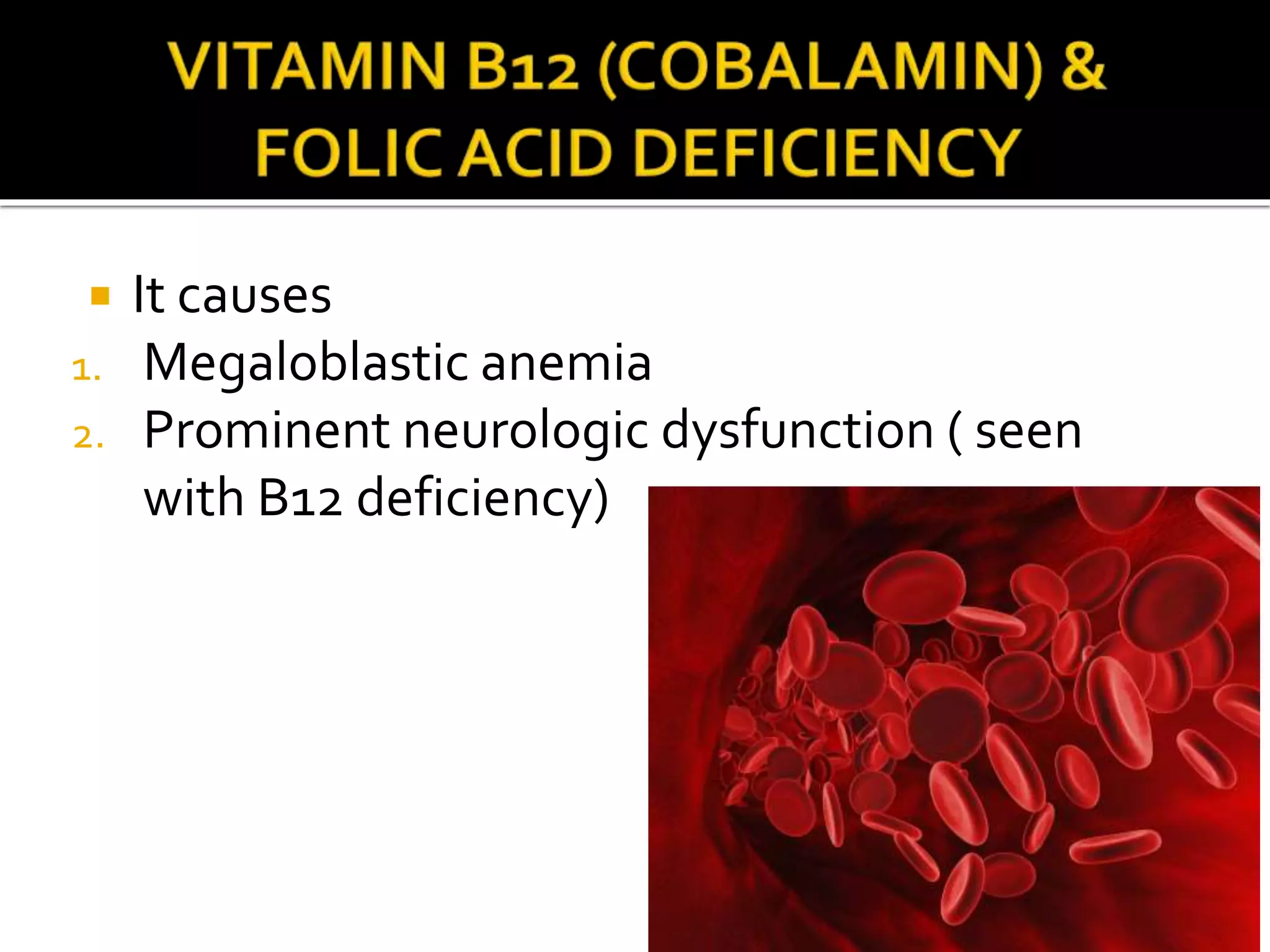
 It causes
1. Megaloblastic anemia
2. Prominent neurologic dysfunction ( seen
with B12 deficiency)
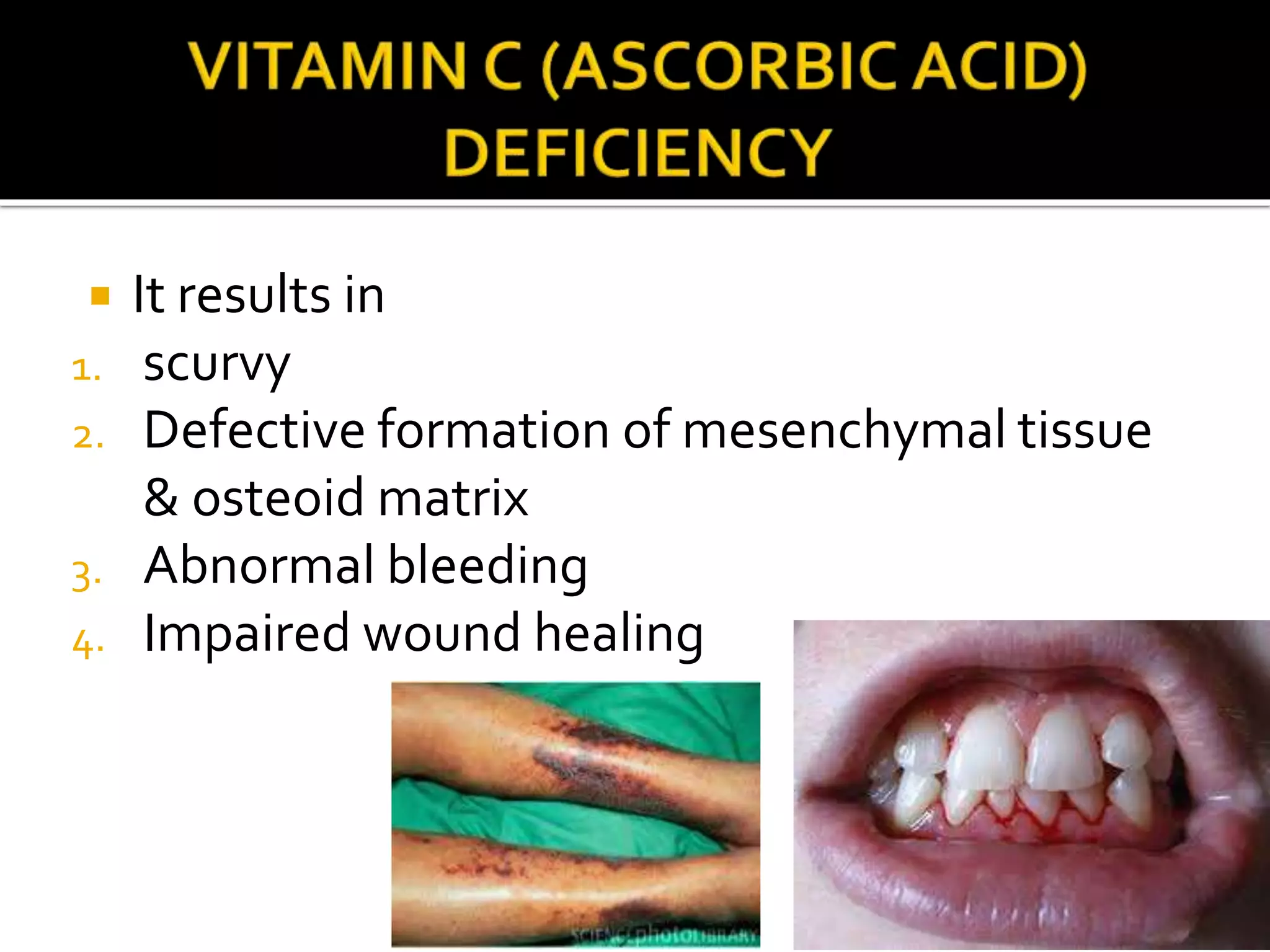
 It results in
1. scurvy
2. Defective formation of mesenchymal tissue
& osteoid matrix
3. Abnormal bleeding
4. Impaired wound healing
 VITAMIN A DEFICIENCY:
1. Night blindness
2. Xerophthalmia (dry eyes), blindness and
keratomalacia
3. Squamous cell metaplasia of trachea,
bronchi & renal pelvis causing
renal calculi.
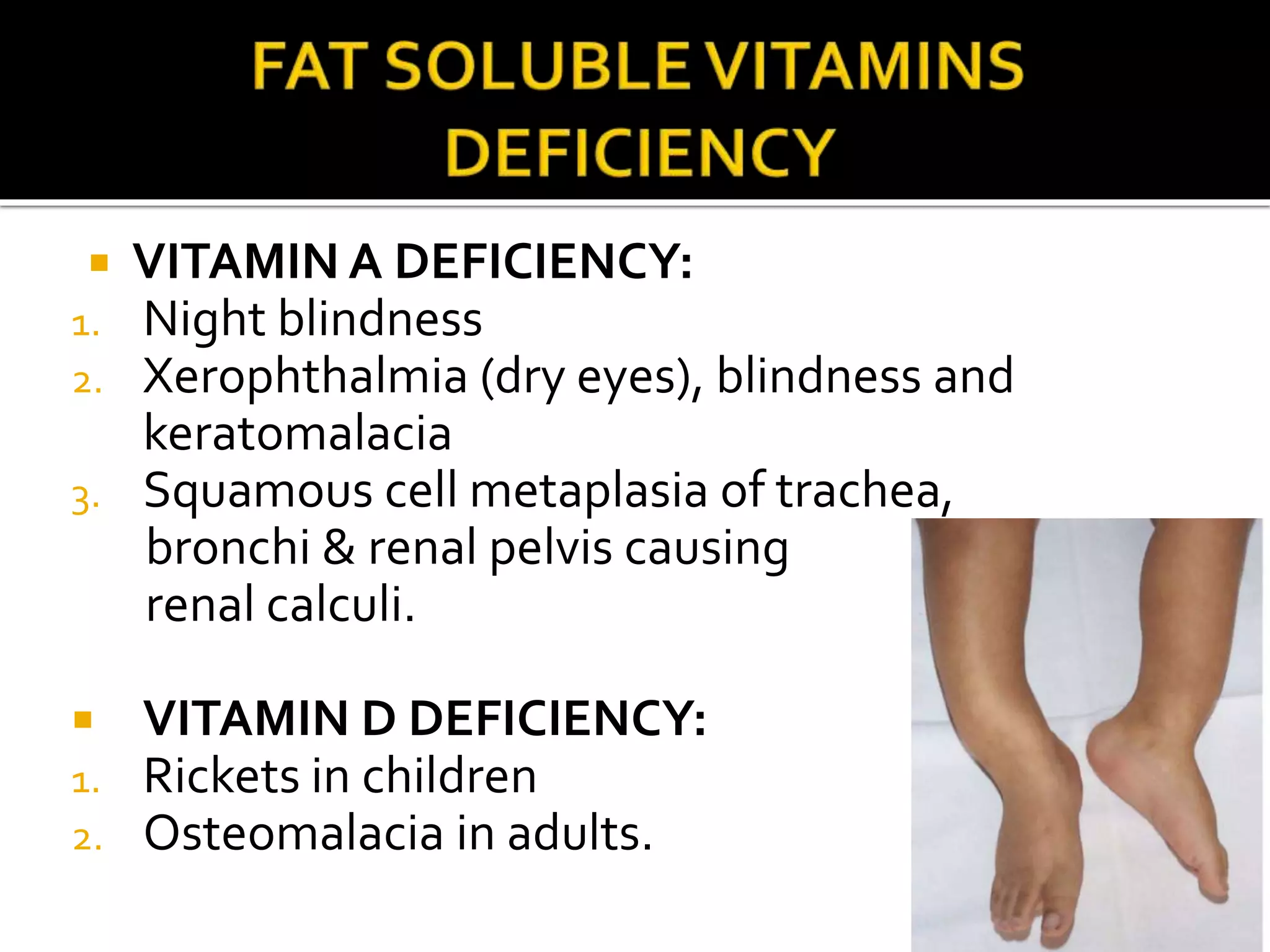
 VITAMIN D DEFICIENCY:
1. Rickets in children
2. Osteomalacia in adults.
 VITAMIN E DEFICIENCY:
1. Neurologic dysfunction
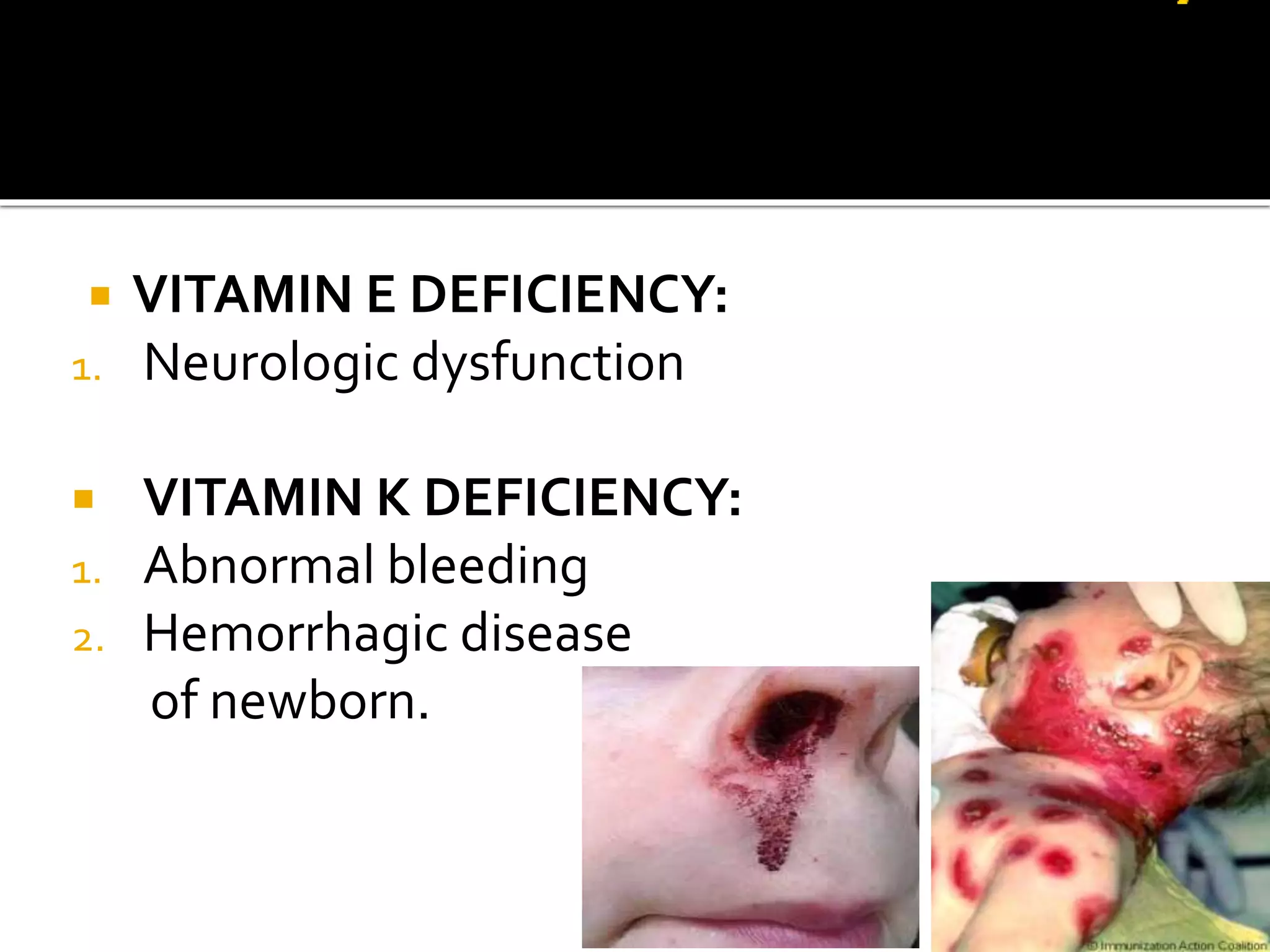
 VITAMIN K DEFICIENCY:
1. Abnormal bleeding
2. Hemorrhagic disease
of newborn.
 There are many mental disorders but we will
discuss here some important one.
1. Anxiety
2. Depression
3. Psychosis including schizophrenia.
 It is general term for several disorders that cause
nervousness, fear, apprehension and worrying.
 Signsymptoms:
1. Feelings of panic, fear and uneasiness
2. Shaking, confusion, dizziness, nausea &
difficulty in breathing (panic attack)
3. Problem in sleeping, palpitation.
 Treatment
1. Behavioral, psychological and social
modification
2. Benzodiazepines, buspirone and phenobarbital.
Thank

epidemiology.ppt22

  • 1.
  • 2.
     DEFINATION: it isthe study of the distribution and determination of health related states or events (including disease) and the application of this study to the control of diseases and other health problems.
  • 3.
     DESCRIPTIVE EPIDEMIOLOGY: studyof the distribution of disease variables commonly examined are descriptive of person, place and time.  ANALYTIC EPIDEMIOLOGY: use of epidemiologic methods to explain disease occurrence or elucidate casual mechanism.
  • 4.
     It isa quantitative science.  It is an applied science  Its methods are generally observational.  It focus is the group or community of person.  Its methods are systemic and orderly.
  • 5.
     DEFINATION: Itis lack of proper nutrition, caused by not having enough to eat, not eating enough of right things, or being unable to use food that one does eat.  Its most common in developing countries  According to national health service UK, around 3 millions people are affected by malnutrition.  According toWHO, malnutrition has largest contribution to child mortality globally, about 45%.
  • 6.
     Developing countries(food shortage, high food prices & lack of breast feeding)  Elderly people, especially who are hospitalized  Individuals who are socially isolated  People on low income (poor people)  People with chronic eating disorders, as bulimia or anorexia nervosa.  Digestive disorders like crohns disease or ulcerative colitis.  alcoholism
  • 7.
     It includes Kwashiorkor  Marasmus
  • 8.
     It iscaused by deficiency of almost all nutrients, notably protein and calories.  It often coexists with vitamin deficiency.  It occurs in children <1 year. sign/ symptoms:  Growth retardation  Loss of muscle & other protein containing tissue.  Loss of subcutaneous fat “wasting away” (monkey face)
  • 10.
     It iscaused by protein deficiency but with adequate caloric intake.  It is seen in children >1 year, with starch rich and poor protein diet. Sign/symptoms:  Growth retardation  Muscle wasting with preservation of subcutaneous fat  Fatty liver, anemia, malabsorption  Severe edema  Depigmented bands with pale streaking in the hair or skin.
  • 11.
  • 12.
     Water solublevitamins like B-complex (B1, B2, B3, B6, B12), folic acid and vitamin C are not stored in the body. Its regular intake is essential except B12.  Toxicity from excessive intake is rare because excess vitamin is excreted in urine.
  • 13.
     B-complex (exceptB12): whole grain cereals, green leafy vegetables, fish, meat and dairy foods.  Vitamin B12: foods of animal origin only  Folic acid: leafy vegetables, cereals, fruit and animal products.  Vitamin C: fruits (especially citrus and tomatoes), vegetables, various meats & milk.
  • 15.
     It isassociated with severe malnutrition, alcoholism and fad diets.  It results 1. DRY BERIBERI: associated with peripheral neuropathy with atrophy of muscles of extremities. 2. WET BERIBERI: it results high-output cardiac failure with dilated cardiomyopathy. 3. WERNICKE-KORSAKOFF SYNDROME: it is seen in alcoholics. It is characterized by confusion, ataxia and ophthalmoplegia (wernicke traid).There is marked memory loss in patients.
  • 16.
     It isseen in chronic alcoholics, elderly, fad dieters and persons with chronic debilitating diseases. It causes:  Cheilosis (skin fissure at angle of mouth)  Glossitis  Corneal vascularization  Seborrheic dermatitis
  • 17.
    it is manifestclinically as  Pellagra (three D’s) dementia dermatitis diarrhea
  • 18.
     Its deficiencycauses 1. Cheilosis 2. Glossitis 3. Microcytic anemia (reduced heme synthesis) 4. Convulsions in infants 5. Neurological dysfunction
  • 19.
     It causes 1.Megaloblastic anemia 2. Prominent neurologic dysfunction ( seen with B12 deficiency)
  • 20.
     It resultsin 1. scurvy 2. Defective formation of mesenchymal tissue & osteoid matrix 3. Abnormal bleeding 4. Impaired wound healing
  • 21.
     VITAMIN ADEFICIENCY: 1. Night blindness 2. Xerophthalmia (dry eyes), blindness and keratomalacia 3. Squamous cell metaplasia of trachea, bronchi & renal pelvis causing renal calculi.  VITAMIN D DEFICIENCY: 1. Rickets in children 2. Osteomalacia in adults.
  • 22.
     VITAMIN EDEFICIENCY: 1. Neurologic dysfunction  VITAMIN K DEFICIENCY: 1. Abnormal bleeding 2. Hemorrhagic disease of newborn.
  • 23.
     There aremany mental disorders but we will discuss here some important one. 1. Anxiety 2. Depression 3. Psychosis including schizophrenia.
  • 24.
     It isgeneral term for several disorders that cause nervousness, fear, apprehension and worrying.  Signsymptoms: 1. Feelings of panic, fear and uneasiness 2. Shaking, confusion, dizziness, nausea & difficulty in breathing (panic attack) 3. Problem in sleeping, palpitation.  Treatment 1. Behavioral, psychological and social modification 2. Benzodiazepines, buspirone and phenobarbital.
  • 25.