Introduction To Motivation
The word ‘motivation’ comes from the Latin
root ‘movere’ which means to move. Motivation is
usually defined as an internal state that arouses,
directs and maintains behaviour. Motivation, thus
may regarded as something which prompts,
compels and energies an individual to act or
behave .
ENTREPRENEURIAL MOTIVATION
Entrepreneurial motivation may be defined as
the process that activates the entrepreneurs to
exert a high level of effort for the achievement of
his/her goals. In other words, the entrepreneurial
motivation refers to the drive or forces within an
entrepreneur that affects his/her direction, intensity
and persistence of voluntary behavior.
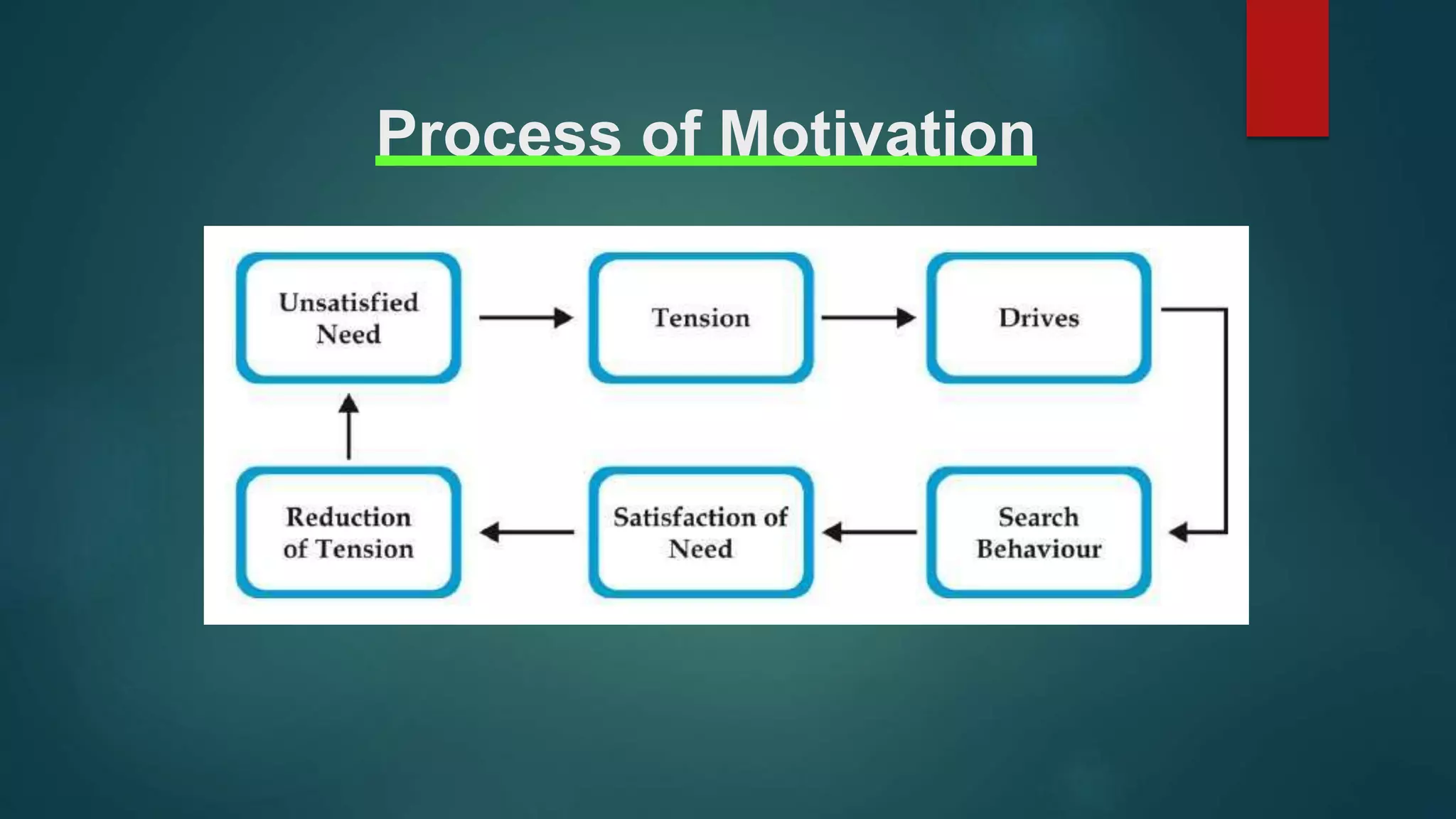
Process of Motivation
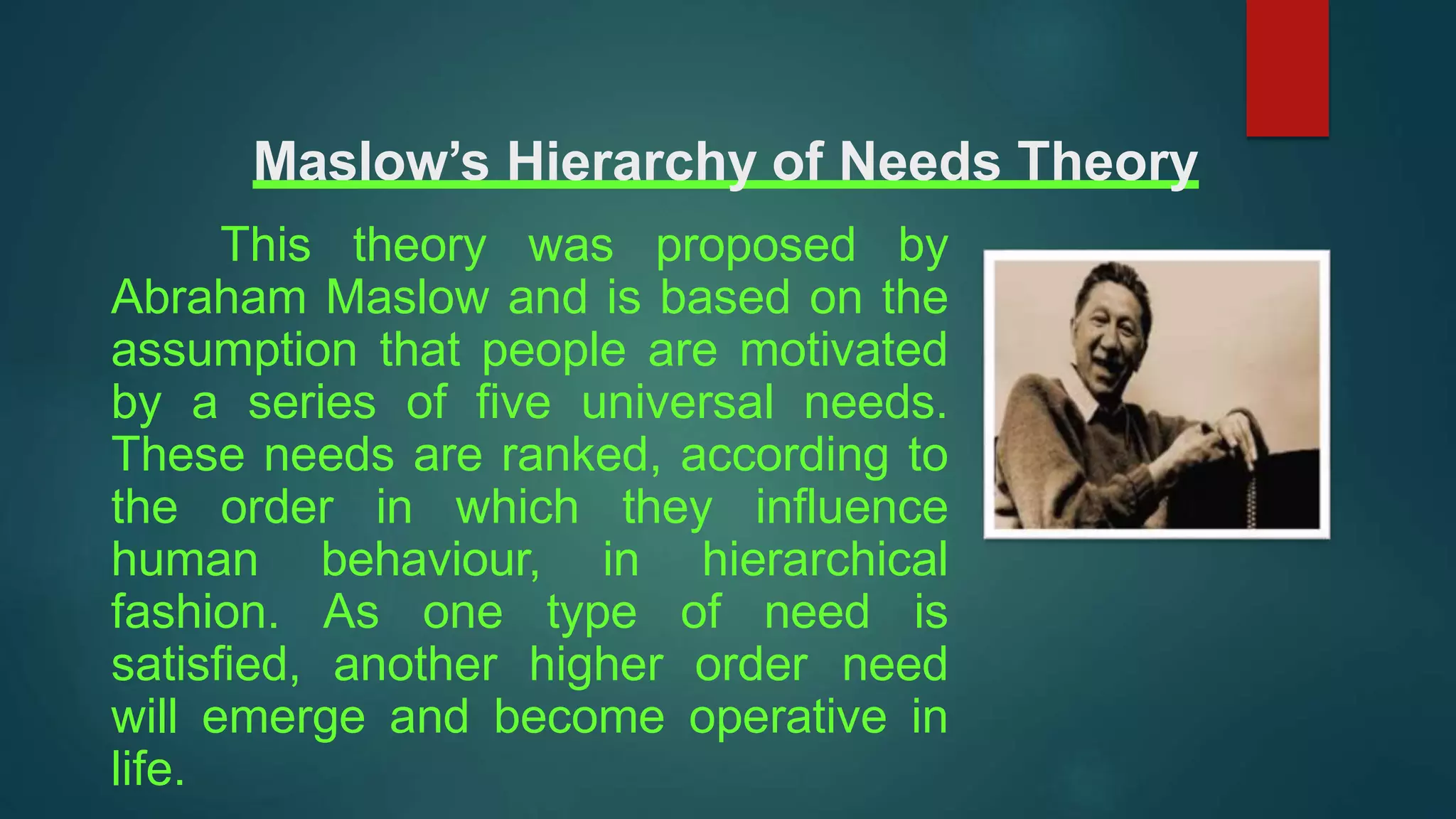
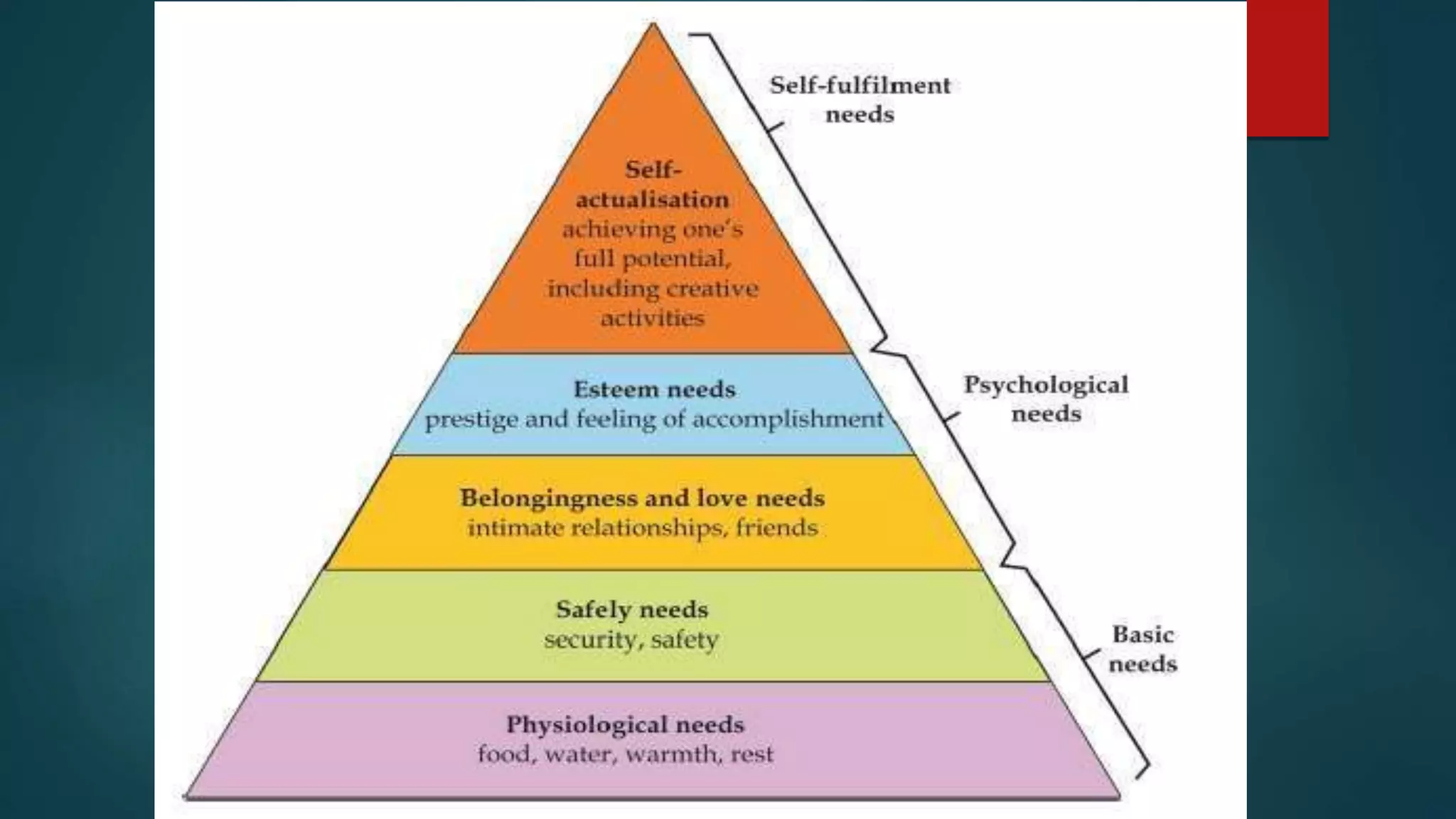
Maslow’s Hierarchy of Needs Theory
This theory was proposed by
Abraham Maslow and is based on the
assumption that people are motivated
by a series of five universal needs.
These needs are ranked, according to
the order in which they influence
human behaviour, in hierarchical
fashion. As one type of need is
satisfied, another higher order need
will emerge and become operative in
life.
Physiological Needs
The most potent need. According
to Maslow, when these physiological needs
are developed for a long period, all other
needs fail to appear or recede in the
background. Physiological needs are
deemed to be the lowest- level needs.
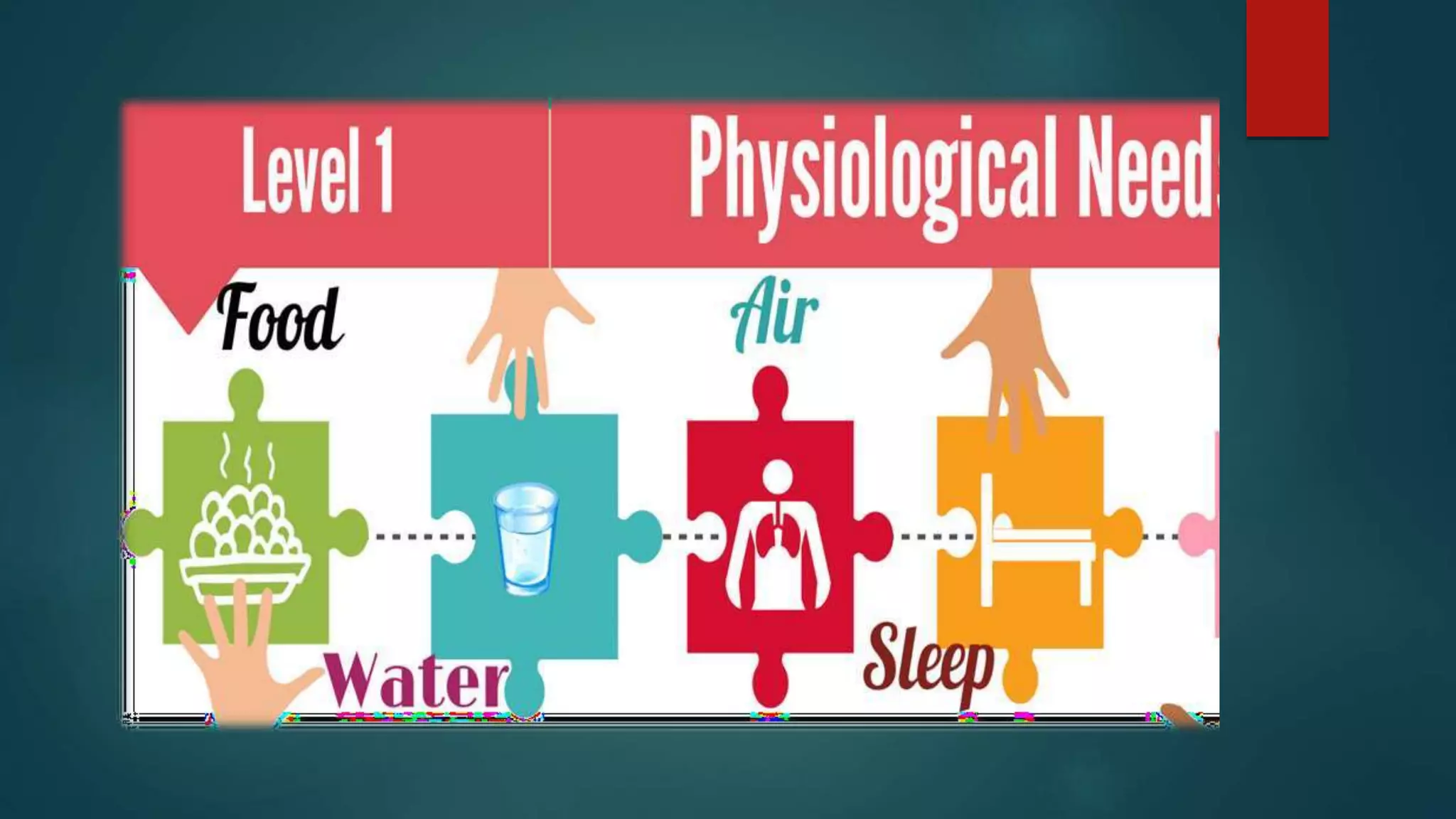
These needs include the needs such as
food and water.
Safety Needs
When the physiological needs are successfully
fulfilled then safety needs become the dominant
force in the personality of the individual. Safety
needs include a desire for security, stability,
dependency, protection, freedom from fear and
anxiety, and a need for structure, order, and law.
In the workplace this needs translates into a
need for at least a minimal degree of employment
security; the knowledge that we cannot be fired on
a whim and that appropriate levels of effort and
productivity will ensure continued employment.
Social Need
This need emphasize basic
physiological nature of human beings to
identify with the group life; making
intimate relationship with other members
of society. These needs are dependent
on the fulfilment of previous needs.
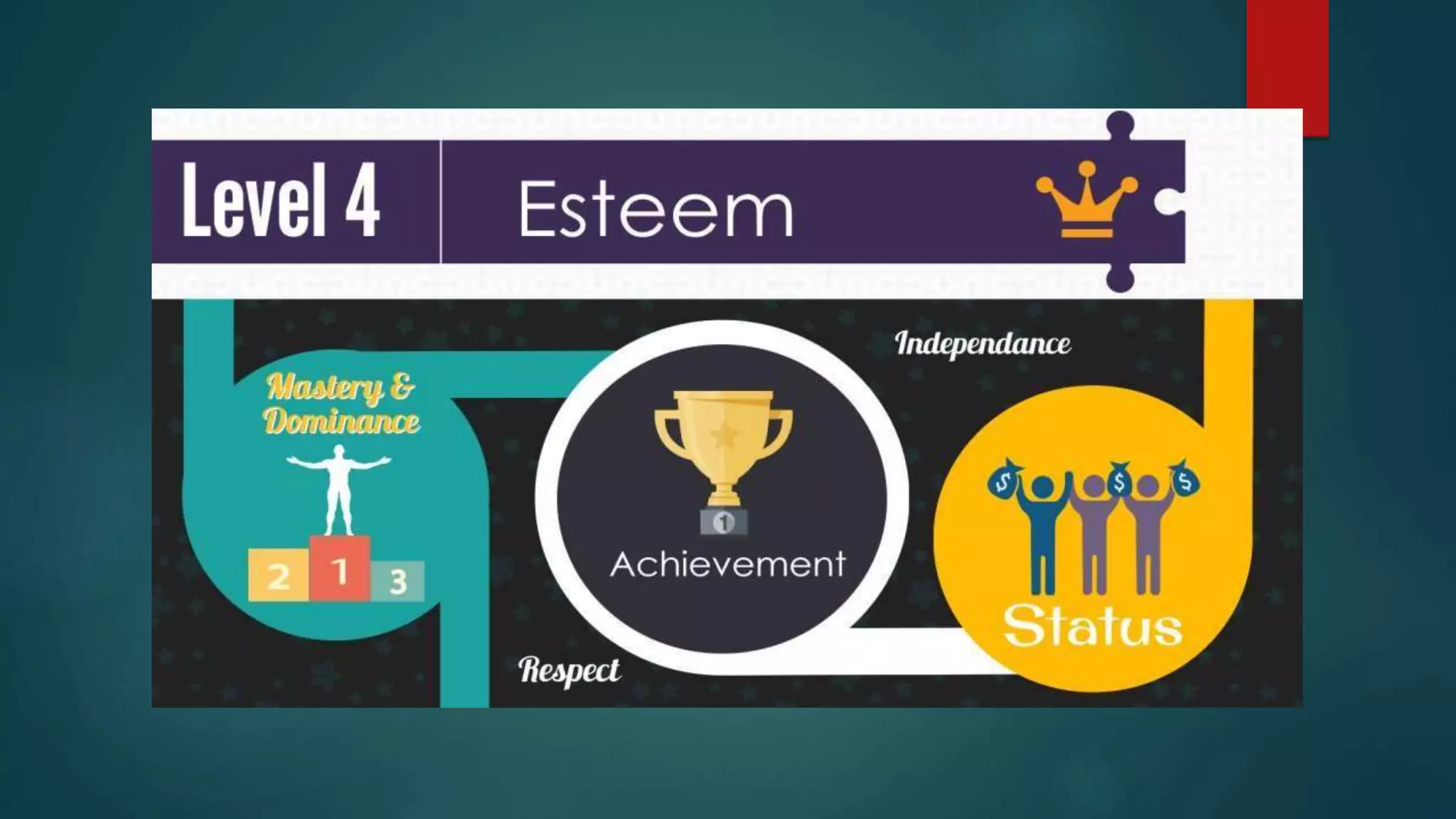
Esteem Need
Esteem needs include the desire for self-
respect, self-esteem, and the esteem of others.
When focused externally, these needs also include
the desire for reputation, prestige, status, fame,
glory, dominance, recognition, attention,
importance, and appreciation.
Self-actualization Need
The highest need. It means to fulfil one’s
individual nature in all aspects, being what one can
be. One of the most important aspects of self-
actualization is freedom from cultural and self-
imposed restrains. Self-actualization is possible
when the basic needs of the person are met.
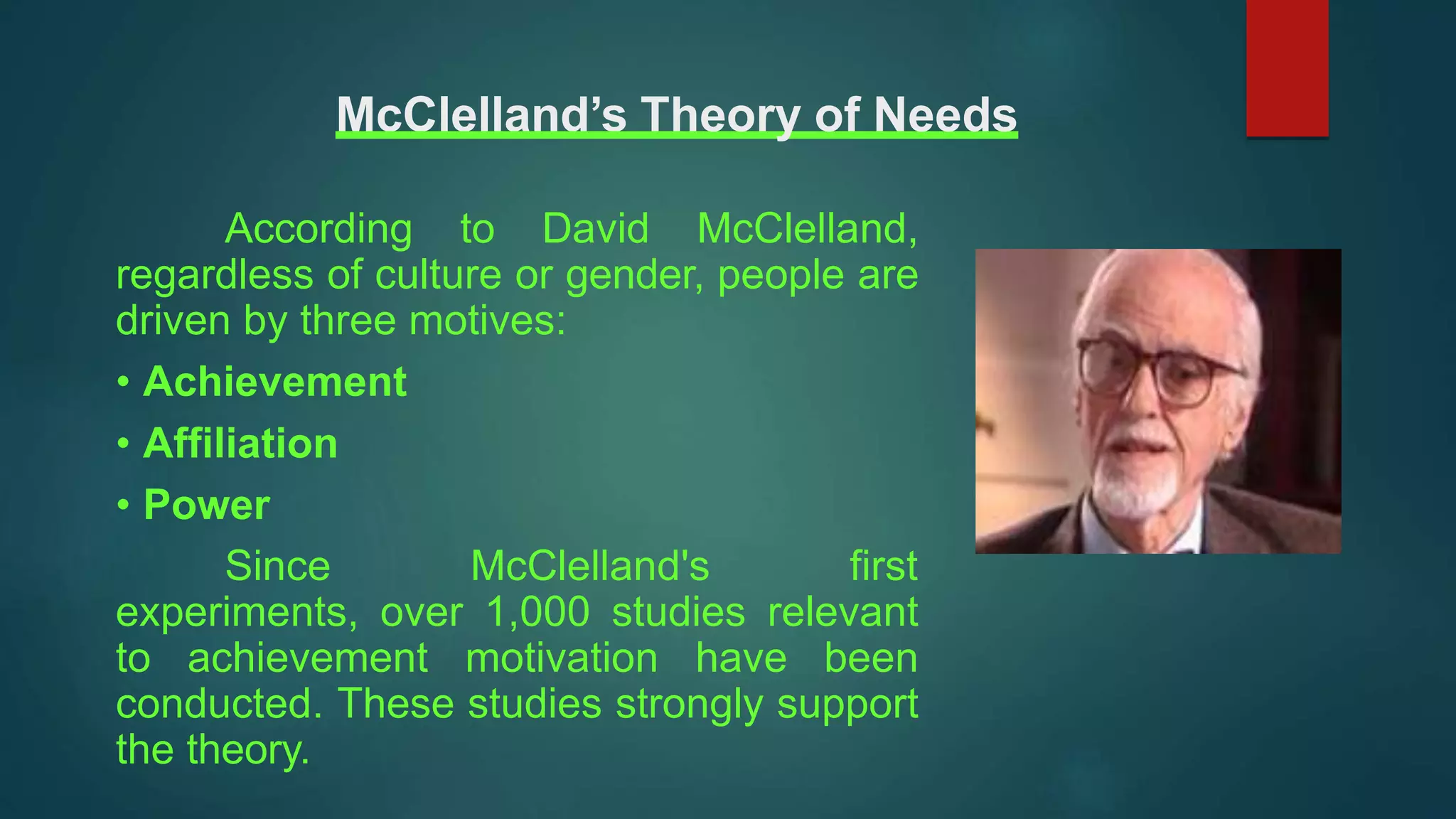
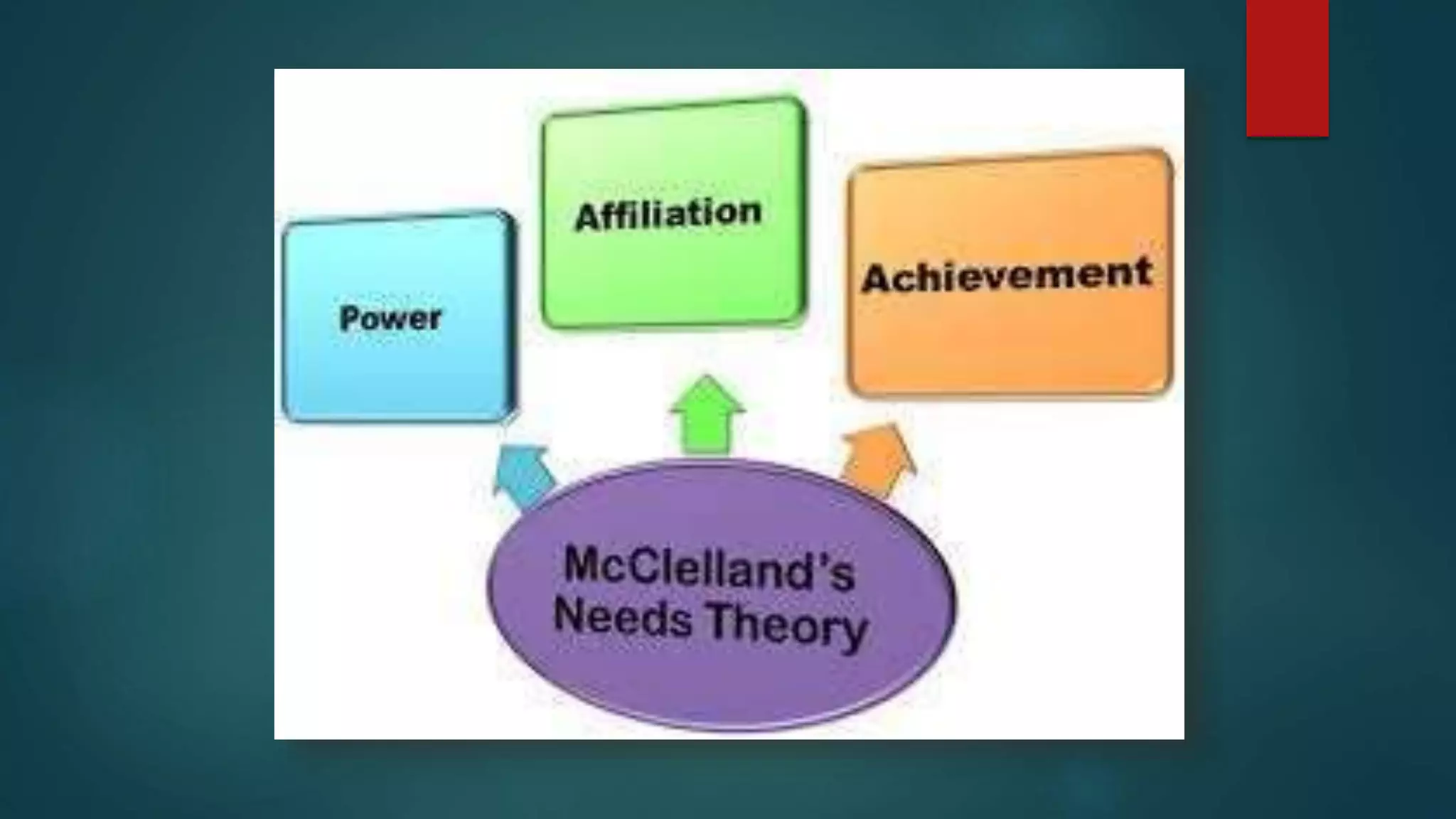
McClelland’s Theory of Needs
According to David McClelland,
regardless of culture or gender, people are
driven by three motives:
• Achievement
• Affiliation
• Power
Since McClelland's first
experiments, over 1,000 studies relevant
to achievement motivation have been
conducted. These studies strongly support
the theory.
Achievement
The need for achievement is
characterized by the wish to take
responsibility for finding solutions
to problems, master complex
tasks, set goals and get feedback
on level of success.
Affiliation
The need for affiliation is
characterized by a desire to belong,
an enjoyment of teamwork, a
concern about interpersonal
relationships, and a need to reduce
uncertainty.
Power
 The need for power is characterized by
a drive to control and influence others, a need
to win arguments, a need to persuade and
prevail
According to McClelland, the presence
of these motives or drives in an individual
indicates a predisposition to behave in certain
ways. Therefore, from a manager's
perspective, recognizing which need is
dominant in any particular individual affects
the way in which that person can be
motivated.
EP Unit-2 ppt.pptx

EP Unit-2 ppt.pptx

  • 2.
    Introduction To Motivation Theword ‘motivation’ comes from the Latin root ‘movere’ which means to move. Motivation is usually defined as an internal state that arouses, directs and maintains behaviour. Motivation, thus may regarded as something which prompts, compels and energies an individual to act or behave .
  • 3.
    ENTREPRENEURIAL MOTIVATION Entrepreneurial motivationmay be defined as the process that activates the entrepreneurs to exert a high level of effort for the achievement of his/her goals. In other words, the entrepreneurial motivation refers to the drive or forces within an entrepreneur that affects his/her direction, intensity and persistence of voluntary behavior.
  • 4.
  • 5.
    Maslow’s Hierarchy ofNeeds Theory This theory was proposed by Abraham Maslow and is based on the assumption that people are motivated by a series of five universal needs. These needs are ranked, according to the order in which they influence human behaviour, in hierarchical fashion. As one type of need is satisfied, another higher order need will emerge and become operative in life.
  • 7.
    Physiological Needs The mostpotent need. According to Maslow, when these physiological needs are developed for a long period, all other needs fail to appear or recede in the background. Physiological needs are deemed to be the lowest- level needs. These needs include the needs such as food and water.
  • 9.
    Safety Needs When thephysiological needs are successfully fulfilled then safety needs become the dominant force in the personality of the individual. Safety needs include a desire for security, stability, dependency, protection, freedom from fear and anxiety, and a need for structure, order, and law. In the workplace this needs translates into a need for at least a minimal degree of employment security; the knowledge that we cannot be fired on a whim and that appropriate levels of effort and productivity will ensure continued employment.
  • 11.
    Social Need This needemphasize basic physiological nature of human beings to identify with the group life; making intimate relationship with other members of society. These needs are dependent on the fulfilment of previous needs.
  • 13.
    Esteem Need Esteem needsinclude the desire for self- respect, self-esteem, and the esteem of others. When focused externally, these needs also include the desire for reputation, prestige, status, fame, glory, dominance, recognition, attention, importance, and appreciation.
  • 15.
    Self-actualization Need The highestneed. It means to fulfil one’s individual nature in all aspects, being what one can be. One of the most important aspects of self- actualization is freedom from cultural and self- imposed restrains. Self-actualization is possible when the basic needs of the person are met.
  • 17.
    McClelland’s Theory ofNeeds According to David McClelland, regardless of culture or gender, people are driven by three motives: • Achievement • Affiliation • Power Since McClelland's first experiments, over 1,000 studies relevant to achievement motivation have been conducted. These studies strongly support the theory.
  • 19.
    Achievement The need forachievement is characterized by the wish to take responsibility for finding solutions to problems, master complex tasks, set goals and get feedback on level of success.
  • 20.
    Affiliation The need foraffiliation is characterized by a desire to belong, an enjoyment of teamwork, a concern about interpersonal relationships, and a need to reduce uncertainty.
  • 21.
    Power  The needfor power is characterized by a drive to control and influence others, a need to win arguments, a need to persuade and prevail
  • 22.
    According to McClelland,the presence of these motives or drives in an individual indicates a predisposition to behave in certain ways. Therefore, from a manager's perspective, recognizing which need is dominant in any particular individual affects the way in which that person can be motivated.