Environmental Science


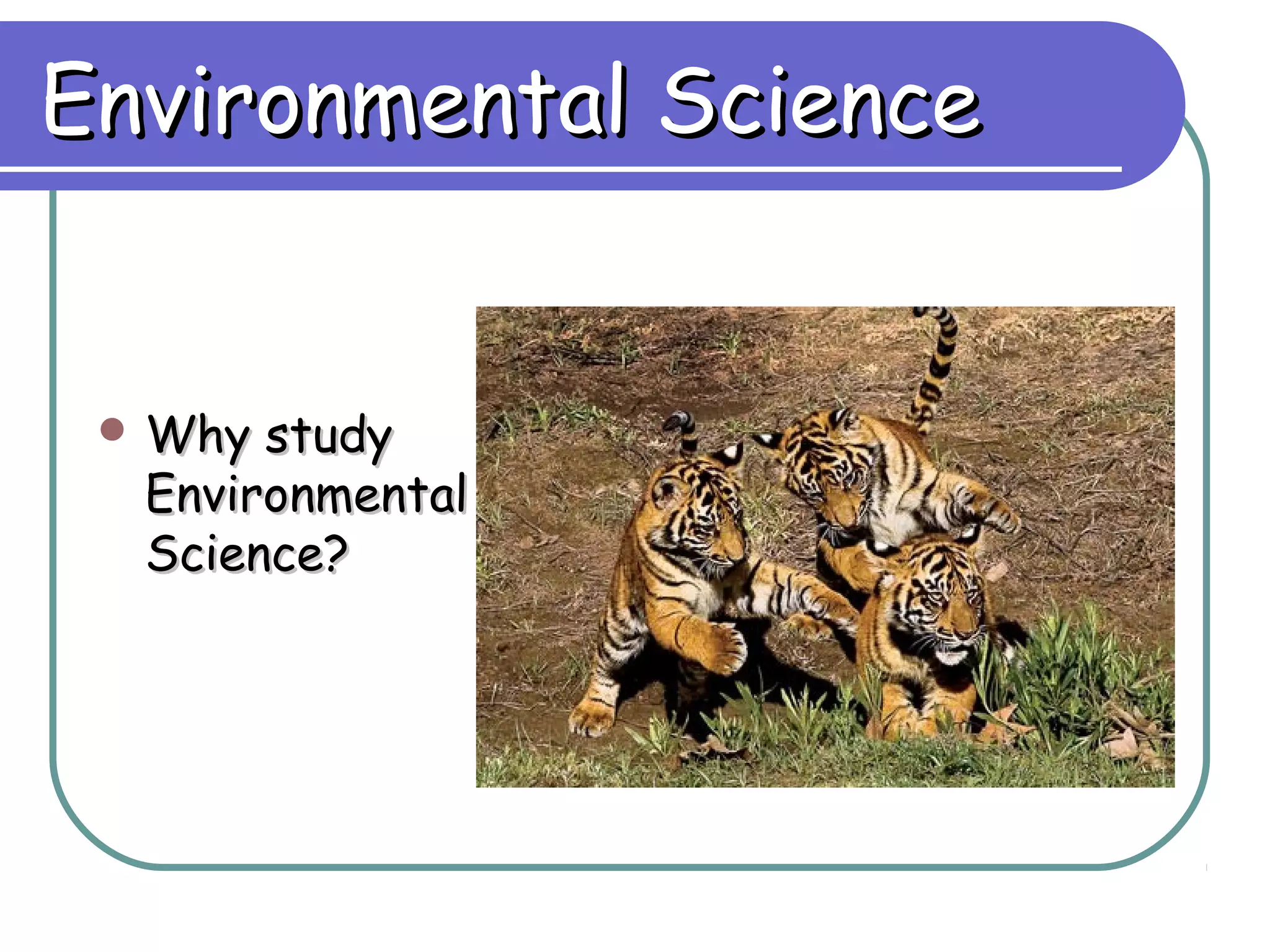
  Why study
  Environmental
  Science?
Environmental Science
 Environmental    Science is…
  An interdisciplinary study of how
   the earth works
  How we interact with the planet

  How to deal with environmental
   problems
 It   affects all aspects of your life
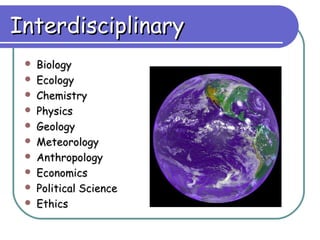
Interdisciplinary
    Biology
    Ecology
    Chemistry
    Physics
    Geology
    Meteorology
    Anthropology
    Economics
    Political Science
    Ethics
Global Environmental Concerns

 Population    Growth
   Economic   Development
 Decline of Vital    Ecosystems
   Loss   of Biodiversity
 Global   Atmospheric Changes
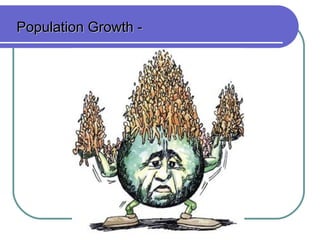
Population Growth -
Population Growth


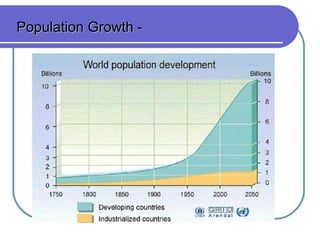
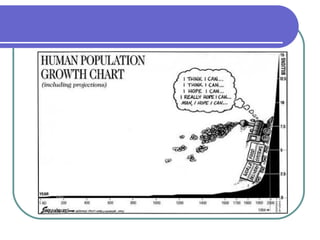
 Human  population today is
  approximately 7 billion
 Global estimates for the year
  2050 could reach over 9 billion
  people
Population Growth -
Population Growth
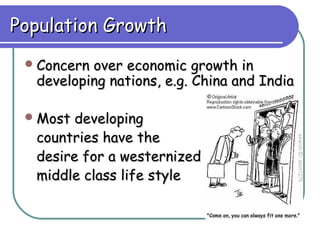
  Concernover economic growth in
  developing nations, e.g. China and India

  Most developing
  countries have the
  desire for a westernized
  middle class life style
Population Growth

 USA   is the largest consumer of
  fossil fuels and largest producer
  of carbon emissions

 With  rapid economic growth what
  is the impact on the environment?
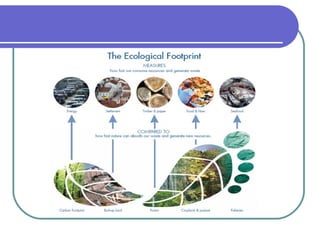
Ecological Footprint
 What    is your Ecological Footprint?
   The  ecological footprint is a measure of
    human demand on the Earth's ecosystems.
    It compares human demand with planet
    Earth's ecological capacity to regenerate.
   Ecological Footprints measures
    humanities demands on Nature.
    Everything we do has consequences…
   www.myfootprint.org/
Vocabulary Definitions
 Resource:    is anything
  obtained from the environment
  to meet our needs and wants
 Renewable Resources: can be
  replenished fairly rapidly
 Nonrenewable Resources:
  exist in a limited quantity
Vocabulary Definitions
 Conservation:  the
  management of natural
  resources for future
  generations
 Environmental Degradation:
  occurs when resource demands
  exceed its replacement rate
Vocabulary Definitions
 Ecosystem:    A group of plants,
  animals, and other organisms
  that work/interact with each
  other in a specific
  environment.
 Organism: Any living thing;
  plant, animal or microbe
Vocabulary Definitions
 Biodiversity:  The variety of
  organism found within an
  ecosystem
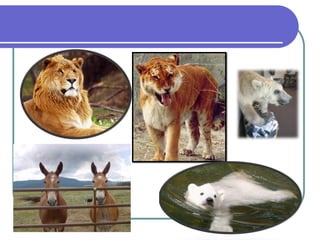
 Species: A single kind of any
  plant, animal or microbe that
  can reproduce and have viable
  offspring
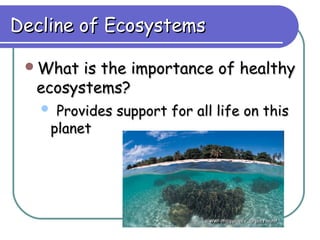
Decline of Ecosystems

 What  is the importance of healthy
  ecosystems?
    Provides support for all life on this
    planet
Decline of Ecosystems

 How   do you feel about habitat
  loss?

 What   about animal extinction?

 Why  should we care about the
  environment?
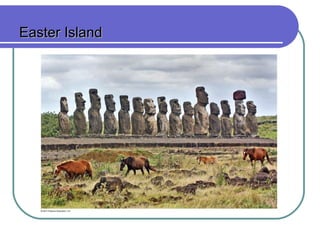
Easter Island
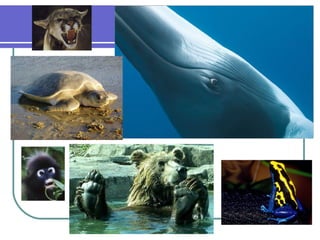
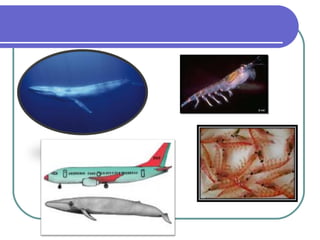
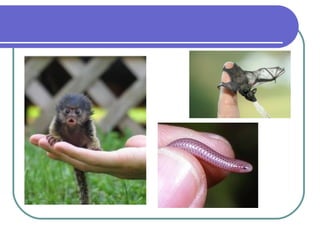
Loss of Biodiversity

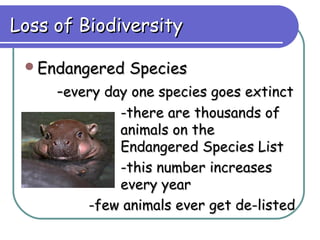
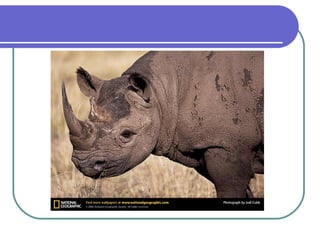
 Endangered   Species
     -every day one species goes extinct
             -there are thousands of
             animals on the
             Endangered Species List
             -this number increases
             every year
         -few animals ever get de-listed
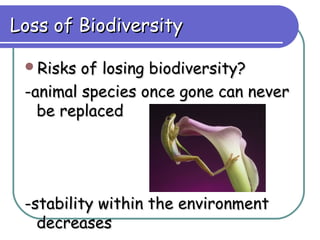
Loss of Biodiversity

 Risks  of losing biodiversity?
 -animal species once gone can never
   be replaced


 -stability within the environment
   decreases
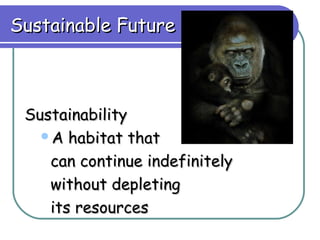
Sustainable Future


 Sustainability
   A habitat that

    can continue indefinitely
    without depleting
    its resources
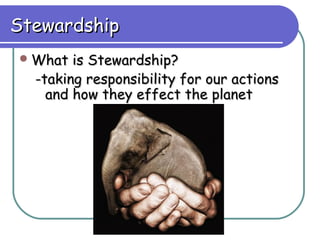
Stewardship
 What  is Stewardship?
  -taking responsibility for our actions
    and how they effect the planet
Stewardship


 Transition   Generation…

    Are   you a part of the solution?
Science & Scientific Method

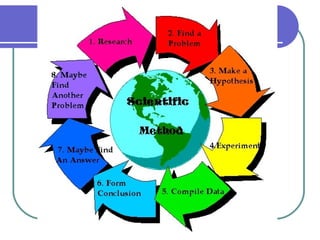
  Science:  A way of gaining knowledge
  Scientific Method:

      1. Problem/Observation
      2. Hypothesis
      3. Experiment
      4. Theory/Solution
    Data:Information that is gathered from
    observations and measurements drawn
    from experiments
Science & Scientific Method

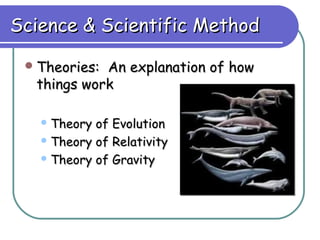
  Theories:An explanation of how
  things work

    Theory of Evolution
    Theory of Relativity

    Theory of Gravity
Science & Scientific Method
What   is scientific objectivity?
 -All information is considered when
  developing conclusions
What is scientific rationality?
 -All information is considered and
  presented is a clear and logical
  fashion
   All scientific research is peer reviewed
    for accuracy, clarity and rationality.
Science & Scientific Method

 Sound  Science: (reliable) is peer
  reviewed research that can be
  duplicated
 Junk Science: (unreliable) usually
  doesn’t have a solid scientific basis of
  reasoning, challenges other scientific
  data with the intent of causing
  confusion and damage to further their
  own interests
Science & Scientific Method

 Cause     & Effect
   A  cause is something that makes something
     else happen. Out of two events, it is the
     event that happens first
    An effect is what happens as a result of the
     cause. Of two related events, it’s the one
     that happens second or last
           -pollution and acid rain
Science & Scientific Method

 Correlation
   a statistical measure of a relationship
    between two or more variables, gives an
    indication of how one variable may predict
    another
          -Body versus Brain size
Science & Scientific Method

 Observation


 Interpretation


     -When looking at scientific
  evidence, you need to see thing
  objectively without emotional
  interpretation!
Environmental science intro & chapter 1

Environmental science intro & chapter 1

  • 1.
    Environmental Science Why study Environmental Science?
  • 2.
    Environmental Science Environmental Science is… An interdisciplinary study of how the earth works How we interact with the planet How to deal with environmental problems It affects all aspects of your life
  • 3.
    Interdisciplinary  Biology  Ecology  Chemistry  Physics  Geology  Meteorology  Anthropology  Economics  Political Science  Ethics
  • 4.
    Global Environmental Concerns Population Growth Economic Development Decline of Vital Ecosystems Loss of Biodiversity Global Atmospheric Changes
  • 5.
  • 6.
    Population Growth Human population today is approximately 7 billion Global estimates for the year 2050 could reach over 9 billion people
  • 7.
  • 8.
    Population Growth Concernover economic growth in developing nations, e.g. China and India  Most developing countries have the desire for a westernized middle class life style
  • 9.
    Population Growth USA is the largest consumer of fossil fuels and largest producer of carbon emissions With rapid economic growth what is the impact on the environment?
  • 11.
    Ecological Footprint What is your Ecological Footprint?  The ecological footprint is a measure of human demand on the Earth's ecosystems. It compares human demand with planet Earth's ecological capacity to regenerate.  Ecological Footprints measures humanities demands on Nature. Everything we do has consequences…  www.myfootprint.org/
  • 13.
    Vocabulary Definitions Resource: is anything obtained from the environment to meet our needs and wants Renewable Resources: can be replenished fairly rapidly Nonrenewable Resources: exist in a limited quantity
  • 14.
    Vocabulary Definitions Conservation: the management of natural resources for future generations Environmental Degradation: occurs when resource demands exceed its replacement rate
  • 15.
    Vocabulary Definitions Ecosystem: A group of plants, animals, and other organisms that work/interact with each other in a specific environment. Organism: Any living thing; plant, animal or microbe
  • 16.
    Vocabulary Definitions Biodiversity: The variety of organism found within an ecosystem Species: A single kind of any plant, animal or microbe that can reproduce and have viable offspring
  • 18.
    Decline of Ecosystems What is the importance of healthy ecosystems?  Provides support for all life on this planet
  • 19.
    Decline of Ecosystems How do you feel about habitat loss? What about animal extinction? Why should we care about the environment?
  • 20.
  • 22.
    Loss of Biodiversity Endangered Species -every day one species goes extinct -there are thousands of animals on the Endangered Species List -this number increases every year -few animals ever get de-listed
  • 26.
    Loss of Biodiversity Risks of losing biodiversity? -animal species once gone can never be replaced -stability within the environment decreases
  • 28.
    Sustainable Future Sustainability A habitat that can continue indefinitely without depleting its resources
  • 29.
    Stewardship  What is Stewardship? -taking responsibility for our actions and how they effect the planet
  • 30.
    Stewardship  Transition Generation… Are you a part of the solution?
  • 31.
    Science & ScientificMethod  Science: A way of gaining knowledge  Scientific Method: 1. Problem/Observation 2. Hypothesis 3. Experiment 4. Theory/Solution  Data:Information that is gathered from observations and measurements drawn from experiments
  • 33.
    Science & ScientificMethod  Theories:An explanation of how things work  Theory of Evolution  Theory of Relativity  Theory of Gravity
  • 34.
    Science & ScientificMethod What is scientific objectivity? -All information is considered when developing conclusions What is scientific rationality? -All information is considered and presented is a clear and logical fashion  All scientific research is peer reviewed for accuracy, clarity and rationality.
  • 35.
    Science & ScientificMethod  Sound Science: (reliable) is peer reviewed research that can be duplicated  Junk Science: (unreliable) usually doesn’t have a solid scientific basis of reasoning, challenges other scientific data with the intent of causing confusion and damage to further their own interests
  • 36.
    Science & ScientificMethod Cause & Effect A cause is something that makes something else happen. Out of two events, it is the event that happens first  An effect is what happens as a result of the cause. Of two related events, it’s the one that happens second or last -pollution and acid rain
  • 37.
    Science & ScientificMethod Correlation a statistical measure of a relationship between two or more variables, gives an indication of how one variable may predict another -Body versus Brain size
  • 38.
    Science & ScientificMethod Observation Interpretation -When looking at scientific evidence, you need to see thing objectively without emotional interpretation!