ENVIRONMENTAL
SCIENCE
Chapter 1:
Yabut, Emerson Rein
Villares, Jay-Ann
Vargas, Ma. Angeline
CAS-02-502P
Topic Outline:
Definition, Scope, and Importance of
Environmental Science
Field of Environmental Science
Environmental Interrelationships
Ecology and Environmental Science
Unifying Environmental Themes
Source: https://www.worldatlas.com/rivers/amazon-river.html
Derived from the Greek word “environner”, which means to
encircle around or surround.
Environment Protection Act 1986: The sum total of land, water,
air, interrelationships among themselves and also with living
organisms.
Definition, Scope, and Importance of Environmental
Science
Definition of Environment
Scope of Environment
Protects the Earth’s surface
Regulates the Earth’s temperature
Atmosphere
Hydrosphere
All types of water resources
Lithosphere
Outer mantle of the Earth
Biosphere
Realm of living organisms and their interactions with the environment
Definition, Scope, and Importance of Environmental
Science
Environmental Science
It is an interdisciplinary field that studies the
interactions between the natural environment and
human society.
Deals with ecology, geology, atmospheric science,
hydrology, oceanography, etc.
Importance of Environmental Science
Provide basic knowledge of the environment to all
individuals and help in understanding present
environmental projects.
Provide a more sustainable way of living.
Helps in using natural resources more efficiently.
Educating and making people aware of different
environmental issues and problems.
5 Major Fields of Environmental Science
Deal with global warming and its effect
Atmospheric Sciences
Ecologists Research
Deals with how a specific species or a group of living creatures are
influenced by their environment
Environmental Chemistry
Explores things like chemical effects on different plants
Social Sciences
Deal with the relationship between humans and nature
Explore the chemical and physical constitution of our planet
Geosciences
Environmental
Interrelationships
It refers to the complex and interconnected
relationships that exist among various
elements within the natural world. These
relationships are fundamental to
understanding how ecosystems function
and how human activities can impact the
environment.
Ecology
• Is the scientific study of the relationships between
organisms and their environment.
• Environment includes the physical and chemical
conditions as well as the biological or living
components of an organism’s surroundings.
• Relationships include interactions with the physical
world as well as with members of the same and other
species.
Ecology and Environmental Science
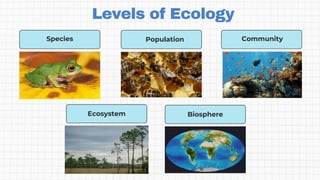
Levels of Ecology
Species Population Community
Ecosystem Biosphere
Is a resource that can be
replenished naturally over time.
Examples: Forests, grasslands,
freshwater, fertile soil, and air
Renewable Resources Non-Renewable Resources
Refers to a natural substance that is
not replenished with the speed at
which it is consumed.
Examples: Coal, oil, copper,
aluminum, salt, and sand
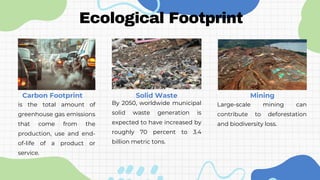
Ecological Footprint
-measures demand on nature including consumption of resources and emissions.
is the total amount of
greenhouse gas emissions
that come from the
production, use and end-
of-life of a product or
service.
Ecological Footprint
Carbon Footprint Solid Waste
By 2050, worldwide municipal
solid waste generation is
expected to have increased by
roughly 70 percent to 3.4
billion metric tons.
Mining
Large-scale mining can
contribute to deforestation
and biodiversity loss.
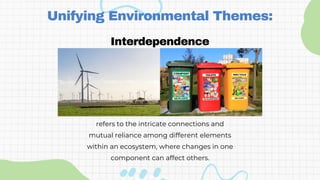
Unifying Environmental Themes:
Interdependence
refers to the intricate connections and
mutual reliance among different elements
within an ecosystem, where changes in one
component can affect others.
Diversity and Stability Change
Unifying Environmental Themes:
ecosystems with a wide variety of species
are more resilient and better equipped to
handle disturbances and changes over time.
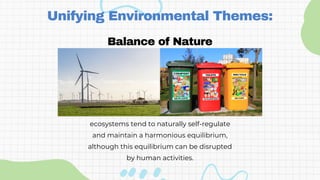
Balance of Nature
Unifying Environmental Themes:
ecosystems tend to naturally self-regulate
and maintain a harmonious equilibrium,
although this equilibrium can be disrupted
by human activities.
Finiteness of Resources
Unifying Environmental Themes:
highlights the idea that natural resources,
such as minerals and fossil fuels, are limited
in quantity and must be managed carefully
to prevent depletion.
Material Cycles
Unifying Environmental Themes:
involve the continuous flow and recycling of
essential elements and compounds (e.g.,
carbon, nitrogen, water) through natural
processes within ecosystems.
Population Growth and Carrying Capacity
Unifying Environmental Themes:
examines how the size of a population,
particularly human populations, interacts
with the environment's ability to support it
without resource exhaustion.
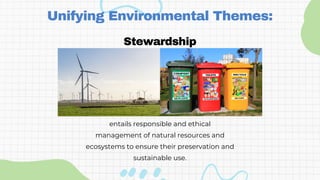
Stewardship
Unifying Environmental Themes:
entails responsible and ethical
management of natural resources and
ecosystems to ensure their preservation and
sustainable use.
Unifying Environmental Themes:
Sustainable Development
• Renewable Energy
• Crop Rotation
• Waste Management
• Reduced greenhouse gases
• Sustainable Forestry
Thank
you very
much!

Environmental Science Chapter on multidisciplinary fields.pdf

  • 1.
    ENVIRONMENTAL SCIENCE Chapter 1: Yabut, EmersonRein Villares, Jay-Ann Vargas, Ma. Angeline CAS-02-502P
  • 2.
    Topic Outline: Definition, Scope,and Importance of Environmental Science Field of Environmental Science Environmental Interrelationships Ecology and Environmental Science Unifying Environmental Themes Source: https://www.worldatlas.com/rivers/amazon-river.html
  • 3.
    Derived from theGreek word “environner”, which means to encircle around or surround. Environment Protection Act 1986: The sum total of land, water, air, interrelationships among themselves and also with living organisms. Definition, Scope, and Importance of Environmental Science Definition of Environment
  • 4.
    Scope of Environment Protectsthe Earth’s surface Regulates the Earth’s temperature Atmosphere Hydrosphere All types of water resources Lithosphere Outer mantle of the Earth Biosphere Realm of living organisms and their interactions with the environment Definition, Scope, and Importance of Environmental Science
  • 5.
    Environmental Science It isan interdisciplinary field that studies the interactions between the natural environment and human society. Deals with ecology, geology, atmospheric science, hydrology, oceanography, etc.
  • 6.
    Importance of EnvironmentalScience Provide basic knowledge of the environment to all individuals and help in understanding present environmental projects. Provide a more sustainable way of living. Helps in using natural resources more efficiently. Educating and making people aware of different environmental issues and problems.
  • 7.
    5 Major Fieldsof Environmental Science Deal with global warming and its effect Atmospheric Sciences Ecologists Research Deals with how a specific species or a group of living creatures are influenced by their environment Environmental Chemistry Explores things like chemical effects on different plants Social Sciences Deal with the relationship between humans and nature Explore the chemical and physical constitution of our planet Geosciences
  • 8.
    Environmental Interrelationships It refers tothe complex and interconnected relationships that exist among various elements within the natural world. These relationships are fundamental to understanding how ecosystems function and how human activities can impact the environment.
  • 9.
    Ecology • Is thescientific study of the relationships between organisms and their environment. • Environment includes the physical and chemical conditions as well as the biological or living components of an organism’s surroundings. • Relationships include interactions with the physical world as well as with members of the same and other species. Ecology and Environmental Science
  • 10.
    Levels of Ecology SpeciesPopulation Community Ecosystem Biosphere
  • 11.
    Is a resourcethat can be replenished naturally over time. Examples: Forests, grasslands, freshwater, fertile soil, and air Renewable Resources Non-Renewable Resources Refers to a natural substance that is not replenished with the speed at which it is consumed. Examples: Coal, oil, copper, aluminum, salt, and sand Ecological Footprint -measures demand on nature including consumption of resources and emissions.
  • 12.
    is the totalamount of greenhouse gas emissions that come from the production, use and end- of-life of a product or service. Ecological Footprint Carbon Footprint Solid Waste By 2050, worldwide municipal solid waste generation is expected to have increased by roughly 70 percent to 3.4 billion metric tons. Mining Large-scale mining can contribute to deforestation and biodiversity loss.
  • 14.
    Unifying Environmental Themes: Interdependence refersto the intricate connections and mutual reliance among different elements within an ecosystem, where changes in one component can affect others.
  • 15.
    Diversity and StabilityChange Unifying Environmental Themes: ecosystems with a wide variety of species are more resilient and better equipped to handle disturbances and changes over time.
  • 16.
    Balance of Nature UnifyingEnvironmental Themes: ecosystems tend to naturally self-regulate and maintain a harmonious equilibrium, although this equilibrium can be disrupted by human activities.
  • 17.
    Finiteness of Resources UnifyingEnvironmental Themes: highlights the idea that natural resources, such as minerals and fossil fuels, are limited in quantity and must be managed carefully to prevent depletion.
  • 18.
    Material Cycles Unifying EnvironmentalThemes: involve the continuous flow and recycling of essential elements and compounds (e.g., carbon, nitrogen, water) through natural processes within ecosystems.
  • 19.
    Population Growth andCarrying Capacity Unifying Environmental Themes: examines how the size of a population, particularly human populations, interacts with the environment's ability to support it without resource exhaustion.
  • 20.
    Stewardship Unifying Environmental Themes: entailsresponsible and ethical management of natural resources and ecosystems to ensure their preservation and sustainable use.
  • 21.
    Unifying Environmental Themes: SustainableDevelopment • Renewable Energy • Crop Rotation • Waste Management • Reduced greenhouse gases • Sustainable Forestry
  • 22.