Lecture # 1
   Introduction      to     ecology     of
    environment; Impact of technology on
    ecology of system; The effects of
    industrial pollutants on human
    environments; Environmental impact
    assessment          &       sustainable
    development; Air pollution and its
    control; Water pollution and its
    control; Industrial waste water and its
    control; Industrial noise pollution and
    its control; Future requirements of
    process industries and developments
    under the constraints of diminishing
    world resources and ecological
    demands of human environment.
   The environment encompasses
    the whole of life on earth and the
    complex interactions that link the
    living world with the physical
    world. In a general sense, this
    covers    everything     contained
    within the air, land and
    water. Sudden and dramatic
    natural     changes      to    the
    environment have occurred, and
    continue to occur, which have the
    potential to upset the whole
    balance of the Earth's ecosystem.
 To increase individual’s
              awareness level by
Objective

              providing information
              that will encourage to
              change the behavior and
              decrease the chance for
              an unpleasant event.
             Reduce    injuries and
              illnesses     and     in
              maintaining     a   safe
              working environment.
   Provide us with a
                structured system for
Objective

                identifying
                hazards, assessing risks
                associated with those
                hazards, putting in place
                measures to control the
                unacceptable risks and to
                review      the    control
                measures to ensure they
                are effective and have not
                introduced new hazards.
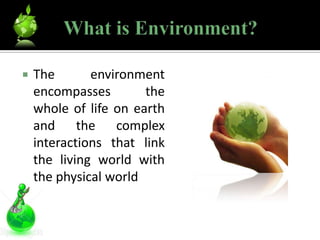
   The       environment
    encompasses        the
    whole of life on earth
    and the complex
    interactions that link
    the living world with
    the physical world
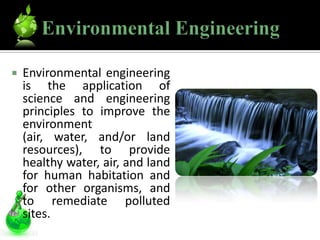
   Environmental engineering
    is the application of
    science and engineering
    principles to improve the
    environment
    (air, water, and/or land
    resources), to provide
    healthy water, air, and land
    for human habitation and
    for other organisms, and
    to remediate polluted
    sites.
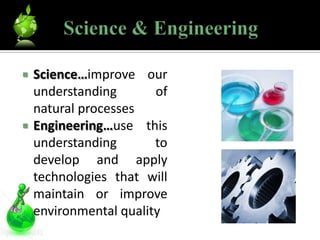
   Science…improve our
    understanding       of
    natural processes
   Engineering…use this
    understanding       to
    develop and apply
    technologies that will
    maintain or improve
    environmental quality
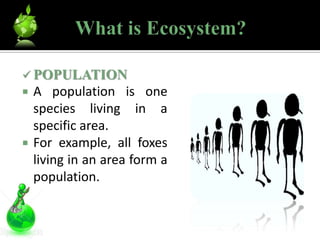
 POPULATION
 A population is       one
    species living    in a
    specific area.
   For example, all foxes
    living in an area form a
    population.
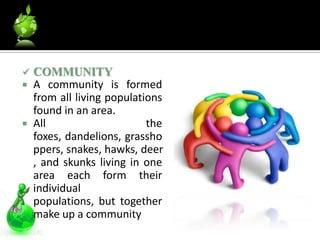
   COMMUNITY
   A community is formed
    from all living populations
    found in an area.
   All                     the
    foxes, dandelions, grassho
    ppers, snakes, hawks, deer
    , and skunks living in one
    area each form their
    individual
    populations, but together
    make up a community
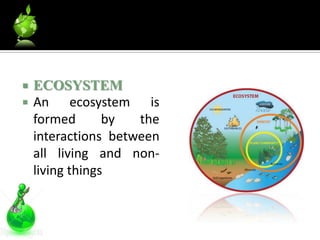
   ECOSYSTEM
   An ecosystem is
    formed       by  the
    interactions between
    all living and non-
    living things
   Ecology is how living
    and non-living things
    affect each other in
    their environment.
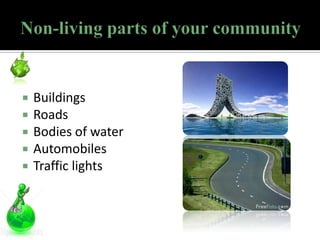
   Buildings
   Roads
   Bodies of water
   Automobiles
   Traffic lights
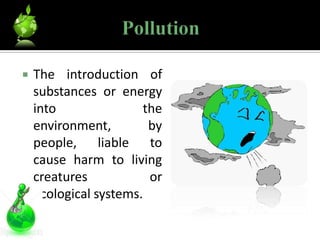
   The introduction of
    substances or energy
    into               the
    environment,        by
    people, liable to
    cause harm to living
    creatures           or
    ecological systems.
    How did pollution begin?
1.   More sophisticated
     lifestyles.
2.   Growing needs of people.
3.   Accelerated rates of human
     and economic activities.
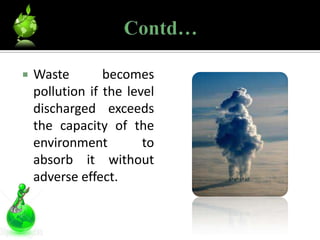
   Waste        becomes
    pollution if the level
    discharged exceeds
    the capacity of the
    environment         to
    absorb it without
    adverse effect.
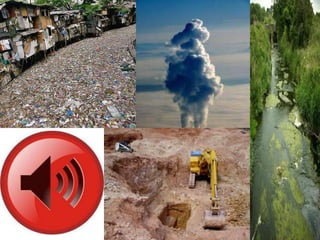
   The types of pollution
    that we are going to
    look at:
       Air Pollution
       Water Pollution
       Land Pollution
       Noise pollution
       Thermal pollution
       Radiation pollution
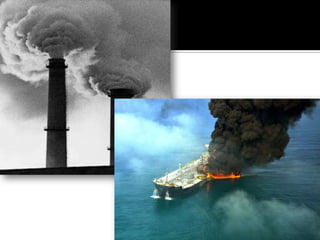
   Air pollution is the
    introduction        of
    chemicals, particulate
    matter, or biological
    materials that cause
    harm or discomfort to
    humans or other living
    organisms, or cause
    damage to the natural
    environment or built
    environment, into the
    atmosphere
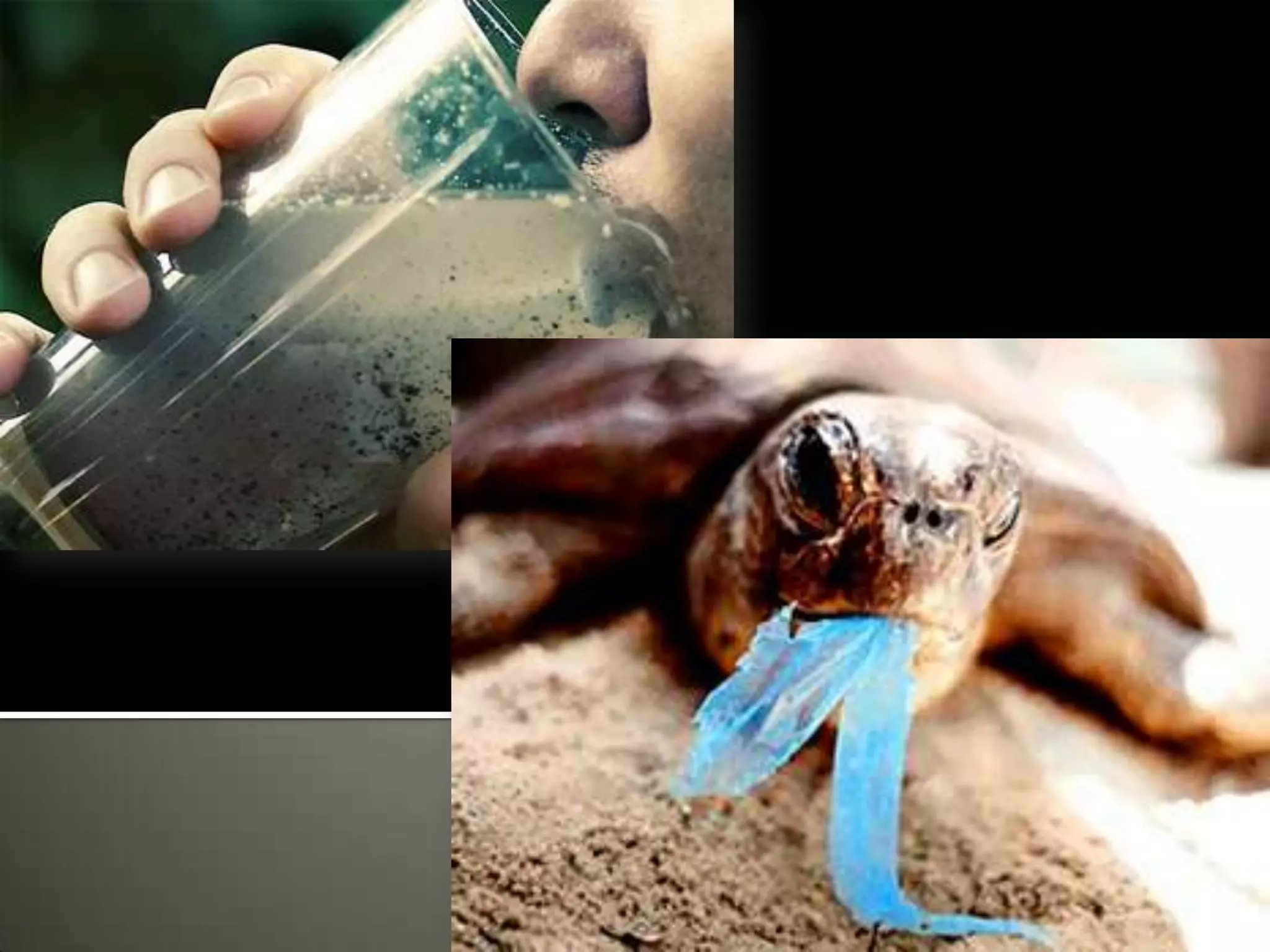
   Water pollution is
    the contamination of
    water bodies (e.g.
    lakes, rivers, oceans
    and groundwater).
   Land pollution is the
    degradation        of
    Earth's land surfaces
    often caused by
    human activities and
    their misuse of land
    resources.
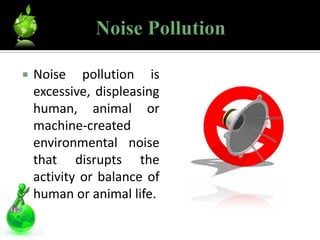
   Noise pollution is
    excessive, displeasing
    human, animal or
    machine-created
    environmental noise
    that disrupts the
    activity or balance of
    human or animal life.

Environmental engineering lec 1

  • 6.
  • 7.
    Introduction to ecology of environment; Impact of technology on ecology of system; The effects of industrial pollutants on human environments; Environmental impact assessment & sustainable development; Air pollution and its control; Water pollution and its control; Industrial waste water and its control; Industrial noise pollution and its control; Future requirements of process industries and developments under the constraints of diminishing world resources and ecological demands of human environment.
  • 8.
    The environment encompasses the whole of life on earth and the complex interactions that link the living world with the physical world. In a general sense, this covers everything contained within the air, land and water. Sudden and dramatic natural changes to the environment have occurred, and continue to occur, which have the potential to upset the whole balance of the Earth's ecosystem.
  • 9.
     To increaseindividual’s awareness level by Objective providing information that will encourage to change the behavior and decrease the chance for an unpleasant event.  Reduce injuries and illnesses and in maintaining a safe working environment.
  • 10.
    Provide us with a structured system for Objective identifying hazards, assessing risks associated with those hazards, putting in place measures to control the unacceptable risks and to review the control measures to ensure they are effective and have not introduced new hazards.
  • 11.
    The environment encompasses the whole of life on earth and the complex interactions that link the living world with the physical world
  • 12.
    Environmental engineering is the application of science and engineering principles to improve the environment (air, water, and/or land resources), to provide healthy water, air, and land for human habitation and for other organisms, and to remediate polluted sites.
  • 13.
    Science…improve our understanding of natural processes  Engineering…use this understanding to develop and apply technologies that will maintain or improve environmental quality
  • 14.
     POPULATION  Apopulation is one species living in a specific area.  For example, all foxes living in an area form a population.
  • 15.
    COMMUNITY  A community is formed from all living populations found in an area.  All the foxes, dandelions, grassho ppers, snakes, hawks, deer , and skunks living in one area each form their individual populations, but together make up a community
  • 16.
    ECOSYSTEM  An ecosystem is formed by the interactions between all living and non- living things
  • 17.
    Ecology is how living and non-living things affect each other in their environment.
  • 18.
    Buildings  Roads  Bodies of water  Automobiles  Traffic lights
  • 19.
    The introduction of substances or energy into the environment, by people, liable to cause harm to living creatures or ecological systems.
  • 20.
    How did pollution begin? 1. More sophisticated lifestyles. 2. Growing needs of people. 3. Accelerated rates of human and economic activities.
  • 21.
    Waste becomes pollution if the level discharged exceeds the capacity of the environment to absorb it without adverse effect.
  • 22.
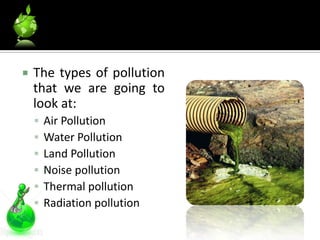
    The types of pollution that we are going to look at:  Air Pollution  Water Pollution  Land Pollution  Noise pollution  Thermal pollution  Radiation pollution
  • 23.
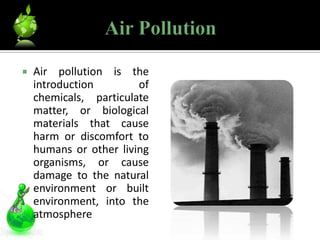
    Air pollution is the introduction of chemicals, particulate matter, or biological materials that cause harm or discomfort to humans or other living organisms, or cause damage to the natural environment or built environment, into the atmosphere
  • 24.
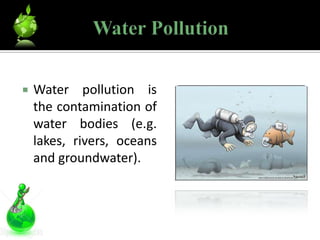
    Water pollution is the contamination of water bodies (e.g. lakes, rivers, oceans and groundwater).
  • 25.
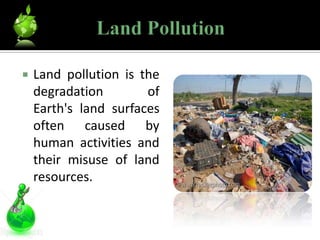
    Land pollution is the degradation of Earth's land surfaces often caused by human activities and their misuse of land resources.
  • 26.
    Noise pollution is excessive, displeasing human, animal or machine-created environmental noise that disrupts the activity or balance of human or animal life.