NOISE POLLUTION
WHAT IS NOISE POLLUTION?
ANY UNWANTED SOUND THAT
PENETRATES THE ENVIRONMENT
IS NOISE POLLUTION.
IN GENERAL NOISE POLLUTION
REFERS TO ANY NOISE
IRRITATING TO ONE'S EAR
WHICH COMES FROM AN
EXTERNAL SOURCE.
WHAT IS NOISE POLLUTION?
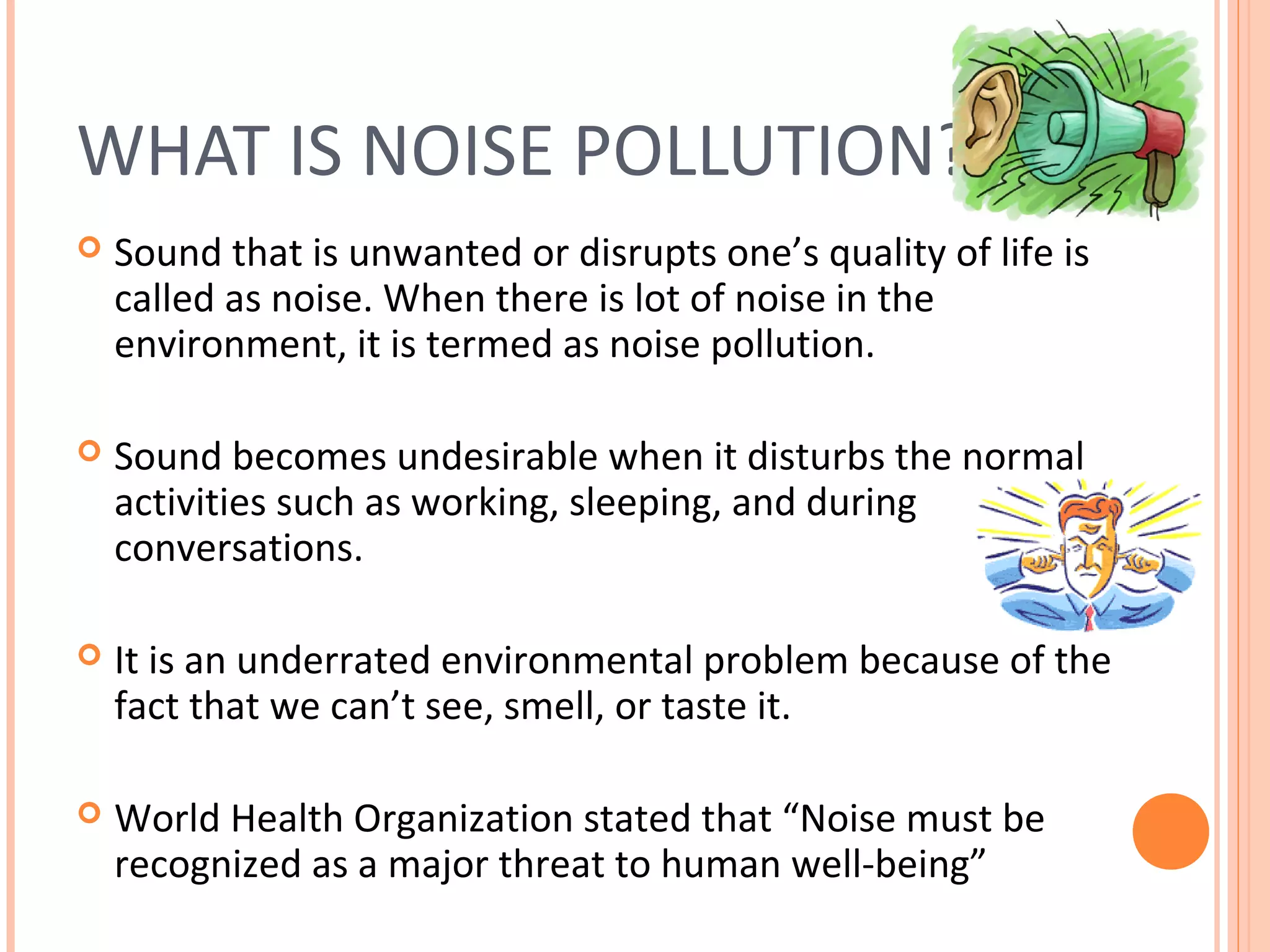
 Sound that is unwanted or disrupts one’s quality of life is
called as noise. When there is lot of noise in the
environment, it is termed as noise pollution.
 Sound becomes undesirable when it disturbs the normal
activities such as working, sleeping, and during
conversations.
 It is an underrated environmental problem because of the
fact that we can’t see, smell, or taste it.
 World Health Organization stated that “Noise must be
recognized as a major threat to human well-being”
SOURCES OF NOISE POLLUTION
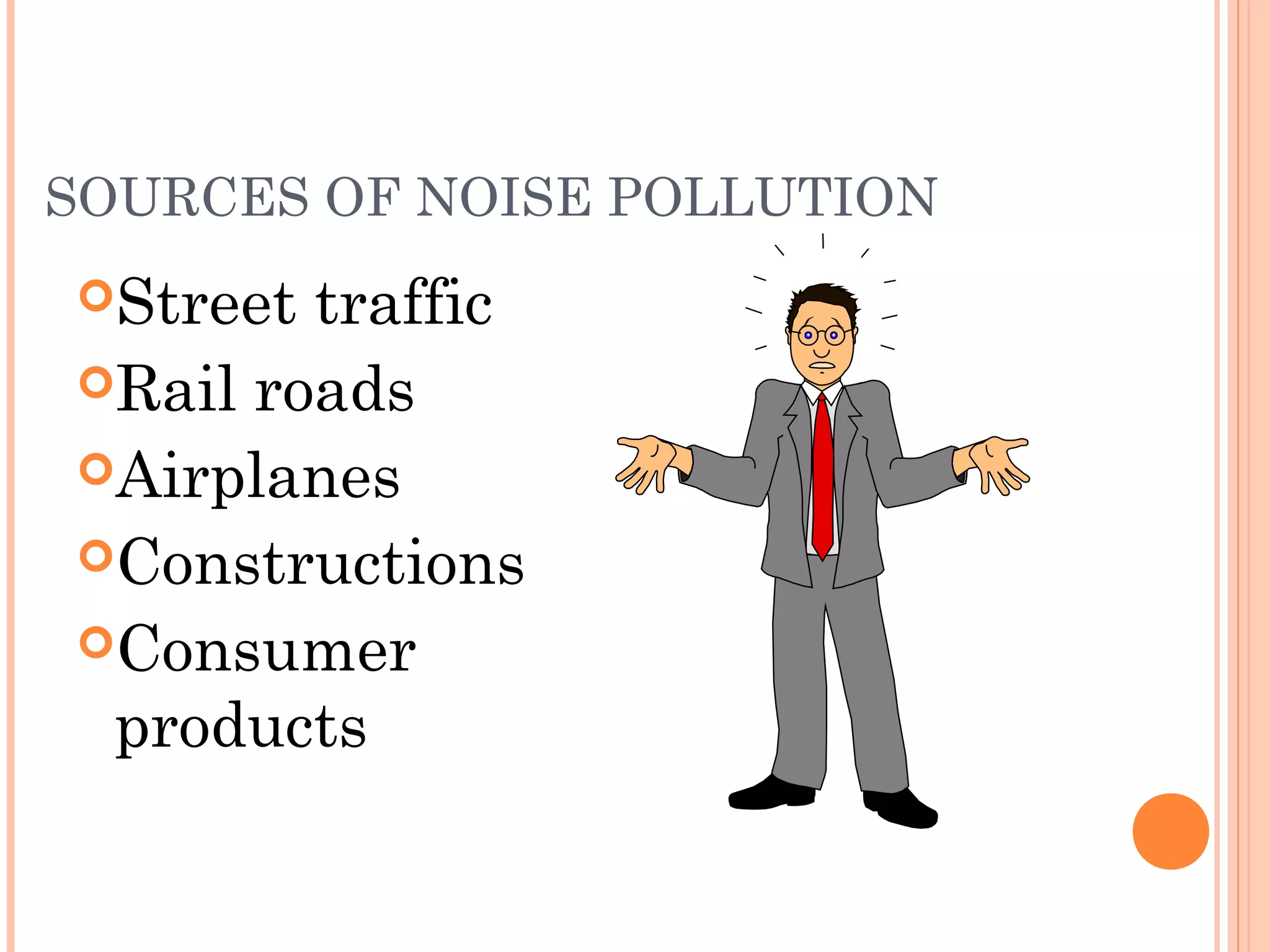
Street traffic
Rail roads
Airplanes
Constructions
Consumer
products
SOURCES OF NOISE POLLUTION
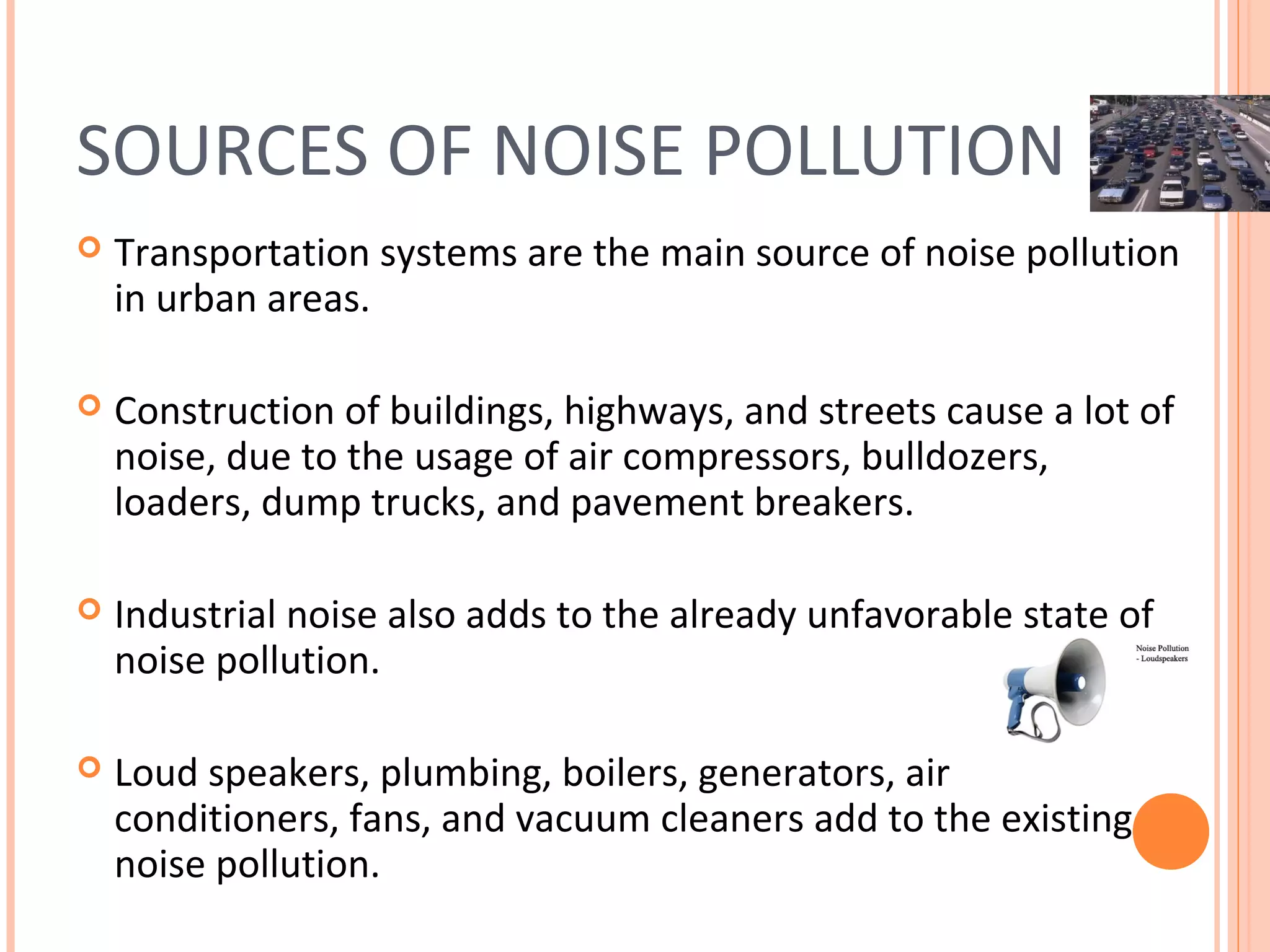
 Transportation systems are the main source of noise pollution
in urban areas.
 Construction of buildings, highways, and streets cause a lot of
noise, due to the usage of air compressors, bulldozers,
loaders, dump trucks, and pavement breakers.
 Industrial noise also adds to the already unfavorable state of
noise pollution.
 Loud speakers, plumbing, boilers, generators, air
conditioners, fans, and vacuum cleaners add to the existing
noise pollution.
LEVEL OF TOLERANCE
 Normal level of tolerance is 80dbA.
 Sound level below and above this is considered to
be as noise pollution.
EFFECTS OF NOISE POLLUTION
 There are about 25000 hair cells in our ear which
create wave in our ear, responding to different
levels of frequencies.
 With increasing levels of sound the cells get
destroyed decreasing our ability to hear the high
frequency sound.
BE CAUTIOUS FROM TODAY
 Irreversible hearing loss.
 Blood pressure rise of 5 to 10 mmHg on 8 hrs of
exposure to even 70 db of sound level.
 Hearing loss begins at 80- 90 dbA. 140 dbA is
painful and 180 dbA can even kill a person.
 Amplified rock music is 120 dbA.
 Most of the electronic vehicles and motors are
above 80 dbA level.
 High noise levels may interfere with the natural
cycles of animals, including feeding behavior,
breeding rituals and migration paths.
SYMPTOMS OF OCCUPATIONAL HEARING
LOSS
 Feeling of fullness in the ear.
 Sounds may seem muffled.
 Cannot hear high frequency sounds.
 Ringing in the ears while listening to the high
frequency sounds.
 Loud noise for a long period of time, or sudden burst
of sound can cause occupational hearing loss.
 Hearing that does not return after an acute noise
injury is called a permanent threshold shift.
HEALTH EFFECTS
 According to the USEPA, there are direct links between noise
and health. Also, noise pollution adversely affects the lives of
millions of people.
 Noise pollution can damage physiological and psychological
health.
 High blood pressure, stress related illness, sleep disruption,
hearing loss, and productivity loss are the problems related to
noise pollution.
 It can also cause memory loss, severe depression, and panic
attacks.
ACTIONS TAKEN AND TO BE TAKEN
 There are a variety of effective strategies for
mitigating adverse sound levels
 use of noise barriers.
 limitation of vehicle speeds
 alteration of roadway surface texture.
 limitation of heavy duty vehicles
 use of traffic controls that smooth vehicle flow to
reduce braking and acceleration, innovative tire
design and other
SOLUTIONS FOR NOISE
POLLUTION
 Planting bushes and trees in and around sound generating
sources is an effective solution for noise pollution.
 Regular servicing and tuning of automobiles can effectively
reduce the noise pollution.
 Buildings can be designed with suitable noise absorbing
material for the walls, windows, and ceilings.
 Workers should be provided with equipments such as ear
plugs and earmuffs for hearing protection.
SOLUTIONS FOR NOISE
POLLUTION
 Similar to automobiles, lubrication of the machinery and
servicing should be done to minimize noise generation.
 Soundproof doors and windows can be installed to block
unwanted noise from outside.
 Regulations should be imposed to restrict the usage of
play loudspeakers in crowded areas and public places.
 Factories and industries should be located far from the
residential areas.
SOLUTIONS FOR NOISE
POLLUTION
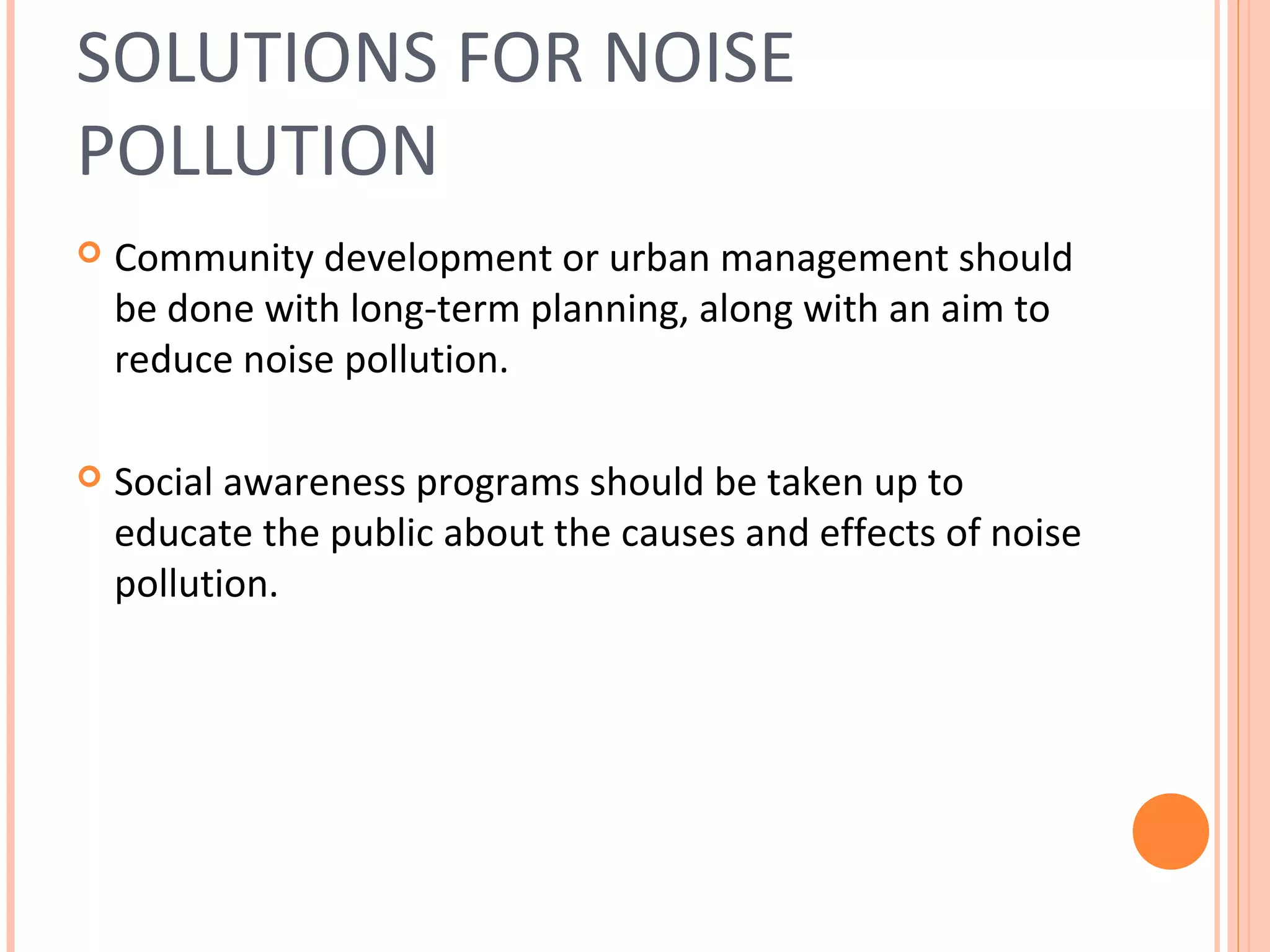
 Community development or urban management should
be done with long-term planning, along with an aim to
reduce noise pollution.
 Social awareness programs should be taken up to
educate the public about the causes and effects of noise
pollution.
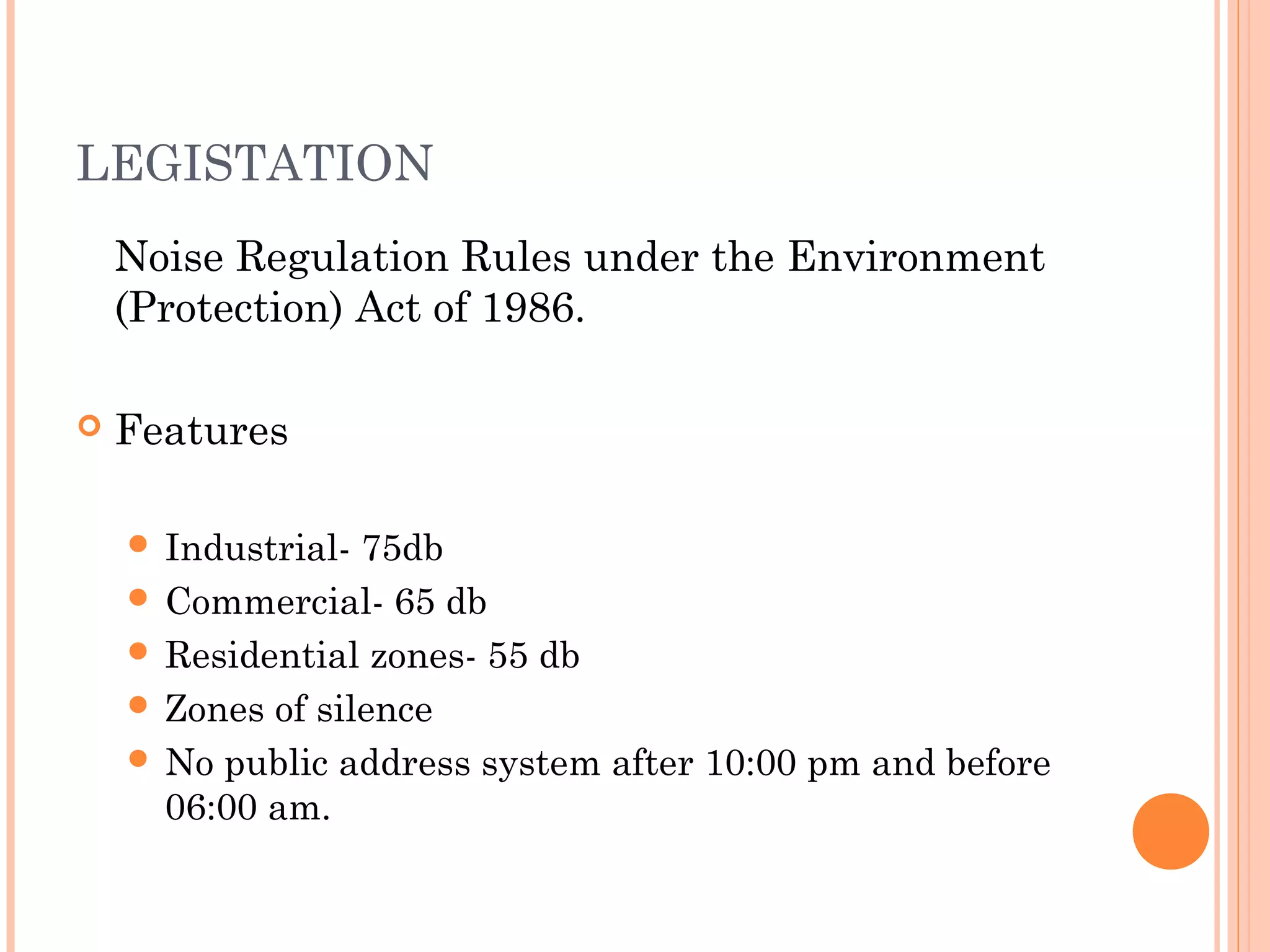
LEGISTATION
Noise Regulation Rules under the Environment
(Protection) Act of 1986.
 Features
 Industrial- 75db
 Commercial- 65 db
 Residential zones- 55 db
 Zones of silence
 No public address system after 10:00 pm and before
06:00 am.

Environmental Engineering (Noise pollution and its sources & effects)

  • 1.
  • 2.
    WHAT IS NOISEPOLLUTION? ANY UNWANTED SOUND THAT PENETRATES THE ENVIRONMENT IS NOISE POLLUTION. IN GENERAL NOISE POLLUTION REFERS TO ANY NOISE IRRITATING TO ONE'S EAR WHICH COMES FROM AN EXTERNAL SOURCE.
  • 3.
    WHAT IS NOISEPOLLUTION?  Sound that is unwanted or disrupts one’s quality of life is called as noise. When there is lot of noise in the environment, it is termed as noise pollution.  Sound becomes undesirable when it disturbs the normal activities such as working, sleeping, and during conversations.  It is an underrated environmental problem because of the fact that we can’t see, smell, or taste it.  World Health Organization stated that “Noise must be recognized as a major threat to human well-being”
  • 4.
    SOURCES OF NOISEPOLLUTION Street traffic Rail roads Airplanes Constructions Consumer products
  • 5.
    SOURCES OF NOISEPOLLUTION  Transportation systems are the main source of noise pollution in urban areas.  Construction of buildings, highways, and streets cause a lot of noise, due to the usage of air compressors, bulldozers, loaders, dump trucks, and pavement breakers.  Industrial noise also adds to the already unfavorable state of noise pollution.  Loud speakers, plumbing, boilers, generators, air conditioners, fans, and vacuum cleaners add to the existing noise pollution.
  • 6.
    LEVEL OF TOLERANCE Normal level of tolerance is 80dbA.  Sound level below and above this is considered to be as noise pollution.
  • 7.
    EFFECTS OF NOISEPOLLUTION  There are about 25000 hair cells in our ear which create wave in our ear, responding to different levels of frequencies.  With increasing levels of sound the cells get destroyed decreasing our ability to hear the high frequency sound.
  • 8.
    BE CAUTIOUS FROMTODAY  Irreversible hearing loss.  Blood pressure rise of 5 to 10 mmHg on 8 hrs of exposure to even 70 db of sound level.  Hearing loss begins at 80- 90 dbA. 140 dbA is painful and 180 dbA can even kill a person.  Amplified rock music is 120 dbA.  Most of the electronic vehicles and motors are above 80 dbA level.  High noise levels may interfere with the natural cycles of animals, including feeding behavior, breeding rituals and migration paths.
  • 9.
    SYMPTOMS OF OCCUPATIONALHEARING LOSS  Feeling of fullness in the ear.  Sounds may seem muffled.  Cannot hear high frequency sounds.  Ringing in the ears while listening to the high frequency sounds.  Loud noise for a long period of time, or sudden burst of sound can cause occupational hearing loss.  Hearing that does not return after an acute noise injury is called a permanent threshold shift.
  • 10.
    HEALTH EFFECTS  Accordingto the USEPA, there are direct links between noise and health. Also, noise pollution adversely affects the lives of millions of people.  Noise pollution can damage physiological and psychological health.  High blood pressure, stress related illness, sleep disruption, hearing loss, and productivity loss are the problems related to noise pollution.  It can also cause memory loss, severe depression, and panic attacks.
  • 11.
    ACTIONS TAKEN ANDTO BE TAKEN  There are a variety of effective strategies for mitigating adverse sound levels  use of noise barriers.  limitation of vehicle speeds  alteration of roadway surface texture.  limitation of heavy duty vehicles  use of traffic controls that smooth vehicle flow to reduce braking and acceleration, innovative tire design and other
  • 12.
    SOLUTIONS FOR NOISE POLLUTION Planting bushes and trees in and around sound generating sources is an effective solution for noise pollution.  Regular servicing and tuning of automobiles can effectively reduce the noise pollution.  Buildings can be designed with suitable noise absorbing material for the walls, windows, and ceilings.  Workers should be provided with equipments such as ear plugs and earmuffs for hearing protection.
  • 13.
    SOLUTIONS FOR NOISE POLLUTION Similar to automobiles, lubrication of the machinery and servicing should be done to minimize noise generation.  Soundproof doors and windows can be installed to block unwanted noise from outside.  Regulations should be imposed to restrict the usage of play loudspeakers in crowded areas and public places.  Factories and industries should be located far from the residential areas.
  • 14.
    SOLUTIONS FOR NOISE POLLUTION Community development or urban management should be done with long-term planning, along with an aim to reduce noise pollution.  Social awareness programs should be taken up to educate the public about the causes and effects of noise pollution.
  • 15.
    LEGISTATION Noise Regulation Rulesunder the Environment (Protection) Act of 1986.  Features  Industrial- 75db  Commercial- 65 db  Residential zones- 55 db  Zones of silence  No public address system after 10:00 pm and before 06:00 am.