Pollution is the introduction of contaminants
      into a natural environment that causes
instability, disorder, harm or discomfort to the
     ecosystem i.e. physical systems or living
    organisms. Pollution can take the form of
  chemical substances or energy, such as noise,
    heat or light. Pollutants, the elements of
pollution, can be foreign substances or energies
     or naturally occurring; when naturally
Littering:- the criminal throwing of inappropriate man-made objects,
unremoved, onto public and private properties. Noise pollution:- which
encompasses roadway noise, aircraft noise, industrial noise as well as
high-intensity sonar. Soil contamination occurs when chemicals are
released intentionally, by spill or underground leakage. Among the
most significant soil contaminants are hydrocarbons, heavy metals,
MTBE,[9] herbicides, pesticides and chlorinated hydrocarbons.
Radioactive contamination, resulting from 20th century activities in
atomic physics, such as nuclear power generation and nuclear weapons
research, manufacture and deployment. (See alpha emitters and
actinides in the environment.) Thermal pollution, is a temperature
change in natural water bodies caused by human influence, such as use
of water as coolant in a power plant. Visual pollution, which can
refer to the presence of overhead power lines, motorway
 Air pollution comes from both natural and
  man made sources. Though globally man
  made pollutants from combustion,
  construction, mining, agriculture and
  warfare are increasingly significant in the
  air pollution equation
 About 400 million metric tons of hazardous
  wastes are generated each year.The United
  States alone produces about 250 million
  metric tons.[17] Americans constitute less
  than 5% of the world's population, but
  produce roughly 25% of the world’s CO2,and
  generate approximately 30% of world’s
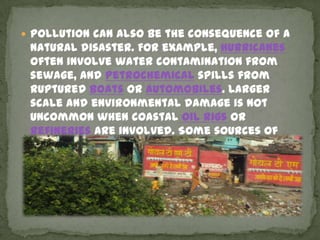
 Pollution can also be the consequence of a
 natural disaster. For example, hurricanes
 often involve water contamination from
 sewage, and petrochemical spills from
 ruptured boats or automobiles. Larger
 scale and environmental damage is not
 uncommon when coastal oil rigs or
 refineries are involved. Some sources of
 pollution, such as nuclear power plants or
 oil tankers, can produce widespread and
 potentially hazardous releases when
 accidents occur.
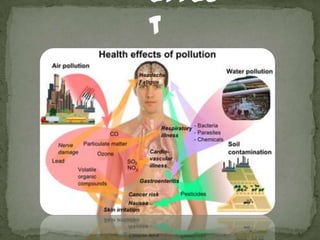
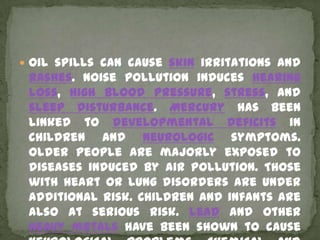
 Oil spills can cause skin irritations and
 rashes. Noise pollution induces hearing
 loss, high blood pressure, stress, and
 sleep disturbance. Mercury has been
 linked to developmental deficits in
 children and neurologic symptoms.
 Older people are majorly exposed to
 diseases induced by air pollution. Those
 with heart or lung disorders are under
 additional risk. Children and infants are
 also at serious risk. Lead and other
 heavy metals have been shown to cause
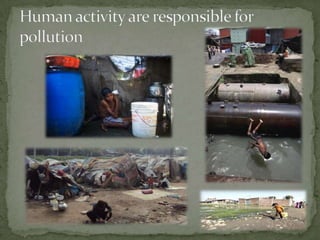
 Pollution has been found to be present widely in the
    environment. There are a number of effects of this:
   Biomagnification describes situations where toxins (such as
    heavy metals) may pass through trophic levels, becoming
    exponentially more concentrated in the process.
   Carbon dioxide emissions cause ocean acidification, the
    ongoing decrease in the pH of the Earth's oceans as CO2
    becomes dissolved.
   The emission of greenhouse gases leads to global warming
    which affects ecosystems in many ways.
   Invasive species can out compete native species and reduce
    biodiversity. Invasive plants can contribute debris and
    biomolecules (allelopathy) that can alter soil and
    chemical compositions of an environment, often reducing
    native species competitiveness.
   Nitrogen oxides are removed from the air by rain and
    fertilise land which can change the species composition of
    ecosystems.
   Smog and haze can reduce the amount of sunlight received
 Pollution control is a term used in
 environmental management. It means the
 control of emissions and effluents into
 air, water or soil. Without pollution
 control, the waste products from
 consumption, heating, agriculture, mining,
 manufacturing, transportation and other
 human activities, whether they
 accumulate or disperse, will degrade
 the environment. In the hierarchy of
 controls, pollution prevention and
 waste minimization are more desirable
 Pollution control                biotreaters (Secondary
  devices                          treatment; also used for
                                   industrial wastewater)
 Dust collection                 Aerated lagoons
  systems                         Constructed wetlands
   Baghouses                      (also used for urban
   Cyclones                       runoff)
   Electrostatic               Industrial wastewater
    precipitators
                                treatment
 Scrubbers                       API oil-water
   Baffle spray scrubber            separators[14][34]
   Cyclonic spray scrubber         Biofilters
   Ejector venturi scrubber        Dissolved air flotation
   Mechanically aided               (DAF)
    scrubber                        Powdered activated
   Spray tower                      carbon treatment
   Wet scrubber                    Ultrafiltration
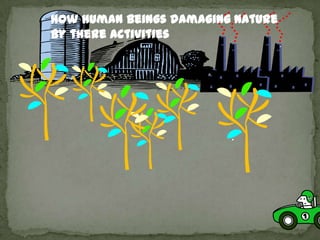
How human beings damaging nature
by there activities
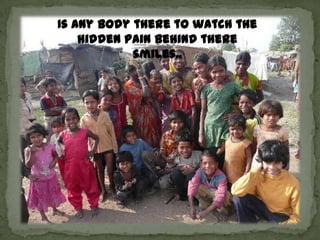
Is any body there to watch the
    hidden pain behind there
            smiles..
Final assignmnt
Final assignmnt

Final assignmnt

  • 2.
    Pollution is theintroduction of contaminants into a natural environment that causes instability, disorder, harm or discomfort to the ecosystem i.e. physical systems or living organisms. Pollution can take the form of chemical substances or energy, such as noise, heat or light. Pollutants, the elements of pollution, can be foreign substances or energies or naturally occurring; when naturally
  • 4.
    Littering:- the criminalthrowing of inappropriate man-made objects, unremoved, onto public and private properties. Noise pollution:- which encompasses roadway noise, aircraft noise, industrial noise as well as high-intensity sonar. Soil contamination occurs when chemicals are released intentionally, by spill or underground leakage. Among the most significant soil contaminants are hydrocarbons, heavy metals, MTBE,[9] herbicides, pesticides and chlorinated hydrocarbons. Radioactive contamination, resulting from 20th century activities in atomic physics, such as nuclear power generation and nuclear weapons research, manufacture and deployment. (See alpha emitters and actinides in the environment.) Thermal pollution, is a temperature change in natural water bodies caused by human influence, such as use of water as coolant in a power plant. Visual pollution, which can refer to the presence of overhead power lines, motorway
  • 5.
     Air pollutioncomes from both natural and man made sources. Though globally man made pollutants from combustion, construction, mining, agriculture and warfare are increasingly significant in the air pollution equation  About 400 million metric tons of hazardous wastes are generated each year.The United States alone produces about 250 million metric tons.[17] Americans constitute less than 5% of the world's population, but produce roughly 25% of the world’s CO2,and generate approximately 30% of world’s
  • 6.
     Pollution canalso be the consequence of a natural disaster. For example, hurricanes often involve water contamination from sewage, and petrochemical spills from ruptured boats or automobiles. Larger scale and environmental damage is not uncommon when coastal oil rigs or refineries are involved. Some sources of pollution, such as nuclear power plants or oil tankers, can produce widespread and potentially hazardous releases when accidents occur.
  • 8.
     Oil spillscan cause skin irritations and rashes. Noise pollution induces hearing loss, high blood pressure, stress, and sleep disturbance. Mercury has been linked to developmental deficits in children and neurologic symptoms. Older people are majorly exposed to diseases induced by air pollution. Those with heart or lung disorders are under additional risk. Children and infants are also at serious risk. Lead and other heavy metals have been shown to cause
  • 9.
     Pollution hasbeen found to be present widely in the environment. There are a number of effects of this:  Biomagnification describes situations where toxins (such as heavy metals) may pass through trophic levels, becoming exponentially more concentrated in the process.  Carbon dioxide emissions cause ocean acidification, the ongoing decrease in the pH of the Earth's oceans as CO2 becomes dissolved.  The emission of greenhouse gases leads to global warming which affects ecosystems in many ways.  Invasive species can out compete native species and reduce biodiversity. Invasive plants can contribute debris and biomolecules (allelopathy) that can alter soil and chemical compositions of an environment, often reducing native species competitiveness.  Nitrogen oxides are removed from the air by rain and fertilise land which can change the species composition of ecosystems.  Smog and haze can reduce the amount of sunlight received
  • 10.
     Pollution controlis a term used in environmental management. It means the control of emissions and effluents into air, water or soil. Without pollution control, the waste products from consumption, heating, agriculture, mining, manufacturing, transportation and other human activities, whether they accumulate or disperse, will degrade the environment. In the hierarchy of controls, pollution prevention and waste minimization are more desirable
  • 11.
     Pollution control biotreaters (Secondary devices treatment; also used for industrial wastewater)  Dust collection  Aerated lagoons systems  Constructed wetlands  Baghouses (also used for urban  Cyclones runoff)  Electrostatic  Industrial wastewater precipitators treatment  Scrubbers  API oil-water  Baffle spray scrubber separators[14][34]  Cyclonic spray scrubber  Biofilters  Ejector venturi scrubber  Dissolved air flotation  Mechanically aided (DAF) scrubber  Powdered activated  Spray tower carbon treatment  Wet scrubber  Ultrafiltration
  • 12.
    How human beingsdamaging nature by there activities
  • 14.
    Is any bodythere to watch the hidden pain behind there smiles..