ENVIRONMENTAL POLLUTION
Environmental pollution is any discharge of material
or energy into water, land, or air that causes or
may cause acute (short-term) or chronic (long-
term) detriment to the Earth's ecological balance
or that lowers the quality of life. Pollutants may
cause primary damage, with direct identifiable
impact on the environment, or secondary damage
in the form of minor perturbations in the delicate
balance of the biological food web that are
detectable only over long time periods.
TROPOSPHERIC POLLUTION
IT occurs due to the presence of undesirable solid or gaseous particles in air.
GASEOUS AIR POLLUTANTS- OXIDES OF SULPHUR NITROGEN , AND
CARBON, HYDROGEN SULPHIDE , HYDROCARBONS, OZONE AND OTHER OXIDANTS
OXIDES OF NITROGEN- AT HIGH ALTITUDES WHEN
LIGHTNING STRIKES DINITROGEN AND DIOXYGEN
COMBINE TO FORM OXIDES OF NITROGEN THE
IRRITANT RED HAZE IN TRAFFIC AND CONGESTED
PLACES IS DUE TO OXIDES OF NITROGEN
OXIDES OF SULPHUR- oxides of sulphur
are produced when sulphur containing
fossil fuel is burnt . It causes respiratory
problems
OXIDES OF CARBON-HYDROCARBONS AND
CARBON MONOXIDE . HYDROCARBONS ARE
FORMED DUE TO INCOMPLETE COMBUSTION
OF FOSSIL FUELS . CARBON MONOXIDE IS
HIGHLY POISNOUS TO HUMAN BEINGS
TROPOSPHERIC POLLUTION
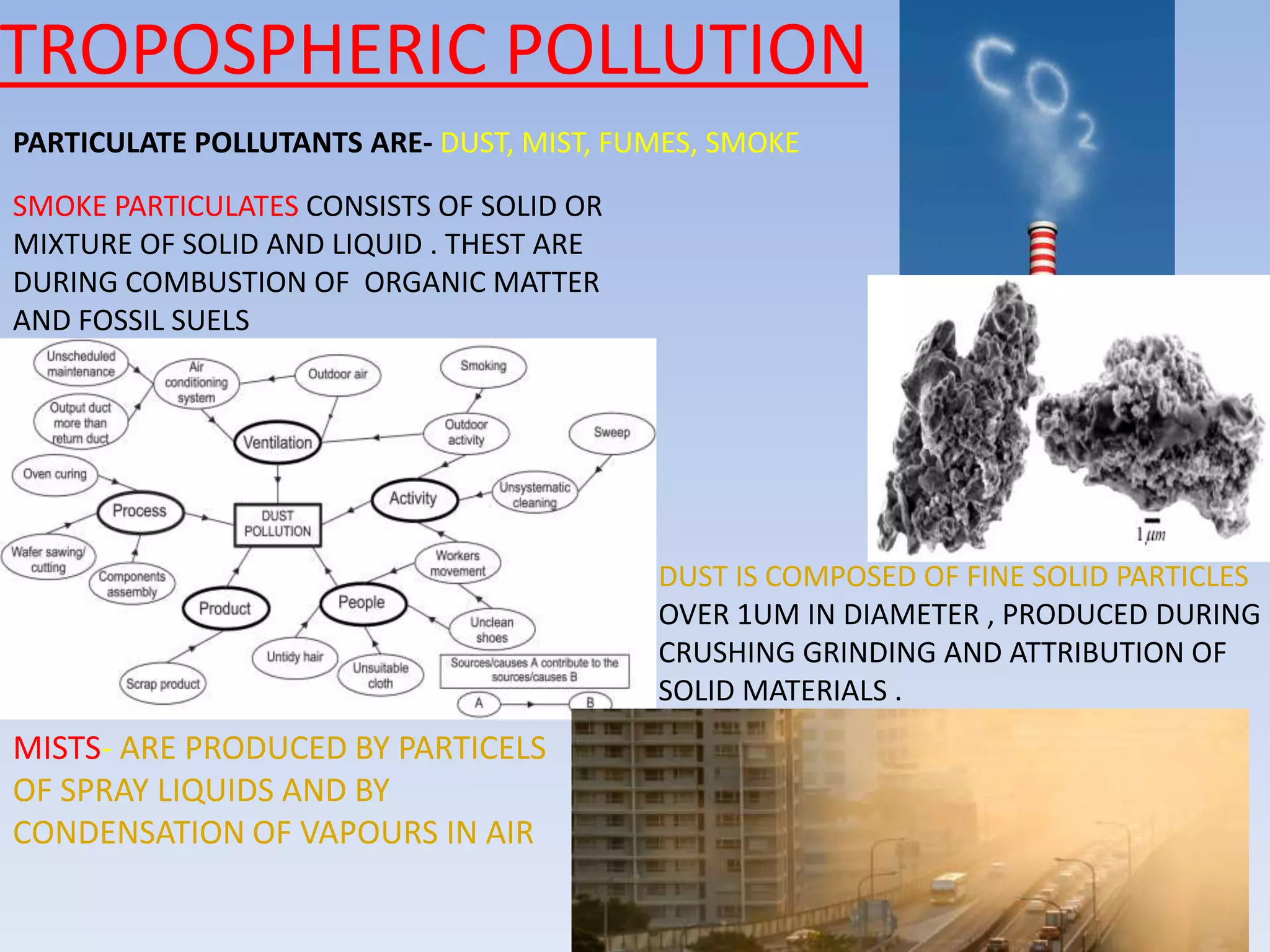
PARTICULATE POLLUTANTS ARE- DUST, MIST, FUMES, SMOKE
SMOKE PARTICULATES CONSISTS OF SOLID OR
MIXTURE OF SOLID AND LIQUID . THEST ARE
DURING COMBUSTION OF ORGANIC MATTER
AND FOSSIL SUELS
DUST IS COMPOSED OF FINE SOLID PARTICLES
OVER 1UM IN DIAMETER , PRODUCED DURING
CRUSHING GRINDING AND ATTRIBUTION OF
SOLID MATERIALS .
MISTS- ARE PRODUCED BY PARTICELS
OF SPRAY LIQUIDS AND BY
CONDENSATION OF VAPOURS IN AIR
GLOBAL WARMING
GREEN HOUSE EFFECT
ACID RAIN WE ARE AWARE THAT NORMAL RAIN WATER HAS PH OF 5.6
DUE TO PRESENCE OF H+ IONS FORMED BY REACTION OF
RAIN WATER WITH CARBON WHEN PH OF RAIN WATER
DROPS BELOW 5.6 IT IS CALLED ACID RAIN
TAJ MAHAL AND ACID RAIN
THE AIR ARROUND THE CITY OF AGRA WHERE THE TAJ MAHAL
IS LOCATED CONTAINS FAIRLY HIGH LEVELS OF SULPHUR AND
NITROGEN OXIDES IT IS MAINLY DUE TO LARGE NUMBER OF
INDUSTRAIL POWER PLANTS ARROUND THE CITY THE RESULTING
ACID RAIN REACTS WITH THE MARBLE OF THE MONUMENT WHICH
IS GETTING DISCOLOURED
STRATOSPHERIC POLLUTION
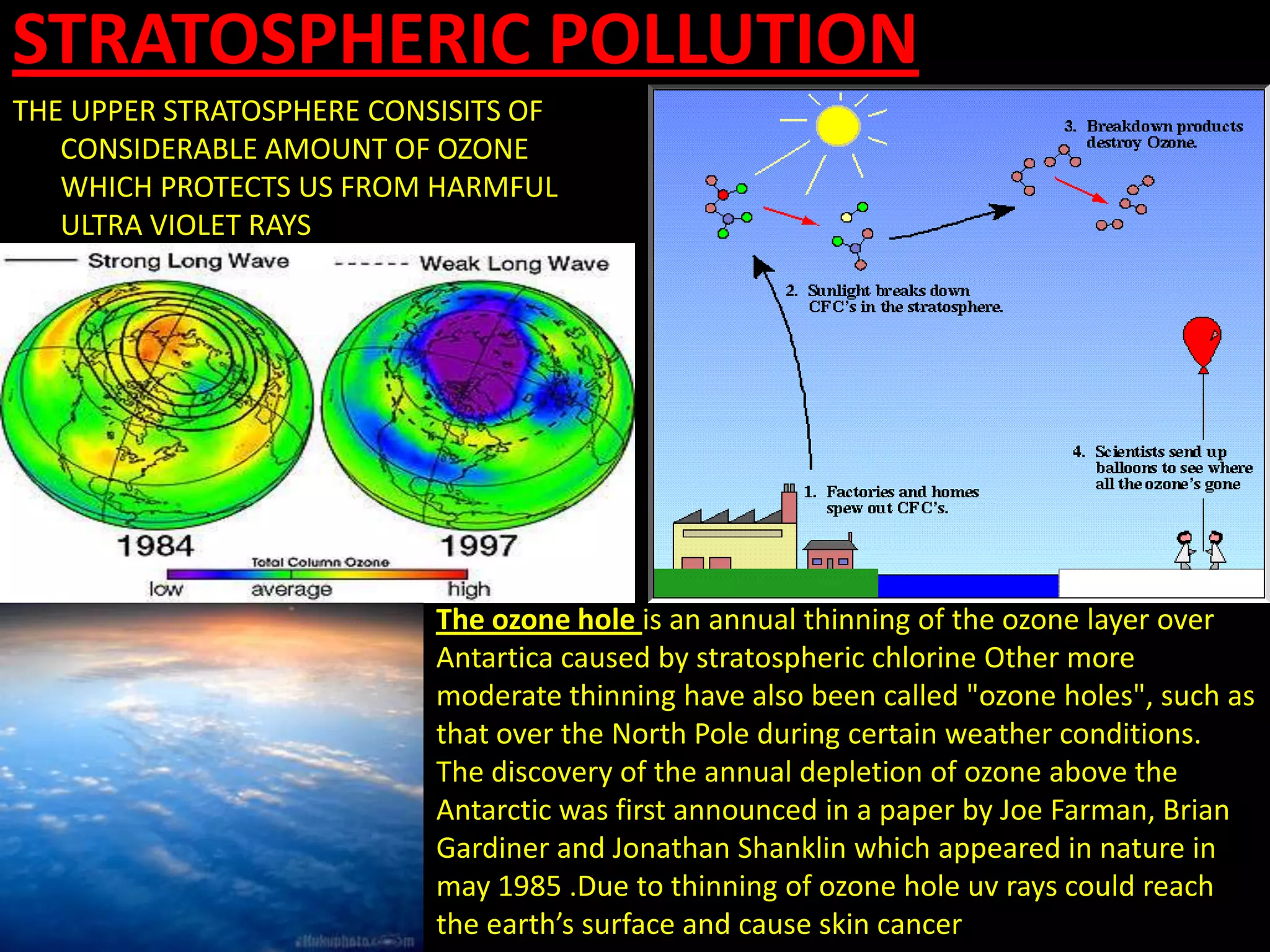
THE UPPER STRATOSPHERE CONSISITS OF
CONSIDERABLE AMOUNT OF OZONE
WHICH PROTECTS US FROM HARMFUL
ULTRA VIOLET RAYS
The ozone hole is an annual thinning of the ozone layer over
Antartica caused by stratospheric chlorine Other more
moderate thinning have also been called "ozone holes", such as
that over the North Pole during certain weather conditions.
The discovery of the annual depletion of ozone above the
Antarctic was first announced in a paper by Joe Farman, Brian
Gardiner and Jonathan Shanklin which appeared in nature in
may 1985 .Due to thinning of ozone hole uv rays could reach
the earth’s surface and cause skin cancer
WATER POLLUTION
Water pollution is the contamination of water bodies
(e.g. lakes, rivers, oceans, aquifers and groundwater).
Water pollution occurs when pollutants are
discharged directly or indirectly into water bodies
without adequate treatment to remove harmful
compounds.
MAIN CAUSES OF WATER POLLUTION ARE
PATHOGENS , ORGANIC WASTE AND
CHEMICAL POLLUTANTS
PATHOGENS INLCLUDE DISEASE CAUSING BACTERIA LIKE
STREPTOCOCCUS FAECALIS AND MANY MORE
AS WE KNOW WATER IS AN EXCELLENT SOLVENT
MANY INORGANIC SOLVENTS LIKE THEY INCLUDE
MERCURY CADIUM
SOIL POLLUTION
Soil contamination or soil pollution is caused by the presence of xenobiotic (human-made)
chemicals or other alteration in the natural soil environment. It is typically caused by
industrial activity, agricultural chemicals, or improper disposal of waste. The most common
chemicals involved are petroleum hydrocarbons, polynuclear aromatic hydrocarbons (such as
naphthalene and benzo(a)pyrene), solvents, pesticides, lead, and other heavy metals.
Contamination is correlated with the degree of industrialization and intensity of chemical
usage.
MAIN CAUSES OF SOIL
POLLUTION ARE PESTICIDES
AND INDUSTRIAL WASTE
A PESTICIDE is a substance or mixture of substances used to kill a pest. A pesticide may
be a chemical substance, biological agent (such as a virus or bacteria), antimicrobial,
disinfectant or device used against any pest. Pests include insects, plant pathogens,
weeds, mollusks, birds, mammals, fish, nematodes (roundworms) and microbes that
compete with humans for food, destroy property, spread or are a vector for disease or
cause a nuisance
Treated sewage sludge, known in the industry as bio
solids, has become controversial as a fertilizer to the
land. As it is the byproduct of sewage treatment, it
generally contains more contaminants such as
organisms, pesticides, and heavy metals than other
soil.
GREEN CHEMISTRY
Green chemistry, also called sustainable chemistry, is a philosophy of chemical
research and engineering that encourages the design of products and processes
that minimize the use and generation of hazardous substances .
Whereas environmental chemistry is the chemistry of the natural environment,
and of pollutant chemicals in nature, green chemistry seeks to reduce and
prevent pollution at its source.
NOBEL GOES TO GRREN CHEMISTRY
What a great day for chemistry,'' declared an advocate of environmentally friendly
"green chemistry,'' Paul Anastas of the American Chemical Society.
The $1.3 million prize will be shared by Robert H. Grubbs, 63, of the California Institute
of Technology; Richard R. Schrock, 60, of the Massachusetts Institute of
Technology, and Yves Chauvin, 74, honorary director of research at the Institut
Francais du Petrole in Rueil-Malmaison, France.
Yves Chauvin Robert H.Grubbs Richard R.schrock

Environmental chemistry

  • 2.
    ENVIRONMENTAL POLLUTION Environmental pollutionis any discharge of material or energy into water, land, or air that causes or may cause acute (short-term) or chronic (long- term) detriment to the Earth's ecological balance or that lowers the quality of life. Pollutants may cause primary damage, with direct identifiable impact on the environment, or secondary damage in the form of minor perturbations in the delicate balance of the biological food web that are detectable only over long time periods.
  • 3.
    TROPOSPHERIC POLLUTION IT occursdue to the presence of undesirable solid or gaseous particles in air. GASEOUS AIR POLLUTANTS- OXIDES OF SULPHUR NITROGEN , AND CARBON, HYDROGEN SULPHIDE , HYDROCARBONS, OZONE AND OTHER OXIDANTS OXIDES OF NITROGEN- AT HIGH ALTITUDES WHEN LIGHTNING STRIKES DINITROGEN AND DIOXYGEN COMBINE TO FORM OXIDES OF NITROGEN THE IRRITANT RED HAZE IN TRAFFIC AND CONGESTED PLACES IS DUE TO OXIDES OF NITROGEN OXIDES OF SULPHUR- oxides of sulphur are produced when sulphur containing fossil fuel is burnt . It causes respiratory problems OXIDES OF CARBON-HYDROCARBONS AND CARBON MONOXIDE . HYDROCARBONS ARE FORMED DUE TO INCOMPLETE COMBUSTION OF FOSSIL FUELS . CARBON MONOXIDE IS HIGHLY POISNOUS TO HUMAN BEINGS
  • 4.
    TROPOSPHERIC POLLUTION PARTICULATE POLLUTANTSARE- DUST, MIST, FUMES, SMOKE SMOKE PARTICULATES CONSISTS OF SOLID OR MIXTURE OF SOLID AND LIQUID . THEST ARE DURING COMBUSTION OF ORGANIC MATTER AND FOSSIL SUELS DUST IS COMPOSED OF FINE SOLID PARTICLES OVER 1UM IN DIAMETER , PRODUCED DURING CRUSHING GRINDING AND ATTRIBUTION OF SOLID MATERIALS . MISTS- ARE PRODUCED BY PARTICELS OF SPRAY LIQUIDS AND BY CONDENSATION OF VAPOURS IN AIR
  • 5.
  • 6.
    ACID RAIN WEARE AWARE THAT NORMAL RAIN WATER HAS PH OF 5.6 DUE TO PRESENCE OF H+ IONS FORMED BY REACTION OF RAIN WATER WITH CARBON WHEN PH OF RAIN WATER DROPS BELOW 5.6 IT IS CALLED ACID RAIN TAJ MAHAL AND ACID RAIN THE AIR ARROUND THE CITY OF AGRA WHERE THE TAJ MAHAL IS LOCATED CONTAINS FAIRLY HIGH LEVELS OF SULPHUR AND NITROGEN OXIDES IT IS MAINLY DUE TO LARGE NUMBER OF INDUSTRAIL POWER PLANTS ARROUND THE CITY THE RESULTING ACID RAIN REACTS WITH THE MARBLE OF THE MONUMENT WHICH IS GETTING DISCOLOURED
  • 7.
    STRATOSPHERIC POLLUTION THE UPPERSTRATOSPHERE CONSISITS OF CONSIDERABLE AMOUNT OF OZONE WHICH PROTECTS US FROM HARMFUL ULTRA VIOLET RAYS The ozone hole is an annual thinning of the ozone layer over Antartica caused by stratospheric chlorine Other more moderate thinning have also been called "ozone holes", such as that over the North Pole during certain weather conditions. The discovery of the annual depletion of ozone above the Antarctic was first announced in a paper by Joe Farman, Brian Gardiner and Jonathan Shanklin which appeared in nature in may 1985 .Due to thinning of ozone hole uv rays could reach the earth’s surface and cause skin cancer
  • 8.
    WATER POLLUTION Water pollutionis the contamination of water bodies (e.g. lakes, rivers, oceans, aquifers and groundwater). Water pollution occurs when pollutants are discharged directly or indirectly into water bodies without adequate treatment to remove harmful compounds. MAIN CAUSES OF WATER POLLUTION ARE PATHOGENS , ORGANIC WASTE AND CHEMICAL POLLUTANTS PATHOGENS INLCLUDE DISEASE CAUSING BACTERIA LIKE STREPTOCOCCUS FAECALIS AND MANY MORE AS WE KNOW WATER IS AN EXCELLENT SOLVENT MANY INORGANIC SOLVENTS LIKE THEY INCLUDE MERCURY CADIUM
  • 9.
    SOIL POLLUTION Soil contaminationor soil pollution is caused by the presence of xenobiotic (human-made) chemicals or other alteration in the natural soil environment. It is typically caused by industrial activity, agricultural chemicals, or improper disposal of waste. The most common chemicals involved are petroleum hydrocarbons, polynuclear aromatic hydrocarbons (such as naphthalene and benzo(a)pyrene), solvents, pesticides, lead, and other heavy metals. Contamination is correlated with the degree of industrialization and intensity of chemical usage. MAIN CAUSES OF SOIL POLLUTION ARE PESTICIDES AND INDUSTRIAL WASTE
  • 10.
    A PESTICIDE isa substance or mixture of substances used to kill a pest. A pesticide may be a chemical substance, biological agent (such as a virus or bacteria), antimicrobial, disinfectant or device used against any pest. Pests include insects, plant pathogens, weeds, mollusks, birds, mammals, fish, nematodes (roundworms) and microbes that compete with humans for food, destroy property, spread or are a vector for disease or cause a nuisance Treated sewage sludge, known in the industry as bio solids, has become controversial as a fertilizer to the land. As it is the byproduct of sewage treatment, it generally contains more contaminants such as organisms, pesticides, and heavy metals than other soil.
  • 11.
    GREEN CHEMISTRY Green chemistry,also called sustainable chemistry, is a philosophy of chemical research and engineering that encourages the design of products and processes that minimize the use and generation of hazardous substances . Whereas environmental chemistry is the chemistry of the natural environment, and of pollutant chemicals in nature, green chemistry seeks to reduce and prevent pollution at its source.
  • 12.
    NOBEL GOES TOGRREN CHEMISTRY What a great day for chemistry,'' declared an advocate of environmentally friendly "green chemistry,'' Paul Anastas of the American Chemical Society. The $1.3 million prize will be shared by Robert H. Grubbs, 63, of the California Institute of Technology; Richard R. Schrock, 60, of the Massachusetts Institute of Technology, and Yves Chauvin, 74, honorary director of research at the Institut Francais du Petrole in Rueil-Malmaison, France. Yves Chauvin Robert H.Grubbs Richard R.schrock