Department of Chemistry
St. Mary’s college, Manarcaud
For a better tomorrow r
Environment is the sum total of
physical and biological factors that
directly influence the survival ,
growth , development and
reproduction of organisms.
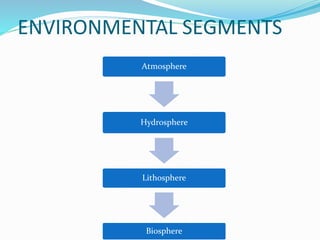
ENVIRONMENTAL SEGMENTS
Atmosphere
Hydrosphere
Lithosphere
Biosphere
 ENVIRONMENTAL STUDIES deals with the sum
of all social ,economical ,biological ,physical
&chemical interrelations with our
surroundings.
 ENVIRONMENTAL CHEMISTRY deals with the
study of the origin , transport ,reactions ,effects
,and fates of chemical species in the
environment
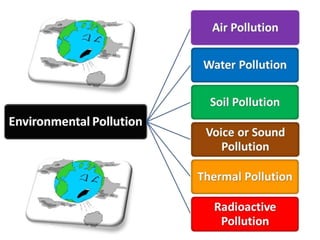
AIR POLLUTION
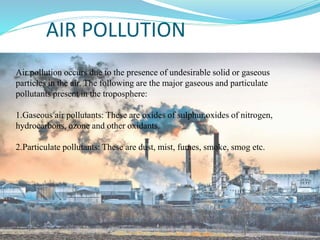
Air pollution occurs due to the presence of undesirable solid or gaseous
particles in the air. The following are the major gaseous and particulate
pollutants present in the troposphere:
1.Gaseous air pollutants: These are oxides of sulphur,oxides of nitrogen,
hydrocarbons, ozone and other oxidants.
2.Particulate pollutants: These are dust, mist, fumes, smoke, smog etc.
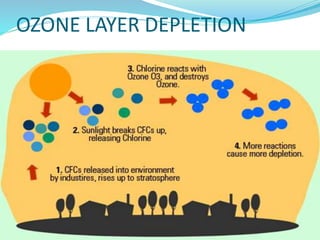
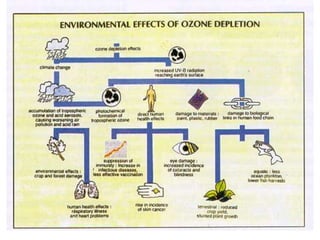
OZONE LAYER DEPLETION
ACID RAIN
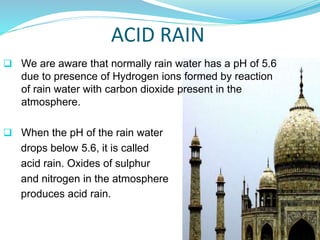
 We are aware that normally rain water has a pH of 5.6
due to presence of Hydrogen ions formed by reaction
of rain water with carbon dioxide present in the
atmosphere.
 When the pH of the rain water
drops below 5.6, it is called
acid rain. Oxides of sulphur
and nitrogen in the atmosphere
produces acid rain.
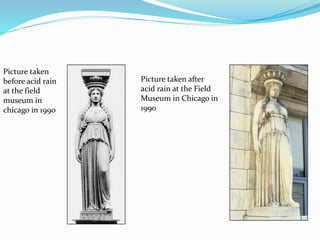
Picture taken after
acid rain at the Field
Museum in Chicago in
1990
Picture taken
before acid rain
at the field
museum in
chicago in 1990
WATER POLLUTION
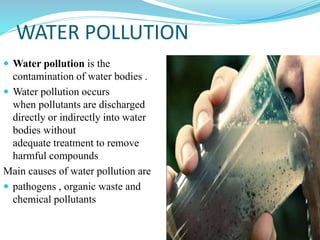
 Water pollution is the
contamination of water bodies .
 Water pollution occurs
when pollutants are discharged
directly or indirectly into water
bodies without
adequate treatment to remove
harmful compounds
Main causes of water pollution are
 pathogens , organic waste and
chemical pollutants
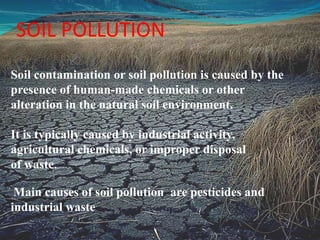
SOIL POLLUTION
Soil contamination or soil pollution is caused by the
presence of human-made chemicals or other
alteration in the natural soil environment.
It is typically caused by industrial activity,
agricultural chemicals, or improper disposal
of waste.
Main causes of soil pollution are pesticides and
industrial waste
RADIOACTIVE POLLUTION
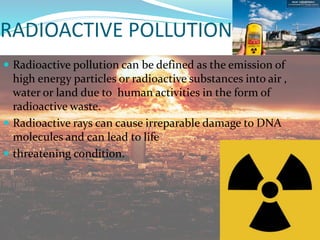
 Radioactive pollution can be defined as the emission of
high energy particles or radioactive substances into air ,
water or land due to human activities in the form of
radioactive waste.
 Radioactive rays can cause irreparable damage to DNA
molecules and can lead to life
 threatening condition.
EFFECTS OF POLLUTION
 Disrupts ecosystems
 Damages the environment
 Causes mutations (nuclear or radio active pollution )
 Causes human health implications
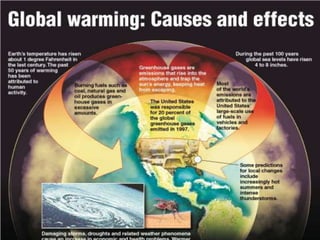
 Global warming
 Species extinction
 Loss of biodiversity
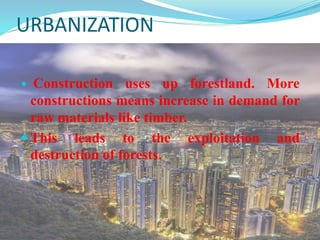
URBANIZATION
 Construction uses up forestland. More
constructions means increase in demand for
raw materials like timber.
 This leads to the exploitation and
destruction of forests.
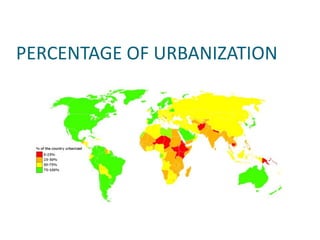
PERCENTAGE OF URBANIZATION
HOW TO SAVE OUR ENVIRONMENT ??
GO GREEN
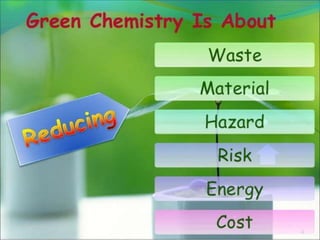
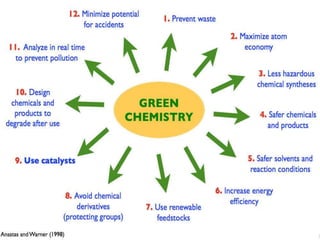
GREEN CHEMISTRY
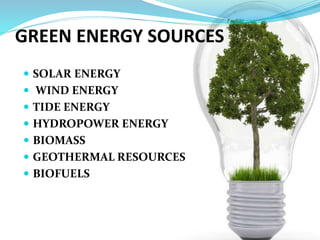
GREEN ENERGY SOURCES
 SOLAR ENERGY
 WIND ENERGY
 TIDE ENERGY
 HYDROPOWER ENERGY
 BIOMASS
 GEOTHERMAL RESOURCES
 BIOFUELS
Need of today- Sustainable growth
Environmental chemistry

Environmental chemistry

  • 1.
    Department of Chemistry St.Mary’s college, Manarcaud For a better tomorrow r
  • 2.
    Environment is thesum total of physical and biological factors that directly influence the survival , growth , development and reproduction of organisms.
  • 3.
  • 4.
     ENVIRONMENTAL STUDIESdeals with the sum of all social ,economical ,biological ,physical &chemical interrelations with our surroundings.  ENVIRONMENTAL CHEMISTRY deals with the study of the origin , transport ,reactions ,effects ,and fates of chemical species in the environment
  • 6.
    AIR POLLUTION Air pollutionoccurs due to the presence of undesirable solid or gaseous particles in the air. The following are the major gaseous and particulate pollutants present in the troposphere: 1.Gaseous air pollutants: These are oxides of sulphur,oxides of nitrogen, hydrocarbons, ozone and other oxidants. 2.Particulate pollutants: These are dust, mist, fumes, smoke, smog etc.
  • 7.
  • 9.
    ACID RAIN  Weare aware that normally rain water has a pH of 5.6 due to presence of Hydrogen ions formed by reaction of rain water with carbon dioxide present in the atmosphere.  When the pH of the rain water drops below 5.6, it is called acid rain. Oxides of sulphur and nitrogen in the atmosphere produces acid rain.
  • 10.
    Picture taken after acidrain at the Field Museum in Chicago in 1990 Picture taken before acid rain at the field museum in chicago in 1990
  • 12.
    WATER POLLUTION  Waterpollution is the contamination of water bodies .  Water pollution occurs when pollutants are discharged directly or indirectly into water bodies without adequate treatment to remove harmful compounds Main causes of water pollution are  pathogens , organic waste and chemical pollutants
  • 13.
    SOIL POLLUTION Soil contaminationor soil pollution is caused by the presence of human-made chemicals or other alteration in the natural soil environment. It is typically caused by industrial activity, agricultural chemicals, or improper disposal of waste. Main causes of soil pollution are pesticides and industrial waste
  • 14.
    RADIOACTIVE POLLUTION  Radioactivepollution can be defined as the emission of high energy particles or radioactive substances into air , water or land due to human activities in the form of radioactive waste.  Radioactive rays can cause irreparable damage to DNA molecules and can lead to life  threatening condition.
  • 15.
    EFFECTS OF POLLUTION Disrupts ecosystems  Damages the environment  Causes mutations (nuclear or radio active pollution )  Causes human health implications  Global warming  Species extinction  Loss of biodiversity
  • 16.
    URBANIZATION  Construction usesup forestland. More constructions means increase in demand for raw materials like timber.  This leads to the exploitation and destruction of forests.
  • 17.
  • 18.
    HOW TO SAVEOUR ENVIRONMENT ?? GO GREEN
  • 20.
  • 21.
    GREEN ENERGY SOURCES SOLAR ENERGY  WIND ENERGY  TIDE ENERGY  HYDROPOWER ENERGY  BIOMASS  GEOTHERMAL RESOURCES  BIOFUELS
  • 22.
    Need of today-Sustainable growth