ENVIRONMENTAL CHEMISTRY
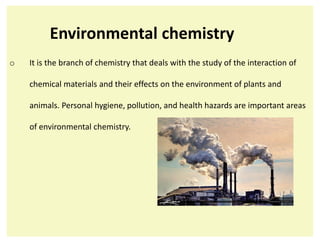
Environmental chemistry
o It is the branch of chemistry that deals with the study of the interaction of
chemical materials and their effects on the environment of plants and
animals. Personal hygiene, pollution, and health hazards are important areas
of environmental chemistry.
•Environment Pollution
•"Environment pollution" is the effect of undesirable changes in our
surroundings that have harmful effects on the plants, animals and
human beings. A substance, which causes pollution, is known as
"pollutant".
Pollutants can be solid, liquid or gaseous substances and they are
produced due to human activities or due to natural happenings.
Some types of pollution:
1) Soil pollution
2) Water pollution
3) Atmosphere pollution
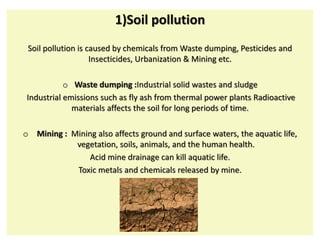
1)Soil pollution
Soil pollution is caused by chemicals from Waste dumping, Pesticides and
Insecticides, Urbanization & Mining etc.
o Waste dumping :Industrial solid wastes and sludge
Industrial emissions such as fly ash from thermal power plants Radioactive
materials affects the soil for long periods of time.
o Mining : Mining also affects ground and surface waters, the aquatic life,
vegetation, soils, animals, and the human health.
Acid mine drainage can kill aquatic life.
Toxic metals and chemicals released by mine.
2) Water Pollution
•Water is essential for our life. Without water there would be no life.
Pollution of water originates from human activities.
Through different paths, pollution reaches surface or ground water.
Easily identified source of pollution is called as point source.
municipal and industrial discharge pipes where pollutants enter the
water-source.
3)ATMOSPHRIC POLLUTION
Air pollution is defined as the addition of undesirable materials into
the atmosphere either due to natural phenomena or due to human
activity on the earth which adversely affect the quality of the air and
hence affects the life on the earth. It is also known as
"Atmospheric Pollution"
SMOG
 (smoke and fog) common air pollution from major cities.
o Classical smog or reducing smog: it occurs in cool humid climate.
It is the mixture of smoke, fog and sulphur dioxide.
o Photochemical smog: occurs in warm, dry and sunny climate.
Reaction components due chain reaction by sunlight on unsaturated
hydrocarbons and nitrogen oxides and free oxygen atom
It has high concentration of oxidizing agents and is, therefore,
called as oxidizing smog. Delhi Smog 2019

Acid rain
We are aware that normally rain water has a pH of 5.6 due to
presence of Hydrogen ions formed by reaction of rain water with
carbon dioxide present in the atmosphere.
When the pH of the rain water drops below 5.6, it is called acid rain.
Impacts of Acid Rain
• It makes lakes so acidic that they can no longer support fish life.
• acid rain gradually eats up lime stone and marble of buildings and corrodes
metals.
• It fades the colour of fabrics (e.g. cotton, nylon and rayon), leather and paper.
• Causes leaf drop in plants.
• It is very corrosive and attacks skin.
• It also damages steel, paints, plastic, cement, masonry work and sculptural
materials.

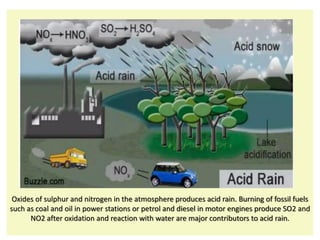
Oxides of sulphur and nitrogen in the atmosphere produces acid rain. Burning of fossil fuels
such as coal and oil in power stations or petrol and diesel in motor engines produce SO2 and
NO2 after oxidation and reaction with water are major contributors to acid rain.
AVOIDANCE & REDUCTION METHODS:
• 3Rs: Removal, Reduction & Reuse/Recycle:
• An important method of waste management is the
prevention of waste material being created.
Reuse or Recycle:
• Repairing broken items instead of buying new -
• Designing products to be refillable or reusable
• Avoid using disposable products
THE END..

environmental chemistry.pdf

  • 1.
  • 2.
    Environmental chemistry o Itis the branch of chemistry that deals with the study of the interaction of chemical materials and their effects on the environment of plants and animals. Personal hygiene, pollution, and health hazards are important areas of environmental chemistry.
  • 3.
    •Environment Pollution •"Environment pollution"is the effect of undesirable changes in our surroundings that have harmful effects on the plants, animals and human beings. A substance, which causes pollution, is known as "pollutant". Pollutants can be solid, liquid or gaseous substances and they are produced due to human activities or due to natural happenings.
  • 4.
    Some types ofpollution: 1) Soil pollution 2) Water pollution 3) Atmosphere pollution
  • 5.
    1)Soil pollution Soil pollutionis caused by chemicals from Waste dumping, Pesticides and Insecticides, Urbanization & Mining etc. o Waste dumping :Industrial solid wastes and sludge Industrial emissions such as fly ash from thermal power plants Radioactive materials affects the soil for long periods of time. o Mining : Mining also affects ground and surface waters, the aquatic life, vegetation, soils, animals, and the human health. Acid mine drainage can kill aquatic life. Toxic metals and chemicals released by mine.
  • 6.
    2) Water Pollution •Wateris essential for our life. Without water there would be no life. Pollution of water originates from human activities. Through different paths, pollution reaches surface or ground water. Easily identified source of pollution is called as point source. municipal and industrial discharge pipes where pollutants enter the water-source.
  • 7.
    3)ATMOSPHRIC POLLUTION Air pollutionis defined as the addition of undesirable materials into the atmosphere either due to natural phenomena or due to human activity on the earth which adversely affect the quality of the air and hence affects the life on the earth. It is also known as "Atmospheric Pollution"
  • 8.
    SMOG  (smoke andfog) common air pollution from major cities. o Classical smog or reducing smog: it occurs in cool humid climate. It is the mixture of smoke, fog and sulphur dioxide. o Photochemical smog: occurs in warm, dry and sunny climate. Reaction components due chain reaction by sunlight on unsaturated hydrocarbons and nitrogen oxides and free oxygen atom It has high concentration of oxidizing agents and is, therefore, called as oxidizing smog. Delhi Smog 2019 
  • 9.
    Acid rain We areaware that normally rain water has a pH of 5.6 due to presence of Hydrogen ions formed by reaction of rain water with carbon dioxide present in the atmosphere. When the pH of the rain water drops below 5.6, it is called acid rain. Impacts of Acid Rain • It makes lakes so acidic that they can no longer support fish life. • acid rain gradually eats up lime stone and marble of buildings and corrodes metals. • It fades the colour of fabrics (e.g. cotton, nylon and rayon), leather and paper. • Causes leaf drop in plants. • It is very corrosive and attacks skin. • It also damages steel, paints, plastic, cement, masonry work and sculptural materials. 
  • 10.
    Oxides of sulphurand nitrogen in the atmosphere produces acid rain. Burning of fossil fuels such as coal and oil in power stations or petrol and diesel in motor engines produce SO2 and NO2 after oxidation and reaction with water are major contributors to acid rain.
  • 11.
    AVOIDANCE & REDUCTIONMETHODS: • 3Rs: Removal, Reduction & Reuse/Recycle: • An important method of waste management is the prevention of waste material being created. Reuse or Recycle: • Repairing broken items instead of buying new - • Designing products to be refillable or reusable • Avoid using disposable products
  • 12.