Environmental Pollution
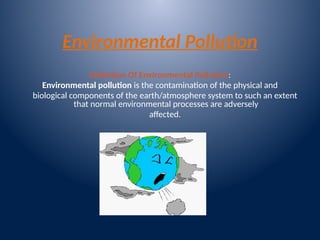
Definition Of Environmental Pollution:
Environmental pollution is the contamination of the physical and
biological components of the earth/atmosphere system to such an extent
that normal environmental processes are adversely
affected.
Types Of Environmental Pollution
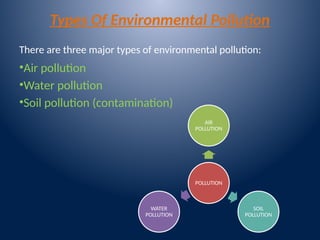
There are three major types of environmental pollution:
•Air pollution
•Water pollution
•Soil pollution (contamination)
POLLUTION
AIR
POLLUTION
SOIL
POLLUTION
WATER
POLLUTION
AIR POLLUTION
Air pollution is the introduction into
the atmosphere of chemicals, particulate matter,
or biological materials that cause discomfort, disease,
or death to humans, damage other living organisms
such as food crops, or damage the natural environment
or built environment .
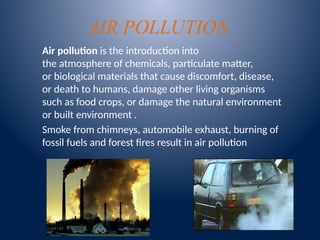
Smoke from chimneys, automobile exhaust, burning of
fossil fuels and forest fires result in air pollution
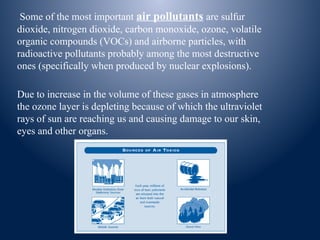
Some of the most important air pollutants are sulfur
dioxide, nitrogen dioxide, carbon monoxide, ozone, volatile
organic compounds (VOCs) and airborne particles, with
radioactive pollutants probably among the most destructive
ones (specifically when produced by nuclear explosions).
Due to increase in the volume of these gases in atmosphere
the ozone layer is depleting because of which the ultraviolet
rays of sun are reaching us and causing damage to our skin,
eyes and other organs.
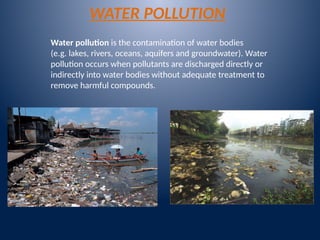
WATER POLLUTION
Water pollution is the contamination of water bodies
(e.g. lakes, rivers, oceans, aquifers and groundwater). Water
pollution occurs when pollutants are discharged directly or
indirectly into water bodies without adequate treatment to
remove harmful compounds.
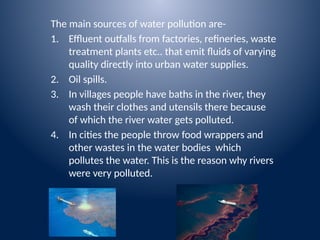
The main sources of water pollution are-
1. Effluent outfalls from factories, refineries, waste
treatment plants etc.. that emit fluids of varying
quality directly into urban water supplies.
2. Oil spills.
3. In villages people have baths in the river, they
wash their clothes and utensils there because
of which the river water gets polluted.
4. In cities the people throw food wrappers and
other wastes in the water bodies which
pollutes the water. This is the reason why rivers
were very polluted.
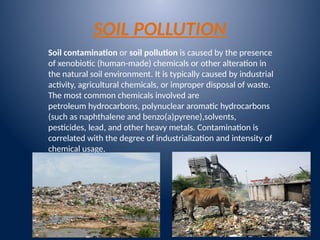
SOIL POLLUTION
Soil contamination or soil pollution is caused by the presence
of xenobiotic (human-made) chemicals or other alteration in
the natural soil environment. It is typically caused by industrial
activity, agricultural chemicals, or improper disposal of waste.
The most common chemicals involved are
petroleum hydrocarbons, polynuclear aromatic hydrocarbons
(such as naphthalene and benzo(a)pyrene),solvents,
pesticides, lead, and other heavy metals. Contamination is
correlated with the degree of industrialization and intensity of
chemical usage.
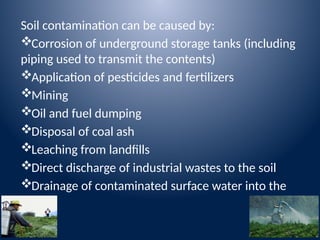
Soil contamination can be caused by:
Corrosion of underground storage tanks (including
piping used to transmit the contents)
Application of pesticides and fertilizers
Mining
Oil and fuel dumping
Disposal of coal ash
Leaching from landfills
Direct discharge of industrial wastes to the soil
Drainage of contaminated surface water into the
soil
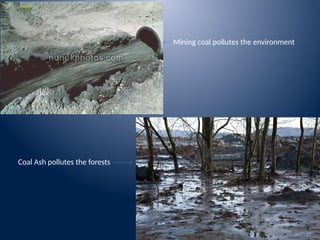
Mining coal pollutes the environment
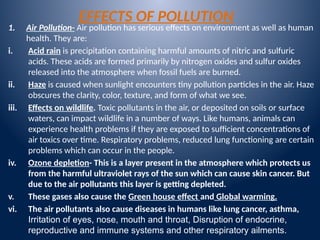
Coal Ash pollutes the forests
EFFECTS OF POLLUTION
1. Air Pollution- Air pollution has serious effects on environment as well as human
health. They are:
i. Acid rain is precipitation containing harmful amounts of nitric and sulfuric
acids. These acids are formed primarily by nitrogen oxides and sulfur oxides
released into the atmosphere when fossil fuels are burned.
ii. Haze is caused when sunlight encounters tiny pollution particles in the air. Haze
obscures the clarity, color, texture, and form of what we see.
iii. Effects on wildlife. Toxic pollutants in the air, or deposited on soils or surface
waters, can impact wildlife in a number of ways. Like humans, animals can
experience health problems if they are exposed to sufficient concentrations of
air toxics over time. Respiratory problems, reduced lung functioning are certain
problems which can occur in the people.
iv. Ozone depletion- This is a layer present in the atmosphere which protects us
from the harmful ultraviolet rays of the sun which can cause skin cancer. But
due to the air pollutants this layer is getting depleted.
v. These gases also cause the Green house effect and Global warming.
vi. The air pollutants also cause diseases in humans like lung cancer, asthma,
Irritation of eyes, nose, mouth and throat, Disruption of endocrine,
reproductive and immune systems and other respiratory ailments.
2. Water Pollution- Its effects are as follows:-
i. Water bodies like lakes and rivers are polluted
which results in the death of marine animals like
fishes, turtles, whales, dolphins etc.
ii. Oil spills not only harm marine animals but they
also affect precipitation rate.
iii. If the polluted water is consumed by humans then
water-borne diseases like typhoid, cholera,
dysentery.
iv. When the pesticides after surface runoff reach the
lakes, they lead to the growth of algae which after
sometime covers the whole lake and due to lack of
oxygen the animals die.
3. Soil Pollution- Its effects are:-
i. The waste from landfill leaches and causes contaminates
the groundwater.
ii. Certain animals like cows eat waste like plastic bags and
die.
iii. It emits foul odour and becomes breeding ground for
mosquitoes.
iv. The waste on a landfill reduces the fertility of the soil.
v. Pesticides, benzene, chromium and weed killers sprayed on
the field are carcinogens which have been established to
lead to all kinds of cancer. Long-term benzene exposure is
responsible for irregular menstrual cycles in women,
leukemia and anemia.
Pesticides like DDT are carcinogens (cancer causing
substance)

environmentppt-121202081136-phpapp02(1).pptx

  • 2.
    Environmental Pollution Definition OfEnvironmental Pollution: Environmental pollution is the contamination of the physical and biological components of the earth/atmosphere system to such an extent that normal environmental processes are adversely affected.
  • 3.
    Types Of EnvironmentalPollution There are three major types of environmental pollution: •Air pollution •Water pollution •Soil pollution (contamination) POLLUTION AIR POLLUTION SOIL POLLUTION WATER POLLUTION
  • 4.
    AIR POLLUTION Air pollutionis the introduction into the atmosphere of chemicals, particulate matter, or biological materials that cause discomfort, disease, or death to humans, damage other living organisms such as food crops, or damage the natural environment or built environment . Smoke from chimneys, automobile exhaust, burning of fossil fuels and forest fires result in air pollution
  • 5.
    Some of themost important air pollutants are sulfur dioxide, nitrogen dioxide, carbon monoxide, ozone, volatile organic compounds (VOCs) and airborne particles, with radioactive pollutants probably among the most destructive ones (specifically when produced by nuclear explosions). Due to increase in the volume of these gases in atmosphere the ozone layer is depleting because of which the ultraviolet rays of sun are reaching us and causing damage to our skin, eyes and other organs.
  • 6.
    WATER POLLUTION Water pollutionis the contamination of water bodies (e.g. lakes, rivers, oceans, aquifers and groundwater). Water pollution occurs when pollutants are discharged directly or indirectly into water bodies without adequate treatment to remove harmful compounds.
  • 7.
    The main sourcesof water pollution are- 1. Effluent outfalls from factories, refineries, waste treatment plants etc.. that emit fluids of varying quality directly into urban water supplies. 2. Oil spills. 3. In villages people have baths in the river, they wash their clothes and utensils there because of which the river water gets polluted. 4. In cities the people throw food wrappers and other wastes in the water bodies which pollutes the water. This is the reason why rivers were very polluted.
  • 8.
    SOIL POLLUTION Soil contaminationor soil pollution is caused by the presence of xenobiotic (human-made) chemicals or other alteration in the natural soil environment. It is typically caused by industrial activity, agricultural chemicals, or improper disposal of waste. The most common chemicals involved are petroleum hydrocarbons, polynuclear aromatic hydrocarbons (such as naphthalene and benzo(a)pyrene),solvents, pesticides, lead, and other heavy metals. Contamination is correlated with the degree of industrialization and intensity of chemical usage.
  • 9.
    Soil contamination canbe caused by: Corrosion of underground storage tanks (including piping used to transmit the contents) Application of pesticides and fertilizers Mining Oil and fuel dumping Disposal of coal ash Leaching from landfills Direct discharge of industrial wastes to the soil Drainage of contaminated surface water into the soil
  • 10.
    Mining coal pollutesthe environment Coal Ash pollutes the forests
  • 11.
    EFFECTS OF POLLUTION 1.Air Pollution- Air pollution has serious effects on environment as well as human health. They are: i. Acid rain is precipitation containing harmful amounts of nitric and sulfuric acids. These acids are formed primarily by nitrogen oxides and sulfur oxides released into the atmosphere when fossil fuels are burned. ii. Haze is caused when sunlight encounters tiny pollution particles in the air. Haze obscures the clarity, color, texture, and form of what we see. iii. Effects on wildlife. Toxic pollutants in the air, or deposited on soils or surface waters, can impact wildlife in a number of ways. Like humans, animals can experience health problems if they are exposed to sufficient concentrations of air toxics over time. Respiratory problems, reduced lung functioning are certain problems which can occur in the people. iv. Ozone depletion- This is a layer present in the atmosphere which protects us from the harmful ultraviolet rays of the sun which can cause skin cancer. But due to the air pollutants this layer is getting depleted. v. These gases also cause the Green house effect and Global warming. vi. The air pollutants also cause diseases in humans like lung cancer, asthma, Irritation of eyes, nose, mouth and throat, Disruption of endocrine, reproductive and immune systems and other respiratory ailments.
  • 12.
    2. Water Pollution-Its effects are as follows:- i. Water bodies like lakes and rivers are polluted which results in the death of marine animals like fishes, turtles, whales, dolphins etc. ii. Oil spills not only harm marine animals but they also affect precipitation rate. iii. If the polluted water is consumed by humans then water-borne diseases like typhoid, cholera, dysentery. iv. When the pesticides after surface runoff reach the lakes, they lead to the growth of algae which after sometime covers the whole lake and due to lack of oxygen the animals die.
  • 13.
    3. Soil Pollution-Its effects are:- i. The waste from landfill leaches and causes contaminates the groundwater. ii. Certain animals like cows eat waste like plastic bags and die. iii. It emits foul odour and becomes breeding ground for mosquitoes. iv. The waste on a landfill reduces the fertility of the soil. v. Pesticides, benzene, chromium and weed killers sprayed on the field are carcinogens which have been established to lead to all kinds of cancer. Long-term benzene exposure is responsible for irregular menstrual cycles in women, leukemia and anemia. Pesticides like DDT are carcinogens (cancer causing substance)