VIVEKANANDHAARTS AND SCIENCE COLLEGE FOR WOMEN
VEERACHIPALAYAM, SANKAGIRI, SALEM.
DEPARTMENT OF MICROBILOGY
SUBJECT: SOIL AND ENVIRONMENTAL MICROBIOLOGY
TOPIC: COMPONENTS OF ENVIRONMENT
Dr. R.DINESHKUMAR
ASSISTANT PROFESSOR
DEPARTMENT OF MICROBILOGY
VIVEKANANDHAARTS AND SCIENCE
COLLEGE FOR WOMEN
VEERACHIPALAYAM, SANKAGIRI, SALEM.
P.DIVYA
II – M.SC MICROBIOLOGY
VIVEKANANDHAARTS AND SCIENCE
COLLEGE FOR WOMEN
VEERACHIPALAYAM, SANKAGIRI,
SALEM
CONTENTS
• Introduction
• Components of environment
• Lithosphere
• Hydrosphere
• Atmosphere
• Biosphere
Introduction
• The term ‘Environment’ means surrounding, influences, conditions and
circumstances in which living bodies such as human beings animals,
microorganisms and plant lives effortlessly on the earth.
• Life is only survived on the earth because of the environment which support or
protect the living organisms and supplies all the necessary materials.
• The term environment is orginated from french word ‘environ’ which means
surrounding.
• The surroundings comprises two elements.
• Biotic
• Abiotic
• The biotic elements include living bodies such as human beings, animals,
microorganisms, plants.
• The abiotic elements include non – living components such as water, soil, air,
temperature and light.
Components Of Environment
• The environment categorized into four
major naturally interlinked components.
1.Lithosphere
2.Hydrosphere
3.Atmosphere
4.Biosphere
• The environment and it’s major
components largely affected by human
being activities.
• The environment is the “sum total of all
conditions and influences that affect the
development and life of all organisms on
earth”.
LITHOSPHERE
• The lithosphere is an extremely significant and important component of the
environment. It is made up of outer mandle of the solid rocks that cover up
uppermost part of the earth’s crust.
• The term ‘lithosphere ‘ orginated from two ancient greek words “ litho” means
rocky and “sphaira” means sphere.
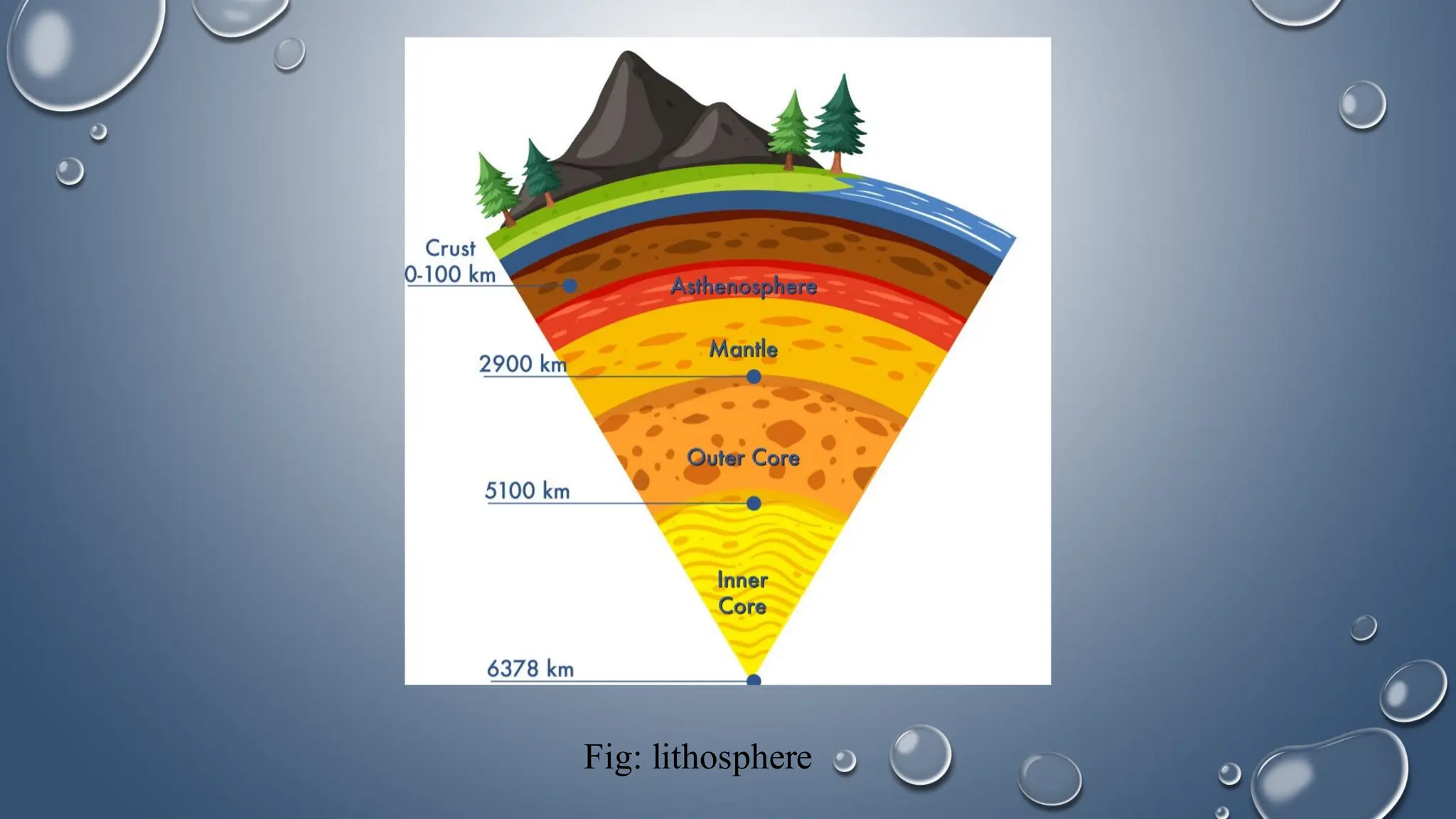
• Lithosphere is rigid and inorganic upper layer of the earth’s crust and consist of
rocks, soil, mountains, continents and ocean.
• Soil is less dense and relatively loose material which prepared from rocks through
the weathering processes such as rainfall, temperature change and humidity.
Fig: lithosphere
• Soil,the most important portion of lithosphere, mainly composed of inorganic
mineral matters, soil organic matters (Humus), soil water, soil atmosphere(air ),
biological systems (plants, human ,animals, microbes) micro nutrients, macro
nutrients.
• The frontier part of lithosphere prepared a multifaceted interface with the other
components of environment, i.e., the biosphere, atmosphere & hydrosphere.
• They all are principally interconverble and interacted to each other.
• The interaction between the lithosphere, atmosphere and biosphere generally
takes place at continental region where land- air interface exists and involves the
precipitation, atmospheric gases and solor energy transformation.
HYDROSPHERE
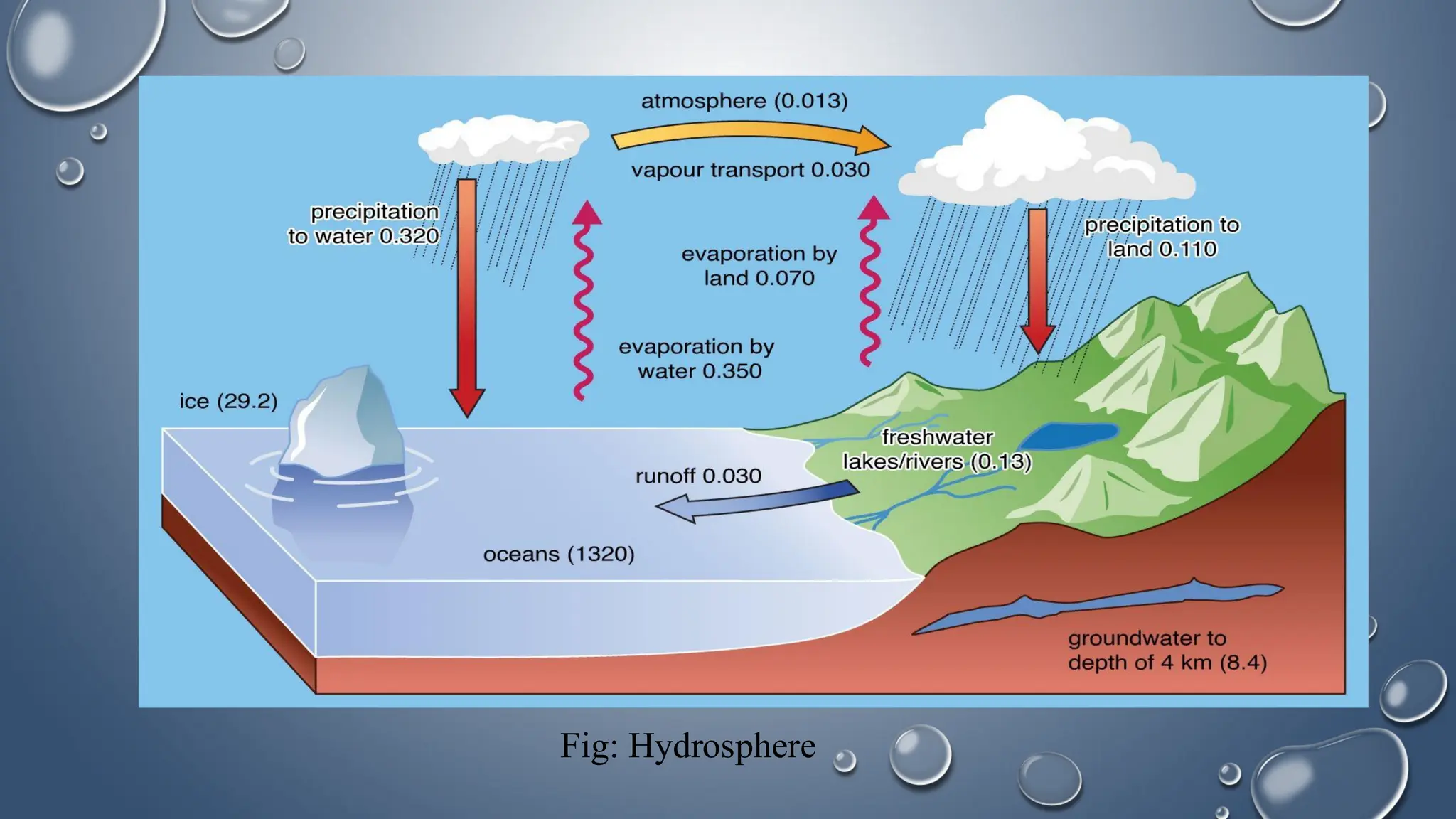
• The hydrosphere is another significant component of environment where
water bodies present in the form of liquid, solid, or gas.
• It is composed of all water bodies and found in its there phases such as
liquid water ,ice & water vapour on and around the earth’s surface.
• It consists of all earth i.e., ocean, rivers,lakes,ponds, streams, reservoirs,
ground water, ice- caps, glaciers, etc..
Fig: Hydrosphere
• Nearly ~96.53% of the earth’s water stored in oceans which covers ~71%
of the earth’s surface.
• Ocean water is saline & account as non drinkable water for human beings
and animals.
• Remaining ~3.477% of the total volume of earth’s water stored in various
resources such as river, lakes, reservoirs, streams, ponds, ground water
reserves, ice – caps, glaciers.
• Which is fresh & fit for human and animal drinking
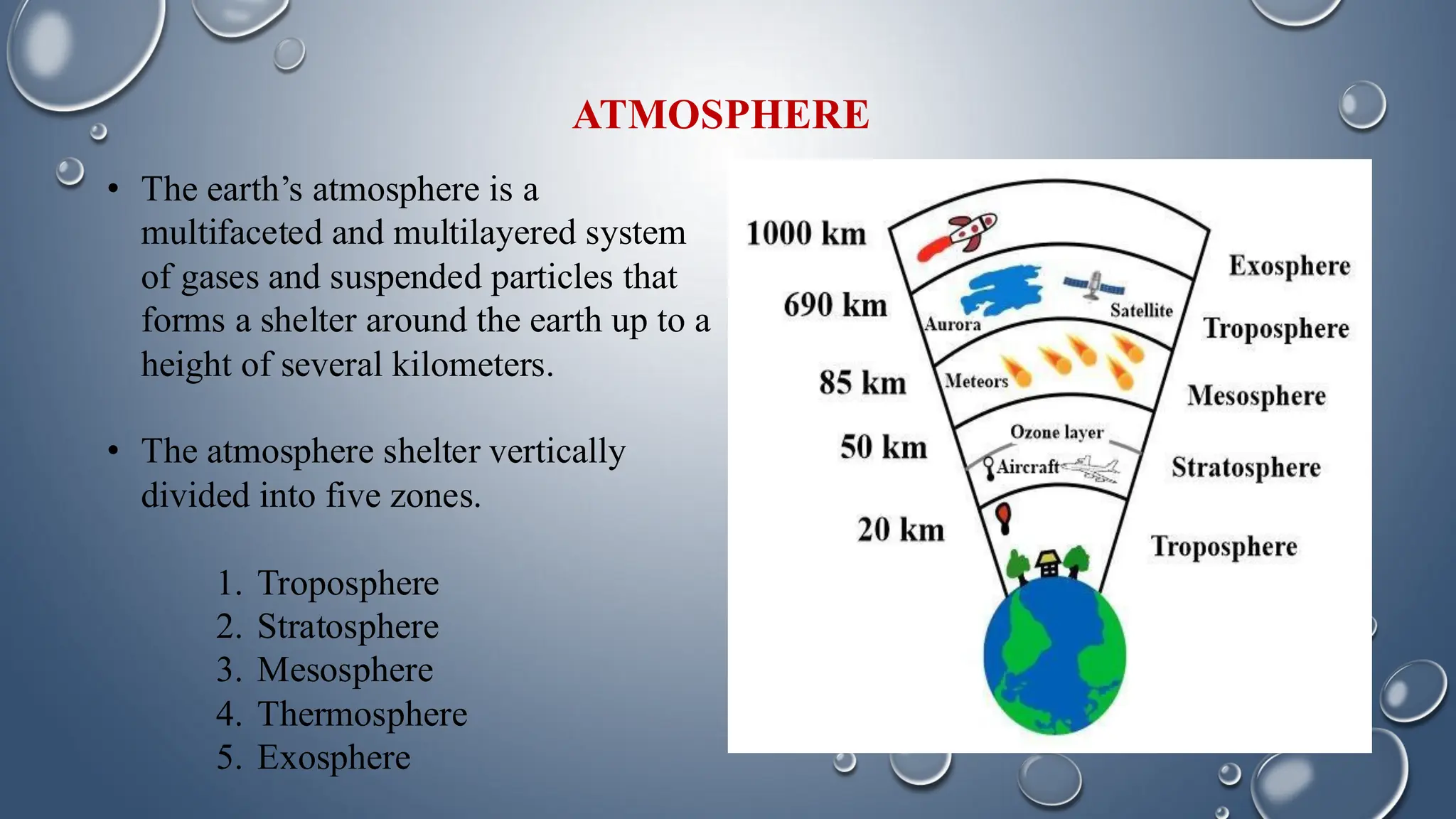
ATMOSPHERE
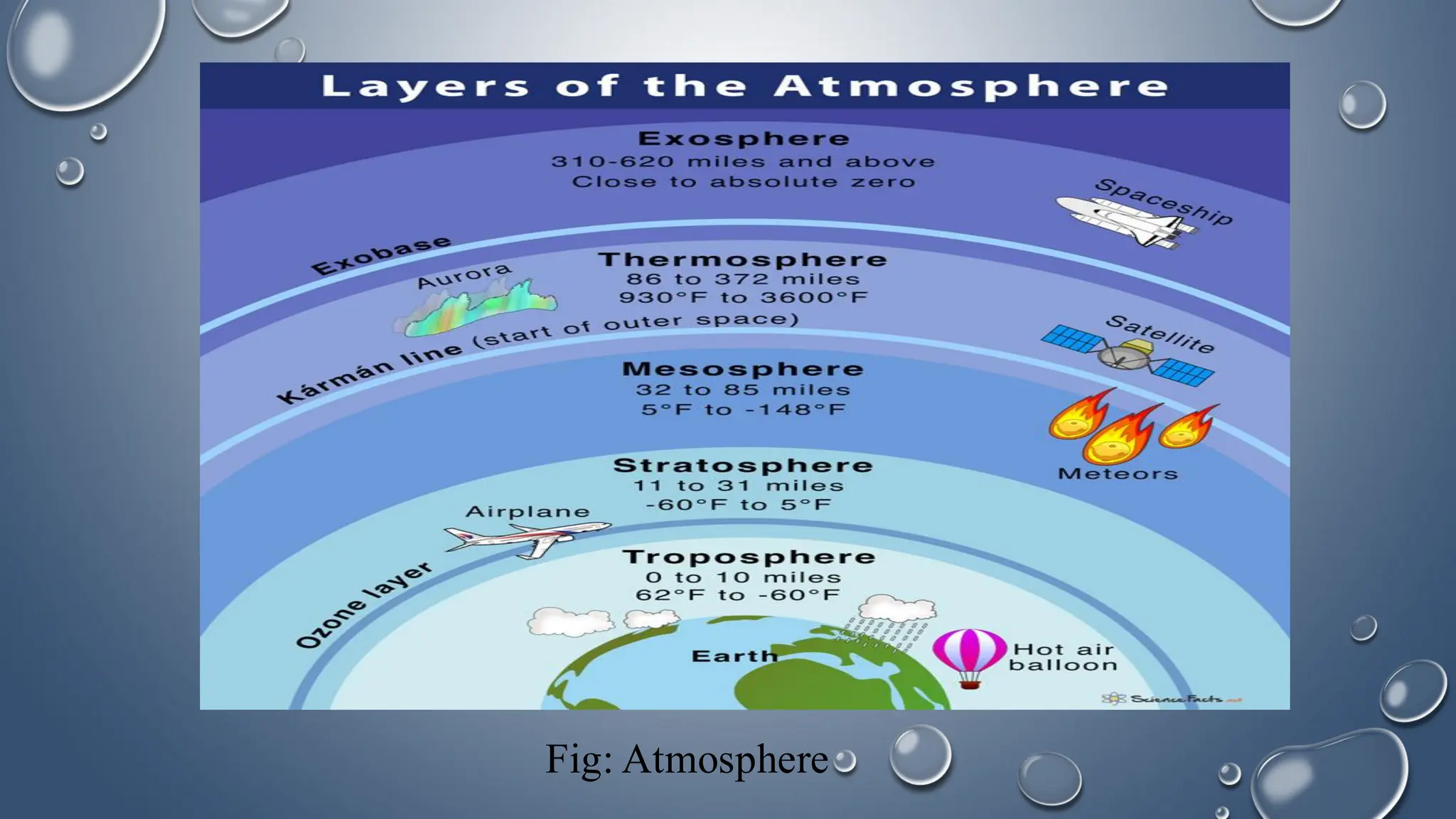
• The earth’s atmosphere is a
multifaceted and multilayered system
of gases and suspended particles that
forms a shelter around the earth up to a
height of several kilometers.
• The atmosphere shelter vertically
divided into five zones.
1. Troposphere
2. Stratosphere
3. Mesosphere
4. Thermosphere
5. Exosphere
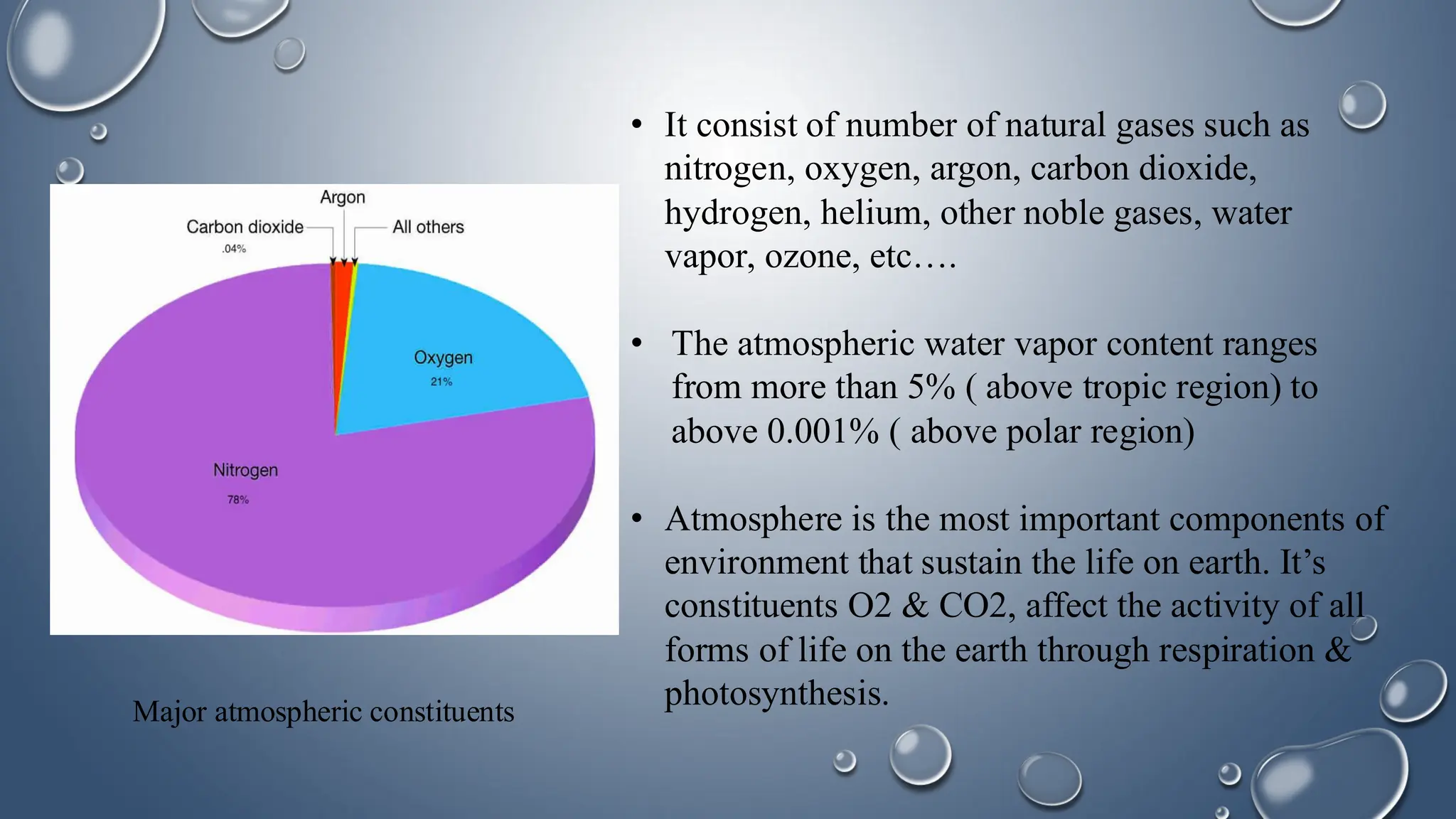
• It consist of number of natural gases such as
nitrogen, oxygen, argon, carbon dioxide,
hydrogen, helium, other noble gases, water
vapor, ozone, etc….
• The atmospheric water vapor content ranges
from more than 5% ( above tropic region) to
above 0.001% ( above polar region)
• Atmosphere is the most important components of
environment that sustain the life on earth. It’s
constituents O2 & CO2, affect the activity of all
forms of life on the earth through respiration &
photosynthesis.
Major atmospheric constituents
Fig: Atmosphere
BIOSPHERE
• The biosphere is the fourth most precious component of earth‘s
environment & biological ecosystem where natural living beings. I.e.,
humans, animals, plants, microbes, live effortlessly.
• The environmental system completes the essential requirements of all
living beings I.e., water, food, air, energy, minerals, macro &
micronutrients etc.. To survive naturally on earth.
• Biosphere is composed of all natural living beings such as human,
animals, plants, flora, fauna, microorganisms etc… that live effortlessly
above, over and below the surface of earth.
• Most of the living beings extend over surface of the earth, and some
of them extend below 3 meters and above 30 meters of the earth‘s
surface.
• Some where it is extended above 200 meters above the ocean.
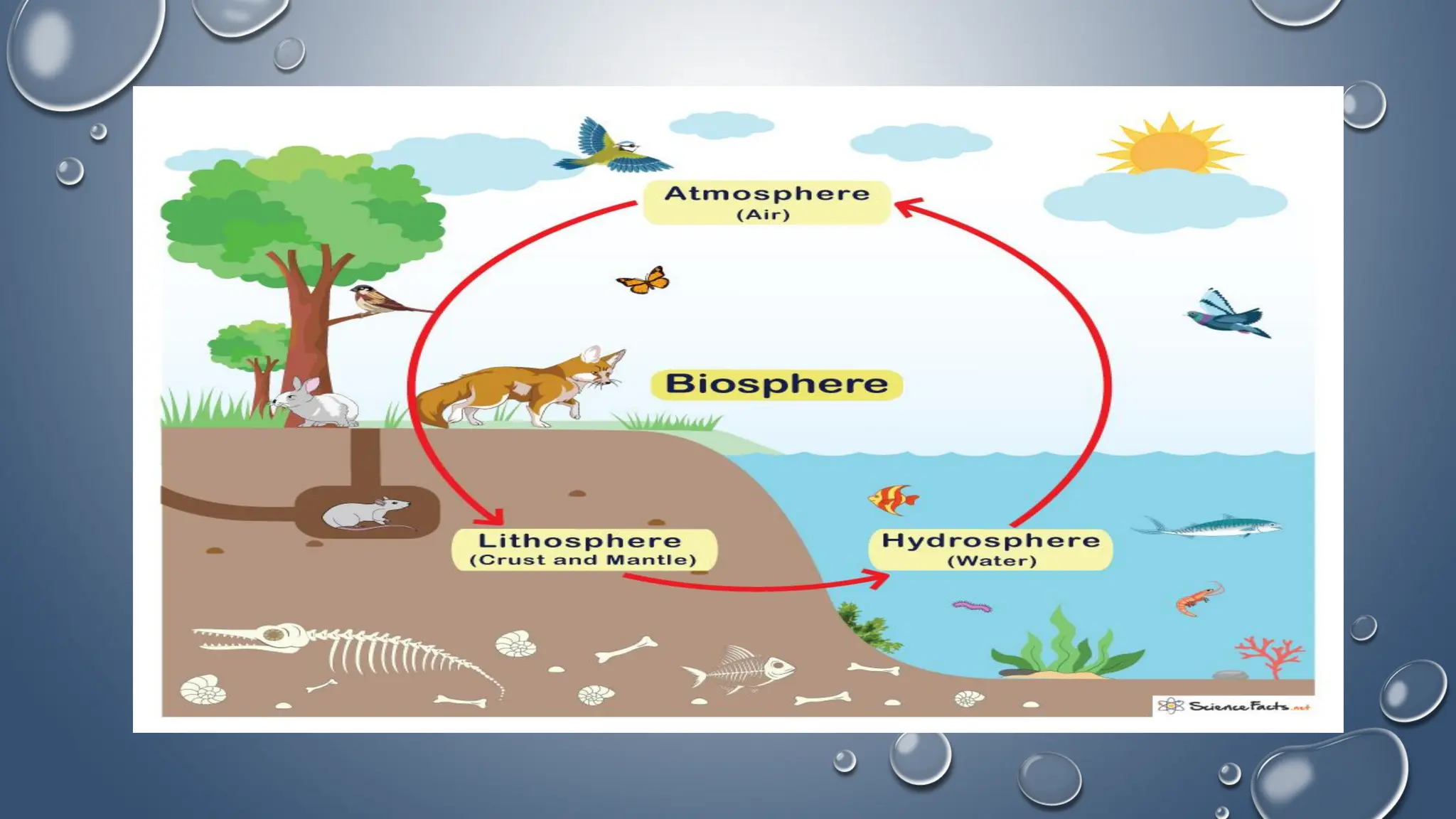
• Therefore, the biosphere is a miscellaneous kind of life, which
survives at the top of the lithosphere, throughout the hydrosphere and
into the lower atmosphere.
• Thus the biosphere is the biology geographical system of earth‘s
surface which gradually interacts with the lithosphere, hydrosphere &
atmosphere.
Components of Environment- lithosphere, hydrosphere, atmosphere, biosphere.

Components of Environment- lithosphere, hydrosphere, atmosphere, biosphere.

  • 1.
    VIVEKANANDHAARTS AND SCIENCECOLLEGE FOR WOMEN VEERACHIPALAYAM, SANKAGIRI, SALEM. DEPARTMENT OF MICROBILOGY SUBJECT: SOIL AND ENVIRONMENTAL MICROBIOLOGY TOPIC: COMPONENTS OF ENVIRONMENT Dr. R.DINESHKUMAR ASSISTANT PROFESSOR DEPARTMENT OF MICROBILOGY VIVEKANANDHAARTS AND SCIENCE COLLEGE FOR WOMEN VEERACHIPALAYAM, SANKAGIRI, SALEM. P.DIVYA II – M.SC MICROBIOLOGY VIVEKANANDHAARTS AND SCIENCE COLLEGE FOR WOMEN VEERACHIPALAYAM, SANKAGIRI, SALEM
  • 2.
    CONTENTS • Introduction • Componentsof environment • Lithosphere • Hydrosphere • Atmosphere • Biosphere
  • 3.
    Introduction • The term‘Environment’ means surrounding, influences, conditions and circumstances in which living bodies such as human beings animals, microorganisms and plant lives effortlessly on the earth. • Life is only survived on the earth because of the environment which support or protect the living organisms and supplies all the necessary materials. • The term environment is orginated from french word ‘environ’ which means surrounding. • The surroundings comprises two elements. • Biotic • Abiotic • The biotic elements include living bodies such as human beings, animals, microorganisms, plants. • The abiotic elements include non – living components such as water, soil, air, temperature and light.
  • 4.
    Components Of Environment •The environment categorized into four major naturally interlinked components. 1.Lithosphere 2.Hydrosphere 3.Atmosphere 4.Biosphere • The environment and it’s major components largely affected by human being activities. • The environment is the “sum total of all conditions and influences that affect the development and life of all organisms on earth”.
  • 5.
    LITHOSPHERE • The lithosphereis an extremely significant and important component of the environment. It is made up of outer mandle of the solid rocks that cover up uppermost part of the earth’s crust. • The term ‘lithosphere ‘ orginated from two ancient greek words “ litho” means rocky and “sphaira” means sphere. • Lithosphere is rigid and inorganic upper layer of the earth’s crust and consist of rocks, soil, mountains, continents and ocean. • Soil is less dense and relatively loose material which prepared from rocks through the weathering processes such as rainfall, temperature change and humidity.
  • 6.
  • 7.
    • Soil,the mostimportant portion of lithosphere, mainly composed of inorganic mineral matters, soil organic matters (Humus), soil water, soil atmosphere(air ), biological systems (plants, human ,animals, microbes) micro nutrients, macro nutrients. • The frontier part of lithosphere prepared a multifaceted interface with the other components of environment, i.e., the biosphere, atmosphere & hydrosphere. • They all are principally interconverble and interacted to each other. • The interaction between the lithosphere, atmosphere and biosphere generally takes place at continental region where land- air interface exists and involves the precipitation, atmospheric gases and solor energy transformation.
  • 8.
    HYDROSPHERE • The hydrosphereis another significant component of environment where water bodies present in the form of liquid, solid, or gas. • It is composed of all water bodies and found in its there phases such as liquid water ,ice & water vapour on and around the earth’s surface. • It consists of all earth i.e., ocean, rivers,lakes,ponds, streams, reservoirs, ground water, ice- caps, glaciers, etc..
  • 9.
  • 10.
    • Nearly ~96.53%of the earth’s water stored in oceans which covers ~71% of the earth’s surface. • Ocean water is saline & account as non drinkable water for human beings and animals. • Remaining ~3.477% of the total volume of earth’s water stored in various resources such as river, lakes, reservoirs, streams, ponds, ground water reserves, ice – caps, glaciers. • Which is fresh & fit for human and animal drinking
  • 11.
    ATMOSPHERE • The earth’satmosphere is a multifaceted and multilayered system of gases and suspended particles that forms a shelter around the earth up to a height of several kilometers. • The atmosphere shelter vertically divided into five zones. 1. Troposphere 2. Stratosphere 3. Mesosphere 4. Thermosphere 5. Exosphere
  • 12.
    • It consistof number of natural gases such as nitrogen, oxygen, argon, carbon dioxide, hydrogen, helium, other noble gases, water vapor, ozone, etc…. • The atmospheric water vapor content ranges from more than 5% ( above tropic region) to above 0.001% ( above polar region) • Atmosphere is the most important components of environment that sustain the life on earth. It’s constituents O2 & CO2, affect the activity of all forms of life on the earth through respiration & photosynthesis. Major atmospheric constituents
  • 13.
  • 14.
    BIOSPHERE • The biosphereis the fourth most precious component of earth‘s environment & biological ecosystem where natural living beings. I.e., humans, animals, plants, microbes, live effortlessly. • The environmental system completes the essential requirements of all living beings I.e., water, food, air, energy, minerals, macro & micronutrients etc.. To survive naturally on earth. • Biosphere is composed of all natural living beings such as human, animals, plants, flora, fauna, microorganisms etc… that live effortlessly above, over and below the surface of earth.
  • 16.
    • Most ofthe living beings extend over surface of the earth, and some of them extend below 3 meters and above 30 meters of the earth‘s surface. • Some where it is extended above 200 meters above the ocean. • Therefore, the biosphere is a miscellaneous kind of life, which survives at the top of the lithosphere, throughout the hydrosphere and into the lower atmosphere. • Thus the biosphere is the biology geographical system of earth‘s surface which gradually interacts with the lithosphere, hydrosphere & atmosphere.