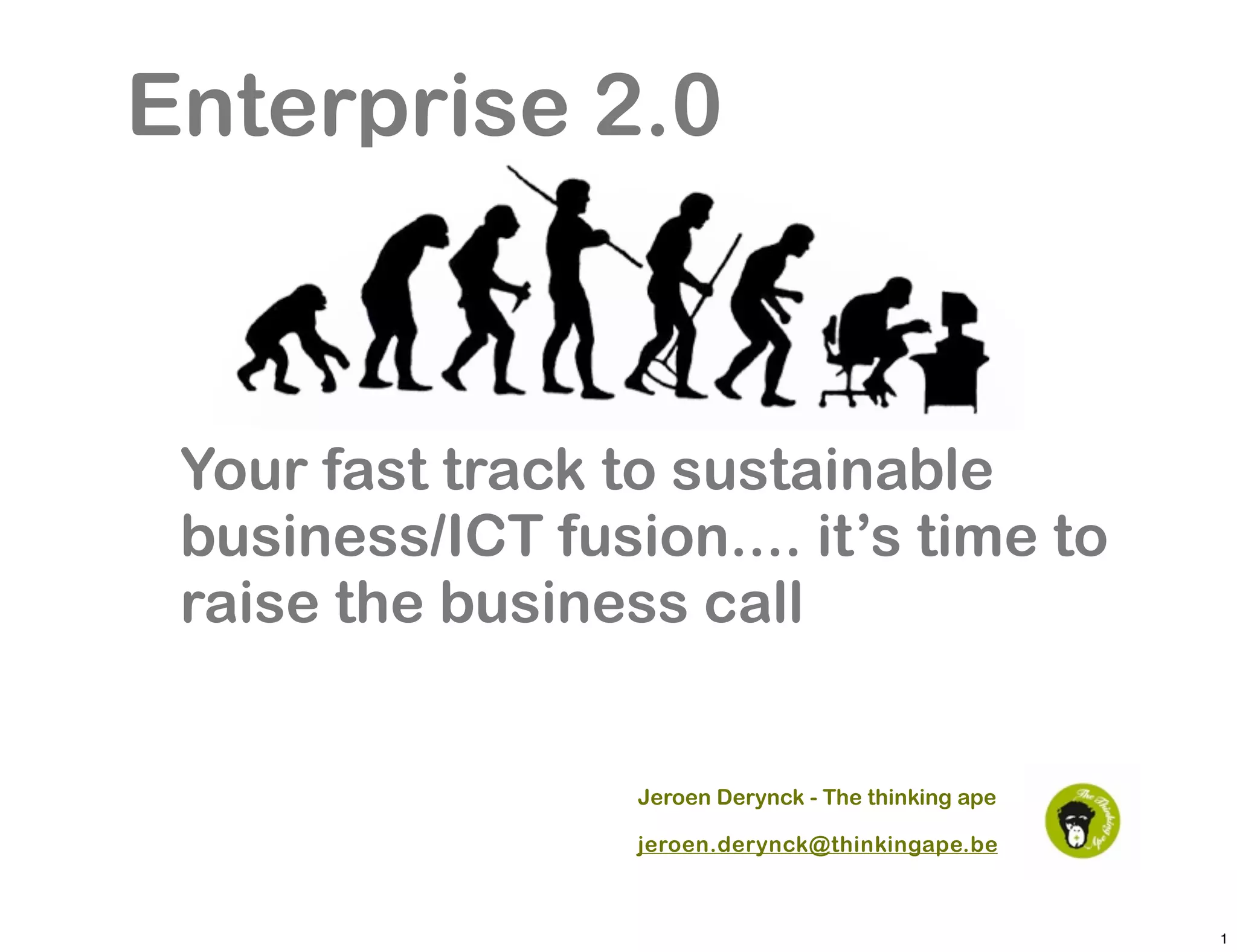




Enterprise 2.0


 Your fast track to sustainable
 business/ICT fusion.... it’s time to
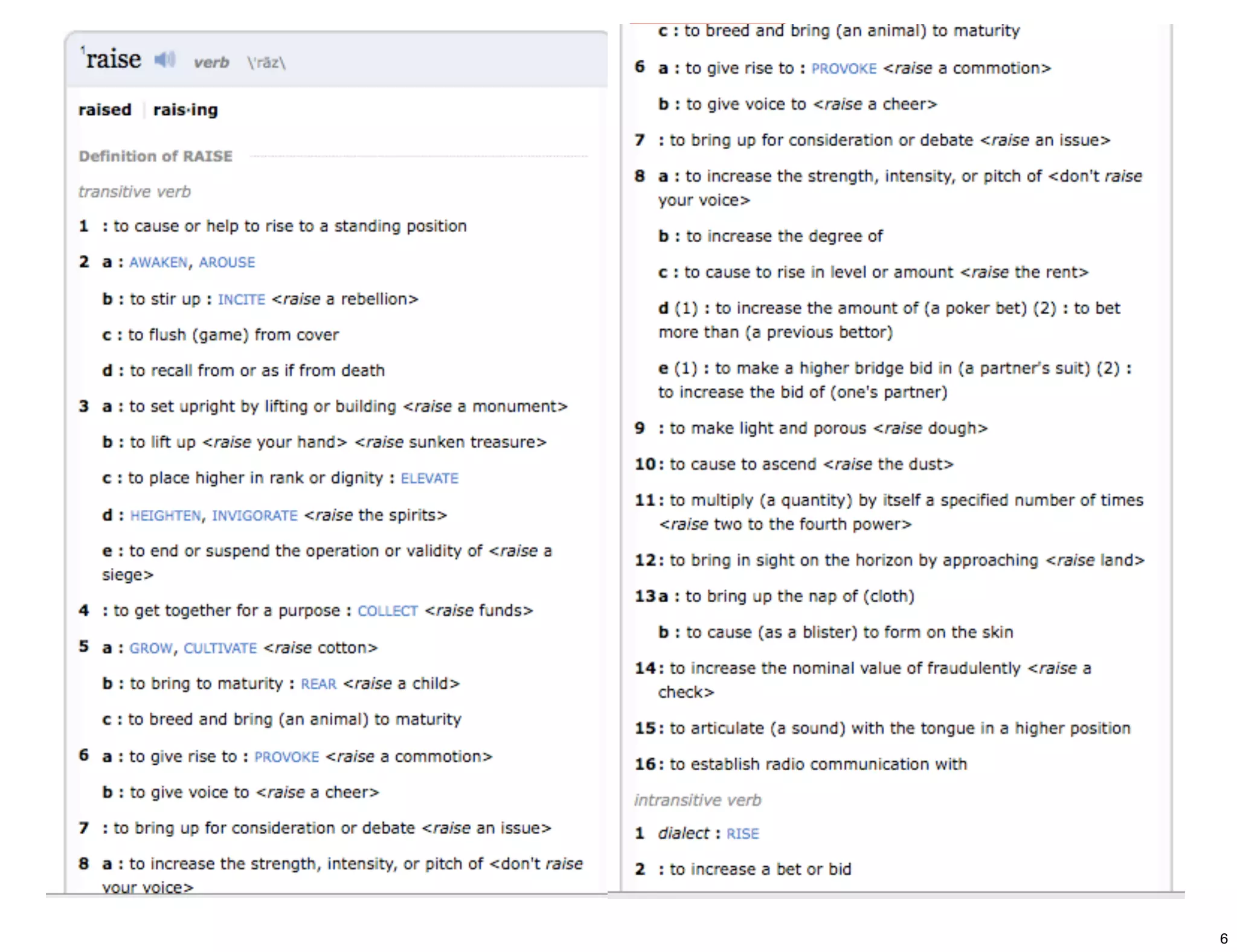
 raise the business call


                  Jeroen Derynck - The thinking ape

                  jeroen.derynck@thinkingape.be


                                                      1
CIO priorities 2010
1. Business productivity and cost reduction
2. IT/Business alignment
3. Agility and speed to market
4. Business process re-engineering
5. IT cost reduction
6. IT reliability and efficiency
7. IT strategic planning
8. Revenue-generating IT innovations
9. Security and privacy
10. CIO leadership role
                  http://www.cioinsight.com/c/a/Research/CIO-Priorities-for-2010-196566/


                                                                                           2
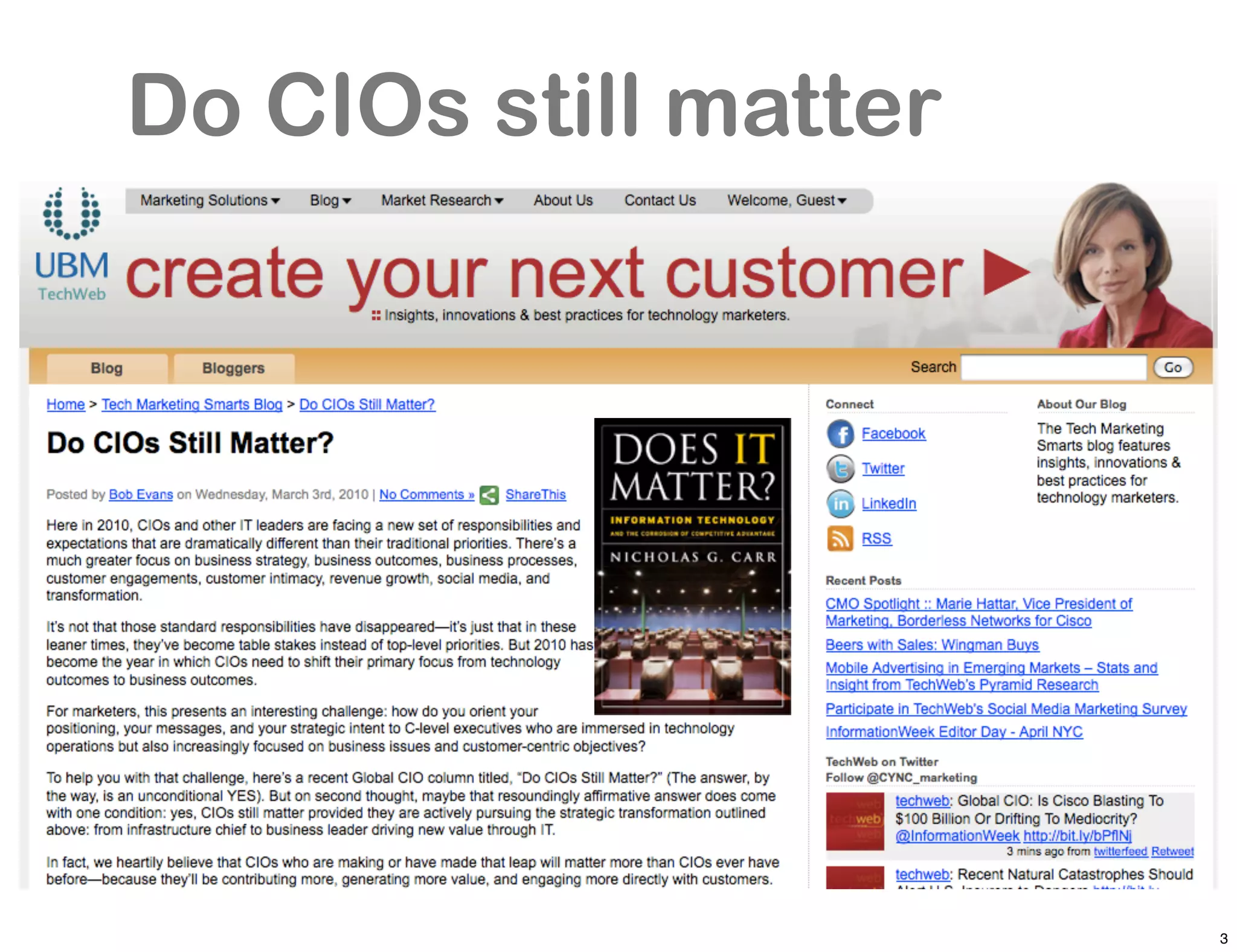
Do CIOs still matter


                       3
4
but...what is the role of ICT
in the first place


 •Reduce costs
 •Access information anywhere
 •Improve efficiency
 •Secure data
 •Enable growth
             Based on Paul Strassman - XEROX

                                               5
6
BITA.... what’s the problem


                              7
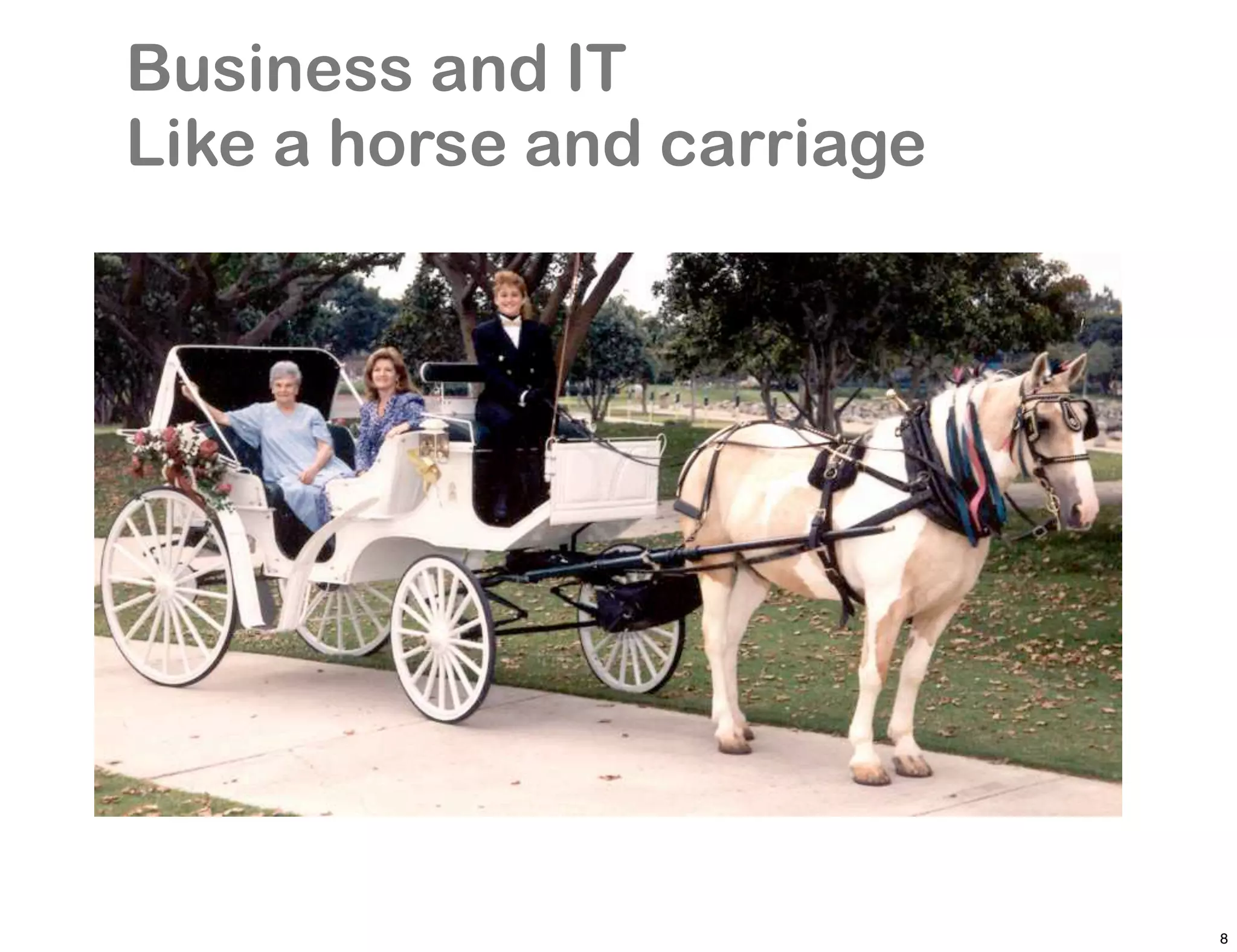
Business and IT
Like a horse and carriage


                            8
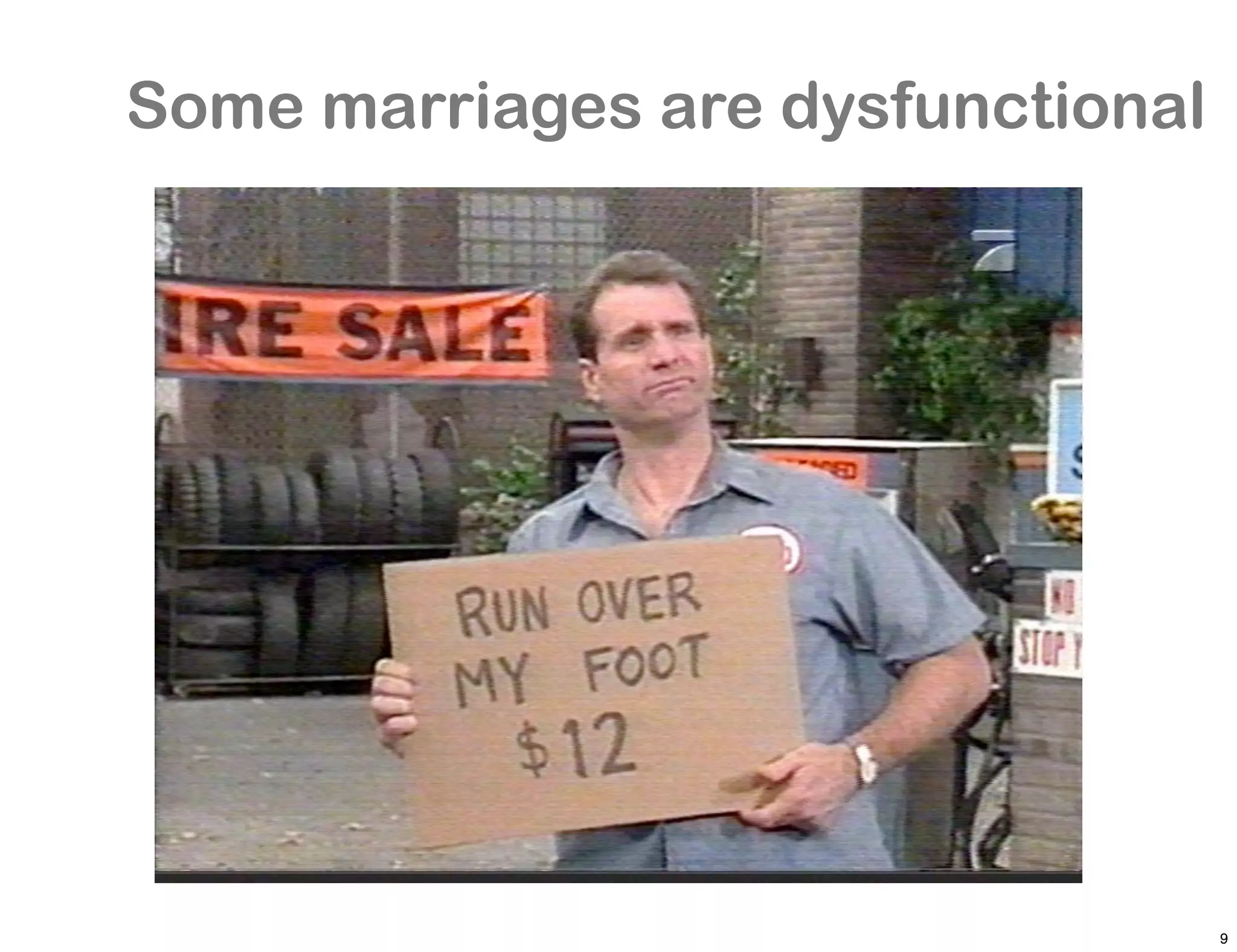
Some marriages are dysfunctional


                                   9
10
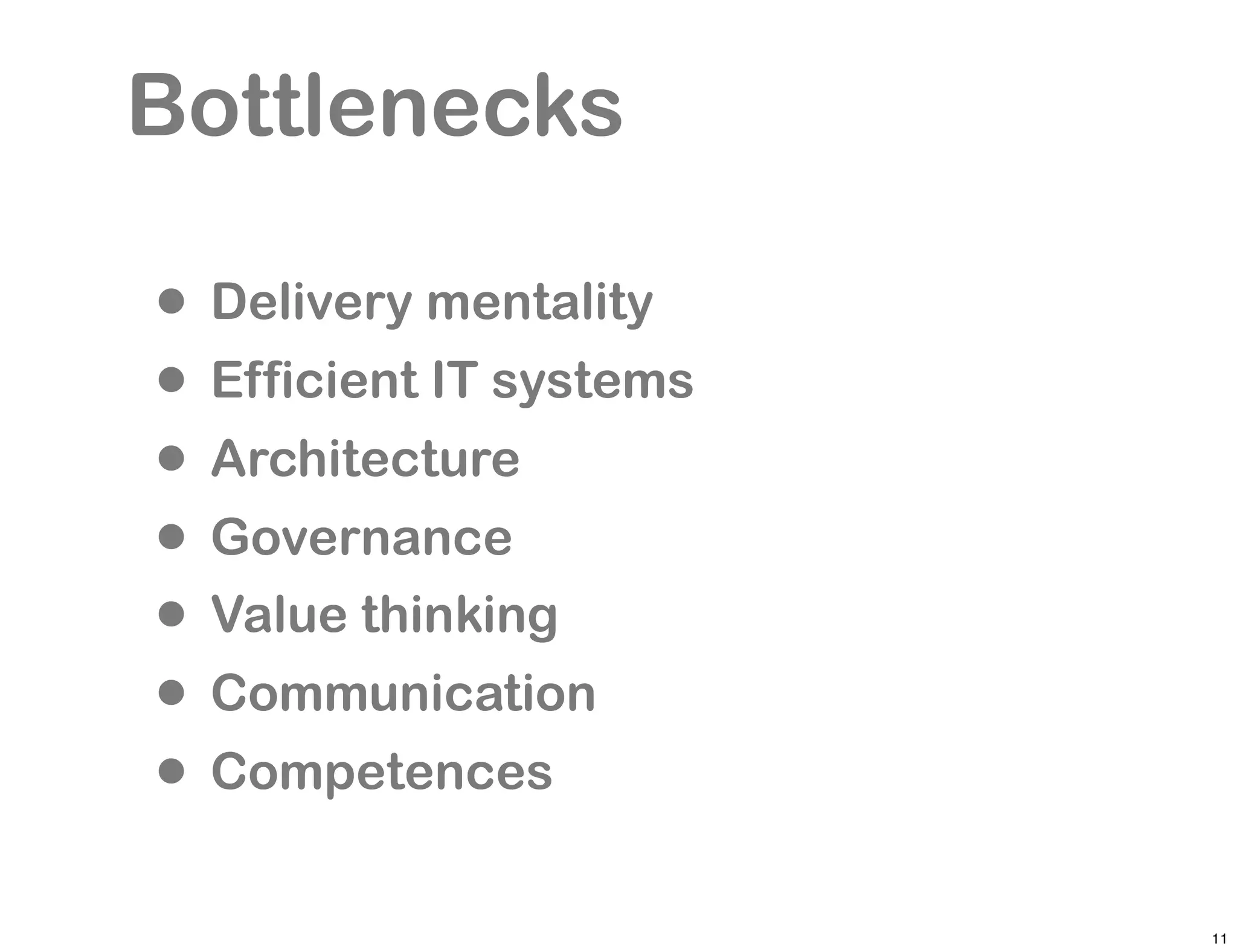
Bottlenecks

• Delivery mentality
• Efficient IT systems
• Architecture
• Governance
• Value thinking
• Communication
• Competences
                         11
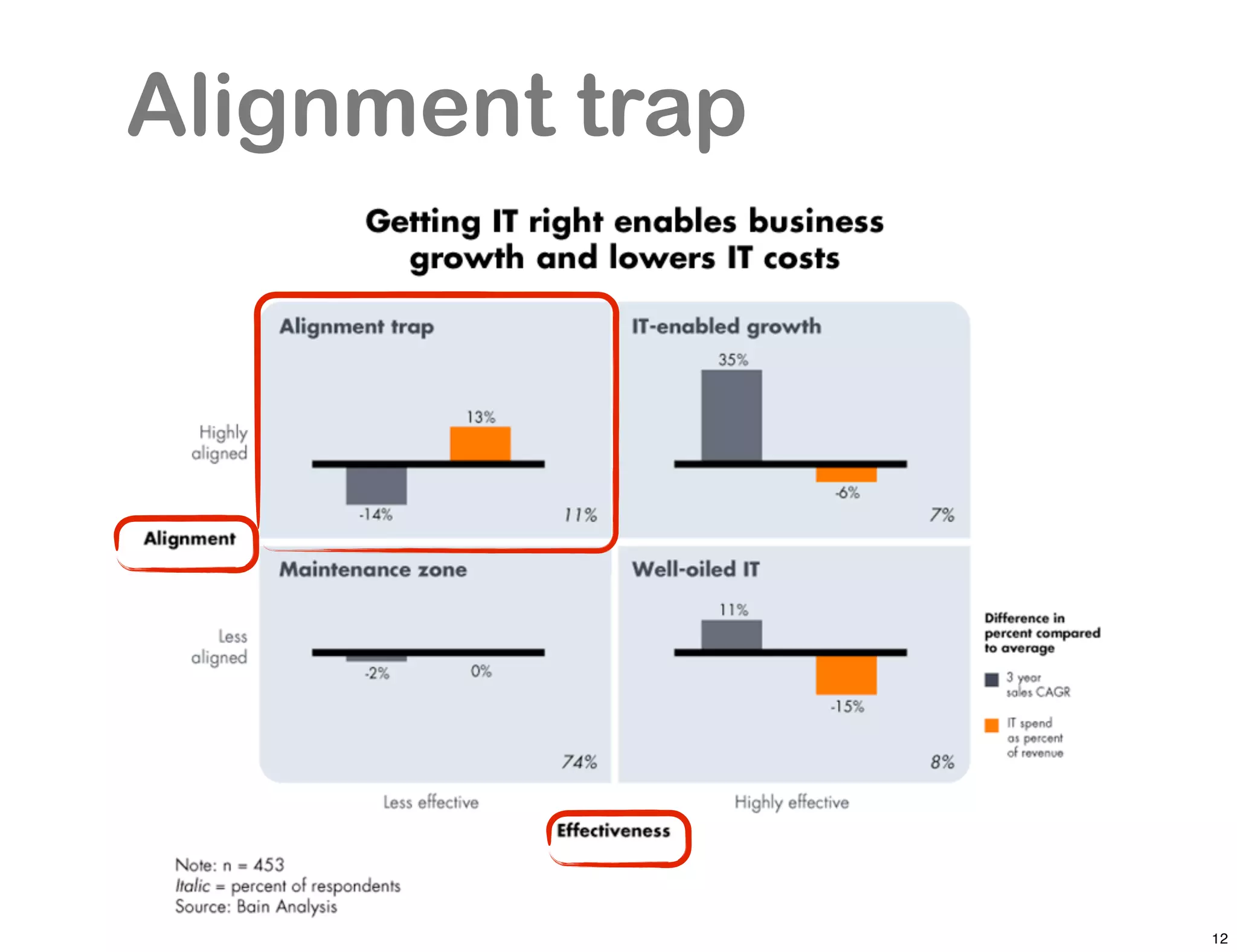
Alignment trap


                 12
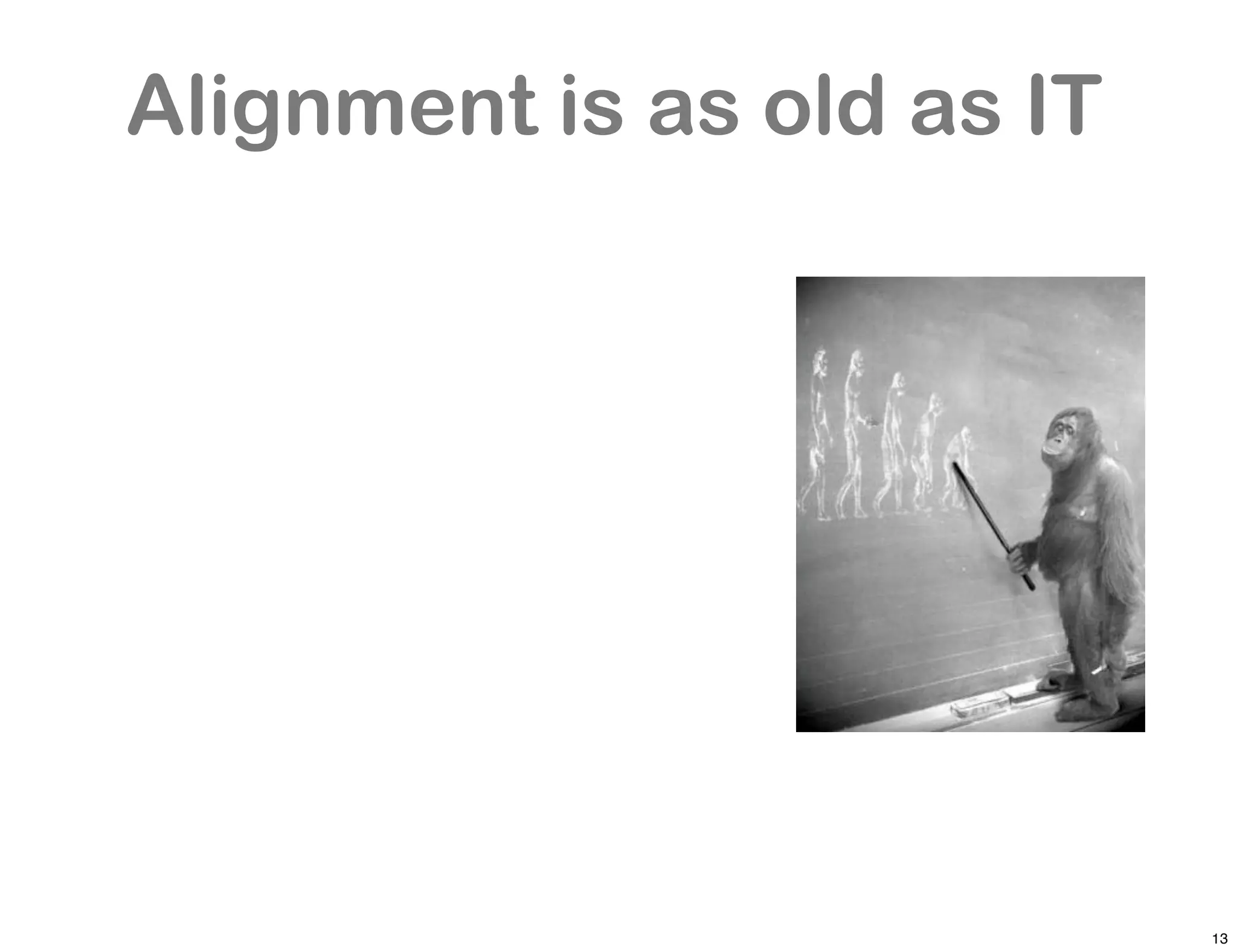
Alignment is as old as IT


                            13
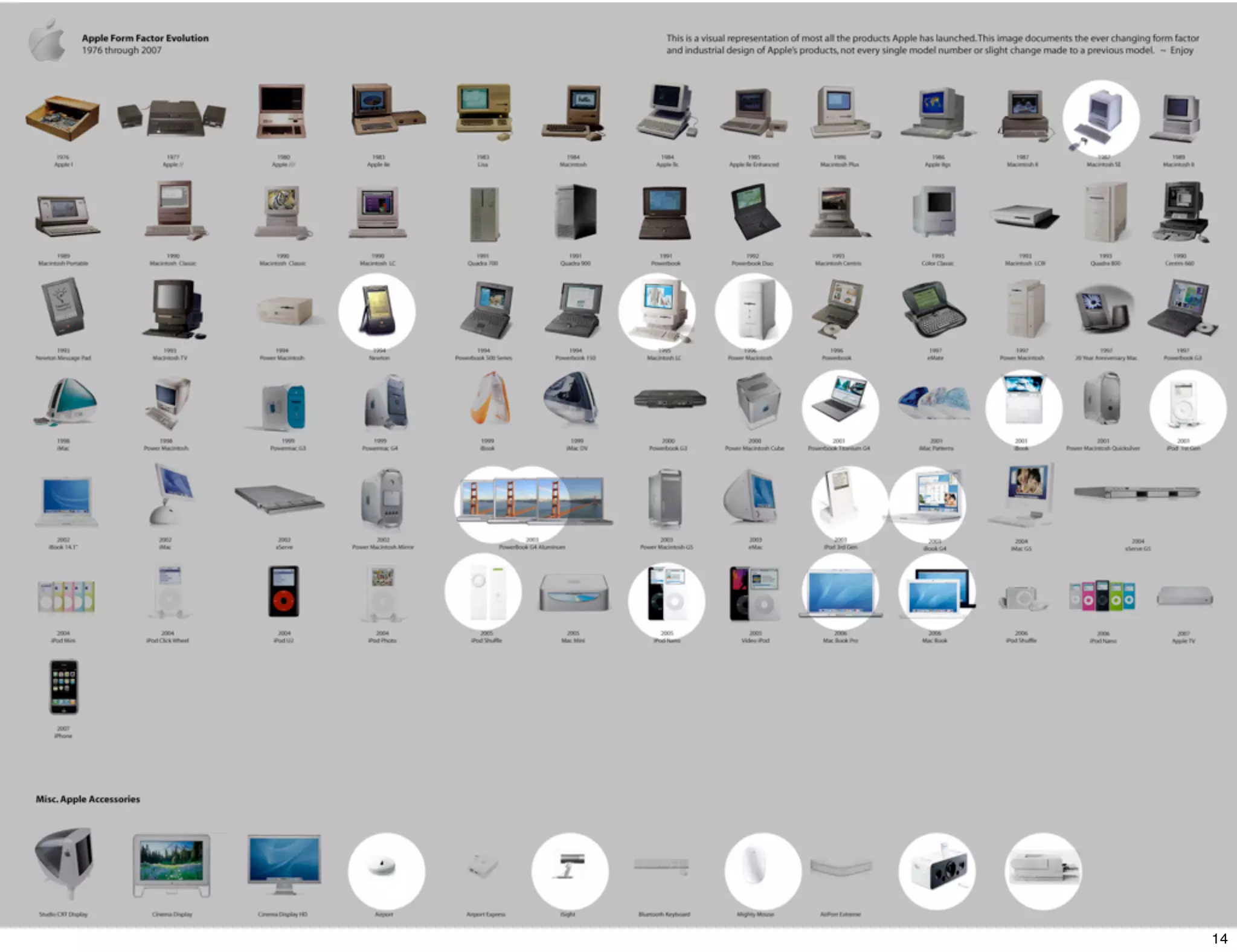
14
Darwinian technologies
Desktop days

 Personal computers proliferated in the early
 1990s to support specialized tasks:
 spreadsheets for financial analysis, computer-
 aided design, project management, graphic
 design - whatever could not run centrally on
 large mainframes. By itself, the desktop
 workstation was an isolated development. But
 as productivity became the basis of
 competition, a new ecosystem emerged around
 local area networks, client-server architecture
 and new collaboration tools.


                                                   15
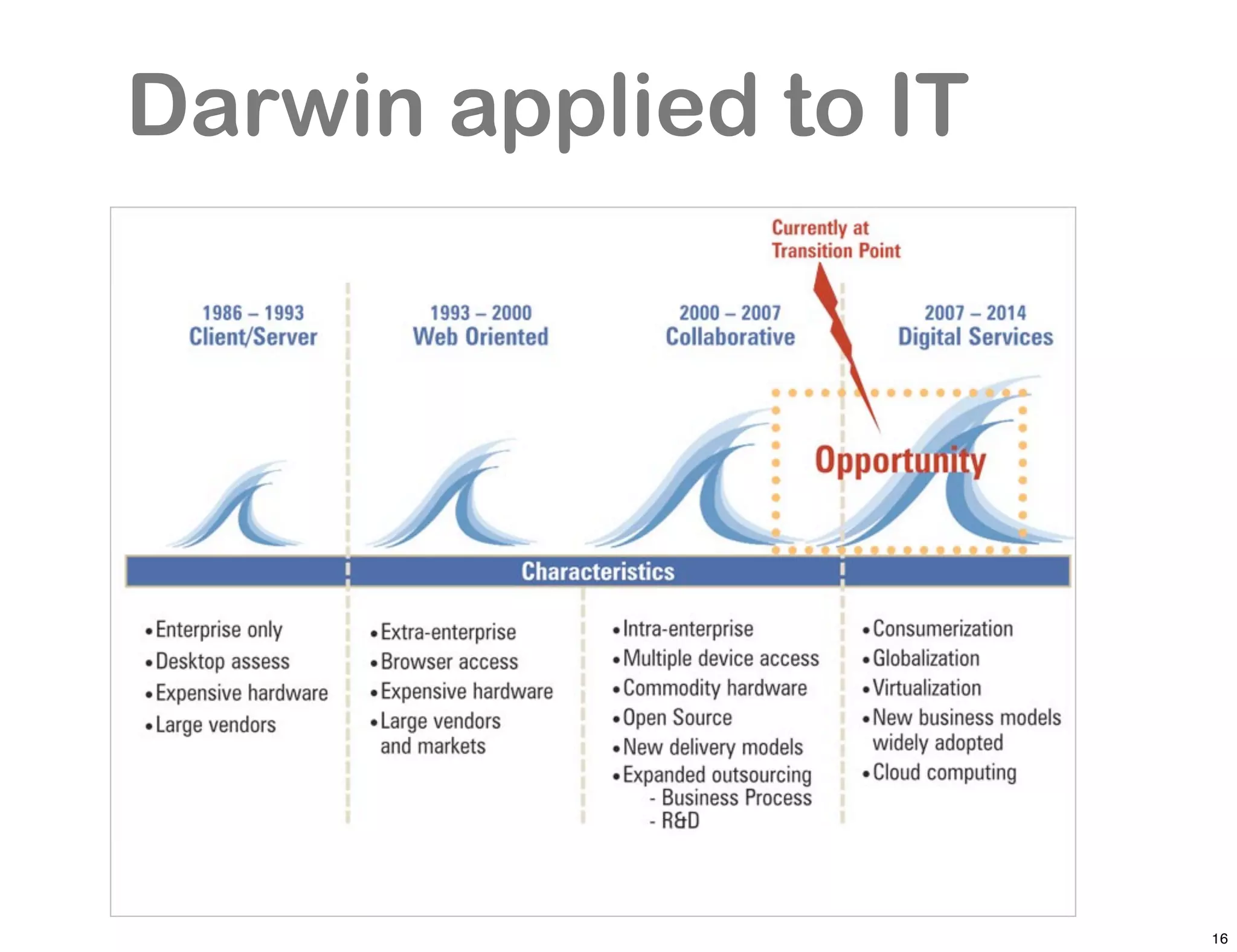
Darwin applied to IT


                       16
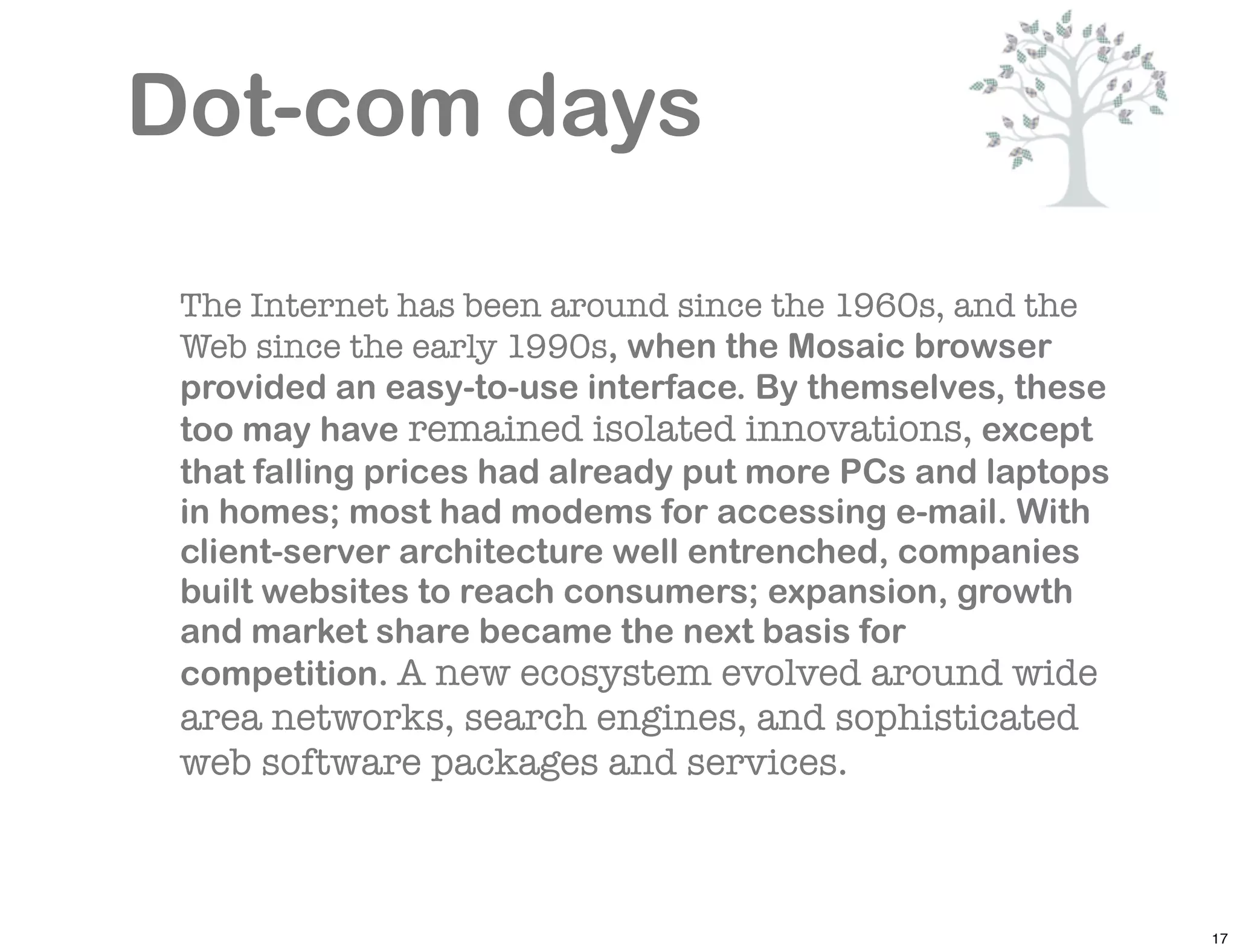
Dot-com days

 The Internet has been around since the 1960s, and the
 Web since the early 1990s, when the Mosaic browser
 provided an easy-to-use interface. By themselves, these
 too may have remained isolated innovations, except
 that falling prices had already put more PCs and laptops
 in homes; most had modems for accessing e-mail. With
 client-server architecture well entrenched, companies
 built websites to reach consumers; expansion, growth
 and market share became the next basis for
 competition. A new ecosystem evolved around wide
 area networks, search engines, and sophisticated
 web software packages and services.


                                                            17
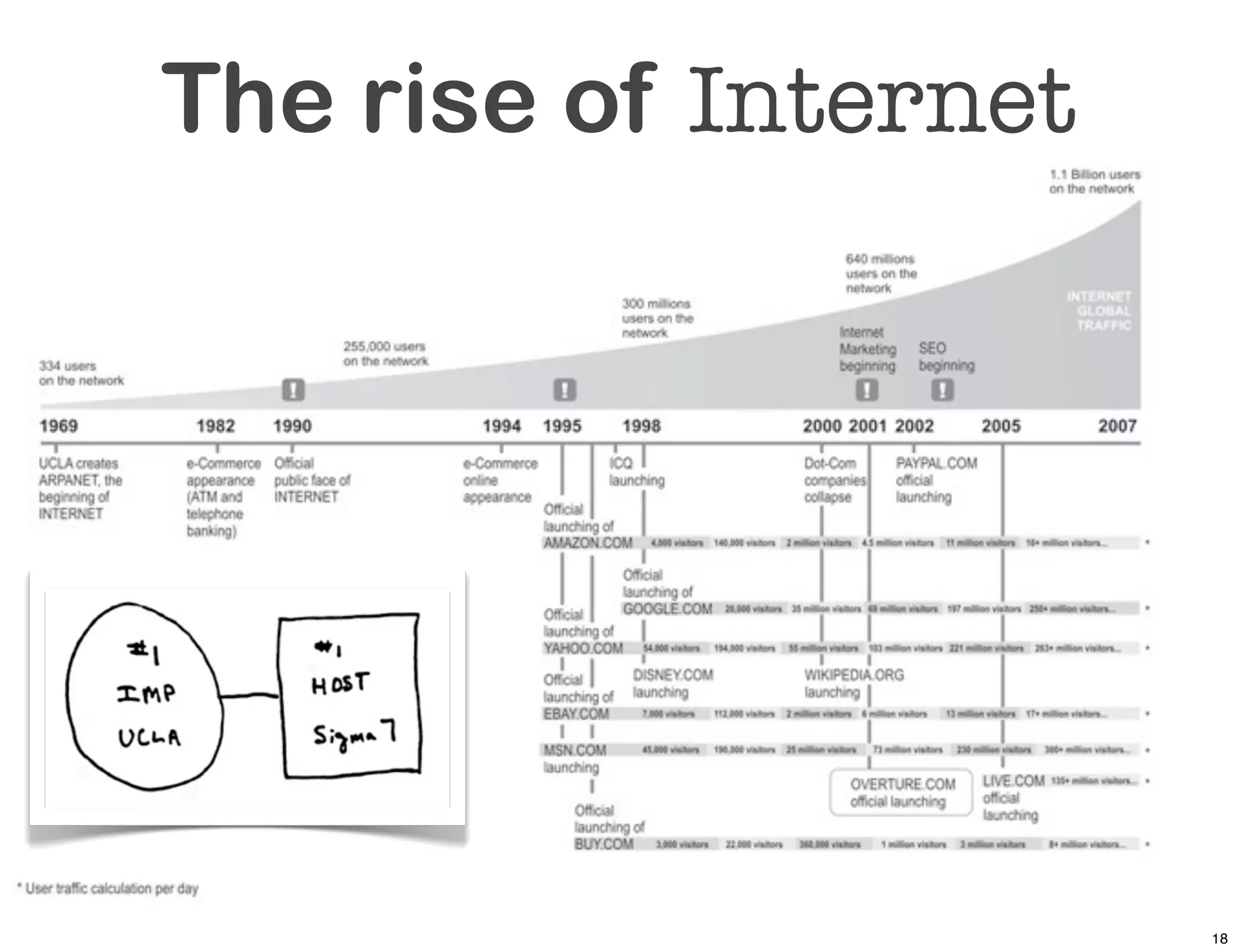
The rise of Internet


                       18
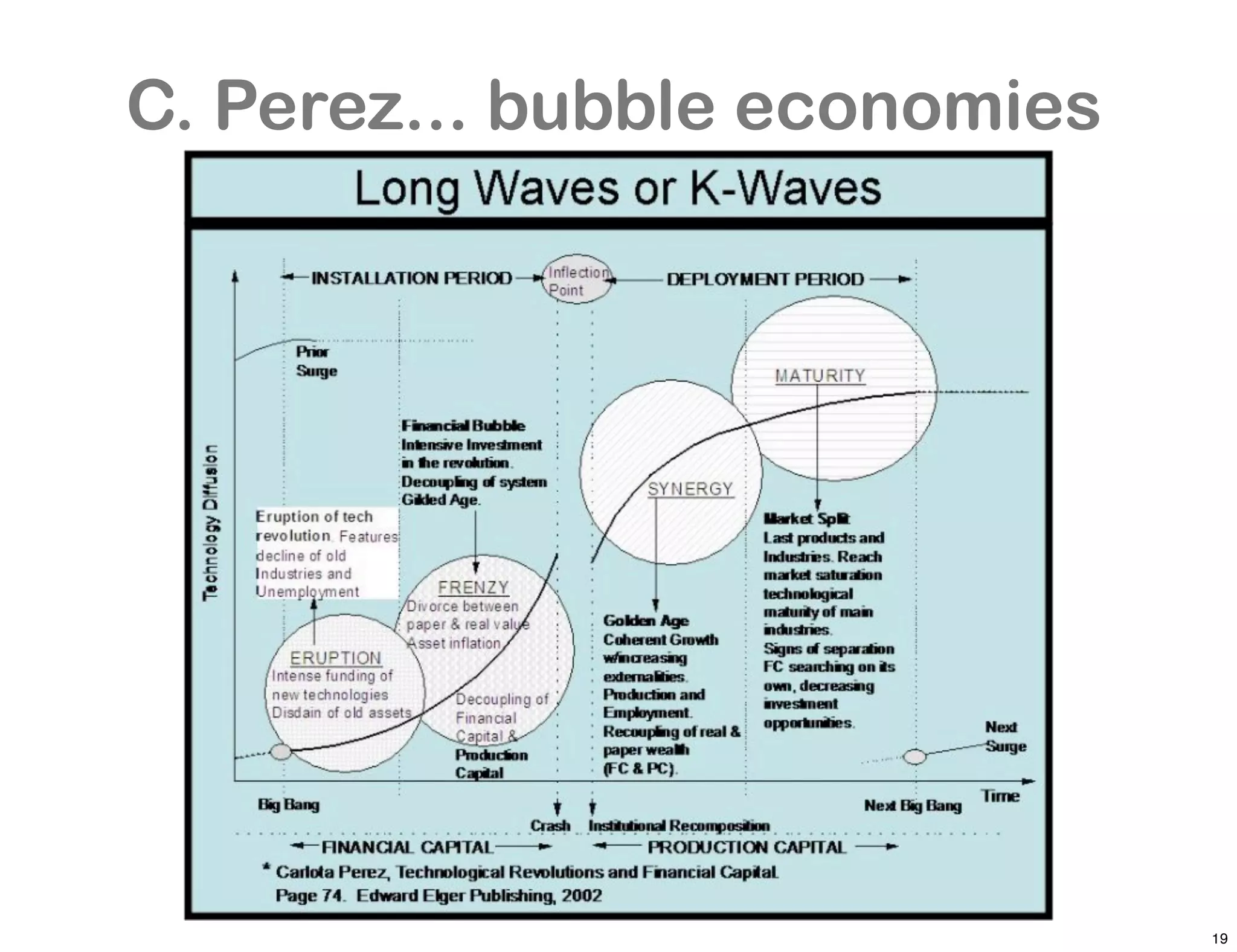
C. Perez... bubble economies


                               19
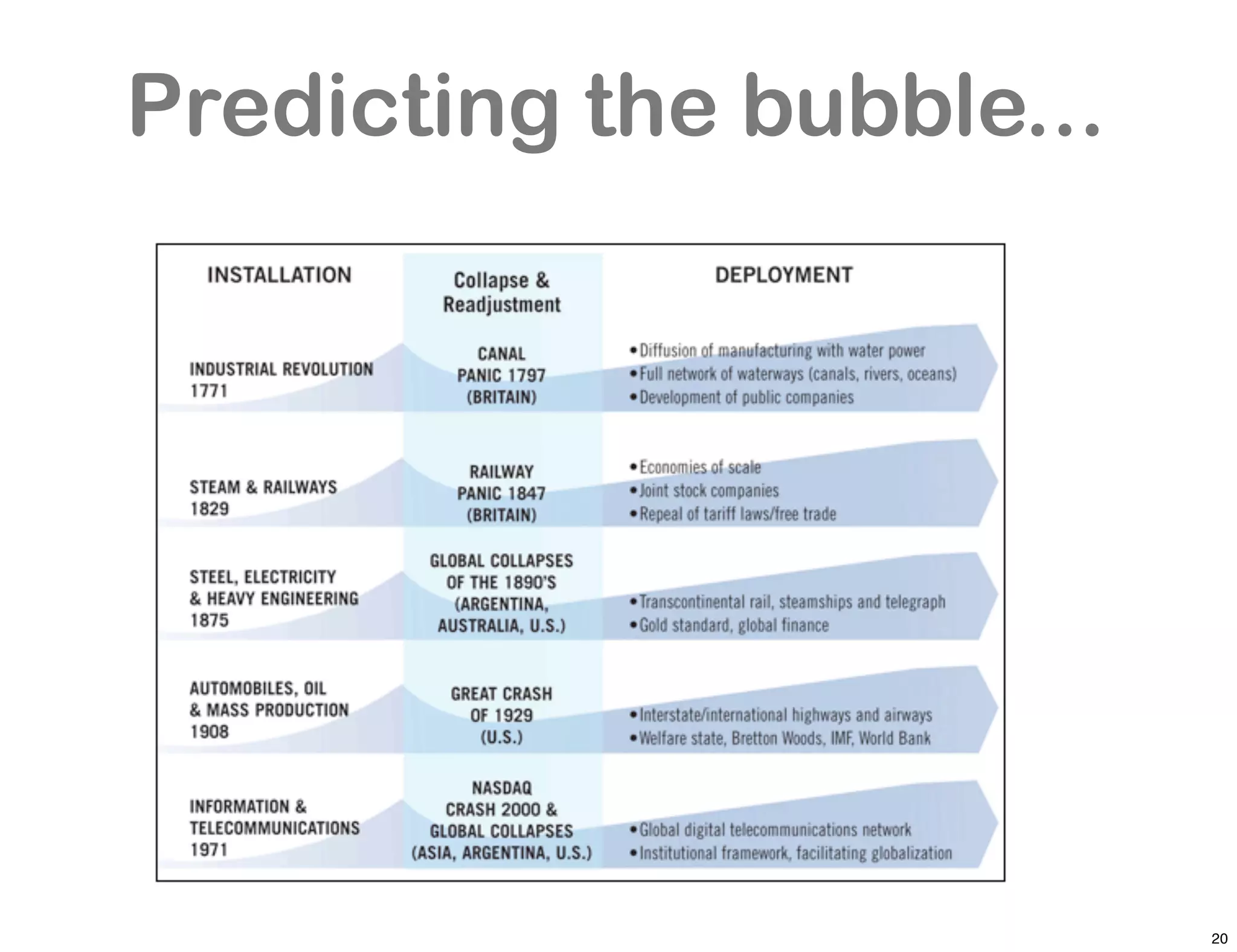
Predicting the bubble...


                           20
21
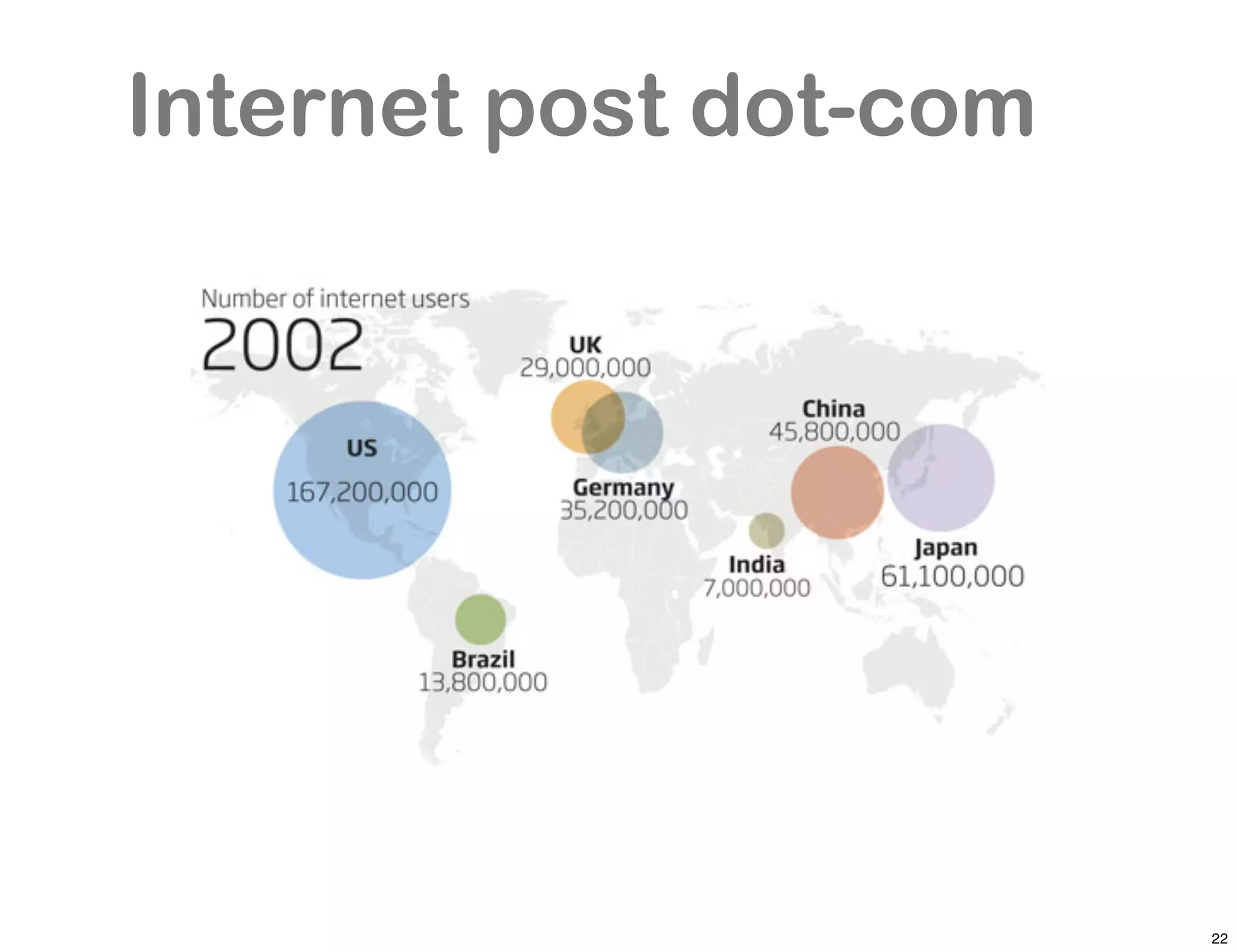
Internet post dot-com


                        22
Consolidation
 Global economic recession and the increasing
 cost of managing heterogeneous technologies
 built at breakneck speed during the dot-com days
 led to significant consolidation over the past
 several years. Cost cutting became the norm,
 forcing IT to consolidate at all levels: IP at the
 network level; XML at the messaging level; Linux
 and Windows at the OS level; Java and .Net at the
 programming platform level; and SAP and Oracle
 applications at the application platform level.


                                                      23
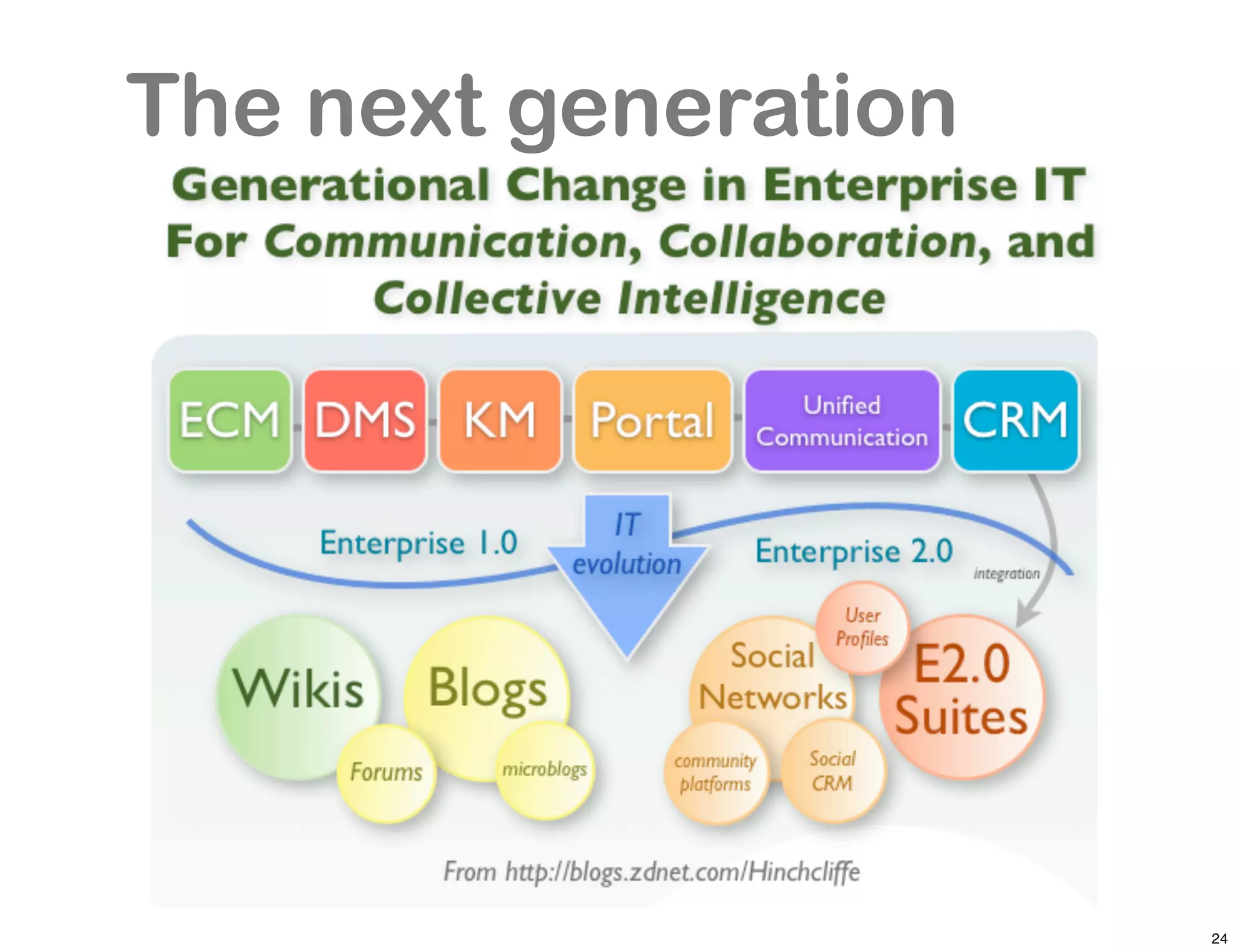
The next generation


                      24
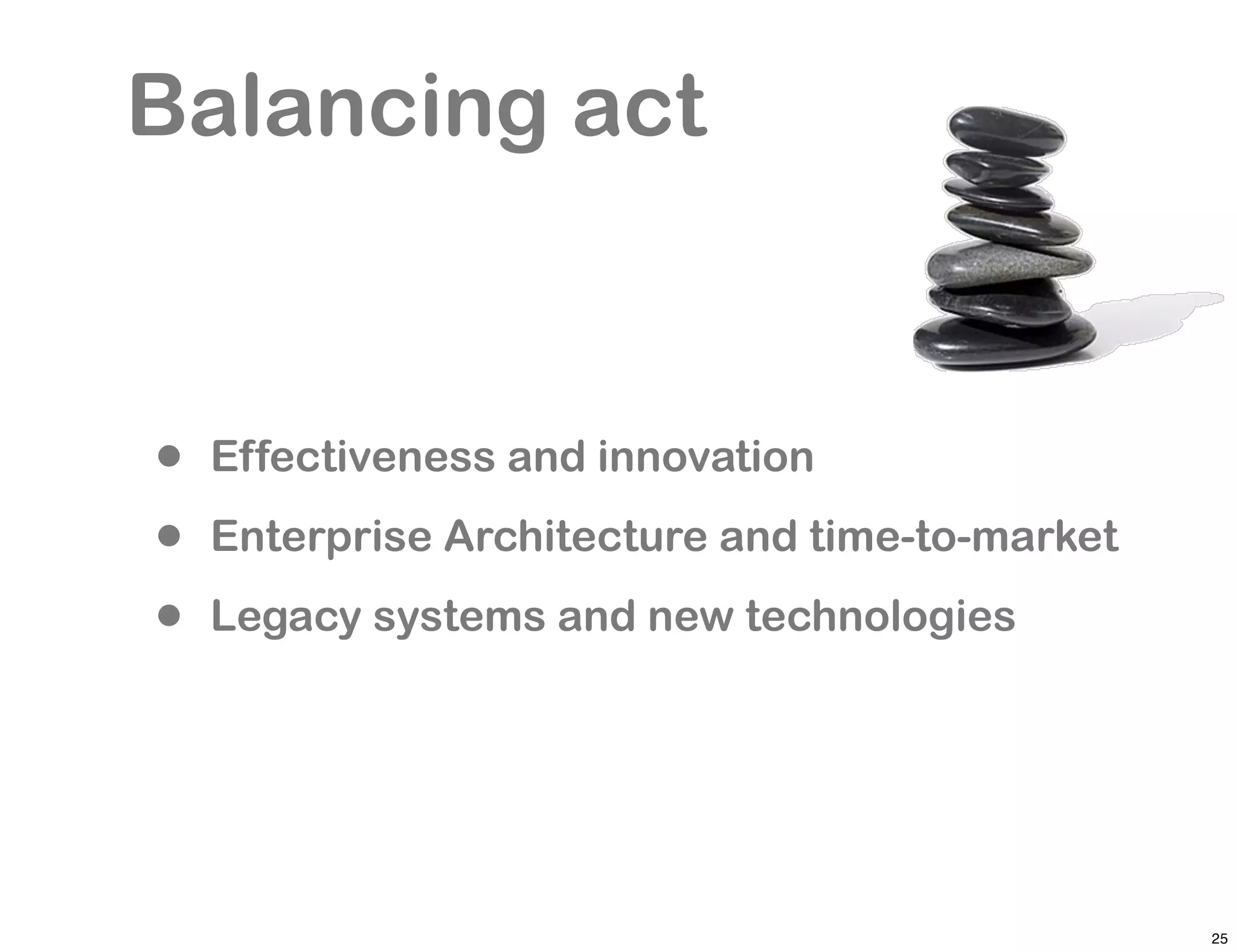
Balancing act


•   Effectiveness and innovation

•   Enterprise Architecture and time-to-market

•   Legacy systems and new technologies


                                                 25
paradigm shift (pair uh dime shift)
  Etymology:
  Late Latin paradigma, from Greek paradeigma, from
  paradeiknynai to show side by side

1.a profound and irreversible change to a different
  model of behavior or perception.
2.an epiphany with staying power.
3.a sea change of such magnitude that it alters the
  course of all who pass through it.


                                                      26
Trends redefining technology

•   Seamless interoperability
•   Focus on the business processes
•   Virtualization
•   Cloud computing
•   Advanced analytics and intelligence
•   Fluid Collaboration
•   The Mobile Enterprise
•   Web 2.0... and 3.0
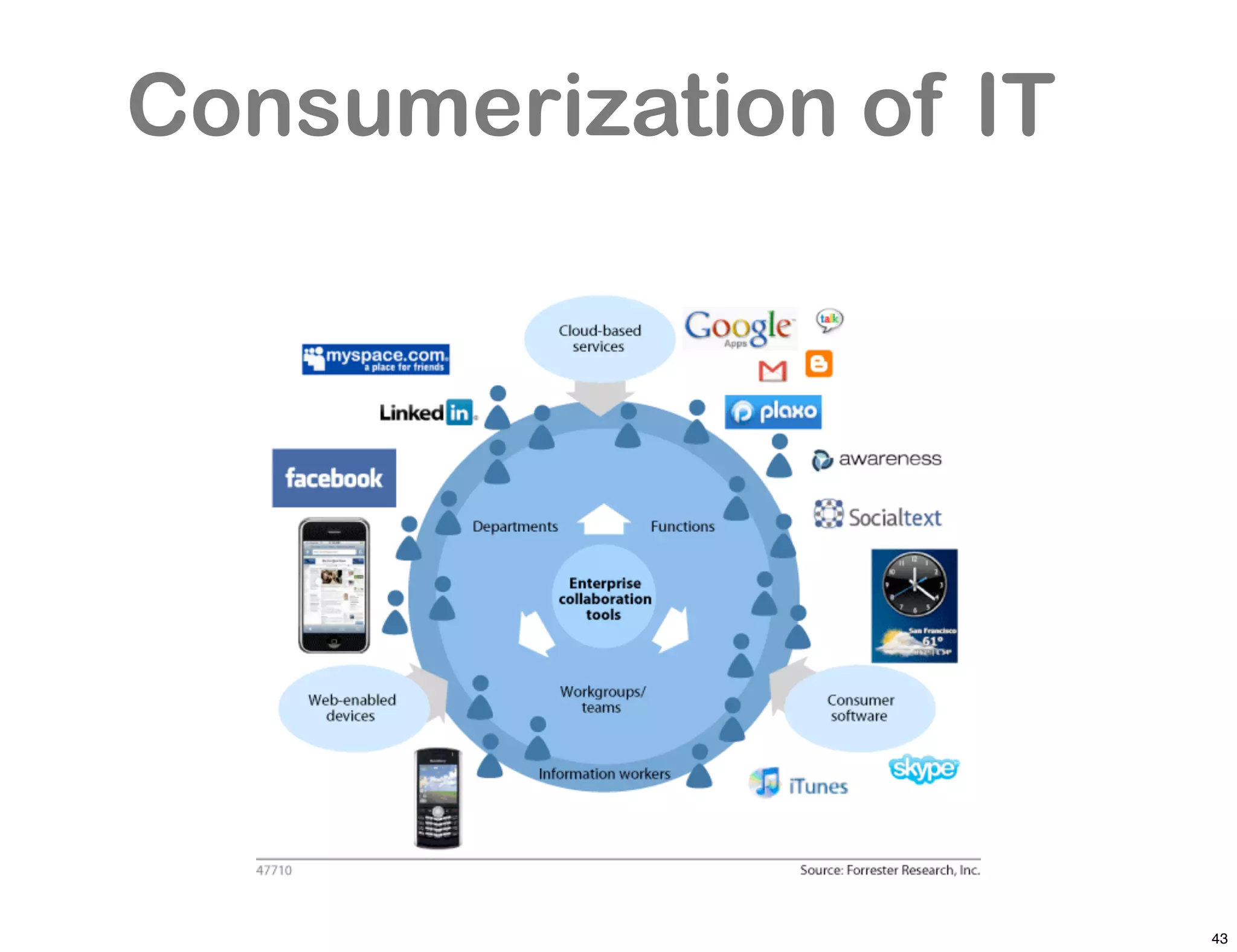
•   Consumerization of IT

                                          Source: Accenture

                                                              27
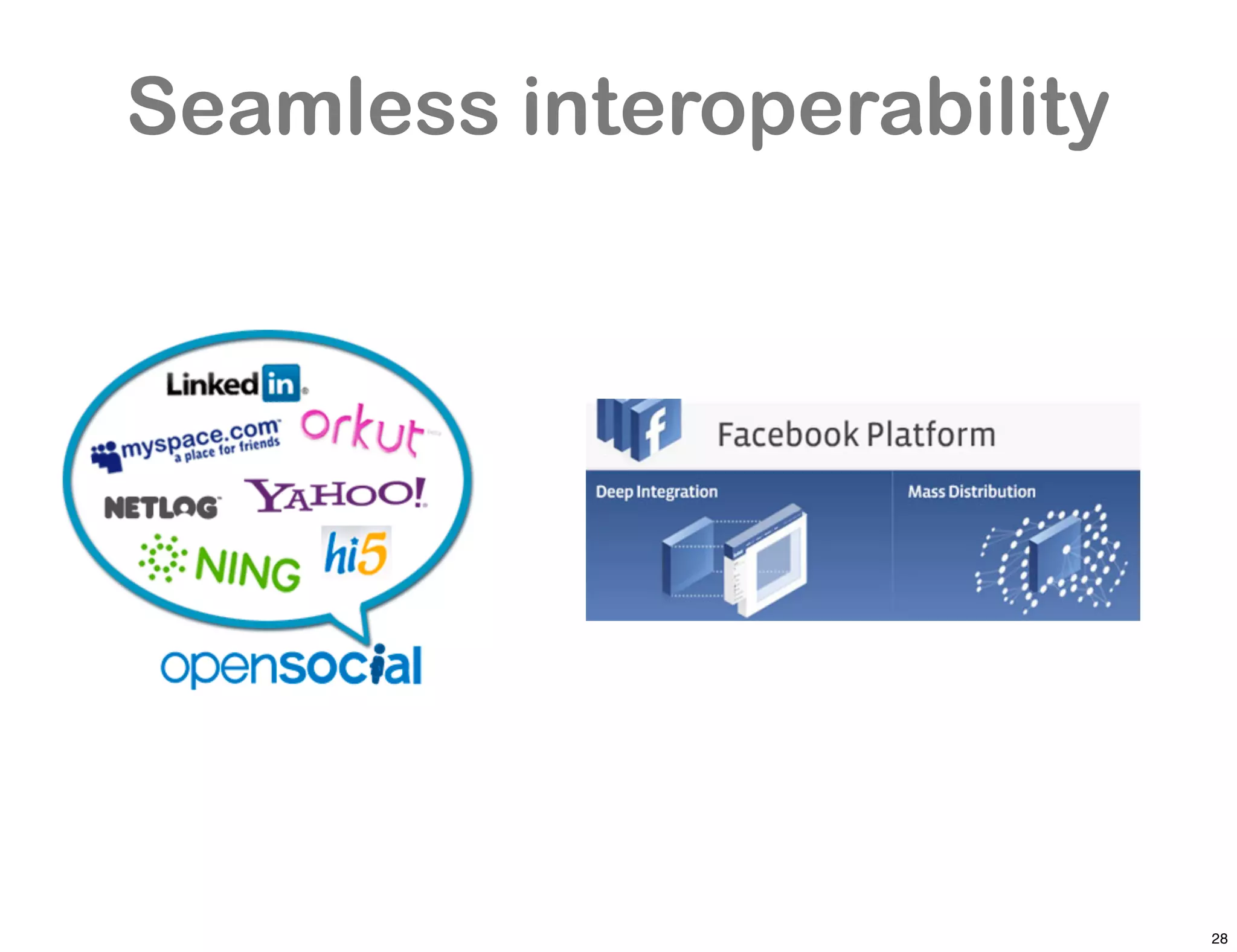
Seamless interoperability


                            28
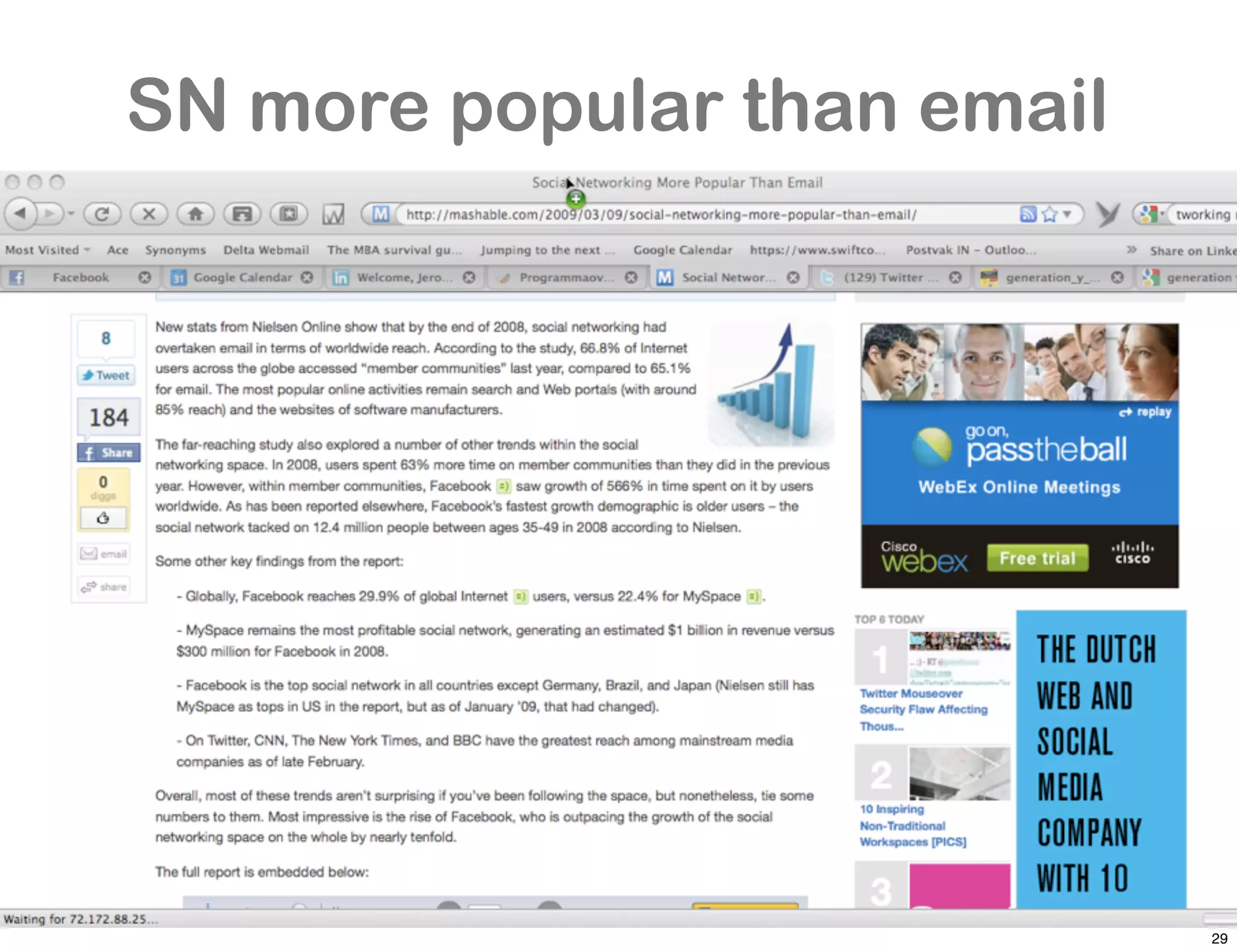
SN more popular than email


                             29
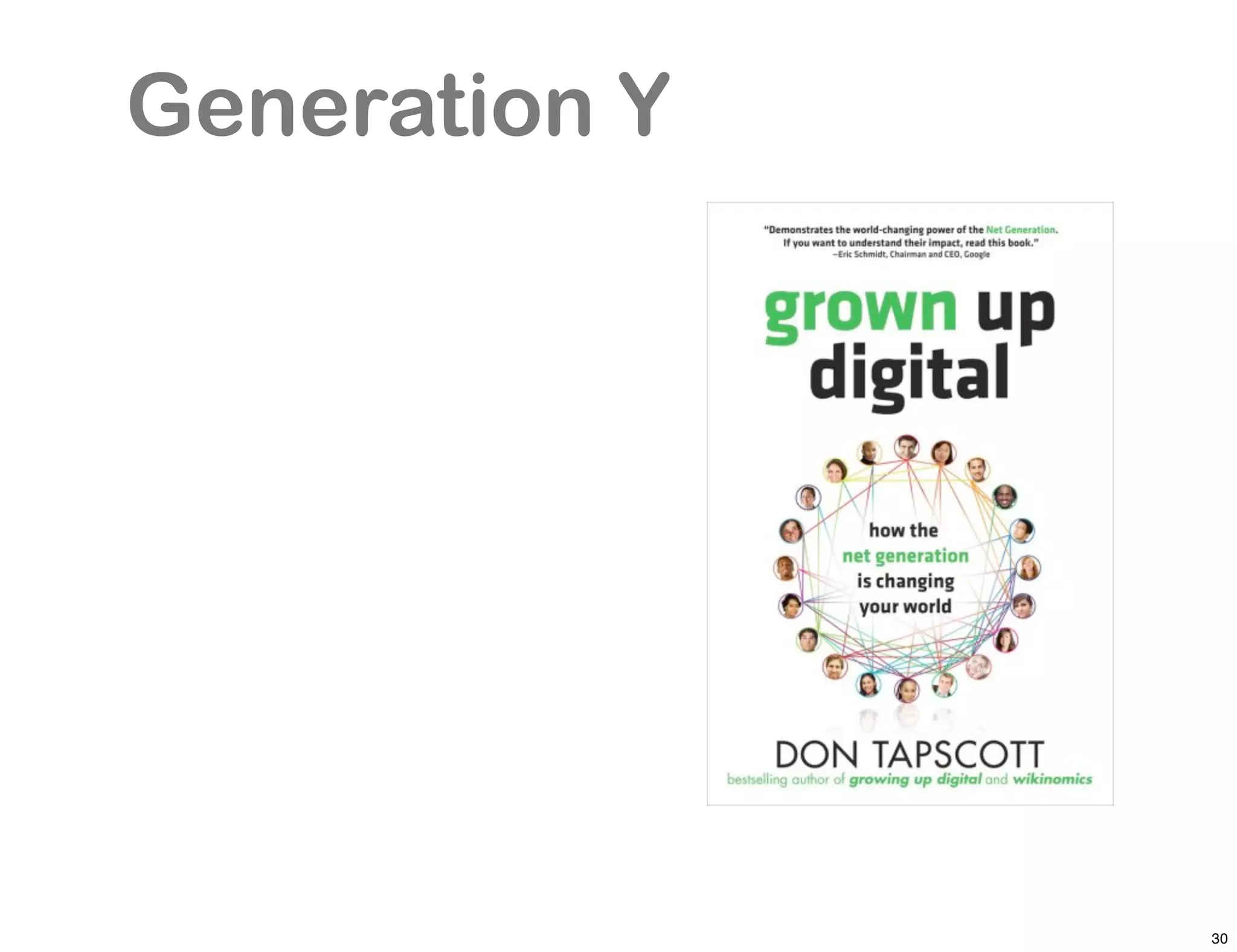
Generation Y


               30
Social....


             31
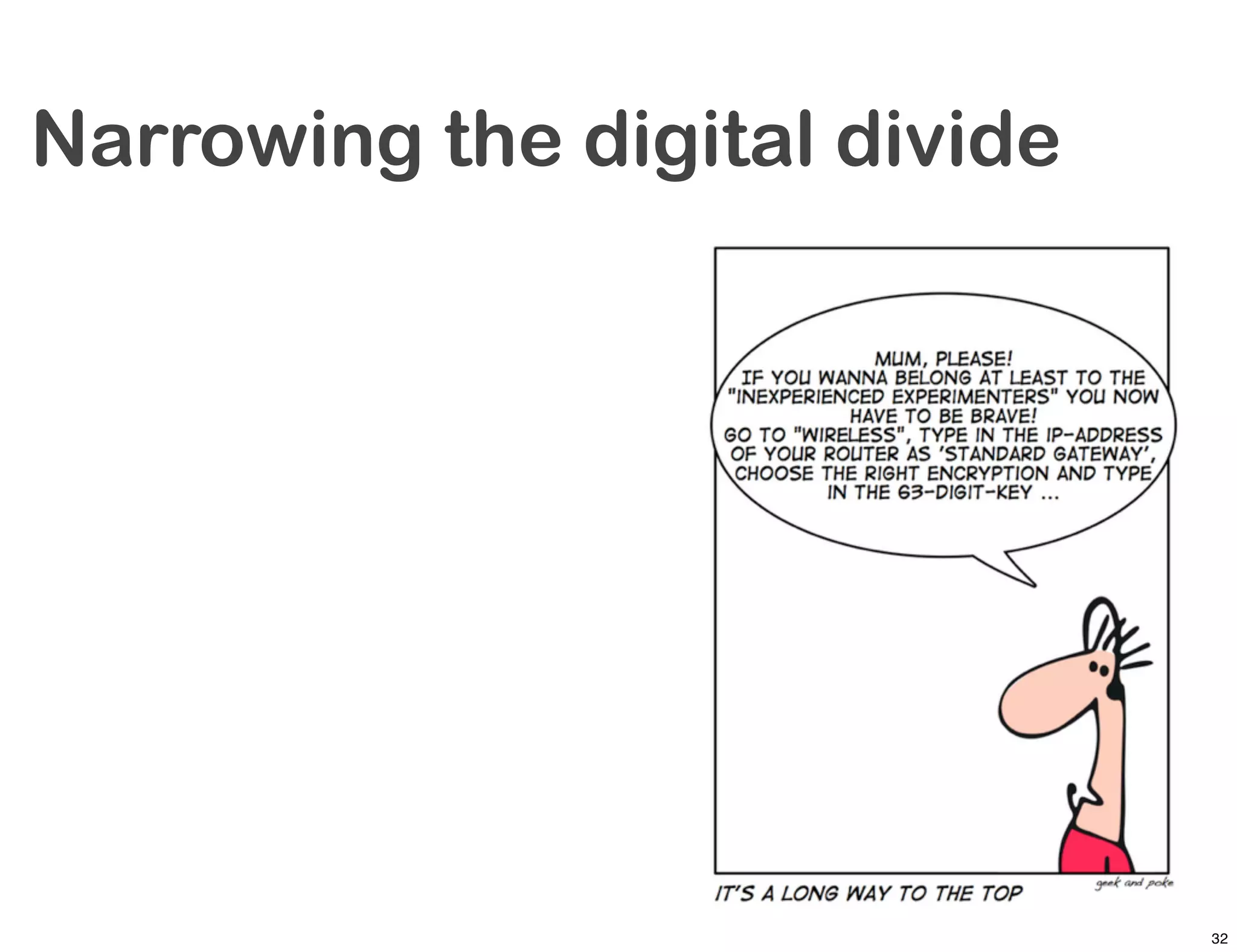
Narrowing the digital divide


                               32
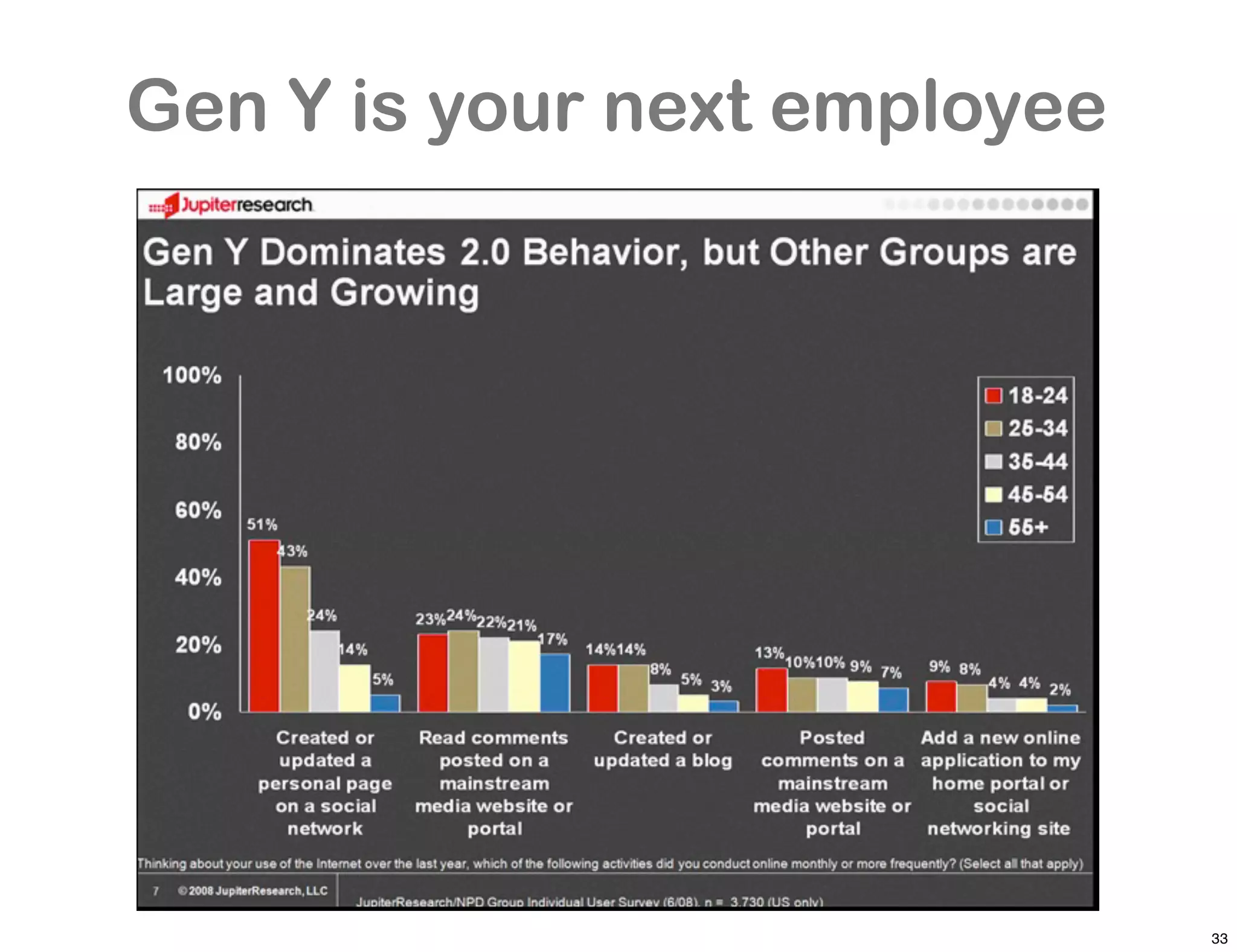
Gen Y is your next employee


                              33
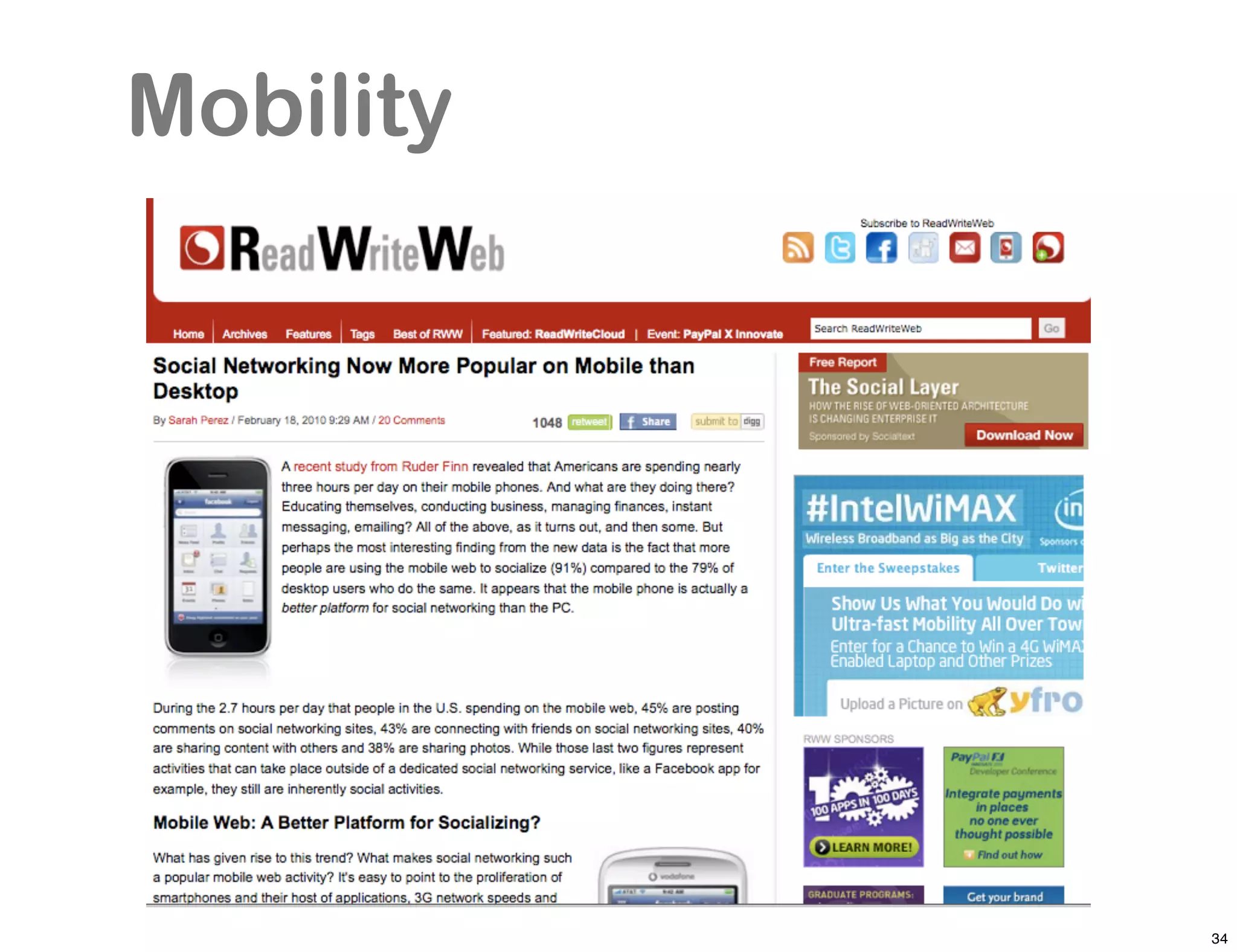
Mobility


           34
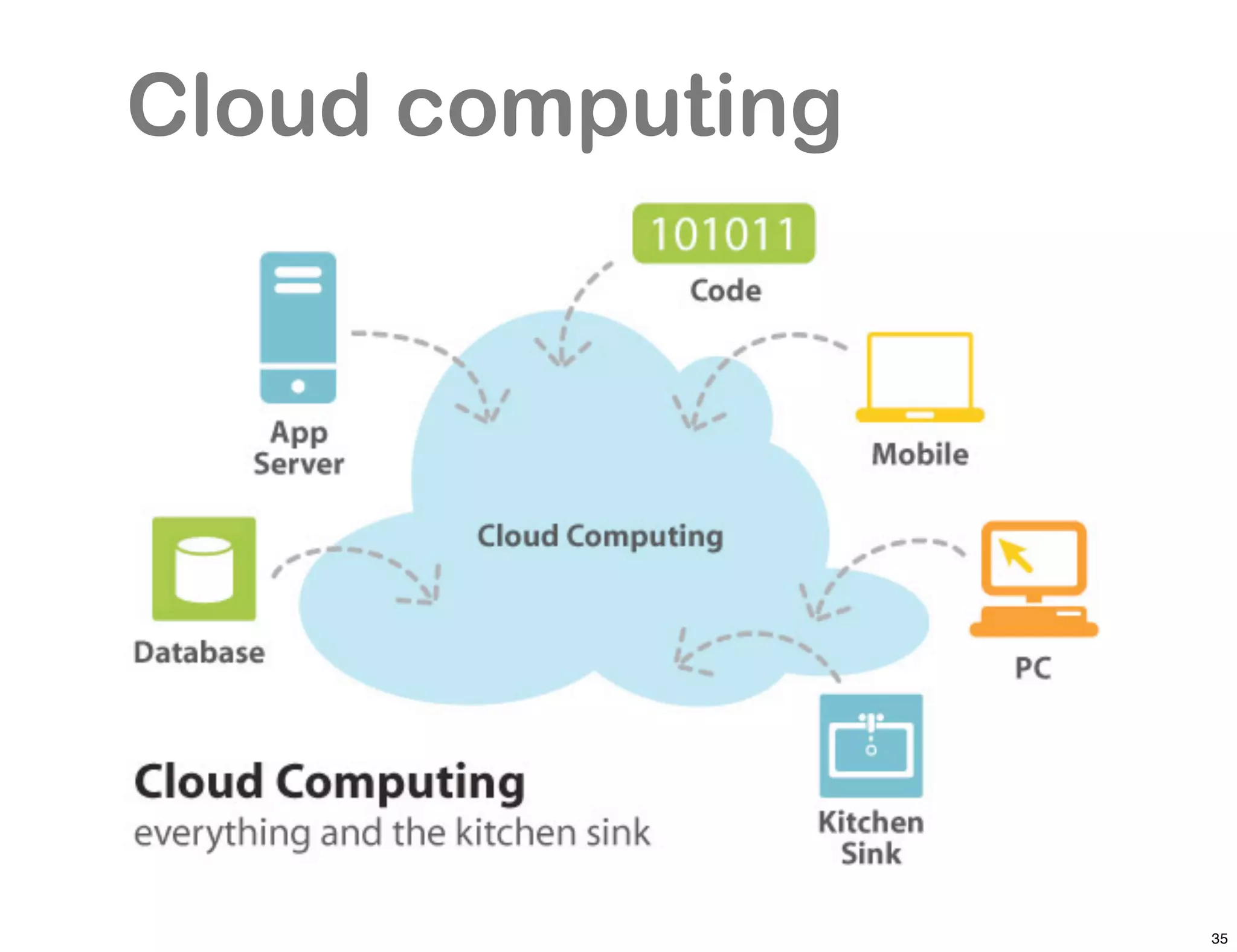
Cloud computing


                  35
36
Martin Luther
  German Reformation leader

             “The multitude of
  Table Talk, 1530s.


books is a great evil. There is
no limit to this fever for
writing; every one must be an
author; some out of vanity, to
acquire celebrity and raise up
a name, others for the sake of
mere gain.”
                                  37
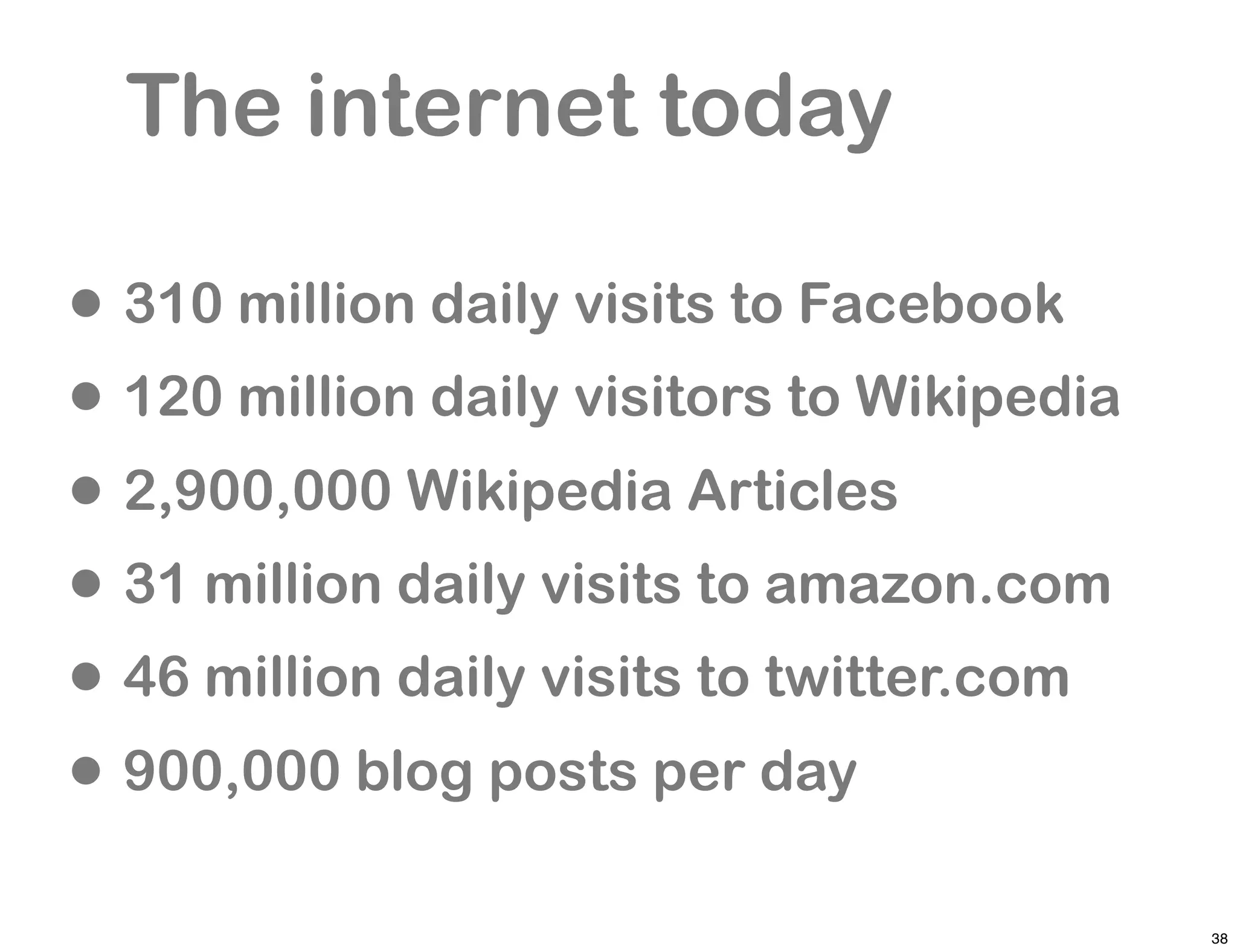
The internet today

• 310 million daily visits to Facebook
• 120 million daily visitors to Wikipedia
• 2,900,000 Wikipedia Articles
• 31 million daily visits to amazon.com
• 46 million daily visits to twitter.com
• 900,000 blog posts per day
                                            38
39
40
41
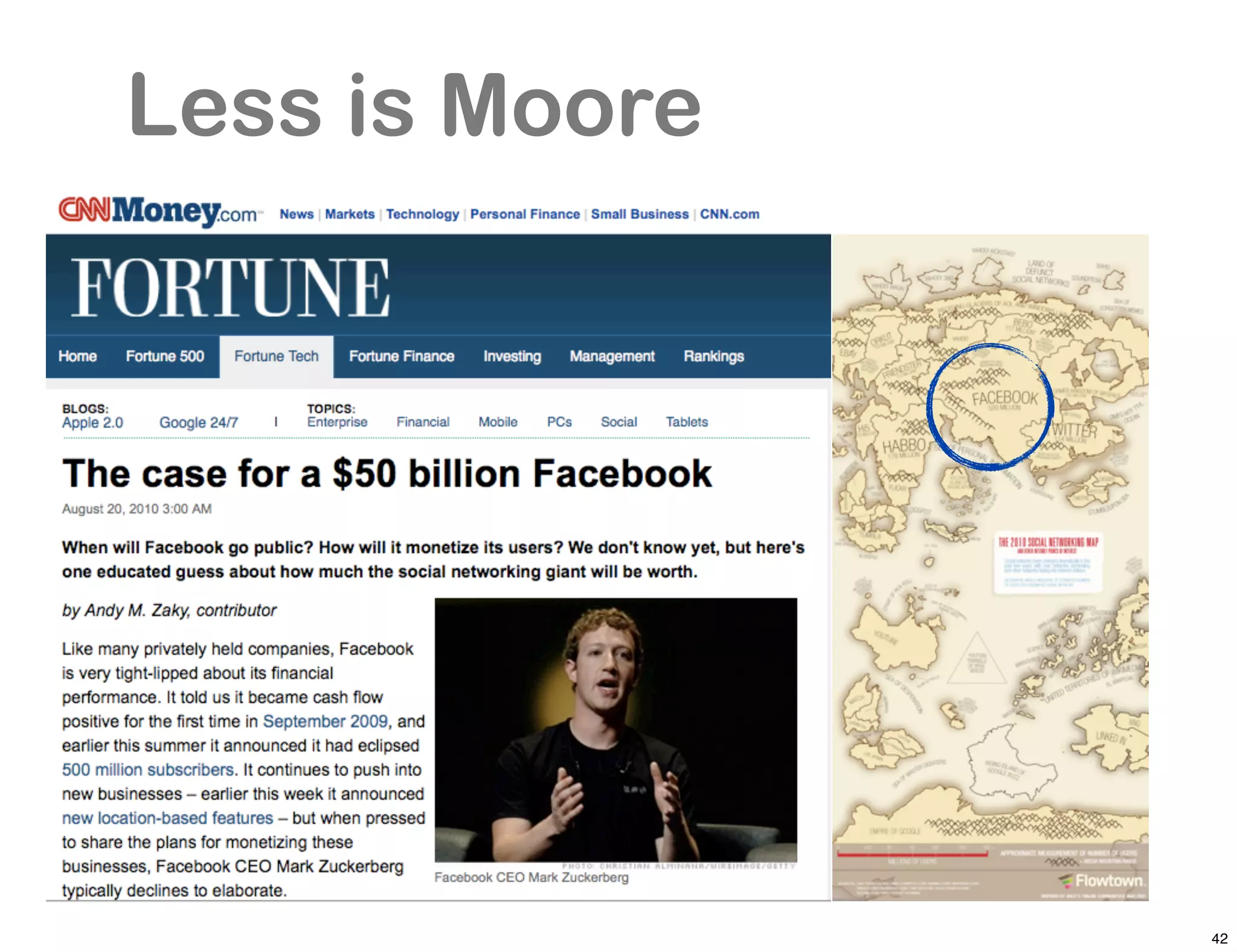
Less is Moore


                42
Consumerization of IT


                        43
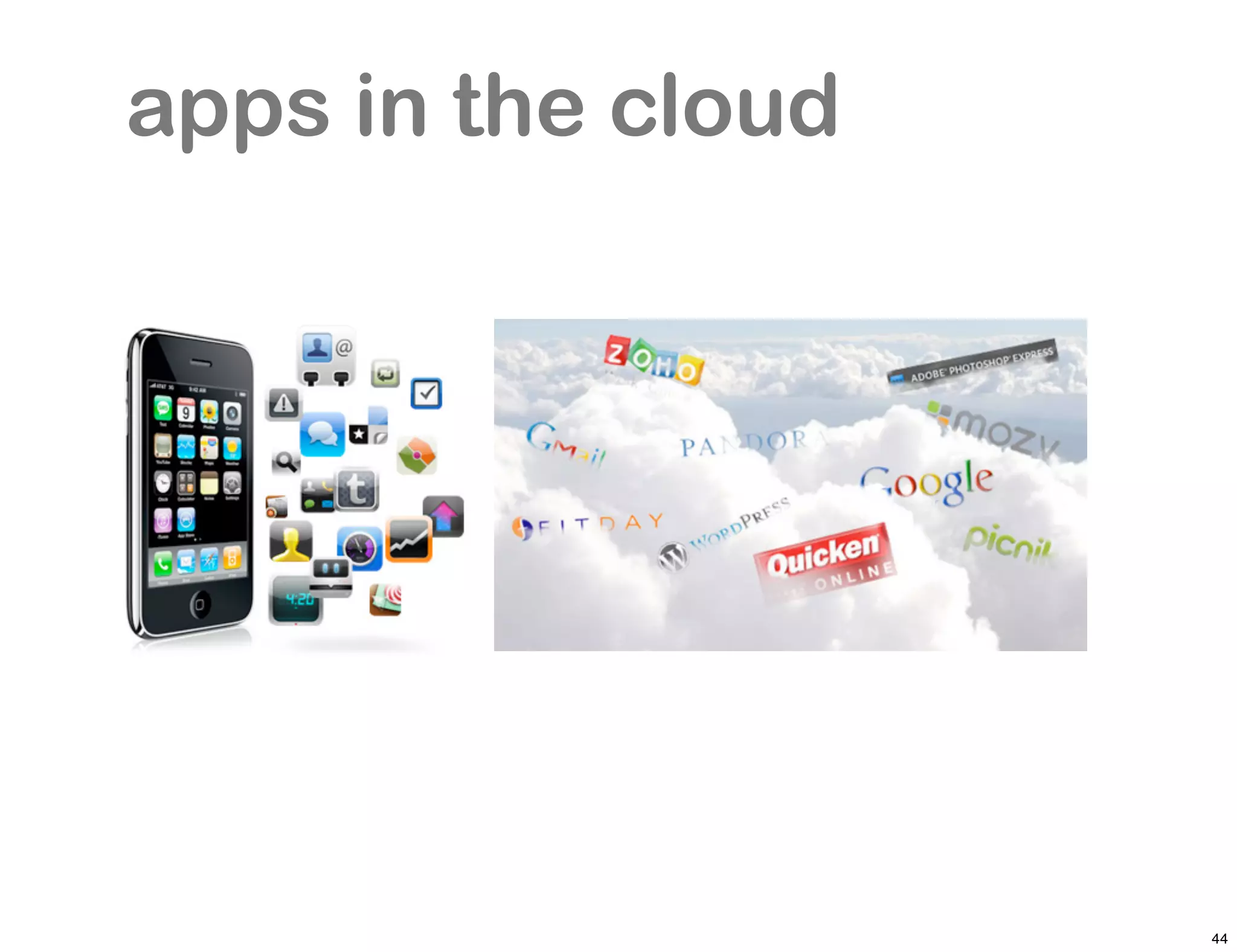
apps in the cloud


                    44
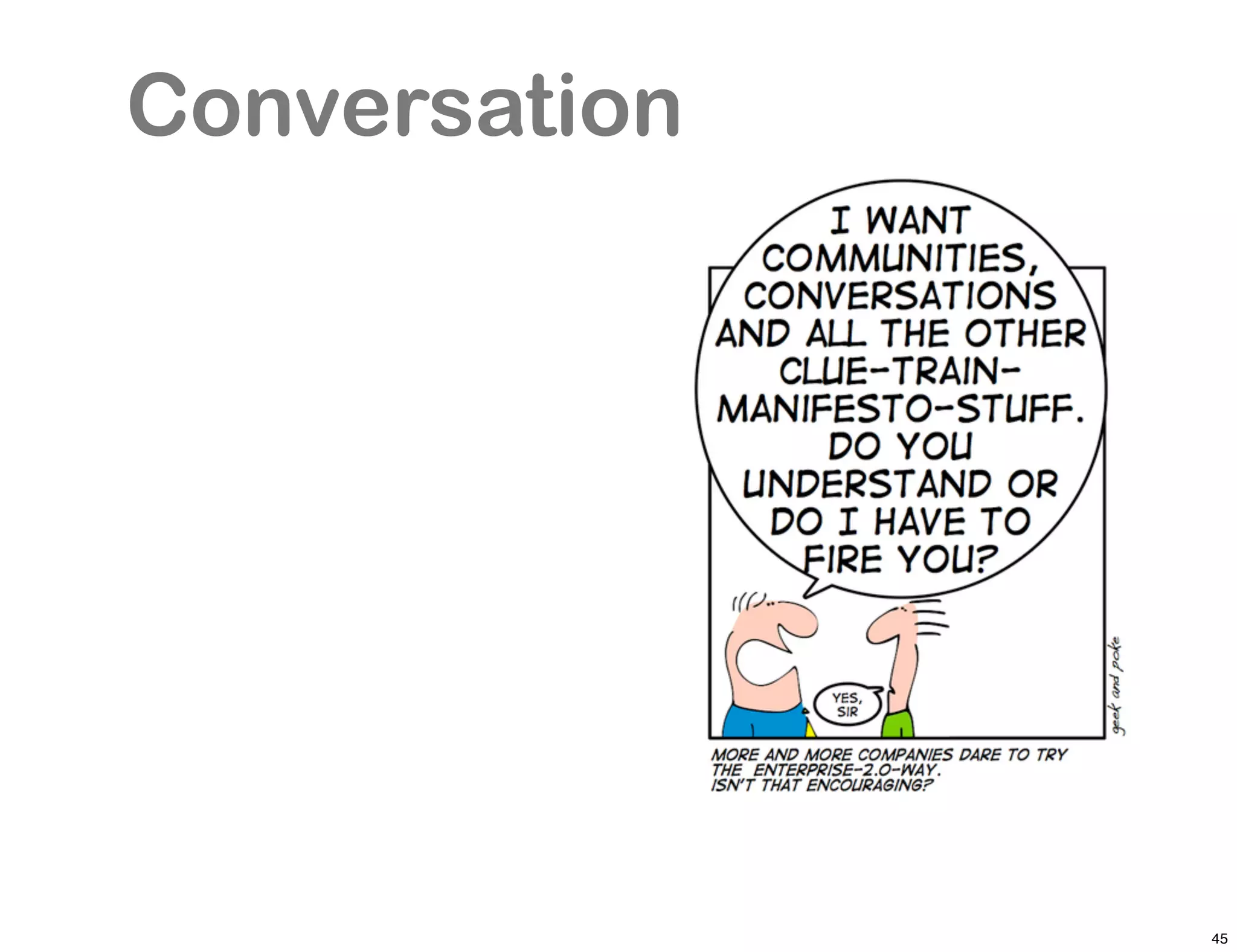
Conversation


               45
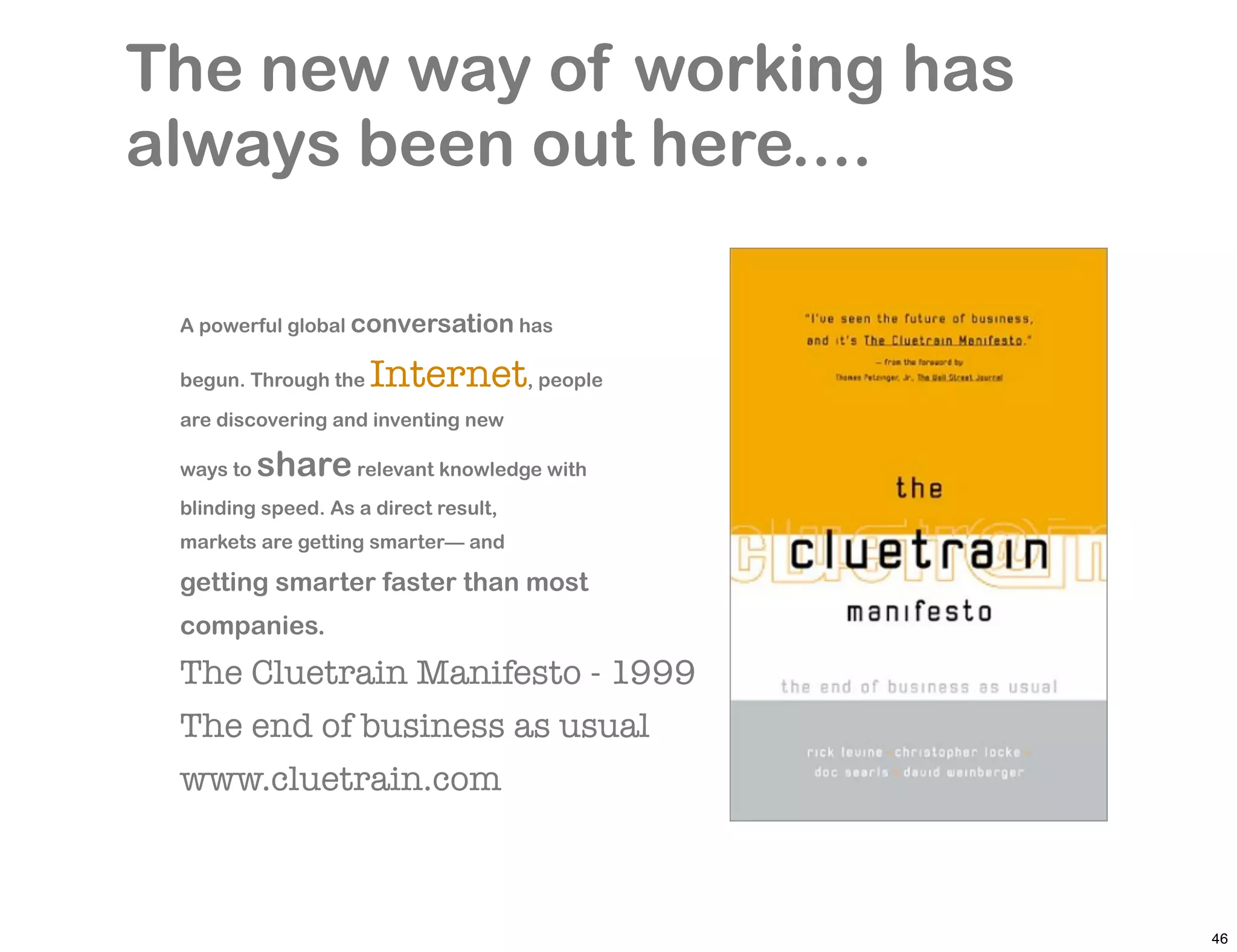
The new way of working has
always been out here....

 A powerful global conversation has

 begun. Through the   Internet, people
 are discovering and inventing new

 ways to   share relevant knowledge with
 blinding speed. As a direct result,
 markets are getting smarter— and

 getting smarter faster than most
 companies.
 The Cluetrain Manifesto - 1999
 The end of business as usual
 www.cluetrain.com


                                           46
47
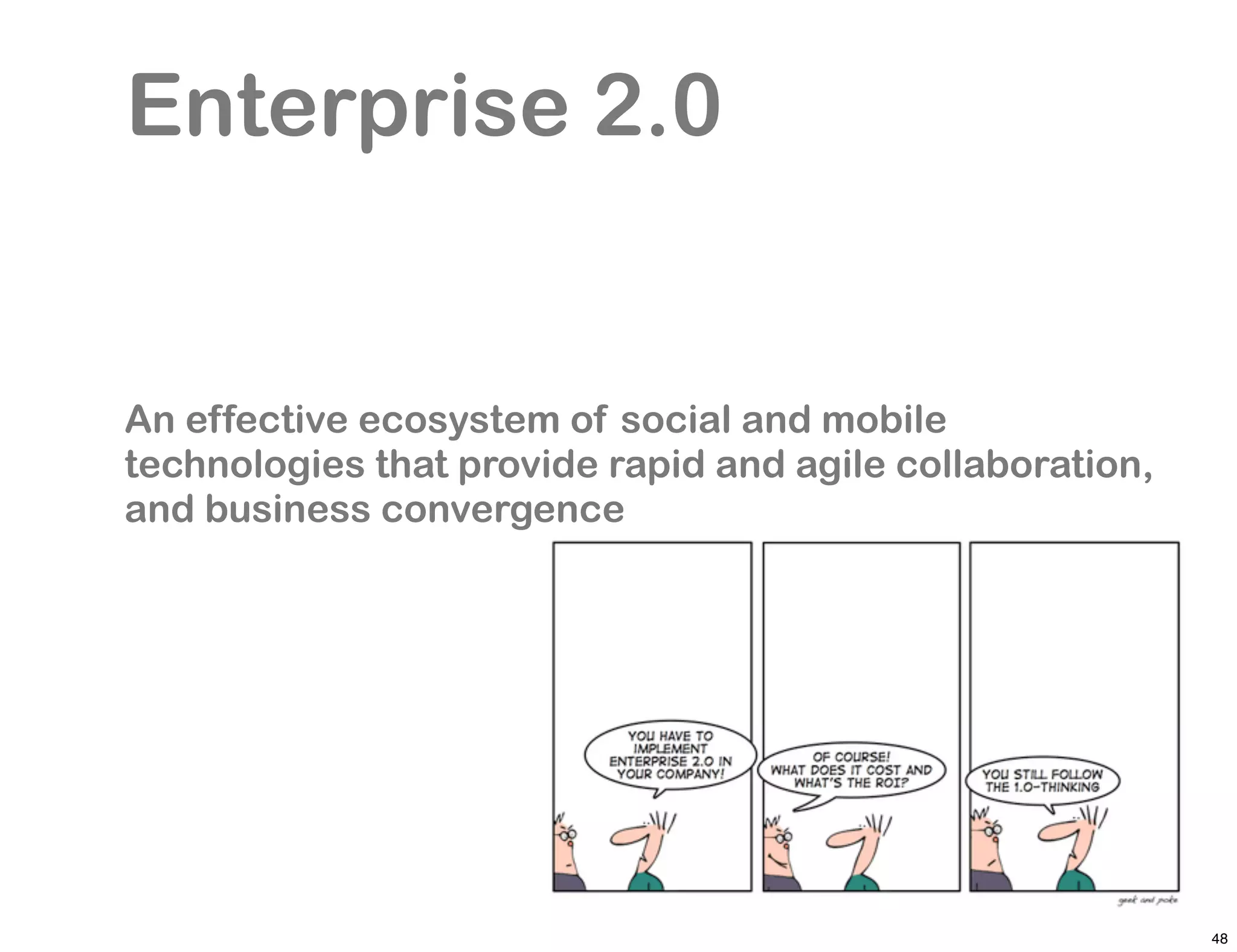
Enterprise 2.0


An effective ecosystem of social and mobile
technologies that provide rapid and agile collaboration,
and business convergence


                                                           48
49
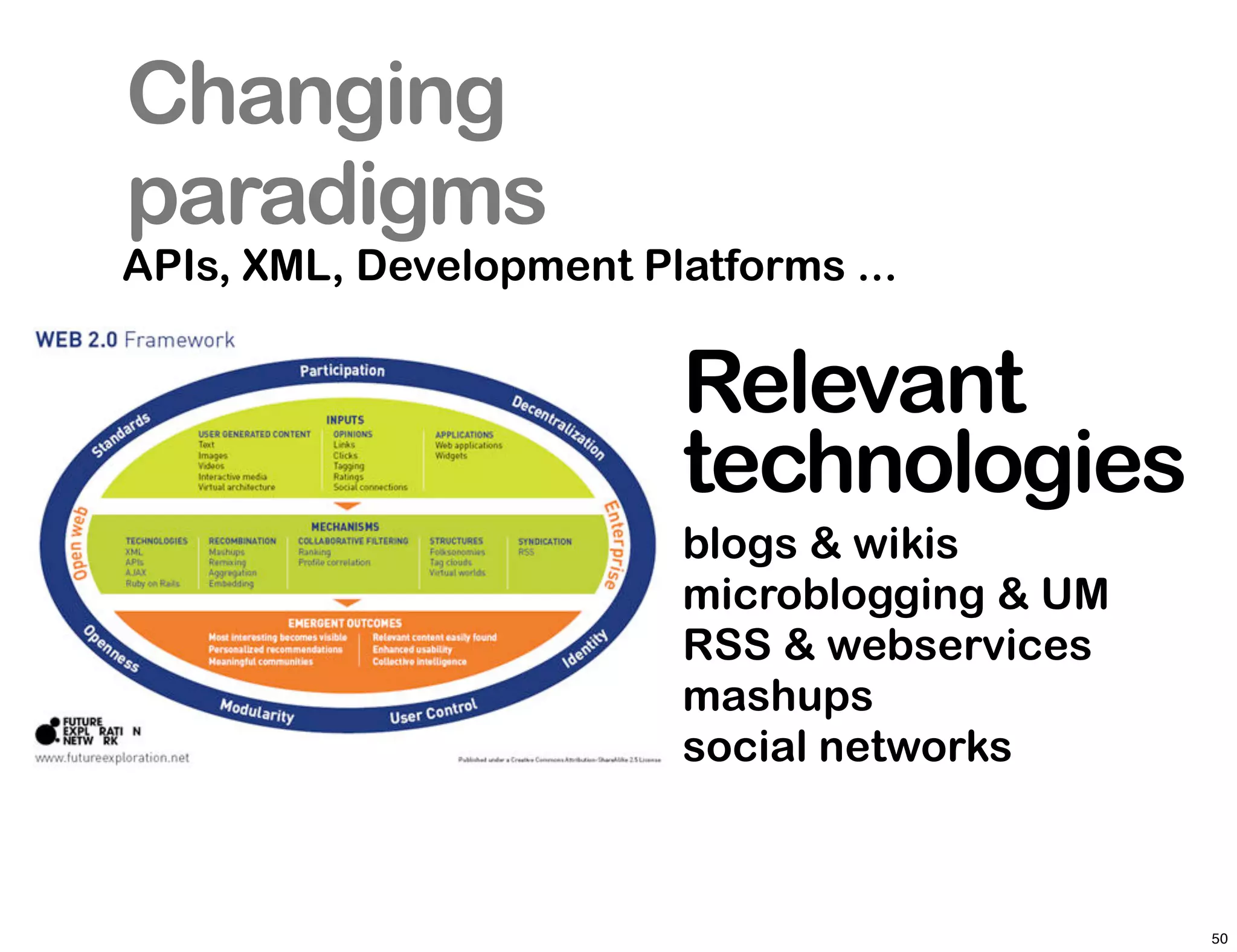
Changing
paradigms
APIs, XML, Development Platforms ...


                          Relevant
                          technologies
                          blogs & wikis
                          microblogging & UM
                          RSS & webservices
                          mashups
                          social networks


                                               50
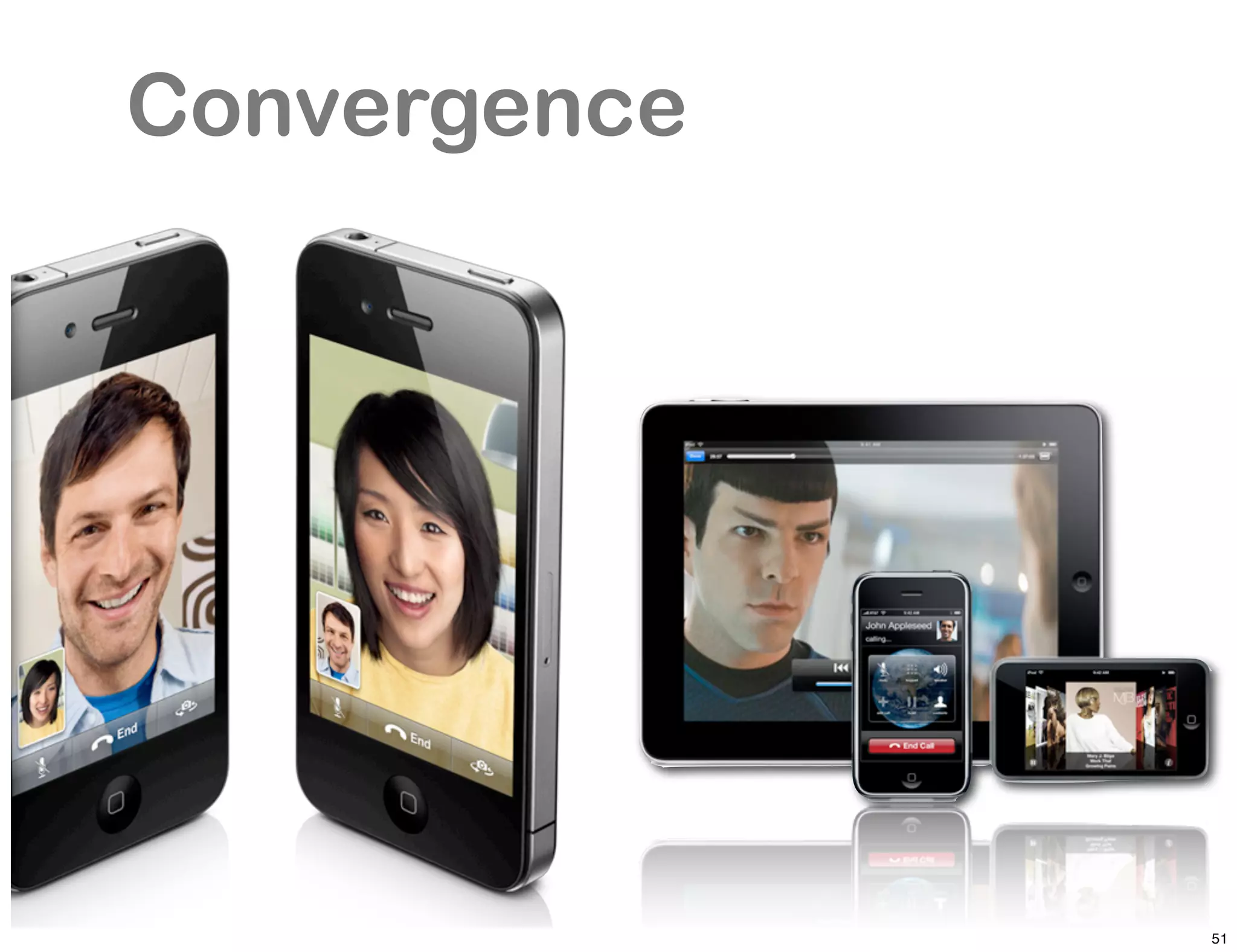
Convergence


              51
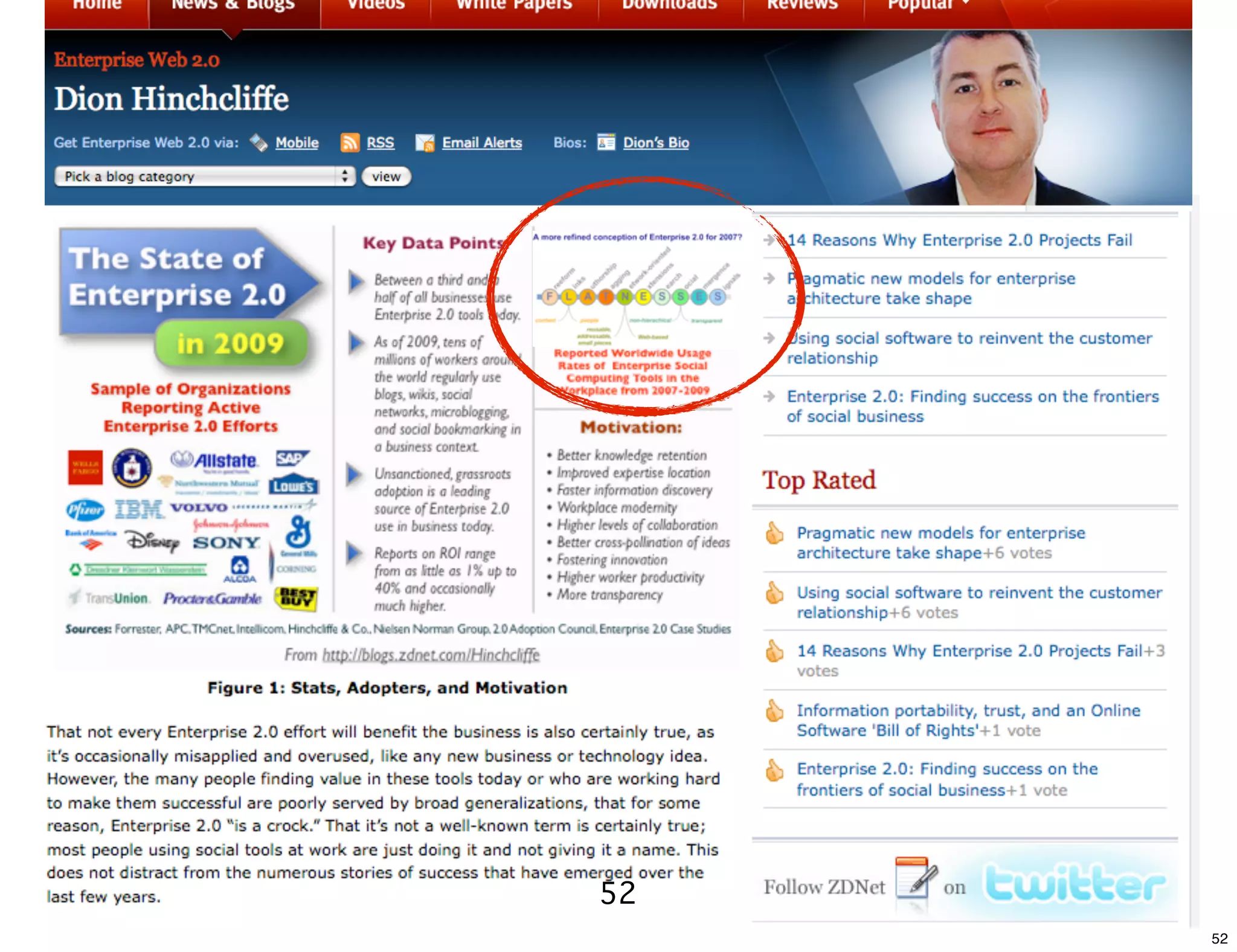
52
     52
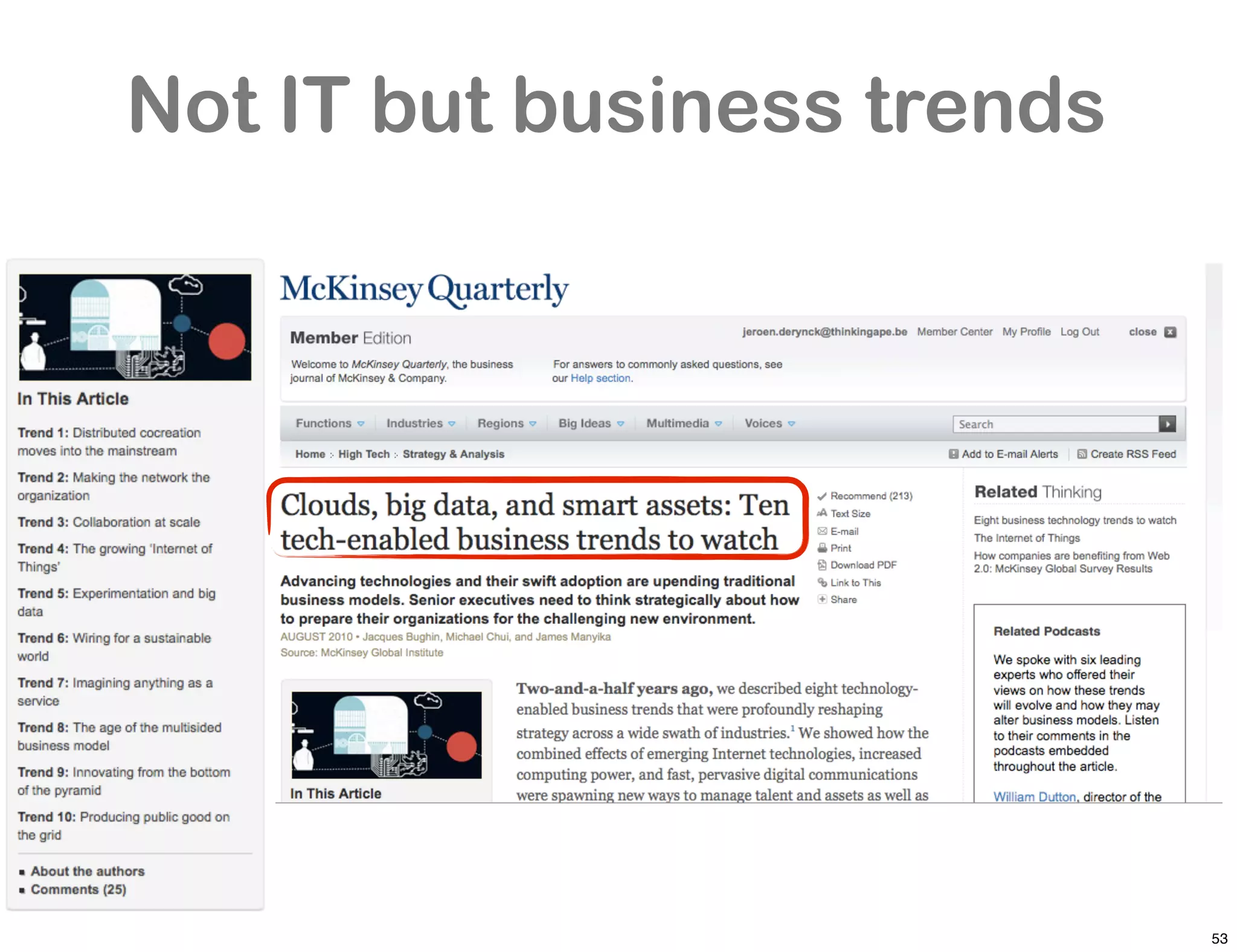
Not IT but business trends


                             53
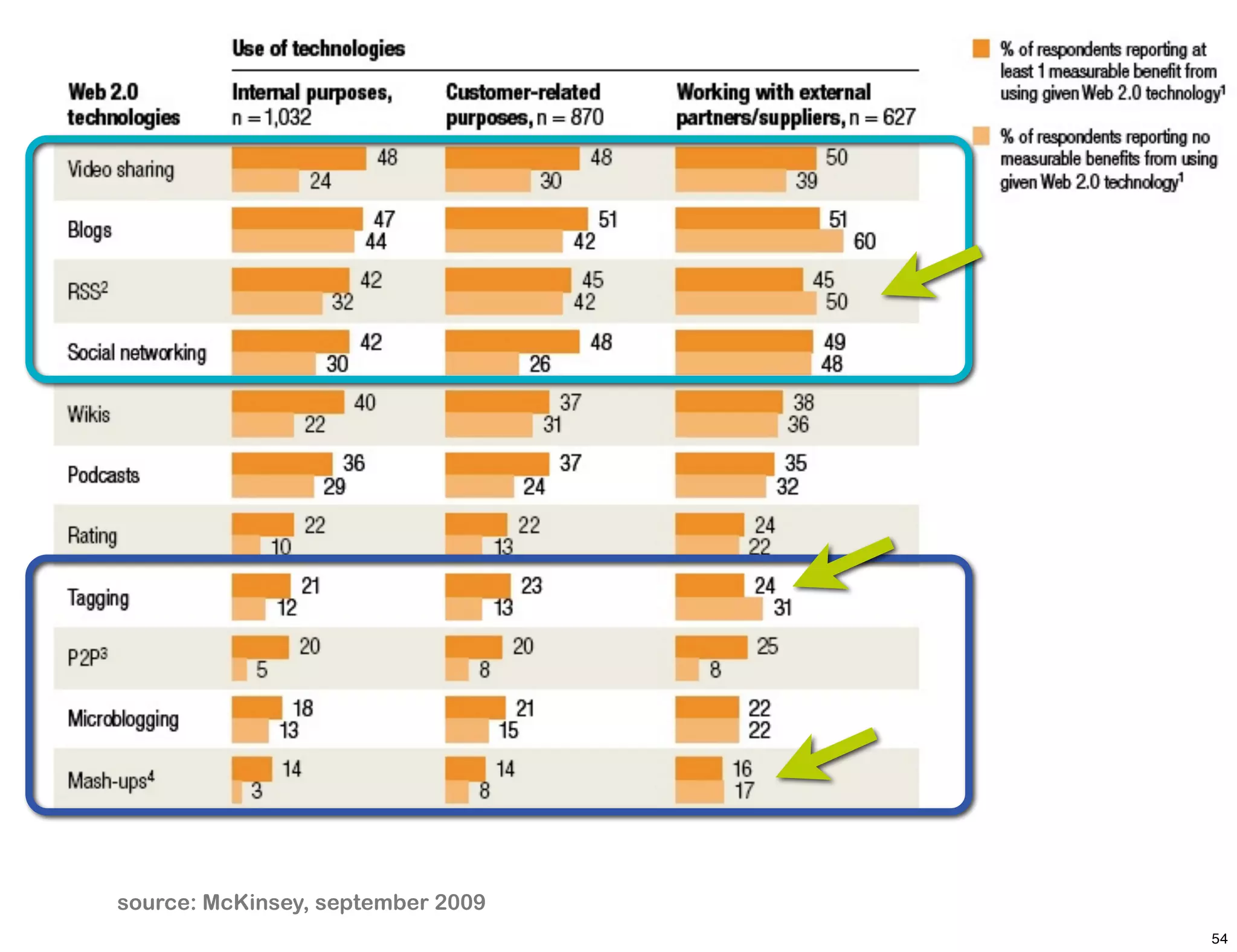
source: McKinsey, september 2009
                                   54
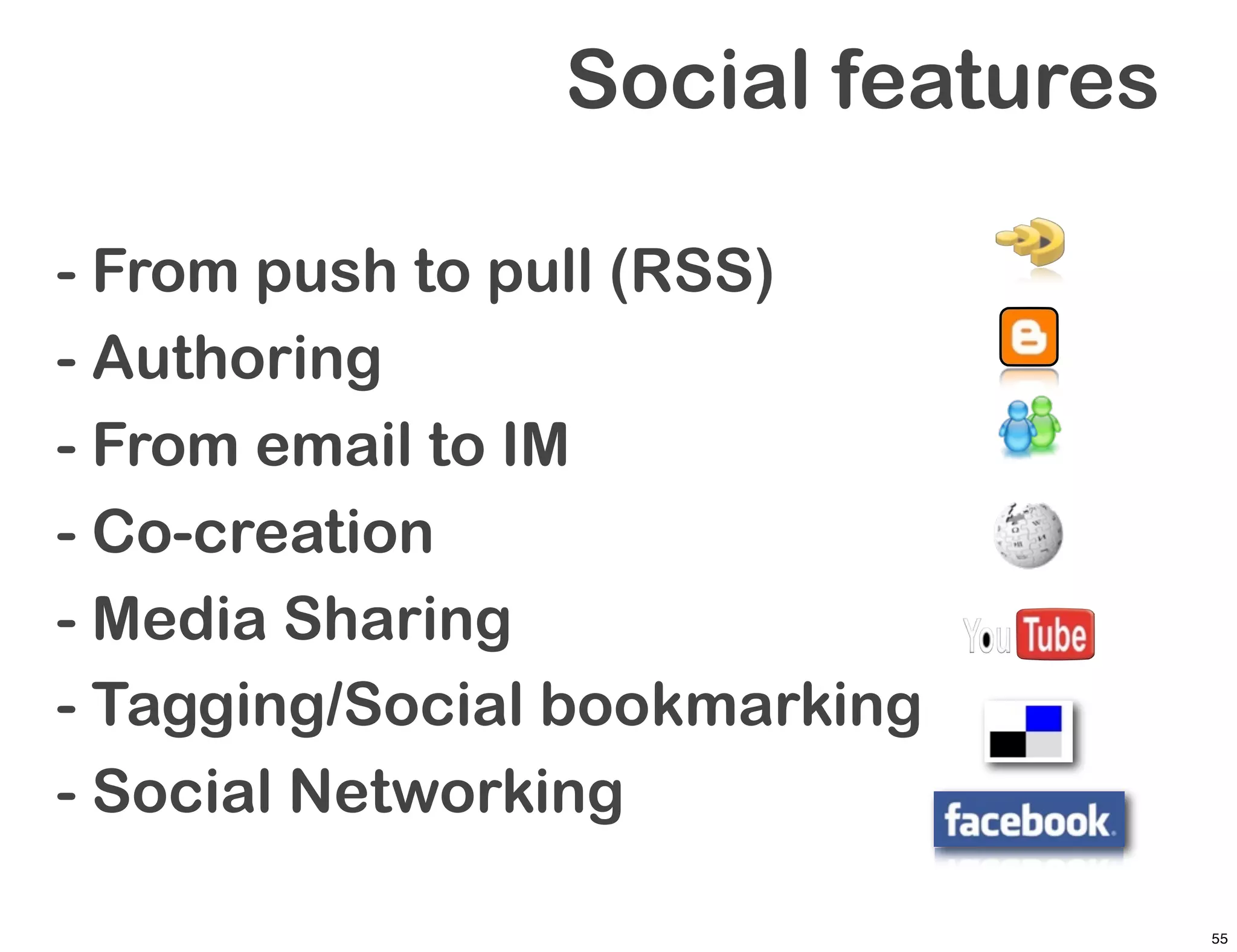
Social features

- From push to pull (RSS)
- Authoring
- From email to IM
- Co-creation
- Media Sharing
- Tagging/Social bookmarking
- Social Networking

                                  55
social features
- Micro-blogging
- Widgets
- Mash UP
- Aggregation
- ratings
- Recommendations

                               56
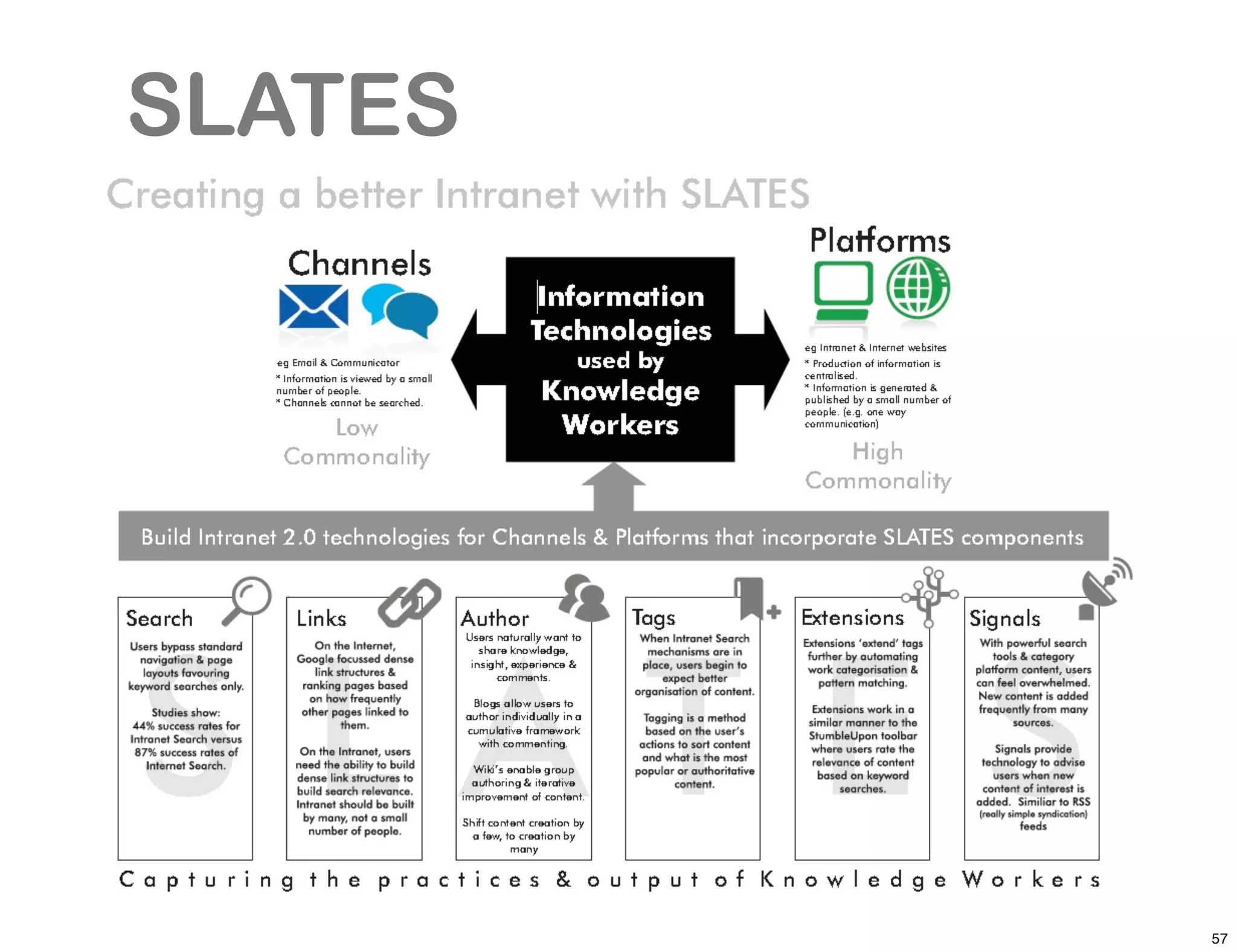
SLATES


         57
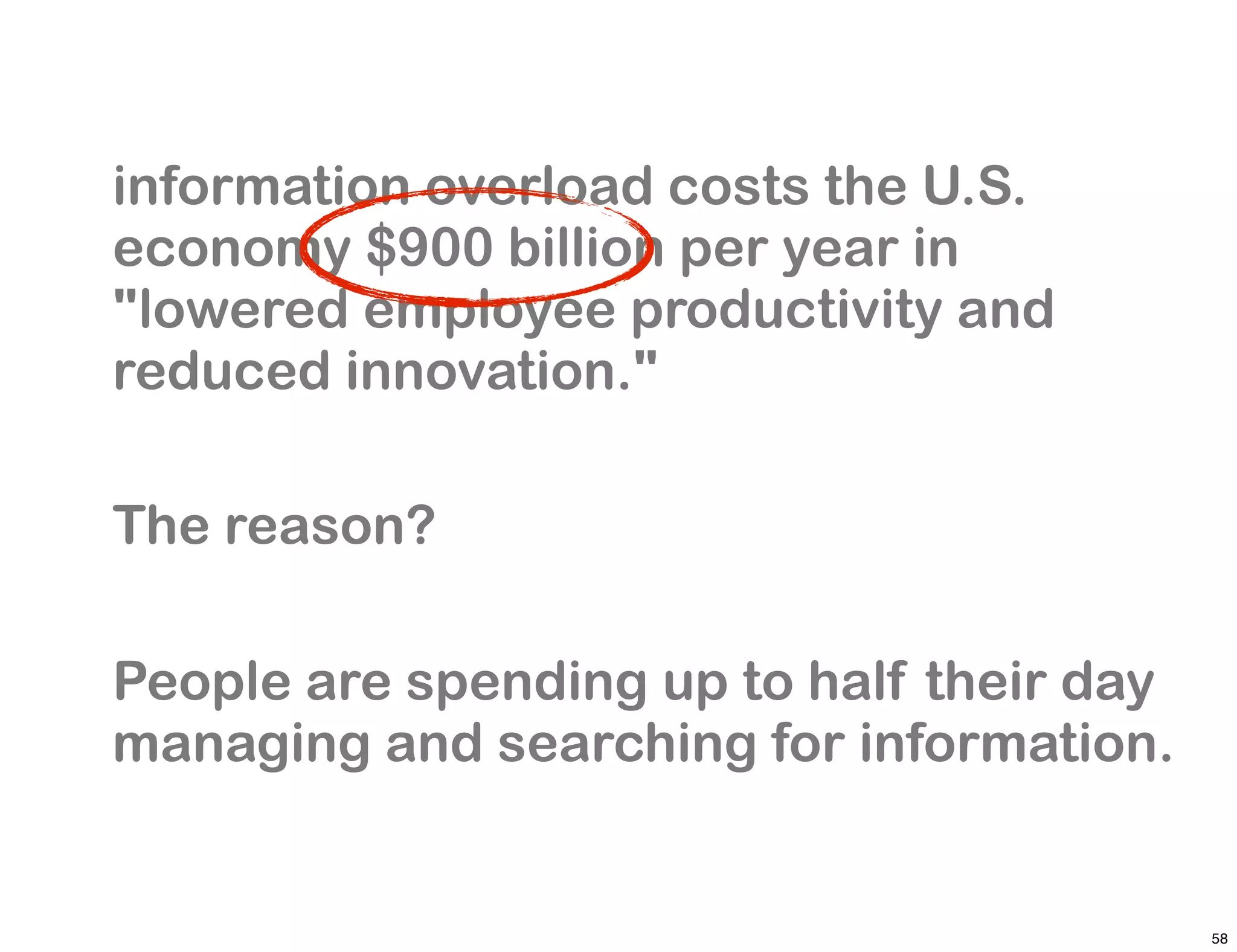
information overload costs the U.S.
economy $900 billion per year in
"lowered employee productivity and
reduced innovation."  

The reason?  

People are spending up to half their day
managing and searching for information.  


                                            58
knowledge is an asset

 “So the flow of information is changing us at
 a far deeper level than we realize.
 Knowledge was once power. Now it’s
 becoming freedom. If knowledge were
 power we’d have good cause to be secretive.
 But secrecy isn’t only becoming impossible.
 It’s proving dysfunctional as well. We begin
 to see how much better our decisions are
 when we work together, openly”
 (Lienhard, 1997)


                                                 59
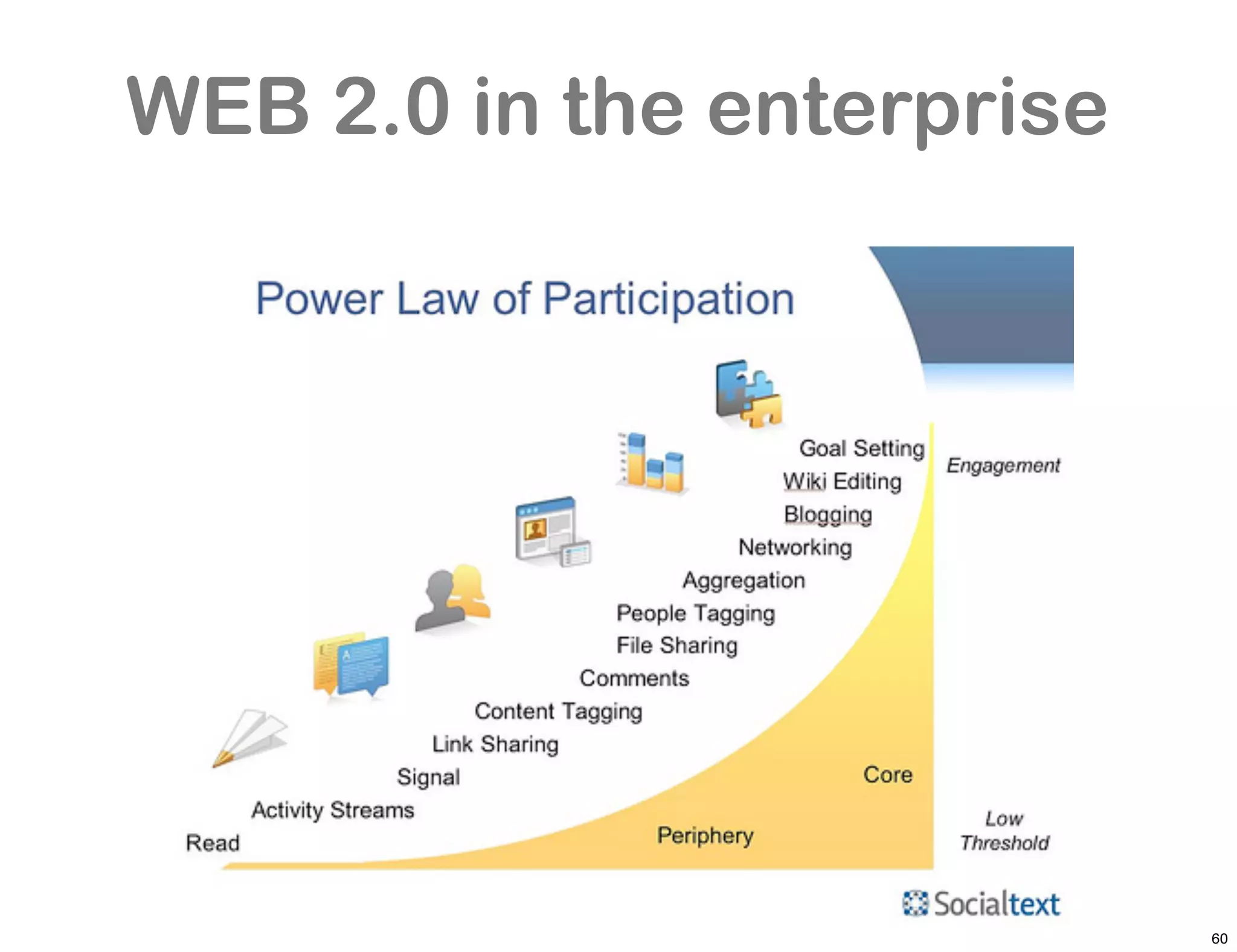
WEB 2.0 in the enterprise


                            60
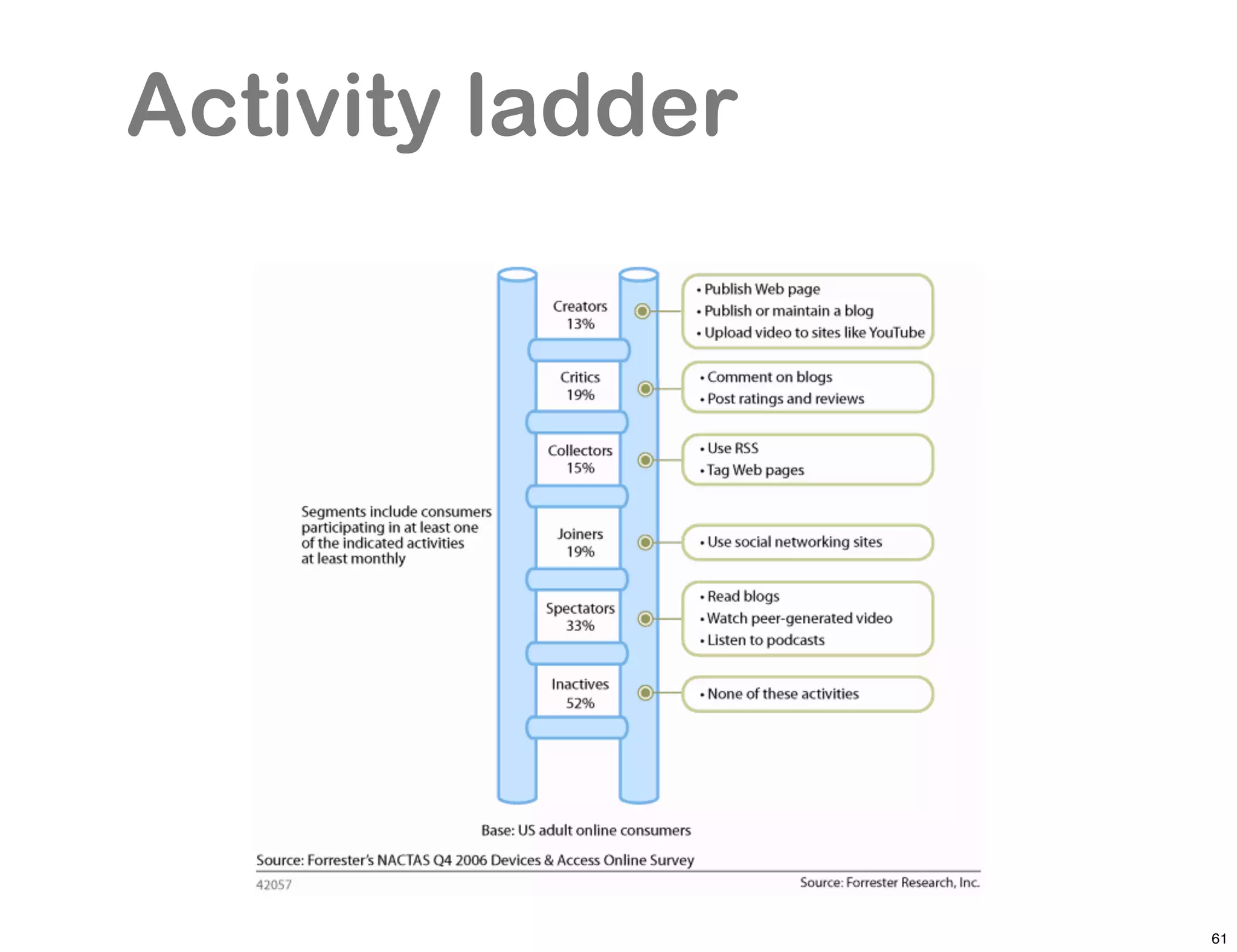
Activity ladder


                  61
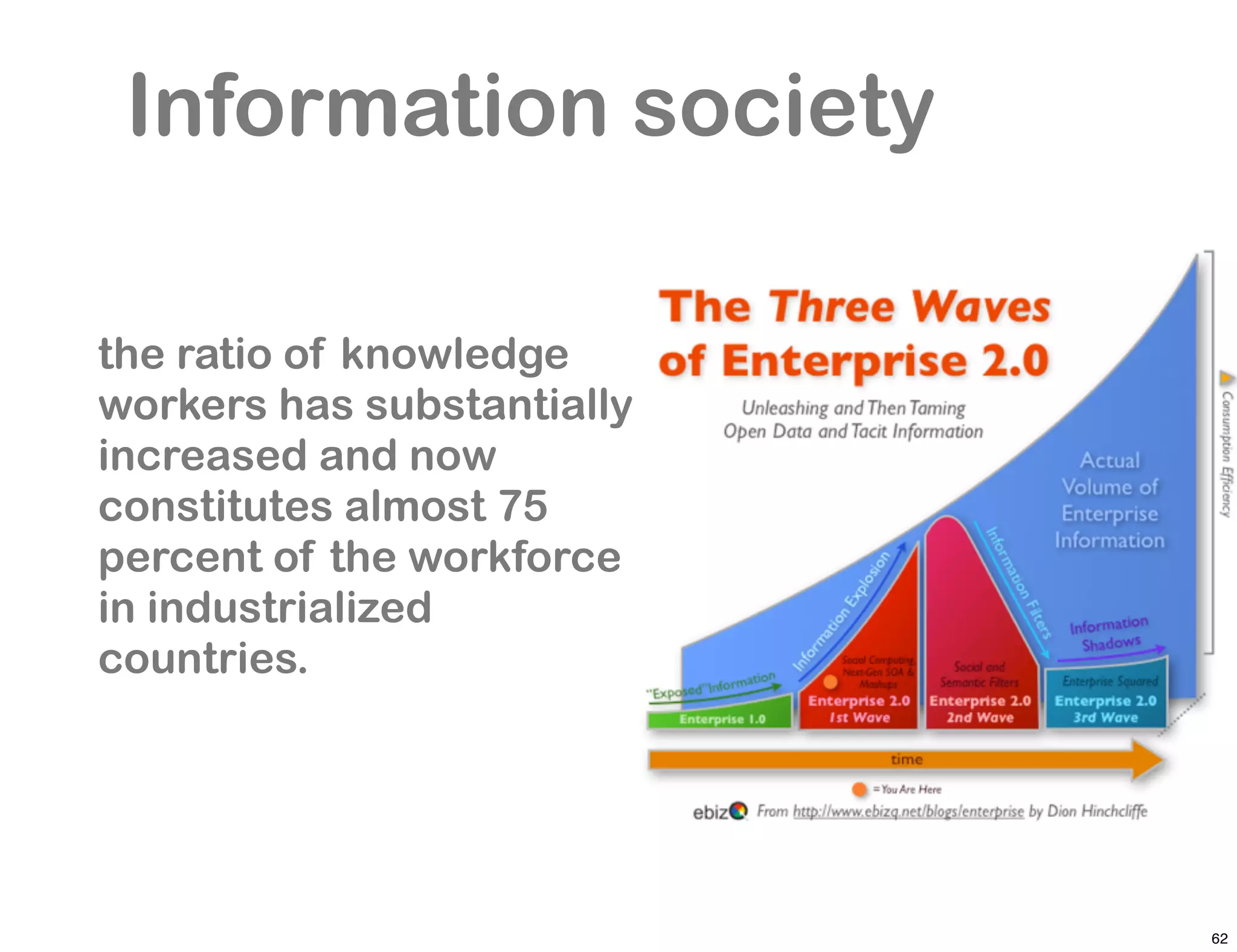
Information society

the ratio of knowledge
workers has substantially
increased and now
constitutes almost 75
percent of the workforce
in industrialized
countries.


                            62
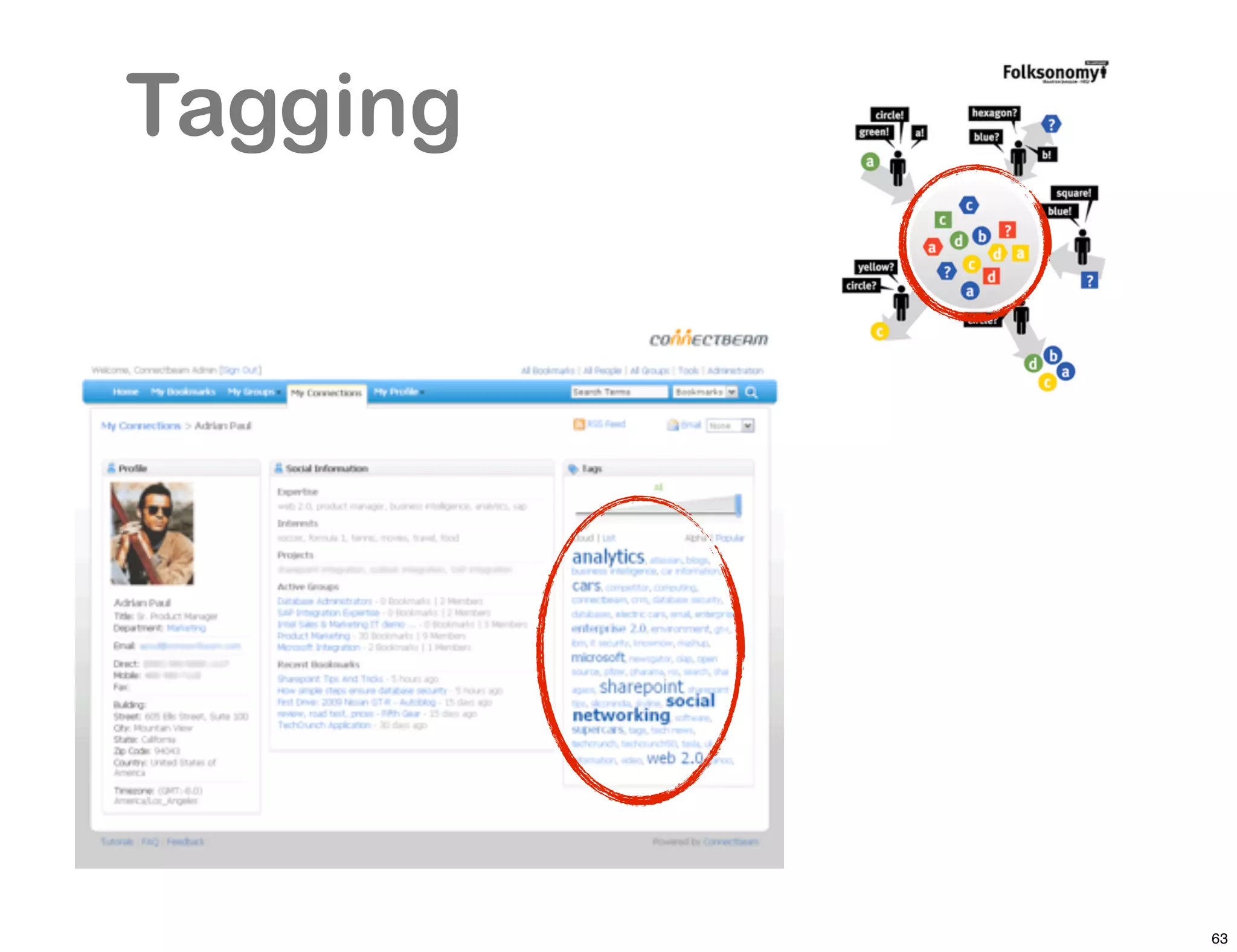
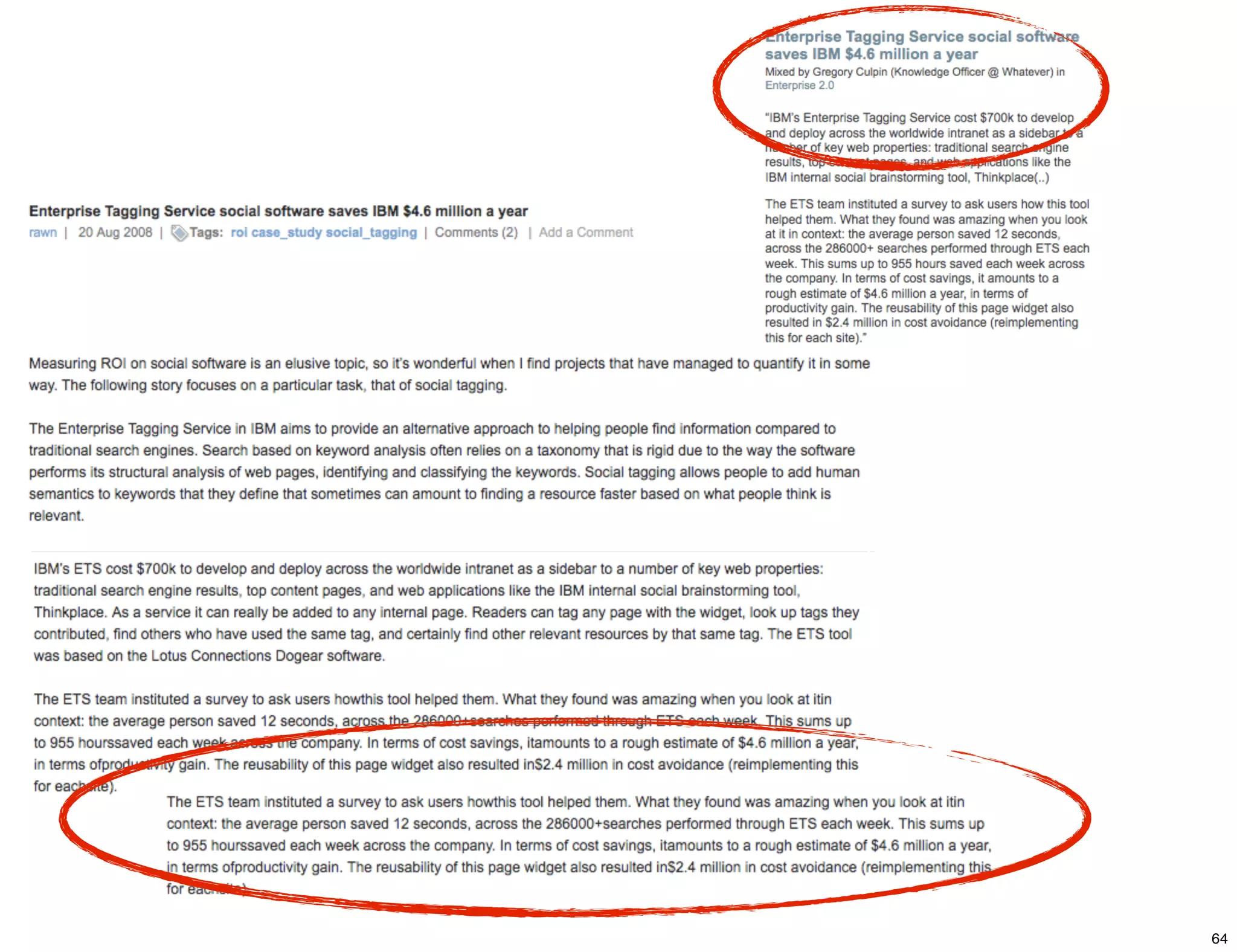
Tagging


          63
64
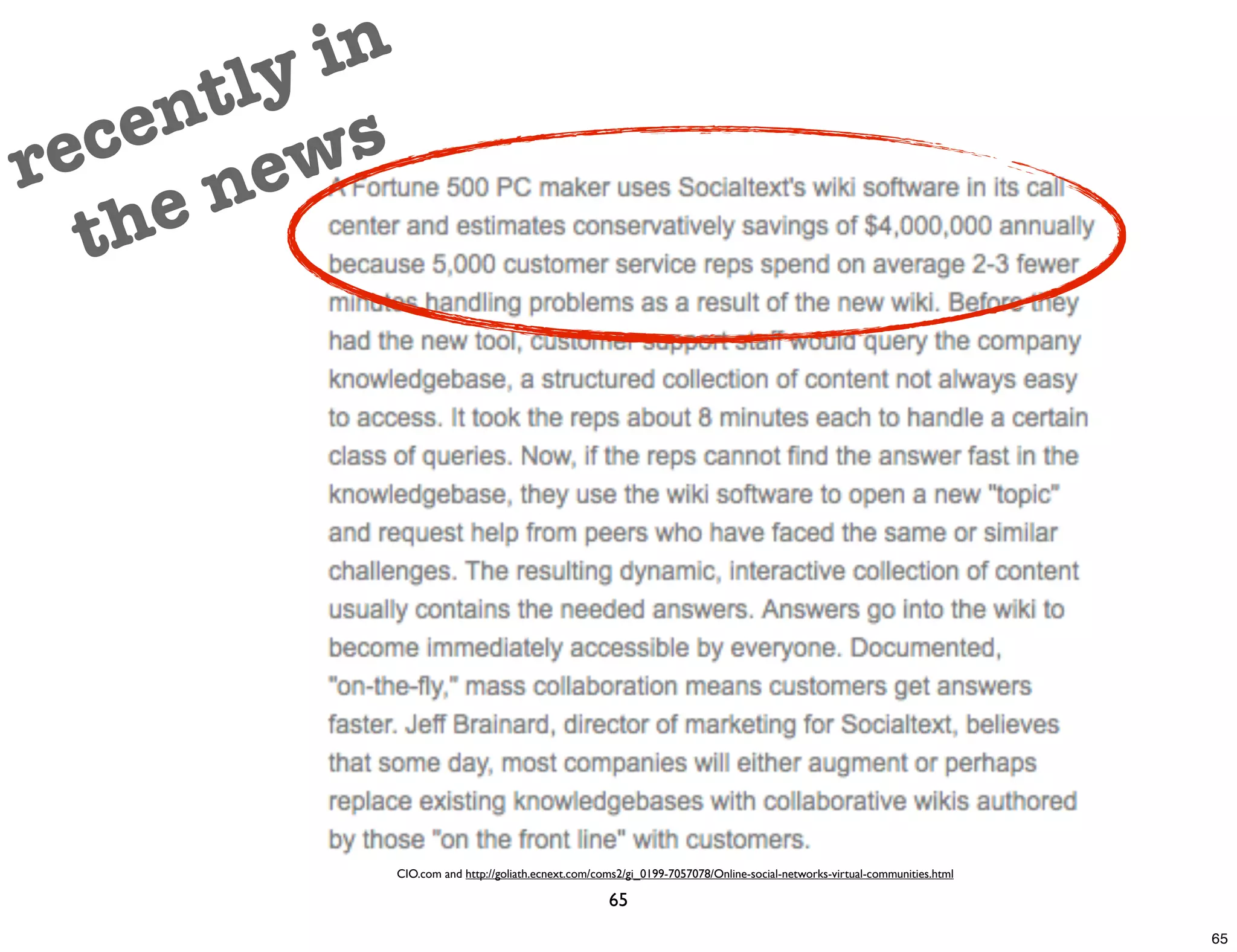
ly in
        t
     en ws
r ec       e
        n
   t he


                  CIO.com and http://goliath.ecnext.com/coms2/gi_0199-7057078/Online-social-networks-virtual-communities.html

                                                          65
                                                                                                                                65
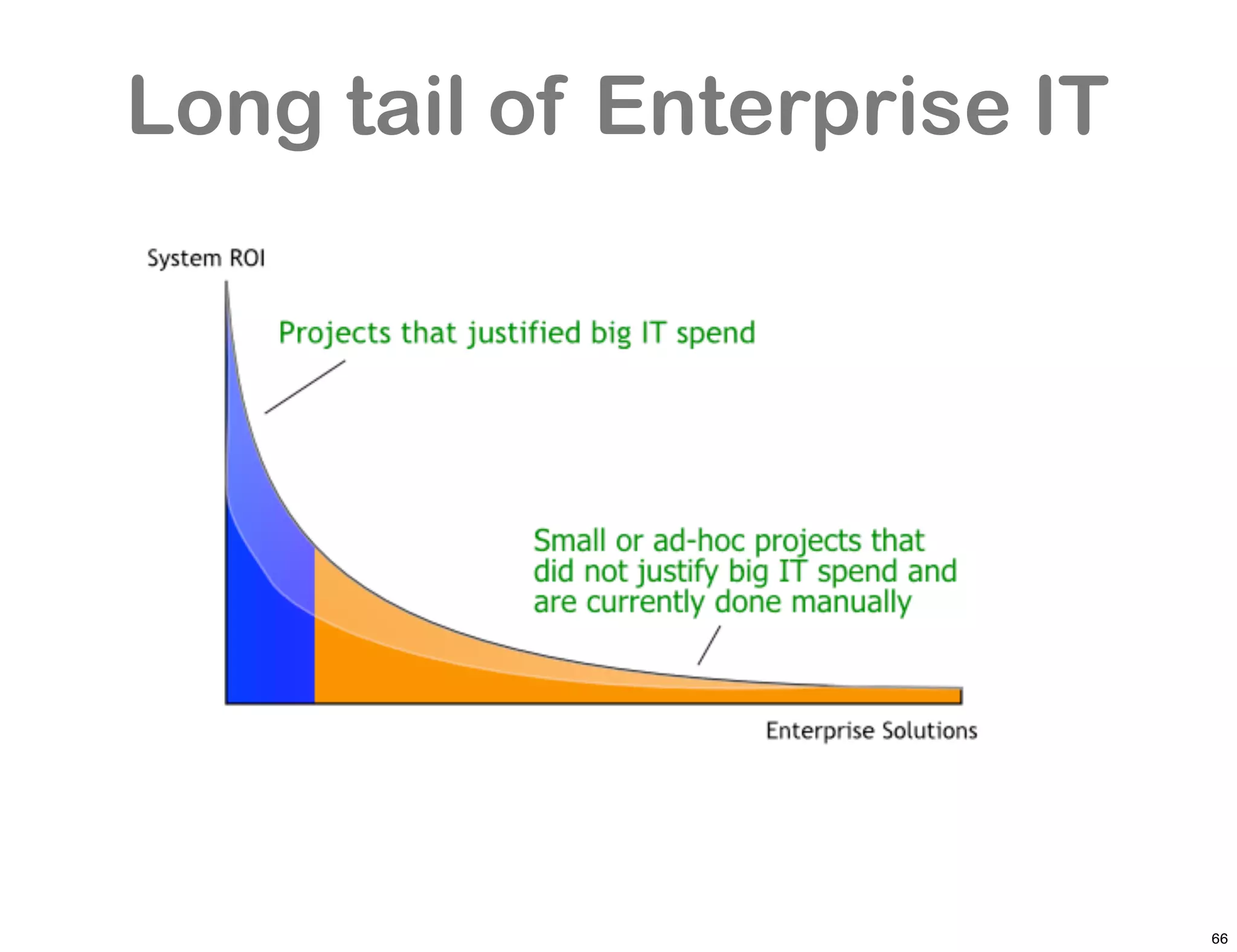
Long tail of Enterprise IT


                             66
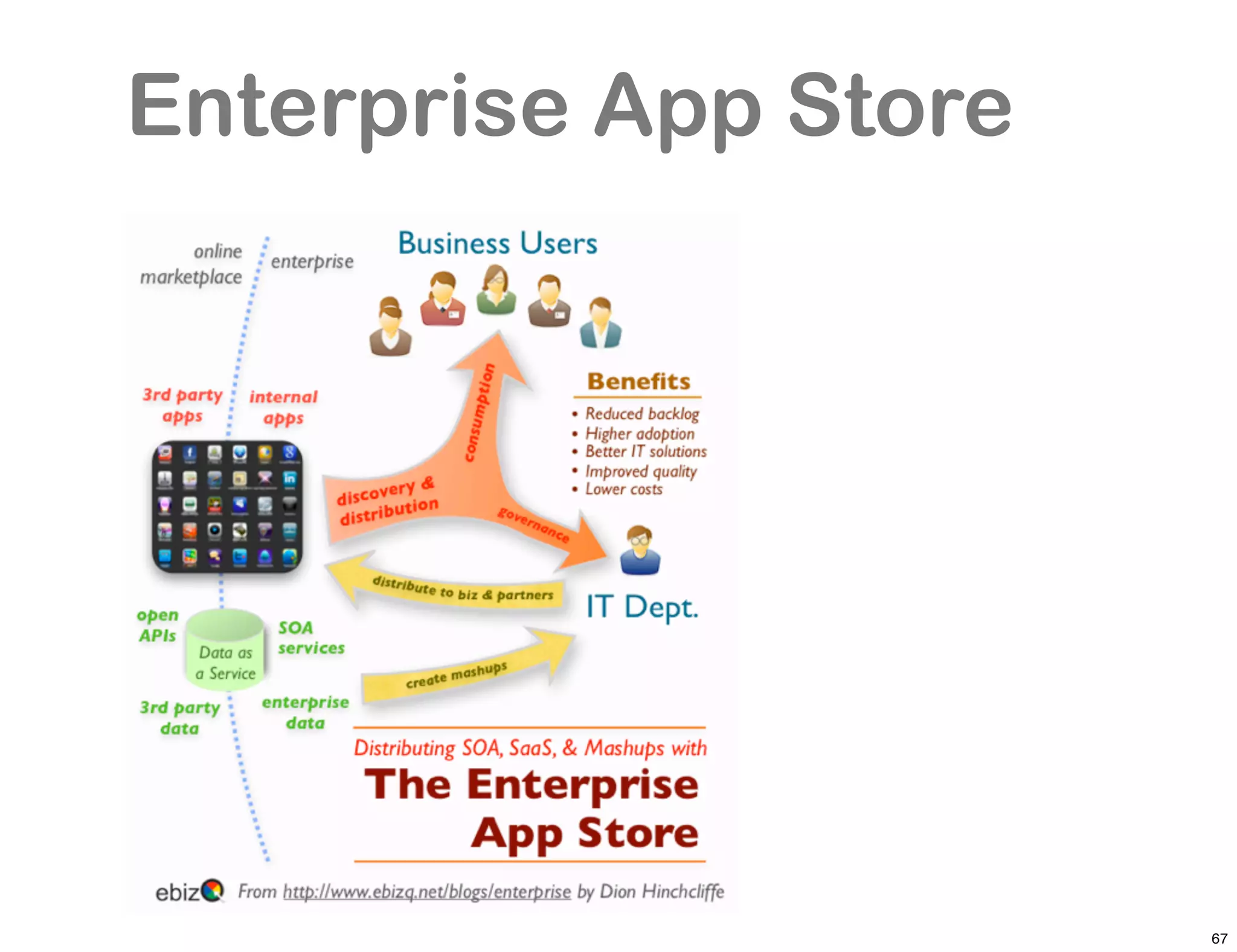
Enterprise App Store


                       67
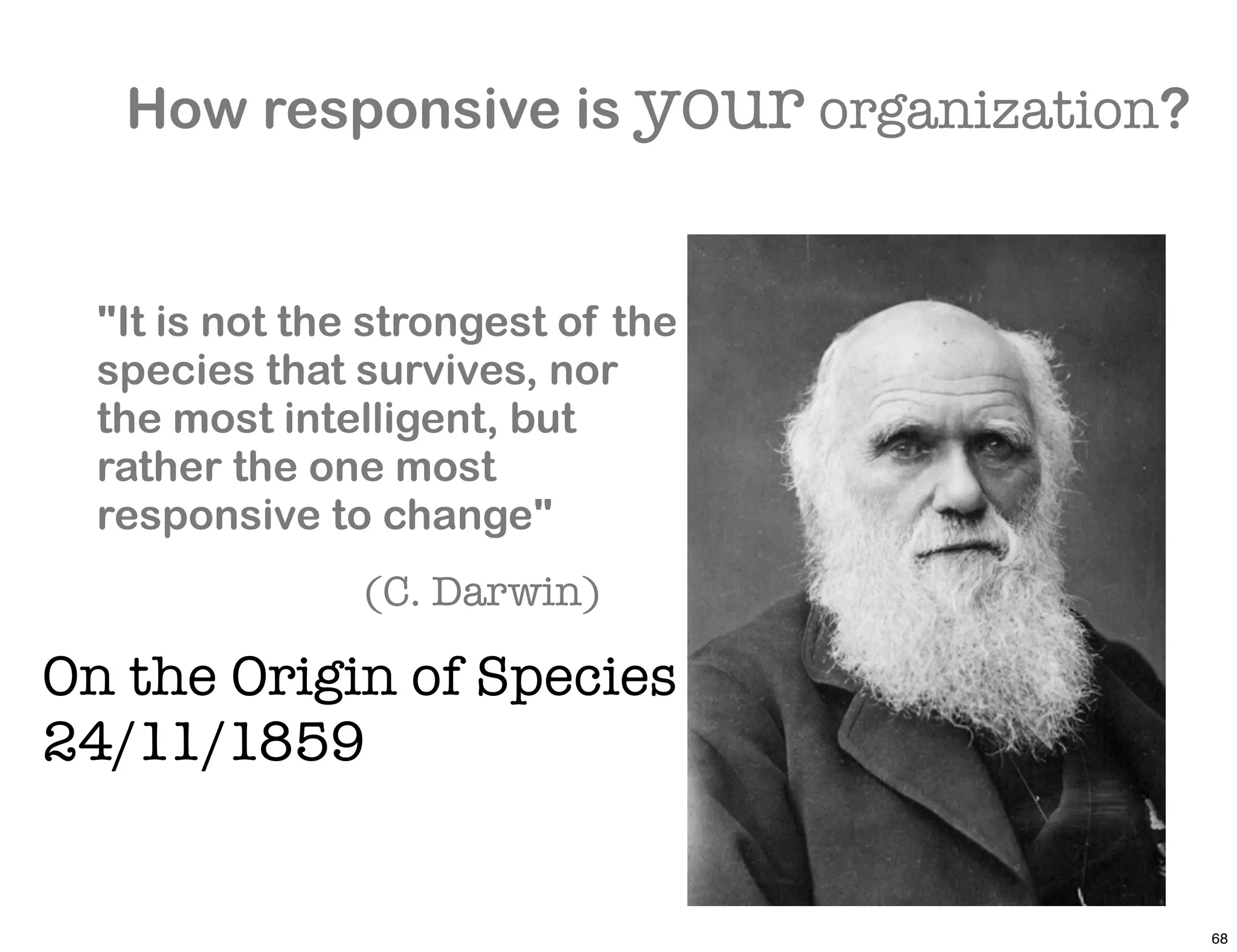
How responsive is your organization?


  "It is not the strongest of the
  species that survives, nor
  the most intelligent, but
  rather the one most
  responsive to change"
                (C. Darwin)

On the Origin of Species
24/11/1859


                                          68
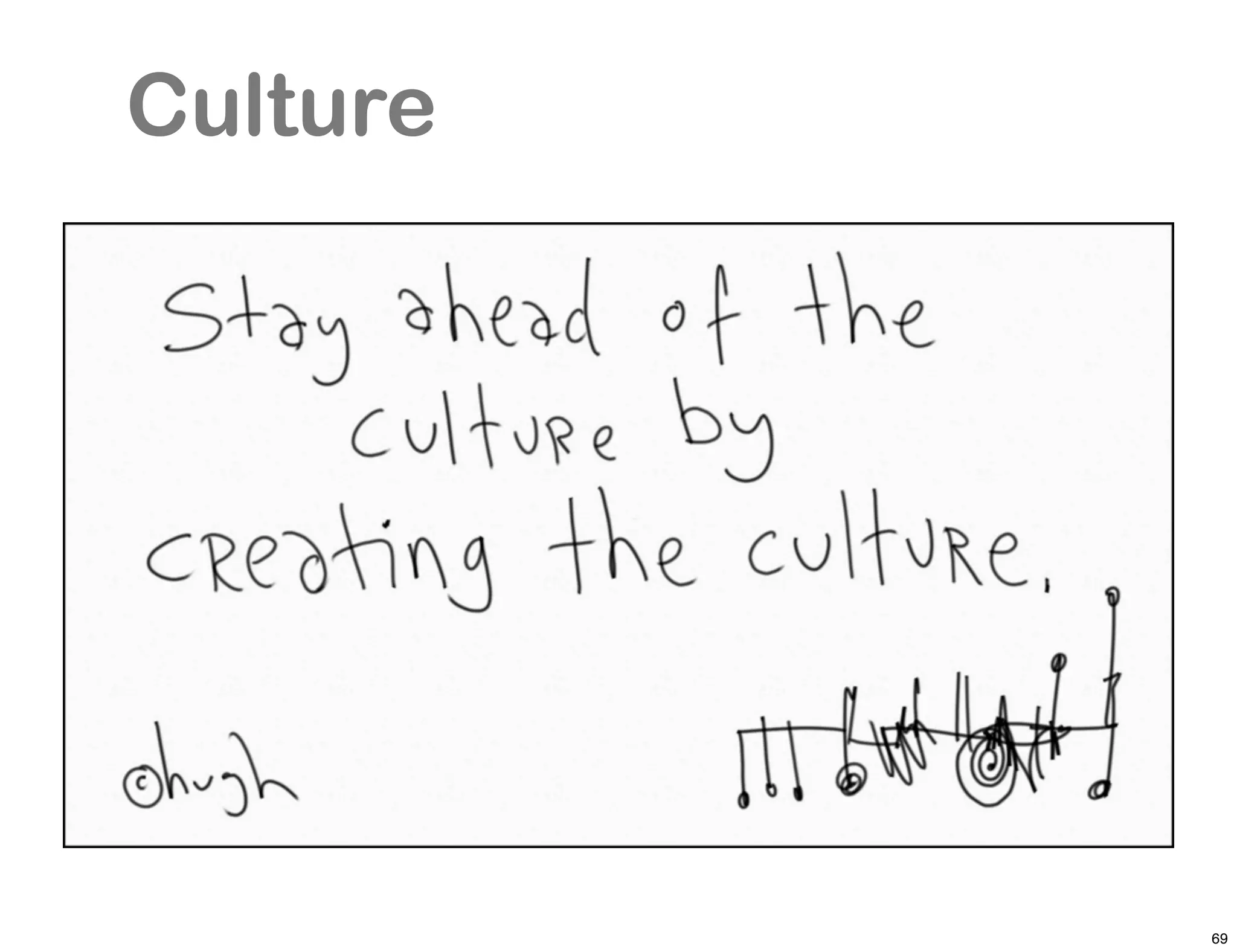
Culture


          69
Culture & collaboration


 A culture of openness = the ease of talking
 to anyone within the organization, the
 regularity of cooperation between units
 within the organization, and the
 accessibility of persons to those in other
 departments.


                                               70
Collaboration drives performance


    Collaboration counts for 36% of
    overall business performance


research paper Meetings around the world:
the impact of collaboration on Business Performance (Gofus et. al., 2006)
                                                                            71
10 steps toward RAISE

1. Reduce cost of email traffic & data redundancy
2. Provide alternatives for on-site meetings
3. Decrease training & internal recruitment costs
4. Enable the virtual enterprise & distributed teams
5. Increase speed of information
6. Reduce time searching for information
7. Enable to quickly locate expert knowledge
8. Integrate partner/customer/supplier communities & networks
9. Manage knowledge drain
10. Prepare for the changing demographics in the organization

                                                                72
It’s time to
raise the
business’ call


                 73
Thank you
  +32 476 96 17 49
  +31 6 10 42 36 33

  jeroen.derynck@thinkingape.be

  www.linkedin.com/in/thinkingape

  http://twitter.com/thethinkingape

                                      74

Enterprise 2.0 and business/IT alignment

  • 1.
    Enterprise 2.0 Yourfast track to sustainable business/ICT fusion.... it’s time to raise the business call Jeroen Derynck - The thinking ape jeroen.derynck@thinkingape.be 1
  • 2.
    CIO priorities 2010 1.Business productivity and cost reduction 2. IT/Business alignment 3. Agility and speed to market 4. Business process re-engineering 5. IT cost reduction 6. IT reliability and efficiency 7. IT strategic planning 8. Revenue-generating IT innovations 9. Security and privacy 10. CIO leadership role http://www.cioinsight.com/c/a/Research/CIO-Priorities-for-2010-196566/ 2
  • 3.
    Do CIOs stillmatter 3
  • 4.
  • 5.
    but...what is therole of ICT in the first place •Reduce costs •Access information anywhere •Improve efficiency •Secure data •Enable growth Based on Paul Strassman - XEROX 5
  • 6.
  • 7.
  • 8.
    Business and IT Likea horse and carriage 8
  • 9.
    Some marriages aredysfunctional 9
  • 10.
  • 11.
    Bottlenecks • Delivery mentality •Efficient IT systems • Architecture • Governance • Value thinking • Communication • Competences 11
  • 12.
  • 13.
    Alignment is asold as IT 13
  • 14.
  • 15.
    Darwinian technologies Desktop days Personal computers proliferated in the early 1990s to support specialized tasks: spreadsheets for financial analysis, computer- aided design, project management, graphic design - whatever could not run centrally on large mainframes. By itself, the desktop workstation was an isolated development. But as productivity became the basis of competition, a new ecosystem emerged around local area networks, client-server architecture and new collaboration tools. 15
  • 16.
  • 17.
    Dot-com days TheInternet has been around since the 1960s, and the Web since the early 1990s, when the Mosaic browser provided an easy-to-use interface. By themselves, these too may have remained isolated innovations, except that falling prices had already put more PCs and laptops in homes; most had modems for accessing e-mail. With client-server architecture well entrenched, companies built websites to reach consumers; expansion, growth and market share became the next basis for competition. A new ecosystem evolved around wide area networks, search engines, and sophisticated web software packages and services. 17
  • 18.
    The rise ofInternet 18
  • 19.
    C. Perez... bubbleeconomies 19
  • 20.
  • 21.
  • 22.
  • 23.
    Consolidation Global economicrecession and the increasing cost of managing heterogeneous technologies built at breakneck speed during the dot-com days led to significant consolidation over the past several years. Cost cutting became the norm, forcing IT to consolidate at all levels: IP at the network level; XML at the messaging level; Linux and Windows at the OS level; Java and .Net at the programming platform level; and SAP and Oracle applications at the application platform level. 23
  • 24.
  • 25.
    Balancing act • Effectiveness and innovation • Enterprise Architecture and time-to-market • Legacy systems and new technologies 25
  • 26.
    paradigm shift (pairuh dime shift) Etymology: Late Latin paradigma, from Greek paradeigma, from paradeiknynai to show side by side 1.a profound and irreversible change to a different model of behavior or perception. 2.an epiphany with staying power. 3.a sea change of such magnitude that it alters the course of all who pass through it. 26
  • 27.
    Trends redefining technology • Seamless interoperability • Focus on the business processes • Virtualization • Cloud computing • Advanced analytics and intelligence • Fluid Collaboration • The Mobile Enterprise • Web 2.0... and 3.0 • Consumerization of IT Source: Accenture 27
  • 28.
  • 29.
    SN more popularthan email 29
  • 30.
  • 31.
  • 32.
  • 33.
    Gen Y isyour next employee 33
  • 34.
  • 35.
  • 36.
  • 37.
    Martin Luther German Reformation leader “The multitude of Table Talk, 1530s. books is a great evil. There is no limit to this fever for writing; every one must be an author; some out of vanity, to acquire celebrity and raise up a name, others for the sake of mere gain.” 37
  • 38.
    The internet today •310 million daily visits to Facebook • 120 million daily visitors to Wikipedia • 2,900,000 Wikipedia Articles • 31 million daily visits to amazon.com • 46 million daily visits to twitter.com • 900,000 blog posts per day 38
  • 39.
  • 40.
  • 41.
  • 42.
  • 43.
  • 44.
    apps in thecloud 44
  • 45.
  • 46.
    The new wayof working has always been out here.... A powerful global conversation has begun. Through the Internet, people are discovering and inventing new ways to share relevant knowledge with blinding speed. As a direct result, markets are getting smarter— and getting smarter faster than most companies. The Cluetrain Manifesto - 1999 The end of business as usual www.cluetrain.com 46
  • 47.
  • 48.
    Enterprise 2.0 An effectiveecosystem of social and mobile technologies that provide rapid and agile collaboration, and business convergence 48
  • 49.
  • 50.
    Changing paradigms APIs, XML, DevelopmentPlatforms ... Relevant technologies blogs & wikis microblogging & UM RSS & webservices mashups social networks 50
  • 51.
  • 52.
    52 52
  • 53.
    Not IT butbusiness trends 53
  • 54.
  • 55.
    Social features - Frompush to pull (RSS) - Authoring - From email to IM - Co-creation - Media Sharing - Tagging/Social bookmarking - Social Networking 55
  • 56.
    social features - Micro-blogging -Widgets - Mash UP - Aggregation - ratings - Recommendations 56
  • 57.
  • 58.
    information overload coststhe U.S. economy $900 billion per year in "lowered employee productivity and reduced innovation."   The reason?   People are spending up to half their day managing and searching for information.   58
  • 59.
    knowledge is anasset “So the flow of information is changing us at a far deeper level than we realize. Knowledge was once power. Now it’s becoming freedom. If knowledge were power we’d have good cause to be secretive. But secrecy isn’t only becoming impossible. It’s proving dysfunctional as well. We begin to see how much better our decisions are when we work together, openly” (Lienhard, 1997) 59
  • 60.
    WEB 2.0 inthe enterprise 60
  • 61.
  • 62.
    Information society the ratioof knowledge workers has substantially increased and now constitutes almost 75 percent of the workforce in industrialized countries. 62
  • 63.
  • 64.
  • 65.
    ly in t en ws r ec e n t he CIO.com and http://goliath.ecnext.com/coms2/gi_0199-7057078/Online-social-networks-virtual-communities.html 65 65
  • 66.
    Long tail ofEnterprise IT 66
  • 67.
  • 68.
    How responsive isyour organization? "It is not the strongest of the species that survives, nor the most intelligent, but rather the one most responsive to change" (C. Darwin) On the Origin of Species 24/11/1859 68
  • 69.
  • 70.
    Culture & collaboration A culture of openness = the ease of talking to anyone within the organization, the regularity of cooperation between units within the organization, and the accessibility of persons to those in other departments. 70
  • 71.
    Collaboration drives performance Collaboration counts for 36% of overall business performance research paper Meetings around the world: the impact of collaboration on Business Performance (Gofus et. al., 2006) 71
  • 72.
    10 steps towardRAISE 1. Reduce cost of email traffic & data redundancy 2. Provide alternatives for on-site meetings 3. Decrease training & internal recruitment costs 4. Enable the virtual enterprise & distributed teams 5. Increase speed of information 6. Reduce time searching for information 7. Enable to quickly locate expert knowledge 8. Integrate partner/customer/supplier communities & networks 9. Manage knowledge drain 10. Prepare for the changing demographics in the organization 72
  • 73.
    It’s time to raisethe business’ call 73
  • 74.
    Thank you +32 476 96 17 49 +31 6 10 42 36 33 jeroen.derynck@thinkingape.be www.linkedin.com/in/thinkingape http://twitter.com/thethinkingape 74