ASSESSMENT OF EAR,
NOSE, THROAT
Mr. Binu Babu
M.Sc. Nursing
Mrs. Jincy Ealias
M.Sc. Nursing
EARS
Inspection
Color
Shape
Size: Greater than 4 cm and smaller than 10 cm.
Position: Draw an imaginary line from outer canthus of eye to
Helix of ear.
Helix
Lesions
Drainage: Cerumen or wax is the only normal drainage.
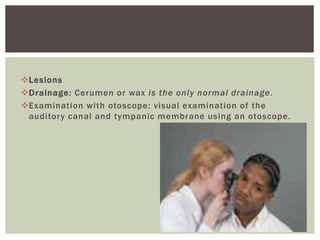
Examination with otoscope: visual examination of the
auditory canal and tympanic membrane using an otoscope.
Hearing acuity : hearing tests
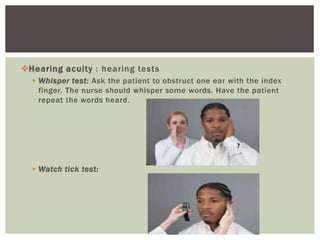
 Whisper test: Ask the patient to obstruct one ear with the index
finger. The nurse should whisper some words. Have the patient
repeat the words heard.
 Watch tick test:
 Tunning fork test:
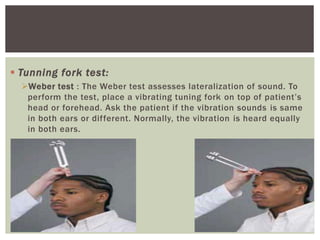
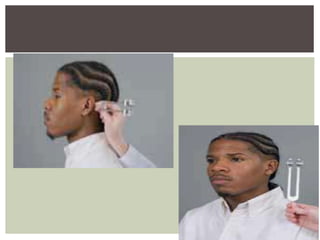
Weber test : The Weber test assesses lateralization of sound. To
perform the test, place a vibrating tuning fork on top of patient’s
head or forehead. Ask the patient if the vibration sounds is same
in both ears or different. Normally, the vibration is heard equally
in both ears.
 Rinne test:
 This test is used to compare air conduction and bone
conduction.
 To perform this test, place a vibrating tuning fork on
patient’s mastoid process.
 When the sound is no longer heard, immediately place
the vibrating fork about 1 inch in front of the external
auditory canal and continue until the patient can no
longer hear the sound.
 Normally, air conduction > bone conduction
Romberg’s test: Make patient to stand with
feet together, eyes opened, and then eyes
closed. Note patient’s ability to maintain
balance.
Palpation
Ears: normally soft and non tender
Mastoid bone: normally non tender
NOSE
Inspection
Symmetry
Nasal drainage: normally absent
Nasal flaring: normally absent
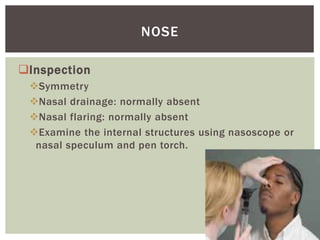
Examine the internal structures using nasoscope or
nasal speculum and pen torch.
Sinuses: Inspect frontal sinuses above the
eyes and maxillary sinuses below the eyes.
Normal finding is no evidence of swelling
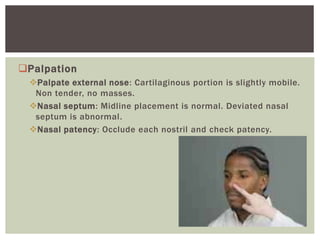
Palpation
Palpate external nose: Cartilaginous portion is slightly mobile.
Non tender, no masses.
Nasal septum: Midline placement is normal. Deviated nasal
septum is abnormal.
Nasal patency: Occlude each nostril and check patency.
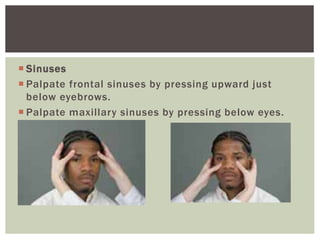
 Sinuses
 Palpate frontal sinuses by pressing upward just
below eyebrows.
 Palpate maxillary sinuses by pressing below eyes.
Inspection
Have the patient sit with the head tilted
backward and the mouth opened wide.
 Oropharynx : Inspect for color, lesions, and drainage.
Inspect the oropharynx using a tongue depressor and penlight.
Tonsils: Check for color and size.
Uvula: Have patient say “AH!” and note symmetrical rise of the
uvula. Normally it is midline, pink, moist, without lesions.
Gag reflex: Elicit the gag reflex by pressing the posterior
tongue with a tongue depressor.
THROAT
 Palpation
 Lymph nodes: Palpate the nodes using finger pads
around neck. Normally not palpable.

ENT NURSING ASSESSMENT

  • 1.
    ASSESSMENT OF EAR, NOSE,THROAT Mr. Binu Babu M.Sc. Nursing Mrs. Jincy Ealias M.Sc. Nursing
  • 2.
    EARS Inspection Color Shape Size: Greater than4 cm and smaller than 10 cm. Position: Draw an imaginary line from outer canthus of eye to Helix of ear. Helix
  • 3.
    Lesions Drainage: Cerumen orwax is the only normal drainage. Examination with otoscope: visual examination of the auditory canal and tympanic membrane using an otoscope.
  • 4.
    Hearing acuity :hearing tests  Whisper test: Ask the patient to obstruct one ear with the index finger. The nurse should whisper some words. Have the patient repeat the words heard.  Watch tick test:
  • 5.
     Tunning forktest: Weber test : The Weber test assesses lateralization of sound. To perform the test, place a vibrating tuning fork on top of patient’s head or forehead. Ask the patient if the vibration sounds is same in both ears or different. Normally, the vibration is heard equally in both ears.
  • 6.
     Rinne test: This test is used to compare air conduction and bone conduction.  To perform this test, place a vibrating tuning fork on patient’s mastoid process.  When the sound is no longer heard, immediately place the vibrating fork about 1 inch in front of the external auditory canal and continue until the patient can no longer hear the sound.  Normally, air conduction > bone conduction
  • 8.
    Romberg’s test: Makepatient to stand with feet together, eyes opened, and then eyes closed. Note patient’s ability to maintain balance.
  • 9.
    Palpation Ears: normally softand non tender Mastoid bone: normally non tender
  • 10.
    NOSE Inspection Symmetry Nasal drainage: normallyabsent Nasal flaring: normally absent Examine the internal structures using nasoscope or nasal speculum and pen torch.
  • 11.
    Sinuses: Inspect frontalsinuses above the eyes and maxillary sinuses below the eyes. Normal finding is no evidence of swelling
  • 12.
    Palpation Palpate external nose:Cartilaginous portion is slightly mobile. Non tender, no masses. Nasal septum: Midline placement is normal. Deviated nasal septum is abnormal. Nasal patency: Occlude each nostril and check patency.
  • 13.
     Sinuses  Palpatefrontal sinuses by pressing upward just below eyebrows.  Palpate maxillary sinuses by pressing below eyes.
  • 14.
    Inspection Have the patientsit with the head tilted backward and the mouth opened wide.  Oropharynx : Inspect for color, lesions, and drainage. Inspect the oropharynx using a tongue depressor and penlight. Tonsils: Check for color and size. Uvula: Have patient say “AH!” and note symmetrical rise of the uvula. Normally it is midline, pink, moist, without lesions. Gag reflex: Elicit the gag reflex by pressing the posterior tongue with a tongue depressor. THROAT
  • 15.
     Palpation  Lymphnodes: Palpate the nodes using finger pads around neck. Normally not palpable.