Enron
Group Members and
        Work Breakdown
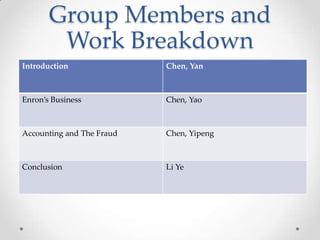
Introduction               Chen, Yan


Enron’s Business           Chen, Yao


Accounting and The Fraud   Chen, Yipeng


Conclusion                 Li Ye
Introduction
Introduction

• Enron Corporation was an
  American energy, commodities,
  and services company based in
  Houston, Texas.
• Before its bankruptcy on
  December 2, 2001, Enron
  employed approximately 20,000
  staff and was one of the world's
  leading electricity, natural gas,
  communications, and pulp and
  paper companies, with claimed
  revenues of nearly $101 billion in
  2000.
Achievements

• Fortune named Enron "America's Most Innovative
  Company" for six consecutive years.

• It was also an extensive futures trader, including
  sugar, coffee, grains, hog, and other meat
  futures.

• At the time of its bankruptcy filing in December
  2001, Enron structured into seven distinct business
  units.
Scandal
• At the end of 2001, it was revealed that its reported
  financial condition was sustained substantially by
  institutionalized, systematic, and creatively planned
  accounting fraud, known as the "Enron scandal".


• Enron has since become a popular symbol of willful
  corporate fraud and corruption.
Enron’s
       Fall
• The Enron scandal was a financial scandal involving
  Enron Corporation and its accounting firm Arthur
  Andersen, that was revealed in late 2001.

• After a series of revelations involving irregular
  accounting procedures conducted throughout the
  1990s, Enron was on the verge of bankruptcy by
  November of 2001. A white knight rescue attempt
  by a similar, smaller energy company, Dynegy, was
  not viable. Enron filed for bankruptcy on December
  2, 2001.
Enron’s Business
Business
      Model
• Deregulation generally led to lower prices and
  increased supply, it also introduced increased
  volatility in gas prices

• Standard contract(old)--- allowed suppliers to
  interrupt gas supply without legal penalties.

• Creating a natural gas “bank”(Enron)----Enron
  began offering utilities long-term fixed price
  contracts for natural gas, typically at prices that
  assumed long-term declines in spot prices.
Business
      Model
• Off-balance sheet financing vehicles---Special
  Purpose Entities(SPE) , to finance many of these
  transactions.

• Enron Online---The creation of the on-line trading
  model

• The gas trading model was a huge success. By 1992,
  Enron was the largest merchant of natural gas in
  North America.
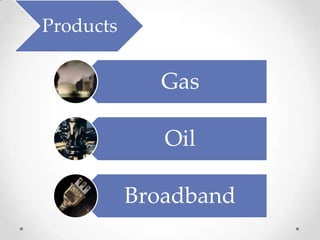
Products

             Gas

              Oil

           Broadband
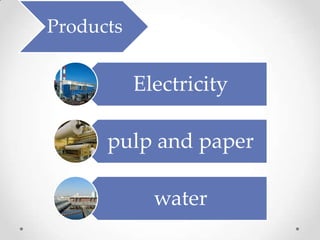
Products


           Electricity

      pulp and paper

             water
Accounting and The
      Fraud
Remarkable
      Company

• The world’s largest energy trader.

• the total revenue was $100 billion in 2000, 7th of Top
  500 in US.

• Blue chip, $80 per share, 21 thousands employees,
  globalization enterprise.
Bankruptcy


•   2001, a investment agency boss publicly doubts the profitability
    model of Enron, the stock price decrease from $80 to 42$ in Aug.

•   16, Oct. Enron announces the total loss for 3th quarter was $618
    million.

•   22, Oct. SEC begin to investigate Enron formally.

•   8, Nov. Enron was forced to admit do false account, profit total
    false nearly $600 million since 1997.

•   30, Nov. stock price falls to $0.26 per share.

•   2, Dec. formally apply for bankruptcy protection.
Why?
• How did it happen?

• Accounting method
• Management group
• US monitor system
Accounting
     method

• Enron’s nontransparent financial statements did not
  clearly depict its operations and finances with
  shareholders.

• Accrual accounting: actual costs and actual
  revenues were received and recorded when selling
  it.

• Mark-to-market accounting: income was estimated
  as the PV of future cash flow, but costs were hard to
  be recorded.
Accounting
       method
Example:
• In July 2000, Enron and Blockbuster Video signed a 20-
  year agreement to introduce a new on-line video game
  to various cities.

•   After several pilot projects, Enron estimated profits of
    more than $110 million form the deal, even though
    analysts questioned the technical viability and market
    demand of the service.

•   When the net work failed to work, Blockbuster pulled out
    of the contract, Enron continued to recognized future
    profits, even though the deal resulted in a loss.
Accounting
     method
SPE(Special purpose entities)
• It is a legal entity created to fulfill narrow, special or
  temporary objectives . They are used to hide debt,
  ownership mostly in real market.
• These shell firms were created by a sponsor, but
  managed by independent equity investor and debt
  financing.


• Enron used SPE to manage risks associated with specific
  assets and disclose minimal details of its SPE.
• By 2001, Enron had used hundreds of SPEs to hide its
  debt. As a result of one violation, Enron’s balance sheet
  understated its liabilities, overstated its equity and profits.
Management
        group
• Corporate governance
  Enron had a model board of directors comprising
   predominantly outsiders with significant ownership stakes and
   a talented audit committee. Even with its complex corporate
   governance, Enron was still able to conceal its true
   performance.
• Executive compensation
  The setup of the system contributed to a dysfunctional
   corporate culture that became obsessed with a focus only on
   short-term earnings to maximize bonuses.
• Financial audit
   Enron’s auditor firm, Arthur Andersen, was accused of
   applying reckless standards in its audits because of a conflict
   of interest over the significant consulting fees($27 million).
    Anderson’s auditors were pressured by Enron to defer
   recognizing the charges from the SPE as its credit risks.
US monitor
      system
• The state accounting committee was an
  independent body established in accordance with
  the state Accountant Acts. At the national level, the
  Uniform Certified Public Accountants Act was just a
  template method, does not have binding enforce.

• American institute of CPA and State Certified
  General Accountants Association were traditional
  civil society organizations, not specifically
  authorized by law.

• The independence of the CPA.
Business
         Ethic
• How about the CEO and directors deal with fraud?

   Obviously, the top management operated the problem
  in very well, but all of they intentionally less of attention
  about the fraud. Including the CEO Skilling, many of the
  directors were continuing advocated to rise stock price,
  but selling the stock at the same time.
• Both of they have no business ethics and no long–term
  development.(1985-2001 Enron)

• Where there is a business ethic, there is a long-term
  bloom.
Conclusion
Arthur
     Andersen
• In July 2002, the one-time Big 5 accounting firm was
  found guilty of obstruction of justice for shredding
  documents in the Enron case.
• Their Enron connections essentially put the entire
  firm out of business, affecting 22,000 workers, most
  of whom had no connection to Enron.
Sarbanes-
       Oxley Act

• Between December 2001 and April 2002, the
  Senate Committee on Banking, Housing, and Urban
  Affairs and the House Committee on Financial
  Services held multiple hearings about the collapse
  of Enron and related accounting and investor
  protection issues.
• These hearings and the corporate scandals that
  followed Enron led to the passage of the Sarbanes-
  Oxley Act on July 30, 2002.The Act is nearly "a mirror
  image of Enron: the company's perceived
  corporate governance failings are matched
  virtually point for point in the principal provisions of
  the Act."
In conclusion, Enron was a remarkable and
innovative company in the world, Its success cannot
be neglected.

But there is a interest question for Enron’s
bankruptcy: Is there a company can get success
without ethics?

To see from the facts, the answer is “no.”
Whether Enron or Anderson, they finally pay for their
fault on ethics.

We see ethic problem would bring a fatal strike to a
company, no matter how it was successful.
Thank You!

Enron

  • 1.
  • 2.
    Group Members and Work Breakdown Introduction Chen, Yan Enron’s Business Chen, Yao Accounting and The Fraud Chen, Yipeng Conclusion Li Ye
  • 3.
  • 4.
    Introduction • Enron Corporationwas an American energy, commodities, and services company based in Houston, Texas. • Before its bankruptcy on December 2, 2001, Enron employed approximately 20,000 staff and was one of the world's leading electricity, natural gas, communications, and pulp and paper companies, with claimed revenues of nearly $101 billion in 2000.
  • 5.
    Achievements • Fortune namedEnron "America's Most Innovative Company" for six consecutive years. • It was also an extensive futures trader, including sugar, coffee, grains, hog, and other meat futures. • At the time of its bankruptcy filing in December 2001, Enron structured into seven distinct business units.
  • 6.
    Scandal • At theend of 2001, it was revealed that its reported financial condition was sustained substantially by institutionalized, systematic, and creatively planned accounting fraud, known as the "Enron scandal". • Enron has since become a popular symbol of willful corporate fraud and corruption.
  • 7.
    Enron’s Fall • The Enron scandal was a financial scandal involving Enron Corporation and its accounting firm Arthur Andersen, that was revealed in late 2001. • After a series of revelations involving irregular accounting procedures conducted throughout the 1990s, Enron was on the verge of bankruptcy by November of 2001. A white knight rescue attempt by a similar, smaller energy company, Dynegy, was not viable. Enron filed for bankruptcy on December 2, 2001.
  • 8.
  • 9.
    Business Model • Deregulation generally led to lower prices and increased supply, it also introduced increased volatility in gas prices • Standard contract(old)--- allowed suppliers to interrupt gas supply without legal penalties. • Creating a natural gas “bank”(Enron)----Enron began offering utilities long-term fixed price contracts for natural gas, typically at prices that assumed long-term declines in spot prices.
  • 10.
    Business Model • Off-balance sheet financing vehicles---Special Purpose Entities(SPE) , to finance many of these transactions. • Enron Online---The creation of the on-line trading model • The gas trading model was a huge success. By 1992, Enron was the largest merchant of natural gas in North America.
  • 12.
    Products Gas Oil Broadband
  • 13.
    Products Electricity pulp and paper water
  • 15.
  • 16.
    Remarkable Company • The world’s largest energy trader. • the total revenue was $100 billion in 2000, 7th of Top 500 in US. • Blue chip, $80 per share, 21 thousands employees, globalization enterprise.
  • 17.
    Bankruptcy • 2001, a investment agency boss publicly doubts the profitability model of Enron, the stock price decrease from $80 to 42$ in Aug. • 16, Oct. Enron announces the total loss for 3th quarter was $618 million. • 22, Oct. SEC begin to investigate Enron formally. • 8, Nov. Enron was forced to admit do false account, profit total false nearly $600 million since 1997. • 30, Nov. stock price falls to $0.26 per share. • 2, Dec. formally apply for bankruptcy protection.
  • 18.
    Why? • How didit happen? • Accounting method • Management group • US monitor system
  • 19.
    Accounting method • Enron’s nontransparent financial statements did not clearly depict its operations and finances with shareholders. • Accrual accounting: actual costs and actual revenues were received and recorded when selling it. • Mark-to-market accounting: income was estimated as the PV of future cash flow, but costs were hard to be recorded.
  • 20.
    Accounting method Example: • In July 2000, Enron and Blockbuster Video signed a 20- year agreement to introduce a new on-line video game to various cities. • After several pilot projects, Enron estimated profits of more than $110 million form the deal, even though analysts questioned the technical viability and market demand of the service. • When the net work failed to work, Blockbuster pulled out of the contract, Enron continued to recognized future profits, even though the deal resulted in a loss.
  • 21.
    Accounting method SPE(Special purpose entities) • It is a legal entity created to fulfill narrow, special or temporary objectives . They are used to hide debt, ownership mostly in real market. • These shell firms were created by a sponsor, but managed by independent equity investor and debt financing. • Enron used SPE to manage risks associated with specific assets and disclose minimal details of its SPE. • By 2001, Enron had used hundreds of SPEs to hide its debt. As a result of one violation, Enron’s balance sheet understated its liabilities, overstated its equity and profits.
  • 22.
    Management group • Corporate governance Enron had a model board of directors comprising predominantly outsiders with significant ownership stakes and a talented audit committee. Even with its complex corporate governance, Enron was still able to conceal its true performance. • Executive compensation The setup of the system contributed to a dysfunctional corporate culture that became obsessed with a focus only on short-term earnings to maximize bonuses. • Financial audit Enron’s auditor firm, Arthur Andersen, was accused of applying reckless standards in its audits because of a conflict of interest over the significant consulting fees($27 million). Anderson’s auditors were pressured by Enron to defer recognizing the charges from the SPE as its credit risks.
  • 23.
    US monitor system • The state accounting committee was an independent body established in accordance with the state Accountant Acts. At the national level, the Uniform Certified Public Accountants Act was just a template method, does not have binding enforce. • American institute of CPA and State Certified General Accountants Association were traditional civil society organizations, not specifically authorized by law. • The independence of the CPA.
  • 24.
    Business Ethic • How about the CEO and directors deal with fraud? Obviously, the top management operated the problem in very well, but all of they intentionally less of attention about the fraud. Including the CEO Skilling, many of the directors were continuing advocated to rise stock price, but selling the stock at the same time. • Both of they have no business ethics and no long–term development.(1985-2001 Enron) • Where there is a business ethic, there is a long-term bloom.
  • 25.
  • 26.
    Arthur Andersen • In July 2002, the one-time Big 5 accounting firm was found guilty of obstruction of justice for shredding documents in the Enron case. • Their Enron connections essentially put the entire firm out of business, affecting 22,000 workers, most of whom had no connection to Enron.
  • 27.
    Sarbanes- Oxley Act • Between December 2001 and April 2002, the Senate Committee on Banking, Housing, and Urban Affairs and the House Committee on Financial Services held multiple hearings about the collapse of Enron and related accounting and investor protection issues. • These hearings and the corporate scandals that followed Enron led to the passage of the Sarbanes- Oxley Act on July 30, 2002.The Act is nearly "a mirror image of Enron: the company's perceived corporate governance failings are matched virtually point for point in the principal provisions of the Act."
  • 28.
    In conclusion, Enronwas a remarkable and innovative company in the world, Its success cannot be neglected. But there is a interest question for Enron’s bankruptcy: Is there a company can get success without ethics? To see from the facts, the answer is “no.” Whether Enron or Anderson, they finally pay for their fault on ethics. We see ethic problem would bring a fatal strike to a company, no matter how it was successful.
  • 29.