What are Natural Resources?
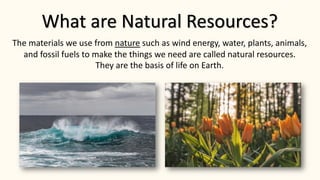
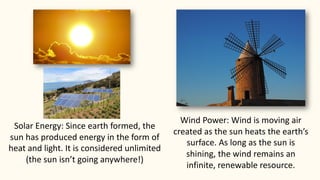
The materials we use from nature such as wind energy, water, plants, animals,
and fossil fuels to make the things we need are called natural resources.
They are the basis of life on Earth.
Natural Resources fall under 2 main Categories:
Renewable
Resources
Non-renewable
Resources
Renewable Resources
Renewable resources are those that can be replaced or never runs out.
Examples include solar energy, wind power, geothermal energy, hydroelectric
energy (water), and biomass (material made from plants and animals).
Solar Energy: Since earth formed, the
sun has produced energy in the form of
heat and light. It is considered unlimited
(the sun isn’t going anywhere!)
Wind Power: Wind is moving air
created as the sun heats the earth’s
surface. As long as the sun is
shining, the wind remains an
infinite, renewable resource.
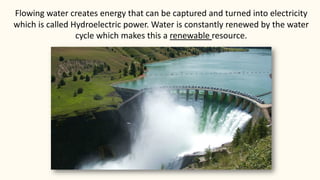
Flowing water creates energy that can be captured and turned into electricity
which is called Hydroelectric power. Water is constantly renewed by the water
cycle which makes this a renewable resource.
When we use heat from the earth to generate energy it is called Geothermal
Energy. (geo mean earth and thermal means heat)
The earth is constantly being
warmed up by its core so when we
use geothermal energy, we don’t
use up resources like we do when
we burn gas. This makes it a
renewable resource.
Using geothermal heat
pumps is a great way to
heat or cool buildings.
Core
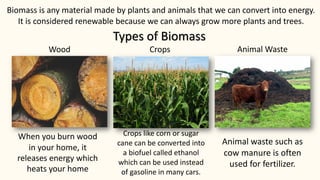
Biomass is any material made by plants and animals that we can convert into energy.
It is considered renewable because we can always grow more plants and trees.
Types of Biomass
When you burn wood
in your home, it
releases energy which
heats your home
Wood Crops
Crops like corn or sugar
cane can be converted into
a biofuel called ethanol
which can be used instead
of gasoline in many cars.
Animal Waste
Animal waste such as
cow manure is often
used for fertilizer.
Non-Renewable Resources
Non-renewable resources are those that cannot be replaced at the
same rate it is being used. It takes a long time to be replaced.
Most Non-renewable energy sources are fossil fuels: coal, natural gas, and oil.
Coal
Fossil fuels release heat energy when they are burned and they are
used to create energy and electricity. They were formed from the
remains of living organisms millions of years ago.
Types of Fossil Fuels
Coal is a black or brownish rock.
We burn coal to create energy.
Oil
Oil is a liquid fossil fuel. Most
of the worlds oil is still deep
under the ground.
Natural Gas
We rely on natural gas to give power
to lights, TVs, air conditioners, and
kitchen appliances.
Burning fossil fuels are harmful to the environment. When coal and oil are
burned, they release particles that can pollute the air, water, and land.
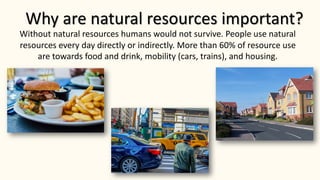
Why are natural resources important?
Without natural resources humans would not survive. People use natural
resources every day directly or indirectly. More than 60% of resource use
are towards food and drink, mobility (cars, trains), and housing.

Natural Resources PowerPoint.pdf

  • 2.
    What are NaturalResources? The materials we use from nature such as wind energy, water, plants, animals, and fossil fuels to make the things we need are called natural resources. They are the basis of life on Earth.
  • 3.
    Natural Resources fallunder 2 main Categories: Renewable Resources Non-renewable Resources
  • 4.
    Renewable Resources Renewable resourcesare those that can be replaced or never runs out. Examples include solar energy, wind power, geothermal energy, hydroelectric energy (water), and biomass (material made from plants and animals).
  • 5.
    Solar Energy: Sinceearth formed, the sun has produced energy in the form of heat and light. It is considered unlimited (the sun isn’t going anywhere!) Wind Power: Wind is moving air created as the sun heats the earth’s surface. As long as the sun is shining, the wind remains an infinite, renewable resource.
  • 6.
    Flowing water createsenergy that can be captured and turned into electricity which is called Hydroelectric power. Water is constantly renewed by the water cycle which makes this a renewable resource.
  • 7.
    When we useheat from the earth to generate energy it is called Geothermal Energy. (geo mean earth and thermal means heat) The earth is constantly being warmed up by its core so when we use geothermal energy, we don’t use up resources like we do when we burn gas. This makes it a renewable resource. Using geothermal heat pumps is a great way to heat or cool buildings. Core
  • 8.
    Biomass is anymaterial made by plants and animals that we can convert into energy. It is considered renewable because we can always grow more plants and trees. Types of Biomass When you burn wood in your home, it releases energy which heats your home Wood Crops Crops like corn or sugar cane can be converted into a biofuel called ethanol which can be used instead of gasoline in many cars. Animal Waste Animal waste such as cow manure is often used for fertilizer.
  • 9.
    Non-Renewable Resources Non-renewable resourcesare those that cannot be replaced at the same rate it is being used. It takes a long time to be replaced. Most Non-renewable energy sources are fossil fuels: coal, natural gas, and oil.
  • 10.
    Coal Fossil fuels releaseheat energy when they are burned and they are used to create energy and electricity. They were formed from the remains of living organisms millions of years ago. Types of Fossil Fuels Coal is a black or brownish rock. We burn coal to create energy. Oil Oil is a liquid fossil fuel. Most of the worlds oil is still deep under the ground. Natural Gas We rely on natural gas to give power to lights, TVs, air conditioners, and kitchen appliances.
  • 11.
    Burning fossil fuelsare harmful to the environment. When coal and oil are burned, they release particles that can pollute the air, water, and land.
  • 12.
    Why are naturalresources important? Without natural resources humans would not survive. People use natural resources every day directly or indirectly. More than 60% of resource use are towards food and drink, mobility (cars, trains), and housing.