Energy sources
Unit 4
• Energy sources:
• Natural sources to produce energy for domestic purposes, industries and
transport.
• The control, production and distribution of the energy sources has become a
major strategic factor.
• Can be divided in two groups:
• Depending on economic importance: Traditional or alternative.
• Depending on whether or not they will run out: Renewable or non-renewable.
Non-renewable energy sources
• Limited resources and may run out.
• Coal:
• Rock fossil fuel.
• Use: Was the force of the industrial revolution. Nowadays, it’s in
decline, it is used as fuel for thermal energy production.
• Problems: Is pollutant and expensive to mine.
• Oil:
• Fossil fuel with a high calorific value.
• Use: Highly valued energy resource for transport, heating and
chemical industry.
• Problems: Is pollutant, and non-renewable. The most widely
used resource. Worries about the remaining reserves.
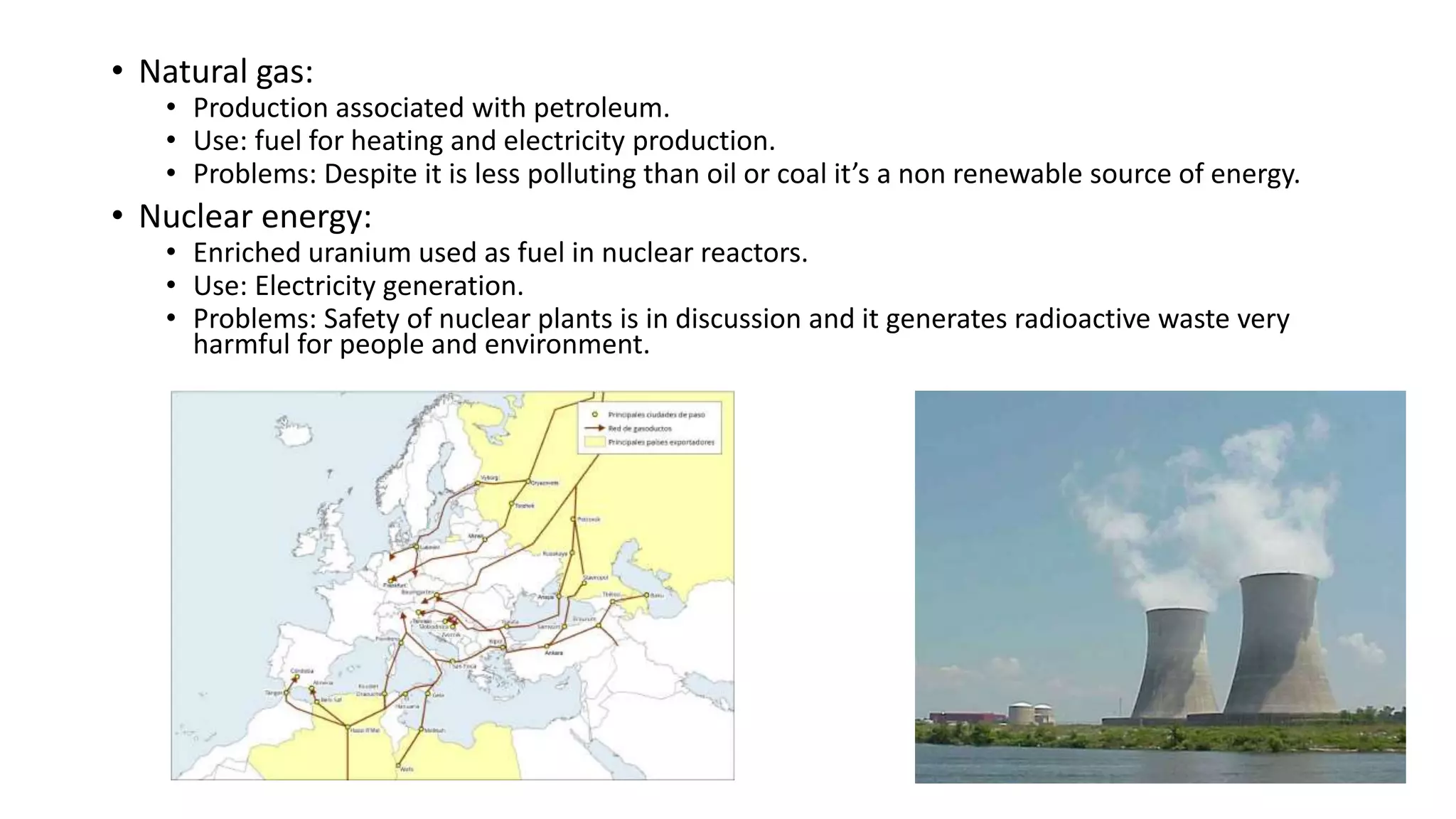
• Natural gas:
• Production associated with petroleum.
• Use: fuel for heating and electricity production.
• Problems: Despite it is less polluting than oil or coal it’s a non renewable source of energy.
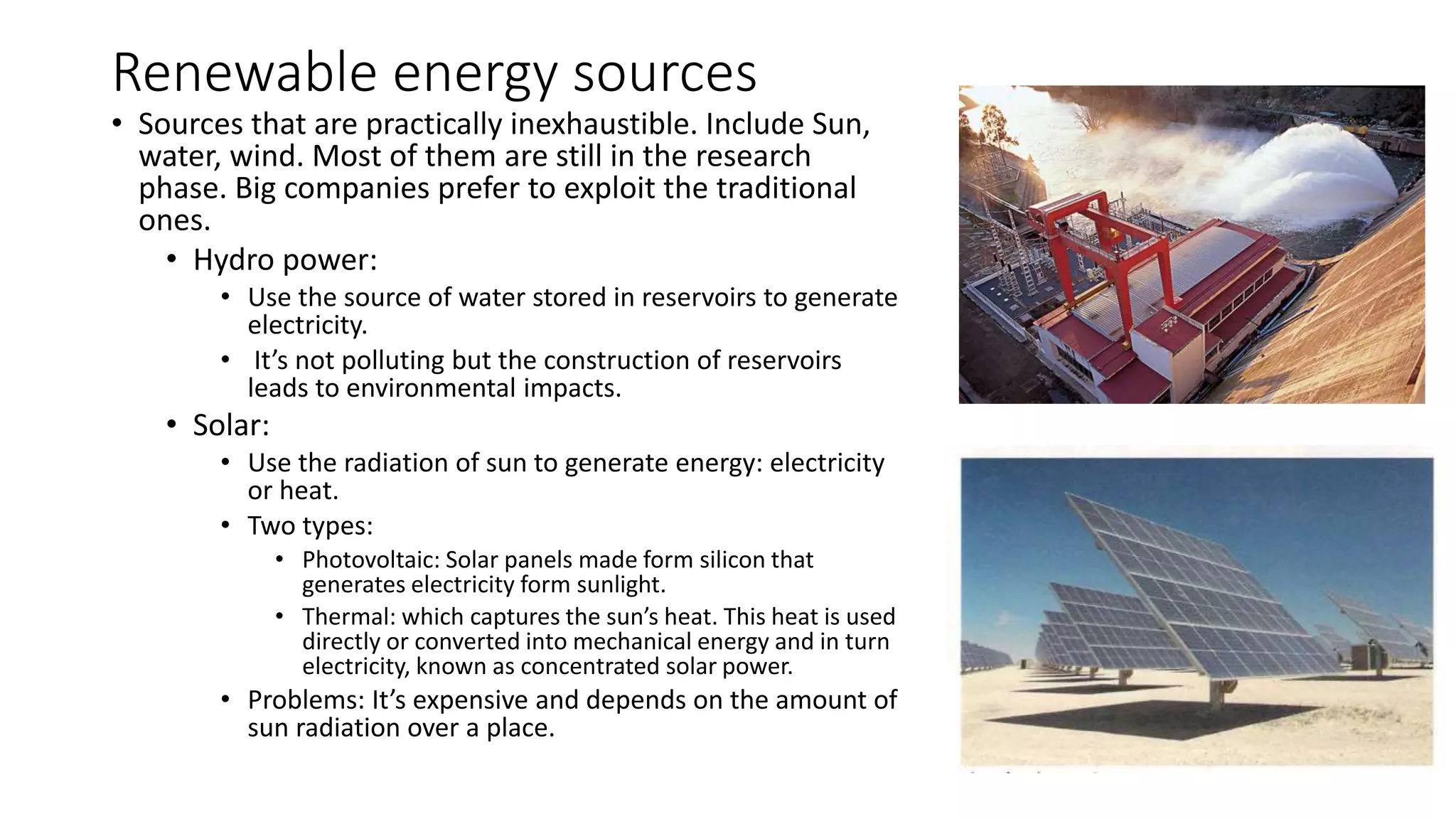
• Nuclear energy:
• Enriched uranium used as fuel in nuclear reactors.
• Use: Electricity generation.
• Problems: Safety of nuclear plants is in discussion and it generates radioactive waste very
harmful for people and environment.
Renewable energy sources
• Sources that are practically inexhaustible. Include Sun,
water, wind. Most of them are still in the research
phase. Big companies prefer to exploit the traditional
ones.
• Hydro power:
• Use the source of water stored in reservoirs to generate
electricity.
• It’s not polluting but the construction of reservoirs
leads to environmental impacts.
• Solar:
• Use the radiation of sun to generate energy: electricity
or heat.
• Two types:
• Photovoltaic: Solar panels made form silicon that
generates electricity form sunlight.
• Thermal: which captures the sun’s heat. This heat is used
directly or converted into mechanical energy and in turn
electricity, known as concentrated solar power.
• Problems: It’s expensive and depends on the amount of
sun radiation over a place.
• Wind energy:
• Obtained by harnessing the force of the wind. Non polluting energy.
• Use: Production of electricity.
• Problems: alter the landscape, noise pollution, danger for bird wildlife.
• Geothermal energy:
• Uses the heat from inside the earth to produce electricity or heating.
• Reduced to areas with intense volcanic activity or thermal waters.
• Tidal energy:
• Uses the movements of seawater caused by tides, waves and currents.
• Is still in research phase.

Energy sources

  • 1.
  • 2.
    • Energy sources: •Natural sources to produce energy for domestic purposes, industries and transport. • The control, production and distribution of the energy sources has become a major strategic factor. • Can be divided in two groups: • Depending on economic importance: Traditional or alternative. • Depending on whether or not they will run out: Renewable or non-renewable.
  • 3.
    Non-renewable energy sources •Limited resources and may run out. • Coal: • Rock fossil fuel. • Use: Was the force of the industrial revolution. Nowadays, it’s in decline, it is used as fuel for thermal energy production. • Problems: Is pollutant and expensive to mine. • Oil: • Fossil fuel with a high calorific value. • Use: Highly valued energy resource for transport, heating and chemical industry. • Problems: Is pollutant, and non-renewable. The most widely used resource. Worries about the remaining reserves.
  • 4.
    • Natural gas: •Production associated with petroleum. • Use: fuel for heating and electricity production. • Problems: Despite it is less polluting than oil or coal it’s a non renewable source of energy. • Nuclear energy: • Enriched uranium used as fuel in nuclear reactors. • Use: Electricity generation. • Problems: Safety of nuclear plants is in discussion and it generates radioactive waste very harmful for people and environment.
  • 5.
    Renewable energy sources •Sources that are practically inexhaustible. Include Sun, water, wind. Most of them are still in the research phase. Big companies prefer to exploit the traditional ones. • Hydro power: • Use the source of water stored in reservoirs to generate electricity. • It’s not polluting but the construction of reservoirs leads to environmental impacts. • Solar: • Use the radiation of sun to generate energy: electricity or heat. • Two types: • Photovoltaic: Solar panels made form silicon that generates electricity form sunlight. • Thermal: which captures the sun’s heat. This heat is used directly or converted into mechanical energy and in turn electricity, known as concentrated solar power. • Problems: It’s expensive and depends on the amount of sun radiation over a place.
  • 7.
    • Wind energy: •Obtained by harnessing the force of the wind. Non polluting energy. • Use: Production of electricity. • Problems: alter the landscape, noise pollution, danger for bird wildlife.
  • 8.
    • Geothermal energy: •Uses the heat from inside the earth to produce electricity or heating. • Reduced to areas with intense volcanic activity or thermal waters. • Tidal energy: • Uses the movements of seawater caused by tides, waves and currents. • Is still in research phase.