Ene rg y and its transfo rmatio n
●   ENERGY SOURCES
    *Household uses :operating household
    appliances, heating systems, means of transfort,
    etc.
    *Industrial uses: the operation of factories and
    businesses, construction, agricultura, etc.
    *by avaavailabity in nature : renewable or
    non -renewale.
    *By origin: primary or secondary.
    *By use: Conventional or non-conventional.
    *By environmental impact: Clean or polluting.
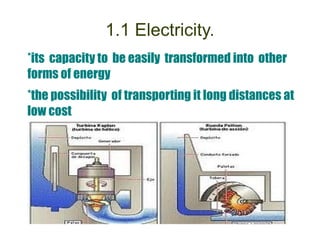
1.1 Electricity.
*its capacity to be easily transformed into other
forms of energy
*the possibility of transporting it long distances at
low cost
Electric power plants
●
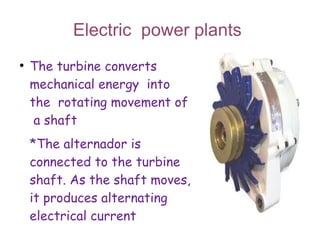
    The turbine converts
    mechanical energy into
    the rotating movement of
     a shaft
    *The alternador is
    connected to the turbine
    shaft. As the shaft moves,
    it produces alternating
    electrical current
2 electric power plants
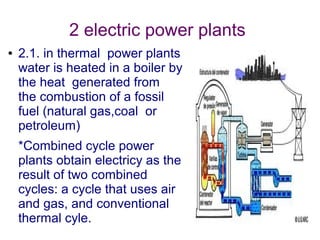
●   2.1. in thermal power plants
    water is heated in a boiler by
    the heat generated from
    the combustion of a fossil
    fuel (natural gas,coal or
    petroleum)
    *Combined cycle power
    plants obtain electricy as the
    result of two combined
    cycles: a cycle that uses air
    and gas, and conventional
    thermal cyle.
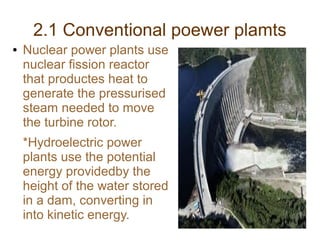
2.1 Conventional poewer plamts
●   Nuclear power plants use
    nuclear fission reactor
    that productes heat to
    generate the pressurised
    steam needed to move
    the turbine rotor.
    *Hydroelectric power
    plants use the potential
    energy providedby the
    height of the water stored
    in a dam, converting in
    into kinetic energy.
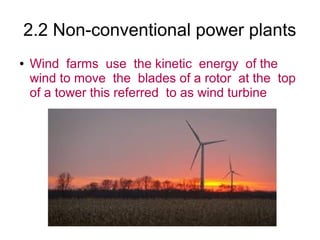
2.2 Non-conventional power plants
●   Wind farms use the kinetic energy of the
    wind to move the blades of a rotor at the top
    of a tower this referred to as wind turbine
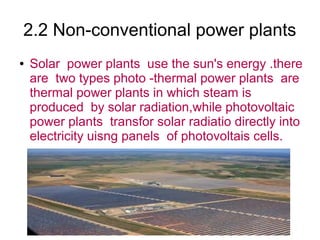
2.2 Non-conventional power plants
●   Solar power plants use the sun's energy .there
    are two types photo -thermal power plants are
    thermal power plants in which steam is
    produced by solar radiation,while photovoltaic
    power plants transfor solar radiatio directly into
    electricity uisng panels of photovoltais cells.
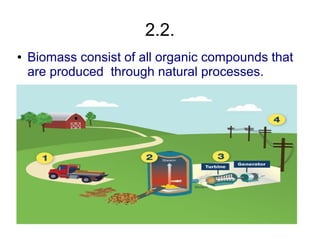
2.2.
●   Biomass consist of all organic compounds that
    are produced through natural processes.
2.2.
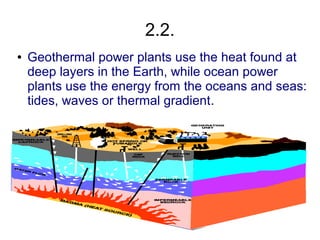
●   Geothermal power plants use the heat found at
    deep layers in the Earth, while ocean power
    plants use the energy from the oceans and seas:
    tides, waves or thermal gradient.
3 environmental impact
●   3.1environmental repercussions
    *the exploitation of fossil fuels and nuclear
    energy leads to the depletion of
    resources.furthermore,fuel extraction
    processes are sometimes harmful to the
    environment
    *petroleum is transported by means of oil
    pipelines and oil tankers both can have
    accidents which means the risk of a spill.
3.1
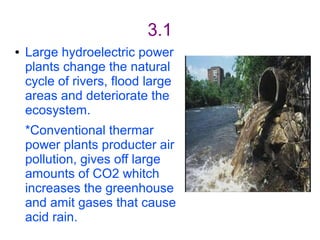
●   Large hydroelectric power
    plants change the natural
    cycle of rivers, flood large
    areas and deteriorate the
    ecosystem.
    *Conventional thermar
    power plants producter air
    pollution, gives off large
    amounts of CO2 whitch
    increases the greenhouse
    and amit gases that cause
    acid rain.
3.1
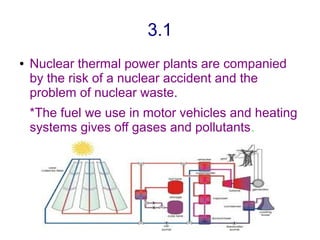
●   Nuclear thermal power plants are companied
    by the risk of a nuclear accident and the
    problem of nuclear waste.
    *The fuel we use in motor vehicles and heating
    systems gives off gases and pollutants.
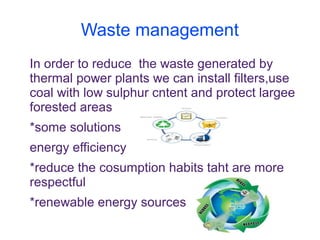
Waste management
In order to reduce the waste generated by
thermal power plants we can install filters,use
coal with low sulphur cntent and protect largee
forested areas
*some solutions
energy efficiency
*reduce the cosumption habits taht are more
respectful
*renewable energy sources

Energy ans its transformations

  • 1.
    Ene rg yand its transfo rmatio n ● ENERGY SOURCES *Household uses :operating household appliances, heating systems, means of transfort, etc. *Industrial uses: the operation of factories and businesses, construction, agricultura, etc. *by avaavailabity in nature : renewable or non -renewale. *By origin: primary or secondary. *By use: Conventional or non-conventional. *By environmental impact: Clean or polluting.
  • 2.
    1.1 Electricity. *its capacityto be easily transformed into other forms of energy *the possibility of transporting it long distances at low cost
  • 3.
    Electric power plants ● The turbine converts mechanical energy into the rotating movement of a shaft *The alternador is connected to the turbine shaft. As the shaft moves, it produces alternating electrical current
  • 4.
    2 electric powerplants ● 2.1. in thermal power plants water is heated in a boiler by the heat generated from the combustion of a fossil fuel (natural gas,coal or petroleum) *Combined cycle power plants obtain electricy as the result of two combined cycles: a cycle that uses air and gas, and conventional thermal cyle.
  • 5.
    2.1 Conventional poewerplamts ● Nuclear power plants use nuclear fission reactor that productes heat to generate the pressurised steam needed to move the turbine rotor. *Hydroelectric power plants use the potential energy providedby the height of the water stored in a dam, converting in into kinetic energy.
  • 6.
    2.2 Non-conventional powerplants ● Wind farms use the kinetic energy of the wind to move the blades of a rotor at the top of a tower this referred to as wind turbine
  • 7.
    2.2 Non-conventional powerplants ● Solar power plants use the sun's energy .there are two types photo -thermal power plants are thermal power plants in which steam is produced by solar radiation,while photovoltaic power plants transfor solar radiatio directly into electricity uisng panels of photovoltais cells.
  • 8.
    2.2. ● Biomass consist of all organic compounds that are produced through natural processes.
  • 9.
    2.2. ● Geothermal power plants use the heat found at deep layers in the Earth, while ocean power plants use the energy from the oceans and seas: tides, waves or thermal gradient.
  • 10.
    3 environmental impact ● 3.1environmental repercussions *the exploitation of fossil fuels and nuclear energy leads to the depletion of resources.furthermore,fuel extraction processes are sometimes harmful to the environment *petroleum is transported by means of oil pipelines and oil tankers both can have accidents which means the risk of a spill.
  • 11.
    3.1 ● Large hydroelectric power plants change the natural cycle of rivers, flood large areas and deteriorate the ecosystem. *Conventional thermar power plants producter air pollution, gives off large amounts of CO2 whitch increases the greenhouse and amit gases that cause acid rain.
  • 12.
    3.1 ● Nuclear thermal power plants are companied by the risk of a nuclear accident and the problem of nuclear waste. *The fuel we use in motor vehicles and heating systems gives off gases and pollutants.
  • 13.
    Waste management In orderto reduce the waste generated by thermal power plants we can install filters,use coal with low sulphur cntent and protect largee forested areas *some solutions energy efficiency *reduce the cosumption habits taht are more respectful *renewable energy sources