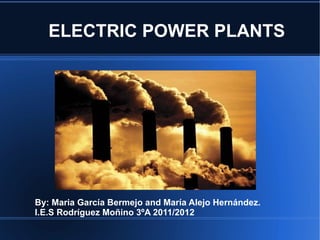
ELECTRIC POWER PLANTS


By: Maria García Bermejo and María Alejo Hernández.
I.E.S Rodríguez Moñino 3ºA 2011/2012
INDEX
There are different types of power plants depending on
  the source of the energy:
Nuclear power plants
Fossil fuel thermal power plants
Hydroelectric power plants
Wind power plants and wind farms
Solar power plants
Geothermal power plants
Biomass thermal power plants
Ocean power plants
Curiosities
Nuclear power plants

These nuclear power plants burn the radioactive material
  (mainly uranium), to produce electricity.
Process in the nuclear power
              plants
First, uranium is burned in the reactor and inside the control
  rods, nuclear fission takes place.
Water in the reactor is heated to very high temperatures.
Then it's transported to the steam generator where the
  reaction of hot and cool water produces steam
The steam moves a turbine that produces electricity.
This electricity is then induced into the electric network.
While this occurs the steam produced is cooled down again
 to water, and is transported to the reactor.
The process is repeated.
Thermal power plants
Process in thermal power plants


These types of power plants, use fossil raw materials
such as coal,natural gasl or petroleum in order to heat
water in a boiler. The steam produced is then
transported to a turbine and makes it turn. The turbine is
connected to an electric generator that produces
electricity. The steam is converted again to water and
the result is the realisng water vapour through the
cooling tower.
Hydroelectric power plants
Process in hydroelectric power
             plants
These types of power plants use the force of
 water accumulated in a dam in order to make a
 turbine move. Again the turbine is connected to
 an electric generator and produces electricity.
 The characteristics of the obtained electricity
 are modified in the transformer to high voltage
 in order to be transported. When it reaches the
 electric network near the cities and towns, the
 voltage is then reduced in order to be
 consumed.
Wind power plants and wind
         farms
Process in wind power plants

The nacelle is a metallic box in which a series of
 electric machines measure the physical
 characteristics of the wind. When a curent of
 wind cames, the blades move the generator
 inside the nacelle. The process in the
 hydroelectric network is then repeated,
 tranporting the electricity to the far away cities,
 passing first through a transformation and
 control substation.
Solar power plants
We can find two different types: Photo-thermal
       and photovoltaic power plants
Characteristics

PHOTOVOLTAIC                  PHOTO-THERMAL
Radiation from the sun        The sun heats water and
 reaches photovoltaic           water vapour is
 cells that are capableof       produced in order to
 transforming it into           move a turbine. The
 electricity.                   turbine is conected to a
                                generator that produces
They are usually located in
                                electricity.
  large areas.
                              Special mirrors are
Can also be obtained at
                               required to reflect the
 home and then sold to
                               sun light to the boiler.
 the electric grid.
Geothermal power plants
This type of energy source is able to
      produce energy in two ways:

      DIRECTLY                  INDIRECTLY
The internal heat of the   This is the process in
 Earth is used for          which the (unwanted)
 storing hot water and      water vapour
 heating in industrial      produced in the direct
 and domestic use.          one is used (recycled)
                            to produce electricity
                            through a generator.
Biomass thermal power plants
Process and characteristics

This power plant uses energy from recycled
 waste that has non-potential use to produce
 electricity such as agricultural waste, agri-food
 industrial waste and specific crops.
These wastes are burned and as a consequence
 steam is produced which again moves a turbine
 conected to a generator.
The main disadvantage is the huge quatities of
 CO2 released to the atmosphere.
OCEAN POWER PLANTS
Characteristics

It uses three different types of energy from the
   sea:
-the mechanical energy from the tides
-the mechanical energy from the waves
-the energy from the ocean's thermal gradient
Its principal aim is to move a turbine that is
  connected to a generator that produces
  electricity.
Advantages and disadvantages
Advantages                      Disadvantages
It is a clean form of energy    Its productivity is very low
    that takes advantage of the    because ocean power
    natural force of the sea       plants aren't still totally
    such as the waves and the      experimented.
    tides.
                              It causes environmental
It benefits from the             impact and affects the
   differences in temperature    development of the
   between the surface and
                                 species.
  the ground soil, creating
  energy from the thermal
  gradient.
Curiosities: Wind turbine creates
       water from thin air
This ecological purpose aims to help arid and
 desertic areas that have low manufacture of
 drinking water by taking advantage of a
 renewable energy. How? It's easy, the energy
 produced in wind power station is used to make
 a water generating system works. This process
 extracts humidity from the air and stores fresh
 water into stainless steel pipes. This process
 has been discovered by a French firm and the
 good point about it is that it can took place
 anywhere.
The end

Electric power plants.rtf

  • 1.
    ELECTRIC POWER PLANTS By:Maria García Bermejo and María Alejo Hernández. I.E.S Rodríguez Moñino 3ºA 2011/2012
  • 2.
    INDEX There are differenttypes of power plants depending on the source of the energy: Nuclear power plants Fossil fuel thermal power plants Hydroelectric power plants Wind power plants and wind farms Solar power plants Geothermal power plants Biomass thermal power plants Ocean power plants Curiosities
  • 3.
    Nuclear power plants Thesenuclear power plants burn the radioactive material (mainly uranium), to produce electricity.
  • 4.
    Process in thenuclear power plants First, uranium is burned in the reactor and inside the control rods, nuclear fission takes place. Water in the reactor is heated to very high temperatures. Then it's transported to the steam generator where the reaction of hot and cool water produces steam The steam moves a turbine that produces electricity. This electricity is then induced into the electric network. While this occurs the steam produced is cooled down again to water, and is transported to the reactor. The process is repeated.
  • 5.
  • 6.
    Process in thermalpower plants These types of power plants, use fossil raw materials such as coal,natural gasl or petroleum in order to heat water in a boiler. The steam produced is then transported to a turbine and makes it turn. The turbine is connected to an electric generator that produces electricity. The steam is converted again to water and the result is the realisng water vapour through the cooling tower.
  • 7.
  • 8.
    Process in hydroelectricpower plants These types of power plants use the force of water accumulated in a dam in order to make a turbine move. Again the turbine is connected to an electric generator and produces electricity. The characteristics of the obtained electricity are modified in the transformer to high voltage in order to be transported. When it reaches the electric network near the cities and towns, the voltage is then reduced in order to be consumed.
  • 9.
    Wind power plantsand wind farms
  • 10.
    Process in windpower plants The nacelle is a metallic box in which a series of electric machines measure the physical characteristics of the wind. When a curent of wind cames, the blades move the generator inside the nacelle. The process in the hydroelectric network is then repeated, tranporting the electricity to the far away cities, passing first through a transformation and control substation.
  • 11.
    Solar power plants Wecan find two different types: Photo-thermal and photovoltaic power plants
  • 12.
    Characteristics PHOTOVOLTAIC PHOTO-THERMAL Radiation from the sun The sun heats water and reaches photovoltaic water vapour is cells that are capableof produced in order to transforming it into move a turbine. The electricity. turbine is conected to a generator that produces They are usually located in electricity. large areas. Special mirrors are Can also be obtained at required to reflect the home and then sold to sun light to the boiler. the electric grid.
  • 13.
  • 14.
    This type ofenergy source is able to produce energy in two ways: DIRECTLY INDIRECTLY The internal heat of the This is the process in Earth is used for which the (unwanted) storing hot water and water vapour heating in industrial produced in the direct and domestic use. one is used (recycled) to produce electricity through a generator.
  • 15.
  • 16.
    Process and characteristics Thispower plant uses energy from recycled waste that has non-potential use to produce electricity such as agricultural waste, agri-food industrial waste and specific crops. These wastes are burned and as a consequence steam is produced which again moves a turbine conected to a generator. The main disadvantage is the huge quatities of CO2 released to the atmosphere.
  • 17.
  • 18.
    Characteristics It uses threedifferent types of energy from the sea: -the mechanical energy from the tides -the mechanical energy from the waves -the energy from the ocean's thermal gradient Its principal aim is to move a turbine that is connected to a generator that produces electricity.
  • 19.
    Advantages and disadvantages Advantages Disadvantages It is a clean form of energy Its productivity is very low that takes advantage of the because ocean power natural force of the sea plants aren't still totally such as the waves and the experimented. tides. It causes environmental It benefits from the impact and affects the differences in temperature development of the between the surface and species. the ground soil, creating energy from the thermal gradient.
  • 20.
    Curiosities: Wind turbinecreates water from thin air This ecological purpose aims to help arid and desertic areas that have low manufacture of drinking water by taking advantage of a renewable energy. How? It's easy, the energy produced in wind power station is used to make a water generating system works. This process extracts humidity from the air and stores fresh water into stainless steel pipes. This process has been discovered by a French firm and the good point about it is that it can took place anywhere.
  • 21.