ELECTRIC POWER PLANTS


    Adrián Mendoza Zárate
    Ramón Barrabés Parra
             3ºA
Index
Conventional Power Plants
  -Nuclear Power Plants
  -Fossil Fuel Power Plants
  -Hydroelectric Power Plants
Non-conventional Power Plants
  -Wind Power Plants and Wind Farms
  -Solar Power Plants
        Photo-Thermal Power Plants
        Photovoltaic Power Plant
  -Geothermal Power Plant
  -Biomass Thermal Power Plants
  -Ocean Power Plant
CONVENTIONAL POWER
           PLANTS:
     NUCLEAR POWER PLANTS
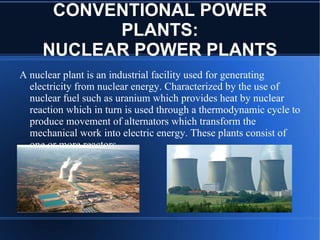
A nuclear plant is an industrial facility used for generating
  electricity from nuclear energy. Characterized by the use of
  nuclear fuel such as uranium which provides heat by nuclear
  reaction which in turn is used through a thermodynamic cycle to
  produce movement of alternators which transform the
  mechanical work into electric energy. These plants consist of
  one or more reactors.
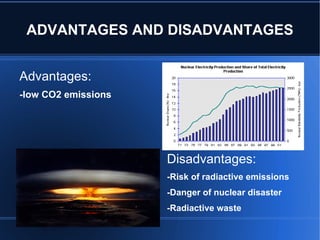
ADVANTAGES AND DISADVANTAGES


Advantages:
-low CO2 emissions


                     Disadvantages:
                     -Risk of radiactive emissions
                     -Danger of nuclear disaster
                     -Radiactive waste
FOSSIL FUELS POWER PLANT

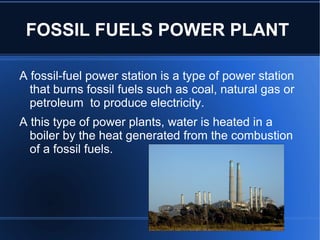
A fossil-fuel power station is a type of power station
  that burns fossil fuels such as coal, natural gas or
  petroleum to produce electricity.
A this type of power plants, water is heated in a
  boiler by the heat generated from the combustion
  of a fossil fuels.
ADVANTAGES AND
          DISADVANTAGES
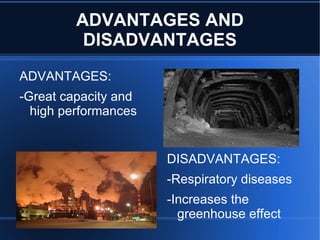
ADVANTAGES:
-Great capacity and
  high performances


                      DISADVANTAGES:
                      -Respiratory diseases
                      -Increases the
                        greenhouse effect
HYDROELECTRIC POWER
           PLANTS
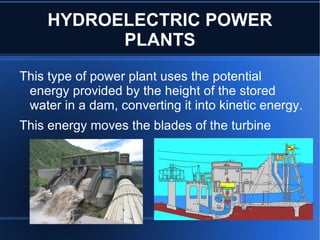
This type of power plant uses the potential
 energy provided by the height of the stored
 water in a dam, converting it into kinetic energy.
This energy moves the blades of the turbine
ADVANTAGES AND
             DISADVANTAGES
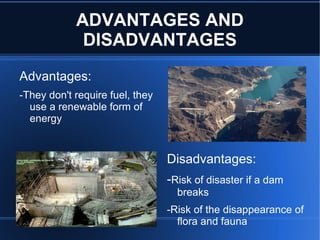
Advantages:
-They don't require fuel, they
  use a renewable form of
  energy


 12                              Disadvantages:
 10

 8                               -Risk of disaster if a dam
 6

 4
                                   breaks
 2
                                 -Risk of the disappearance of
 0
                                   flora and fauna
NON-CONVETIONAL POWER
PLANTS: WIND POWER PLANTS
      & WIND FARMS
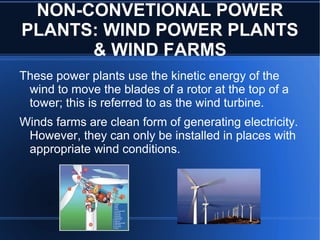
These power plants use the kinetic energy of the
 wind to move the blades of a rotor at the top of a
 tower; this is referred to as the wind turbine.
Winds farms are clean form of generating electricity.
 However, they can only be installed in places with
 appropriate wind conditions.
ADVANTAGES AND
          DISADVANTAGES
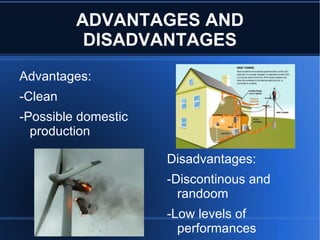
Advantages:
-Clean
-Possible domestic
  production

                     Disadvantages:
                     -Discontinous and
                       randoom
                     -Low levels of
                       performances
SOLAR POWER PLANTS

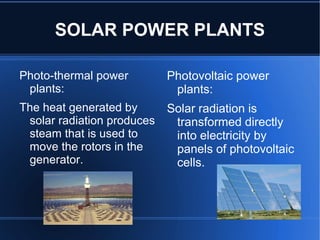
Photo-thermal power         Photovoltaic power
 plants:                     plants:
The heat generated by       Solar radiation is
 solar radiation produces    transformed directly
 steam that is used to       into electricity by
 move the rotors in the      panels of photovoltaic
 generator.                  cells.
ADVANTAGES AND
DISADVANTAGES OF THERMAL
      POWER PLANTS
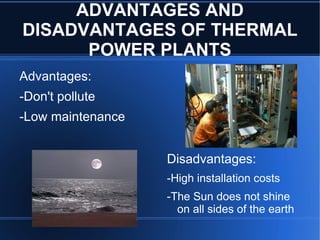
Advantages:
-Don't pollute
-Low maintenance


                   Disadvantages:
                   -High installation costs
                   -The Sun does not shine
                     on all sides of the earth
ADVANTAGES AND
    DISADVANTAGES OF
PHOTOVOLTAIC POWER PLANTS
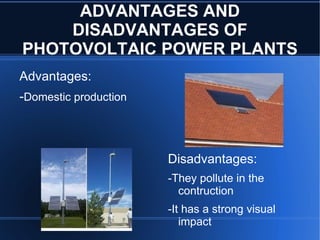
Advantages:
-Domestic production


                       Disadvantages:
                       -They pollute in the
                         contruction
                       -It has a strong visual
                          impact
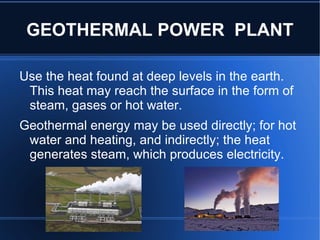
GEOTHERMAL POWER PLANT

Use the heat found at deep levels in the earth.
 This heat may reach the surface in the form of
 steam, gases or hot water.
Geothermal energy may be used directly; for hot
 water and heating, and indirectly; the heat
 generates steam, which produces electricity.
ADVANTAGES AND
           DISADVANTAGES
Advantages:
-Job creation and
 economic benefits


                     Disadvantages:
                     -May release harmful
                       gases
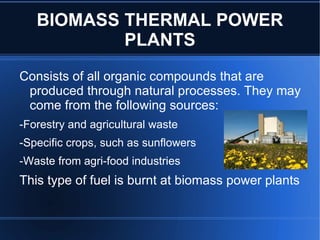
BIOMASS THERMAL POWER
           PLANTS
Consists of all organic compounds that are
 produced through natural processes. They may
 come from the following sources:
-Forestry and agricultural waste
-Specific crops, such as sunflowers
-Waste from agri-food industries
This type of fuel is burnt at biomass power plants
ADVANTAGES AND
            DISADVANTAGES
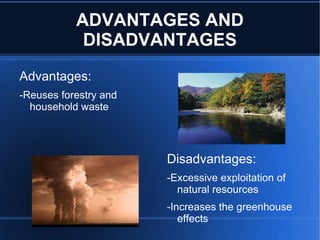
Advantages:
-Reuses forestry and
  household waste


                       Disadvantages:
                       -Excessive exploitation of
                         natural resources
                       -Increases the greenhouse
                          effects
OCEAN POWER PLANTS

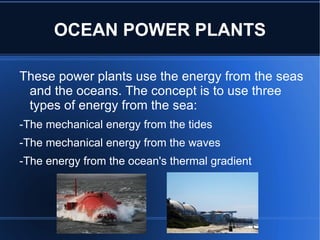
These power plants use the energy from the seas
 and the oceans. The concept is to use three
 types of energy from the sea:
-The mechanical energy from the tides
-The mechanical energy from the waves
-The energy from the ocean's thermal gradient
ADVANTAGES AND
           DISADVANTAGES
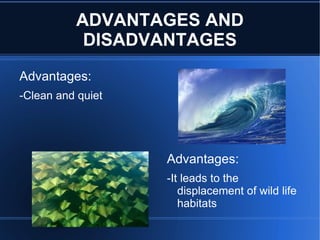
Advantages:
-Clean and quiet


                   Advantages:
                   -It leads to the
                      displacement of wild life
                      habitats

Electric power plants

  • 1.
    ELECTRIC POWER PLANTS Adrián Mendoza Zárate Ramón Barrabés Parra 3ºA
  • 2.
    Index Conventional Power Plants -Nuclear Power Plants -Fossil Fuel Power Plants -Hydroelectric Power Plants Non-conventional Power Plants -Wind Power Plants and Wind Farms -Solar Power Plants Photo-Thermal Power Plants Photovoltaic Power Plant -Geothermal Power Plant -Biomass Thermal Power Plants -Ocean Power Plant
  • 3.
    CONVENTIONAL POWER PLANTS: NUCLEAR POWER PLANTS A nuclear plant is an industrial facility used for generating electricity from nuclear energy. Characterized by the use of nuclear fuel such as uranium which provides heat by nuclear reaction which in turn is used through a thermodynamic cycle to produce movement of alternators which transform the mechanical work into electric energy. These plants consist of one or more reactors.
  • 4.
    ADVANTAGES AND DISADVANTAGES Advantages: -lowCO2 emissions Disadvantages: -Risk of radiactive emissions -Danger of nuclear disaster -Radiactive waste
  • 5.
    FOSSIL FUELS POWERPLANT A fossil-fuel power station is a type of power station that burns fossil fuels such as coal, natural gas or petroleum to produce electricity. A this type of power plants, water is heated in a boiler by the heat generated from the combustion of a fossil fuels.
  • 6.
    ADVANTAGES AND DISADVANTAGES ADVANTAGES: -Great capacity and high performances DISADVANTAGES: -Respiratory diseases -Increases the greenhouse effect
  • 7.
    HYDROELECTRIC POWER PLANTS This type of power plant uses the potential energy provided by the height of the stored water in a dam, converting it into kinetic energy. This energy moves the blades of the turbine
  • 8.
    ADVANTAGES AND DISADVANTAGES Advantages: -They don't require fuel, they use a renewable form of energy 12 Disadvantages: 10 8 -Risk of disaster if a dam 6 4 breaks 2 -Risk of the disappearance of 0 flora and fauna
  • 9.
    NON-CONVETIONAL POWER PLANTS: WINDPOWER PLANTS & WIND FARMS These power plants use the kinetic energy of the wind to move the blades of a rotor at the top of a tower; this is referred to as the wind turbine. Winds farms are clean form of generating electricity. However, they can only be installed in places with appropriate wind conditions.
  • 10.
    ADVANTAGES AND DISADVANTAGES Advantages: -Clean -Possible domestic production Disadvantages: -Discontinous and randoom -Low levels of performances
  • 11.
    SOLAR POWER PLANTS Photo-thermalpower Photovoltaic power plants: plants: The heat generated by Solar radiation is solar radiation produces transformed directly steam that is used to into electricity by move the rotors in the panels of photovoltaic generator. cells.
  • 12.
    ADVANTAGES AND DISADVANTAGES OFTHERMAL POWER PLANTS Advantages: -Don't pollute -Low maintenance Disadvantages: -High installation costs -The Sun does not shine on all sides of the earth
  • 13.
    ADVANTAGES AND DISADVANTAGES OF PHOTOVOLTAIC POWER PLANTS Advantages: -Domestic production Disadvantages: -They pollute in the contruction -It has a strong visual impact
  • 14.
    GEOTHERMAL POWER PLANT Usethe heat found at deep levels in the earth. This heat may reach the surface in the form of steam, gases or hot water. Geothermal energy may be used directly; for hot water and heating, and indirectly; the heat generates steam, which produces electricity.
  • 15.
    ADVANTAGES AND DISADVANTAGES Advantages: -Job creation and economic benefits Disadvantages: -May release harmful gases
  • 16.
    BIOMASS THERMAL POWER PLANTS Consists of all organic compounds that are produced through natural processes. They may come from the following sources: -Forestry and agricultural waste -Specific crops, such as sunflowers -Waste from agri-food industries This type of fuel is burnt at biomass power plants
  • 17.
    ADVANTAGES AND DISADVANTAGES Advantages: -Reuses forestry and household waste Disadvantages: -Excessive exploitation of natural resources -Increases the greenhouse effects
  • 18.
    OCEAN POWER PLANTS Thesepower plants use the energy from the seas and the oceans. The concept is to use three types of energy from the sea: -The mechanical energy from the tides -The mechanical energy from the waves -The energy from the ocean's thermal gradient
  • 19.
    ADVANTAGES AND DISADVANTAGES Advantages: -Clean and quiet Advantages: -It leads to the displacement of wild life habitats