ENERGY
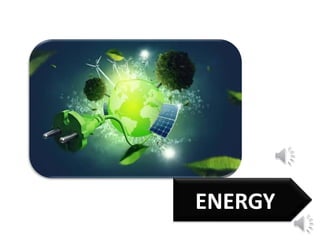
We rely on the energy
stored in food to keep us
alive and on the energy
locked within fuels to drive
our machines and
industries. Energy exist in
many different forms,
including electricity, sound,
heat and light
Originated from
Greek word Energeia
Unit - Joule
SOURCES
OF ENERGY
Non-
renewable
renewable
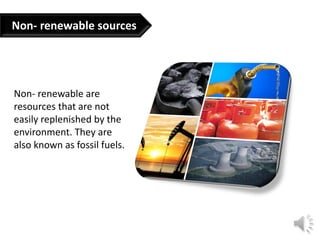
Non- renewable are
resources that are not
easily replenished by the
environment. They are
also known as fossil fuels.
Non- renewable sources
COAL
The main component of the
coal is CARBON
Liquefied natural gas
Compressed natural gas
Liquefied petroleum gas
NATURAL GAS
Nuclear energy is the
energy held in the
nucleus of an atom; it
can be obtained
through two types of
reactions - fission and
fusion
NUCLEAR ENERGY
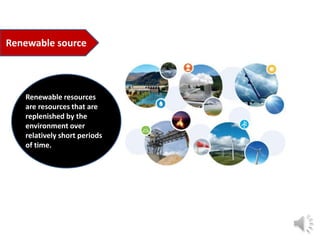
Renewable source
Renewable resources
are resources that are
replenished by the
environment over
relatively short periods
of time.
GREEN ENERGYGreen energy is the
energy formed from a
sustainable, renewable
energy sources that are
environmentally friendly
with no limited supply.
This has triggered
concern for less polluting
environmental friendly
energy sources like wind,
solar, geothermal,
biofuels and
hydropower.
Solar energy is the most abundant, renewable
energy source in the world. Solar energy
systems refer to technologies that convert the
sun's heat or light to another form of energy
for use
SOLAR ENERGY
Photovoltaic Thermal
Photovoltaic technology directly
converts sunlight into electricity
through solar panels made of
semiconductor cells
Solar thermal technology
harnesses its heat.
This heat is used directly
or converted into mechanical
energy and in turn electricity
TECHNOLOGIES THAT HARNESS SOLAR ENERGY
Tidal power converts the energy
from the natural rise and fall of the
tides into electricity. Tidal energy is
one of the oldest forms of energy
generation. Tides are caused by the
combined effects of gravitational
forces exerted by the Moon, the
Sun, and the rotation of the Earth.
TIDAL ENERGY
Hydropower or
hydroelectricity
refers to the
conversion of energy
from flowing water
into electricity. It is
considered a
renewable energy
source because the
water cycle is
constantly renewed
by the sun
HYDRO POWER
Geothermal energy refers to the
production of energy using the
internal heat of the Earth’s crust.
This heat comes from the
radioactive decay of minerals and
continual heat loss from the earth’s
original formation.
GEOTHERMAL ENERGY
WIND MILLS
Wind Energy
captures the
natural wind in our
environment
through turbines
and converts the
air’s motion into
mechanical energy
for electricity
ENERGY CRISIS
Energy crisis is the
consequences of increasing
demand but decreasing
availability
WHAT CAN WE DO FOR REDUCING ENERGY CRISIS ?
• Judicious utilization of energy
• Maximum utilization of solar
energy
• Minimizing the wastage of water
• Making use of public
transportation as far as possible.
• Construction and beautifying of
houses and roads in a scientific
manner.
• Controlling the street lamp with
LDR
• Timely repairing of machines
• Ensuring maximum efficiency of
machine used.
• Limiting size of newly
constructed buildings
FOR BETTER FUTURE,
THINK ABOUT ENERGY CONSERVATION
RUKHIYA.P
Keyi sahib training college

Energy

  • 1.
  • 2.
    We rely onthe energy stored in food to keep us alive and on the energy locked within fuels to drive our machines and industries. Energy exist in many different forms, including electricity, sound, heat and light
  • 3.
    Originated from Greek wordEnergeia Unit - Joule
  • 4.
  • 5.
    Non- renewable are resourcesthat are not easily replenished by the environment. They are also known as fossil fuels. Non- renewable sources
  • 6.
    COAL The main componentof the coal is CARBON Liquefied natural gas Compressed natural gas Liquefied petroleum gas NATURAL GAS
  • 7.
    Nuclear energy isthe energy held in the nucleus of an atom; it can be obtained through two types of reactions - fission and fusion NUCLEAR ENERGY
  • 8.
    Renewable source Renewable resources areresources that are replenished by the environment over relatively short periods of time.
  • 9.
    GREEN ENERGYGreen energyis the energy formed from a sustainable, renewable energy sources that are environmentally friendly with no limited supply. This has triggered concern for less polluting environmental friendly energy sources like wind, solar, geothermal, biofuels and hydropower.
  • 10.
    Solar energy isthe most abundant, renewable energy source in the world. Solar energy systems refer to technologies that convert the sun's heat or light to another form of energy for use SOLAR ENERGY
  • 11.
    Photovoltaic Thermal Photovoltaic technologydirectly converts sunlight into electricity through solar panels made of semiconductor cells Solar thermal technology harnesses its heat. This heat is used directly or converted into mechanical energy and in turn electricity TECHNOLOGIES THAT HARNESS SOLAR ENERGY
  • 12.
    Tidal power convertsthe energy from the natural rise and fall of the tides into electricity. Tidal energy is one of the oldest forms of energy generation. Tides are caused by the combined effects of gravitational forces exerted by the Moon, the Sun, and the rotation of the Earth. TIDAL ENERGY
  • 13.
    Hydropower or hydroelectricity refers tothe conversion of energy from flowing water into electricity. It is considered a renewable energy source because the water cycle is constantly renewed by the sun HYDRO POWER
  • 14.
    Geothermal energy refersto the production of energy using the internal heat of the Earth’s crust. This heat comes from the radioactive decay of minerals and continual heat loss from the earth’s original formation. GEOTHERMAL ENERGY
  • 15.
    WIND MILLS Wind Energy capturesthe natural wind in our environment through turbines and converts the air’s motion into mechanical energy for electricity
  • 16.
    ENERGY CRISIS Energy crisisis the consequences of increasing demand but decreasing availability
  • 17.
    WHAT CAN WEDO FOR REDUCING ENERGY CRISIS ? • Judicious utilization of energy • Maximum utilization of solar energy • Minimizing the wastage of water • Making use of public transportation as far as possible. • Construction and beautifying of houses and roads in a scientific manner. • Controlling the street lamp with LDR • Timely repairing of machines • Ensuring maximum efficiency of machine used. • Limiting size of newly constructed buildings
  • 18.
    FOR BETTER FUTURE, THINKABOUT ENERGY CONSERVATION
  • 19.