

DONE BY :- 
S.Durgashree 
IX-A 
KENDRIYA VIDYALAYA 
KARAIKUDI
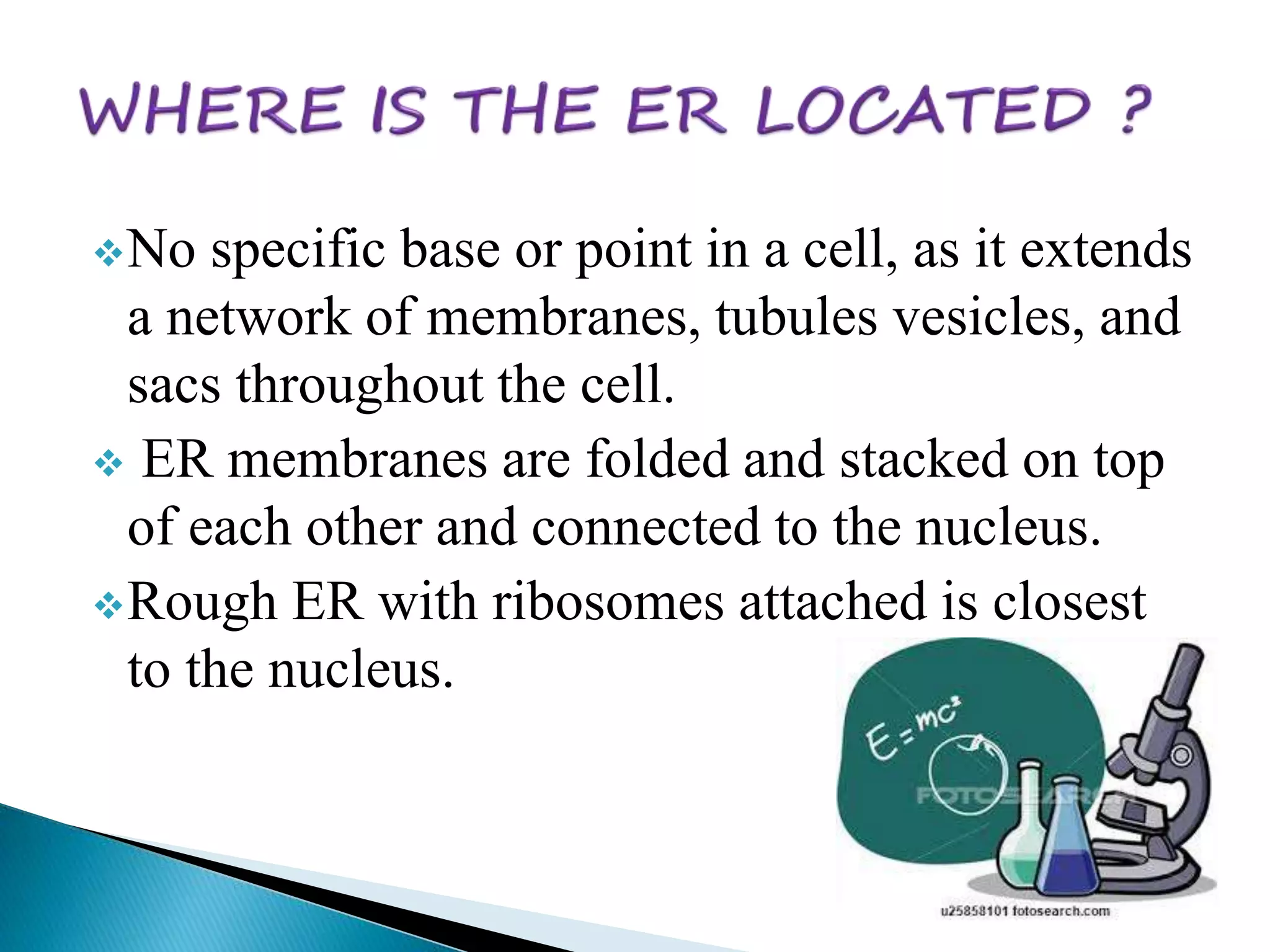
Discovered by Belgian biologist 
Albert Claude (1899-1983). 
Used the newly developed 
electron microscope to explore 
the interior of cells and along 
with his associate Keith Porter in 
1945 observed the presence of a 
“lace-work structure.”
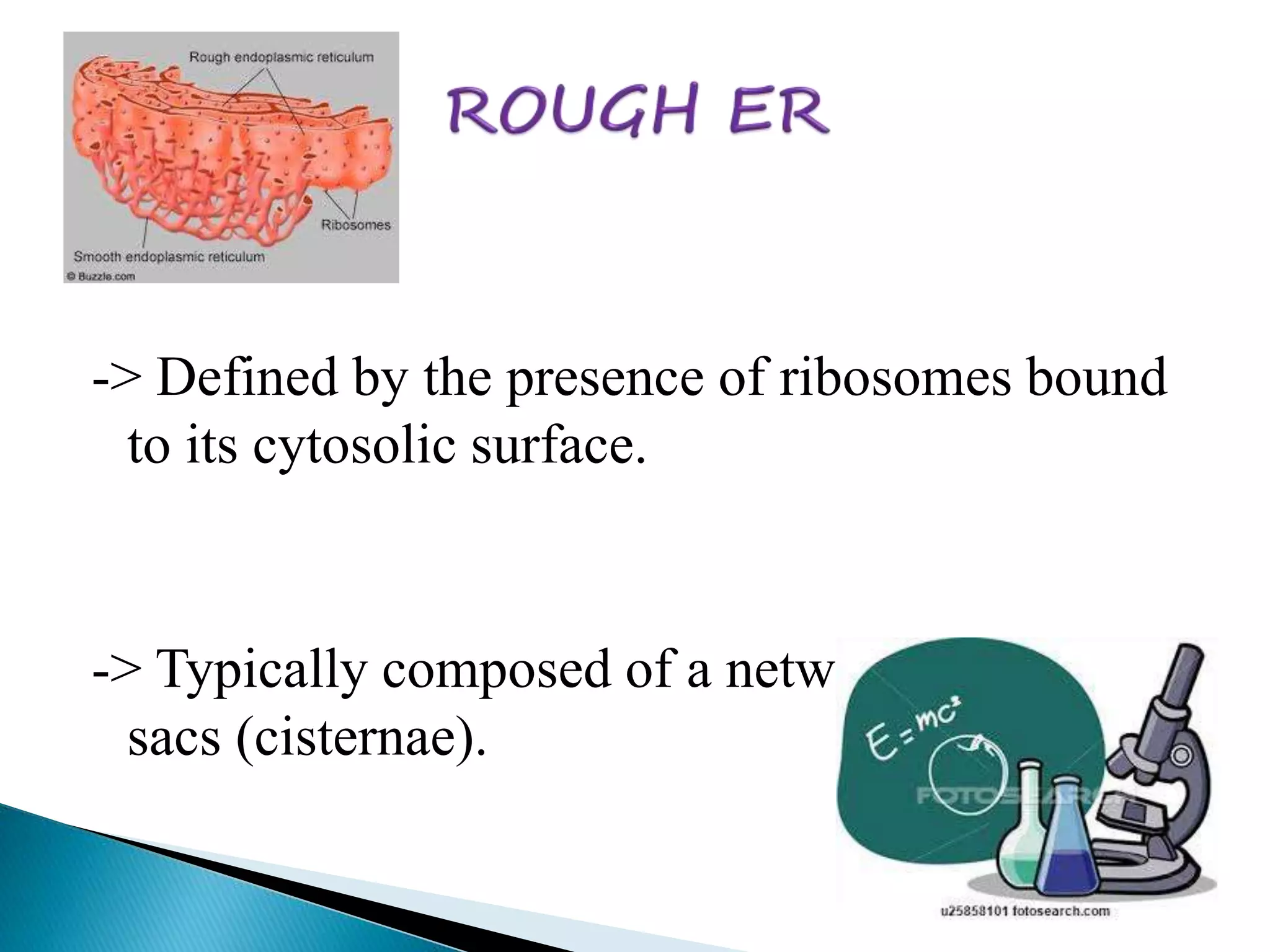
Rough ER appears as lumpy sheets of folded 
membranes. The lumps are the ribosome. They 
are not permanently attached, adhering only 
when there is protein manufacturing work to 
be done. 
Smooth ER which isn't coated with ribosome's 
looks like smooth tubes.
No specific base or point in a cell, as it extends 
a network of membranes, tubules vesicles, and 
sacs throughout the cell. 
 ER membranes are folded and stacked on top 
of each other and connected to the nucleus. 
Rough ER with ribosomes attached is closest 
to the nucleus.
Endoplasmic - “within the cytoplasm”. 
Reticulum - Latin for “a little net”. 
-> Extensive network of folded membranes that 
extends from the nuclear envelope to which it 
is connected, throughout the cytoplasm. 
-> Divided into two sub-compartments, rough 
ER and smooth ER.
-> Defined by the presence of ribosomes bound 
to its cytosolic surface. 
-> Typically composed of a network of flattened 
sacs (cisternae).
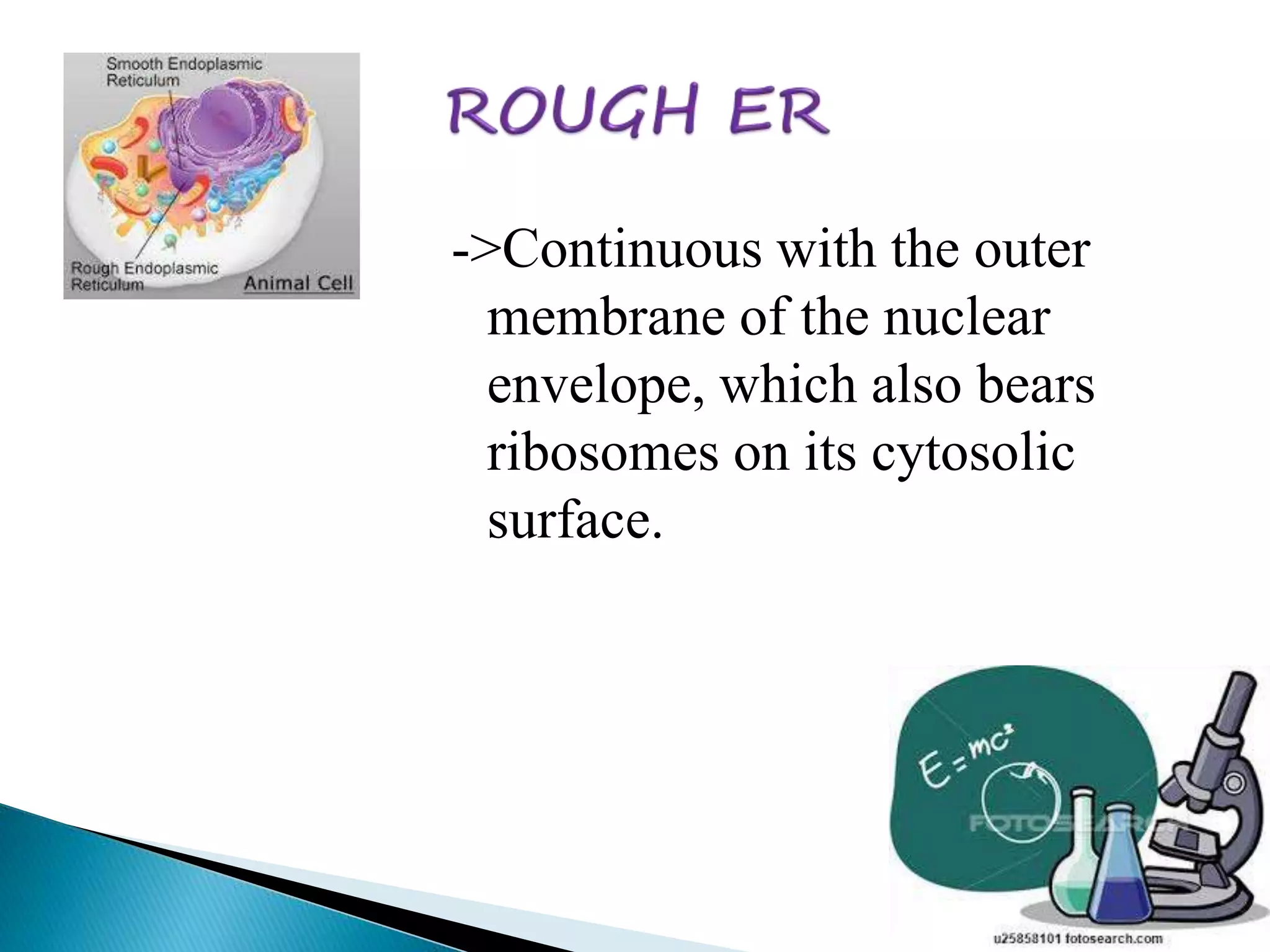
->Continuous with the outer 
membrane of the nuclear 
envelope, which also bears 
ribosomes on its cytosolic 
surface.
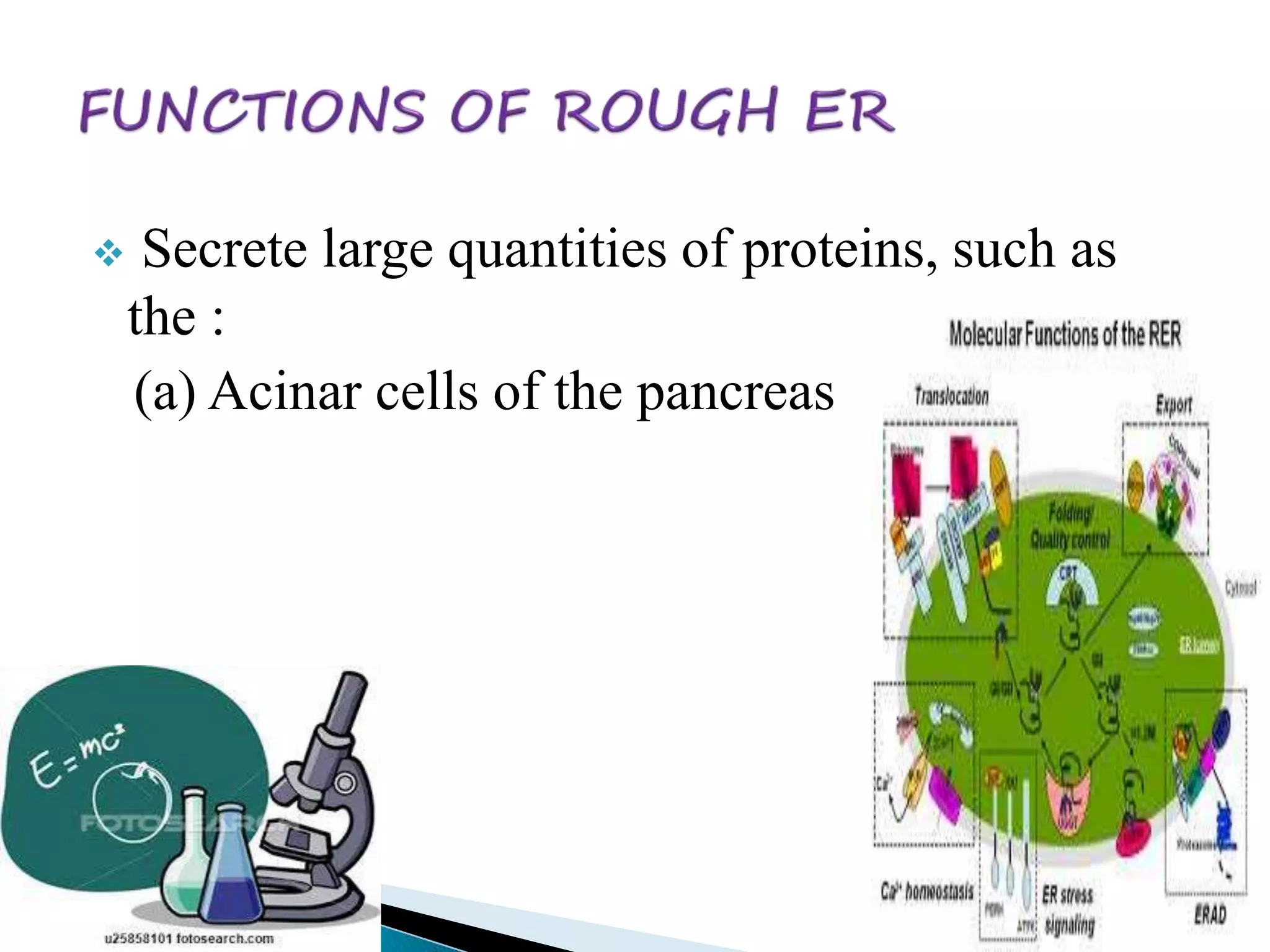
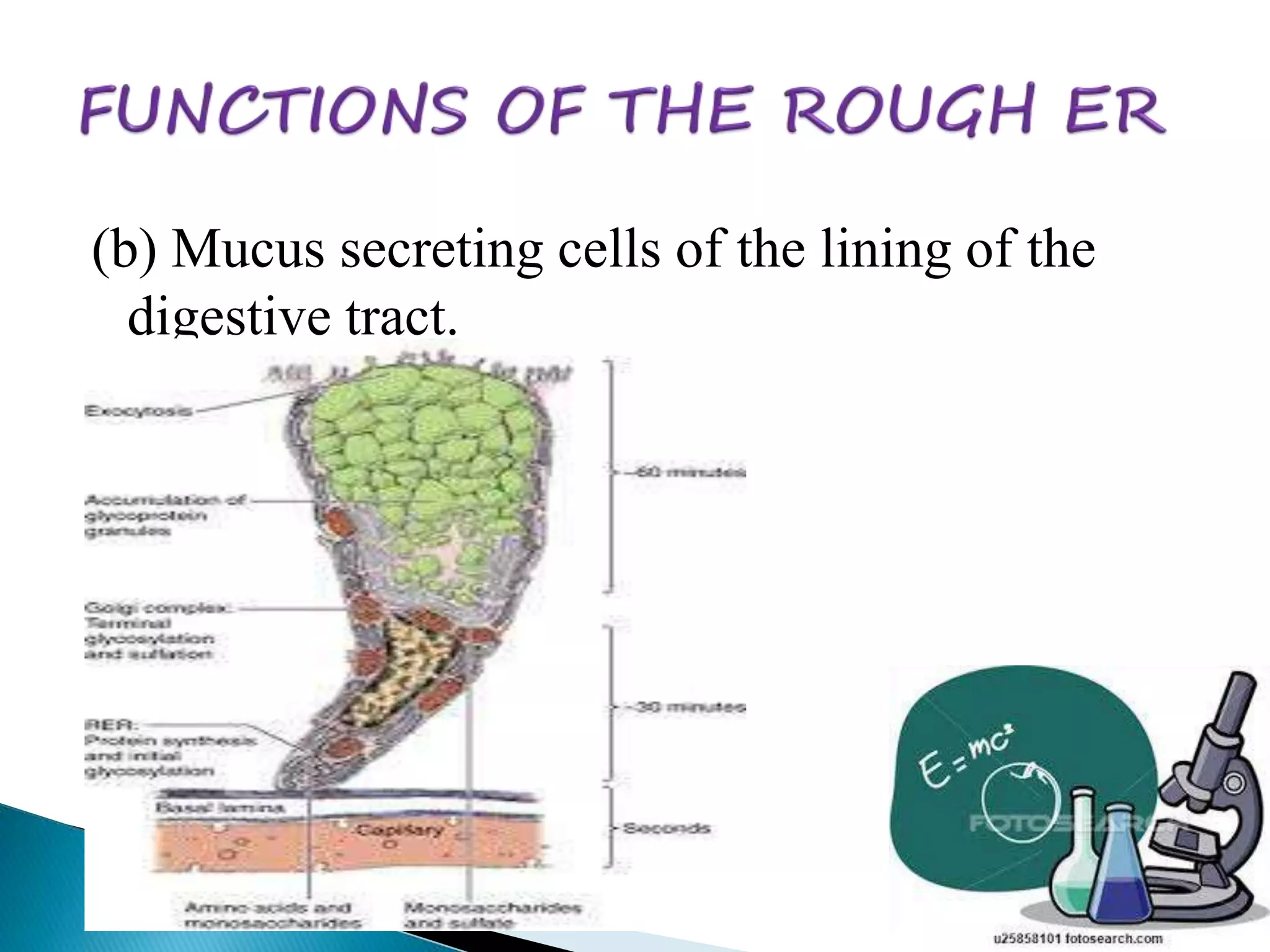
 Secrete large quantities of proteins, such as 
the : 
(a) Acinar cells of the pancreas
(b) Mucus secreting cells of the lining of the 
digestive tract.
Rough ER is the starting point of the 
biosynthetic pathways of: 
 Proteins 
 Carbohydrate chains 
 Phospholipids 
that journey through the membranous 
compartments of the cell.
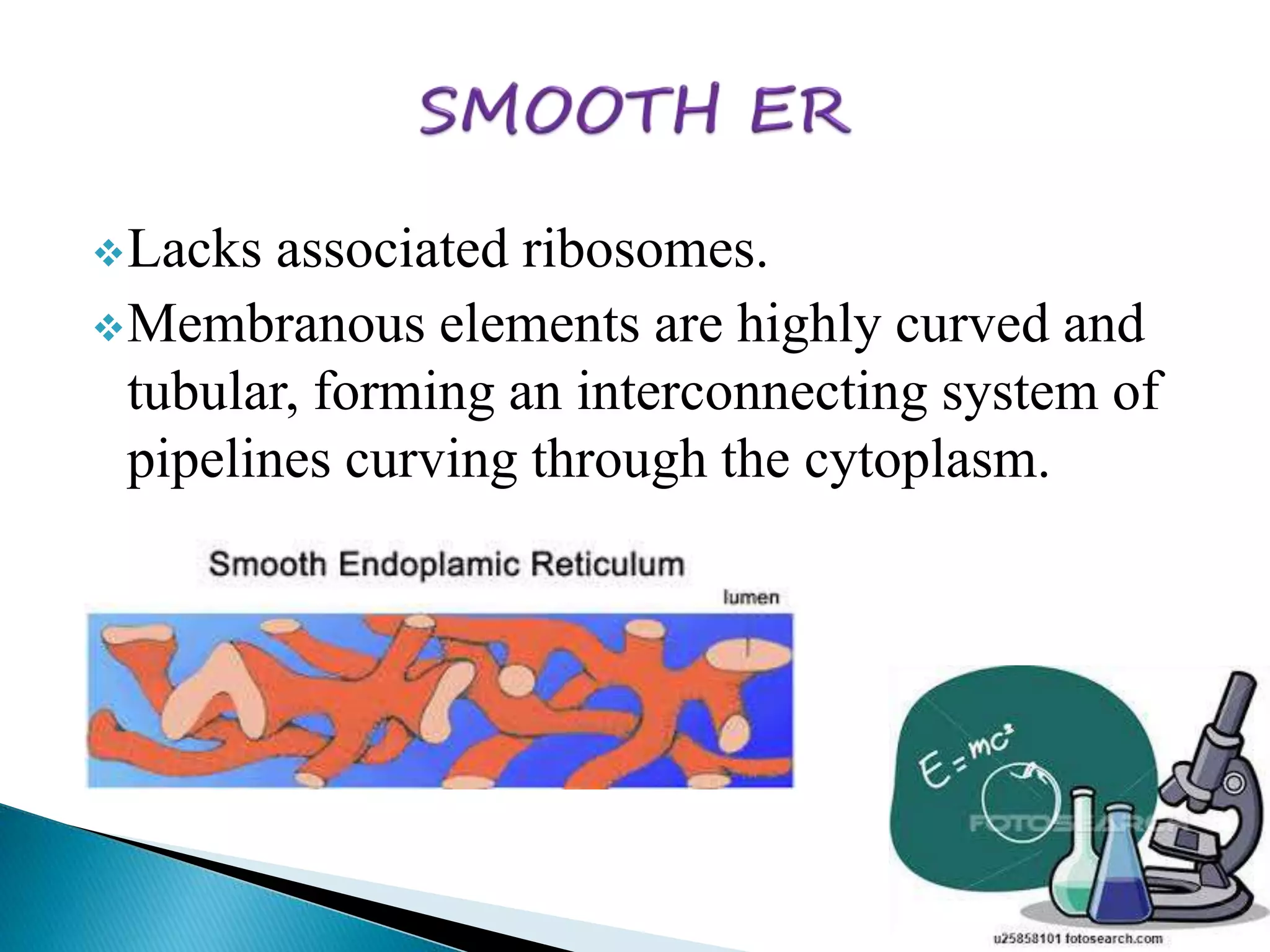
Lacks associated ribosomes. 
Membranous elements are highly curved and 
tubular, forming an interconnecting system of 
pipelines curving through the cytoplasm.
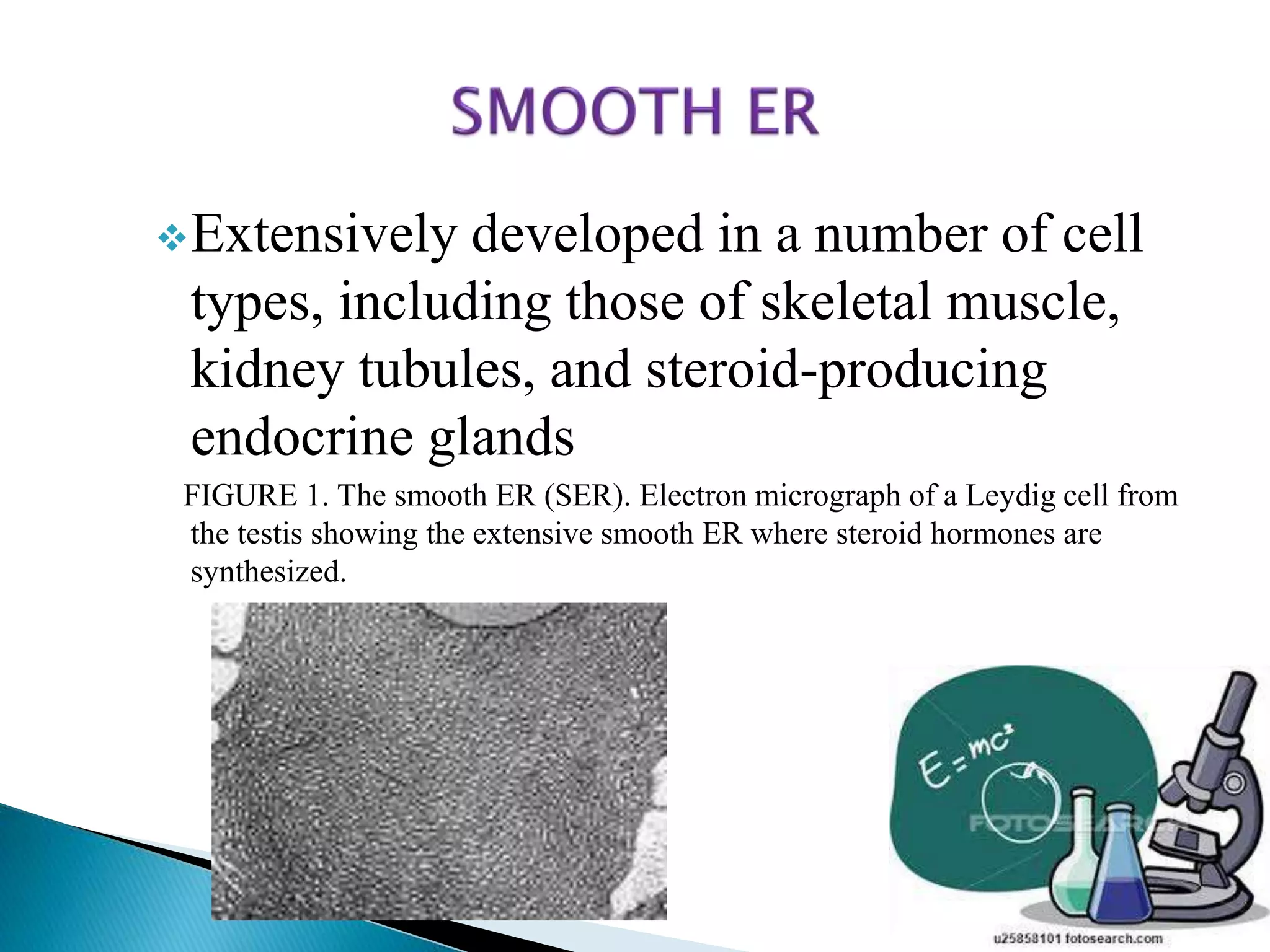
Extensively developed in a number of cell 
types, including those of skeletal muscle, 
kidney tubules, and steroid-producing 
endocrine glands 
FIGURE 1. The smooth ER (SER). Electron micrograph of a Leydig cell from 
the testis showing the extensive smooth ER where steroid hormones are 
synthesized.
Synthesis of fatty acids and steroid hormones, 
such as estrogens and testosterone. 
Detoxification in the liver of a wide variety of 
organic compounds, including barbiturates and 
ethanol. 
Sequestering calcium ions within the 
cytoplasm of cells.
Ribosomes on its 
outer surface. 
Not associated with 
ribosomes. 
Site of synthesis of 
proteins destined for 
secretion . 
Involved in lipid 
metabolism.
 ON MEMBRANE - BOUND RIBOSOMES: 
 a. Secreted proteins 
 b. Integral membrane proteins 
 c. Soluble proteins in ER, Golgi complex, lysosomes, 
endosomes, vesicles and plant vacuoles 
 ON FREE RIBOSOMES: 
 a. Cytosolic proteins 
 b. Peripheral proteins 
 c. Proteins transported to the nucleus 
 d. Proteins to be incorporated in peroxisomes, 
chloroplasts and mitochondria
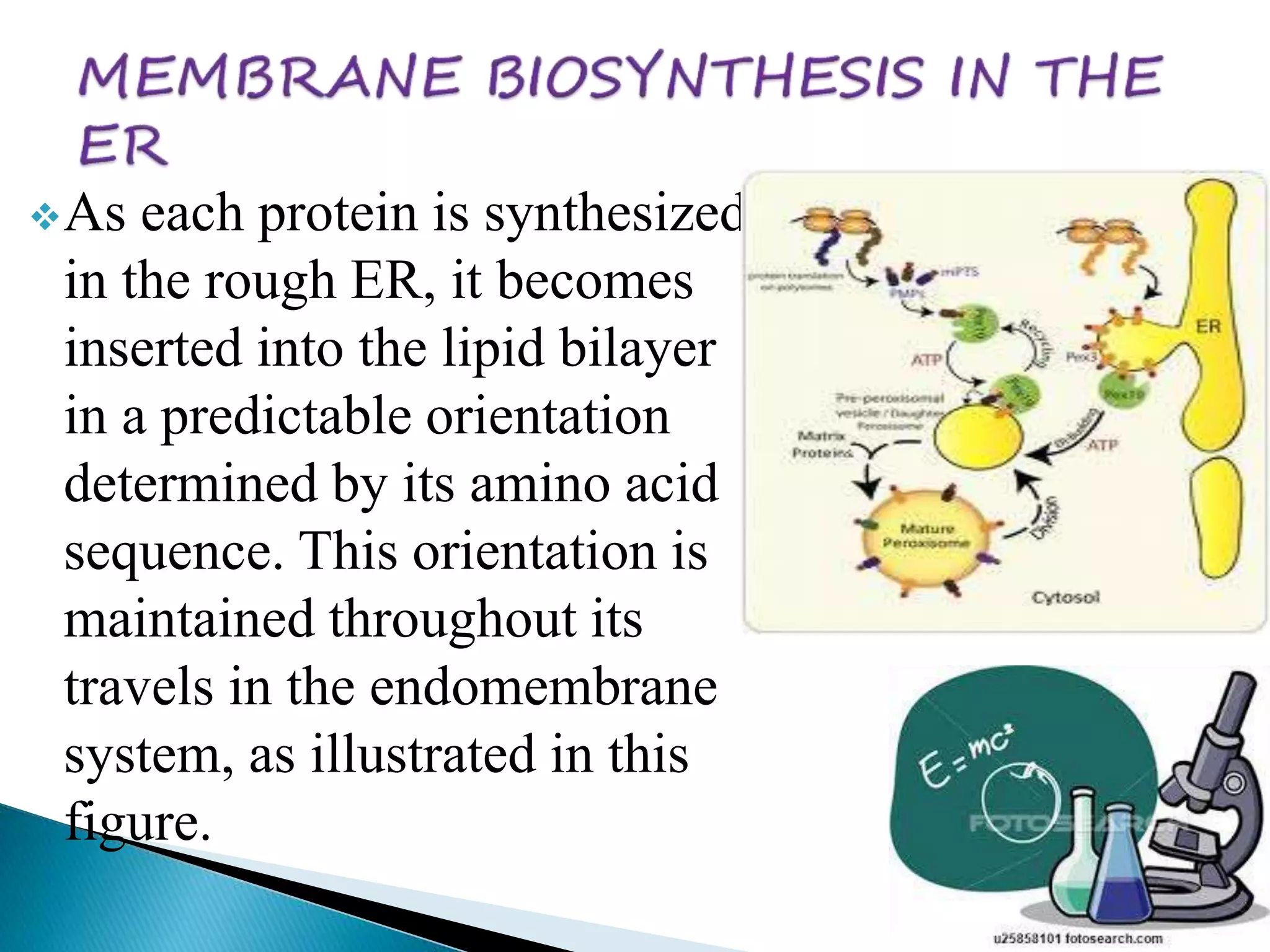
As each protein is synthesized 
in the rough ER, it becomes 
inserted into the lipid bilayer 
in a predictable orientation 
determined by its amino acid 
sequence. This orientation is 
maintained throughout its 
travels in the endomembrane 
system, as illustrated in this 
figure.
I hope that you would 
have gained knowledge 
from this power point 
presentation….
Endoplasmic reticulum class IX

Endoplasmic reticulum class IX

  • 1.
    DONE BY :- S.Durgashree IX-A KENDRIYA VIDYALAYA KARAIKUDI
  • 2.
    Discovered by Belgianbiologist Albert Claude (1899-1983). Used the newly developed electron microscope to explore the interior of cells and along with his associate Keith Porter in 1945 observed the presence of a “lace-work structure.”
  • 3.
    Rough ER appearsas lumpy sheets of folded membranes. The lumps are the ribosome. They are not permanently attached, adhering only when there is protein manufacturing work to be done. Smooth ER which isn't coated with ribosome's looks like smooth tubes.
  • 4.
    No specific baseor point in a cell, as it extends a network of membranes, tubules vesicles, and sacs throughout the cell.  ER membranes are folded and stacked on top of each other and connected to the nucleus. Rough ER with ribosomes attached is closest to the nucleus.
  • 5.
    Endoplasmic - “withinthe cytoplasm”. Reticulum - Latin for “a little net”. -> Extensive network of folded membranes that extends from the nuclear envelope to which it is connected, throughout the cytoplasm. -> Divided into two sub-compartments, rough ER and smooth ER.
  • 6.
    -> Defined bythe presence of ribosomes bound to its cytosolic surface. -> Typically composed of a network of flattened sacs (cisternae).
  • 7.
    ->Continuous with theouter membrane of the nuclear envelope, which also bears ribosomes on its cytosolic surface.
  • 8.
     Secrete largequantities of proteins, such as the : (a) Acinar cells of the pancreas
  • 9.
    (b) Mucus secretingcells of the lining of the digestive tract.
  • 10.
    Rough ER isthe starting point of the biosynthetic pathways of:  Proteins  Carbohydrate chains  Phospholipids that journey through the membranous compartments of the cell.
  • 11.
    Lacks associated ribosomes. Membranous elements are highly curved and tubular, forming an interconnecting system of pipelines curving through the cytoplasm.
  • 12.
    Extensively developed ina number of cell types, including those of skeletal muscle, kidney tubules, and steroid-producing endocrine glands FIGURE 1. The smooth ER (SER). Electron micrograph of a Leydig cell from the testis showing the extensive smooth ER where steroid hormones are synthesized.
  • 13.
    Synthesis of fattyacids and steroid hormones, such as estrogens and testosterone. Detoxification in the liver of a wide variety of organic compounds, including barbiturates and ethanol. Sequestering calcium ions within the cytoplasm of cells.
  • 14.
    Ribosomes on its outer surface. Not associated with ribosomes. Site of synthesis of proteins destined for secretion . Involved in lipid metabolism.
  • 15.
     ON MEMBRANE- BOUND RIBOSOMES:  a. Secreted proteins  b. Integral membrane proteins  c. Soluble proteins in ER, Golgi complex, lysosomes, endosomes, vesicles and plant vacuoles  ON FREE RIBOSOMES:  a. Cytosolic proteins  b. Peripheral proteins  c. Proteins transported to the nucleus  d. Proteins to be incorporated in peroxisomes, chloroplasts and mitochondria
  • 16.
    As each proteinis synthesized in the rough ER, it becomes inserted into the lipid bilayer in a predictable orientation determined by its amino acid sequence. This orientation is maintained throughout its travels in the endomembrane system, as illustrated in this figure.
  • 17.
    I hope thatyou would have gained knowledge from this power point presentation….