ENDOCRINE SYSTEM
-by Dimple Talukdar
INTRODUCTION
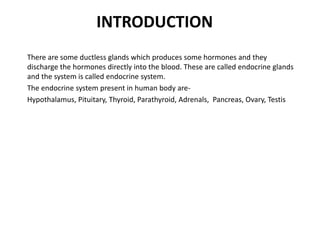
There are some ductless glands which produces some hormones and they
discharge the hormones directly into the blood. These are called endocrine glands
and the system is called endocrine system.
The endocrine system present in human body are-
Hypothalamus, Pituitary, Thyroid, Parathyroid, Adrenals, Pancreas, Ovary, Testis
HYPOTHALAMUS
Hypothalamus is a part of the forebrain.
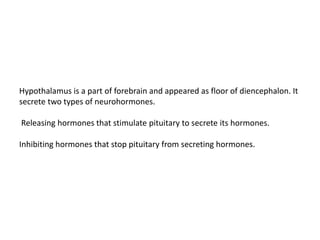
Hypothalamus is a part of forebrain and appeared as floor of diencephalon. It
secrete two types of neurohormones.
Releasing hormones that stimulate pituitary to secrete its hormones.
Inhibiting hormones that stop pituitary from secreting hormones.
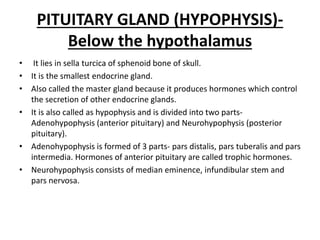
PITUITARY GLAND (HYPOPHYSIS)-
Below the hypothalamus
• It lies in sella turcica of sphenoid bone of skull.
• It is the smallest endocrine gland.
• Also called the master gland because it produces hormones which control
the secretion of other endocrine glands.
• It is also called as hypophysis and is divided into two parts-
Adenohypophysis (anterior pituitary) and Neurohypophysis (posterior
pituitary).
• Adenohypophysis is formed of 3 parts- pars distalis, pars tuberalis and pars
intermedia. Hormones of anterior pituitary are called trophic hormones.
• Neurohypophysis consists of median eminence, infundibular stem and
pars nervosa.
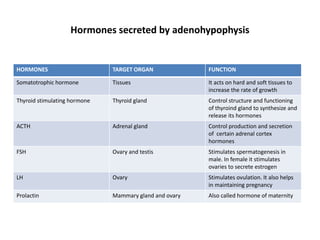
Hormones secreted by adenohypophysis
HORMONES TARGET ORGAN FUNCTION
Somatotrophic hormone Tissues It acts on hard and soft tissues to
increase the rate of growth
Thyroid stimulating hormone Thyroid gland Control structure and functioning
of thyroind gland to synthesize and
release its hormones
ACTH Adrenal gland Control production and secretion
of certain adrenal cortex
hormones
FSH Ovary and testis Stimulates spermatogenesis in
male. In female it stimulates
ovaries to secrete estrogen
LH Ovary Stimulates ovulation. It also helps
in maintaining pregnancy
Prolactin Mammary gland and ovary Also called hormone of maternity
Hormones secreted by neurohypophysis
Hormones Target organ Function
Oxytocin Uterus and mammary
gland
It contracts uterus during
child birth. It stimulates
milk production after child
birth.
Vasopressin Kidney This hormone regulates
water and salt balance of
the body. Absence of this
hormone cause diabetes
insipidus.
THYROID GLAND
Thyroid is located in the neck between the
trachea and the larynx.
The thyroid gland secretes the following
hormones-
1. Tri-iodothyronine (T3)
2. Tetra-iodothyronine (T4)
Out of the two, Tetra-iodothyronine is
popularly called thyroxine
3. Calcitonin
FUNCTIONS
1. Thyroid hormone promote the growth and
development of body tissue.
2. It is essential for normal activity of nervous system.
3. Calcitonin works in conjugation with the parathormone
to regulate calcium level
PARATHYROID GLAND
It is located in the neck, behind the thyroid. The main
hormone secreted is parathormone. The main function of
this hormone is to regulate blood calcium and phosphate
level.
ADRENAL GLAND
These are small glands located on top of each kidney. Adrenal gland is divided
into 2 main regions- outer cortex and inner medulla
• The adrenal cortex secretes steroid hormones collectively called
corticoids. They maintain electrolyte and water balance in the body.
• Hormones of the medulla are – adrenaline or epinephrine and nor-
adrenaline or nor- epinephrine.
• Adrenaline also known as emergency hormone increases blood pressure.
It also increases respiration rate.
• Nor-adrenaline , more or less it resembles adrenaline in its biological
effects except that it operates during normal state.
PANCREAS
• The pancreas is a gland lying between stomach and intestine.
• Pancreas has both exocrine and endocrine tissues.
• Endocrine cells are called Islets of Langerhans or pancreatic islets.
• Hormones secreting cells present in Islets of Langerhans are-
Type of cells Hormones
α cells Glucagon
β cells Insulin
∂ cells Somatostatin
Functions of insulin and glucagon
• Insulin helps to control the blood sugar level. It allows cell to
take in glucose for energy. If the body has sufficient energy,
insulin signals the liver to take up glucose and store it as
glycogen.
• When the concentration of glucose in the bloodstream falls
too low, glucagon causes the liver to convert stored glycogen
into glucose.
OVARY
It secretes homone estrogen and progesterone.
ESTROGEN
• It regulates the
menstrual cycle.
• It is responsible for the
development of sex
organs in female.
PROGESTERONE
• It is responsible for the
preparation of uterus to
receive fertilized ovum.
• It helps in development
of placenta
TESTIS
• Testis secrete the hormone testosterone.
• It control the growth and function of secondary sex organs in
male.

Endocrine system

  • 1.
  • 2.
    INTRODUCTION There are someductless glands which produces some hormones and they discharge the hormones directly into the blood. These are called endocrine glands and the system is called endocrine system. The endocrine system present in human body are- Hypothalamus, Pituitary, Thyroid, Parathyroid, Adrenals, Pancreas, Ovary, Testis
  • 3.
    HYPOTHALAMUS Hypothalamus is apart of the forebrain.
  • 4.
    Hypothalamus is apart of forebrain and appeared as floor of diencephalon. It secrete two types of neurohormones. Releasing hormones that stimulate pituitary to secrete its hormones. Inhibiting hormones that stop pituitary from secreting hormones.
  • 5.
    PITUITARY GLAND (HYPOPHYSIS)- Belowthe hypothalamus • It lies in sella turcica of sphenoid bone of skull. • It is the smallest endocrine gland. • Also called the master gland because it produces hormones which control the secretion of other endocrine glands. • It is also called as hypophysis and is divided into two parts- Adenohypophysis (anterior pituitary) and Neurohypophysis (posterior pituitary). • Adenohypophysis is formed of 3 parts- pars distalis, pars tuberalis and pars intermedia. Hormones of anterior pituitary are called trophic hormones. • Neurohypophysis consists of median eminence, infundibular stem and pars nervosa.
  • 6.
    Hormones secreted byadenohypophysis HORMONES TARGET ORGAN FUNCTION Somatotrophic hormone Tissues It acts on hard and soft tissues to increase the rate of growth Thyroid stimulating hormone Thyroid gland Control structure and functioning of thyroind gland to synthesize and release its hormones ACTH Adrenal gland Control production and secretion of certain adrenal cortex hormones FSH Ovary and testis Stimulates spermatogenesis in male. In female it stimulates ovaries to secrete estrogen LH Ovary Stimulates ovulation. It also helps in maintaining pregnancy Prolactin Mammary gland and ovary Also called hormone of maternity
  • 7.
    Hormones secreted byneurohypophysis Hormones Target organ Function Oxytocin Uterus and mammary gland It contracts uterus during child birth. It stimulates milk production after child birth. Vasopressin Kidney This hormone regulates water and salt balance of the body. Absence of this hormone cause diabetes insipidus.
  • 8.
    THYROID GLAND Thyroid islocated in the neck between the trachea and the larynx. The thyroid gland secretes the following hormones- 1. Tri-iodothyronine (T3) 2. Tetra-iodothyronine (T4) Out of the two, Tetra-iodothyronine is popularly called thyroxine 3. Calcitonin
  • 9.
    FUNCTIONS 1. Thyroid hormonepromote the growth and development of body tissue. 2. It is essential for normal activity of nervous system. 3. Calcitonin works in conjugation with the parathormone to regulate calcium level
  • 10.
    PARATHYROID GLAND It islocated in the neck, behind the thyroid. The main hormone secreted is parathormone. The main function of this hormone is to regulate blood calcium and phosphate level.
  • 11.
    ADRENAL GLAND These aresmall glands located on top of each kidney. Adrenal gland is divided into 2 main regions- outer cortex and inner medulla • The adrenal cortex secretes steroid hormones collectively called corticoids. They maintain electrolyte and water balance in the body. • Hormones of the medulla are – adrenaline or epinephrine and nor- adrenaline or nor- epinephrine. • Adrenaline also known as emergency hormone increases blood pressure. It also increases respiration rate. • Nor-adrenaline , more or less it resembles adrenaline in its biological effects except that it operates during normal state.
  • 12.
    PANCREAS • The pancreasis a gland lying between stomach and intestine. • Pancreas has both exocrine and endocrine tissues. • Endocrine cells are called Islets of Langerhans or pancreatic islets. • Hormones secreting cells present in Islets of Langerhans are- Type of cells Hormones α cells Glucagon β cells Insulin ∂ cells Somatostatin
  • 13.
    Functions of insulinand glucagon • Insulin helps to control the blood sugar level. It allows cell to take in glucose for energy. If the body has sufficient energy, insulin signals the liver to take up glucose and store it as glycogen. • When the concentration of glucose in the bloodstream falls too low, glucagon causes the liver to convert stored glycogen into glucose.
  • 14.
    OVARY It secretes homoneestrogen and progesterone. ESTROGEN • It regulates the menstrual cycle. • It is responsible for the development of sex organs in female. PROGESTERONE • It is responsible for the preparation of uterus to receive fertilized ovum. • It helps in development of placenta
  • 15.
    TESTIS • Testis secretethe hormone testosterone. • It control the growth and function of secondary sex organs in male.