E N D O C R I N E S Y S T E M
INTRODUCTION
• The endocrine system consists of a collection of small glands
that regulates a number of vital functions of our body.
• Endocrine system is instrumental in regulating
mood, growth and development, tissue funtion,
metabolism and sexual function and reproductive
processes.
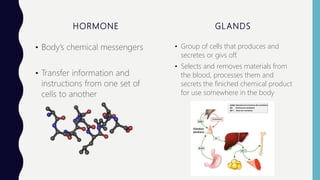
HORMONE
• Body’s chemical messengers
• Transfer information and
instructions from one set of
cells to another
GLANDS
• Group of cells that produces and
secretes or givs off.
• Selects and removes materials from
the blood, processes them and
secrets the finiched chemical product
for use somewhere in the body
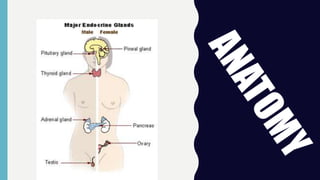
1. HYPOTHALAMUS
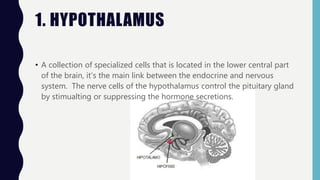
• A collection of specialized cells that is located in the lower central part
of the brain, it’s the main link between the endocrine and nervous
system. The nerve cells of the hypothalamus control the pituitary gland
by stimualting or suppressing the hormone secretions.
2. PITUITARY GLAND
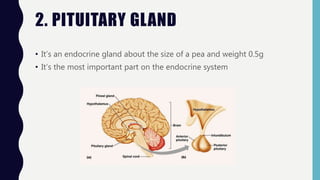
• It’s an endocrine gland about the size of a pea and weight 0.5g
• It’s the most important part on the endocrine system
3. THYROID GLAND
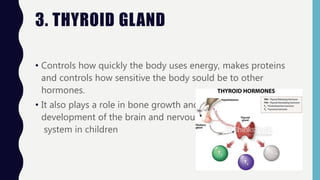
• Controls how quickly the body uses energy, makes proteins
and controls how sensitive the body sould be to other
hormones.
• It also plays a role in bone growth and
development of the brain and nervous
system in children
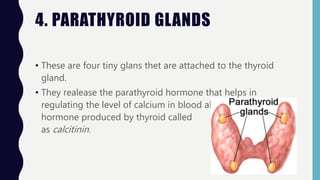
4. PARATHYROID GLANDS
• These are four tiny glans thet are attached to the thyroid
gland.
• They realease the parathyroid hormone that helps in
regulating the level of calcium in blood along with another
hormone produced by thyroid called
as calcitinin.
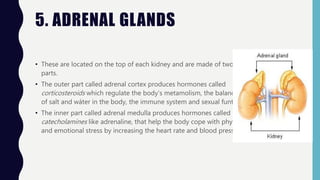
5. ADRENAL GLANDS
• These are located on the top of each kidney and are made of two
parts.
• The outer part called adrenal cortex produces hormones called
corticosteroids which regulate the body’s metamolism, the balance
of salt and wáter in the body, the immune system and sexual funtion.
• The inner part called adrenal medulla produces hormones called
catecholamines like adrenaline, that help the body cope with physical
and emotional stress by increasing the heart rate and blood pressure.
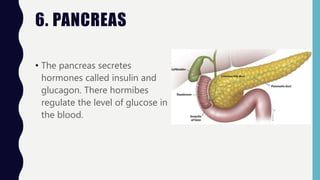
6. PANCREAS
• The pancreas secretes
hormones called insulin and
glucagon. There hormibes
regulate the level of glucose in
the blood.
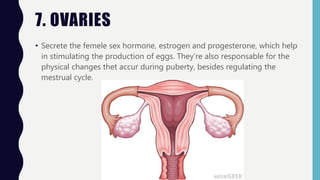
7. OVARIES
• Secrete the femele sex hormone, estrogen and progesterone, which help
in stimulating the production of eggs. They’re also responsable for the
physical changes thet accur during puberty, besides regulating the
mestrual cycle.
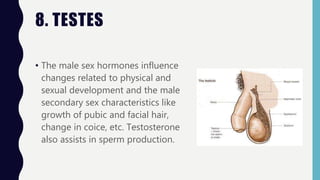
8. TESTES
• The male sex hormones influence
changes related to physical and
sexual development and the male
secondary sex characteristics like
growth of pubic and facial hair,
change in coice, etc. Testosterone
also assists in sperm production.
Endocrine system

Endocrine system

  • 1.
    E N DO C R I N E S Y S T E M
  • 3.
    INTRODUCTION • The endocrinesystem consists of a collection of small glands that regulates a number of vital functions of our body. • Endocrine system is instrumental in regulating mood, growth and development, tissue funtion, metabolism and sexual function and reproductive processes.
  • 4.
    HORMONE • Body’s chemicalmessengers • Transfer information and instructions from one set of cells to another GLANDS • Group of cells that produces and secretes or givs off. • Selects and removes materials from the blood, processes them and secrets the finiched chemical product for use somewhere in the body
  • 5.
    1. HYPOTHALAMUS • Acollection of specialized cells that is located in the lower central part of the brain, it’s the main link between the endocrine and nervous system. The nerve cells of the hypothalamus control the pituitary gland by stimualting or suppressing the hormone secretions.
  • 6.
    2. PITUITARY GLAND •It’s an endocrine gland about the size of a pea and weight 0.5g • It’s the most important part on the endocrine system
  • 8.
    3. THYROID GLAND •Controls how quickly the body uses energy, makes proteins and controls how sensitive the body sould be to other hormones. • It also plays a role in bone growth and development of the brain and nervous system in children
  • 9.
    4. PARATHYROID GLANDS •These are four tiny glans thet are attached to the thyroid gland. • They realease the parathyroid hormone that helps in regulating the level of calcium in blood along with another hormone produced by thyroid called as calcitinin.
  • 10.
    5. ADRENAL GLANDS •These are located on the top of each kidney and are made of two parts. • The outer part called adrenal cortex produces hormones called corticosteroids which regulate the body’s metamolism, the balance of salt and wáter in the body, the immune system and sexual funtion. • The inner part called adrenal medulla produces hormones called catecholamines like adrenaline, that help the body cope with physical and emotional stress by increasing the heart rate and blood pressure.
  • 11.
    6. PANCREAS • Thepancreas secretes hormones called insulin and glucagon. There hormibes regulate the level of glucose in the blood.
  • 12.
    7. OVARIES • Secretethe femele sex hormone, estrogen and progesterone, which help in stimulating the production of eggs. They’re also responsable for the physical changes thet accur during puberty, besides regulating the mestrual cycle.
  • 13.
    8. TESTES • Themale sex hormones influence changes related to physical and sexual development and the male secondary sex characteristics like growth of pubic and facial hair, change in coice, etc. Testosterone also assists in sperm production.