Endocrine System
Chemical Control
What are endocrine
hormones?
1 2 3
33% 33%33%
1. Chemical signals
from one cell to
remote target cells.
2. Chemicals for direct
cell-to-cell
communication.
3. Chemicals that cross
a gap between to
adjacent cells.
Messenger Molecules
• Cells must communicate with one
another to coordinate cell processes
within tissues and to maintain
homeostasis.
• Cell-to-cell communication is carried out
via messenger molecules.
Three types of
chemical signals
are used for cell-
to-cell
communication.
Four methods of cell-to-cell communication are
found in the human body, ranging from direct to
remote communication.
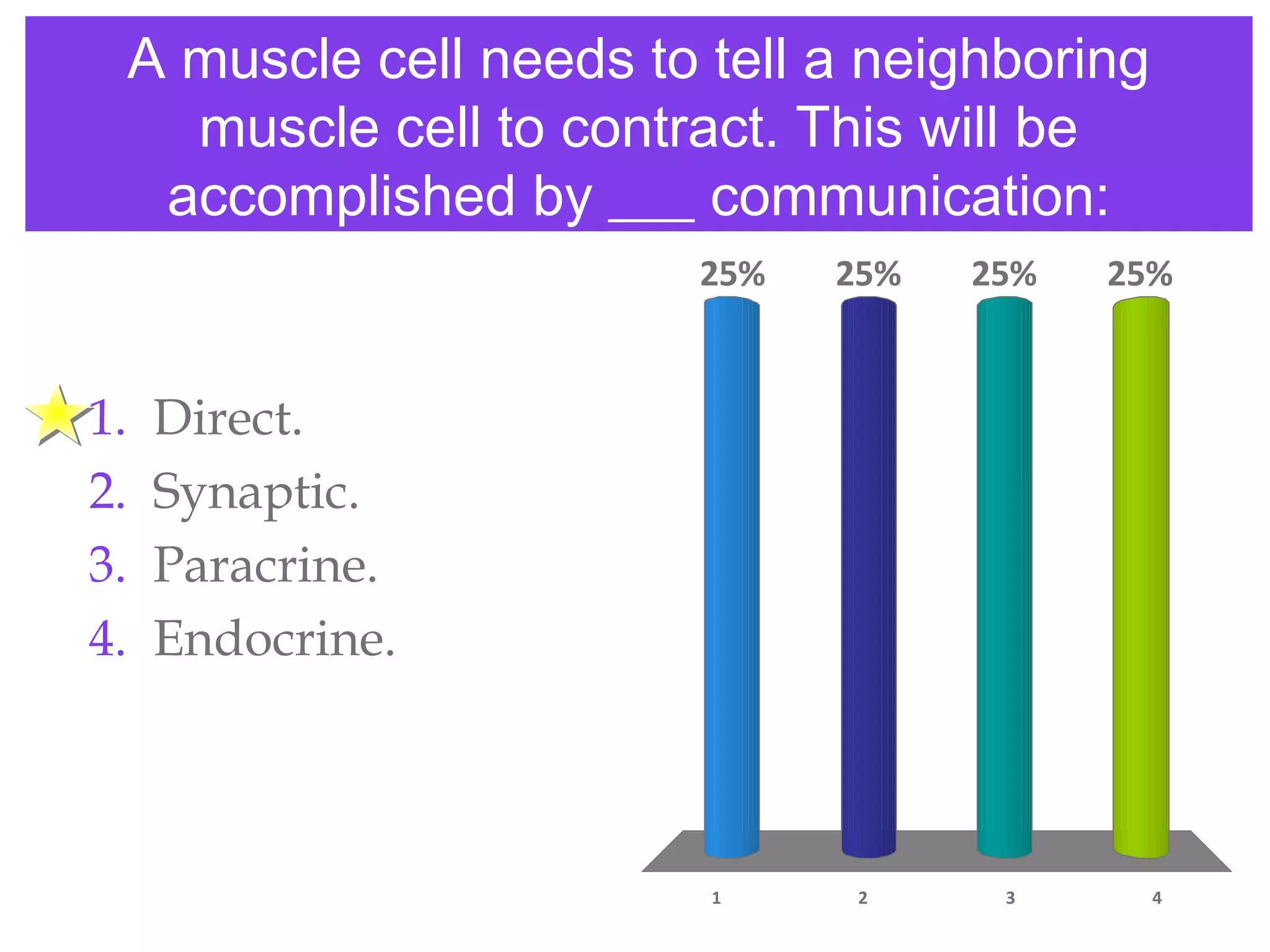
A muscle cell needs to tell a neighboring
muscle cell to contract. This will be
accomplished by ___ communication:
1 2 3 4
25% 25%25%25%
1. Direct.
2. Synaptic.
3. Paracrine.
4. Endocrine.
When blood sugar is high, body cells must be
stimulated to take up sugar. This is
accomplished by ___ communication.
1 2 3 4
25% 25%25%25%
1. Direct.
2. Synaptic.
3. Paracrine.
4. Endocrine.
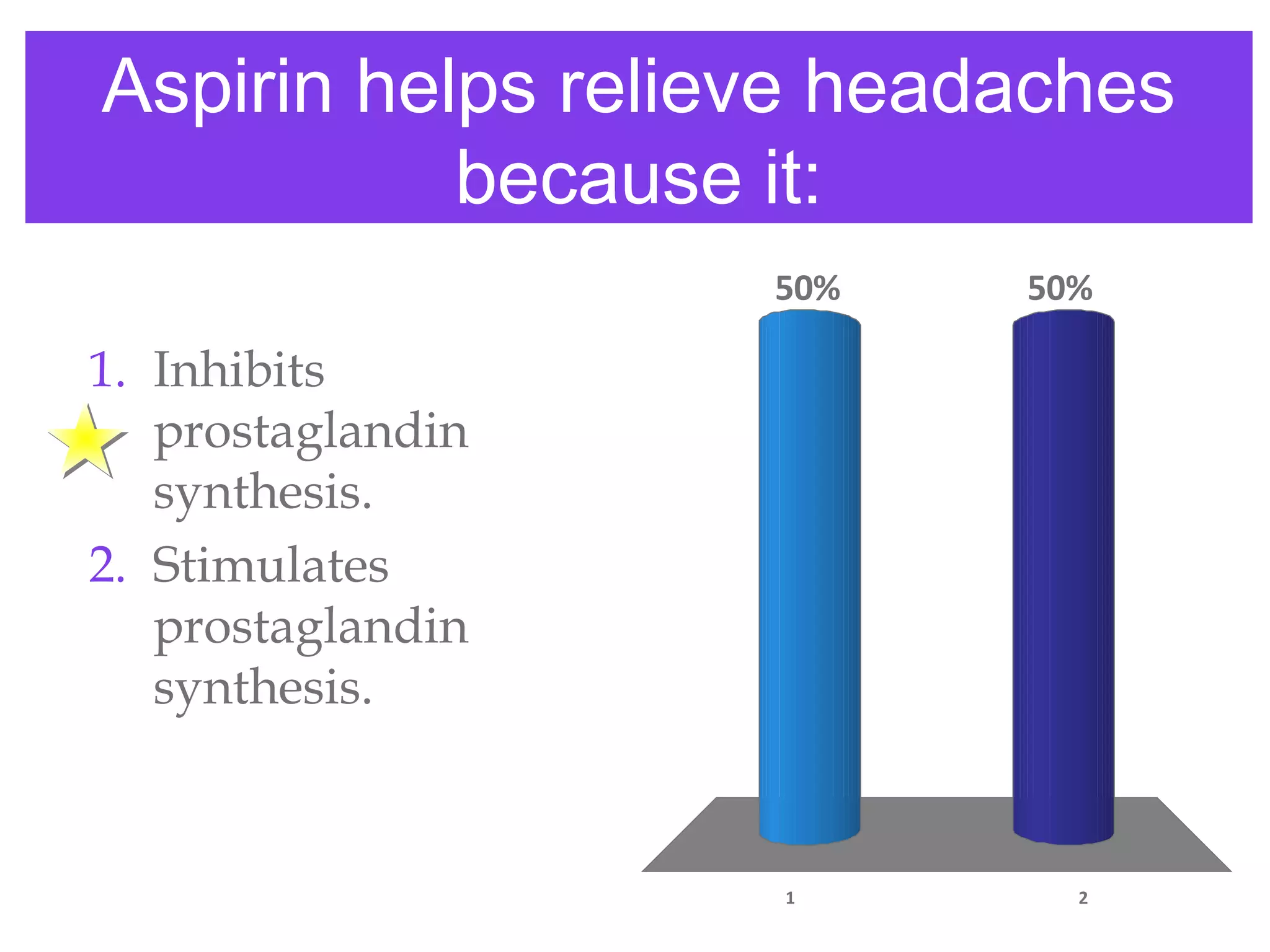
Aspirin helps relieve headaches
because it:
1 2
50%50%
1. Inhibits
prostaglandin
synthesis.
2. Stimulates
prostaglandin
synthesis.
Endocrine hormones
• Produced by endocrine (“ductless”) glands and
secreted into the bloodstream.
• Endocrine hormones may affect a wide array of
target cells to produce multiple effects.
• Two types: peptides (small proteins) and
steroids (lipids).
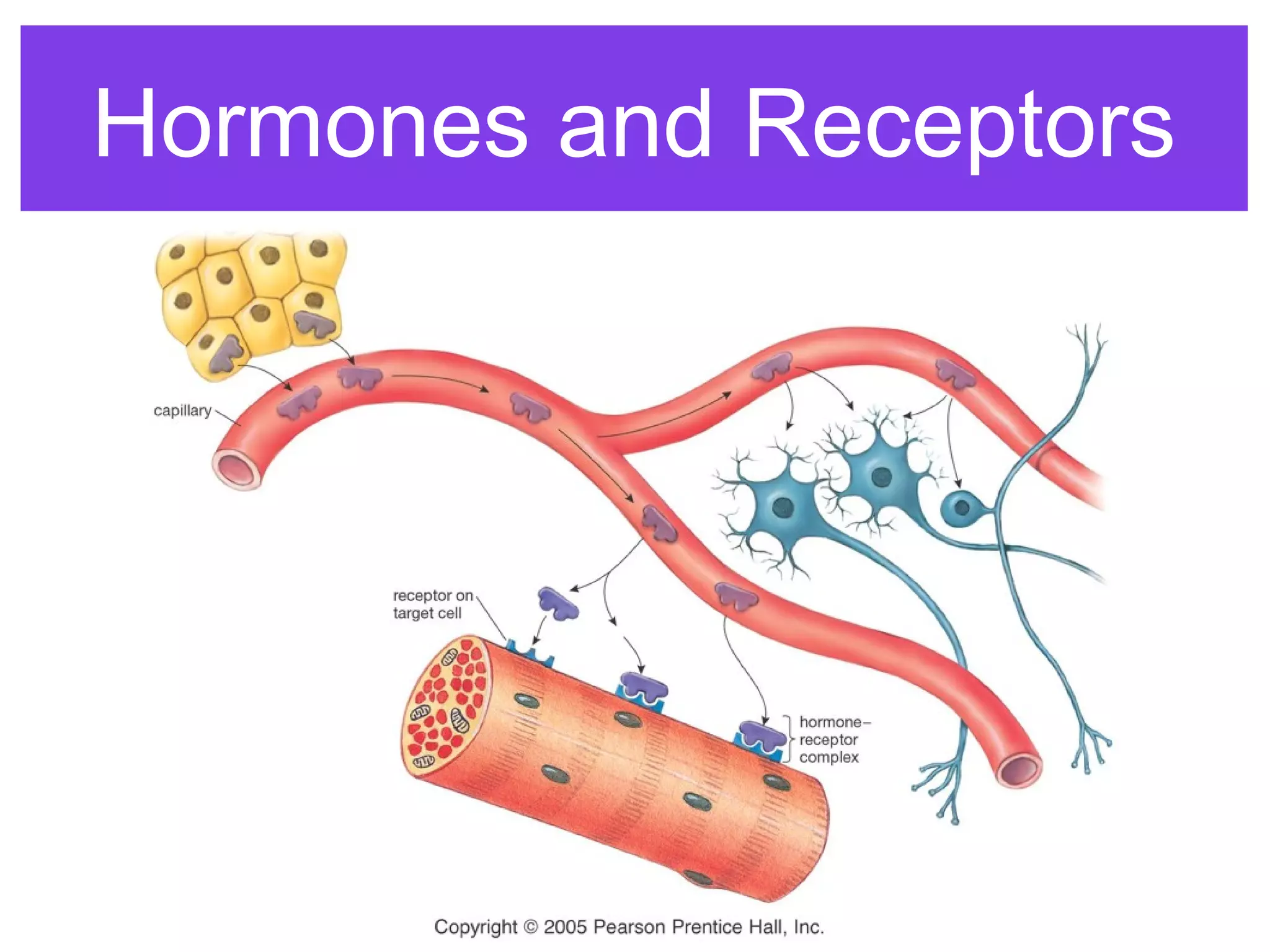
Hormones and Receptors
Peptide Hormones
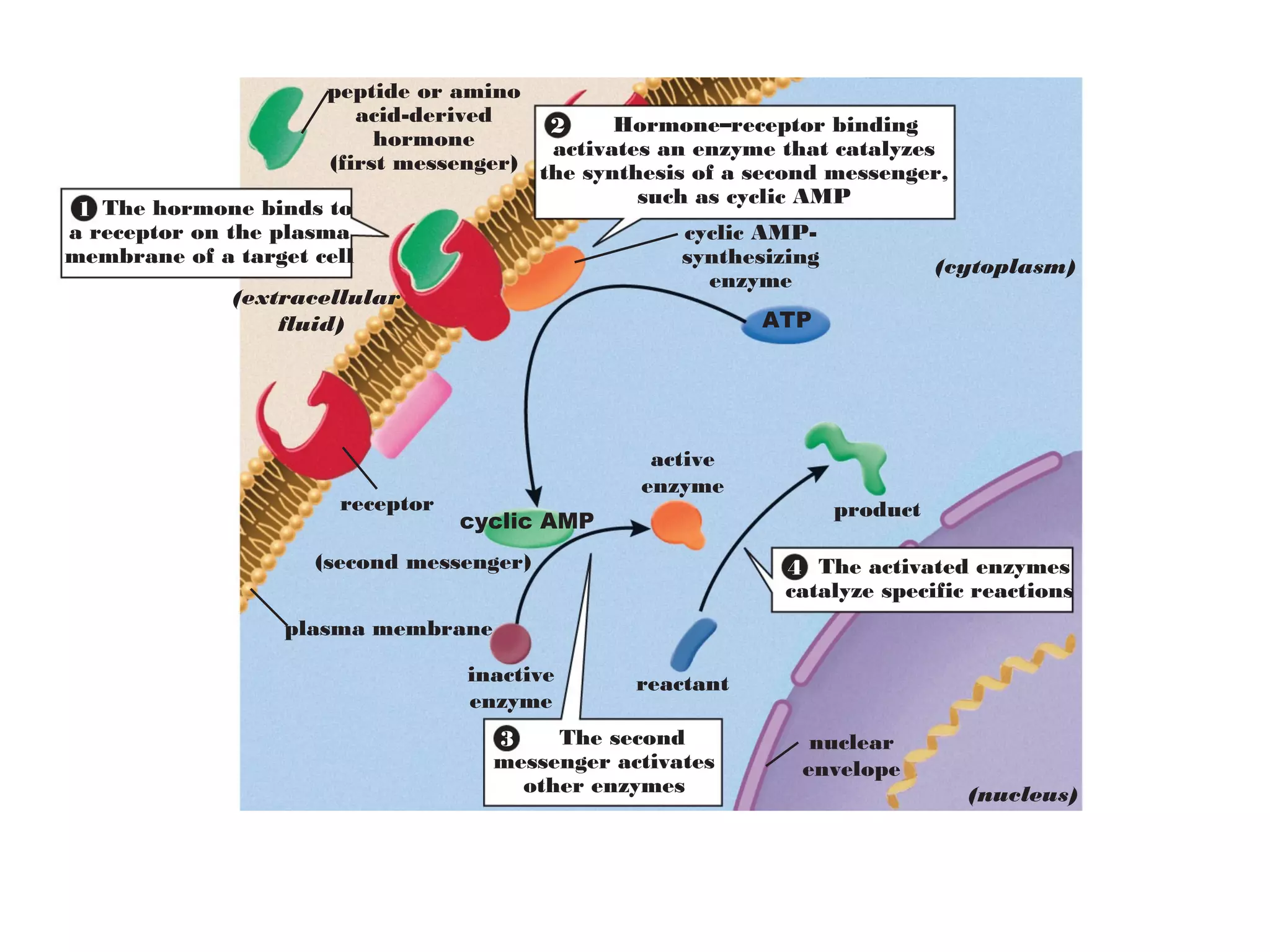
• Peptide hormones do not enter the cell
directly. These hormones bind to
receptor proteins in the cell membrane.
• When the hormone binds with the
receptor protein, a secondary messenger
molecule initiates the cell response.
• Because peptide hormones are water
soluble, they often produce fast
responses.
(cytoplasm)
(nucleus)
peptide or amino
acid-derived
hormone
(first messenger)
(extracellular
fluid)
cyclic AMP-
synthesizing
enzyme
cyclic AMP
ATP
inactive
enzyme
(second messenger)
active
enzyme
reactant
product
plasma membrane
nuclear
envelope
receptor
The hormone binds to
a receptor on the plasma
membrane of a target cell
1
The activated enzymes
catalyze specific reactions
4
The second
messenger activates
other enzymes
3
Hormone–receptor binding
activates an enzyme that catalyzes
the synthesis of a second messenger,
such as cyclic AMP
2
Steroid Hormones
• Steroid hormones enter through the cell
membrane and bind to receptors inside
of the target cell.
• These hormones may directly stimulate
transcription of genes to make certain
proteins.
• Because steroids work by triggering gene
activity, the response is slower than
peptide hormones.
gene
plasma
membrane
ribosome
hormone receptor
steroid hormone
mRNA
(nucleus)
RNA polymerase
DNA
(cytoplasm)
new protein
(extracellular
fluid)
A steroid hormone
diffuses through the
plasma membrane
The hormone binds to a
receptor in the nucleus or to
a receptor in the cytoplasm
that carries it into the nucleus
The hormone–receptor
complex binds to DNA and
causes RNA polymerase to
bind to a nearby promoter
site for a specific gene
RNA polymerase catalyzes
the transcription of DNA into
messenger RNA (mRNA)
The mRNA leaves the
nucleus, then attaches to a
ribosome and directs the
synthesis of a specific protein
product
1
2
3
4
5
nuclear
envelope
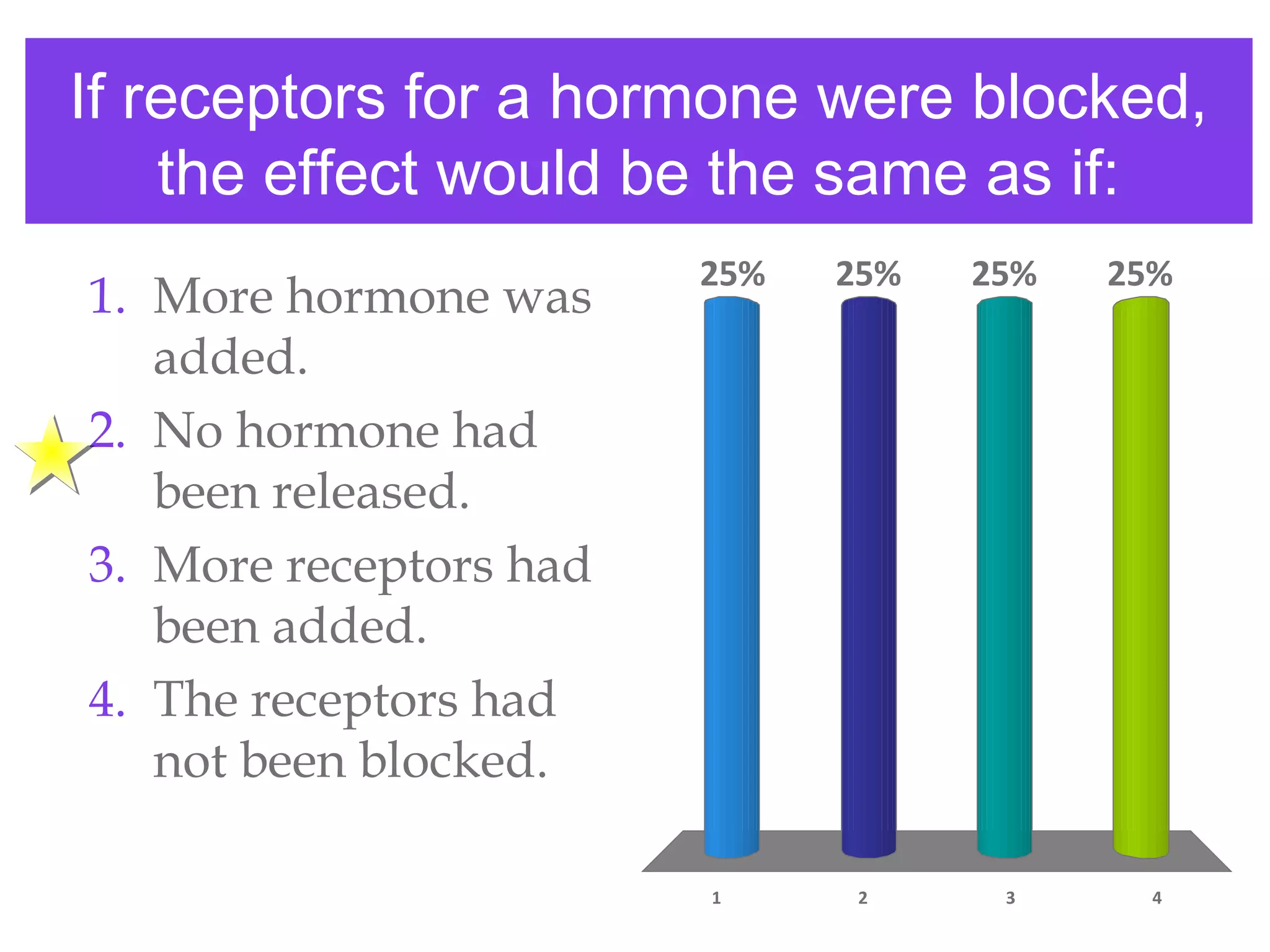
If receptors for a hormone were blocked,
the effect would be the same as if:
1 2 3 4
25% 25%25%25%
1. More hormone was
added.
2. No hormone had
been released.
3. More receptors had
been added.
4. The receptors had
not been blocked.
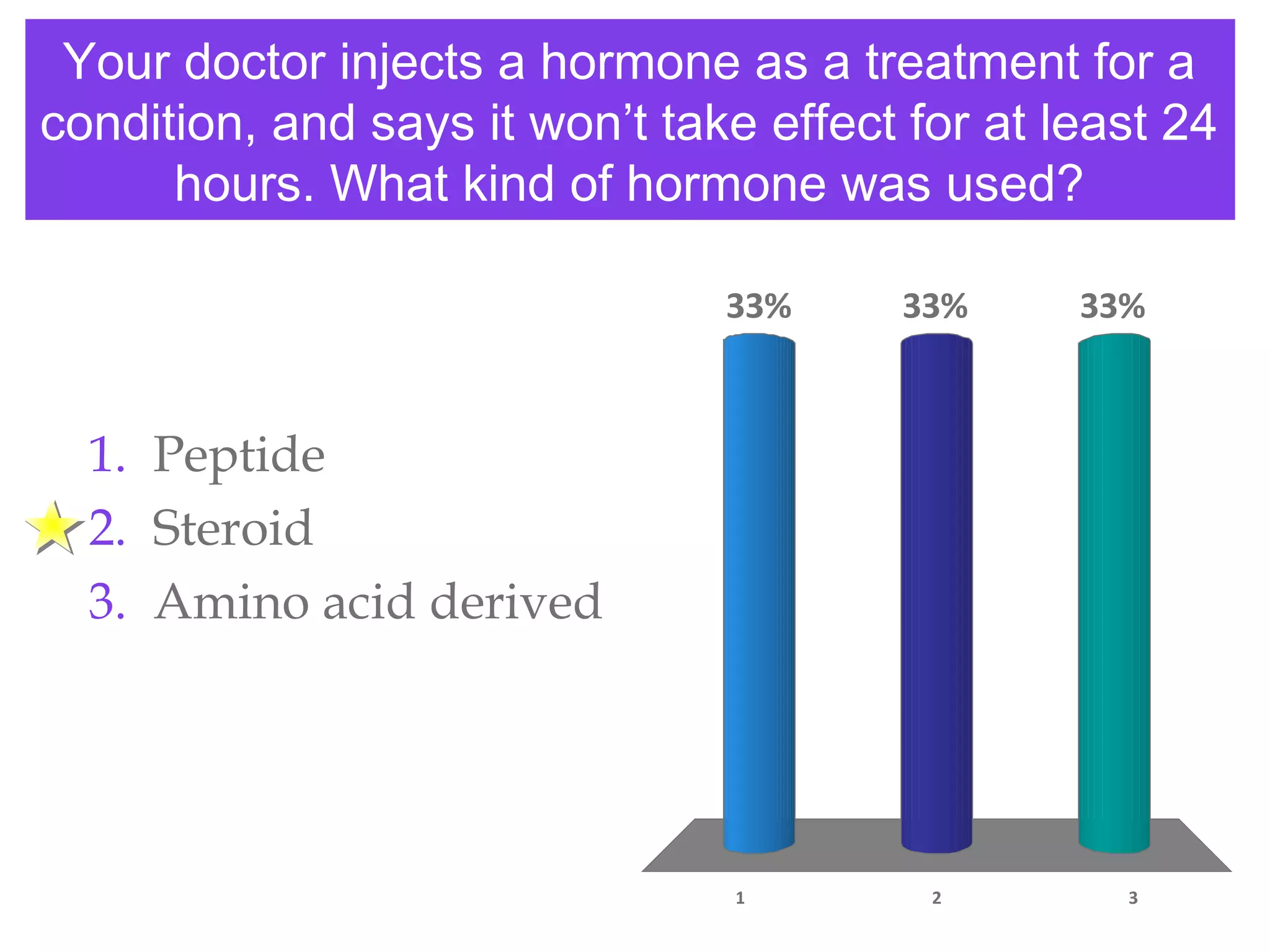
Your doctor injects a hormone as a treatment for a
condition, and says it won’t take effect for at least 24
hours. What kind of hormone was used?
1 2 3
33% 33%33%
1. Peptide
2. Steroid
3. Amino acid derived
• How do endocrine hormones “know”
which cells are their target cells?
W
O
R
K
T
O
G
E
T
H
E
R
Role of the Hypothalamus
• The thalamus receives sensory
information, relays some to the
hypothalamus.
• Hypothalamus monitors the body for
temperature, pH, other conditions.
• Hypothalamus signals pituitary gland if
conditions need to be corrected.
Role of the Pituitary
• The pituitary is the “master gland” that signals other
glands to produce their hormones when needed.
• The anterior lobe of the pituitary receives signals from
the hypothalamus, and responds by sending out the
appropriate hormone to other endocrine glands.
• The posterior pituitary receives oxytocin or
antidiuretic hormone (ADH) from the hypothalamus,
relays them to the body as necessary.
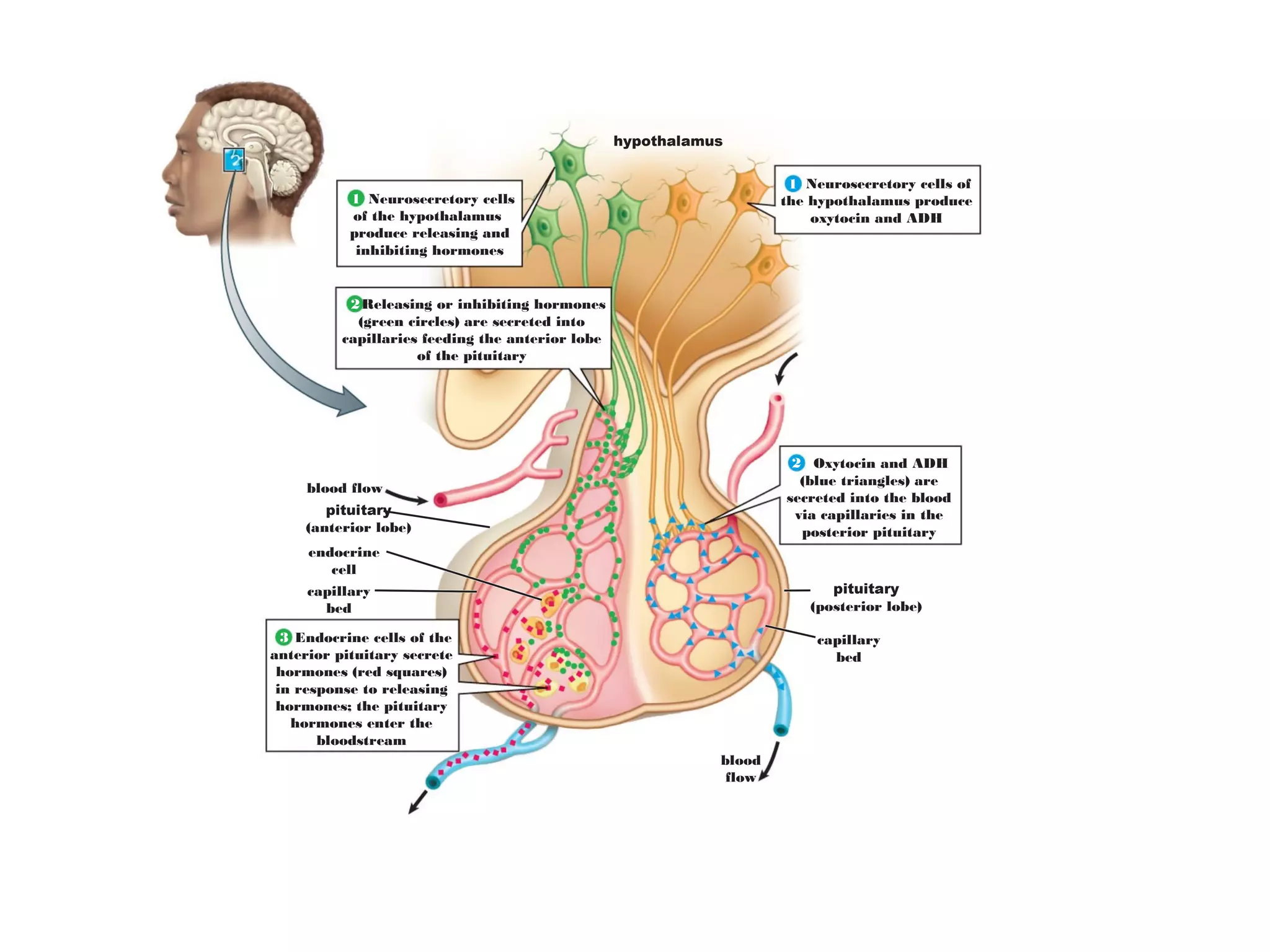
hypothalamus
pituitary
(anterior lobe)
capillary
bed
endocrine
cell
blood flow
blood
flow
capillary
bed
pituitary
(posterior lobe)
Oxytocin and ADH
(blue triangles) are
secreted into the blood
via capillaries in the
posterior pituitary
Endocrine cells of the
anterior pituitary secrete
hormones (red squares)
in response to releasing
hormones; the pituitary
hormones enter the
bloodstream
Neurosecretory cells of
the hypothalamus produce
oxytocin and ADH
Releasing or inhibiting hormones
(green circles) are secreted into
capillaries feeding the anterior lobe
of the pituitary
Neurosecretory cells
of the hypothalamus
produce releasing and
inhibiting hormones
1
2
1
2
3
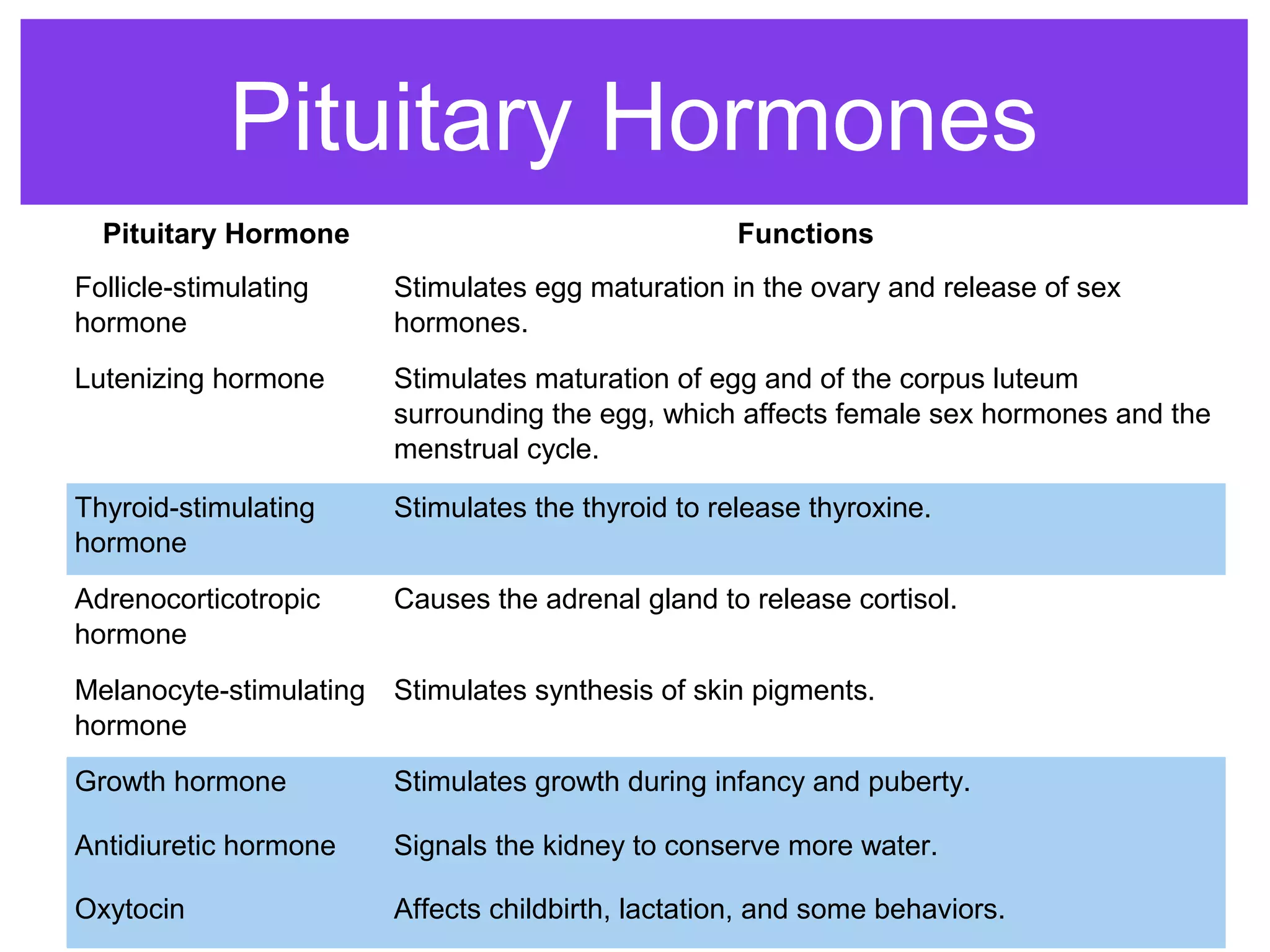
Pituitary Hormones
Pituitary Hormone Functions
Follicle-stimulating
hormone
Stimulates egg maturation in the ovary and release of sex
hormones.
Lutenizing hormone Stimulates maturation of egg and of the corpus luteum
surrounding the egg, which affects female sex hormones and the
menstrual cycle.
Thyroid-stimulating
hormone
Stimulates the thyroid to release thyroxine.
Adrenocorticotropic
hormone
Causes the adrenal gland to release cortisol.
Melanocyte-stimulating
hormone
Stimulates synthesis of skin pigments.
Growth hormone Stimulates growth during infancy and puberty.
Antidiuretic hormone Signals the kidney to conserve more water.
Oxytocin Affects childbirth, lactation, and some behaviors.
Endocrine Hormones
Gland Hormones Functions
Thyroid Thyroxine Regulates metabolism
Calcitonin Inhibits release of calcium from the bones
Parathyroids Parathyroid hormone Stimulates the release of calcium from the bones.
Islet cells (in
the pancreas)
Insulin Decreases blood sugar by promoting uptake of glucose by cells.
Glucagon Increases blood sugar by stimulating breakdown of glycogen in the liver.
Testes Testosterone Regulates sperm cell production and secondary sex characteristics.
Ovaries Estrogen Stimulates egg maturation, controls secondary sex characteristics.
Progesterone Prepares the uterus to receive a fertilized egg.
Adrenal cortex Epinephrine Stimulates “fight or flight” response.
Adrenal
medulla
Glucocorticoids Part of stress response, increase blood glucose levels and decrease
immune response.
Aldosterone Regulates sodium content in the blood.
Testosterone (in both
sexes)
Adult body form (greater muscle mass), libido.
Pineal gland Melatonin Sleep cycles, reproductive cycles in many mammals.
• Use the table on the last slide to diagnose
the following endocrine issues:
• A patient who feels cold and listless all
the time.
• A patient who is constantly keyed up
and nervous.
• An elderly patient who is having
chronic trouble falling asleep at night.
W
O
R
K
T
O
G
E
T
H
E
R
Homeostasis and Hormones
• Examples:
• Thyroid and temperature control
• Thyroid, Parathyroid, and calcium
• Pancreas and glucose control
• Knowing the following:
• The thyroid produces thyroxine, which
increases metabolism.
• Thyroid-stimulating hormone is
released by the pituitary.
• Sketch a negative feedback loop that
controls body temperature regulation.
W
O
R
K
T
O
G
E
T
H
E
R
Temperature Control
• Knowing the following:
• Calcitonin from the thyroid inhibits
calcium release from the bones.
• Parathyroid hormone stimulates
release of calcium from the bones.
• Sketch a negative feedback loop that
controls blood calcium level.
W
O
R
K
T
O
G
E
T
H
E
R
Blood Calcium
• Knowing that:
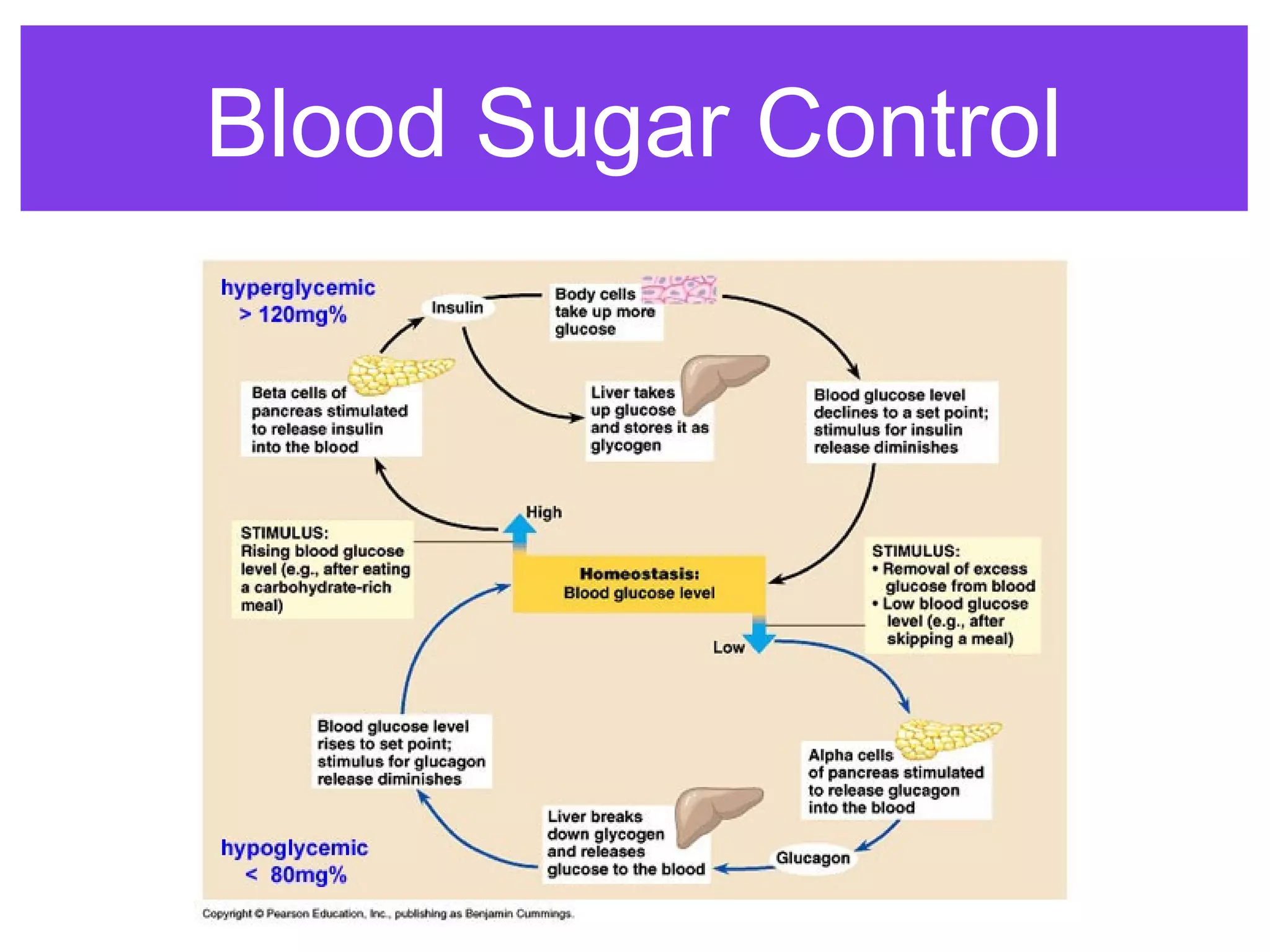
• Insulin from the pancreas lowers blood
glucose by stimulating body cells to take
up glucose.
• Glucagon from the pancreas increases
blood sugar by stimulating the liver to
break down glycogen into glucose.
• Sketch a negative feedback loop that
controls blood sugar.
W
O
R
K
T
O
G
E
T
H
E
R
Blood Sugar Control
• Given this patient profile, can you make a
diagnosis?
• Age – 14
• Gender – Male
• Exam: Normal weight, low blood
pressure
• Lab tests: High blood glucose, low levels
of insulin.
W
O
R
K
T
O
G
E
T
H
E
R
• Now how about this patient?
• Age – 40
• Gender – Male
• Exam: Obese, high blood pressure
• Lab tests: High blood glucose, normal
levels of insulin.
W
O
R
K
T
O
G
E
T
H
E
R
Other hormone roles
• Controlling sleep cycles (melatonin)
• Controlling reproductive cycles
(melatonin, sex hormones)
• Growth (growth hormone)
• Responding to stress or emergencies
(epinephrine and other hormones)
Hormones Everywhere!
• Many other organs besides the endocrine
glands produce hormones.
• Kidneys produce several hormones that
regulate blood pressure, which is
essential for kidney function.
• The digestive system produces several
hormones that regulate appetite.
Low body fat stimulates leptin production, which
stimulates appetite. The mouse is obese because its
low leptin levels give it an enormous appetite. Leptin
injections return the mouse’s weight to normal.
Humans sometimes have a leptin issue, too, but the
problem is a bad leptin receptor on body cells. Alas,
leptin injections won’t cure that.
The obese mouse
on the left does
not produce
enough leptin, a
hormone
produced by fat
cells.
Finally…
• Summarize the roles of the pituitary and
other endocrine glands in maintaining
homeostasis in the human body.

Endocrine system

  • 1.
  • 2.
    What are endocrine hormones? 12 3 33% 33%33% 1. Chemical signals from one cell to remote target cells. 2. Chemicals for direct cell-to-cell communication. 3. Chemicals that cross a gap between to adjacent cells.
  • 3.
    Messenger Molecules • Cellsmust communicate with one another to coordinate cell processes within tissues and to maintain homeostasis. • Cell-to-cell communication is carried out via messenger molecules.
  • 4.
    Three types of chemicalsignals are used for cell- to-cell communication.
  • 5.
    Four methods ofcell-to-cell communication are found in the human body, ranging from direct to remote communication.
  • 6.
    A muscle cellneeds to tell a neighboring muscle cell to contract. This will be accomplished by ___ communication: 1 2 3 4 25% 25%25%25% 1. Direct. 2. Synaptic. 3. Paracrine. 4. Endocrine.
  • 7.
    When blood sugaris high, body cells must be stimulated to take up sugar. This is accomplished by ___ communication. 1 2 3 4 25% 25%25%25% 1. Direct. 2. Synaptic. 3. Paracrine. 4. Endocrine.
  • 8.
    Aspirin helps relieveheadaches because it: 1 2 50%50% 1. Inhibits prostaglandin synthesis. 2. Stimulates prostaglandin synthesis.
  • 9.
    Endocrine hormones • Producedby endocrine (“ductless”) glands and secreted into the bloodstream. • Endocrine hormones may affect a wide array of target cells to produce multiple effects. • Two types: peptides (small proteins) and steroids (lipids).
  • 10.
  • 11.
    Peptide Hormones • Peptidehormones do not enter the cell directly. These hormones bind to receptor proteins in the cell membrane. • When the hormone binds with the receptor protein, a secondary messenger molecule initiates the cell response. • Because peptide hormones are water soluble, they often produce fast responses.
  • 12.
    (cytoplasm) (nucleus) peptide or amino acid-derived hormone (firstmessenger) (extracellular fluid) cyclic AMP- synthesizing enzyme cyclic AMP ATP inactive enzyme (second messenger) active enzyme reactant product plasma membrane nuclear envelope receptor The hormone binds to a receptor on the plasma membrane of a target cell 1 The activated enzymes catalyze specific reactions 4 The second messenger activates other enzymes 3 Hormone–receptor binding activates an enzyme that catalyzes the synthesis of a second messenger, such as cyclic AMP 2
  • 13.
    Steroid Hormones • Steroidhormones enter through the cell membrane and bind to receptors inside of the target cell. • These hormones may directly stimulate transcription of genes to make certain proteins. • Because steroids work by triggering gene activity, the response is slower than peptide hormones.
  • 14.
    gene plasma membrane ribosome hormone receptor steroid hormone mRNA (nucleus) RNApolymerase DNA (cytoplasm) new protein (extracellular fluid) A steroid hormone diffuses through the plasma membrane The hormone binds to a receptor in the nucleus or to a receptor in the cytoplasm that carries it into the nucleus The hormone–receptor complex binds to DNA and causes RNA polymerase to bind to a nearby promoter site for a specific gene RNA polymerase catalyzes the transcription of DNA into messenger RNA (mRNA) The mRNA leaves the nucleus, then attaches to a ribosome and directs the synthesis of a specific protein product 1 2 3 4 5 nuclear envelope
  • 15.
    If receptors fora hormone were blocked, the effect would be the same as if: 1 2 3 4 25% 25%25%25% 1. More hormone was added. 2. No hormone had been released. 3. More receptors had been added. 4. The receptors had not been blocked.
  • 16.
    Your doctor injectsa hormone as a treatment for a condition, and says it won’t take effect for at least 24 hours. What kind of hormone was used? 1 2 3 33% 33%33% 1. Peptide 2. Steroid 3. Amino acid derived
  • 17.
    • How doendocrine hormones “know” which cells are their target cells? W O R K T O G E T H E R
  • 18.
    Role of theHypothalamus • The thalamus receives sensory information, relays some to the hypothalamus. • Hypothalamus monitors the body for temperature, pH, other conditions. • Hypothalamus signals pituitary gland if conditions need to be corrected.
  • 19.
    Role of thePituitary • The pituitary is the “master gland” that signals other glands to produce their hormones when needed. • The anterior lobe of the pituitary receives signals from the hypothalamus, and responds by sending out the appropriate hormone to other endocrine glands. • The posterior pituitary receives oxytocin or antidiuretic hormone (ADH) from the hypothalamus, relays them to the body as necessary.
  • 20.
    hypothalamus pituitary (anterior lobe) capillary bed endocrine cell blood flow blood flow capillary bed pituitary (posteriorlobe) Oxytocin and ADH (blue triangles) are secreted into the blood via capillaries in the posterior pituitary Endocrine cells of the anterior pituitary secrete hormones (red squares) in response to releasing hormones; the pituitary hormones enter the bloodstream Neurosecretory cells of the hypothalamus produce oxytocin and ADH Releasing or inhibiting hormones (green circles) are secreted into capillaries feeding the anterior lobe of the pituitary Neurosecretory cells of the hypothalamus produce releasing and inhibiting hormones 1 2 1 2 3
  • 21.
    Pituitary Hormones Pituitary HormoneFunctions Follicle-stimulating hormone Stimulates egg maturation in the ovary and release of sex hormones. Lutenizing hormone Stimulates maturation of egg and of the corpus luteum surrounding the egg, which affects female sex hormones and the menstrual cycle. Thyroid-stimulating hormone Stimulates the thyroid to release thyroxine. Adrenocorticotropic hormone Causes the adrenal gland to release cortisol. Melanocyte-stimulating hormone Stimulates synthesis of skin pigments. Growth hormone Stimulates growth during infancy and puberty. Antidiuretic hormone Signals the kidney to conserve more water. Oxytocin Affects childbirth, lactation, and some behaviors.
  • 22.
    Endocrine Hormones Gland HormonesFunctions Thyroid Thyroxine Regulates metabolism Calcitonin Inhibits release of calcium from the bones Parathyroids Parathyroid hormone Stimulates the release of calcium from the bones. Islet cells (in the pancreas) Insulin Decreases blood sugar by promoting uptake of glucose by cells. Glucagon Increases blood sugar by stimulating breakdown of glycogen in the liver. Testes Testosterone Regulates sperm cell production and secondary sex characteristics. Ovaries Estrogen Stimulates egg maturation, controls secondary sex characteristics. Progesterone Prepares the uterus to receive a fertilized egg. Adrenal cortex Epinephrine Stimulates “fight or flight” response. Adrenal medulla Glucocorticoids Part of stress response, increase blood glucose levels and decrease immune response. Aldosterone Regulates sodium content in the blood. Testosterone (in both sexes) Adult body form (greater muscle mass), libido. Pineal gland Melatonin Sleep cycles, reproductive cycles in many mammals.
  • 23.
    • Use thetable on the last slide to diagnose the following endocrine issues: • A patient who feels cold and listless all the time. • A patient who is constantly keyed up and nervous. • An elderly patient who is having chronic trouble falling asleep at night. W O R K T O G E T H E R
  • 24.
    Homeostasis and Hormones •Examples: • Thyroid and temperature control • Thyroid, Parathyroid, and calcium • Pancreas and glucose control
  • 25.
    • Knowing thefollowing: • The thyroid produces thyroxine, which increases metabolism. • Thyroid-stimulating hormone is released by the pituitary. • Sketch a negative feedback loop that controls body temperature regulation. W O R K T O G E T H E R
  • 26.
  • 27.
    • Knowing thefollowing: • Calcitonin from the thyroid inhibits calcium release from the bones. • Parathyroid hormone stimulates release of calcium from the bones. • Sketch a negative feedback loop that controls blood calcium level. W O R K T O G E T H E R
  • 28.
  • 29.
    • Knowing that: •Insulin from the pancreas lowers blood glucose by stimulating body cells to take up glucose. • Glucagon from the pancreas increases blood sugar by stimulating the liver to break down glycogen into glucose. • Sketch a negative feedback loop that controls blood sugar. W O R K T O G E T H E R
  • 30.
  • 31.
    • Given thispatient profile, can you make a diagnosis? • Age – 14 • Gender – Male • Exam: Normal weight, low blood pressure • Lab tests: High blood glucose, low levels of insulin. W O R K T O G E T H E R
  • 32.
    • Now howabout this patient? • Age – 40 • Gender – Male • Exam: Obese, high blood pressure • Lab tests: High blood glucose, normal levels of insulin. W O R K T O G E T H E R
  • 33.
    Other hormone roles •Controlling sleep cycles (melatonin) • Controlling reproductive cycles (melatonin, sex hormones) • Growth (growth hormone) • Responding to stress or emergencies (epinephrine and other hormones)
  • 34.
    Hormones Everywhere! • Manyother organs besides the endocrine glands produce hormones. • Kidneys produce several hormones that regulate blood pressure, which is essential for kidney function. • The digestive system produces several hormones that regulate appetite.
  • 35.
    Low body fatstimulates leptin production, which stimulates appetite. The mouse is obese because its low leptin levels give it an enormous appetite. Leptin injections return the mouse’s weight to normal. Humans sometimes have a leptin issue, too, but the problem is a bad leptin receptor on body cells. Alas, leptin injections won’t cure that. The obese mouse on the left does not produce enough leptin, a hormone produced by fat cells.
  • 36.
    Finally… • Summarize theroles of the pituitary and other endocrine glands in maintaining homeostasis in the human body.