Dr. Nikhilraj
Reader
Dept of Oral Medicine & Radiology
MINDS, MAHE
DENTAL CONSIDERATIONS IN
ENDOCRINE DISEASES
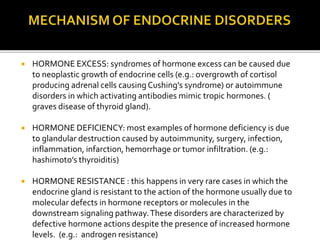
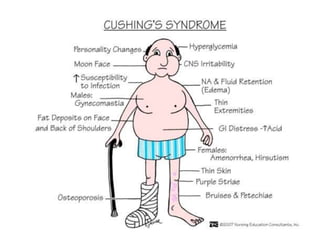
 HORMONE EXCESS: syndromes of hormone excess can be caused due
to neoplastic growth of endocrine cells (e.g.: overgrowth of cortisol
producing adrenal cells causingCushing's syndrome) or autoimmune
disorders in which activating antibodies mimic tropic hormones. (
graves disease of thyroid gland).
 HORMONE DEFICIENCY: most examples of hormone deficiency is due
to glandular destruction caused by autoimmunity, surgery, infection,
inflammation, infarction, hemorrhage or tumor infiltration. (e.g.:
hashimoto’s thyroiditis)
 HORMONE RESISTANCE : this happens in very rare cases in which the
endocrine gland is resistant to the action of the hormone usually due to
molecular defects in hormone receptors or molecules in the
downstream signaling pathway.These disorders are characterized by
defective hormone actions despite the presence of increased hormone
levels. (e.g.: androgen resistance)
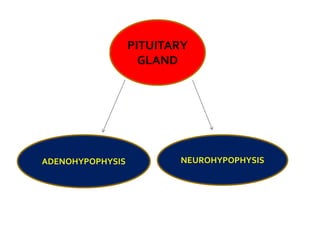
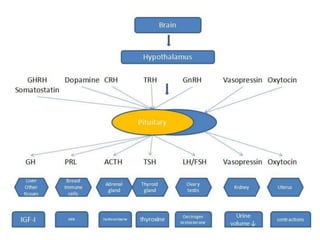
PITUITARY
GLAND
ADENOHYPOPHYSIS NEUROHYPOPHYSIS
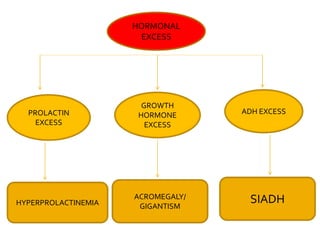
HORMONAL
EXCESS
HYPERPROLACTINEMIA
ACROMEGALY/
GIGANTISM
SIADH
PROLACTIN
EXCESS
GROWTH
HORMONE
EXCESS
ADH EXCESS
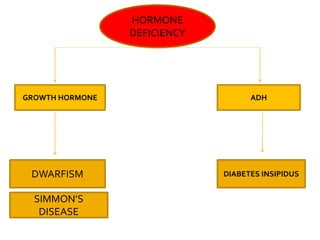
HORMONE
DEFICIENCY
GROWTH HORMONE ADH
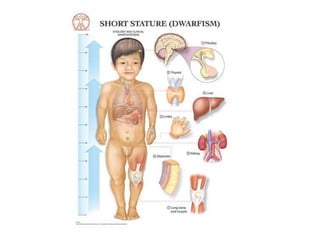
DWARFISM DIABETES INSIPIDUS
SIMMON’S
DISEASE
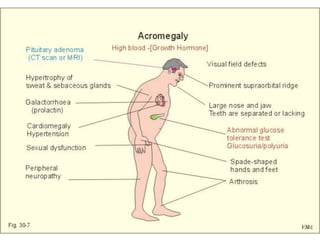
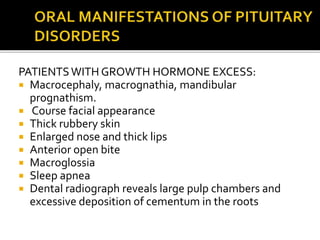
PATIENTSWITH GROWTH HORMONE EXCESS:
 Macrocephaly, macrognathia, mandibular
prognathism.
 Course facial appearance
 Thick rubbery skin
 Enlarged nose and thick lips
 Anterior open bite
 Macroglossia
 Sleep apnea
 Dental radiograph reveals large pulp chambers and
excessive deposition of cementum in the roots
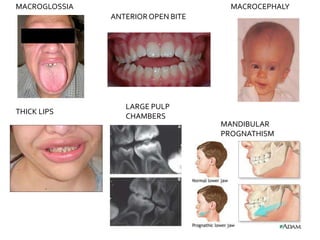
MACROGLOSSIA MACROCEPHALY
THICK LIPS
LARGE PULP
CHAMBERS
ANTERIOROPEN BITE
MANDIBULAR
PROGNATHISM
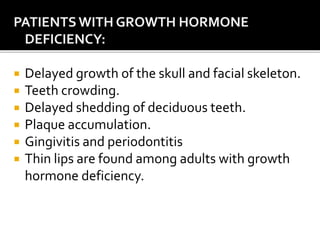
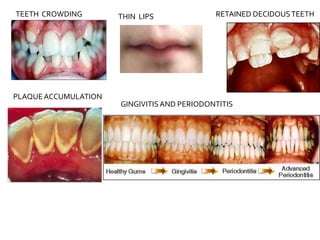
PATIENTSWITH GROWTH HORMONE
DEFICIENCY:
 Delayed growth of the skull and facial skeleton.
 Teeth crowding.
 Delayed shedding of deciduous teeth.
 Plaque accumulation.
 Gingivitis and periodontitis
 Thin lips are found among adults with growth
hormone deficiency.
TEETH CROWDING
PLAQUEACCUMULATION
RETAINED DECIDOUSTEETH
THIN LIPS
GINGIVITISAND PERIODONTITIS
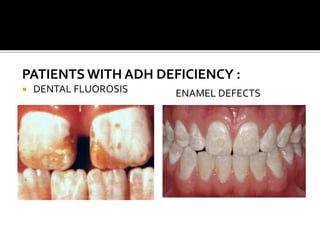
PATIENTSWITH ADH DEFICIENCY :
 DENTAL FLUOROSIS ENAMEL DEFECTS
The dental management of these patients must be done
considering their systemic complications and should
be conducted in consultation with their physician.
A patient with GH deficiency will require correction of
dental and skeletal malocclusions.
If a DI patient requires dental treatment It should be
done under general anesthesia.The anesthetist
should balance the fluid and electrolyte intake
because the urine of DI patients are mainly solute free
water. Glucocorticoids must be avoided in these
patients which may lead to more renal loss of water.
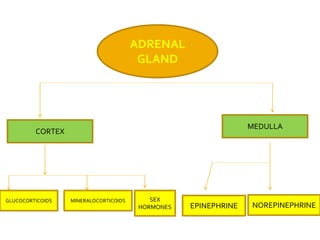
ADRENAL
GLAND
CORTEX
MEDULLA
GLUCOCORTICOIDS MINERALOCORTICOIDS
EPINEPHRINE NOREPINEPHRINE
SEX
HORMONES
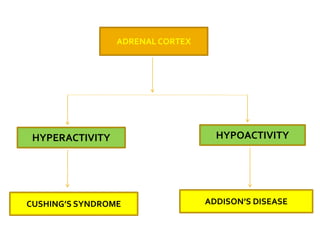
ADRENAL CORTEX
HYPERACTIVITY HYPOACTIVITY
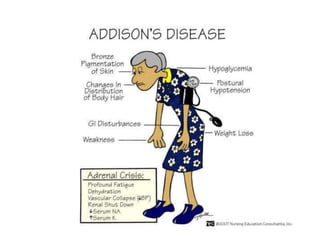
CUSHING’S SYNDROME ADDISON’S DISEASE
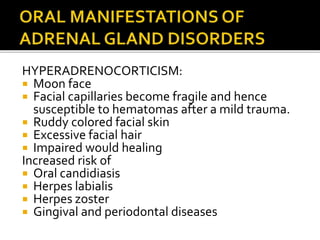
HYPERADRENOCORTICISM:
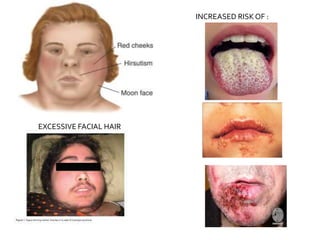
 Moon face
 Facial capillaries become fragile and hence
susceptible to hematomas after a mild trauma.
 Ruddy colored facial skin
 Excessive facial hair
 Impaired would healing
Increased risk of
 Oral candidiasis
 Herpes labialis
 Herpes zoster
 Gingival and periodontal diseases
EXCESSIVE FACIAL HAIR
INCREASED RISKOF :
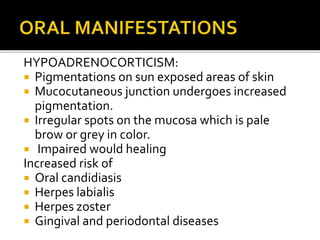
HYPOADRENOCORTICISM:
 Pigmentations on sun exposed areas of skin
 Mucocutaneous junction undergoes increased
pigmentation.
 Irregular spots on the mucosa which is pale
brow or grey in color.
 Impaired would healing
Increased risk of
 Oral candidiasis
 Herpes labialis
 Herpes zoster
 Gingival and periodontal diseases
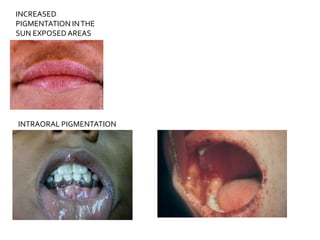
INCREASED
PIGMENTATION INTHE
SUN EXPOSEDAREAS
INTRAORAL PIGMENTATION
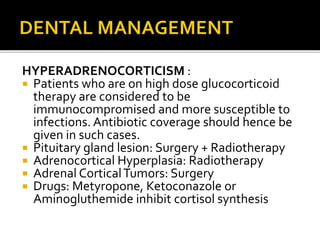
HYPERADRENOCORTICISM :
 Patients who are on high dose glucocorticoid
therapy are considered to be
immunocompromised and more susceptible to
infections. Antibiotic coverage should hence be
given in such cases.
 Pituitary gland lesion: Surgery + Radiotherapy
 Adrenocortical Hyperplasia: Radiotherapy
 Adrenal CorticalTumors: Surgery
 Drugs: Metyropone, Ketoconazole or
Aminogluthemide inhibit cortisol synthesis
HYPOADRENOCORTICISM:
 Initial management while treating these
patients should be by increasing the dosages
of corticosteroids before any invasive
procedures.This helps the patient to cope up
with the stress induced during the procedure.
Intravenous or intramuscular hydrocortisone
is mostly preferred.
 Glucorticoid replacement
 Mineralcorticoid supplement
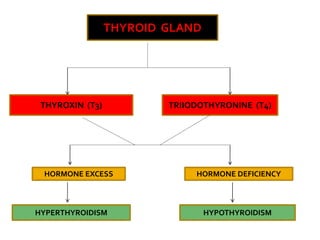
THYROID GLAND
THYROXIN (T3) TRIIODOTHYRONINE (T4)
HORMONE EXCESS HORMONE DEFICIENCY
HYPERTHYROIDISM HYPOTHYROIDISM
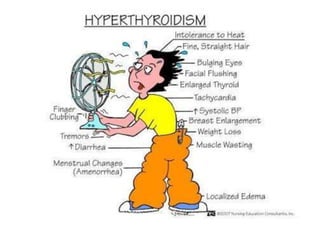
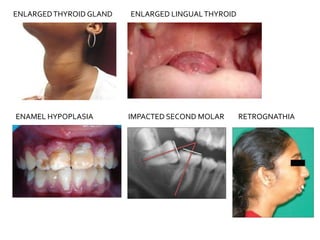
HYPERTHYROIDISM :
 Exacerbated response to pain and anxiety.
 Enlargement of thyroid, tongue, lingual
thyroid tissue.
 Enamel hypoplasia
 Impacted second molar
 Retrognathia
 Difficulty in swallowing.
 Increased susceptibility to caries and
periodontal diseases.
ENLARGEDTHYROID GLAND ENLARGED LINGUALTHYROID
ENAMEL HYPOPLASIA IMPACTED SECOND MOLAR RETROGNATHIA
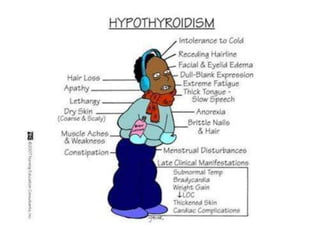
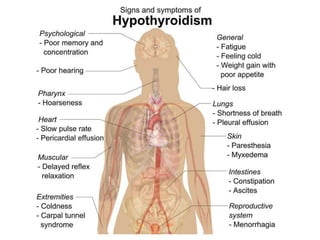
HYPOTHYROIDISM :
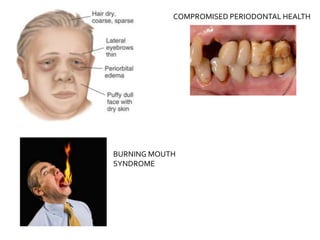
 Facial myxedema
 Enlarged tongue
 Compromised periodontal health
 Delayed tooth eruption
 Delayed wound healing
 Hoarse voice
 Salivary gland enlargement
 Burning mouth symptoms
 Increased bleeding after trauma
BURNING MOUTH
SYNDROME
COMPROMISED PERIODONTAL HEALTH
HYPERTHYROIDISM:
 Propylthiouracil - 60 – 100 mg IV
 There is increased risk of thyrotoxicosis
 Epinephrine is contraindicated
 Stress management and short appointments
 Increased susceptibility to infections can
occur as the side effect of drugs.
 Aspirin and NSAIDs may cause increased
level of circulatingT4.
HYPOTHYROIDISM :
 Thyroxine – 300microgram IV.
 Because of lethargy there might be diminished
respiratory rate and increased risk of aspiration of
dental materials.
 More susceptible to cardiovascular diseases.
 Antibiotic prophylaxis should be given before invasive
procedures.
 They are sensitive to CNS depressants and
barbiturates .
 Narcotics should be avoided for postoperative care.
 Local pressure should be applied for bleeding vessels.
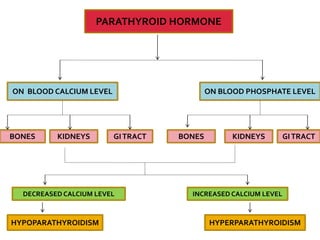
PARATHYROID HORMONE
ON BLOOD CALCIUM LEVEL ON BLOOD PHOSPHATE LEVEL
BONES KIDNEYS GITRACT BONES KIDNEYS GITRACT
DECREASED CALCIUM LEVEL INCREASED CALCIUM LEVEL
HYPOPARATHYROIDISM HYPERPARATHYROIDISM
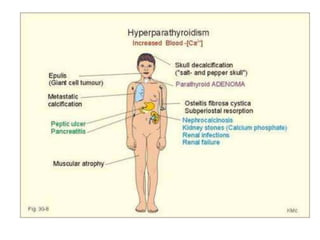
HYPERPARATHYROIDISM :
 Osteoporosis is seen in longstanding
hyperparathyroidism.
 Cortical resorption and rarefactions
 Loss of trabeculation - ground glass appearance.
 Thinning and eventual loss of cortical bone
especially in the lower border of mandible.
 Teeth becomes mobile , moves and causes
malocclusion.
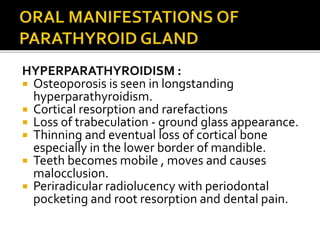
 Periradicular radiolucency with periodontal
pocketing and root resorption and dental pain.
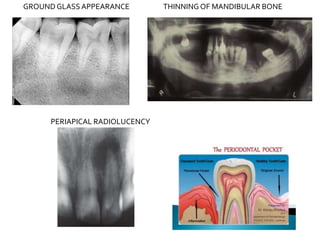
GROUND GLASS APPEARANCE THINNING OF MANDIBULAR BONE
PERIAPICAL RADIOLUCENCY
HYPOPARATHYROIDISM :
 Increased muscular and peripheral nerve
irritability.
 Dense maxilla and mandible .
 Oral mucocutaneous candidiasis may be
present.
 Enamel hypoplasia or parallel horizontal bands
on the enamel and poorly mineralized dentin.
 Malformed teeth anodontia, short blunt apices,
elongated pulp chambers, impacted teeth and
mandibular exostoses.
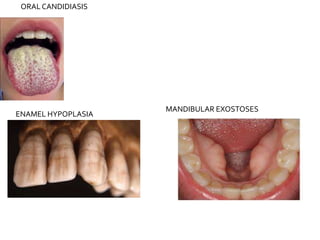
ORAL CANDIDIASIS
ENAMEL HYPOPLASIA
MANDIBULAR EXOSTOSES
HYPERPARATHYROIDISM :
 Careful handling should be done in order to
avoid iatrogenic jaw fracture.
HYPOPARATHYROIDISM :
 They might precipitate cardiac arrythmias,
convulsions, laryngoscope, or bronchospasm.
 Frequent oral examination should be done in
patients with dental abnormalities due
increased caries risk.
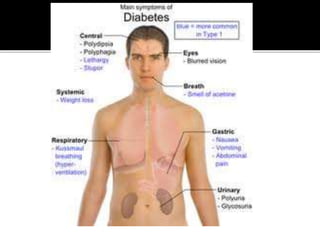
 Diabetes mellitus is clinically and genetically metabolic disease
characterized by abnormally elevated blood glucose levels and
dysregulation of carbohydrate protein and metabolism
 The primary features of this disorder is chronic hyperglycemia
resulting from either a defect in insulin secretion from the pancreas
or resistance of the body’s cell to insulin action or both
 Sustained hyperglycemia has been shown to affect almost all
tissues
in the body and is associated with complications effecting the eyes,
nerves, kidney and blood vessels responsible for high degree of
morbidity and mortality
 The oral health care professional is a crucial part of the health care
team in screening for and monitoring of patients with diabetes
mellitus
 Hereditary
 Genetic
 Diet
 Obesity
 Stress
 Type 1 - juvenile diabetes( insulin dependent
diabetes)
 Type 2 - adult diabetes(non insulin dependent
diabetes)
 Type 3-other specific types(genetic disorders,
pancreatic injury, infections etc)
 Type 4-gestational diabetes
 Type 1 diabetes is of sudden onset
 Type 2 diabetes is often present for years without over signs or
symptoms
 Polydypsia, ployphagia, polyuria
 Unexplained weight loss
 Poor wound healing
 Blurred vision
 High susceptibility to infections
 Neurologic symptoms like-numbness , dizziness and weakness
 GI symptoms
 Genito urinary symptoms
 Several dysfunction
 Eyes- retinopathy, catracts,blindness
 Kidney- neuropathy , renal failure
 Nervous system-sensory , peripheral neuropathy ,
cranial neuropathy affecting cranial nerves 3,4,6,7
 Skin and oral mucosa-unusual infections, delayed
wound healing
 CVS-macro vascular diseases leading to peripheral
vascular disease, coronary artery diseases,
ischemic ulcers, cerebrovascular diseases and
gangrenous feet
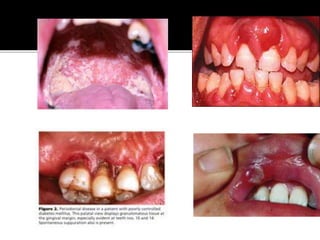
 Burning mouth
 Altered wound healing
 Candidal infections- acute pseudomembraneous
candidiasis
of the tongue, buccal mucosa and gingiva
 Xerostomia
 Sialadenitis
 Patients with xerostomia may also have high incidence of
caries , dental plaque accumulation.
 Gingivitis and periodontitis
 Oral mucosal ulcers
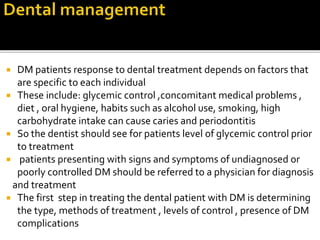
 DM patients response to dental treatment depends on factors that
are specific to each individual
 These include: glycemic control ,concomitant medical problems ,
diet , oral hygiene, habits such as alcohol use, smoking, high
carbohydrate intake can cause caries and periodontitis
 So the dentist should see for patients level of glycemic control prior
to treatment
 patients presenting with signs and symptoms of undiagnosed or
poorly controlled DM should be referred to a physician for diagnosis
and treatment
 The first step in treating the dental patient with DM is determining
the type, methods of treatment , levels of control , presence of DM
complications
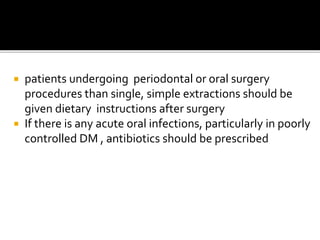
 patients undergoing periodontal or oral surgery
procedures than single, simple extractions should be
given dietary instructions after surgery
 If there is any acute oral infections, particularly in poorly
controlled DM , antibiotics should be prescribed
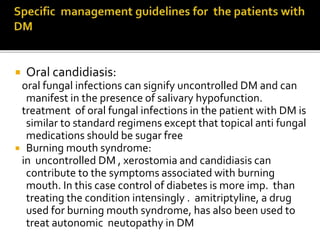
 Oral candidiasis:
oral fungal infections can signify uncontrolled DM and can
manifest in the presence of salivary hypofunction.
treatment of oral fungal infections in the patient with DM is
similar to standard regimens except that topical anti fungal
medications should be sugar free
 Burning mouth syndrome:
in uncontrolled DM , xerostomia and candidiasis can
contribute to the symptoms associated with burning
mouth. In this case control of diabetes is more imp. than
treating the condition intensingly . amitriptyline, a drug
used for burning mouth syndrome, has also been used to
treat autonomic neutopathy in DM
 The most common emergency related to DM in the dental
office is hypoglycemia, a potentially life threatening situation
that must be recognized and treated
 The signs and symptoms include confusion ,sweating, tremors,
agitation, anxiety, dizziness ,tingling or numbness
and tachycardia and severe hypoglycemia may result in seizures
or loss of consciousness
 As soon as a patient experience signs or symptoms of possible
hypoglycemia the dentist should check for the blood glucose
with a glucometer
 If a glucometer is unavailable the condition should be treated
a hypoglycemic episode and rapidly absorbed oral
carbohydrates are preferable
 Then the patient should be carefully observed for 30 to
60 mints after recovery . A second evaluation should be
done to ensure that the normal blood glucose level has
been achieved before the patient is released
 The medical emergency for hyper glycemia is less likely
to occur in the dental orifice, since it develops more
slowly than hypoglycemia care initiated by activating
the emergency medical system, opening the airway,
circulation and vital signs should be maintained and the
patient should be transported to hospital as soon as
possible.
The diseases of endocrine system are of
outmost importance and has to be given
proper care in order to avoid complication
that might even lead to fatal conditions.
Hence before treating a patient with endocrine
disorder we should follow guidelines for
stress reduction, infection control, chair
positioning, drug averse effect and
interactions .
 Burket’s –Text BookOf Oral Medicine-8th , 10th , 12th edition
 Shafer’s –Text BookOf Oral Pathology- 7th edition
 White and pharaoh – principle and interpretation- 6th edition
 Wood and goaz – differential diagnosis of oral and
maxillofacial lesions – 5th edition
 Scully and Cowson- Medical problems in dentistry- 4th
edition
 Review of endocrinology - 2009
ENDOCRINE DISORDERS ( Dr. NIKHIL RAJ)

ENDOCRINE DISORDERS ( Dr. NIKHIL RAJ)

  • 1.
    Dr. Nikhilraj Reader Dept ofOral Medicine & Radiology MINDS, MAHE
  • 2.
  • 3.
     HORMONE EXCESS:syndromes of hormone excess can be caused due to neoplastic growth of endocrine cells (e.g.: overgrowth of cortisol producing adrenal cells causingCushing's syndrome) or autoimmune disorders in which activating antibodies mimic tropic hormones. ( graves disease of thyroid gland).  HORMONE DEFICIENCY: most examples of hormone deficiency is due to glandular destruction caused by autoimmunity, surgery, infection, inflammation, infarction, hemorrhage or tumor infiltration. (e.g.: hashimoto’s thyroiditis)  HORMONE RESISTANCE : this happens in very rare cases in which the endocrine gland is resistant to the action of the hormone usually due to molecular defects in hormone receptors or molecules in the downstream signaling pathway.These disorders are characterized by defective hormone actions despite the presence of increased hormone levels. (e.g.: androgen resistance)
  • 4.
  • 6.
  • 8.
    HORMONE DEFICIENCY GROWTH HORMONE ADH DWARFISMDIABETES INSIPIDUS SIMMON’S DISEASE
  • 10.
    PATIENTSWITH GROWTH HORMONEEXCESS:  Macrocephaly, macrognathia, mandibular prognathism.  Course facial appearance  Thick rubbery skin  Enlarged nose and thick lips  Anterior open bite  Macroglossia  Sleep apnea  Dental radiograph reveals large pulp chambers and excessive deposition of cementum in the roots
  • 11.
    MACROGLOSSIA MACROCEPHALY THICK LIPS LARGEPULP CHAMBERS ANTERIOROPEN BITE MANDIBULAR PROGNATHISM
  • 12.
    PATIENTSWITH GROWTH HORMONE DEFICIENCY: Delayed growth of the skull and facial skeleton.  Teeth crowding.  Delayed shedding of deciduous teeth.  Plaque accumulation.  Gingivitis and periodontitis  Thin lips are found among adults with growth hormone deficiency.
  • 13.
  • 14.
    PATIENTSWITH ADH DEFICIENCY:  DENTAL FLUOROSIS ENAMEL DEFECTS
  • 15.
    The dental managementof these patients must be done considering their systemic complications and should be conducted in consultation with their physician. A patient with GH deficiency will require correction of dental and skeletal malocclusions. If a DI patient requires dental treatment It should be done under general anesthesia.The anesthetist should balance the fluid and electrolyte intake because the urine of DI patients are mainly solute free water. Glucocorticoids must be avoided in these patients which may lead to more renal loss of water.
  • 16.
  • 17.
  • 19.
    HYPERADRENOCORTICISM:  Moon face Facial capillaries become fragile and hence susceptible to hematomas after a mild trauma.  Ruddy colored facial skin  Excessive facial hair  Impaired would healing Increased risk of  Oral candidiasis  Herpes labialis  Herpes zoster  Gingival and periodontal diseases
  • 20.
  • 22.
    HYPOADRENOCORTICISM:  Pigmentations onsun exposed areas of skin  Mucocutaneous junction undergoes increased pigmentation.  Irregular spots on the mucosa which is pale brow or grey in color.  Impaired would healing Increased risk of  Oral candidiasis  Herpes labialis  Herpes zoster  Gingival and periodontal diseases
  • 23.
  • 24.
    HYPERADRENOCORTICISM :  Patientswho are on high dose glucocorticoid therapy are considered to be immunocompromised and more susceptible to infections. Antibiotic coverage should hence be given in such cases.  Pituitary gland lesion: Surgery + Radiotherapy  Adrenocortical Hyperplasia: Radiotherapy  Adrenal CorticalTumors: Surgery  Drugs: Metyropone, Ketoconazole or Aminogluthemide inhibit cortisol synthesis
  • 25.
    HYPOADRENOCORTICISM:  Initial managementwhile treating these patients should be by increasing the dosages of corticosteroids before any invasive procedures.This helps the patient to cope up with the stress induced during the procedure. Intravenous or intramuscular hydrocortisone is mostly preferred.  Glucorticoid replacement  Mineralcorticoid supplement
  • 26.
    THYROID GLAND THYROXIN (T3)TRIIODOTHYRONINE (T4) HORMONE EXCESS HORMONE DEFICIENCY HYPERTHYROIDISM HYPOTHYROIDISM
  • 28.
    HYPERTHYROIDISM :  Exacerbatedresponse to pain and anxiety.  Enlargement of thyroid, tongue, lingual thyroid tissue.  Enamel hypoplasia  Impacted second molar  Retrognathia  Difficulty in swallowing.  Increased susceptibility to caries and periodontal diseases.
  • 29.
    ENLARGEDTHYROID GLAND ENLARGEDLINGUALTHYROID ENAMEL HYPOPLASIA IMPACTED SECOND MOLAR RETROGNATHIA
  • 31.
    HYPOTHYROIDISM :  Facialmyxedema  Enlarged tongue  Compromised periodontal health  Delayed tooth eruption  Delayed wound healing  Hoarse voice  Salivary gland enlargement  Burning mouth symptoms  Increased bleeding after trauma
  • 32.
  • 33.
    HYPERTHYROIDISM:  Propylthiouracil -60 – 100 mg IV  There is increased risk of thyrotoxicosis  Epinephrine is contraindicated  Stress management and short appointments  Increased susceptibility to infections can occur as the side effect of drugs.  Aspirin and NSAIDs may cause increased level of circulatingT4.
  • 34.
    HYPOTHYROIDISM :  Thyroxine– 300microgram IV.  Because of lethargy there might be diminished respiratory rate and increased risk of aspiration of dental materials.  More susceptible to cardiovascular diseases.  Antibiotic prophylaxis should be given before invasive procedures.  They are sensitive to CNS depressants and barbiturates .  Narcotics should be avoided for postoperative care.  Local pressure should be applied for bleeding vessels.
  • 35.
    PARATHYROID HORMONE ON BLOODCALCIUM LEVEL ON BLOOD PHOSPHATE LEVEL BONES KIDNEYS GITRACT BONES KIDNEYS GITRACT DECREASED CALCIUM LEVEL INCREASED CALCIUM LEVEL HYPOPARATHYROIDISM HYPERPARATHYROIDISM
  • 37.
    HYPERPARATHYROIDISM :  Osteoporosisis seen in longstanding hyperparathyroidism.  Cortical resorption and rarefactions  Loss of trabeculation - ground glass appearance.  Thinning and eventual loss of cortical bone especially in the lower border of mandible.  Teeth becomes mobile , moves and causes malocclusion.  Periradicular radiolucency with periodontal pocketing and root resorption and dental pain.
  • 38.
    GROUND GLASS APPEARANCETHINNING OF MANDIBULAR BONE PERIAPICAL RADIOLUCENCY
  • 40.
    HYPOPARATHYROIDISM :  Increasedmuscular and peripheral nerve irritability.  Dense maxilla and mandible .  Oral mucocutaneous candidiasis may be present.  Enamel hypoplasia or parallel horizontal bands on the enamel and poorly mineralized dentin.  Malformed teeth anodontia, short blunt apices, elongated pulp chambers, impacted teeth and mandibular exostoses.
  • 41.
  • 42.
    HYPERPARATHYROIDISM :  Carefulhandling should be done in order to avoid iatrogenic jaw fracture. HYPOPARATHYROIDISM :  They might precipitate cardiac arrythmias, convulsions, laryngoscope, or bronchospasm.  Frequent oral examination should be done in patients with dental abnormalities due increased caries risk.
  • 43.
     Diabetes mellitusis clinically and genetically metabolic disease characterized by abnormally elevated blood glucose levels and dysregulation of carbohydrate protein and metabolism  The primary features of this disorder is chronic hyperglycemia resulting from either a defect in insulin secretion from the pancreas or resistance of the body’s cell to insulin action or both  Sustained hyperglycemia has been shown to affect almost all tissues in the body and is associated with complications effecting the eyes, nerves, kidney and blood vessels responsible for high degree of morbidity and mortality  The oral health care professional is a crucial part of the health care team in screening for and monitoring of patients with diabetes mellitus
  • 44.
     Hereditary  Genetic Diet  Obesity  Stress
  • 45.
     Type 1- juvenile diabetes( insulin dependent diabetes)  Type 2 - adult diabetes(non insulin dependent diabetes)  Type 3-other specific types(genetic disorders, pancreatic injury, infections etc)  Type 4-gestational diabetes
  • 47.
     Type 1diabetes is of sudden onset  Type 2 diabetes is often present for years without over signs or symptoms  Polydypsia, ployphagia, polyuria  Unexplained weight loss  Poor wound healing  Blurred vision  High susceptibility to infections  Neurologic symptoms like-numbness , dizziness and weakness  GI symptoms  Genito urinary symptoms  Several dysfunction
  • 48.
     Eyes- retinopathy,catracts,blindness  Kidney- neuropathy , renal failure  Nervous system-sensory , peripheral neuropathy , cranial neuropathy affecting cranial nerves 3,4,6,7  Skin and oral mucosa-unusual infections, delayed wound healing  CVS-macro vascular diseases leading to peripheral vascular disease, coronary artery diseases, ischemic ulcers, cerebrovascular diseases and gangrenous feet
  • 49.
     Burning mouth Altered wound healing  Candidal infections- acute pseudomembraneous candidiasis of the tongue, buccal mucosa and gingiva  Xerostomia  Sialadenitis  Patients with xerostomia may also have high incidence of caries , dental plaque accumulation.  Gingivitis and periodontitis  Oral mucosal ulcers
  • 51.
     DM patientsresponse to dental treatment depends on factors that are specific to each individual  These include: glycemic control ,concomitant medical problems , diet , oral hygiene, habits such as alcohol use, smoking, high carbohydrate intake can cause caries and periodontitis  So the dentist should see for patients level of glycemic control prior to treatment  patients presenting with signs and symptoms of undiagnosed or poorly controlled DM should be referred to a physician for diagnosis and treatment  The first step in treating the dental patient with DM is determining the type, methods of treatment , levels of control , presence of DM complications
  • 52.
     patients undergoingperiodontal or oral surgery procedures than single, simple extractions should be given dietary instructions after surgery  If there is any acute oral infections, particularly in poorly controlled DM , antibiotics should be prescribed
  • 53.
     Oral candidiasis: oralfungal infections can signify uncontrolled DM and can manifest in the presence of salivary hypofunction. treatment of oral fungal infections in the patient with DM is similar to standard regimens except that topical anti fungal medications should be sugar free  Burning mouth syndrome: in uncontrolled DM , xerostomia and candidiasis can contribute to the symptoms associated with burning mouth. In this case control of diabetes is more imp. than treating the condition intensingly . amitriptyline, a drug used for burning mouth syndrome, has also been used to treat autonomic neutopathy in DM
  • 54.
     The mostcommon emergency related to DM in the dental office is hypoglycemia, a potentially life threatening situation that must be recognized and treated  The signs and symptoms include confusion ,sweating, tremors, agitation, anxiety, dizziness ,tingling or numbness and tachycardia and severe hypoglycemia may result in seizures or loss of consciousness  As soon as a patient experience signs or symptoms of possible hypoglycemia the dentist should check for the blood glucose with a glucometer  If a glucometer is unavailable the condition should be treated a hypoglycemic episode and rapidly absorbed oral carbohydrates are preferable
  • 55.
     Then thepatient should be carefully observed for 30 to 60 mints after recovery . A second evaluation should be done to ensure that the normal blood glucose level has been achieved before the patient is released  The medical emergency for hyper glycemia is less likely to occur in the dental orifice, since it develops more slowly than hypoglycemia care initiated by activating the emergency medical system, opening the airway, circulation and vital signs should be maintained and the patient should be transported to hospital as soon as possible.
  • 56.
    The diseases ofendocrine system are of outmost importance and has to be given proper care in order to avoid complication that might even lead to fatal conditions. Hence before treating a patient with endocrine disorder we should follow guidelines for stress reduction, infection control, chair positioning, drug averse effect and interactions .
  • 57.
     Burket’s –TextBookOf Oral Medicine-8th , 10th , 12th edition  Shafer’s –Text BookOf Oral Pathology- 7th edition  White and pharaoh – principle and interpretation- 6th edition  Wood and goaz – differential diagnosis of oral and maxillofacial lesions – 5th edition  Scully and Cowson- Medical problems in dentistry- 4th edition  Review of endocrinology - 2009