PULPAL PATHOLOGY AND ITS
SEQUELAE
Presenter
Dr. Ravi Acharya
PG Resident
Dept. Of Conservative Dentistry and Endodontics
B.P.Koirala Institute of Health Sciences
Dharan, Nepal
"The pulp lives for the dentin and the
dentin lives by the grace of the pulp.
Few marriages in nature are marked by
a greater affinity."
Alfred L. Ogilvie
CONTENTS
• Response of the pulp to dental caries
• Immune response in the dental pulp
• Hard tissue response to irritation
• Histologic changes in acute inflammation
• Histologic changes in the chronic inflammation
• Haemodynamic changes in the pulp during
caries
• Neural changes during pulpal inflammation
• Antiinflammatory and antinociceptive
mechanisms in the dental pulp
• Less common pulpal responses
• Factors limiting the pulps response
• Iatrogenic effects on the dental pulp
• Systemic factors
• Pulpal sequelae to impact trauma
The causes of pulp inflammation, necrosis, and dystrophy are:
I. Bacterial
A. Coronal ingress
1. Caries
2. Fracture
a. Complete
b. Incomplete (cracks, infraction)
3. Nonfracture trauma
4. Anomalous tract
a. Dens invaginatus (dens in dente)
b. Dens evaginatus
c. Radicular lingual groove (palatogingival
groove)
B. Radicular ingress
1. Caries
2. Retrogenic infection
a. Periodontal pocket
b. Periodontal abscess
3. Hematogenic
II. Traumatic
A. Acute
1. Coronal fracture
2. Radicular fracture
3. Vascular stasis
4. Luxation
5. Avulsion
B. Chronic
1. Adolescent female bruxism
2. Traumatism
3. Attrition or abrasion
4. Erosion
III. Iatral
A. Cavity preparation
1. Heat of preparation
2. Depth of preparation
3. Dehydration
4. Pulp horn extensions
5. Pulp hemorrhage
6. Pulp exposure
7. Pin insertion
8. Impression taking
B. Restoration
1. Insertion
2. Fracture
a. Complete
b. Incomplete
3. Force of cementing
4. Heat of polishing
C. Intentional extirpation and root canal filling
D. Orthodontic movement
E. Periodontal curettage
F. Electrosurgery
G. Laser burn
H. Periradicular curettage
I. Rhinoplasty
J. Osteotomy
K. Intubation for general anesthesia
IV. Chemical
A. Restorative materials
1. Cements
2. Plastics
3. Etching agents
4. Cavity liners
5. Dentin bonding agents
6. Tubule blockage agents
B. Disinfectants
1. Silver nitrate
2. Phenol
3. Sodium fluoride
C. Desiccants
1. Alcohol
2. Ether
3. Others
V. Idiopathic
A. Aging
B. Internal resorption
C. External resorption
D.Hereditary hypophosphatemia
E. Sickle cell anemia
F. Herpes zoster infection
G.Human immunodeficiency virus (HIV) and
acquired immune deficiency syndrome (AIDS)
RESPONSE OF THE PULP TO DENTAL
CARIES
• Bacteria are responsible for most pulpal disease.
• Kakehashi et al. proved that exposed pulps in
gnotobiotic (germ free) rats did not become
inflamed while similarly exposed pulps in rats with
a full oral flora did.
• The response of the pulp may vary depending on
whether the caries process progresses rapidly
(acute caries) or slowly (chronic caries), or is
completely inactive (arrested caries).
• Conditions for growth and availability of
nutrients are quite different in enamel caries than
in dentinal caries
• Products of bacterial metabolism, notably
organic acids and proteolytic enzymes, destroy
enamel and dentin.
• Relatively large bacterial product, bacterial
endotoxin, is able to diffuse through dentinal
tubules to the pulp chamber .
• Bacterial antigens diffusing from the lesion to the
pulp through the dentinal tubules are captured
and processed by APCs, which leads to the
activation of the immune system.
• Deep penetration of dentin by bacteria results in
acute inflammation and eventually infection and
necrosis of the pulp.
• The first reaction of odontoblasts to superficial
caries lesions in enamel is a marked reduction in
the cytoplasm: nucleus ratio, suggesting an altered
metabolism.
• In active lesions, primary odontoblasts are
involved in the formation of reactionary dentin.
• However, even before the appearance of
inflammatory changes, the size and number of
odontoblasts decrease, at which time their
metabolic activity is reduced while cellular
proliferative activity in the cell-free zone of the
pulp increases.
• Although normally tall columnar cells,
odontoblasts adversely affected by caries become
flat to cuboidal in shape.
• The boundary zone between primary and
reparative dentin is atubular and lacks continuity
of tubules.
• Electron microscopic examination of the
odontoblasts beneath a superficial caries lesion
revealed cellular injury in the form of ballooning
degeneration of mitochondria and a reduction in
the number and size of other cytoplasmic
organelles.
• Eventually, the primary odontoblasts die, usually
followed by proliferation of replacement
odontoblasts and reparative dentin formation.
•Bacteria infect some tubules
long before others are infected.
• The distribution of infected tubules is not
uniform, as neighboring uninfected tubules are
frequently found interspersed among infected
tubules.
•At the completion of cavity or
crown preparation, some infected
tubules may not have been
eliminated.
• Basic reactions that tend to protect the pulp
against caries includes:
1. Decrease in the permeability of the dentin due to
dentinal sclerosis,
2. Formation of new dentin (tertiary dentin),
3. Effectiveness of inflammatory and immunologic
reactions.
Dentinal Sclerosis:
• It develops at the periphery of almost all caries
lesions.
• Most common response to caries.
• In dentinal sclerosis, the dentinal tubules
become partly or completely filled with mineral
deposits consisting of both hydroxyapatite and
whitlockite crystals.
• Dentinal sclerosis reduces the permeability of
dentin, thus shielding the pulp from irritation.
• In order for sclerosis to occur, vital odontoblast
processes must be present within the tubules.
• In highly active caries lesions, odontoblast
may die before sclerosis has occurred.
• Disintegration of odontoblast processes
within the tubules results in a dead tract.
Tertiary dentin:
• There are two types of tertiary dentin based upon
the cell type responsible for dentin production:
1. Reactionary Dentin
2. Reparative Dentin
• Compared with primary dentin, reparative dentin
is less tubular and less well calcified.
• At times no tubules are formed; this type of
tertiary dentin has been characterized as a form of
fibrodentin.
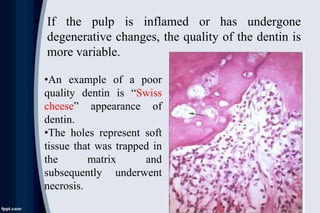
• If the pulp is inflamed or has undergone
degenerative changes, the quality of the dentin is
more variable.
•An example of a poor
quality dentin is “Swiss
cheese” appearance of
dentin.
•The holes represent soft
tissue that was trapped in
the matrix and
subsequently underwent
necrosis.
Hard tissue response to irritation
Irritational dentin
• An odontoblast that is mildly stimulated
may form dentin that closely resembles
normal physiologic dentin.
• Since odontoblasts are incapable of
mitosis, they must be replaced by
underlying cells that mature from dividing
undifferentiated precursors or by
redifferentiation of fibroblasts.
• These new cells are atypical, frequently
without a process, and thus form an
atypical irregular structure called irritation
or reparative dentin.
• Its formation occurs independently of the
presence of inflammation and may form on
the walls of an irreversibly damaged pulp.
• Continued irritation dentin formation may
depend on persistent injurious stimuli; such
a condition is neither desirable nor
reparative.
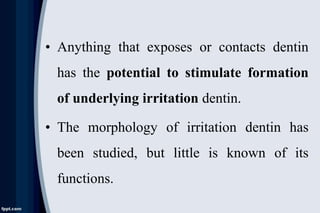
• Anything that exposes or contacts dentin
has the potential to stimulate formation
of underlying irritation dentin.
• The morphology of irritation dentin has
been studied, but little is known of its
functions.
• Some attribute protective properties to this
tissue and therefore recommend methods
or materials to stimulate its formation.
• Others doubt its ability to protect the
underlying pulp.
• They have demonstrated its permeability,
permitting passage of chemicals and
bacteria and other substances.
• The presence of irritation dentin delays, but
does not prevent, the eventual penetration
of caries into the pulp.
BACTERIA AND THEIR BY-PRODUCT
CAN REACH THE PULP FROM OTHER
SOURCES
1. Anomalous Crown Morphology, Fractures,
and Cracks
Fig: Palatogingival Groove
Classification of invaginated teeth
2. Periodontal Disease
Saglie R et al: Scanning electron
microscopic depiction of the inside of
an ulcerated and infected pocket. Area
1 (right border) is the surface view of
lining epithelium. C, epithelial cell.
Dotted line demarcates the cut
surface of the epithelium (Area 2).
The basement lamina (BL) separates
the epithelium from connective tissue
(Area 3), which contains collagen
fibers (CF) and connective tissue cells
(CC). Bacteria (top arrow) enter a
hole (H) in the epithelium (left by a
desquamated cell) and travel through a
“tunnel” to emerge into connective
tissue through the hole. Abundant
cocci, rods, and filaments are seen
alongside the hole on the basement
lamina. Filaments and cocci are then
seen perforating the basement
membrane (double arrow) to
penetrate connective tissue and
reach blood and/or lymph vessels.
3.Blood Stream (Anachoresis)
ANTIGEN RECOGNITION IN THE
DENTAL PULP
• All three antigen-presenting cell types
expressing the type II major histocompatibility
complex (MHC) surface proteins,
macrophages, dendritic cells, and B
lymphocytes, are present and active in the
pulp's response to bacteria and toxins.
• In a normal healthy pulp, macrophages are
present in a resting form, as monocytcs.
• Macrophages require stimulation by bacteria or
cytokines before they express type II MHC
molecules.
• At rest they are found predominantly around
blood vessels though a few are distributed
throughout the tissue.
• Dendritic cells form a network throughout the
pulp concentrating around blood vessels and the
odontoblast layer.
• Some of the dendritic cells in the odontoblast
layer extend their processes into the dentinal
tubules.
• They constantly express the MHC molecules on
their surface without provocation.
• The number of dendritic cells increases in the
pulp when it becomes inflamed and they
accumulate beneath the carious lesion.
• B cells have been reported in the normal pulp but
are rather rare.
• Their role in the initial stages of antigen
recognition and presentation in the pulp is
unclear.
• Occasional T cells are found in normal pulp and
may be activated by antigen presenting cells
locally.
• In the pulp, there is a close anatomic relationship
between nerve fibers and dendritic cells, and
both increase in parallel when the pulp is
inflamed.
• The sympathetic nervous system has recently
been shown to have a modulating influence on
pulpal inflammation.
• The sympathetic system inhibits the production
of proinflammatory cytokines, although
stimulating the production of antiinflammatory
cytokines.
• In addition, T
lymphocytes and other
leukocytes produce anti
nociceptive molecules
such as β-endorphin and
somatostatin during
inflammation which
reduce the excitability of
pain fibers.
• Odontoblasts are the first cells to encounter an
antigen diffusing along the dentinal tubules.
• Odontoblasts respond differentially to the toxins
produced by gram-positive and gram negative
bacteria.
• Odontoblasts express microbial pattern
recognition receptors in situ, allowing
differential responses to gram-positive and
gram-negative bacteria.
• Pro-inflammatory cytokines and innate immune
responses in decayed teeth may result from TLR
signaling.
Veerayutthwilai O, Byers MR, Pharn TTT, et al. Differential regulation of immune
responses by odontoblasts. OralMicrobiol lmmunol 2007;22:5--1 3.
The Process of Antigen Recognition
• Dendritic cells and macrophages bind to and
phagocytize antigen that is then processed
intracellularly, bound to MHC molecules, and
moved to the cell membrane for recognition by T
cells.
• B cells bind antigen to specific cell surface
receptors.
• All the antigen-presenting cell types enter the
blood stream and carry the surface molecules
to the lymph nodes where T cell activation
takes place, though some may occur locally.
• The T cells respond not to the antigen itself but
to the modified complex in the cell membrane
of the antigen- presenting cells.
• Being stationary, the odontoblast does not
participate directly in the activation of T cells
but, presumably, activates dendritic cells.
HISTOLOGIC CHANGES IN ACUTE
INFLAMMATION
• Cariogenic bacteria in the dental plaque produce
a mixture of acids and enzymes that dissolve the
mineral elements of enamel and dentin and then
digest the organic matrix.
• The initial removal of mineral makes the enamel
more permeable and the bacterial toxins will
diffuse well ahead of cavitation.
• Once the dentin is reached, the toxins and, much
later, the bacteria themselves will travel along the
dentinal tubules.
• Clearly, variations in the composition and
thickness of enamel and dentin, and particularly
the patency of the dentinal tubules, will determine
the rate at which these toxins reach the pulp.
• In vital teeth, this
movement will be
opposed by the outward
flow of dentinal fluid.
• Toxins, however, reach
the pulp at a very early
stage relative to surface
changes.
HISTOLOGIC CHANGES IN CHRONIC
INFLAMMATION
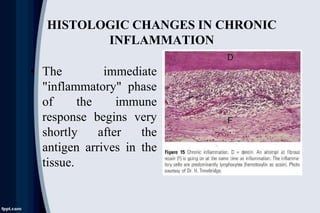
• The immediate
"inflammatory" phase
of the immune
response begins very
shortly after the
antigen arrives in the
tissue.
• If the body has been exposed to the antigen on a
previous occasion, the production of specific
antibodies begins very quickly (within a few
hours).
• If antigen not encountered before, it takes
several days for the production of antibodies.
• At this stage, the pulpal response is
characterized by the presence of the
lymphocytes.
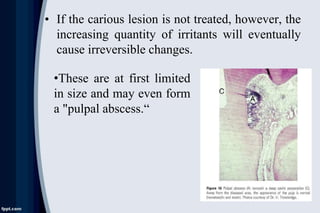
• If the carious lesion is not treated, however, the
increasing quantity of irritants will eventually
cause irreversible changes.
•These are at first limited
in size and may even form
a "pulpal abscess.“
• This local necrosis, unless checked, will
progress gradually throughout the tissue and
into the periradicular tissues.
• The progress of tissue damage in the pulp is
determined by the presence and spread of
bacterial toxins and is not due to the
"strangulation" of blood vessels.
Suppuration and Necrosis
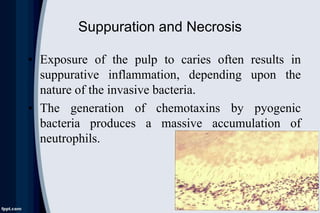
• Exposure of the pulp to caries often results in
suppurative inflammation, depending upon the
nature of the invasive bacteria.
• The generation of chemotaxins by pyogenic
bacteria produces a massive accumulation of
neutrophils.
• HOCL produced from neutrophil destroys
bacteria by halogenation and lipid peroxidation.
• The ability to avoid phagocytosis is of key
importance in the virulence of pyogenic bacteria.
• Because of certain antiphagocytic virulence factors,
it is difficult for neutrophils to kill pyogenic
bacteria, and as a result more and more neutrophils
are mobilized in an attempt to overwhelm the
invading organisms.
• As bacteria invade deep into the dentin, neutrophils
begin to accumulate adjacent to the dentinal tubules.
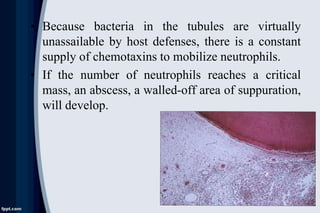
• Because bacteria in the tubules are virtually
unassailable by host defenses, there is a constant
supply of chemotaxins to mobilize neutrophils.
• If the number of neutrophils reaches a critical
mass, an abscess, a walled-off area of suppuration,
will develop.
• The death of neutrophils in situ gives rise to
purulence, formed chiefly by autolysis of
neutrophils by their own lysosomal enzymes.
• As this process continues, an abscess cavity is
formed.
• Tissue necrosis develops when neutrophils release
activated oxygen metabolites and proteases.
• It results in liquefaction necrosis.
• As the caries exposure enlarges and an ever-
increasing number of bacteria enter the pulp, the
defending forces are eventually overwhelmed
• Therefore, when blood flow can no longer meet the
demand for inflammatory elements, the
inflammatory response can no longer be sustained
and bacteria may grow unopposed within the pulp
chamber.
• This ultimately leads to total pulp necrosis.
• Exposure of the pulp to caries does not invariably
result in suppuration.
• In the absence of a sufficient number of pyogenic
bacteria, a localized area of necrosis may develop.
• The body responds to this necrotic debris by
attempting to produce reparative dentin.
• Exposure of the pulp may also trigger extensive
fibrosis of the pulp.
Chronic ulcerative pulpitis
• The histologic term ulcerative is actually a
misnomer in these cases because no surface
epithelium is involved.
• This condition is the result of local excavation of
the surface of the pulp resulting from liquefaction
necrosis of pulp tissue.
• Excavation is likely to occur when drainage of
inflammatory exudate is established through a
pathway of decomposed dentin.
•The inflammation remains
localized and asymptomatic
because drainage prevents a
buildup of pressure.
Chronic hyperplastic pulpitis
• Occurs most often in primary and immature
permanent teeth with incompletely formed roots.
• At this stage of development, numerous blood
vessels enter the pulp through the wide apical
foramen.
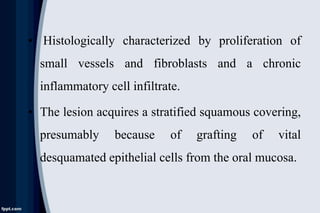
• Histologically characterized by proliferation of
small vessels and fibroblasts and a chronic
inflammatory cell infiltrate.
• The lesion acquires a stratified squamous covering,
presumably because of grafting of vital
desquamated epithelial cells from the oral mucosa.
• Chronic hyperplastic pulpitis develops when carious
pulp exposure creates a large open cavity.
• This opening establishes a pathway for drainage of
the inflammatory exudate.
• When drainage is established, acute inflammation
subsides and chronic inflammatory tissue
proliferates through the opening created by the
exposure to form a polyp.
HEMODYNAMIC CHANGES IN THE PULP
DURING CARIES
Blood Flow
• Using plaque extract to initiate inflammation in a
rat incisor model, a 40% increase in blood flow
in a "moderately inflamed" pulp but a 35%
reduction in a "partially necrotic" pulp was
reported.
Kim S, Liu M, Simchon 5, Dorscher-Kim JE. Effects of selected inflammatory mediators on blood
flow and vascular permeability in the dental pulp. Proc Finn Dent Soc t 992;88 (Suppl 1):387-92.
• The application of Lippolysaccharide to the pulp
resulted, after 10 minutes, in a reduction in blood
flow that continued for the 3-hour duration of the
experiments. This was interpreted as a limited
ability of the pulp to respond.
Blelsa A, Berggreen E, Fristad I, et al. Cytokine signalling in rat pulp interstitial fluid and transcapillary fluid
exchange during lipopolysaccharide-induced acute inflammation. J PhysioI 2006;573:225-36.
Interstitial Fluid Pressure
• The healthy dental pulp has an interstitial
pressure of 5 to 10 mm Hg.
• One of the key changes during inflammation is
the movement of fluid from within the
capillaries into the interstitial space.
• Increasing the amount of fluid in a rigid chamber
leads to an increase in pressure. It was assumed,
for a long time, that such a pressure rise in the
pulp would cause compression of the blood
vessels leading to vascular stasis and necrosis.
• It was even suggested that this pressure change
could lead to strangulation of the vessels at the
apex causing necrosis in areas of the pulp not
directly affected by the bacterial toxins.
• Necrosis occurs beneath persisting carious
lesions only when bacterial toxins, spreading
throughout the pulp, poison cells directly.
NEURAL CHANGES DURING PULPAL
INFLAMMATION
• Sympathetic nerves control blood flow by constricting
precapillary sphincters and by interaction with other
elements of inflammation.
• It inhibits the production of proinflammatory cytokines,
stimulating the production of anti-inflammatory
cytokines and is involved in the recruitment of
inflammatory cells to the area.
• Has an inhibitory effect on odontocasts and stimulate
reparative dentin production.
• Afferent sensory fibers from the trigeminal
system plays an important role in response to
toxins and injury.
• They release substance P and Calcitonin Growth
Related Protein (CGRP).
• They both causes vasodilatation and increase
capillary permeability.
• In injured pulps, there is an increased expression
of nerve growth factor (NGF) and its receptors.
• A concomitant sprouting of the afferent terminals
and increased presence of substance P and CGRP
also takes place.
• Pulpal injury and inflammation are also
associated with neural changes outside the pulp
itself.
• In the trigeminal ganglion after pulpal injury the
expression of various neuropeptides increases.
• There are also detectable changes in the
supporting cells of the ganglion.
• Most significant from a clinical point of view are
changes in the nucleus related to central
sensitization.
• This may help explain the variable presentation of
pulpitis in terms of pain.
ANTI-INFLAMMATORY AND
ANTINOCICEPTIVE MECHANISMS IN THE
DENTAL PULP
• Neuroimmune interactions control pain
through the activation of opioid receptors on
sensory nerves by immune derived opioid
peptides.
• Opoid receptors are present on pulpal nerves.
• On exposure to stress, opioid peptides are
released, bind to opoid receptors on peripheral
sensory neurons, and induce endogenous
antinociception.
LESS COMMON PULPAL RESPONSES:
CALCIFICATION AND RESORPTION
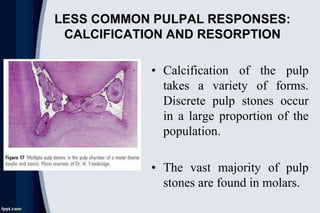
• Calcification of the pulp
takes a variety of forms.
Discrete pulp stones occur
in a large proportion of the
population.
• The vast majority of pulp
stones are found in molars.
• Pulp stones are more common in patients with
atheromatous cardiovascular disease.
• A higher incidence of pulpal mineralization is
associated with some genetic disorders such as
Ehlers-Danlos syndrome and amelogenesis
imperfecta.
• A generalized, more diffuse mineralization of
the pulp may occur after trauma and is one of
several good reasons for follow-up radiographs.
• Internal resorption has
been considered an
alternative sequelae to
trauma.
WHEN THE PULPAL RESPONSE
SUCCEEDS: REPAIR AND REGENERATION
• The immune response, including inflammation,
is only one part of the pulp's total response to
toxins or injury.
• When effective, it neutralizes and removes any
foreign material and allows and probably
initiates the second part, recovery, repair, and
regeneration.
• When no cells are killed,
the original odontoblasts
can form reactionary
(tertiary) dentin.
• When the odontoblasts are
killed, new dentin-forming
cells develop from stem
cells (undifferentiated
mesenchymal cells) and
form reparative (tertiary)
dentin.
• The repair of larger areas of damage is more
variable and depends on the nature of any
clinical intervention.
ENCOURAGING A SUCCESSFUL
RESPONSE
• Most of our strategies for encouraging pulpal
repair involve removal of the irritant and
diseased tissue and the prevention of further
injury.
FACTORS LIMITING THE PULP'S
RESPONSE
• The only significant factor that limits the pulp's
ability respond to injury is age.
• The older pulp has a reduced number of cells,
innervation, and vascularity, but the immune
response remains active.
IATROGENIC EFFECTS ON THE DENTAL
PULP-Local Anesthetics
• Local anesthetics reduce pulpal blood flow by
approximately half when they contain
vasoconstrictors.
• It is important to remember that when preparing
a cavity in an anesthetized tooth the pulp is in a
suboptimal condition to respond.
Cavity/Crown Preparation
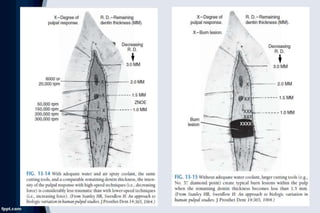
Heat: Cutting Dentin
The amount of heat produced is determined by:
1. Sharpness of the bur
2. Amount of pressure exerted on the bur
3. Length of time the cutting instruments
contacts tooth structure.
The two cooling methods most frequently
applied are:
1. Air cooling
2. Water cooling
Damage has been observed in pulps of teeth cut
with air-cooling only.
• Dentin is a good insulator of heat unless the
thickness of dentin between preparation and
pulp is less than 1.0 mm.
• The “blushing” of dentin is due to frictional heat
resulting in vascular injury in the pulp.
The safest way to prepare tooth structure is to
use:
1. Ultrahigh speeds of rotation (100,000-
250,000 rpm),
2. Efficient water-cooling system,
3. Light pressure,
4. Intermittent cutting
• The close proximity of
the pulp to the external
surface of the tooth,
particularly at the furcal
plane area, where tooth
preparation for full
coverage of
periodontally involved
teeth is so critical, has
been emphasized by
Sproles.
Heat: Laser Beams
• Laser irradiation can generate a large increase in
temperature within dentin and pulp tissue.
• Proper power setting, time of application, and
use of water spray will mitigate the temperature
increase to levels below the heat threshold of
pulp damage.
Pins
• Pulp damage may result from pinhole preparation
or pin placement.
• Coolants do not reach the depth of the pin
preparation.
• During preparation, there is always the risk of pulp
exposure.
• Furthermore, friction locked pins often
produce micro-fractures that may extend to the
pulp, subjecting the pulp to irritation and the
effects of microleakage.
Cavity Cleansing
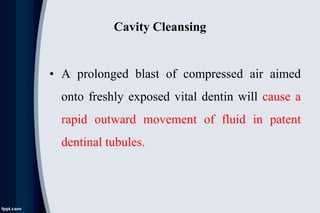
• A prolonged blast of compressed air aimed
onto freshly exposed vital dentin will cause a
rapid outward movement of fluid in patent
dentinal tubules.
Activates strong capillary forces
Causes rapid outward flow of dentinal
fluid
Stimulates nociceptors also causes
odontoblast displacement
Removal of fluid from the tubules by blast of air
Etching Dentin/Smear Layer
• Microleakage is increased if the smear layer
remains, whereas dentin permeability is
increased if the smear layer is removed.
Impressions And Temporary Crowns
• Modeling compound may be damaging because
of the combination of heat and pressure.
• Rubber base and hydrocolloid materials do not
injure the pulp.
• The heat generated during the exothermic
polymerization of autopolymerizing resins may
also injure the pulp.
• Cooling is strongly recommended when
provisional crowns are fabricated directly.
• The temporary crown/cement should be in
place for a short period of time.
• Microleakage around temporary crowns is a
common cause of postoperative sensitivity.
Crown Cementation
• During the cementation of crowns, inlays, and
bridges, strong hydraulic forces may be exerted
on the pulp as cement compresses the fluid in the
dentinal tubules.
• In deep preparations, this can result in a
separation of the odontoblast layer from the
predentin.
• Vents in the casting will allow cement to escape
and facilitate seating.
Dental Materials
Microleakage
• The most important characteristic of any
restorative material, in determining its effect on
the pulp, is its ability to form a seal that prevents
the leakage of bacteria and their products onto
dentin and then into the pulp.
Cytotoxicity
• Certain restorative materials are composed of
chemicals having the potential to irritate the
pulp.
• When placed in a cavity, the intervening dentin
usually neutralizes or prevents leachable
ingredients from reaching the pulp in a high
concentration to cause injury.
• The thickness and permeability of dentin
between a material and the pulp affect the
response to the material.
• In addition, the penetration of some materials
through dentin may be limited by the outward
flow of fluid through the tubules that will be
increased if the pulp is inflamed.
Heat upon Setting
• Temperature increases during setting procedures
may be over l0°C but can be limited to 2 to 3°C
with care.
• Cooling techniques include the use of air/water
cooling and removing the temporary upon initial
polymerization.
• The most exothermic luting material is ZnOP
cement.
• However, during setting, an intrapulpal
temperature increase of only 2°C was recorded.
Heat of this magnitude is not sufficient to injure
the pulp.
Desiccation by Hygroscopy
• Some hygroscopic materials may potentially
cause injury by withdrawing fluid from dentin.
• Moisture absorbed by materials is probably much
less than that removed from dentin during cavity
drying, a procedure that produces an insignificant
amount of pulpal inflammation.
SPECIFIC MATERIALS –
Zinc Oxide- Eugenol
• Eugenol, is toxic when placed in direct contact
with tissue.
• When included in cements to temporize crown
preparation, some eugenol does reach the pulp,
but the amounts are small and unrelated to
RDT.
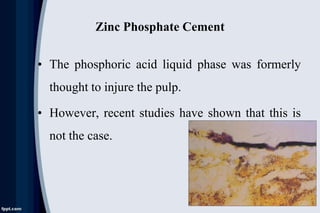
Zinc Phosphate Cement
• The phosphoric acid liquid phase was formerly
thought to injure the pulp.
• However, recent studies have shown that this is
not the case.
• Researchers reported that ZnOP is more likely
to produce pulpal sensitivity at the time of
cementation and 2 weeks after cementation
than glass ionomer. However, 3 months after
cementation, there is no difference in
sensitivity.
Polycarboxylate Cement
• When placed in cavities or used as a luting
cement, zinc polycarboxylate does not irritate the
pulp.
• In cementing well-fitting crowns and inlays,
neither polycarboxylate nor ZnOP cements
contract enough to permit the ingress of bacteria.
Restorative Resins
• The first adhesive bonding and resin composite
systems contracted during polymerization
resulting in gross microleakage and bacterial
contamination of the cavity.
• With recently developed hydrophilic adhesive
bonding composite systems, the problem of
marginal leakage appears to have been
diminished.
Glass Ionomer Cements
• A photo-activated RMGI showed minimal to no
cytotoxicity in vitro tests.
• In vivo tests demonstrated only minimal pulp
reactions when RMGI was evaluated in non
human usage models.
•Recent studies have
demonstrated that
pulpotomy is successful
when restored with an
RMGI Adhesive Resin
Systems or adhesive.
•RMGI has been used as a
definitive restorative agent
to decrease microleakage.
Amalgam
• There is shrinkage during setting, which results in
microleakage.
• This decreases as corrosion products accumulate
between restoration and cavity walls and can be
reduced by the use of liners.
• Amalgam is the only restorative material in which
the marginal seal improves with time.
MTA
• The most promising material is mineral trioxide
aggregate (MTA) because of its superior
characteristics as a direct pulp-capping agent
compared with Ca(OH)2 controls in several
animal models.
• Results show reparative dentin bridge formation
in the majority of samples with minimal
inflammatory cell response.
Histologic section from a
nonhuman primate pulp that
was direct capped with Dycal
for 24 months. The dentin
bridge contains a tunnel defect
running from the restoration
interface to the dental pulp,
Histologic section of a nonhuman primate
pulp that was direct capped with MTA for
5 months. A new dentin bridge is seen
midfield directly below the MTA particles
with new odontoblastoid cells along the
pulp interface. The deeper pulp is free of
operative debris chips and inflammation
POLISHING RESTORATIONS
• Polishing glass ionomer and composite
restorations does not cause an increased
temperature at the pulp-dentin interface.
• Polishing amalgam restoration produce
temperatures that may be damaging.
• When polishing an amalgam restoration with
continuous pressure and no water coolant, it is
recommended to not exceed 4,000 rpm.
• With use of coolant, light pressure, and
intermittent contact during polishing, there is a
low likelihood of heat-generated pulp damage.
POST-RESTORATIVE HYPERSENSITIVITY
• If pain is prolonged, a preexisting pulpitis may
have been exacerbated.
• If delayed, the cause may be microleakage of
bacterial toxins under a poorly sealed
temporary restoration.
• If pain evoked is by biting on a recently restored
tooth, an intracoronal restoration may be
exerting a strong shearing force on the dentin
walls of the preparation.
• Hyperocclusion from an extra-coronal
restoration is not injurious to the pulp but may
cause a transient hypersensitivity.
VITAL TOOTH BLEACHING
• Can cause mild pulpitis which is
reversed within 2 weeks.
VITALITY TESTING
• Heat and cold testing within normal
clinical parameters does not damage the
dental pulp.
ORTHODONTICS
• Orthodontic tooth movement of a routine nature
does not cause clinically significant changes in
the dental pulp.
• The heavy forces used to reposition impacted
canines frequently lead to pulp necrosis or
calcific metamorphosis.
A, Radiograph of canine intruded by trauma. B, Effect of hypoxia on
pulp owing to intrusion.Myelinated nerve showing vacuolization
of axon (closed arrow), disruption and smudging of myelin sheath
(open arrow), and loss of cellular detail. C, Loss of cellular
detail in the nucleus (N) and cytoplasm (C). Cell clumping in nucleus and
loss of organelles with rupture of lysosome (arrow) in cytoplasm.
• Bracket removal by use of an electrothermal
device (ETD) does not cause gross damage or
necrosis of dental pulp.
• There may be limited peripheral disruption of
odontoblasts with slight inflammation.
ULTRASONIC SCALING
• Ultrasonic scaling of roots requires
prolonged contact of the ultrasonic
device, and the potential for pulp damage
exists.
• Proper water cooling of both ultrasonic
and sonic scalers will prevent excessive
heat production in the pulp.
SYSTEMIC FACTOR
Hereditary Hypophosphatemia
• It is characterized dentally by the abnormally
large pulps and incomplete calcification of the
dentin.
• The pulps in these teeth appear to be fragile and
succumb to minor irritating stimuli.
SYSTEMIC FACTOR
• Sickle cell anemia
• Herpes zooster infection
• HIV and AIDS
PULPAL SEQUELAE TO IMPACT
TRAUMA
It can be categorized as
1. Repair
2. Calcification
3. Resorption
4. Necrosis
• The response depends on type, duration,
severity and suceptibility of the pulp to injury.
The result maybe:
1. Adaptation
2. Reversible injury
3. Death
Radiograph of max central
incisor. The pulp chamber and
canal are obliterated with
irritational dentin.
A, Radiograph of a maxillary left central
incisor. The canal is large because the trauma
stopped root development when the pulp
became necrotic. There is inflammatory
resorption of the apex. B, After endodontic
therapy.
CONCLUSION
• Exposure of dentin through attrition, trauma, or
caries produces profound pulpal reactions that
tend to reduce dentin permeability and stimulate
formation of additional dentin.
• These reactions are brought about by changes in
fibroblasts, nerves, blood vessels, odontoblasts,
leukocytes, and the immune system.
• Recent discoveries of the effects of nerves on
pulpal blood vessels and vice versa have
produced a new appreciation for the interaction
of these two systems in response to stimuli
applied to dentin.
• The special features of the dental pulp, including
restricted vascularity, enclosure in dentin, and
susceptability to bacterial infection or trauma,
play an important role in defining the
inflammatory and healing potential of this tissue
References
• Ingle’s Endodontics,5th and 6th edition
• Dental Pulp, Seltzer and Benders
• Cohen’s Pathways Of the Pulp,9th edition
• Essentials of Endodontics, Vimal K Sikri
• Textbook of Endodontics, Nisha Garg, 2nd
Edition
Pulpal pahology

Pulpal pahology

  • 1.
    PULPAL PATHOLOGY ANDITS SEQUELAE Presenter Dr. Ravi Acharya PG Resident Dept. Of Conservative Dentistry and Endodontics B.P.Koirala Institute of Health Sciences Dharan, Nepal
  • 2.
    "The pulp livesfor the dentin and the dentin lives by the grace of the pulp. Few marriages in nature are marked by a greater affinity." Alfred L. Ogilvie
  • 3.
    CONTENTS • Response ofthe pulp to dental caries • Immune response in the dental pulp • Hard tissue response to irritation • Histologic changes in acute inflammation • Histologic changes in the chronic inflammation • Haemodynamic changes in the pulp during caries
  • 4.
    • Neural changesduring pulpal inflammation • Antiinflammatory and antinociceptive mechanisms in the dental pulp • Less common pulpal responses • Factors limiting the pulps response • Iatrogenic effects on the dental pulp • Systemic factors • Pulpal sequelae to impact trauma
  • 5.
    The causes ofpulp inflammation, necrosis, and dystrophy are: I. Bacterial A. Coronal ingress 1. Caries 2. Fracture a. Complete b. Incomplete (cracks, infraction) 3. Nonfracture trauma 4. Anomalous tract a. Dens invaginatus (dens in dente) b. Dens evaginatus c. Radicular lingual groove (palatogingival groove)
  • 6.
    B. Radicular ingress 1.Caries 2. Retrogenic infection a. Periodontal pocket b. Periodontal abscess 3. Hematogenic
  • 7.
    II. Traumatic A. Acute 1.Coronal fracture 2. Radicular fracture 3. Vascular stasis 4. Luxation 5. Avulsion B. Chronic 1. Adolescent female bruxism 2. Traumatism 3. Attrition or abrasion 4. Erosion
  • 8.
    III. Iatral A. Cavitypreparation 1. Heat of preparation 2. Depth of preparation 3. Dehydration 4. Pulp horn extensions 5. Pulp hemorrhage 6. Pulp exposure 7. Pin insertion 8. Impression taking
  • 9.
    B. Restoration 1. Insertion 2.Fracture a. Complete b. Incomplete 3. Force of cementing 4. Heat of polishing C. Intentional extirpation and root canal filling D. Orthodontic movement E. Periodontal curettage F. Electrosurgery
  • 10.
    G. Laser burn H.Periradicular curettage I. Rhinoplasty J. Osteotomy K. Intubation for general anesthesia IV. Chemical A. Restorative materials 1. Cements 2. Plastics 3. Etching agents
  • 11.
    4. Cavity liners 5.Dentin bonding agents 6. Tubule blockage agents B. Disinfectants 1. Silver nitrate 2. Phenol 3. Sodium fluoride C. Desiccants 1. Alcohol 2. Ether 3. Others
  • 12.
    V. Idiopathic A. Aging B.Internal resorption C. External resorption D.Hereditary hypophosphatemia E. Sickle cell anemia F. Herpes zoster infection G.Human immunodeficiency virus (HIV) and acquired immune deficiency syndrome (AIDS)
  • 13.
    RESPONSE OF THEPULP TO DENTAL CARIES • Bacteria are responsible for most pulpal disease. • Kakehashi et al. proved that exposed pulps in gnotobiotic (germ free) rats did not become inflamed while similarly exposed pulps in rats with a full oral flora did.
  • 14.
    • The responseof the pulp may vary depending on whether the caries process progresses rapidly (acute caries) or slowly (chronic caries), or is completely inactive (arrested caries). • Conditions for growth and availability of nutrients are quite different in enamel caries than in dentinal caries
  • 15.
    • Products ofbacterial metabolism, notably organic acids and proteolytic enzymes, destroy enamel and dentin. • Relatively large bacterial product, bacterial endotoxin, is able to diffuse through dentinal tubules to the pulp chamber .
  • 16.
    • Bacterial antigensdiffusing from the lesion to the pulp through the dentinal tubules are captured and processed by APCs, which leads to the activation of the immune system. • Deep penetration of dentin by bacteria results in acute inflammation and eventually infection and necrosis of the pulp.
  • 17.
    • The firstreaction of odontoblasts to superficial caries lesions in enamel is a marked reduction in the cytoplasm: nucleus ratio, suggesting an altered metabolism. • In active lesions, primary odontoblasts are involved in the formation of reactionary dentin.
  • 18.
    • However, evenbefore the appearance of inflammatory changes, the size and number of odontoblasts decrease, at which time their metabolic activity is reduced while cellular proliferative activity in the cell-free zone of the pulp increases.
  • 19.
    • Although normallytall columnar cells, odontoblasts adversely affected by caries become flat to cuboidal in shape.
  • 20.
    • The boundaryzone between primary and reparative dentin is atubular and lacks continuity of tubules. • Electron microscopic examination of the odontoblasts beneath a superficial caries lesion revealed cellular injury in the form of ballooning degeneration of mitochondria and a reduction in the number and size of other cytoplasmic organelles.
  • 21.
    • Eventually, theprimary odontoblasts die, usually followed by proliferation of replacement odontoblasts and reparative dentin formation. •Bacteria infect some tubules long before others are infected.
  • 22.
    • The distributionof infected tubules is not uniform, as neighboring uninfected tubules are frequently found interspersed among infected tubules. •At the completion of cavity or crown preparation, some infected tubules may not have been eliminated.
  • 23.
    • Basic reactionsthat tend to protect the pulp against caries includes: 1. Decrease in the permeability of the dentin due to dentinal sclerosis, 2. Formation of new dentin (tertiary dentin), 3. Effectiveness of inflammatory and immunologic reactions.
  • 24.
    Dentinal Sclerosis: • Itdevelops at the periphery of almost all caries lesions. • Most common response to caries. • In dentinal sclerosis, the dentinal tubules become partly or completely filled with mineral deposits consisting of both hydroxyapatite and whitlockite crystals.
  • 25.
    • Dentinal sclerosisreduces the permeability of dentin, thus shielding the pulp from irritation. • In order for sclerosis to occur, vital odontoblast processes must be present within the tubules.
  • 27.
    • In highlyactive caries lesions, odontoblast may die before sclerosis has occurred. • Disintegration of odontoblast processes within the tubules results in a dead tract.
  • 28.
    Tertiary dentin: • Thereare two types of tertiary dentin based upon the cell type responsible for dentin production: 1. Reactionary Dentin 2. Reparative Dentin
  • 29.
    • Compared withprimary dentin, reparative dentin is less tubular and less well calcified. • At times no tubules are formed; this type of tertiary dentin has been characterized as a form of fibrodentin.
  • 30.
    • If thepulp is inflamed or has undergone degenerative changes, the quality of the dentin is more variable. •An example of a poor quality dentin is “Swiss cheese” appearance of dentin. •The holes represent soft tissue that was trapped in the matrix and subsequently underwent necrosis.
  • 31.
    Hard tissue responseto irritation Irritational dentin • An odontoblast that is mildly stimulated may form dentin that closely resembles normal physiologic dentin.
  • 32.
    • Since odontoblastsare incapable of mitosis, they must be replaced by underlying cells that mature from dividing undifferentiated precursors or by redifferentiation of fibroblasts.
  • 33.
    • These newcells are atypical, frequently without a process, and thus form an atypical irregular structure called irritation or reparative dentin.
  • 34.
    • Its formationoccurs independently of the presence of inflammation and may form on the walls of an irreversibly damaged pulp. • Continued irritation dentin formation may depend on persistent injurious stimuli; such a condition is neither desirable nor reparative.
  • 35.
    • Anything thatexposes or contacts dentin has the potential to stimulate formation of underlying irritation dentin. • The morphology of irritation dentin has been studied, but little is known of its functions.
  • 36.
    • Some attributeprotective properties to this tissue and therefore recommend methods or materials to stimulate its formation. • Others doubt its ability to protect the underlying pulp.
  • 37.
    • They havedemonstrated its permeability, permitting passage of chemicals and bacteria and other substances.
  • 38.
    • The presenceof irritation dentin delays, but does not prevent, the eventual penetration of caries into the pulp.
  • 39.
    BACTERIA AND THEIRBY-PRODUCT CAN REACH THE PULP FROM OTHER SOURCES 1. Anomalous Crown Morphology, Fractures, and Cracks
  • 40.
  • 41.
    2. Periodontal Disease SaglieR et al: Scanning electron microscopic depiction of the inside of an ulcerated and infected pocket. Area 1 (right border) is the surface view of lining epithelium. C, epithelial cell. Dotted line demarcates the cut surface of the epithelium (Area 2). The basement lamina (BL) separates the epithelium from connective tissue (Area 3), which contains collagen fibers (CF) and connective tissue cells (CC). Bacteria (top arrow) enter a hole (H) in the epithelium (left by a desquamated cell) and travel through a “tunnel” to emerge into connective tissue through the hole. Abundant cocci, rods, and filaments are seen alongside the hole on the basement lamina. Filaments and cocci are then seen perforating the basement membrane (double arrow) to penetrate connective tissue and reach blood and/or lymph vessels.
  • 42.
  • 43.
    ANTIGEN RECOGNITION INTHE DENTAL PULP • All three antigen-presenting cell types expressing the type II major histocompatibility complex (MHC) surface proteins, macrophages, dendritic cells, and B lymphocytes, are present and active in the pulp's response to bacteria and toxins.
  • 44.
    • In anormal healthy pulp, macrophages are present in a resting form, as monocytcs. • Macrophages require stimulation by bacteria or cytokines before they express type II MHC molecules. • At rest they are found predominantly around blood vessels though a few are distributed throughout the tissue.
  • 45.
    • Dendritic cellsform a network throughout the pulp concentrating around blood vessels and the odontoblast layer. • Some of the dendritic cells in the odontoblast layer extend their processes into the dentinal tubules. • They constantly express the MHC molecules on their surface without provocation.
  • 46.
    • The numberof dendritic cells increases in the pulp when it becomes inflamed and they accumulate beneath the carious lesion.
  • 48.
    • B cellshave been reported in the normal pulp but are rather rare. • Their role in the initial stages of antigen recognition and presentation in the pulp is unclear. • Occasional T cells are found in normal pulp and may be activated by antigen presenting cells locally.
  • 49.
    • In thepulp, there is a close anatomic relationship between nerve fibers and dendritic cells, and both increase in parallel when the pulp is inflamed.
  • 50.
    • The sympatheticnervous system has recently been shown to have a modulating influence on pulpal inflammation. • The sympathetic system inhibits the production of proinflammatory cytokines, although stimulating the production of antiinflammatory cytokines.
  • 51.
    • In addition,T lymphocytes and other leukocytes produce anti nociceptive molecules such as β-endorphin and somatostatin during inflammation which reduce the excitability of pain fibers.
  • 52.
    • Odontoblasts arethe first cells to encounter an antigen diffusing along the dentinal tubules. • Odontoblasts respond differentially to the toxins produced by gram-positive and gram negative bacteria.
  • 53.
    • Odontoblasts expressmicrobial pattern recognition receptors in situ, allowing differential responses to gram-positive and gram-negative bacteria. • Pro-inflammatory cytokines and innate immune responses in decayed teeth may result from TLR signaling. Veerayutthwilai O, Byers MR, Pharn TTT, et al. Differential regulation of immune responses by odontoblasts. OralMicrobiol lmmunol 2007;22:5--1 3.
  • 54.
    The Process ofAntigen Recognition • Dendritic cells and macrophages bind to and phagocytize antigen that is then processed intracellularly, bound to MHC molecules, and moved to the cell membrane for recognition by T cells.
  • 55.
    • B cellsbind antigen to specific cell surface receptors. • All the antigen-presenting cell types enter the blood stream and carry the surface molecules to the lymph nodes where T cell activation takes place, though some may occur locally.
  • 56.
    • The Tcells respond not to the antigen itself but to the modified complex in the cell membrane of the antigen- presenting cells. • Being stationary, the odontoblast does not participate directly in the activation of T cells but, presumably, activates dendritic cells.
  • 57.
    HISTOLOGIC CHANGES INACUTE INFLAMMATION • Cariogenic bacteria in the dental plaque produce a mixture of acids and enzymes that dissolve the mineral elements of enamel and dentin and then digest the organic matrix. • The initial removal of mineral makes the enamel more permeable and the bacterial toxins will diffuse well ahead of cavitation.
  • 58.
    • Once thedentin is reached, the toxins and, much later, the bacteria themselves will travel along the dentinal tubules. • Clearly, variations in the composition and thickness of enamel and dentin, and particularly the patency of the dentinal tubules, will determine the rate at which these toxins reach the pulp.
  • 59.
    • In vitalteeth, this movement will be opposed by the outward flow of dentinal fluid. • Toxins, however, reach the pulp at a very early stage relative to surface changes.
  • 60.
    HISTOLOGIC CHANGES INCHRONIC INFLAMMATION • The immediate "inflammatory" phase of the immune response begins very shortly after the antigen arrives in the tissue.
  • 61.
    • If thebody has been exposed to the antigen on a previous occasion, the production of specific antibodies begins very quickly (within a few hours). • If antigen not encountered before, it takes several days for the production of antibodies.
  • 62.
    • At thisstage, the pulpal response is characterized by the presence of the lymphocytes.
  • 63.
    • If thecarious lesion is not treated, however, the increasing quantity of irritants will eventually cause irreversible changes. •These are at first limited in size and may even form a "pulpal abscess.“
  • 64.
    • This localnecrosis, unless checked, will progress gradually throughout the tissue and into the periradicular tissues. • The progress of tissue damage in the pulp is determined by the presence and spread of bacterial toxins and is not due to the "strangulation" of blood vessels.
  • 65.
    Suppuration and Necrosis •Exposure of the pulp to caries often results in suppurative inflammation, depending upon the nature of the invasive bacteria. • The generation of chemotaxins by pyogenic bacteria produces a massive accumulation of neutrophils.
  • 66.
    • HOCL producedfrom neutrophil destroys bacteria by halogenation and lipid peroxidation. • The ability to avoid phagocytosis is of key importance in the virulence of pyogenic bacteria.
  • 67.
    • Because ofcertain antiphagocytic virulence factors, it is difficult for neutrophils to kill pyogenic bacteria, and as a result more and more neutrophils are mobilized in an attempt to overwhelm the invading organisms. • As bacteria invade deep into the dentin, neutrophils begin to accumulate adjacent to the dentinal tubules.
  • 68.
    • Because bacteriain the tubules are virtually unassailable by host defenses, there is a constant supply of chemotaxins to mobilize neutrophils. • If the number of neutrophils reaches a critical mass, an abscess, a walled-off area of suppuration, will develop.
  • 69.
    • The deathof neutrophils in situ gives rise to purulence, formed chiefly by autolysis of neutrophils by their own lysosomal enzymes. • As this process continues, an abscess cavity is formed.
  • 70.
    • Tissue necrosisdevelops when neutrophils release activated oxygen metabolites and proteases. • It results in liquefaction necrosis. • As the caries exposure enlarges and an ever- increasing number of bacteria enter the pulp, the defending forces are eventually overwhelmed
  • 71.
    • Therefore, whenblood flow can no longer meet the demand for inflammatory elements, the inflammatory response can no longer be sustained and bacteria may grow unopposed within the pulp chamber. • This ultimately leads to total pulp necrosis.
  • 72.
    • Exposure ofthe pulp to caries does not invariably result in suppuration. • In the absence of a sufficient number of pyogenic bacteria, a localized area of necrosis may develop.
  • 73.
    • The bodyresponds to this necrotic debris by attempting to produce reparative dentin.
  • 74.
    • Exposure ofthe pulp may also trigger extensive fibrosis of the pulp.
  • 75.
    Chronic ulcerative pulpitis •The histologic term ulcerative is actually a misnomer in these cases because no surface epithelium is involved. • This condition is the result of local excavation of the surface of the pulp resulting from liquefaction necrosis of pulp tissue.
  • 76.
    • Excavation islikely to occur when drainage of inflammatory exudate is established through a pathway of decomposed dentin. •The inflammation remains localized and asymptomatic because drainage prevents a buildup of pressure.
  • 77.
    Chronic hyperplastic pulpitis •Occurs most often in primary and immature permanent teeth with incompletely formed roots. • At this stage of development, numerous blood vessels enter the pulp through the wide apical foramen.
  • 78.
    • Histologically characterizedby proliferation of small vessels and fibroblasts and a chronic inflammatory cell infiltrate. • The lesion acquires a stratified squamous covering, presumably because of grafting of vital desquamated epithelial cells from the oral mucosa.
  • 79.
    • Chronic hyperplasticpulpitis develops when carious pulp exposure creates a large open cavity. • This opening establishes a pathway for drainage of the inflammatory exudate.
  • 80.
    • When drainageis established, acute inflammation subsides and chronic inflammatory tissue proliferates through the opening created by the exposure to form a polyp.
  • 81.
    HEMODYNAMIC CHANGES INTHE PULP DURING CARIES Blood Flow • Using plaque extract to initiate inflammation in a rat incisor model, a 40% increase in blood flow in a "moderately inflamed" pulp but a 35% reduction in a "partially necrotic" pulp was reported. Kim S, Liu M, Simchon 5, Dorscher-Kim JE. Effects of selected inflammatory mediators on blood flow and vascular permeability in the dental pulp. Proc Finn Dent Soc t 992;88 (Suppl 1):387-92.
  • 82.
    • The applicationof Lippolysaccharide to the pulp resulted, after 10 minutes, in a reduction in blood flow that continued for the 3-hour duration of the experiments. This was interpreted as a limited ability of the pulp to respond. Blelsa A, Berggreen E, Fristad I, et al. Cytokine signalling in rat pulp interstitial fluid and transcapillary fluid exchange during lipopolysaccharide-induced acute inflammation. J PhysioI 2006;573:225-36.
  • 83.
    Interstitial Fluid Pressure •The healthy dental pulp has an interstitial pressure of 5 to 10 mm Hg. • One of the key changes during inflammation is the movement of fluid from within the capillaries into the interstitial space.
  • 84.
    • Increasing theamount of fluid in a rigid chamber leads to an increase in pressure. It was assumed, for a long time, that such a pressure rise in the pulp would cause compression of the blood vessels leading to vascular stasis and necrosis. • It was even suggested that this pressure change could lead to strangulation of the vessels at the apex causing necrosis in areas of the pulp not directly affected by the bacterial toxins.
  • 85.
    • Necrosis occursbeneath persisting carious lesions only when bacterial toxins, spreading throughout the pulp, poison cells directly.
  • 86.
    NEURAL CHANGES DURINGPULPAL INFLAMMATION • Sympathetic nerves control blood flow by constricting precapillary sphincters and by interaction with other elements of inflammation. • It inhibits the production of proinflammatory cytokines, stimulating the production of anti-inflammatory cytokines and is involved in the recruitment of inflammatory cells to the area. • Has an inhibitory effect on odontocasts and stimulate reparative dentin production.
  • 87.
    • Afferent sensoryfibers from the trigeminal system plays an important role in response to toxins and injury. • They release substance P and Calcitonin Growth Related Protein (CGRP). • They both causes vasodilatation and increase capillary permeability.
  • 88.
    • In injuredpulps, there is an increased expression of nerve growth factor (NGF) and its receptors. • A concomitant sprouting of the afferent terminals and increased presence of substance P and CGRP also takes place.
  • 89.
    • Pulpal injuryand inflammation are also associated with neural changes outside the pulp itself. • In the trigeminal ganglion after pulpal injury the expression of various neuropeptides increases. • There are also detectable changes in the supporting cells of the ganglion.
  • 90.
    • Most significantfrom a clinical point of view are changes in the nucleus related to central sensitization. • This may help explain the variable presentation of pulpitis in terms of pain.
  • 91.
    ANTI-INFLAMMATORY AND ANTINOCICEPTIVE MECHANISMSIN THE DENTAL PULP • Neuroimmune interactions control pain through the activation of opioid receptors on sensory nerves by immune derived opioid peptides. • Opoid receptors are present on pulpal nerves.
  • 92.
    • On exposureto stress, opioid peptides are released, bind to opoid receptors on peripheral sensory neurons, and induce endogenous antinociception.
  • 93.
    LESS COMMON PULPALRESPONSES: CALCIFICATION AND RESORPTION • Calcification of the pulp takes a variety of forms. Discrete pulp stones occur in a large proportion of the population. • The vast majority of pulp stones are found in molars.
  • 94.
    • Pulp stonesare more common in patients with atheromatous cardiovascular disease. • A higher incidence of pulpal mineralization is associated with some genetic disorders such as Ehlers-Danlos syndrome and amelogenesis imperfecta.
  • 95.
    • A generalized,more diffuse mineralization of the pulp may occur after trauma and is one of several good reasons for follow-up radiographs. • Internal resorption has been considered an alternative sequelae to trauma.
  • 96.
    WHEN THE PULPALRESPONSE SUCCEEDS: REPAIR AND REGENERATION • The immune response, including inflammation, is only one part of the pulp's total response to toxins or injury. • When effective, it neutralizes and removes any foreign material and allows and probably initiates the second part, recovery, repair, and regeneration.
  • 97.
    • When nocells are killed, the original odontoblasts can form reactionary (tertiary) dentin.
  • 98.
    • When theodontoblasts are killed, new dentin-forming cells develop from stem cells (undifferentiated mesenchymal cells) and form reparative (tertiary) dentin.
  • 99.
    • The repairof larger areas of damage is more variable and depends on the nature of any clinical intervention.
  • 100.
    ENCOURAGING A SUCCESSFUL RESPONSE •Most of our strategies for encouraging pulpal repair involve removal of the irritant and diseased tissue and the prevention of further injury.
  • 101.
    FACTORS LIMITING THEPULP'S RESPONSE • The only significant factor that limits the pulp's ability respond to injury is age. • The older pulp has a reduced number of cells, innervation, and vascularity, but the immune response remains active.
  • 102.
    IATROGENIC EFFECTS ONTHE DENTAL PULP-Local Anesthetics • Local anesthetics reduce pulpal blood flow by approximately half when they contain vasoconstrictors. • It is important to remember that when preparing a cavity in an anesthetized tooth the pulp is in a suboptimal condition to respond.
  • 103.
    Cavity/Crown Preparation Heat: CuttingDentin The amount of heat produced is determined by: 1. Sharpness of the bur 2. Amount of pressure exerted on the bur 3. Length of time the cutting instruments contacts tooth structure.
  • 104.
    The two coolingmethods most frequently applied are: 1. Air cooling 2. Water cooling Damage has been observed in pulps of teeth cut with air-cooling only.
  • 105.
    • Dentin isa good insulator of heat unless the thickness of dentin between preparation and pulp is less than 1.0 mm. • The “blushing” of dentin is due to frictional heat resulting in vascular injury in the pulp.
  • 106.
    The safest wayto prepare tooth structure is to use: 1. Ultrahigh speeds of rotation (100,000- 250,000 rpm), 2. Efficient water-cooling system, 3. Light pressure, 4. Intermittent cutting
  • 108.
    • The closeproximity of the pulp to the external surface of the tooth, particularly at the furcal plane area, where tooth preparation for full coverage of periodontally involved teeth is so critical, has been emphasized by Sproles.
  • 109.
    Heat: Laser Beams •Laser irradiation can generate a large increase in temperature within dentin and pulp tissue. • Proper power setting, time of application, and use of water spray will mitigate the temperature increase to levels below the heat threshold of pulp damage.
  • 110.
    Pins • Pulp damagemay result from pinhole preparation or pin placement. • Coolants do not reach the depth of the pin preparation. • During preparation, there is always the risk of pulp exposure.
  • 111.
    • Furthermore, frictionlocked pins often produce micro-fractures that may extend to the pulp, subjecting the pulp to irritation and the effects of microleakage.
  • 113.
    Cavity Cleansing • Aprolonged blast of compressed air aimed onto freshly exposed vital dentin will cause a rapid outward movement of fluid in patent dentinal tubules.
  • 114.
    Activates strong capillaryforces Causes rapid outward flow of dentinal fluid Stimulates nociceptors also causes odontoblast displacement Removal of fluid from the tubules by blast of air
  • 115.
    Etching Dentin/Smear Layer •Microleakage is increased if the smear layer remains, whereas dentin permeability is increased if the smear layer is removed.
  • 116.
    Impressions And TemporaryCrowns • Modeling compound may be damaging because of the combination of heat and pressure. • Rubber base and hydrocolloid materials do not injure the pulp.
  • 117.
    • The heatgenerated during the exothermic polymerization of autopolymerizing resins may also injure the pulp. • Cooling is strongly recommended when provisional crowns are fabricated directly.
  • 118.
    • The temporarycrown/cement should be in place for a short period of time. • Microleakage around temporary crowns is a common cause of postoperative sensitivity.
  • 119.
    Crown Cementation • Duringthe cementation of crowns, inlays, and bridges, strong hydraulic forces may be exerted on the pulp as cement compresses the fluid in the dentinal tubules. • In deep preparations, this can result in a separation of the odontoblast layer from the predentin. • Vents in the casting will allow cement to escape and facilitate seating.
  • 120.
    Dental Materials Microleakage • Themost important characteristic of any restorative material, in determining its effect on the pulp, is its ability to form a seal that prevents the leakage of bacteria and their products onto dentin and then into the pulp.
  • 121.
    Cytotoxicity • Certain restorativematerials are composed of chemicals having the potential to irritate the pulp. • When placed in a cavity, the intervening dentin usually neutralizes or prevents leachable ingredients from reaching the pulp in a high concentration to cause injury.
  • 122.
    • The thicknessand permeability of dentin between a material and the pulp affect the response to the material. • In addition, the penetration of some materials through dentin may be limited by the outward flow of fluid through the tubules that will be increased if the pulp is inflamed.
  • 123.
    Heat upon Setting •Temperature increases during setting procedures may be over l0°C but can be limited to 2 to 3°C with care. • Cooling techniques include the use of air/water cooling and removing the temporary upon initial polymerization.
  • 124.
    • The mostexothermic luting material is ZnOP cement. • However, during setting, an intrapulpal temperature increase of only 2°C was recorded. Heat of this magnitude is not sufficient to injure the pulp.
  • 125.
    Desiccation by Hygroscopy •Some hygroscopic materials may potentially cause injury by withdrawing fluid from dentin. • Moisture absorbed by materials is probably much less than that removed from dentin during cavity drying, a procedure that produces an insignificant amount of pulpal inflammation.
  • 126.
    SPECIFIC MATERIALS – ZincOxide- Eugenol • Eugenol, is toxic when placed in direct contact with tissue. • When included in cements to temporize crown preparation, some eugenol does reach the pulp, but the amounts are small and unrelated to RDT.
  • 127.
    Zinc Phosphate Cement •The phosphoric acid liquid phase was formerly thought to injure the pulp. • However, recent studies have shown that this is not the case.
  • 128.
    • Researchers reportedthat ZnOP is more likely to produce pulpal sensitivity at the time of cementation and 2 weeks after cementation than glass ionomer. However, 3 months after cementation, there is no difference in sensitivity.
  • 129.
    Polycarboxylate Cement • Whenplaced in cavities or used as a luting cement, zinc polycarboxylate does not irritate the pulp. • In cementing well-fitting crowns and inlays, neither polycarboxylate nor ZnOP cements contract enough to permit the ingress of bacteria.
  • 130.
    Restorative Resins • Thefirst adhesive bonding and resin composite systems contracted during polymerization resulting in gross microleakage and bacterial contamination of the cavity. • With recently developed hydrophilic adhesive bonding composite systems, the problem of marginal leakage appears to have been diminished.
  • 132.
    Glass Ionomer Cements •A photo-activated RMGI showed minimal to no cytotoxicity in vitro tests. • In vivo tests demonstrated only minimal pulp reactions when RMGI was evaluated in non human usage models.
  • 133.
    •Recent studies have demonstratedthat pulpotomy is successful when restored with an RMGI Adhesive Resin Systems or adhesive. •RMGI has been used as a definitive restorative agent to decrease microleakage.
  • 134.
    Amalgam • There isshrinkage during setting, which results in microleakage. • This decreases as corrosion products accumulate between restoration and cavity walls and can be reduced by the use of liners. • Amalgam is the only restorative material in which the marginal seal improves with time.
  • 135.
    MTA • The mostpromising material is mineral trioxide aggregate (MTA) because of its superior characteristics as a direct pulp-capping agent compared with Ca(OH)2 controls in several animal models. • Results show reparative dentin bridge formation in the majority of samples with minimal inflammatory cell response.
  • 136.
    Histologic section froma nonhuman primate pulp that was direct capped with Dycal for 24 months. The dentin bridge contains a tunnel defect running from the restoration interface to the dental pulp, Histologic section of a nonhuman primate pulp that was direct capped with MTA for 5 months. A new dentin bridge is seen midfield directly below the MTA particles with new odontoblastoid cells along the pulp interface. The deeper pulp is free of operative debris chips and inflammation
  • 137.
    POLISHING RESTORATIONS • Polishingglass ionomer and composite restorations does not cause an increased temperature at the pulp-dentin interface. • Polishing amalgam restoration produce temperatures that may be damaging.
  • 138.
    • When polishingan amalgam restoration with continuous pressure and no water coolant, it is recommended to not exceed 4,000 rpm. • With use of coolant, light pressure, and intermittent contact during polishing, there is a low likelihood of heat-generated pulp damage.
  • 139.
    POST-RESTORATIVE HYPERSENSITIVITY • Ifpain is prolonged, a preexisting pulpitis may have been exacerbated. • If delayed, the cause may be microleakage of bacterial toxins under a poorly sealed temporary restoration.
  • 140.
    • If painevoked is by biting on a recently restored tooth, an intracoronal restoration may be exerting a strong shearing force on the dentin walls of the preparation. • Hyperocclusion from an extra-coronal restoration is not injurious to the pulp but may cause a transient hypersensitivity.
  • 141.
    VITAL TOOTH BLEACHING •Can cause mild pulpitis which is reversed within 2 weeks.
  • 142.
    VITALITY TESTING • Heatand cold testing within normal clinical parameters does not damage the dental pulp.
  • 143.
    ORTHODONTICS • Orthodontic toothmovement of a routine nature does not cause clinically significant changes in the dental pulp. • The heavy forces used to reposition impacted canines frequently lead to pulp necrosis or calcific metamorphosis.
  • 144.
    A, Radiograph ofcanine intruded by trauma. B, Effect of hypoxia on pulp owing to intrusion.Myelinated nerve showing vacuolization of axon (closed arrow), disruption and smudging of myelin sheath (open arrow), and loss of cellular detail. C, Loss of cellular detail in the nucleus (N) and cytoplasm (C). Cell clumping in nucleus and loss of organelles with rupture of lysosome (arrow) in cytoplasm.
  • 145.
    • Bracket removalby use of an electrothermal device (ETD) does not cause gross damage or necrosis of dental pulp. • There may be limited peripheral disruption of odontoblasts with slight inflammation.
  • 146.
    ULTRASONIC SCALING • Ultrasonicscaling of roots requires prolonged contact of the ultrasonic device, and the potential for pulp damage exists. • Proper water cooling of both ultrasonic and sonic scalers will prevent excessive heat production in the pulp.
  • 147.
    SYSTEMIC FACTOR Hereditary Hypophosphatemia •It is characterized dentally by the abnormally large pulps and incomplete calcification of the dentin. • The pulps in these teeth appear to be fragile and succumb to minor irritating stimuli.
  • 149.
    SYSTEMIC FACTOR • Sicklecell anemia • Herpes zooster infection • HIV and AIDS
  • 150.
    PULPAL SEQUELAE TOIMPACT TRAUMA It can be categorized as 1. Repair 2. Calcification 3. Resorption 4. Necrosis
  • 151.
    • The responsedepends on type, duration, severity and suceptibility of the pulp to injury. The result maybe: 1. Adaptation 2. Reversible injury 3. Death
  • 152.
    Radiograph of maxcentral incisor. The pulp chamber and canal are obliterated with irritational dentin. A, Radiograph of a maxillary left central incisor. The canal is large because the trauma stopped root development when the pulp became necrotic. There is inflammatory resorption of the apex. B, After endodontic therapy.
  • 153.
    CONCLUSION • Exposure ofdentin through attrition, trauma, or caries produces profound pulpal reactions that tend to reduce dentin permeability and stimulate formation of additional dentin. • These reactions are brought about by changes in fibroblasts, nerves, blood vessels, odontoblasts, leukocytes, and the immune system.
  • 154.
    • Recent discoveriesof the effects of nerves on pulpal blood vessels and vice versa have produced a new appreciation for the interaction of these two systems in response to stimuli applied to dentin. • The special features of the dental pulp, including restricted vascularity, enclosure in dentin, and susceptability to bacterial infection or trauma, play an important role in defining the inflammatory and healing potential of this tissue
  • 155.
    References • Ingle’s Endodontics,5thand 6th edition • Dental Pulp, Seltzer and Benders • Cohen’s Pathways Of the Pulp,9th edition • Essentials of Endodontics, Vimal K Sikri • Textbook of Endodontics, Nisha Garg, 2nd Edition