Entering Academic
 Conversations:
   What are they talking about?


     En120, Spring 2013
 Week 1: Monday, 11 February

          Prof. E. Kugler
Graff and Birkenstein's
   They Say/I Say
        Describe their approach?

        What is their stated point?
            What is implicit?
        What is at stake for them?
What kind of writing styles and techniques
              do they value?
Culler's Literary Theory:
A Very Short Introduction
 Do you see the rhetorical moves advocated by
      Graff and Birkenstein in use here?


Where does Culler express his own views or those
                   of others?

Or, at least, when does he represent his own views
   or represent his take on the views of others?
What is Culler's point?
      Why does he see the need for this book?
Into what sorts of conversations is he intervening?
What is Literature?
• Pause and consider what types of texts you consider
 literary.
             List them.

• In groups of 3, organize them in relation to each other.
• Put this chart on the board.
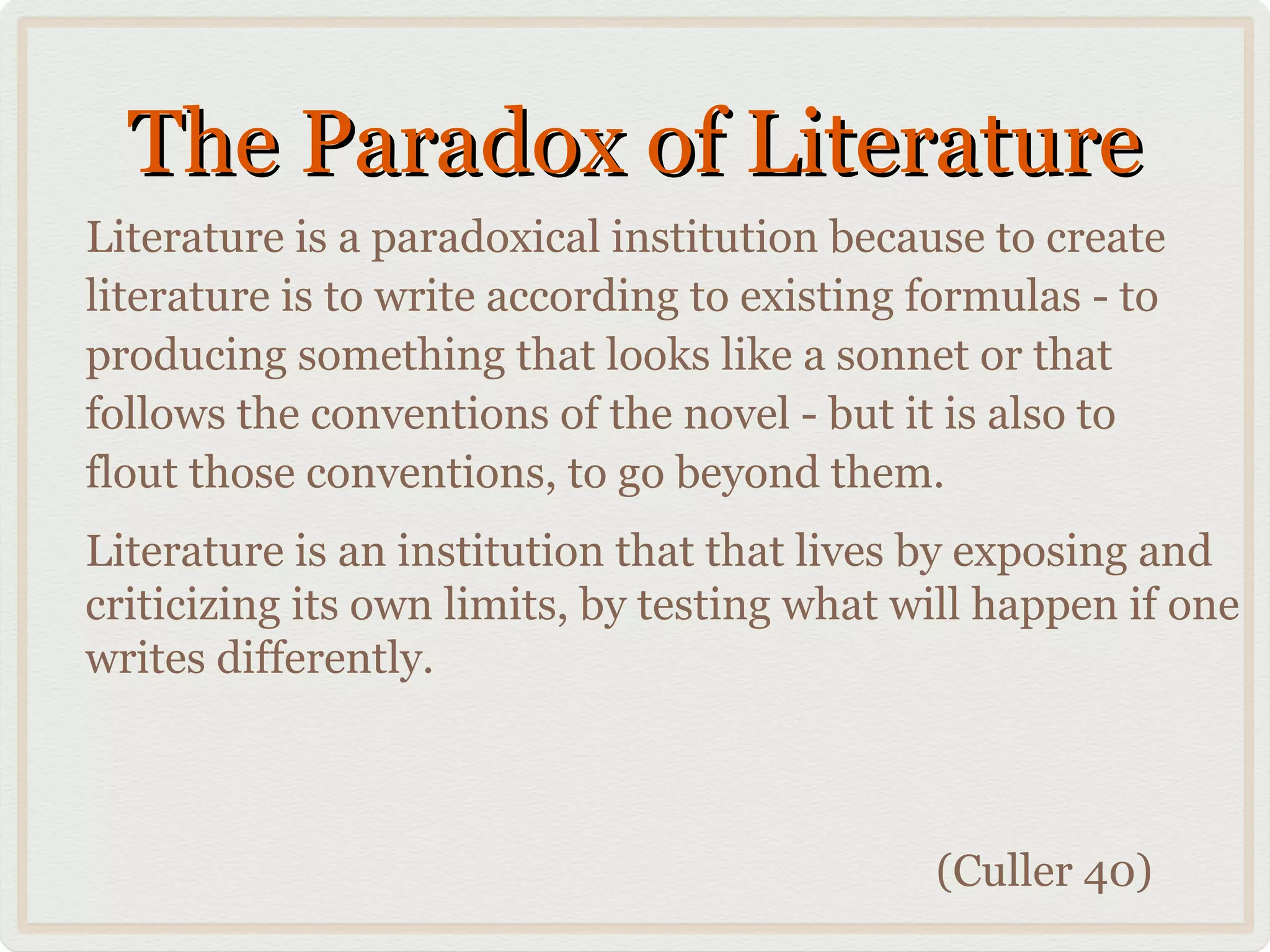
The Paradox of Literature
Literature is a paradoxical institution because to create
literature is to write according to existing formulas - to
producing something that looks like a sonnet or that
follows the conventions of the novel - but it is also to
flout those conventions, to go beyond them.
Literature is an institution that that lives by exposing and
criticizing its own limits, by testing what will happen if one
writes differently.


                                             (Culler 40)
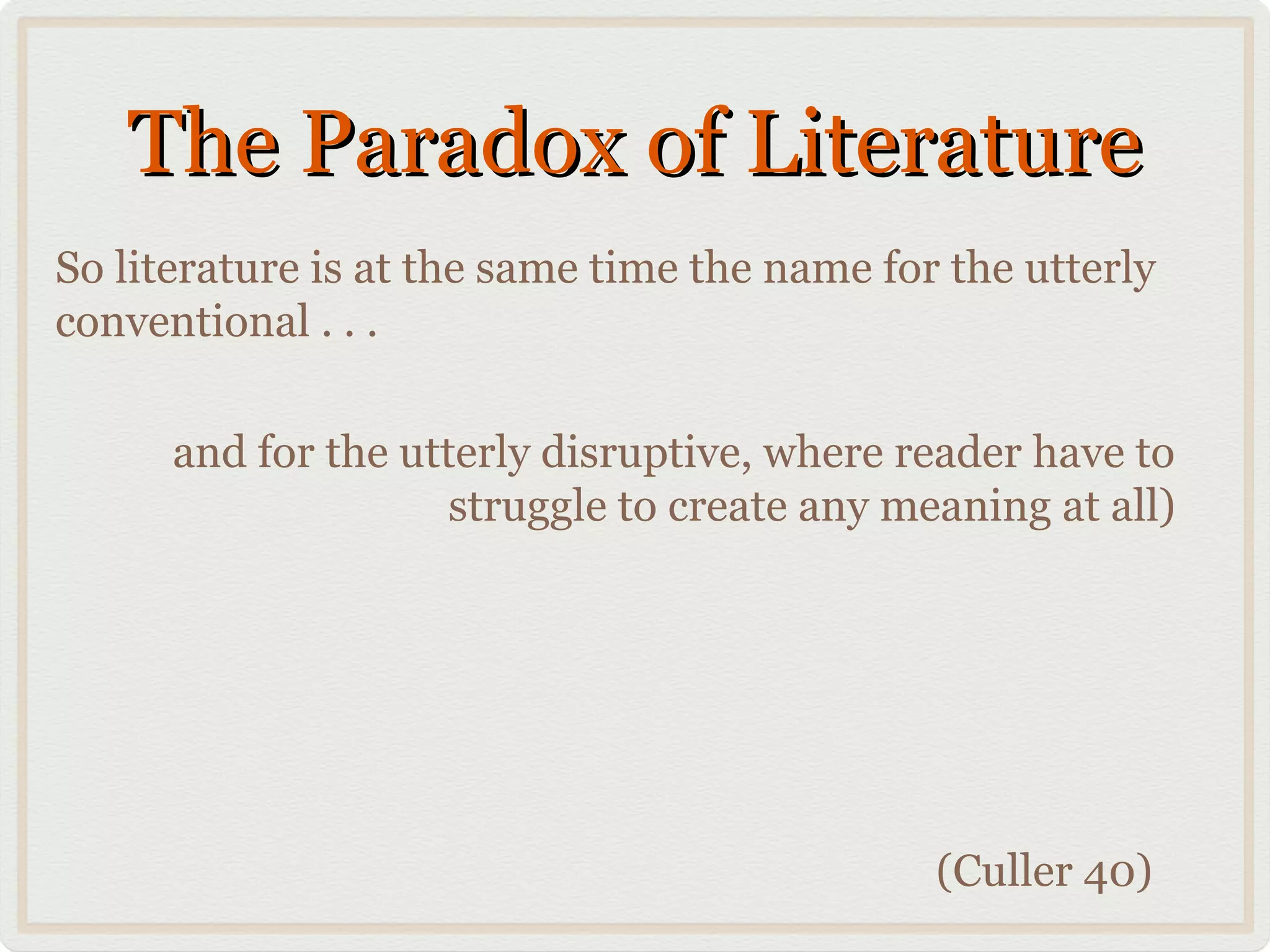
The Paradox of Literature
So literature is at the same time the name for the utterly
conventional . . .

      and for the utterly disruptive, where reader have to
                     struggle to create any meaning at all)


                                              (Culler 40)
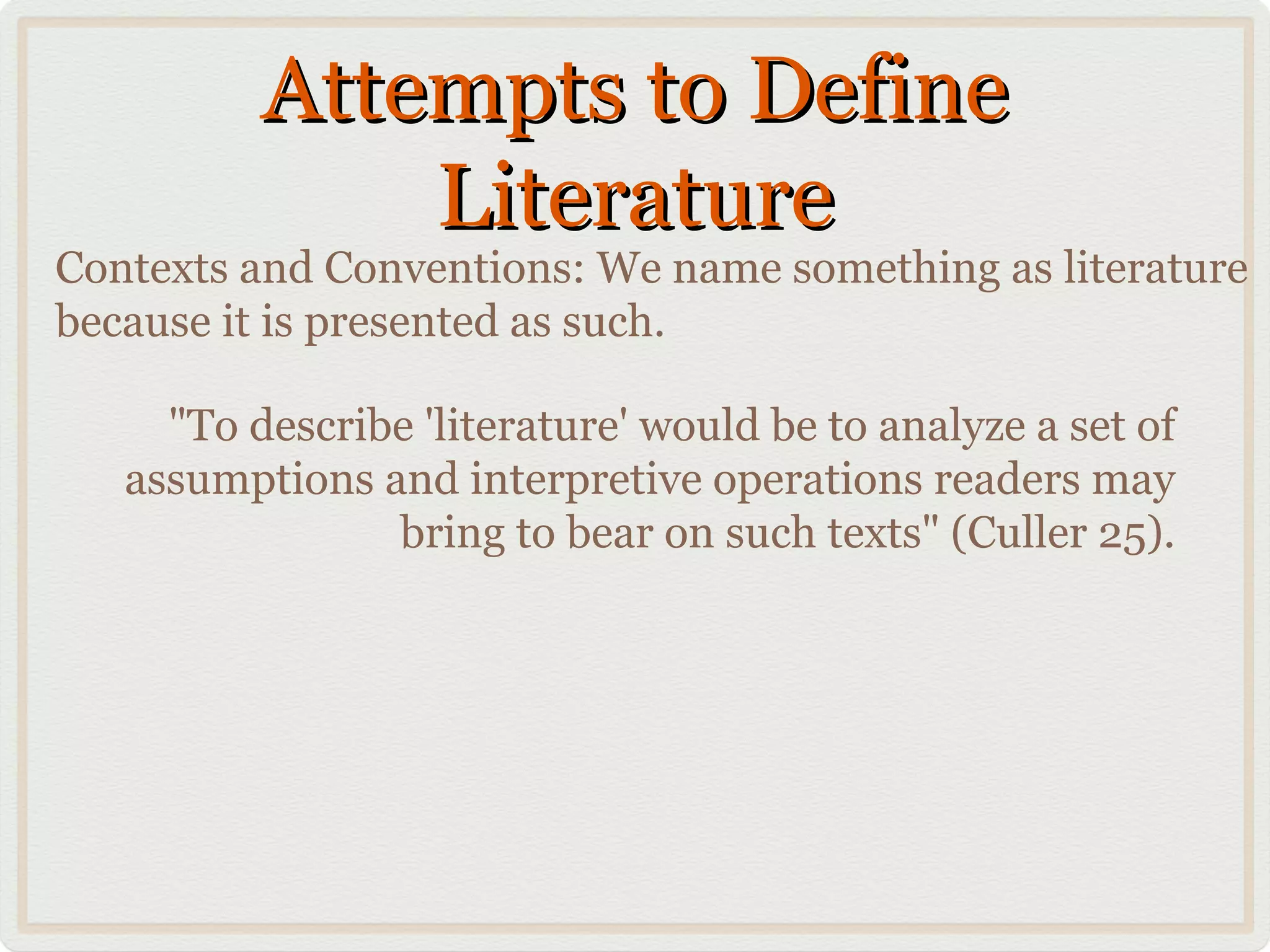
Attempts to Define
              Literature
Contexts and Conventions: We name something as literature
because it is presented as such.

     "To describe 'literature' would be to analyze a set of
   assumptions and interpretive operations readers may
                bring to bear on such texts" (Culler 25).
Attempts to Define
              Literature
We assume there's a purpose beyond the surface
meaning, because it has been labeled as "literature"

'Literature is an institutional label that gives us reason
to expect that the results of our reading efforts will be
'worth it.' And many of the features of literature follow
from the willingness of readers to pay attention, to
explore uncertainties, and not immediately ask 'what
do you mean by that?'(Culler 27).
Most of the time what leads readers to treat something as
literature is that they find it in a context that identifies it as
literature: in a book of poems or a section of a magazine,
library, or bookstore. (Culler 27).

          Would you have seen the Burney
         mastectomy letter as literary if you
        encountered it in a different context?
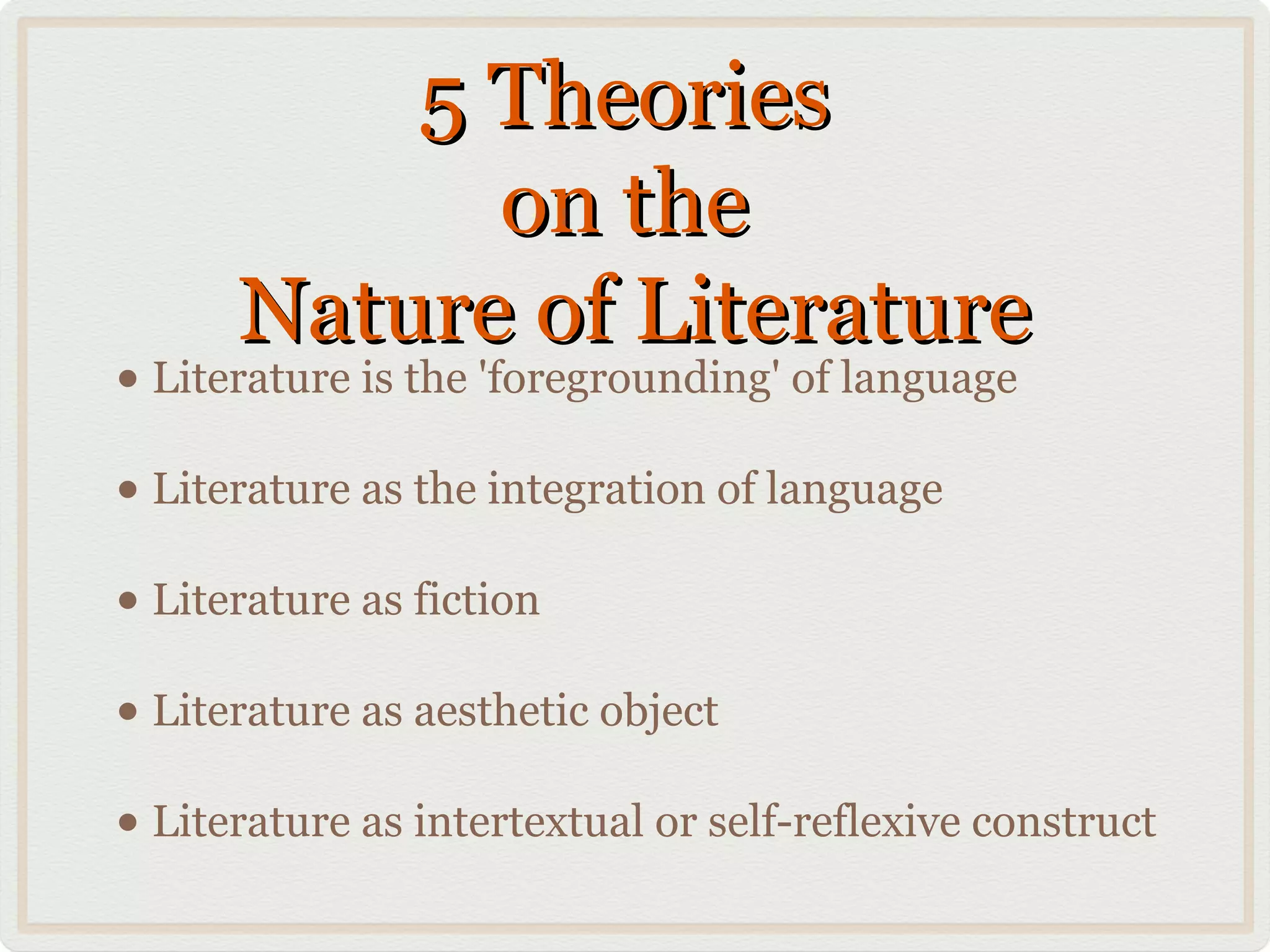
5 Theories
            on the
      Nature of Literature
• Literature is the 'foregrounding' of language
• Literature as the integration of language
• Literature as fiction
• Literature as aesthetic object
• Literature as intertextual or self-reflexive construct
5 Theories
            on the
      Nature of Literature
When you read these theories, which was the most
familiar to you?

Which made the most sense?

Why do you think this was the case?
What's the Question:
       Theory as Methodology
                Culler defines theory as

 1) Interdisciplinary: as a "discourse with effects outside an
 original discipline" (Culler 14).
2) Analytical and Speculative: it "attempt[s] to work out
what is involved in what we call sex or language or
writing or meaning or the subject" (14).
3) Critical of Assumptions, aka "common sense" or
"concepts taken as natural" (15).
4) Reflexive: questions "the categories we use in making
sense of things"; it is "thinking about thinking" (15).
What is "discourse"?
Culler characterizes the theories of Michel Foucault as
offering "a general framework for thinking about texts
and discourses in general" (13).
Foucault "proposes to show us not how insightful or
wise texts are but how far the discourses of doctors,
scientists, novelists, and others create the things they
claim only to analyze. . . . [He] shows how creatively
productive the discourses of knowledge are" (13).
What is "discourse"?
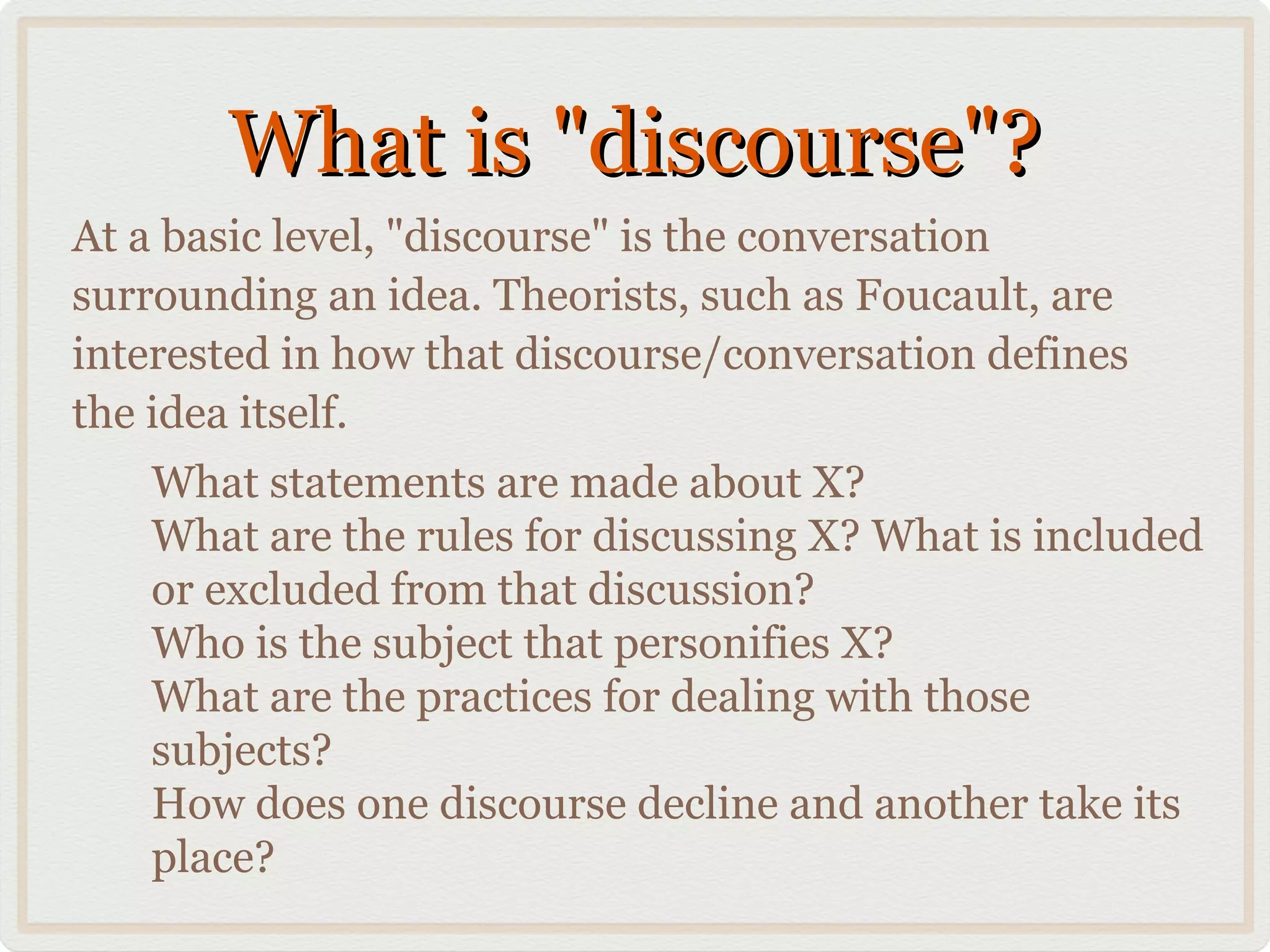
At a basic level, "discourse" is the conversation
surrounding an idea. Theorists, such as Foucault, are
interested in how that discourse/conversation defines
the idea itself.
   What statements are made about X?
   What are the rules for discussing X? What is included
   or excluded from that discussion?
   Who is the subject that personifies X?
   What are the practices for dealing with those
   subjects?
   How does one discourse decline and another take its
   place?
What is "discourse"?
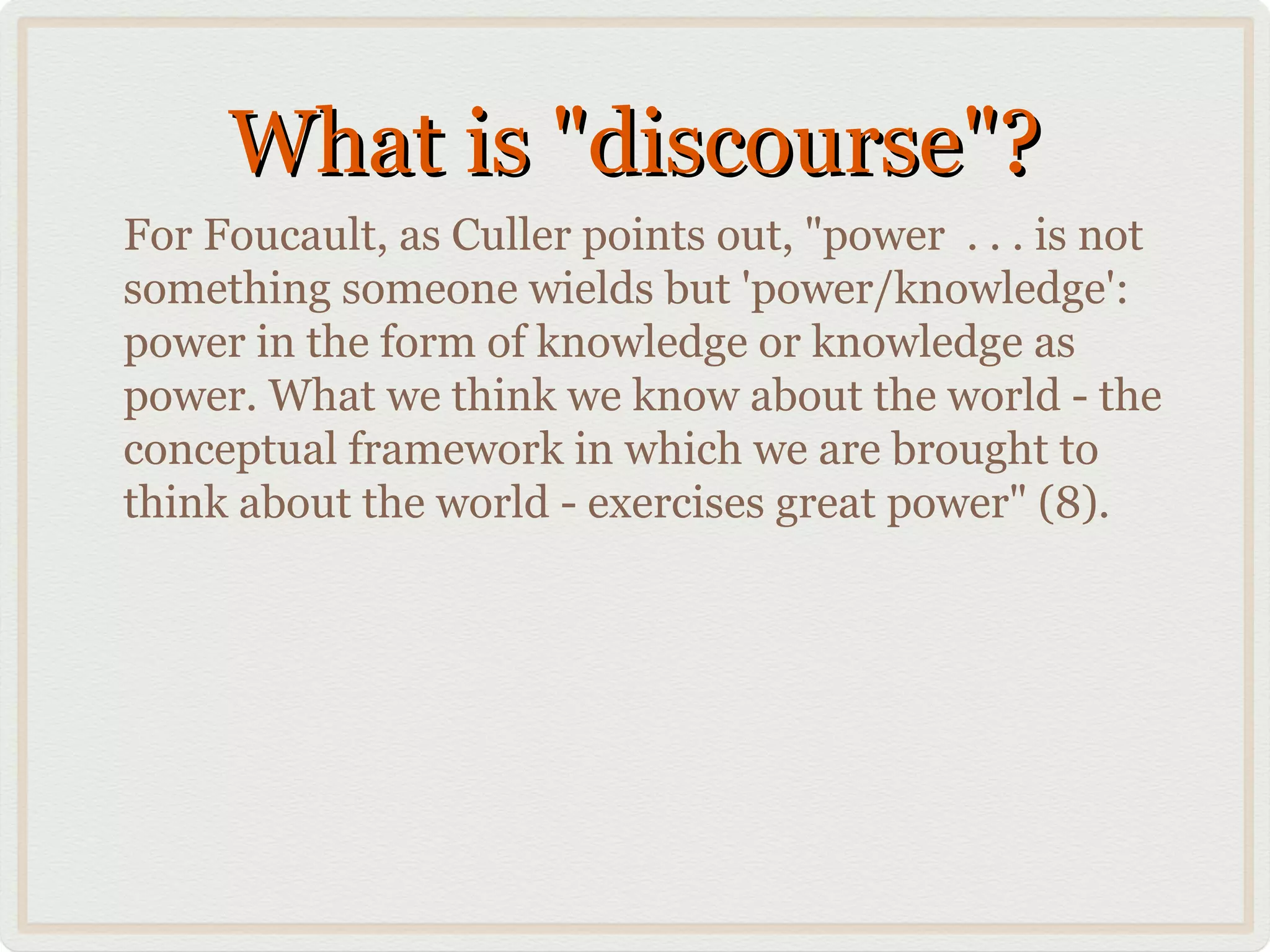
For Foucault, as Culler points out, "power . . . is not
something someone wields but 'power/knowledge':
power in the form of knowledge or knowledge as
power. What we think we know about the world - the
conceptual framework in which we are brought to
think about the world - exercises great power" (8).
What is "discourse"?
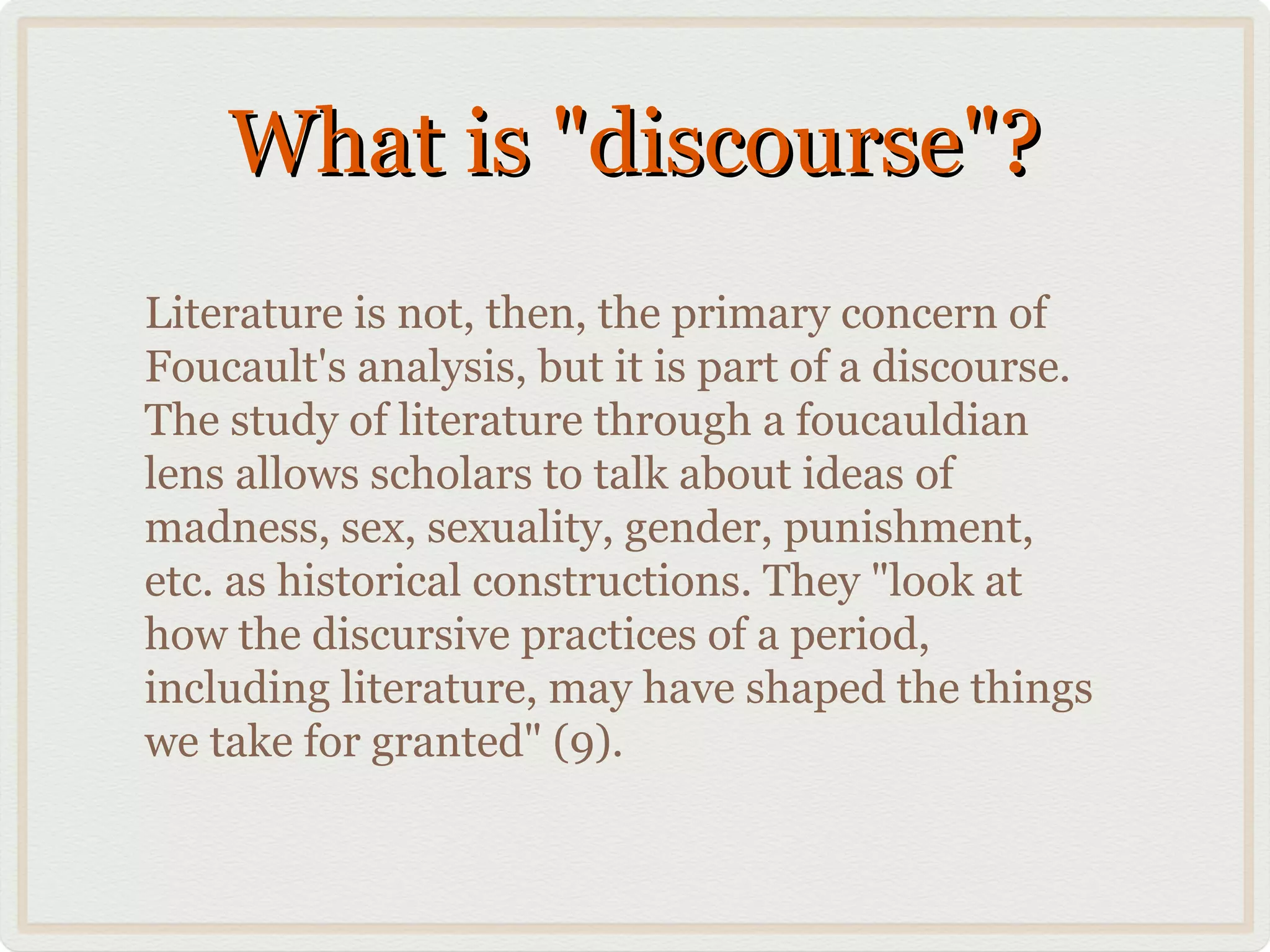
Literature is not, then, the primary concern of
Foucault's analysis, but it is part of a discourse.
The study of literature through a foucauldian
lens allows scholars to talk about ideas of
madness, sex, sexuality, gender, punishment,
etc. as historical constructions. They "look at
how the discursive practices of a period,
including literature, may have shaped the things
we take for granted" (9).
What is Literature?
• Return to your list of literary types.

• Which do you think are granted more cultural value than
  others?

• Why? How are these hierarchies created?
• What is the discourse surrounding those categories?
Next time
Derrida's life suffused with signs (Culler 9-14)
            Fairytale as Discourse
   Signs and Supplements in "Sure Thing"
                      Lun
            Lunsford's EasyWriter
  Questions of Mastery: what is "enough"
              knowledge for you?
           Eight Journals Collected
        Week 0 Assessment Returned

En120.spring2013.week1.monday

  • 1.
    Entering Academic Conversations: What are they talking about? En120, Spring 2013 Week 1: Monday, 11 February Prof. E. Kugler
  • 2.
    Graff and Birkenstein's They Say/I Say Describe their approach? What is their stated point? What is implicit? What is at stake for them? What kind of writing styles and techniques do they value?
  • 3.
    Culler's Literary Theory: AVery Short Introduction Do you see the rhetorical moves advocated by Graff and Birkenstein in use here? Where does Culler express his own views or those of others? Or, at least, when does he represent his own views or represent his take on the views of others?
  • 4.
    What is Culler'spoint? Why does he see the need for this book? Into what sorts of conversations is he intervening?
  • 5.
    What is Literature? •Pause and consider what types of texts you consider literary. List them. • In groups of 3, organize them in relation to each other. • Put this chart on the board.
  • 6.
    The Paradox ofLiterature Literature is a paradoxical institution because to create literature is to write according to existing formulas - to producing something that looks like a sonnet or that follows the conventions of the novel - but it is also to flout those conventions, to go beyond them. Literature is an institution that that lives by exposing and criticizing its own limits, by testing what will happen if one writes differently. (Culler 40)
  • 7.
    The Paradox ofLiterature So literature is at the same time the name for the utterly conventional . . . and for the utterly disruptive, where reader have to struggle to create any meaning at all) (Culler 40)
  • 8.
    Attempts to Define Literature Contexts and Conventions: We name something as literature because it is presented as such. "To describe 'literature' would be to analyze a set of assumptions and interpretive operations readers may bring to bear on such texts" (Culler 25).
  • 9.
    Attempts to Define Literature We assume there's a purpose beyond the surface meaning, because it has been labeled as "literature" 'Literature is an institutional label that gives us reason to expect that the results of our reading efforts will be 'worth it.' And many of the features of literature follow from the willingness of readers to pay attention, to explore uncertainties, and not immediately ask 'what do you mean by that?'(Culler 27).
  • 10.
    Most of thetime what leads readers to treat something as literature is that they find it in a context that identifies it as literature: in a book of poems or a section of a magazine, library, or bookstore. (Culler 27). Would you have seen the Burney mastectomy letter as literary if you encountered it in a different context?
  • 11.
    5 Theories on the Nature of Literature • Literature is the 'foregrounding' of language • Literature as the integration of language • Literature as fiction • Literature as aesthetic object • Literature as intertextual or self-reflexive construct
  • 12.
    5 Theories on the Nature of Literature When you read these theories, which was the most familiar to you? Which made the most sense? Why do you think this was the case?
  • 14.
    What's the Question: Theory as Methodology Culler defines theory as 1) Interdisciplinary: as a "discourse with effects outside an original discipline" (Culler 14). 2) Analytical and Speculative: it "attempt[s] to work out what is involved in what we call sex or language or writing or meaning or the subject" (14). 3) Critical of Assumptions, aka "common sense" or "concepts taken as natural" (15). 4) Reflexive: questions "the categories we use in making sense of things"; it is "thinking about thinking" (15).
  • 15.
    What is "discourse"? Cullercharacterizes the theories of Michel Foucault as offering "a general framework for thinking about texts and discourses in general" (13). Foucault "proposes to show us not how insightful or wise texts are but how far the discourses of doctors, scientists, novelists, and others create the things they claim only to analyze. . . . [He] shows how creatively productive the discourses of knowledge are" (13).
  • 16.
    What is "discourse"? Ata basic level, "discourse" is the conversation surrounding an idea. Theorists, such as Foucault, are interested in how that discourse/conversation defines the idea itself. What statements are made about X? What are the rules for discussing X? What is included or excluded from that discussion? Who is the subject that personifies X? What are the practices for dealing with those subjects? How does one discourse decline and another take its place?
  • 17.
    What is "discourse"? ForFoucault, as Culler points out, "power . . . is not something someone wields but 'power/knowledge': power in the form of knowledge or knowledge as power. What we think we know about the world - the conceptual framework in which we are brought to think about the world - exercises great power" (8).
  • 18.
    What is "discourse"? Literatureis not, then, the primary concern of Foucault's analysis, but it is part of a discourse. The study of literature through a foucauldian lens allows scholars to talk about ideas of madness, sex, sexuality, gender, punishment, etc. as historical constructions. They "look at how the discursive practices of a period, including literature, may have shaped the things we take for granted" (9).
  • 19.
    What is Literature? •Return to your list of literary types. • Which do you think are granted more cultural value than others? • Why? How are these hierarchies created? • What is the discourse surrounding those categories?
  • 20.
    Next time Derrida's lifesuffused with signs (Culler 9-14) Fairytale as Discourse Signs and Supplements in "Sure Thing" Lun Lunsford's EasyWriter Questions of Mastery: what is "enough" knowledge for you? Eight Journals Collected Week 0 Assessment Returned