COURSE NAME – HIGH RISE
BUILDING
COURSE CODE – ARC 404
SUBMITTED TO :- AR. SUKRITI DOGRA
SYBMITTED BY:- MANISHA BISHT
B.ARCH
5TH SEM
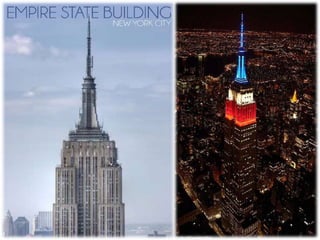
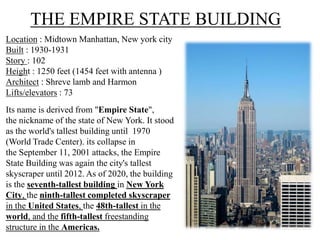
THE EMPIRE STATE BUILDING
Location : Midtown Manhattan, New york city
Built : 1930-1931
Story : 102
Height : 1250 feet (1454 feet with antenna )
Architect : Shreve lamb and Harmon
Lifts/elevators : 73
Its name is derived from "Empire State",
the nickname of the state of New York. It stood
as the world's tallest building until 1970
(World Trade Center). its collapse in
the September 11, 2001 attacks, the Empire
State Building was again the city's tallest
skyscraper until 2012. As of 2020, the building
is the seventh-tallest building in New York
City, the ninth-tallest completed skyscraper
in the United States, the 48th-tallest in the
world, and the fifth-tallest freestanding
structure in the Americas.
Site
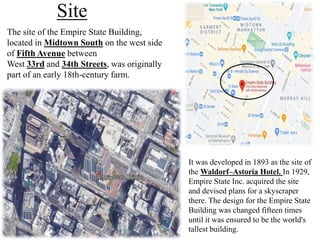
The site of the Empire State Building,
located in Midtown South on the west side
of Fifth Avenue between
West 33rd and 34th Streets, was originally
part of an early 18th-century farm.
It was developed in 1893 as the site of
the Waldorf–Astoria Hotel. In 1929,
Empire State Inc. acquired the site
and devised plans for a skyscraper
there. The design for the Empire State
Building was changed fifteen times
until it was ensured to be the world's
tallest building.
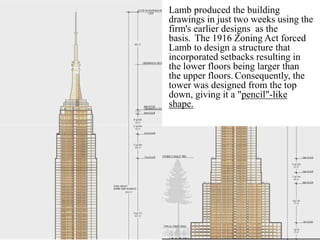
Lamb produced the building
drawings in just two weeks using the
firm's earlier designs as the
basis. The 1916 Zoning Act forced
Lamb to design a structure that
incorporated setbacks resulting in
the lower floors being larger than
the upper floors. Consequently, the
tower was designed from the top
down, giving it a "pencil"-like
shape.
The Structure of the tower is braced steel frame with semi-
rigid connections. It remains stiffest of the tower for its
height, due to largely due to heavy cladding that is designed
to stiffen the frame.
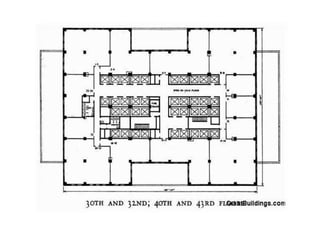
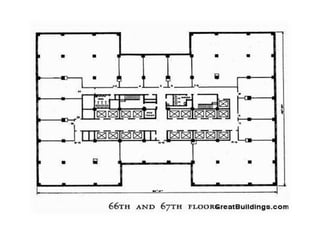
Single core system The system structure of a tall building with a centre
single core (single core) and within short columns (mullion) which bear
the floor with the core of the building.
 The core of the building except bears the vertical load is also
burdened with a horizontal force due to the earthquake and wind.
 There are windows on four sides providing excellent light and views.
Shear Walls: To resist the lateral load caused
by wind and Earthquake
 The Assembly of shear wall is known as
“Coupled Shear Wall”
 Belt Trusses distribute the tensile and
compressive force to the large no of
exterior truss.
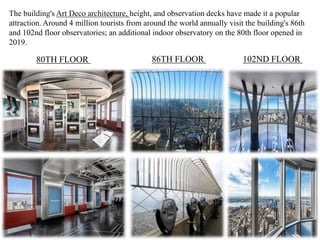
The building's Art Deco architecture, height, and observation decks have made it a popular
attraction. Around 4 million tourists from around the world annually visit the building's 86th
and 102nd floor observatories; an additional indoor observatory on the 80th floor opened in
2019.
80TH FLOOR 86TH FLOOR 102ND FLOOR
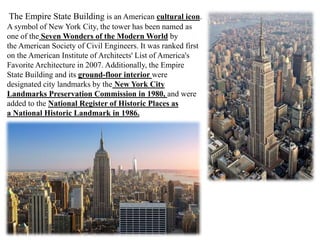
The Empire State Building is an American cultural icon.
A symbol of New York City, the tower has been named as
one of the Seven Wonders of the Modern World by
the American Society of Civil Engineers. It was ranked first
on the American Institute of Architects' List of America's
Favorite Architecture in 2007. Additionally, the Empire
State Building and its ground-floor interior were
designated city landmarks by the New York City
Landmarks Preservation Commission in 1980, and were
added to the National Register of Historic Places as
a National Historic Landmark in 1986.
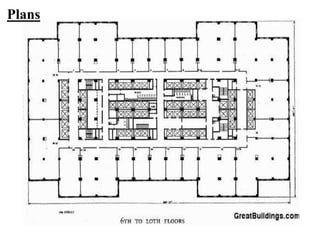
Plans
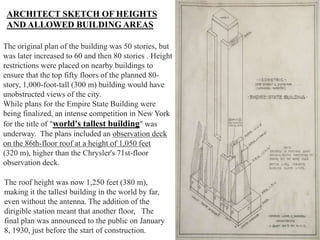
The original plan of the building was 50 stories, but
was later increased to 60 and then 80 stories . Height
restrictions were placed on nearby buildings to
ensure that the top fifty floors of the planned 80-
story, 1,000-foot-tall (300 m) building would have
unobstructed views of the city.
While plans for the Empire State Building were
being finalized, an intense competition in New York
for the title of "world's tallest building" was
underway. The plans included an observation deck
on the 86th-floor roof at a height of 1,050 feet
(320 m), higher than the Chrysler's 71st-floor
observation deck.
The roof height was now 1,250 feet (380 m),
making it the tallest building in the world by far,
even without the antenna. The addition of the
dirigible station meant that another floor, The
final plan was announced to the public on January
8, 1930, just before the start of construction.
ARCHITECT SKETCH OF HEIGHTS
AND ALLOWED BUILDING AREAS
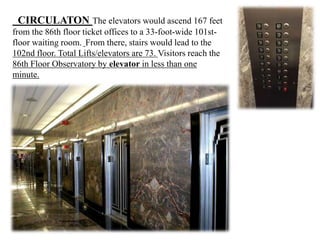
CIRCULATON The elevators would ascend 167 feet
from the 86th floor ticket offices to a 33-foot-wide 101st-
floor waiting room. From there, stairs would lead to the
102nd floor. Total Lifts/elevators are 73. Visitors reach the
86th Floor Observatory by elevator in less than one
minute.
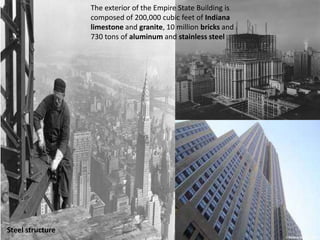
Steel structure
The exterior of the Empire State Building is
composed of 200,000 cubic feet of Indiana
limestone and granite, 10 million bricks and
730 tons of aluminum and stainless steel
THANK YOU

Empire state building

  • 1.
    COURSE NAME –HIGH RISE BUILDING COURSE CODE – ARC 404 SUBMITTED TO :- AR. SUKRITI DOGRA SYBMITTED BY:- MANISHA BISHT B.ARCH 5TH SEM
  • 3.
    THE EMPIRE STATEBUILDING Location : Midtown Manhattan, New york city Built : 1930-1931 Story : 102 Height : 1250 feet (1454 feet with antenna ) Architect : Shreve lamb and Harmon Lifts/elevators : 73 Its name is derived from "Empire State", the nickname of the state of New York. It stood as the world's tallest building until 1970 (World Trade Center). its collapse in the September 11, 2001 attacks, the Empire State Building was again the city's tallest skyscraper until 2012. As of 2020, the building is the seventh-tallest building in New York City, the ninth-tallest completed skyscraper in the United States, the 48th-tallest in the world, and the fifth-tallest freestanding structure in the Americas.
  • 4.
    Site The site ofthe Empire State Building, located in Midtown South on the west side of Fifth Avenue between West 33rd and 34th Streets, was originally part of an early 18th-century farm. It was developed in 1893 as the site of the Waldorf–Astoria Hotel. In 1929, Empire State Inc. acquired the site and devised plans for a skyscraper there. The design for the Empire State Building was changed fifteen times until it was ensured to be the world's tallest building.
  • 5.
    Lamb produced thebuilding drawings in just two weeks using the firm's earlier designs as the basis. The 1916 Zoning Act forced Lamb to design a structure that incorporated setbacks resulting in the lower floors being larger than the upper floors. Consequently, the tower was designed from the top down, giving it a "pencil"-like shape.
  • 6.
    The Structure ofthe tower is braced steel frame with semi- rigid connections. It remains stiffest of the tower for its height, due to largely due to heavy cladding that is designed to stiffen the frame. Single core system The system structure of a tall building with a centre single core (single core) and within short columns (mullion) which bear the floor with the core of the building.  The core of the building except bears the vertical load is also burdened with a horizontal force due to the earthquake and wind.  There are windows on four sides providing excellent light and views. Shear Walls: To resist the lateral load caused by wind and Earthquake  The Assembly of shear wall is known as “Coupled Shear Wall”  Belt Trusses distribute the tensile and compressive force to the large no of exterior truss.
  • 7.
    The building's ArtDeco architecture, height, and observation decks have made it a popular attraction. Around 4 million tourists from around the world annually visit the building's 86th and 102nd floor observatories; an additional indoor observatory on the 80th floor opened in 2019. 80TH FLOOR 86TH FLOOR 102ND FLOOR
  • 8.
    The Empire StateBuilding is an American cultural icon. A symbol of New York City, the tower has been named as one of the Seven Wonders of the Modern World by the American Society of Civil Engineers. It was ranked first on the American Institute of Architects' List of America's Favorite Architecture in 2007. Additionally, the Empire State Building and its ground-floor interior were designated city landmarks by the New York City Landmarks Preservation Commission in 1980, and were added to the National Register of Historic Places as a National Historic Landmark in 1986.
  • 9.
  • 12.
    The original planof the building was 50 stories, but was later increased to 60 and then 80 stories . Height restrictions were placed on nearby buildings to ensure that the top fifty floors of the planned 80- story, 1,000-foot-tall (300 m) building would have unobstructed views of the city. While plans for the Empire State Building were being finalized, an intense competition in New York for the title of "world's tallest building" was underway. The plans included an observation deck on the 86th-floor roof at a height of 1,050 feet (320 m), higher than the Chrysler's 71st-floor observation deck. The roof height was now 1,250 feet (380 m), making it the tallest building in the world by far, even without the antenna. The addition of the dirigible station meant that another floor, The final plan was announced to the public on January 8, 1930, just before the start of construction. ARCHITECT SKETCH OF HEIGHTS AND ALLOWED BUILDING AREAS
  • 13.
    CIRCULATON The elevatorswould ascend 167 feet from the 86th floor ticket offices to a 33-foot-wide 101st- floor waiting room. From there, stairs would lead to the 102nd floor. Total Lifts/elevators are 73. Visitors reach the 86th Floor Observatory by elevator in less than one minute.
  • 14.
    Steel structure The exteriorof the Empire State Building is composed of 200,000 cubic feet of Indiana limestone and granite, 10 million bricks and 730 tons of aluminum and stainless steel
  • 15.