April- 2018
“ Emotional Intelligence is core
Competency of an Agile Servant Leader”
Presented By-Md. Mizanur Rahman PMP,CSP
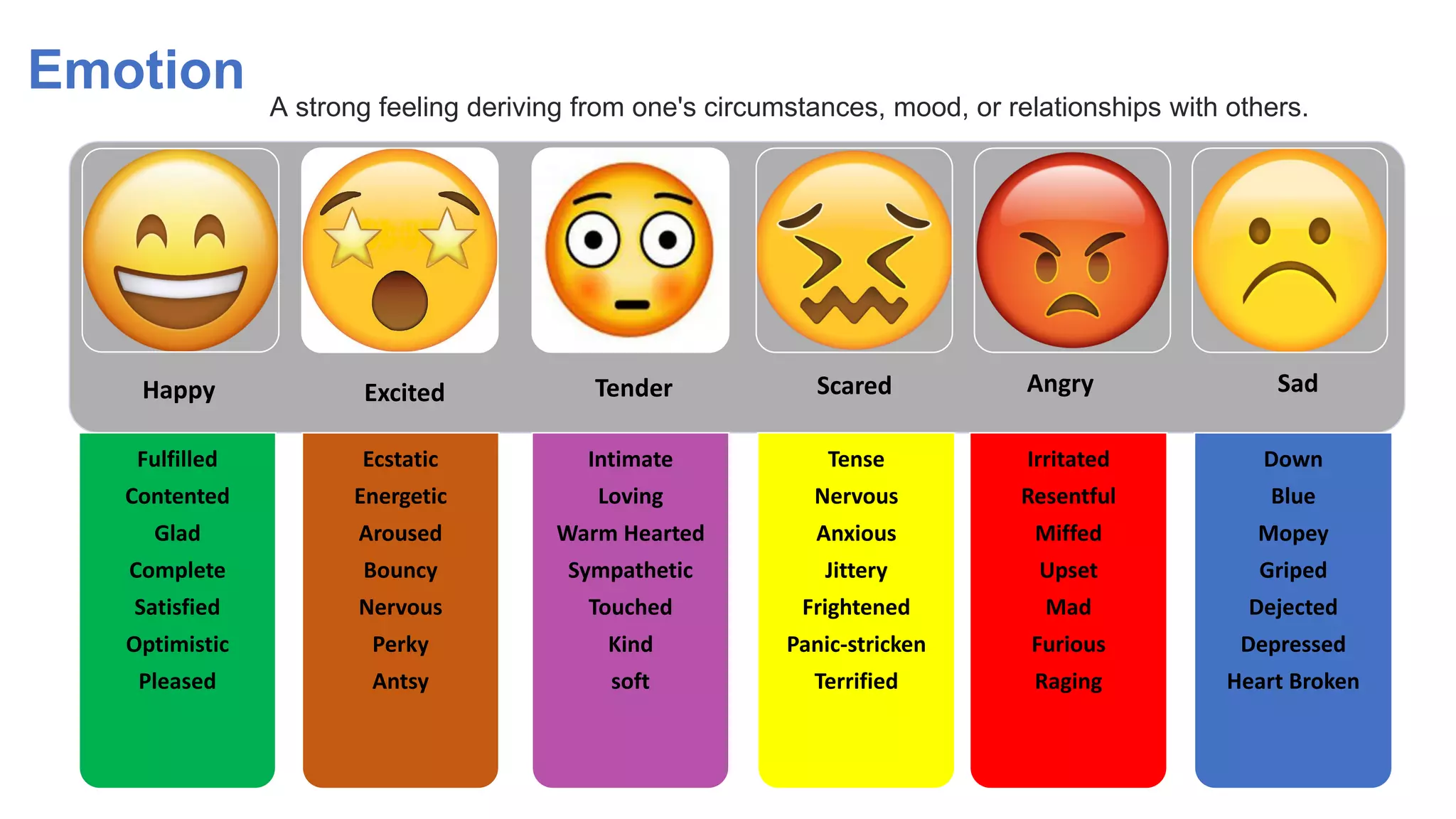
A strong feeling deriving from one's circumstances, mood, or relationships with others.
Emotion
Fulfilled
Contented
Glad
Complete
Satisfied
Optimistic
Pleased
Ecstatic
Energetic
Aroused
Bouncy
Nervous
Perky
Antsy
Intimate
Loving
Warm Hearted
Sympathetic
Touched
Kind
soft
Tense
Nervous
Anxious
Jittery
Frightened
Panic-stricken
Terrified
Irritated
Resentful
Miffed
Upset
Mad
Furious
Raging
Down
Blue
Mopey
Griped
Dejected
Depressed
Heart Broken
Happy Excited Tender Scared Angry Sad
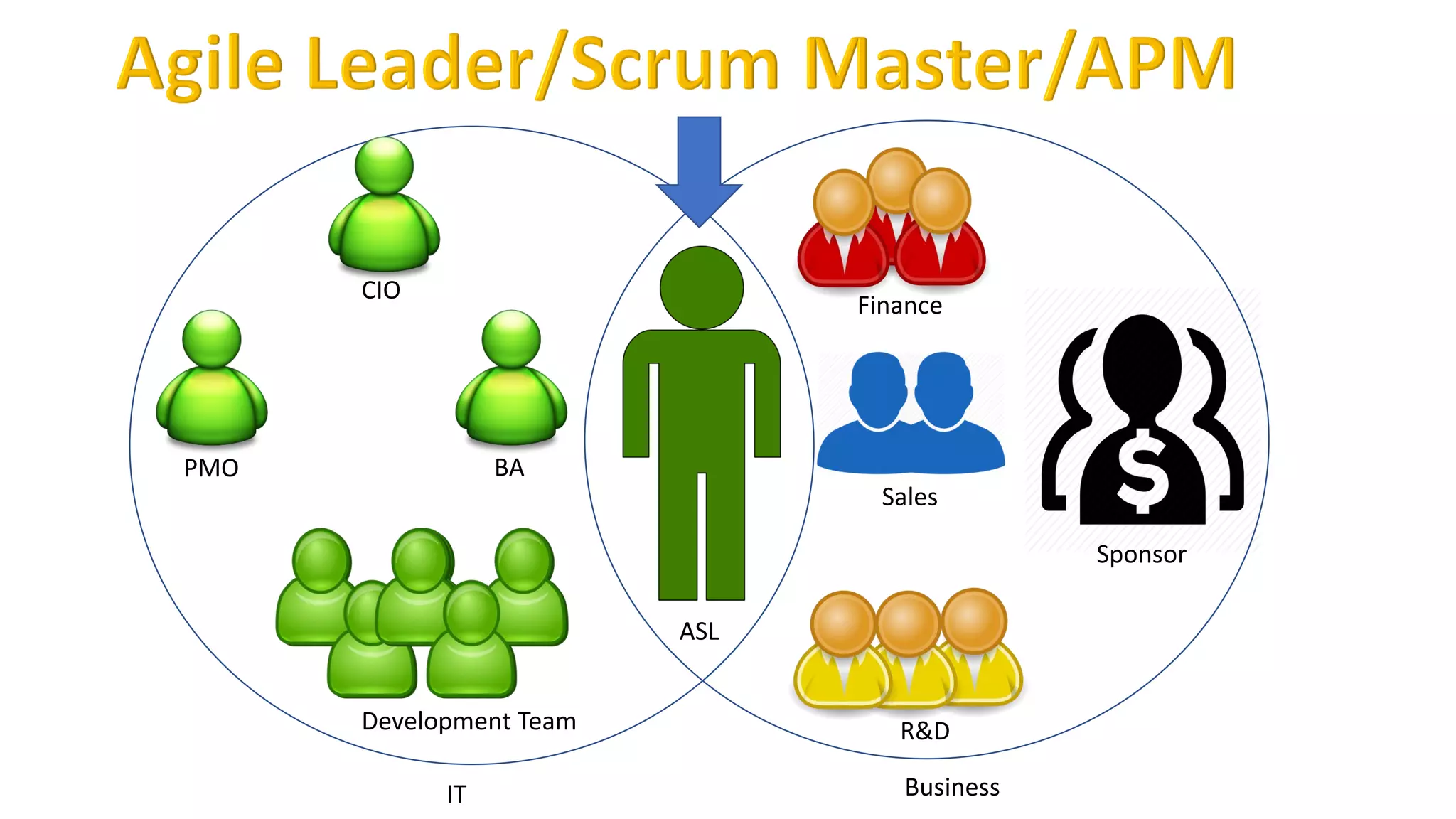
IT Business
Development Team
CIO
PMO BA
ASL
Sponsor
Finance
Sales
R&D
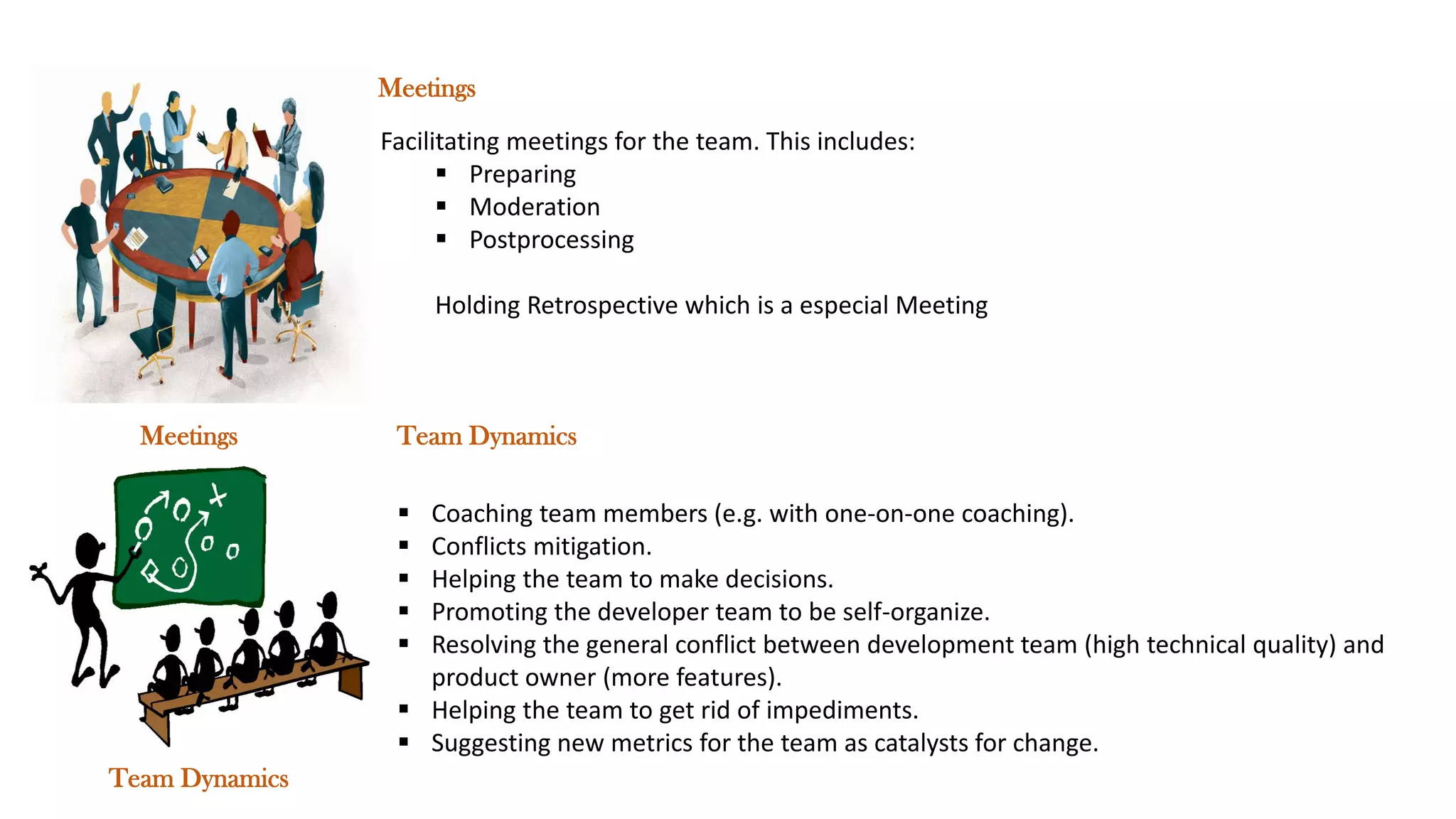
Meetings
Team Dynamics
Facilitating meetings for the team. This includes:
▪ Preparing
▪ Moderation
▪ Postprocessing
Holding Retrospective which is a especial Meeting
Meetings
▪ Coaching team members (e.g. with one-on-one coaching).
▪ Conflicts mitigation.
▪ Helping the team to make decisions.
▪ Promoting the developer team to be self-organize.
▪ Resolving the general conflict between development team (high technical quality) and
product owner (more features).
▪ Helping the team to get rid of impediments.
▪ Suggesting new metrics for the team as catalysts for change.
Team Dynamics
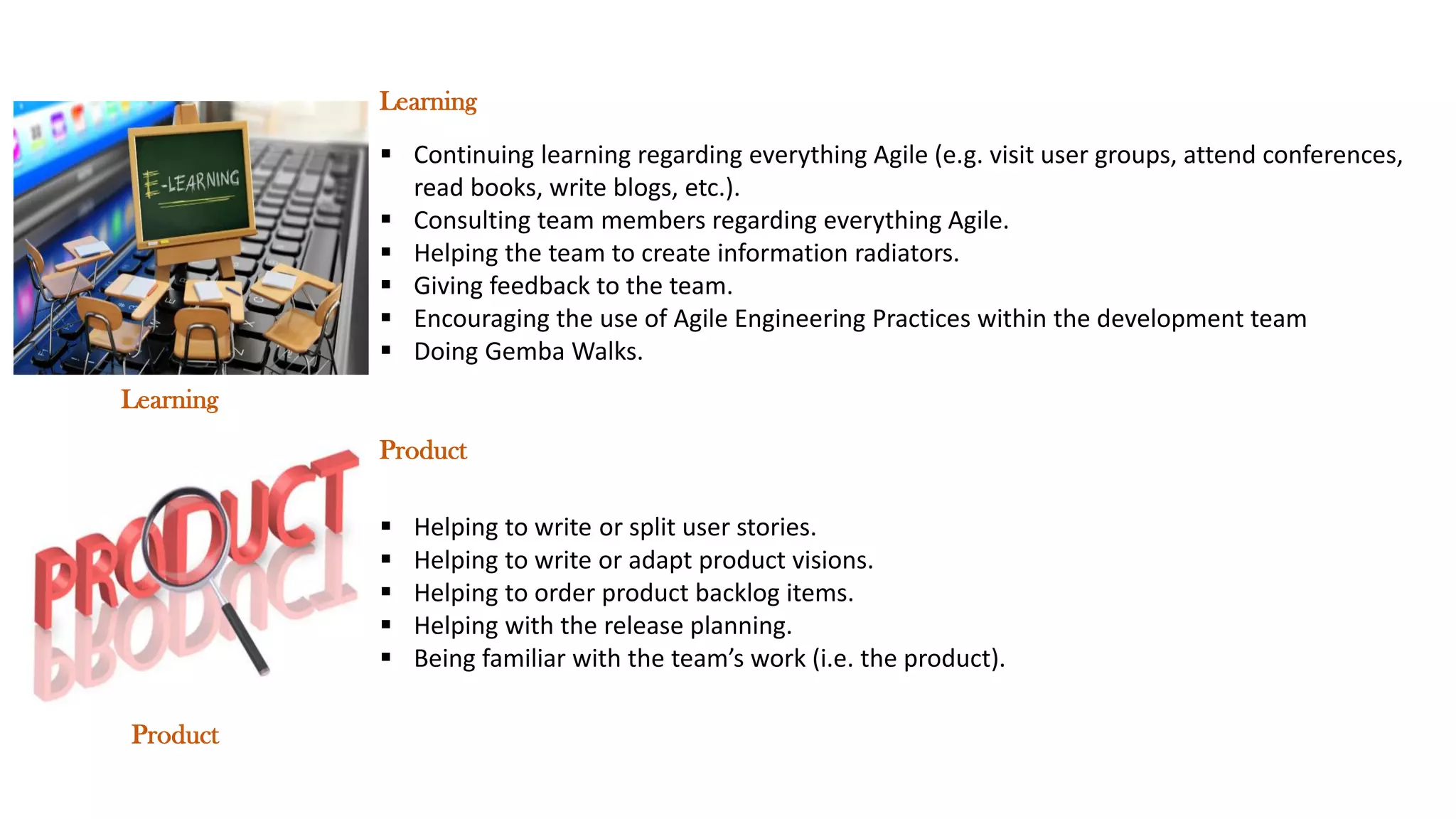
▪ Continuing learning regarding everything Agile (e.g. visit user groups, attend conferences,
read books, write blogs, etc.).
▪ Consulting team members regarding everything Agile.
▪ Helping the team to create information radiators.
▪ Giving feedback to the team.
▪ Encouraging the use of Agile Engineering Practices within the development team
▪ Doing Gemba Walks.
▪ Helping to write or split user stories.
▪ Helping to write or adapt product visions.
▪ Helping to order product backlog items.
▪ Helping with the release planning.
▪ Being familiar with the team’s work (i.e. the product).
Product
Learning
Learning
Product
▪ Reflecting Agile and Scrum values to the team.
▪ Reminding the team of their arrangements (e.g. policies).
▪ Helping the team to continuously improve their process.
▪ Reflecting issues to the team through observation from outside of the team.
▪ Asking open questions.
▪ Checking all the models the team uses (e.g. Sprint backlog, metrics, etc.) and
show them differences between the model and the real world.
▪ Helping the team to keep focus (e.g. by acting as a buffer between external
distractions and the team).
▪ Helping the team to maintain and use their Scrum tools (Story board, Action board,
charts, backlogs, etc.).
▪ Helping team and product owner to define a appropriate
▪ definition of done
▪ definition of ready.
Miscellaneous
Mirror
Miscellaneous
Mirror
The leadership formula:
IQ + EQ +SQ - EGO
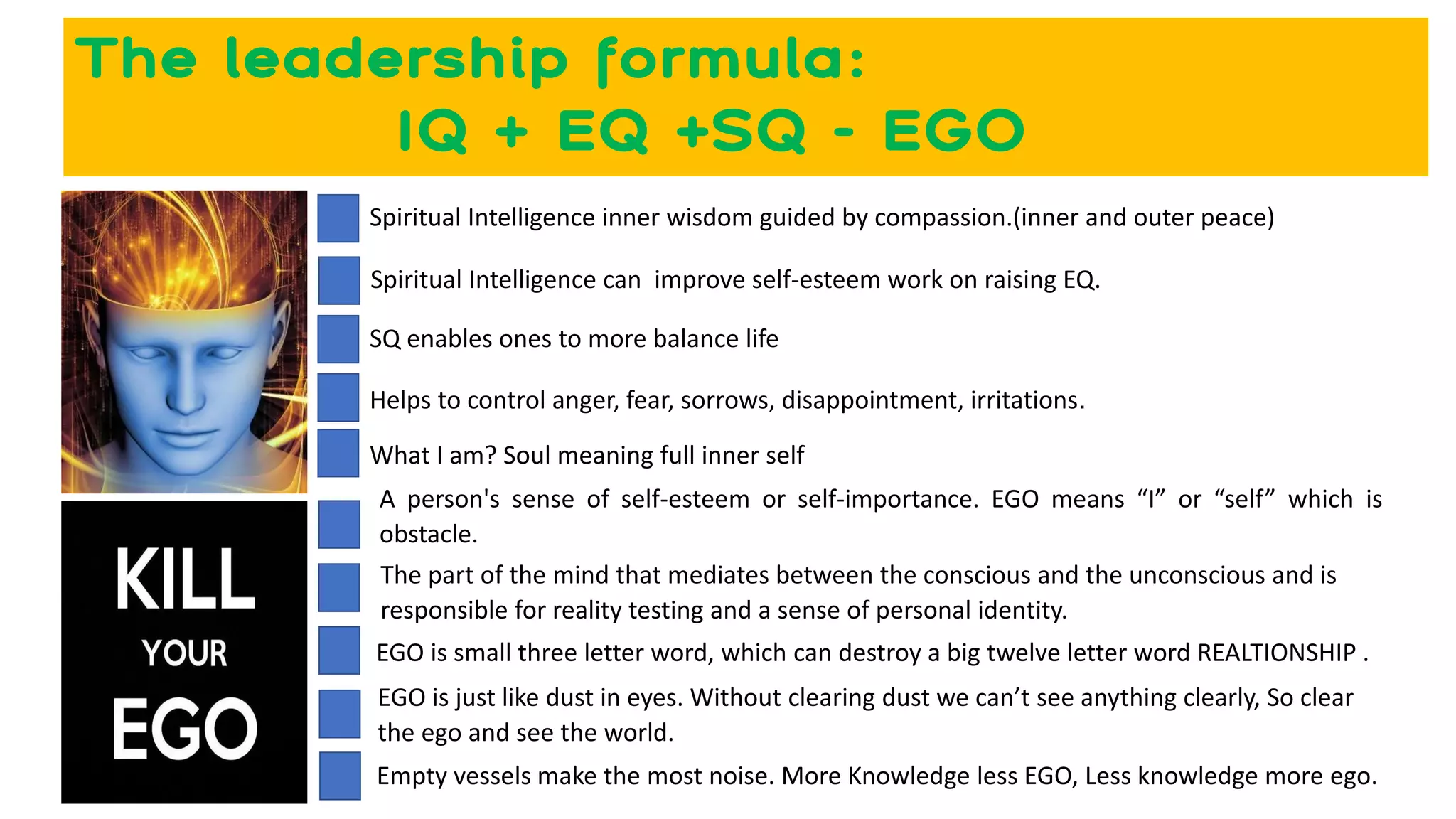
Intellectual Intelligence or IQ is the measure relative intelligence which is
determined by several standardized tests.
IQ is the measure of cognitive ability, such as ability to learn, understand or to
deal with new situation.
Emotional Intelligence or EI is the capability or ability of individuals to identify
and manage their own emotions and the emotion of others.
EI means a heart without negative emotions.
Manage and/or adjust emotions to adapt to environments or achieve one's goal(s).
IQ means a mind without negative thoughts.
What I think? Left Brain Conative critical thinking.
What I feel? Right Brain Emotional Relationship.
The leadership formula:
IQ + EQ +SQ - EGO
Spiritual Intelligence can improve self-esteem work on raising EQ.
SQ enables ones to more balance life
A person's sense of self-esteem or self-importance. EGO means “I” or “self” which is
obstacle.
The part of the mind that mediates between the conscious and the unconscious and is
responsible for reality testing and a sense of personal identity.
EGO is small three letter word, which can destroy a big twelve letter word REALTIONSHIP .
Helps to control anger, fear, sorrows, disappointment, irritations.
EGO is just like dust in eyes. Without clearing dust we can’t see anything clearly, So clear
the ego and see the world.
Empty vessels make the most noise. More Knowledge less EGO, Less knowledge more ego.
Spiritual Intelligence inner wisdom guided by compassion.(inner and outer peace)
What I am? Soul meaning full inner self
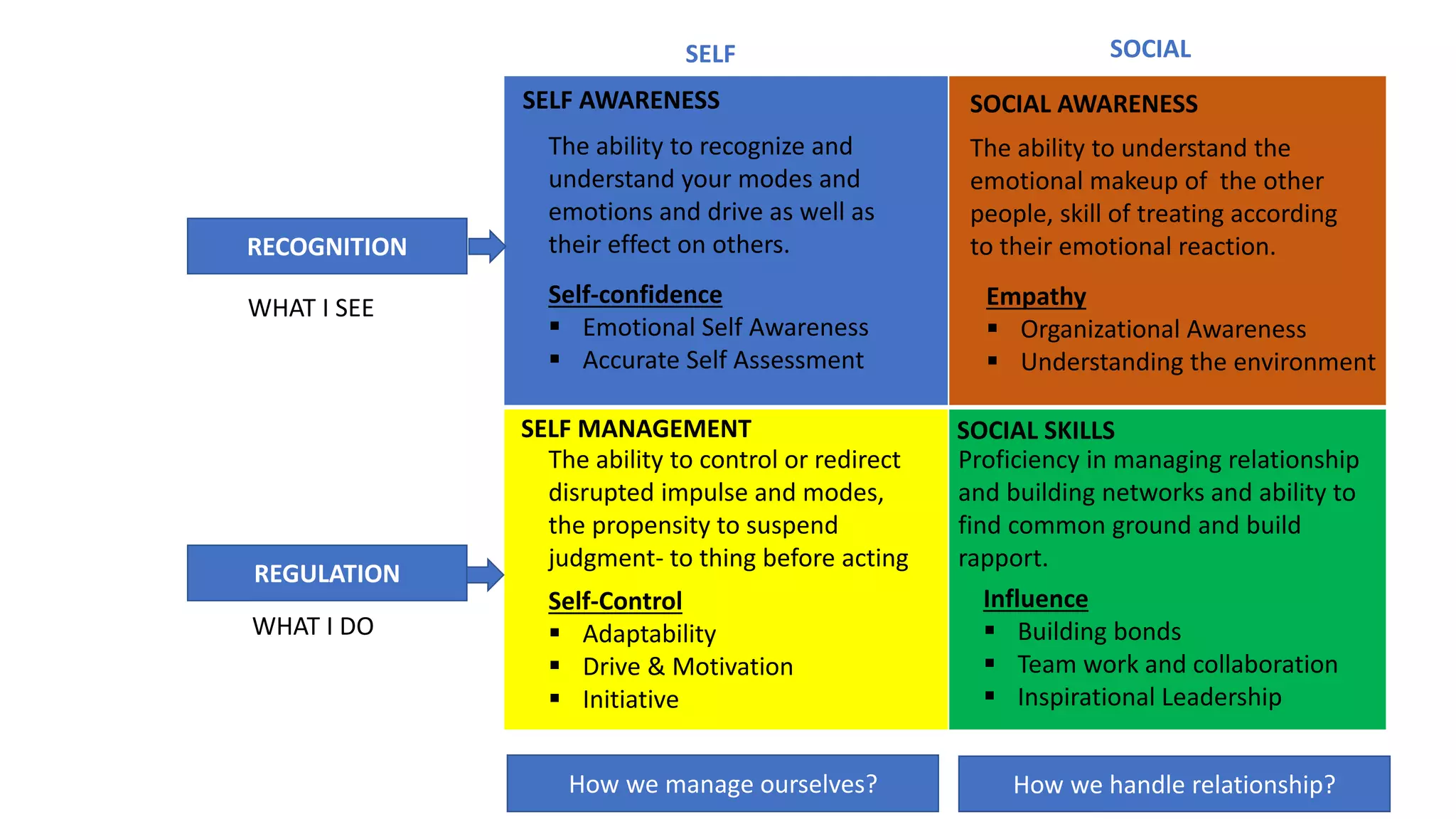
WHAT I SEE
WHAT I DO
SELF SOCIAL
SELF AWARENESS SOCIAL AWARENESS
SELF MANAGEMENT SOCIAL SKILLS
The ability to recognize and
understand your modes and
emotions and drive as well as
their effect on others.
Self-confidence
▪ Emotional Self Awareness
▪ Accurate Self Assessment
The ability to understand the
emotional makeup of the other
people, skill of treating according
to their emotional reaction.
Empathy
▪ Organizational Awareness
▪ Understanding the environment
The ability to control or redirect
disrupted impulse and modes,
the propensity to suspend
judgment- to thing before acting
Self-Control
▪ Adaptability
▪ Drive & Motivation
▪ Initiative
Proficiency in managing relationship
and building networks and ability to
find common ground and build
rapport.
Influence
▪ Building bonds
▪ Team work and collaboration
▪ Inspirational Leadership
RECOGNITION
REGULATION
How we manage ourselves? How we handle relationship?
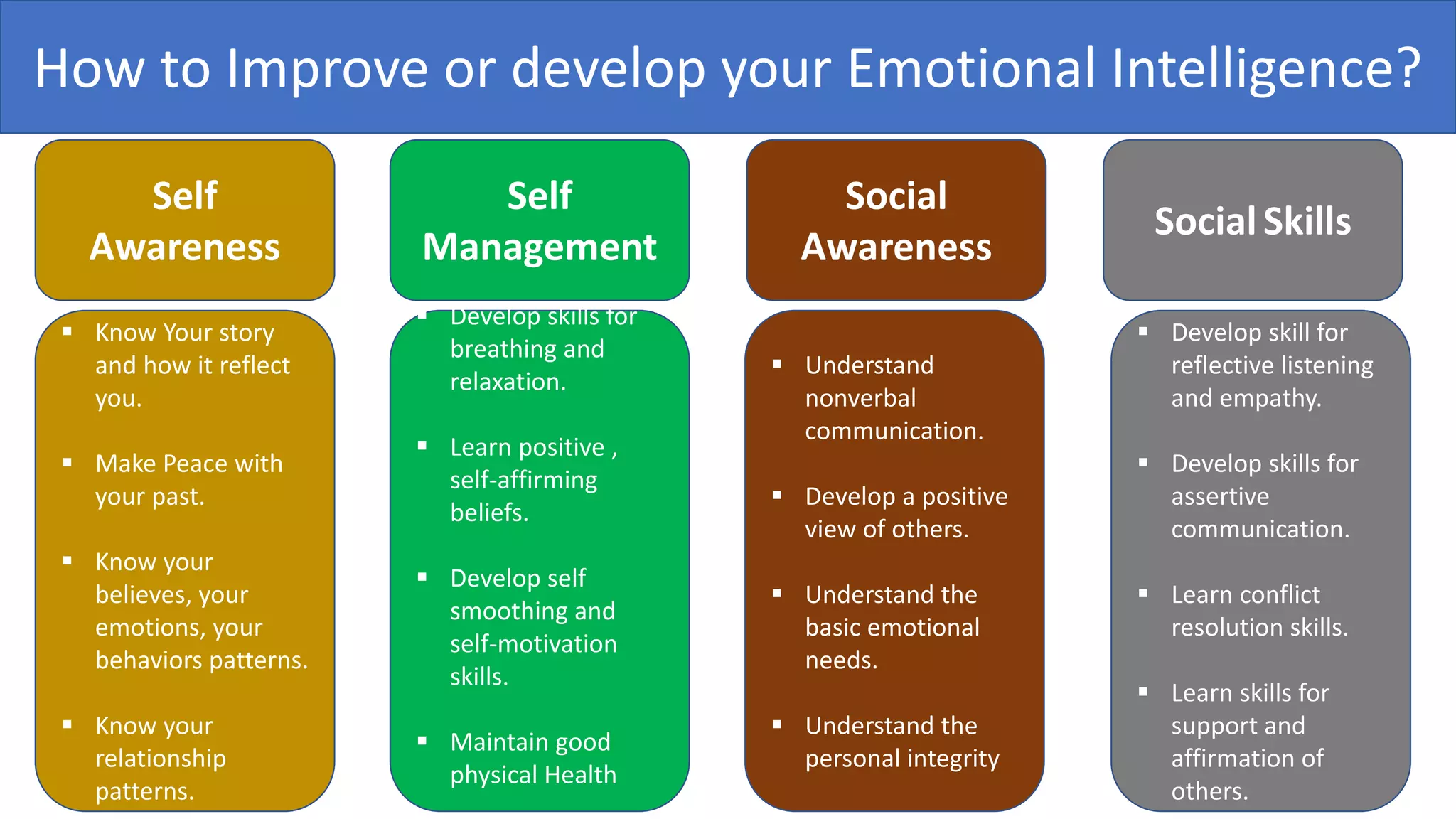
How to Improve or develop your Emotional Intelligence?
Self
Awareness
Self
Management
Social
Awareness
Social Skills
▪ Know Your story
and how it reflect
you.
▪ Make Peace with
your past.
▪ Know your
believes, your
emotions, your
behaviors patterns.
▪ Know your
relationship
patterns.
▪ Develop skills for
breathing and
relaxation.
▪ Learn positive ,
self-affirming
beliefs.
▪ Develop self
smoothing and
self-motivation
skills.
▪ Maintain good
physical Health
▪ Understand
nonverbal
communication.
▪ Develop a positive
view of others.
▪ Understand the
basic emotional
needs.
▪ Understand the
personal integrity
▪ Develop skill for
reflective listening
and empathy.
▪ Develop skills for
assertive
communication.
▪ Learn conflict
resolution skills.
▪ Learn skills for
support and
affirmation of
others.
Emotional intelligence for agile leader by MM Rahman

Emotional intelligence for agile leader by MM Rahman

  • 1.
    April- 2018 “ EmotionalIntelligence is core Competency of an Agile Servant Leader” Presented By-Md. Mizanur Rahman PMP,CSP
  • 2.
    A strong feelingderiving from one's circumstances, mood, or relationships with others. Emotion Fulfilled Contented Glad Complete Satisfied Optimistic Pleased Ecstatic Energetic Aroused Bouncy Nervous Perky Antsy Intimate Loving Warm Hearted Sympathetic Touched Kind soft Tense Nervous Anxious Jittery Frightened Panic-stricken Terrified Irritated Resentful Miffed Upset Mad Furious Raging Down Blue Mopey Griped Dejected Depressed Heart Broken Happy Excited Tender Scared Angry Sad
  • 3.
    IT Business Development Team CIO PMOBA ASL Sponsor Finance Sales R&D
  • 4.
    Meetings Team Dynamics Facilitating meetingsfor the team. This includes: ▪ Preparing ▪ Moderation ▪ Postprocessing Holding Retrospective which is a especial Meeting Meetings ▪ Coaching team members (e.g. with one-on-one coaching). ▪ Conflicts mitigation. ▪ Helping the team to make decisions. ▪ Promoting the developer team to be self-organize. ▪ Resolving the general conflict between development team (high technical quality) and product owner (more features). ▪ Helping the team to get rid of impediments. ▪ Suggesting new metrics for the team as catalysts for change. Team Dynamics
  • 5.
    ▪ Continuing learningregarding everything Agile (e.g. visit user groups, attend conferences, read books, write blogs, etc.). ▪ Consulting team members regarding everything Agile. ▪ Helping the team to create information radiators. ▪ Giving feedback to the team. ▪ Encouraging the use of Agile Engineering Practices within the development team ▪ Doing Gemba Walks. ▪ Helping to write or split user stories. ▪ Helping to write or adapt product visions. ▪ Helping to order product backlog items. ▪ Helping with the release planning. ▪ Being familiar with the team’s work (i.e. the product). Product Learning Learning Product
  • 6.
    ▪ Reflecting Agileand Scrum values to the team. ▪ Reminding the team of their arrangements (e.g. policies). ▪ Helping the team to continuously improve their process. ▪ Reflecting issues to the team through observation from outside of the team. ▪ Asking open questions. ▪ Checking all the models the team uses (e.g. Sprint backlog, metrics, etc.) and show them differences between the model and the real world. ▪ Helping the team to keep focus (e.g. by acting as a buffer between external distractions and the team). ▪ Helping the team to maintain and use their Scrum tools (Story board, Action board, charts, backlogs, etc.). ▪ Helping team and product owner to define a appropriate ▪ definition of done ▪ definition of ready. Miscellaneous Mirror Miscellaneous Mirror
  • 7.
    The leadership formula: IQ+ EQ +SQ - EGO Intellectual Intelligence or IQ is the measure relative intelligence which is determined by several standardized tests. IQ is the measure of cognitive ability, such as ability to learn, understand or to deal with new situation. Emotional Intelligence or EI is the capability or ability of individuals to identify and manage their own emotions and the emotion of others. EI means a heart without negative emotions. Manage and/or adjust emotions to adapt to environments or achieve one's goal(s). IQ means a mind without negative thoughts. What I think? Left Brain Conative critical thinking. What I feel? Right Brain Emotional Relationship.
  • 8.
    The leadership formula: IQ+ EQ +SQ - EGO Spiritual Intelligence can improve self-esteem work on raising EQ. SQ enables ones to more balance life A person's sense of self-esteem or self-importance. EGO means “I” or “self” which is obstacle. The part of the mind that mediates between the conscious and the unconscious and is responsible for reality testing and a sense of personal identity. EGO is small three letter word, which can destroy a big twelve letter word REALTIONSHIP . Helps to control anger, fear, sorrows, disappointment, irritations. EGO is just like dust in eyes. Without clearing dust we can’t see anything clearly, So clear the ego and see the world. Empty vessels make the most noise. More Knowledge less EGO, Less knowledge more ego. Spiritual Intelligence inner wisdom guided by compassion.(inner and outer peace) What I am? Soul meaning full inner self
  • 9.
    WHAT I SEE WHATI DO SELF SOCIAL SELF AWARENESS SOCIAL AWARENESS SELF MANAGEMENT SOCIAL SKILLS The ability to recognize and understand your modes and emotions and drive as well as their effect on others. Self-confidence ▪ Emotional Self Awareness ▪ Accurate Self Assessment The ability to understand the emotional makeup of the other people, skill of treating according to their emotional reaction. Empathy ▪ Organizational Awareness ▪ Understanding the environment The ability to control or redirect disrupted impulse and modes, the propensity to suspend judgment- to thing before acting Self-Control ▪ Adaptability ▪ Drive & Motivation ▪ Initiative Proficiency in managing relationship and building networks and ability to find common ground and build rapport. Influence ▪ Building bonds ▪ Team work and collaboration ▪ Inspirational Leadership RECOGNITION REGULATION How we manage ourselves? How we handle relationship?
  • 10.
    How to Improveor develop your Emotional Intelligence? Self Awareness Self Management Social Awareness Social Skills ▪ Know Your story and how it reflect you. ▪ Make Peace with your past. ▪ Know your believes, your emotions, your behaviors patterns. ▪ Know your relationship patterns. ▪ Develop skills for breathing and relaxation. ▪ Learn positive , self-affirming beliefs. ▪ Develop self smoothing and self-motivation skills. ▪ Maintain good physical Health ▪ Understand nonverbal communication. ▪ Develop a positive view of others. ▪ Understand the basic emotional needs. ▪ Understand the personal integrity ▪ Develop skill for reflective listening and empathy. ▪ Develop skills for assertive communication. ▪ Learn conflict resolution skills. ▪ Learn skills for support and affirmation of others.