Emotional Intelligence
Concept and Feature
Dr. RESHMA HAFEEZ
"Intelligence, as a hypothetical
construct, is the aggregate or
global capacity of the individual
to act purposefully, to think
rationally, and to deal
effectively with his environment”
- Wechsler
Plato
said,
“All learning has an emotional
base.”
Howard Gardner
2 types that fit emotional intelligence
Intrapersonal intelligence
the capacity to manage ourselves
through knowing and understanding
our feelings, wishes, needs, wants,
and purposes.
Interpersonal intelligence
Involves the ability to be
sensitive to other people’s
emotions and psychological
states, and enable us to choose
appropriate responses.
What Is Emotional Intelligence?
Emotional intelligence involves the
“abilities to perceive, appraise, and
express emotion; to access and/or
generate feelings when they facilitate
thought; to understand emotion and
emotional knowledge; and to regulate
emotions to promote emotional and
intellectual growth.”
Mayer and Salovey 1997
John Mayer ,
Peter Salovey,
Daniel Golman
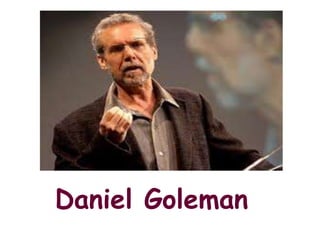
Daniel Goleman
Goleman - Aspects of Emotional Intelligence
Knowing ones emotions - self-
awareness or recognizing an emotion
when it occurs is knowing ones own
emotions.
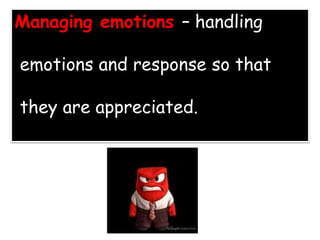
Managing emotions – handling
emotions and response so that
they are appreciated.
Motivating oneself - the ability to
channelize emotions in the service of
a goal.
INTRINSIC: Motivation comes from
inside the person ( amount of EFFORT,
belief in SELF , interest).
EXTRINSIC: Motivation comes from
outside the person ( money, trophies,
recognition)
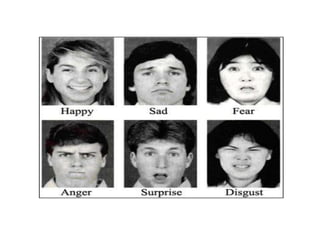
Recognizing emotions in others
or
Empathy
The appreciation of the differences in
people and the sensitivity towards other’s
feelings.
Empathy is a very high level skill. It is
the ability to see the world from others
point of view and to identify and
understand others’ situations, feelings and
motives.
Empathy begins with LISTENING
Six NEGATIVE listening pattern
1. The FAKER
2. The INTRRUPTER
3. The LOGICAL LISTENER
4. The REBUTTAL maker
5. The ADVICE maker
Handling Relationships
Managing emotions in others.
Social Skills.
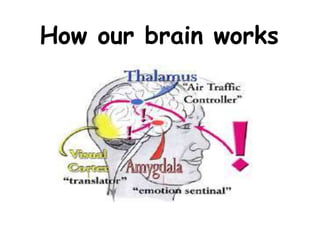
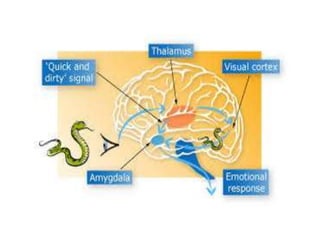
Joseph trophiesDr.Joseph LeDoux
How our brain works
WHAT YOU CAN DO
after seeing physical
SIGNS
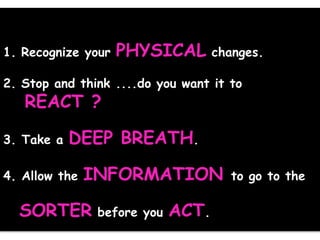
1. Recognize your PHYSICAL changes.
2. Stop and think ....do you want it to
REACT ?
3. Take a DEEP BREATH.
4. Allow the INFORMATION to go to the
SORTER before you ACT.
Emotional intelligence

Emotional intelligence

  • 1.
    Emotional Intelligence Concept andFeature Dr. RESHMA HAFEEZ
  • 4.
    "Intelligence, as ahypothetical construct, is the aggregate or global capacity of the individual to act purposefully, to think rationally, and to deal effectively with his environment” - Wechsler
  • 5.
    Plato said, “All learning hasan emotional base.”
  • 6.
    Howard Gardner 2 typesthat fit emotional intelligence Intrapersonal intelligence the capacity to manage ourselves through knowing and understanding our feelings, wishes, needs, wants, and purposes.
  • 7.
    Interpersonal intelligence Involves theability to be sensitive to other people’s emotions and psychological states, and enable us to choose appropriate responses.
  • 8.
    What Is EmotionalIntelligence? Emotional intelligence involves the “abilities to perceive, appraise, and express emotion; to access and/or generate feelings when they facilitate thought; to understand emotion and emotional knowledge; and to regulate emotions to promote emotional and intellectual growth.” Mayer and Salovey 1997
  • 9.
    John Mayer , PeterSalovey, Daniel Golman
  • 10.
  • 11.
    Goleman - Aspectsof Emotional Intelligence Knowing ones emotions - self- awareness or recognizing an emotion when it occurs is knowing ones own emotions.
  • 12.
    Managing emotions –handling emotions and response so that they are appreciated.
  • 13.
    Motivating oneself -the ability to channelize emotions in the service of a goal. INTRINSIC: Motivation comes from inside the person ( amount of EFFORT, belief in SELF , interest). EXTRINSIC: Motivation comes from outside the person ( money, trophies, recognition)
  • 14.
    Recognizing emotions inothers or Empathy The appreciation of the differences in people and the sensitivity towards other’s feelings. Empathy is a very high level skill. It is the ability to see the world from others point of view and to identify and understand others’ situations, feelings and motives.
  • 15.
    Empathy begins withLISTENING Six NEGATIVE listening pattern 1. The FAKER 2. The INTRRUPTER 3. The LOGICAL LISTENER 4. The REBUTTAL maker 5. The ADVICE maker
  • 16.
  • 17.
  • 18.
  • 20.
    WHAT YOU CANDO after seeing physical SIGNS
  • 23.
    1. Recognize yourPHYSICAL changes. 2. Stop and think ....do you want it to REACT ? 3. Take a DEEP BREATH. 4. Allow the INFORMATION to go to the SORTER before you ACT.