COMMUNITY
This META-MOOC addresses
methods for building community in
online courses while build a
community in the course
STRATEGIES
AND TOOLS
LIVE EVENTS
BADGES FIRST
REDESIGN
COMPETENCY
BASED
FIVEreasons
TO EXPLORE 

THE HUMANMOOC
MARBWK
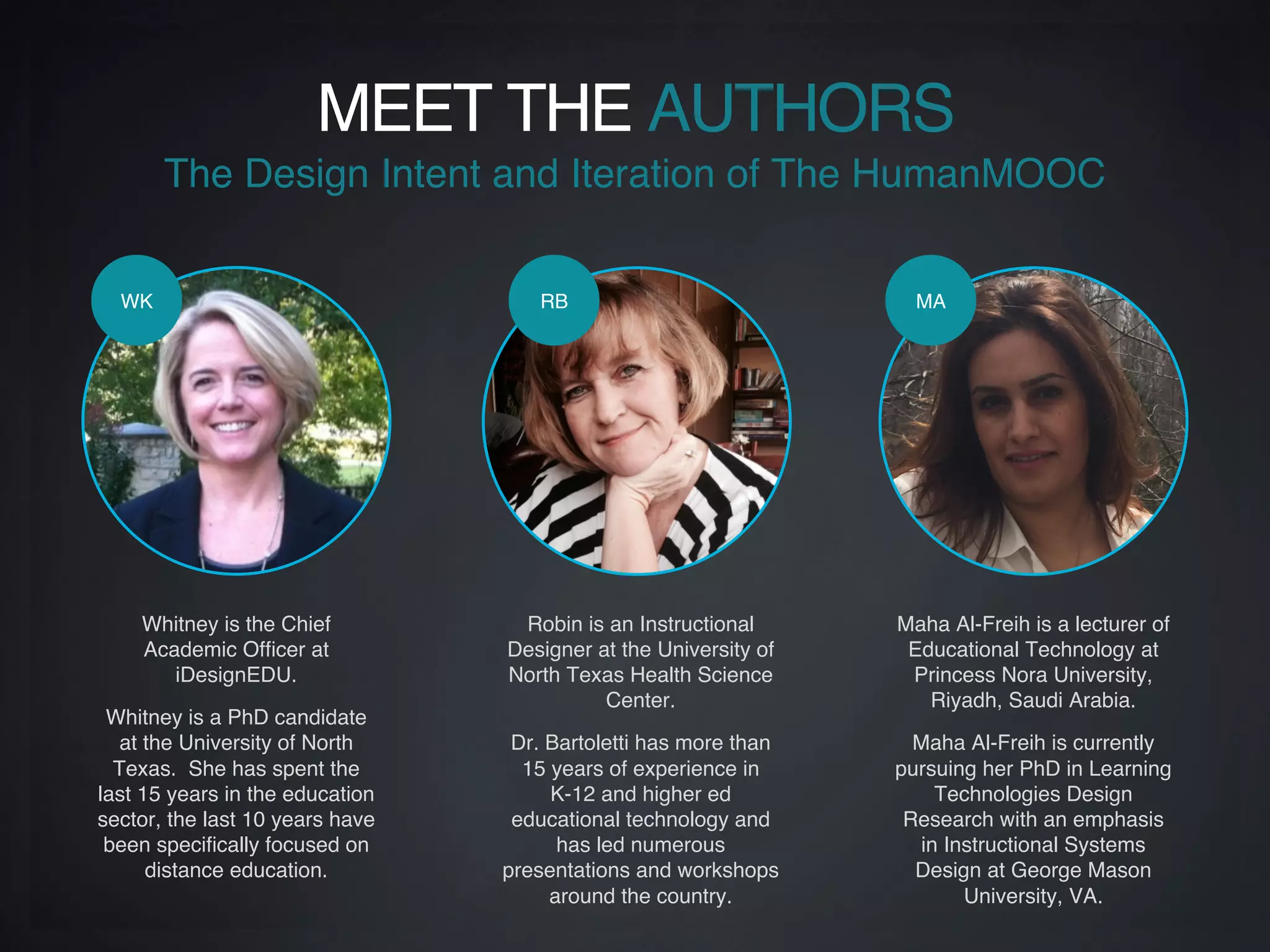
Robin is an Instructional
Designer at the University of
North Texas Health Science
Center.
Dr. Bartoletti has more than
15 years of experience in
K-12 and higher ed
educational technology and
has led numerous
presentations and workshops
around the country.
Maha Al-Freih is a lecturer of
Educational Technology at
Princess Nora University,
Riyadh, Saudi Arabia.
Maha Al-Freih is currently
pursuing her PhD in Learning
Technologies Design
Research with an emphasis
in Instructional Systems
Design at George Mason
University, VA.
Whitney is the Chief
Academic Officer at
iDesignEDU.
Whitney is a PhD candidate
at the University of North
Texas. She has spent the
last 15 years in the education
sector, the last 10 years have
been specifically focused on
distance education.
MEET THE AUTHORS
The Design Intent and Iteration of The HumanMOOC
RESEARCH
DESIGNThe role of motivational beliefs, self-
regulated learning skills, and perceived
instructor/social/cognitive presence in
learners’ persistence in Massive Open
Online Courses.
This research has an approved IRB 
from George Mason University.  
ESSENTIAL ELEMENTS
Teaches the components of the Community
of Inquiry
Distributed multi-institutional professional
development
Strategies and techniques for humanizing
online courses shared
It is important to make HUMAN connections
WHY? #HUMANMOOC
HEY, I’M
IN HERE
One of the reasons that
students drop out of online
courses is because they
feel alone.
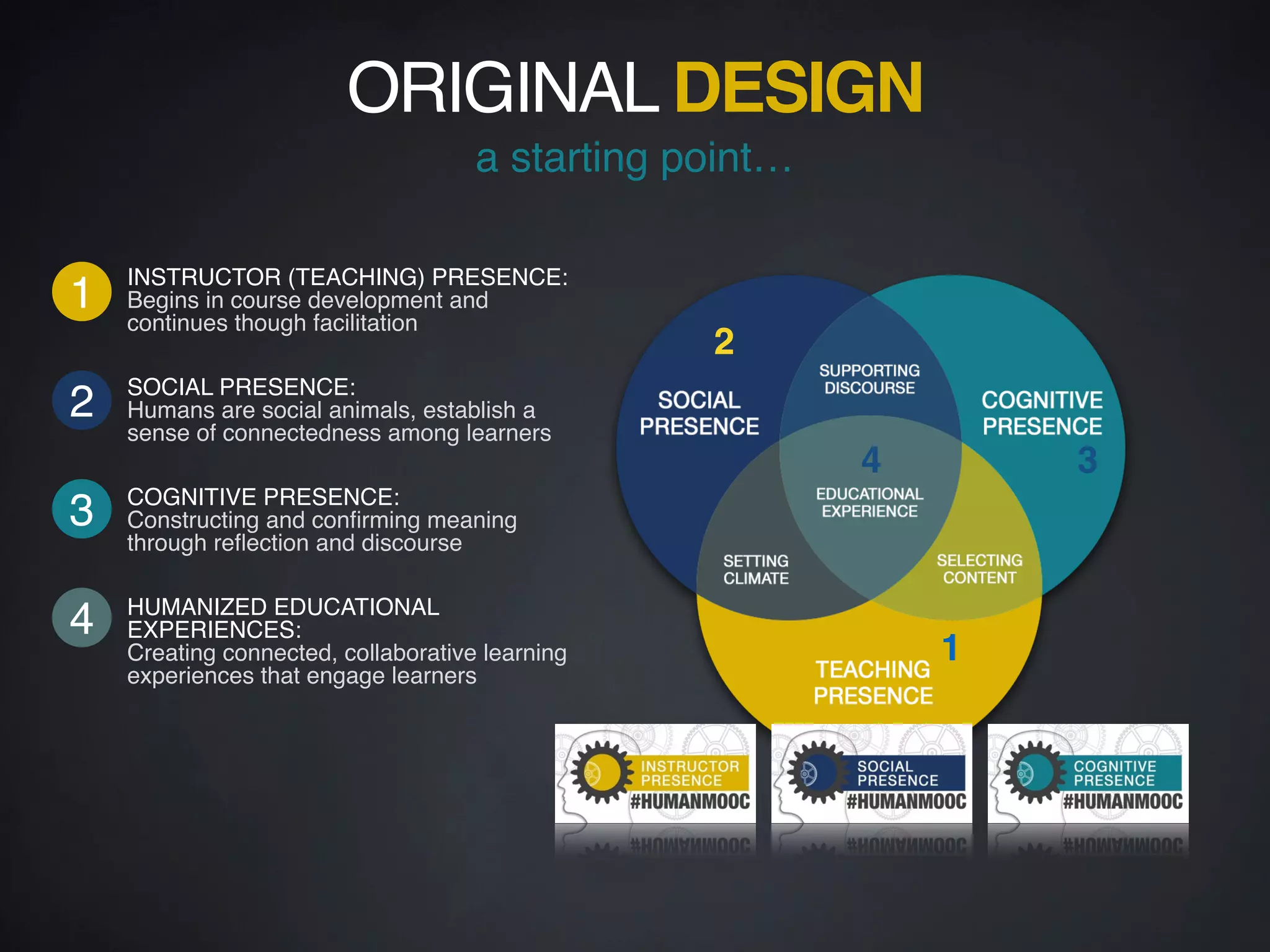
INSTRUCTOR (TEACHING) PRESENCE:
Begins in course development and
continues though facilitation
SOCIAL PRESENCE: 

Humans are social animals, establish a
sense of connectedness among learners
COGNITIVE PRESENCE: 

Constructing and confirming meaning
through reflection and discourse
HUMANIZED EDUCATIONAL
EXPERIENCES: 

Creating connected, collaborative learning
experiences that engage learners
1
2
ORIGINAL DESIGN
a starting point…
3
4
1
3
2
4
The Design Intent and Iteration
#HUMANMOOC
ALIGN WITH
PENN STATE
COMPETENCIESFaculty Competencies for Online Teaching
ASSIGNMENT
ALIGNMENT
TO BADGES
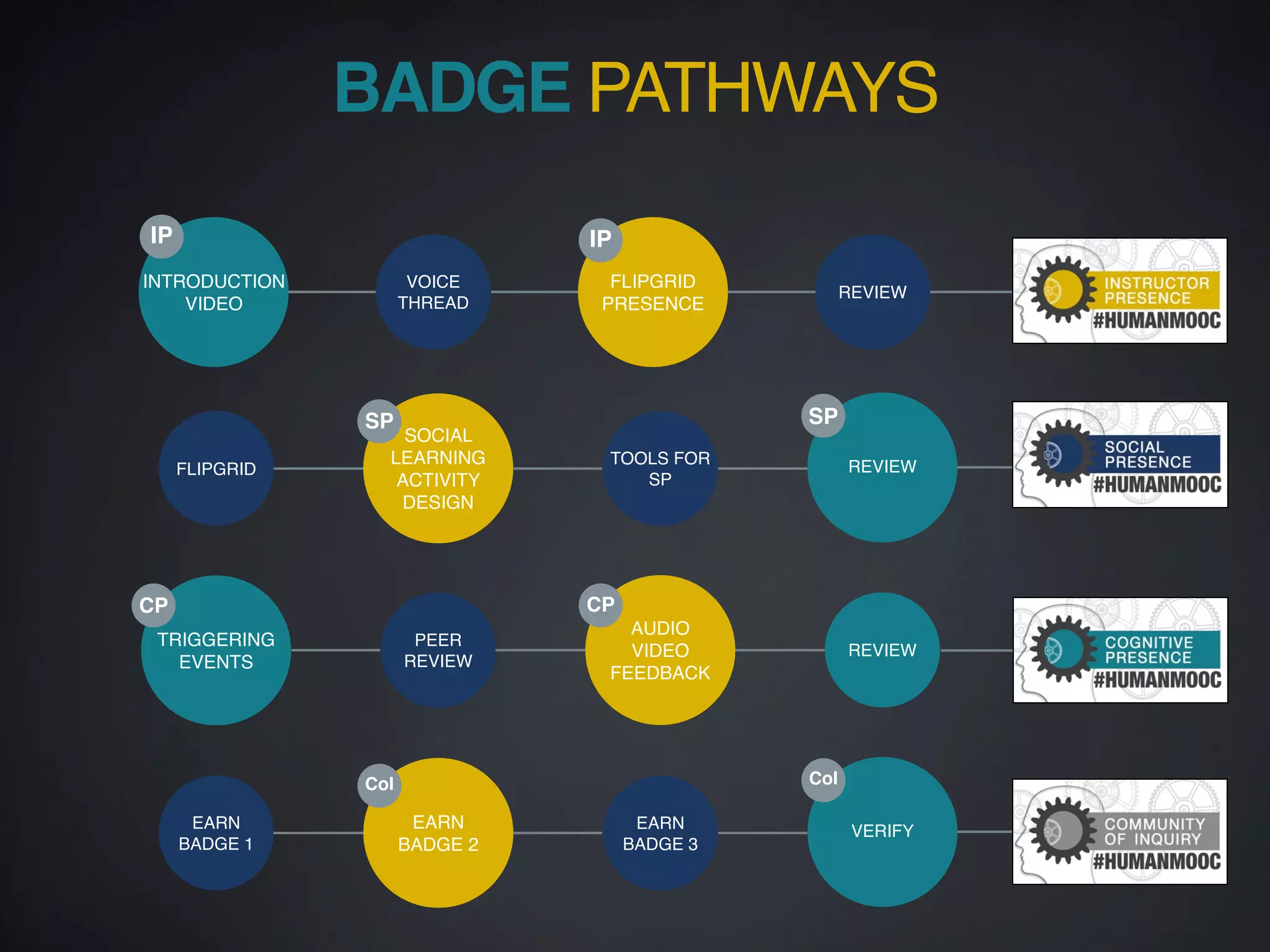
The tasks were aligned to the course
learning outcomes and badges awarded
based upon required task completion.
VOICE
THREAD
REVIEW
FLIPGRID
TOOLS FOR
SP
PEER
REVIEW
REVIEW
INTRODUCTION
VIDEO
IP
FLIPGRID
PRESENCE
IP
SOCIAL
LEARNING
ACTIVITY
DESIGN
SP
REVIEW
SP
TRIGGERING
EVENTS
CP
AUDIO
VIDEO
FEEDBACK
CP
BADGE PATHWAYS
EARN
BADGE 1
EARN
BADGE 3
EARN
BADGE 2
CoI
VERIFY
CoI
Social Learning
is Powerful
Humans help us to decipher meaning
through discourse
Dr. Charles Severance
University of Michigan
Dr. Rena Palloff
Fielding Graduate University
Dr. Peggy Semingson
University of Texas - Arlington
Joyce Seitzinger
Owner: Academic Tribe
Dr. Maha Bali
The American University in Cairo
Cathy Barnes
Established fact and web
Dr. Phil Ice
American Public University System
Jim Groom
University of Mary Washington
THE HANGOUTS
VIDEO TO
ENHANCE
PRESENCE
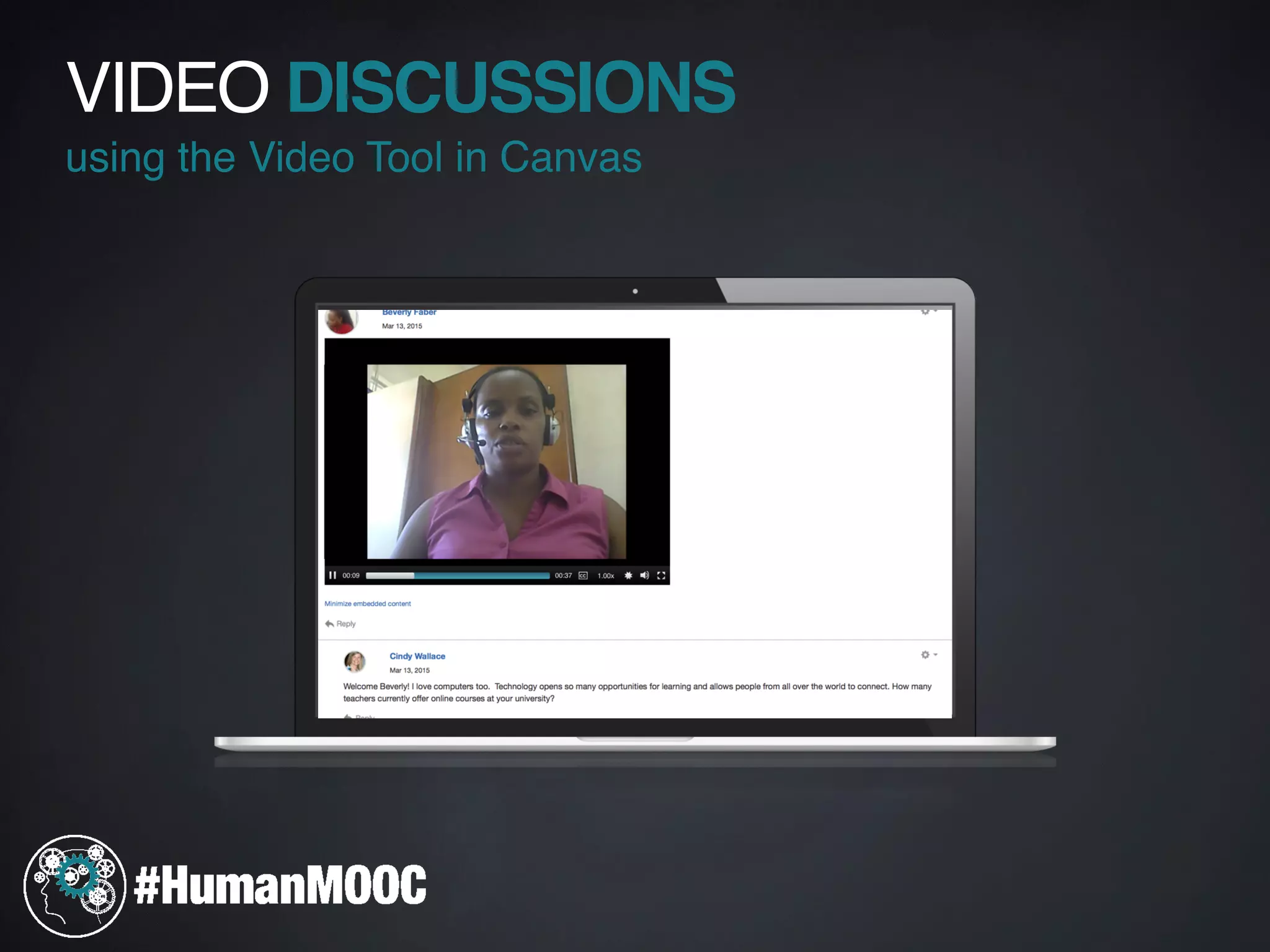
Video in Discussion Boards,
VoiceThread, and FlipGrid were
explored
using the Video Tool in Canvas
VIDEO DISCUSSIONS
Text alone can’t deliver
the subtlety and
expression required for
meaningful connection.
VoiceThreading is a
more human way to
connect.
VT
VOICETHREAD AND PRESENCE
FlipGrid
Participants explored
the use of FlipGrid in
lieu of discussion
forums.
FG
FLIPGRID AND PRESENCE
TUCKER MACNEILL
UK
VERENA ROBERTS
CANADA
PARTICIPANTS COMMENTS
FROM TWITTER
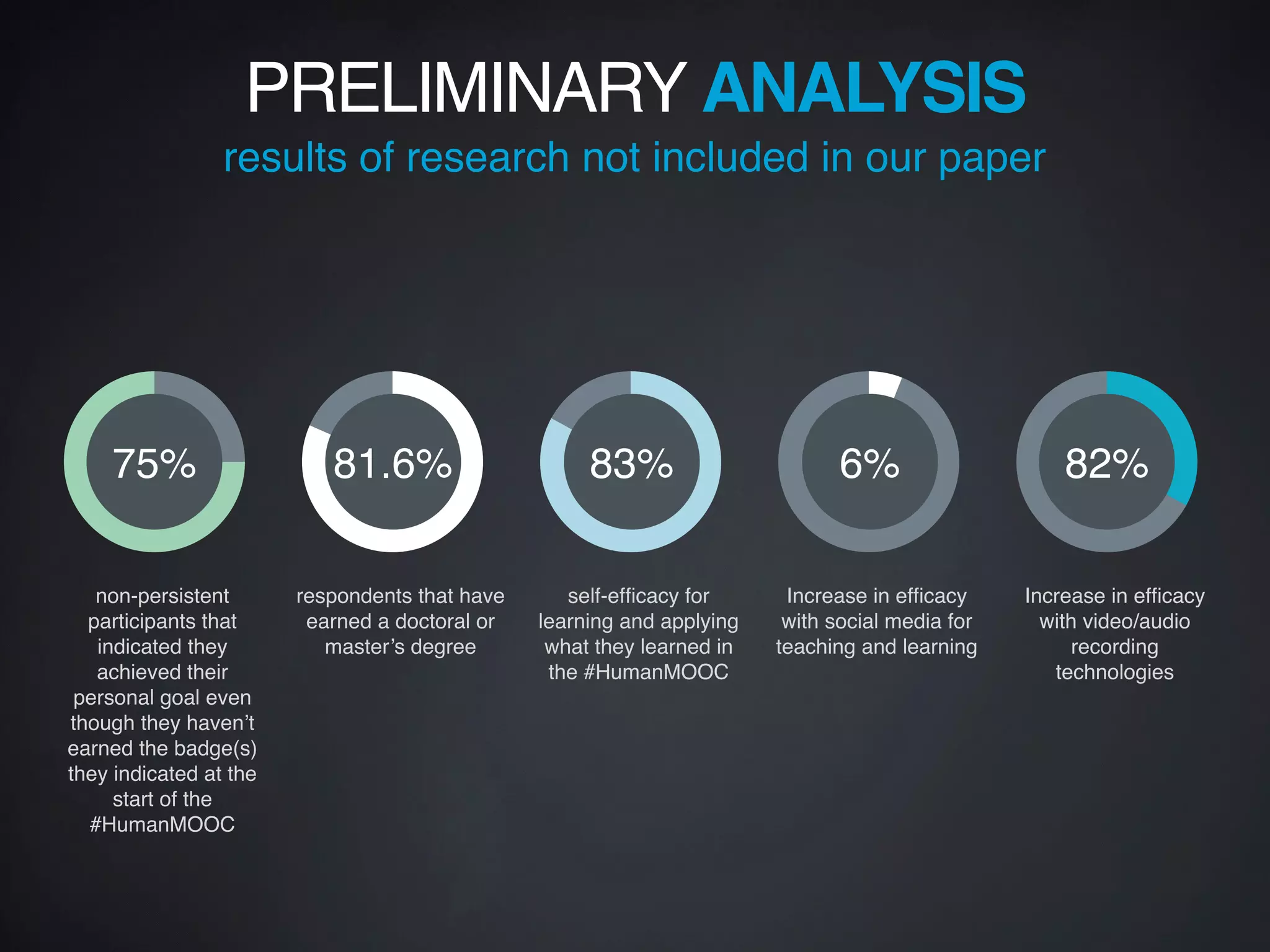
non-persistent
participants that
indicated they
achieved their
personal goal even
though they haven’t
earned the badge(s)
they indicated at the
start of the
#HumanMOOC
respondents that have
earned a doctoral or
master’s degree
self-efficacy for
learning and applying
what they learned in
the #HumanMOOC
Increase in efficacy
with social media for
teaching and learning
Increase in efficacy
with video/audio
recording
technologies
81.6%75% 83% 82%6%
PRELIMINARY ANALYSIS
results of research not included in our paper
Uniquely
Human
How do we address the needs of
our learners online?
Empower
Learners
Digital Educators who embrace the
affordances of technology will change
digital teaching and learning

eMOOCs2015_humanmooc_pechakucha

  • 1.
    COMMUNITY This META-MOOC addresses methodsfor building community in online courses while build a community in the course STRATEGIES AND TOOLS LIVE EVENTS BADGES FIRST REDESIGN COMPETENCY BASED FIVEreasons TO EXPLORE 
 THE HUMANMOOC
  • 2.
    MARBWK Robin is anInstructional Designer at the University of North Texas Health Science Center. Dr. Bartoletti has more than 15 years of experience in K-12 and higher ed educational technology and has led numerous presentations and workshops around the country. Maha Al-Freih is a lecturer of Educational Technology at Princess Nora University, Riyadh, Saudi Arabia. Maha Al-Freih is currently pursuing her PhD in Learning Technologies Design Research with an emphasis in Instructional Systems Design at George Mason University, VA. Whitney is the Chief Academic Officer at iDesignEDU. Whitney is a PhD candidate at the University of North Texas. She has spent the last 15 years in the education sector, the last 10 years have been specifically focused on distance education. MEET THE AUTHORS The Design Intent and Iteration of The HumanMOOC
  • 3.
    RESEARCH DESIGNThe role ofmotivational beliefs, self- regulated learning skills, and perceived instructor/social/cognitive presence in learners’ persistence in Massive Open Online Courses. This research has an approved IRB from George Mason University.  
  • 4.
    ESSENTIAL ELEMENTS Teaches thecomponents of the Community of Inquiry Distributed multi-institutional professional development Strategies and techniques for humanizing online courses shared It is important to make HUMAN connections WHY? #HUMANMOOC
  • 5.
    HEY, I’M IN HERE Oneof the reasons that students drop out of online courses is because they feel alone.
  • 6.
    INSTRUCTOR (TEACHING) PRESENCE: Beginsin course development and continues though facilitation SOCIAL PRESENCE: 
 Humans are social animals, establish a sense of connectedness among learners COGNITIVE PRESENCE: 
 Constructing and confirming meaning through reflection and discourse HUMANIZED EDUCATIONAL EXPERIENCES: 
 Creating connected, collaborative learning experiences that engage learners 1 2 ORIGINAL DESIGN a starting point… 3 4 1 3 2 4
  • 7.
    The Design Intentand Iteration #HUMANMOOC
  • 8.
    ALIGN WITH PENN STATE COMPETENCIESFacultyCompetencies for Online Teaching
  • 9.
    ASSIGNMENT ALIGNMENT TO BADGES The taskswere aligned to the course learning outcomes and badges awarded based upon required task completion.
  • 10.
  • 11.
    Social Learning is Powerful Humanshelp us to decipher meaning through discourse
  • 12.
    Dr. Charles Severance Universityof Michigan Dr. Rena Palloff Fielding Graduate University Dr. Peggy Semingson University of Texas - Arlington Joyce Seitzinger Owner: Academic Tribe Dr. Maha Bali The American University in Cairo Cathy Barnes Established fact and web Dr. Phil Ice American Public University System Jim Groom University of Mary Washington THE HANGOUTS
  • 13.
    VIDEO TO ENHANCE PRESENCE Video inDiscussion Boards, VoiceThread, and FlipGrid were explored
  • 14.
    using the VideoTool in Canvas VIDEO DISCUSSIONS
  • 15.
    Text alone can’tdeliver the subtlety and expression required for meaningful connection. VoiceThreading is a more human way to connect. VT VOICETHREAD AND PRESENCE
  • 16.
    FlipGrid Participants explored the useof FlipGrid in lieu of discussion forums. FG FLIPGRID AND PRESENCE
  • 17.
  • 18.
    non-persistent participants that indicated they achievedtheir personal goal even though they haven’t earned the badge(s) they indicated at the start of the #HumanMOOC respondents that have earned a doctoral or master’s degree self-efficacy for learning and applying what they learned in the #HumanMOOC Increase in efficacy with social media for teaching and learning Increase in efficacy with video/audio recording technologies 81.6%75% 83% 82%6% PRELIMINARY ANALYSIS results of research not included in our paper
  • 19.
    Uniquely Human How do weaddress the needs of our learners online?
  • 20.
    Empower Learners Digital Educators whoembrace the affordances of technology will change digital teaching and learning