Emerging perspectives in
librarianship
H. Anil Kumar
Librarian
Indian Institute of Management Ahmedabad
April 12, 2013
Outline
• India and higher education
• Higher education trends
• Why do we need the libraries?
• Trends in librarianship
• Free / open resources
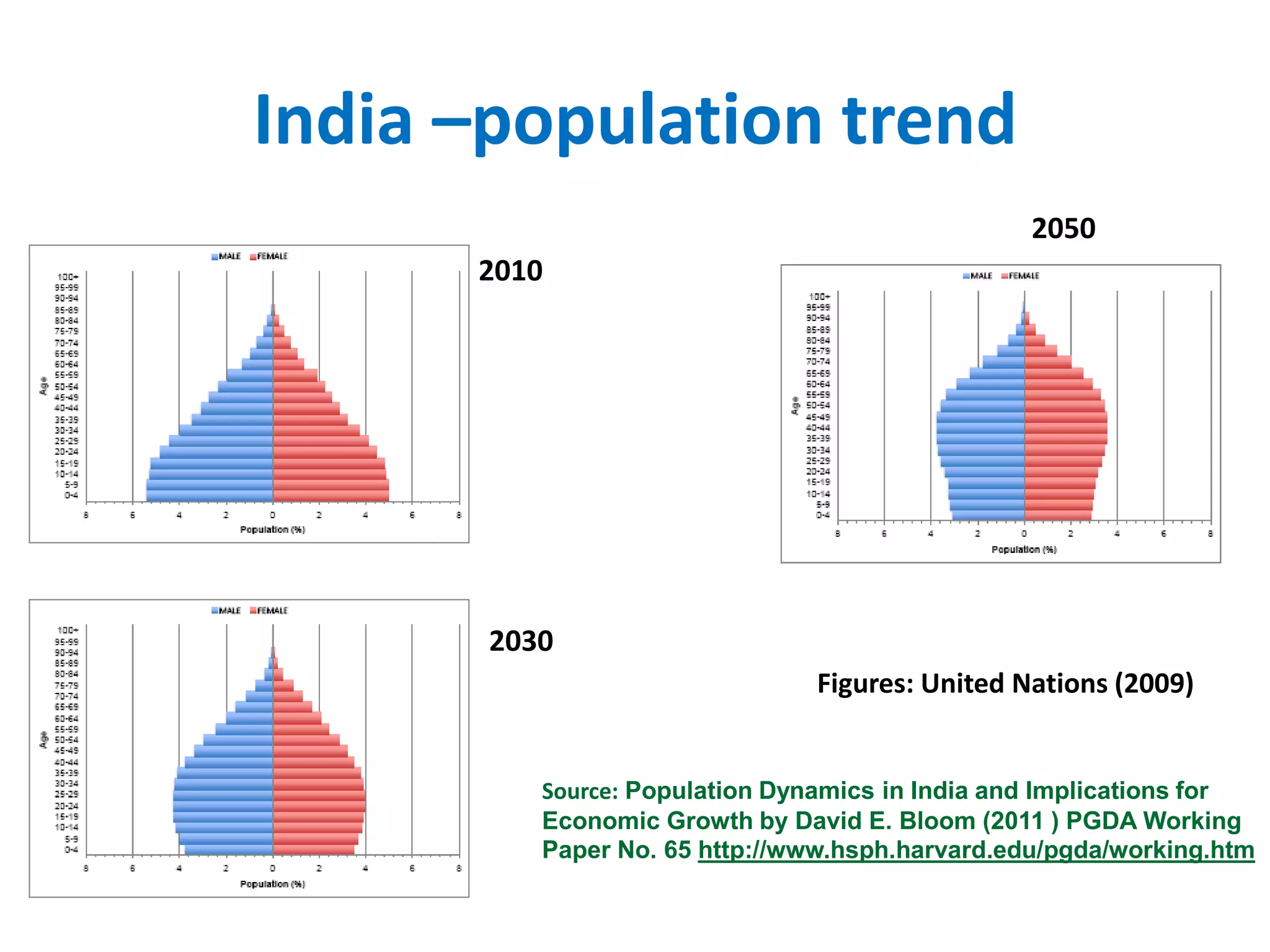
India –population trend
2010
2030
2050
Figures: United Nations (2009)
Source: Population Dynamics in India and Implications for
Economic Growth by David E. Bloom (2011 ) PGDA Working
Paper No. 65 http://www.hsph.harvard.edu/pgda/working.htm
Government Initiatives in Education
• Improve Access
– More institutions
– Improve infrastructure
– E-learning
– Improve GER
• Improve quality
– Entry - admissions
– Experience
• Design - curriculum
• Delivery – pedagogy
• Choice based credits
• Teacher training
• Learning materials
– Evaluation
• Learning focus
• Application orientation
• Grades vs marks
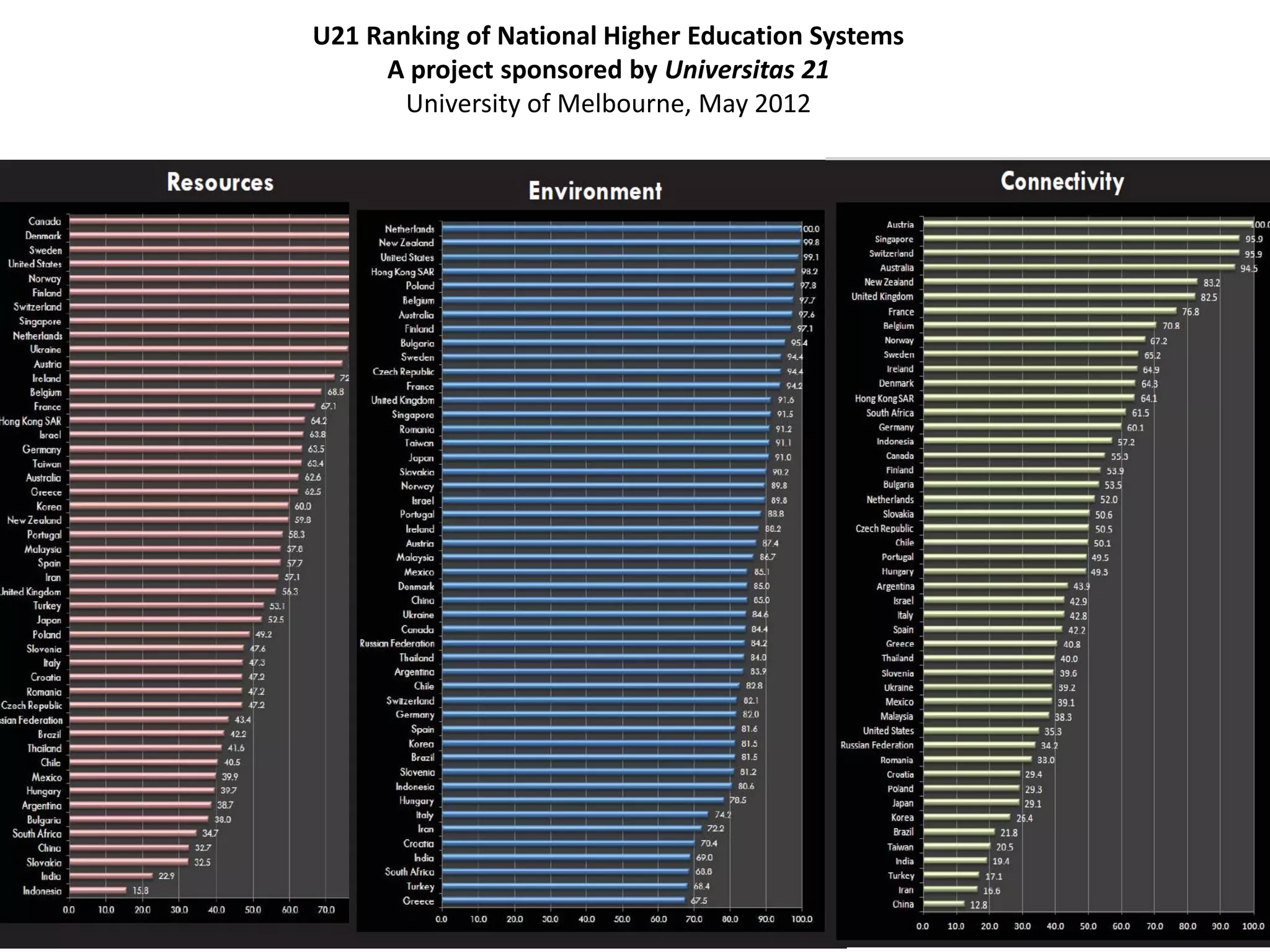
U21 Ranking of National Higher Education Systems
A project sponsored by Universitas 21
University of Melbourne, May 2012
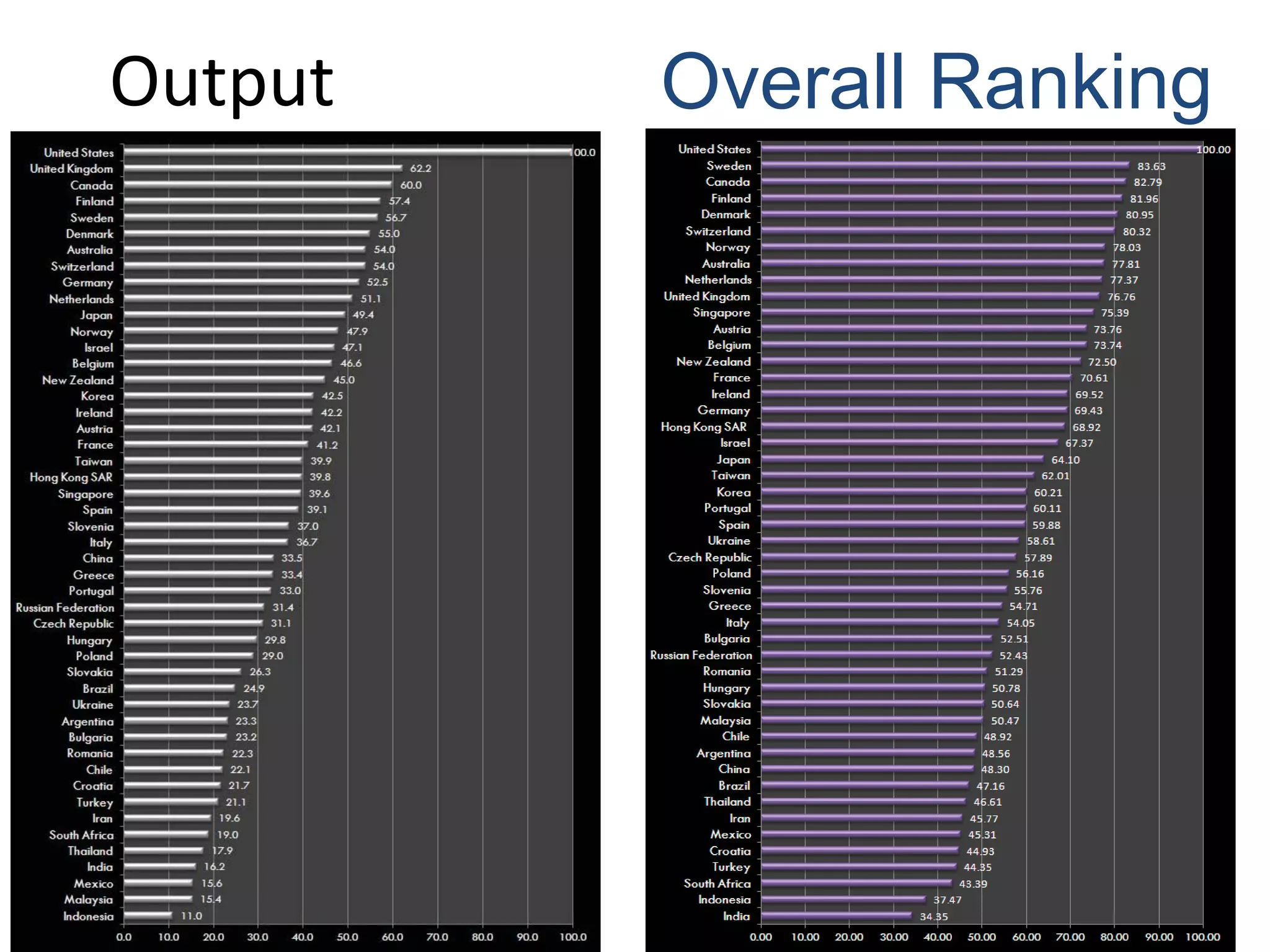
Output Overall Ranking
Universities, ours and theirs
Krishna Kumar (in The Hindu, August 9, 2012)
• Recruitment of faculty
• Concept of teaching (periods)
• Concept of knowledge – research
• Library
• The fourth critical difference lies in the library. In the West, even in the
most ordinary universities, the library forms the centre of life, both for
teachers and students. Librarians enjoy a high status as their contribution
to academic life cuts across academic disciplines…..
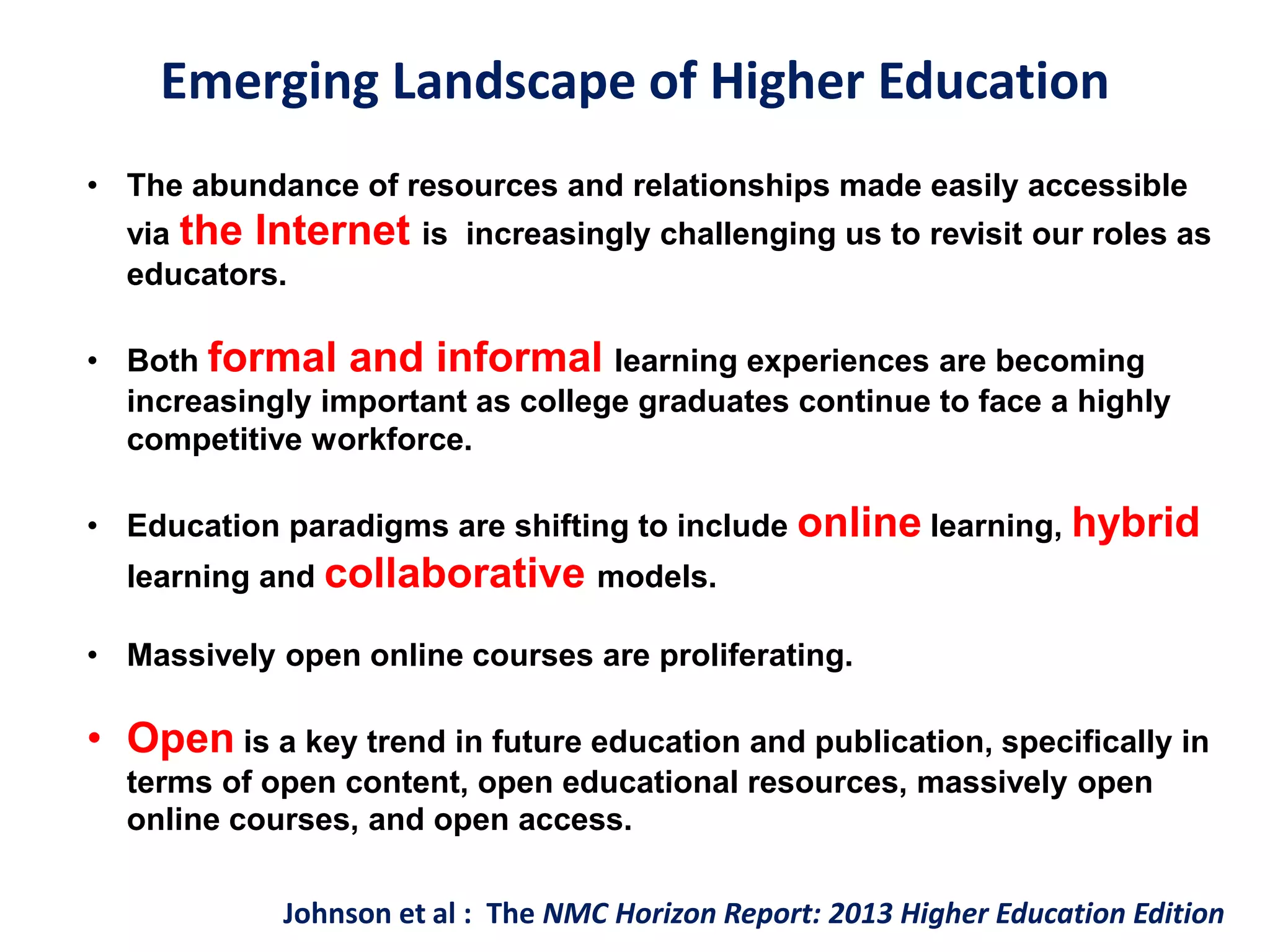
Emerging Landscape of Higher Education
• The abundance of resources and relationships made easily accessible
via the Internet is increasingly challenging us to revisit our roles as
educators.
• Both formal and informal learning experiences are becoming
increasingly important as college graduates continue to face a highly
competitive workforce.
• Education paradigms are shifting to include online learning, hybrid
learning and collaborative models.
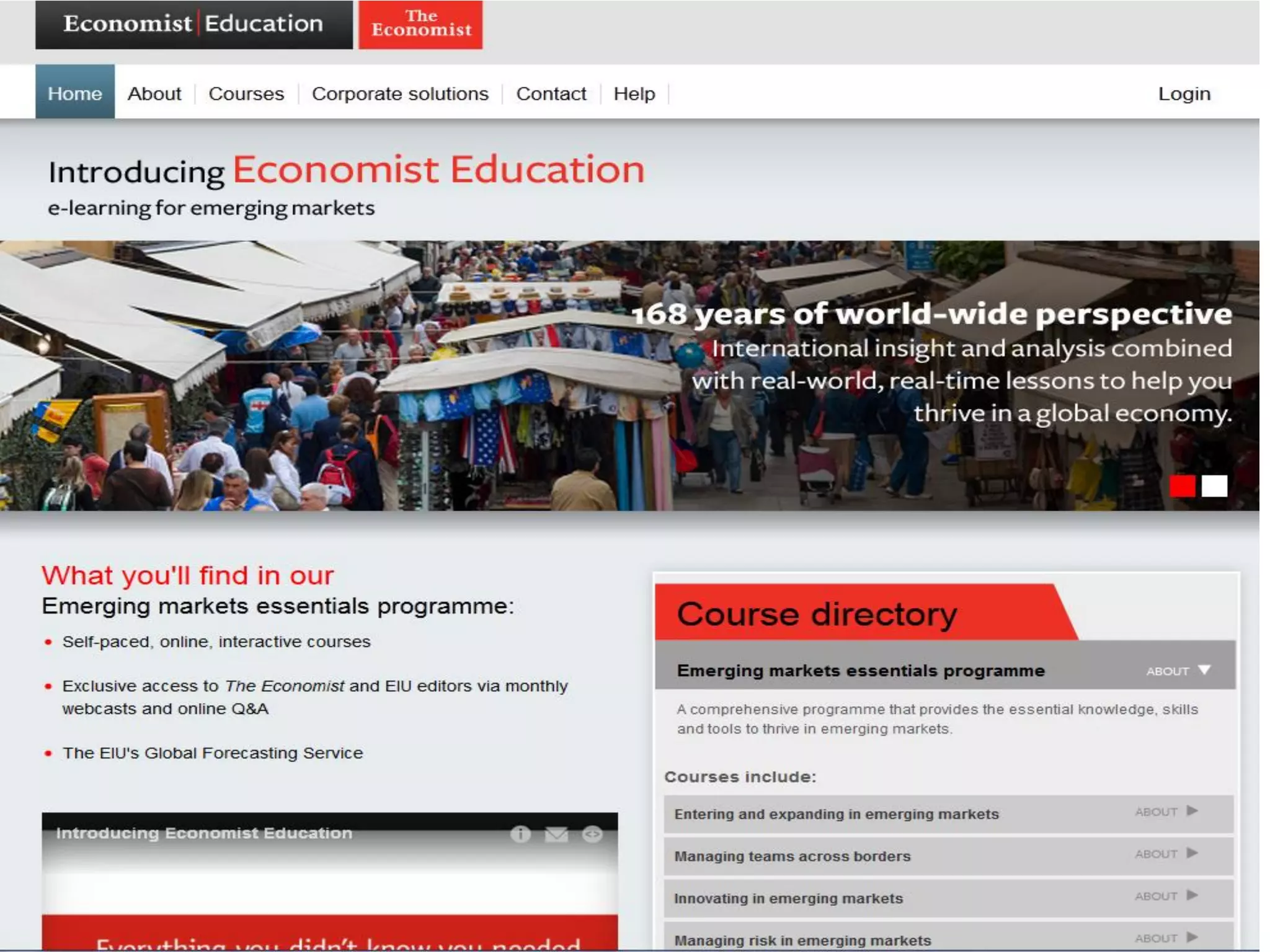
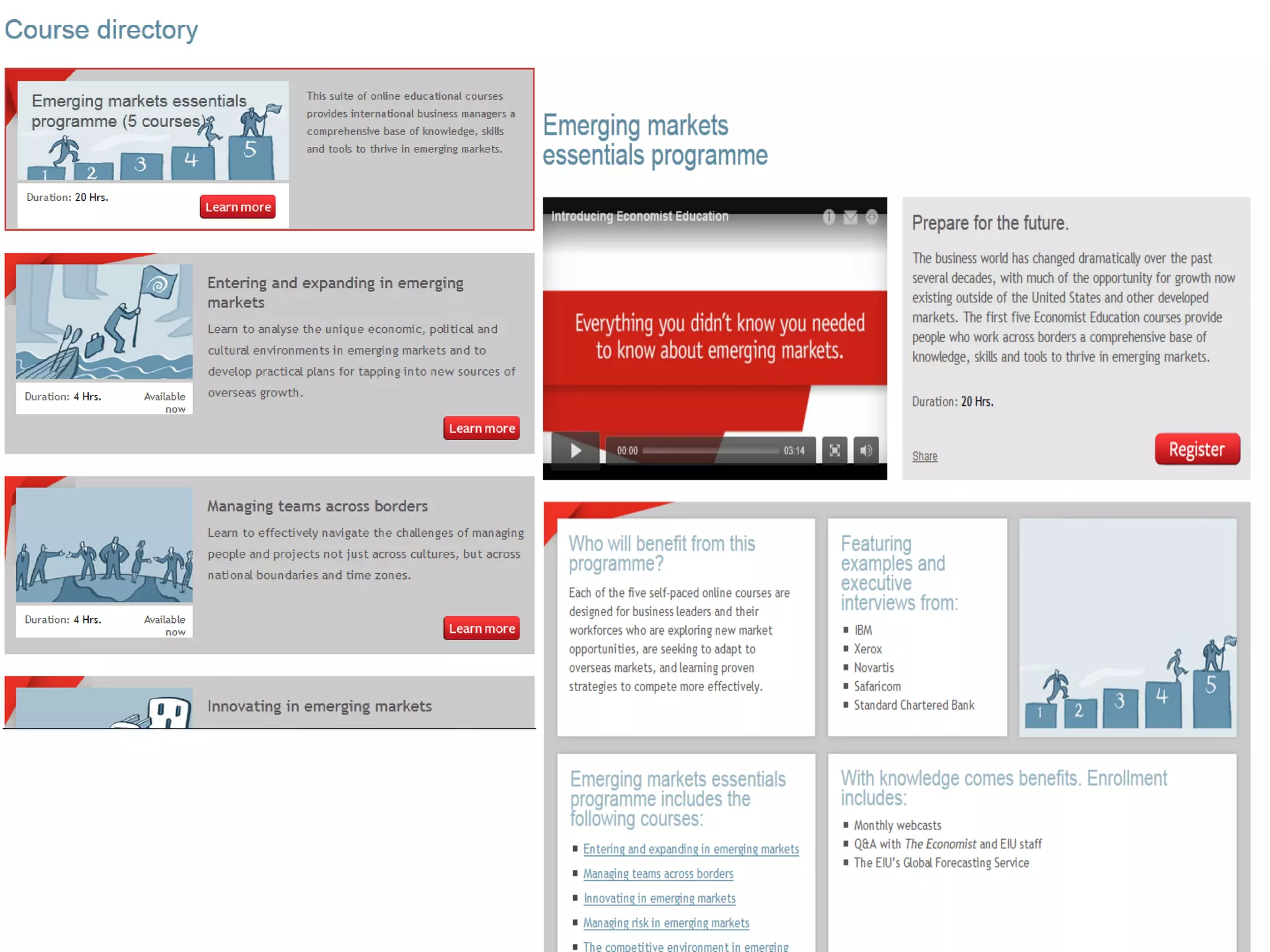
• Massively open online courses are proliferating.
• Open is a key trend in future education and publication, specifically in
terms of open content, open educational resources, massively open
online courses, and open access.
Johnson et al : The NMC Horizon Report: 2013 Higher Education Edition
- The abundance of resources and relationships
- easily accessible via the Internet
- revisit our roles as educators
• Institutions must consider the unique value that each
adds to a world in which information is everywhere. In
such a world, sense-making and the ability to assess the
credibility of information are paramount.
• Universities have always been seen as the gold standard
for educational credentialing, but emerging certification
programs from other sources are eroding the value of that
mission daily.
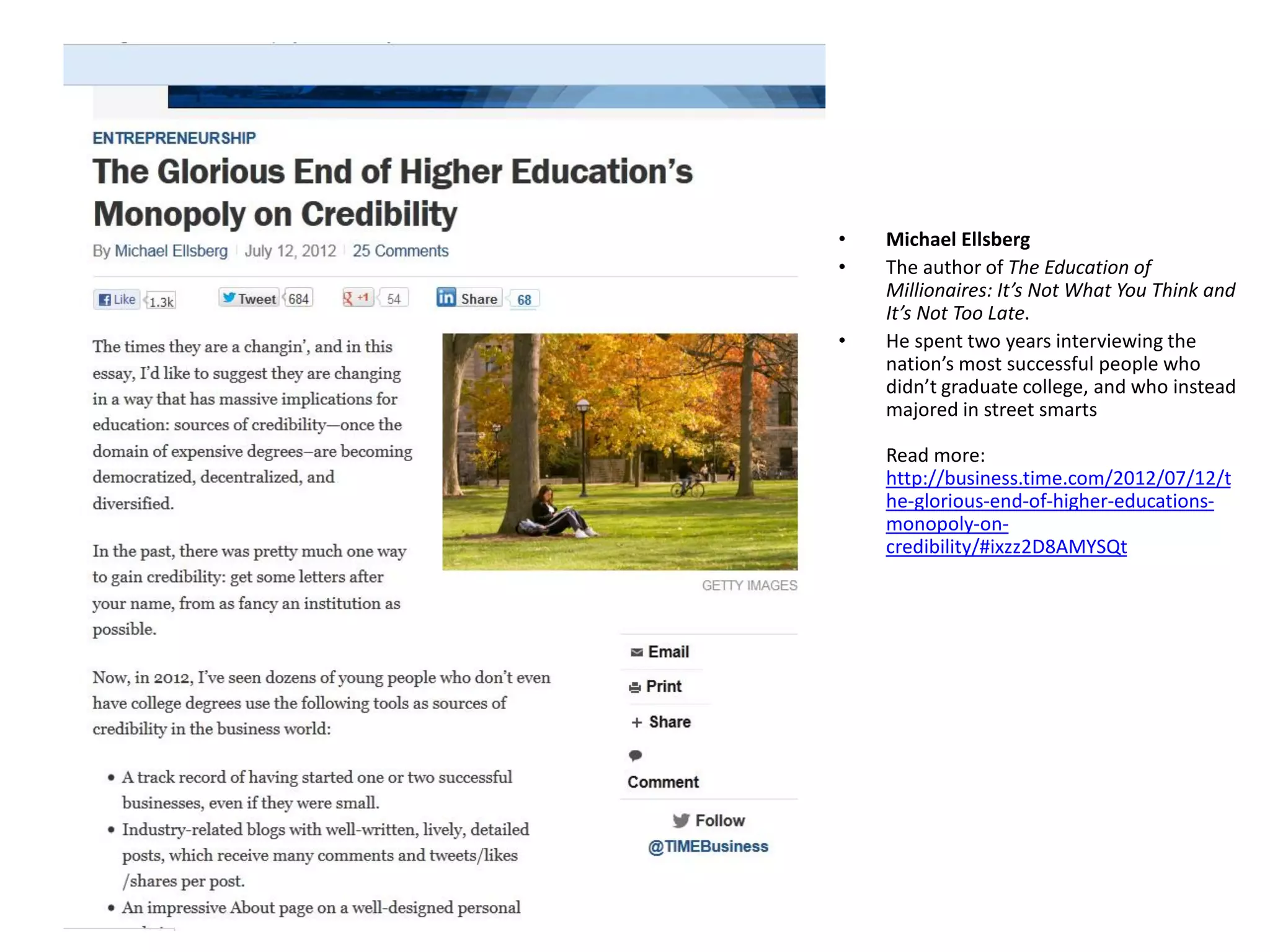
• Michael Ellsberg
• The author of The Education of
Millionaires: It’s Not What You Think and
It’s Not Too Late.
• He spent two years interviewing the
nation’s most successful people who
didn’t graduate college, and who instead
majored in street smarts
Read more:
http://business.time.com/2012/07/12/t
he-glorious-end-of-higher-educations-
monopoly-on-
credibility/#ixzz2D8AMYSQt
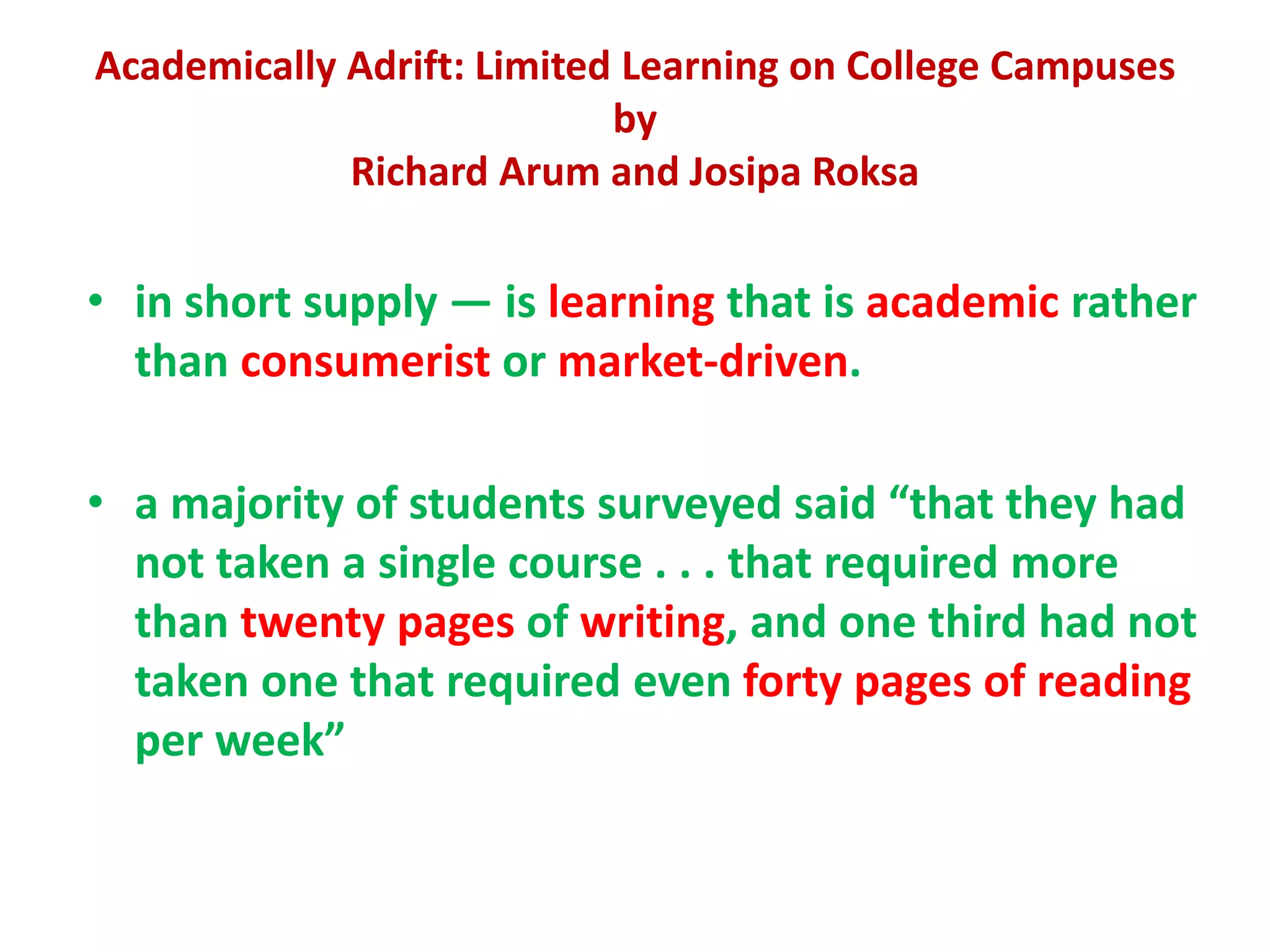
Academically Adrift: Limited Learning on College Campuses
by
Richard Arum and Josipa Roksa
• in short supply — is learning that is academic rather
than consumerist or market-driven.
• a majority of students surveyed said “that they had
not taken a single course . . . that required more
than twenty pages of writing, and one third had not
taken one that required even forty pages of reading
per week”
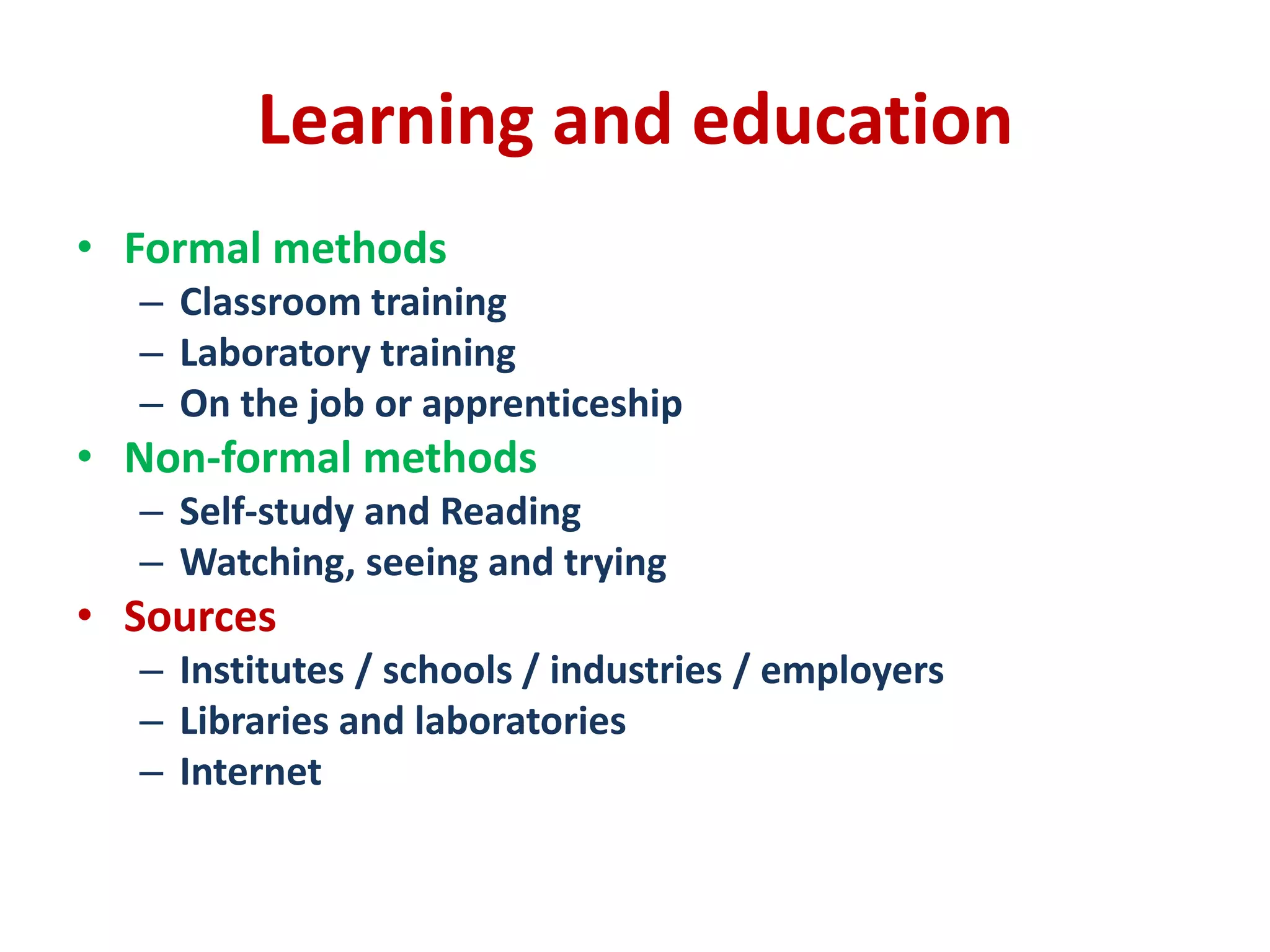
Learning and education
• Formal methods
– Classroom training
– Laboratory training
– On the job or apprenticeship
• Non-formal methods
– Self-study and Reading
– Watching, seeing and trying
• Sources
– Institutes / schools / industries / employers
– Libraries and laboratories
– Internet
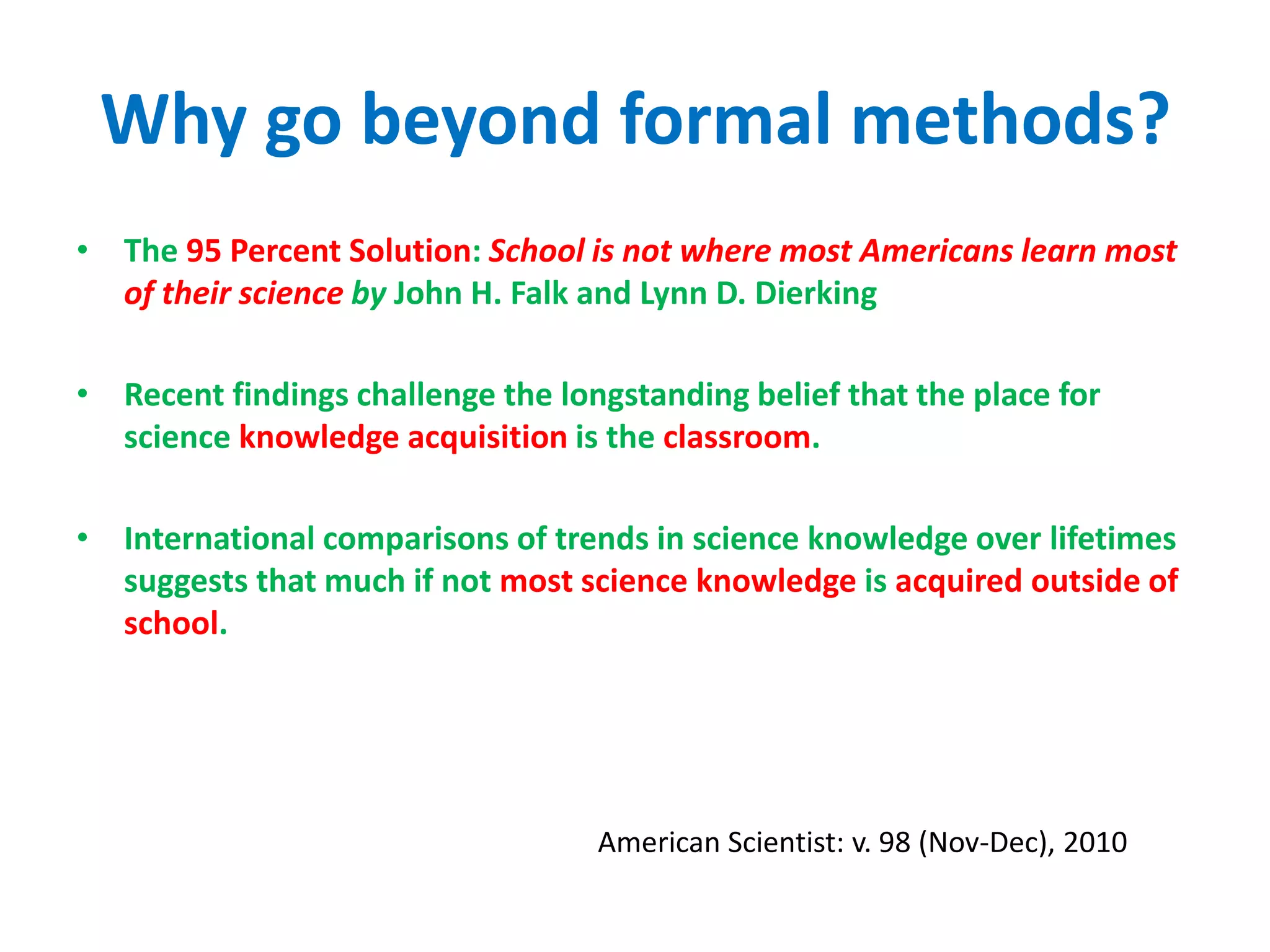
Why go beyond formal methods?
• The 95 Percent Solution: School is not where most Americans learn most
of their science by John H. Falk and Lynn D. Dierking
• Recent findings challenge the longstanding belief that the place for
science knowledge acquisition is the classroom.
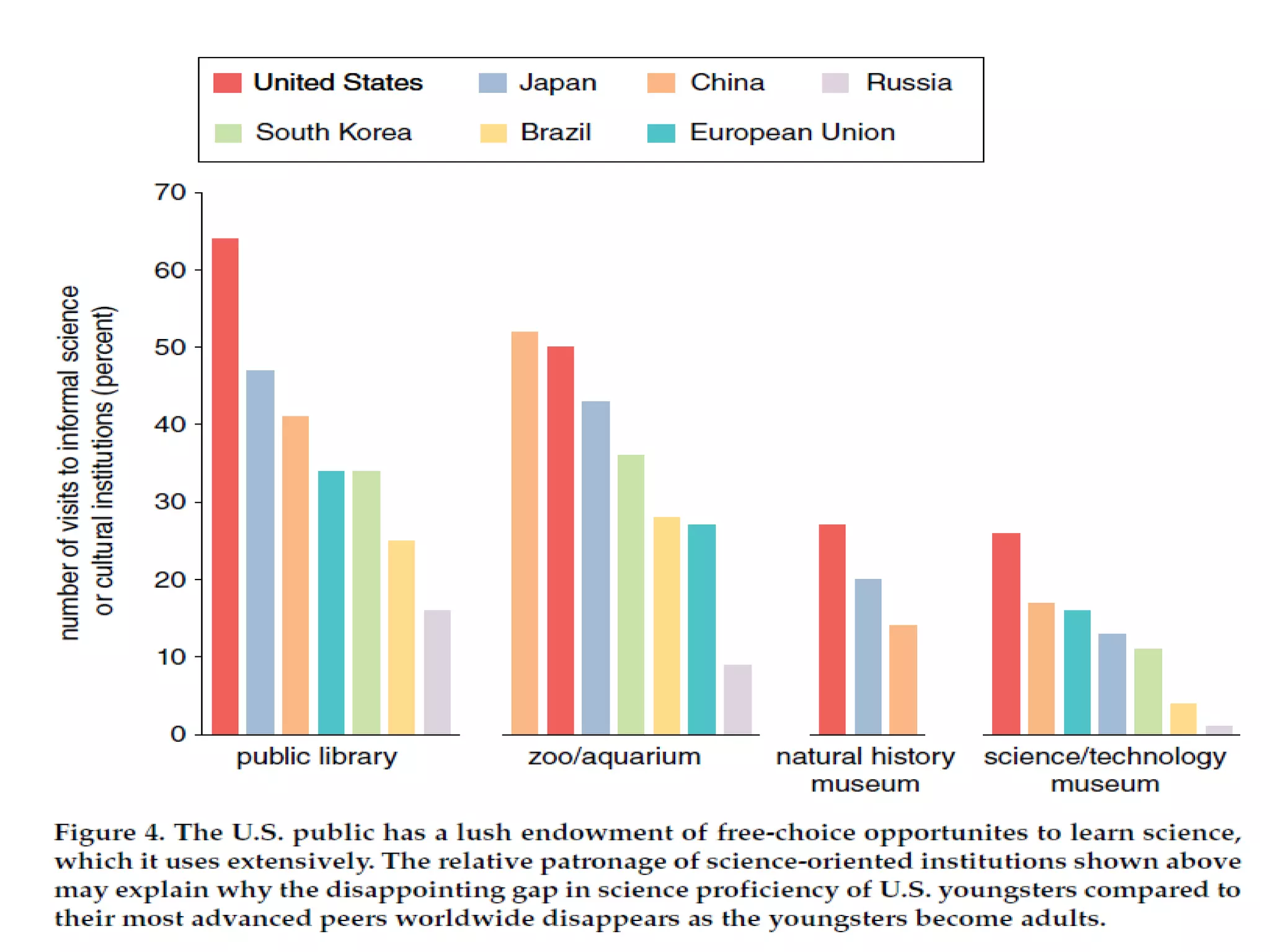
• International comparisons of trends in science knowledge over lifetimes
suggests that much if not most science knowledge is acquired outside of
school.
American Scientist: v. 98 (Nov-Dec), 2010
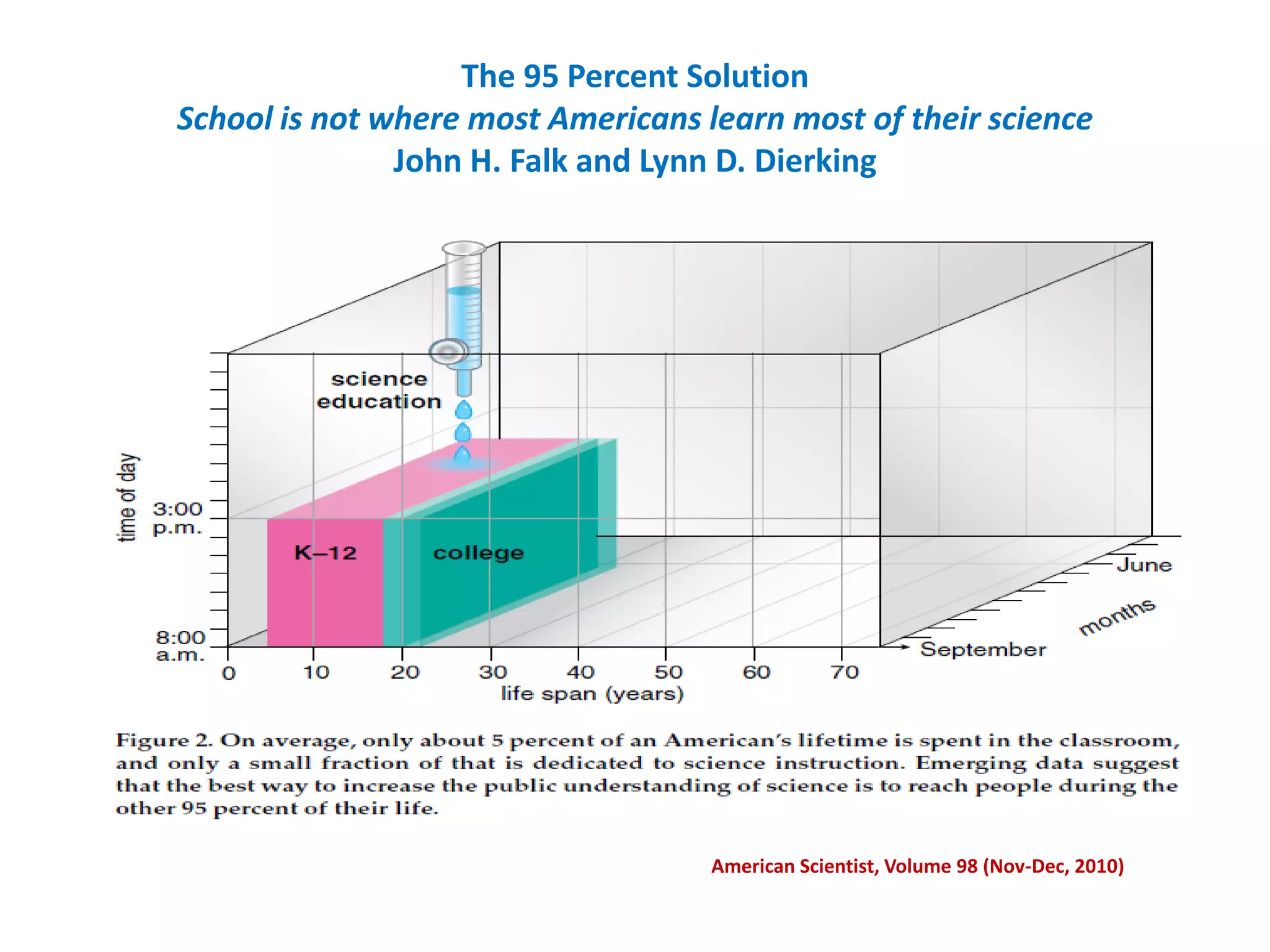
The 95 Percent Solution
School is not where most Americans learn most of their science
John H. Falk and Lynn D. Dierking
American Scientist, Volume 98 (Nov-Dec, 2010)
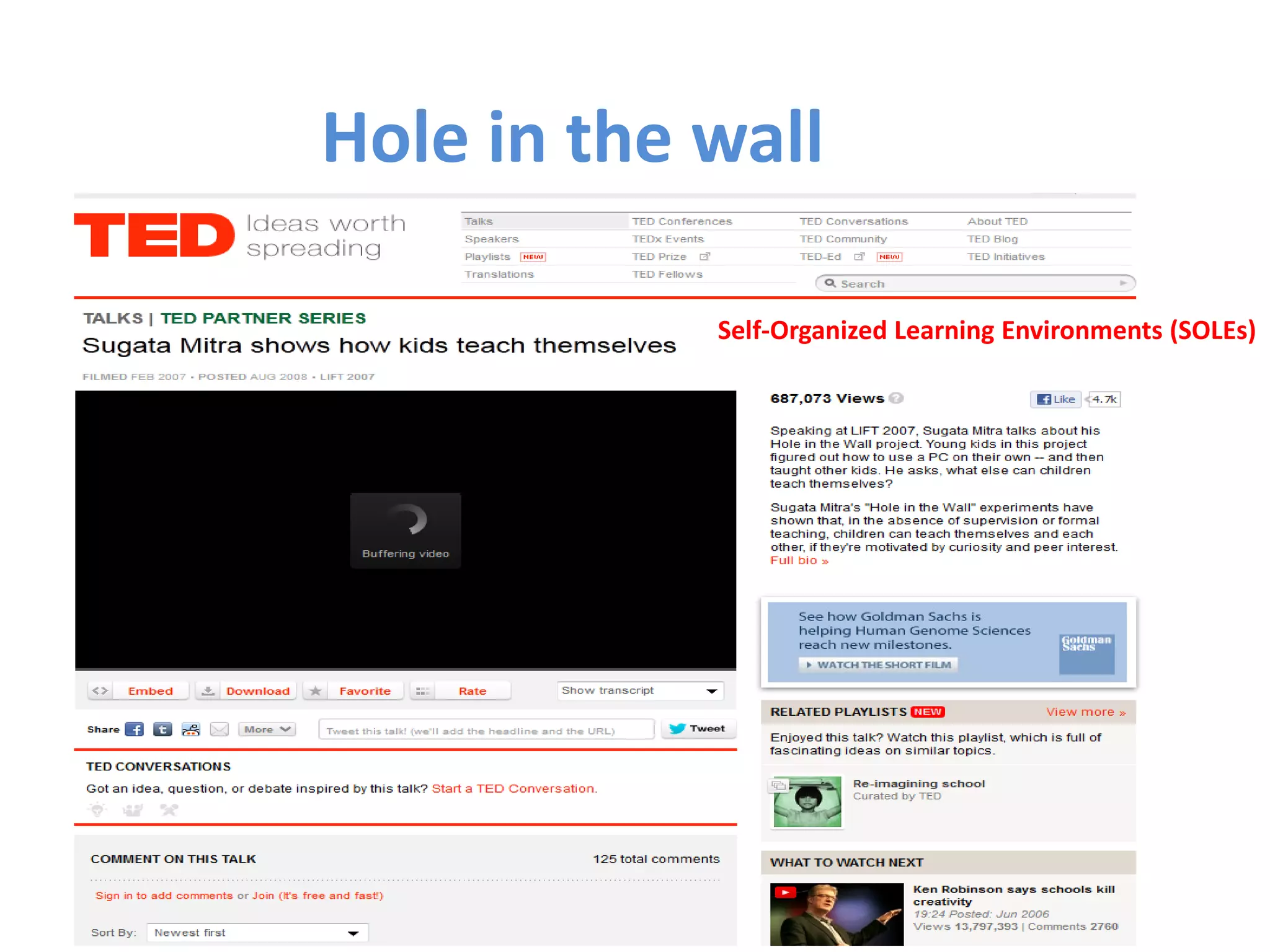
Hole in the wall
Self-Organized Learning Environments (SOLEs)
Technology Advantages
• Learn at your own pace and interest
• Supplement learning in the classroom
• Less dependency on formal support
• Explore new ways of learning
• Variety and wide range of topics
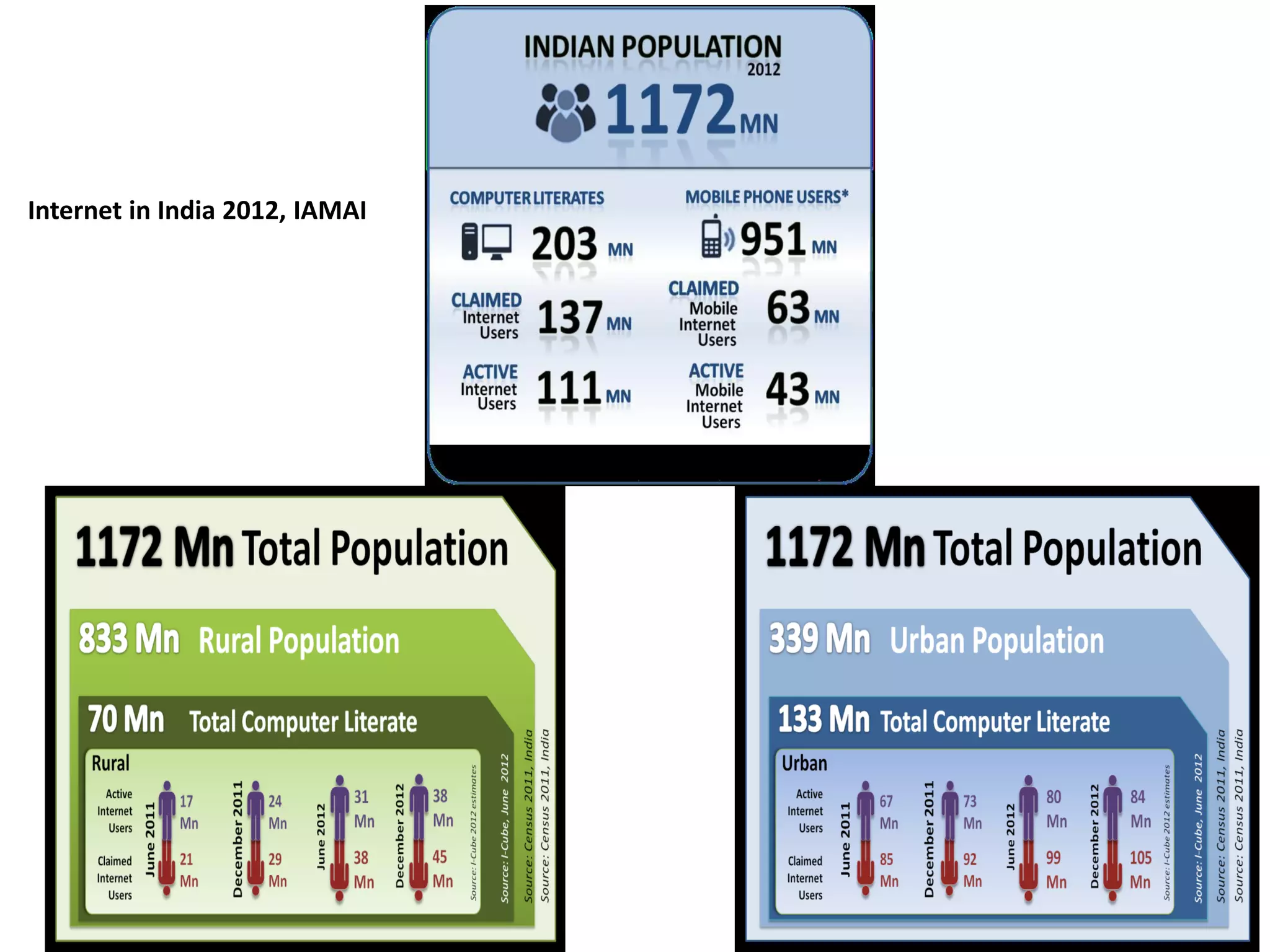
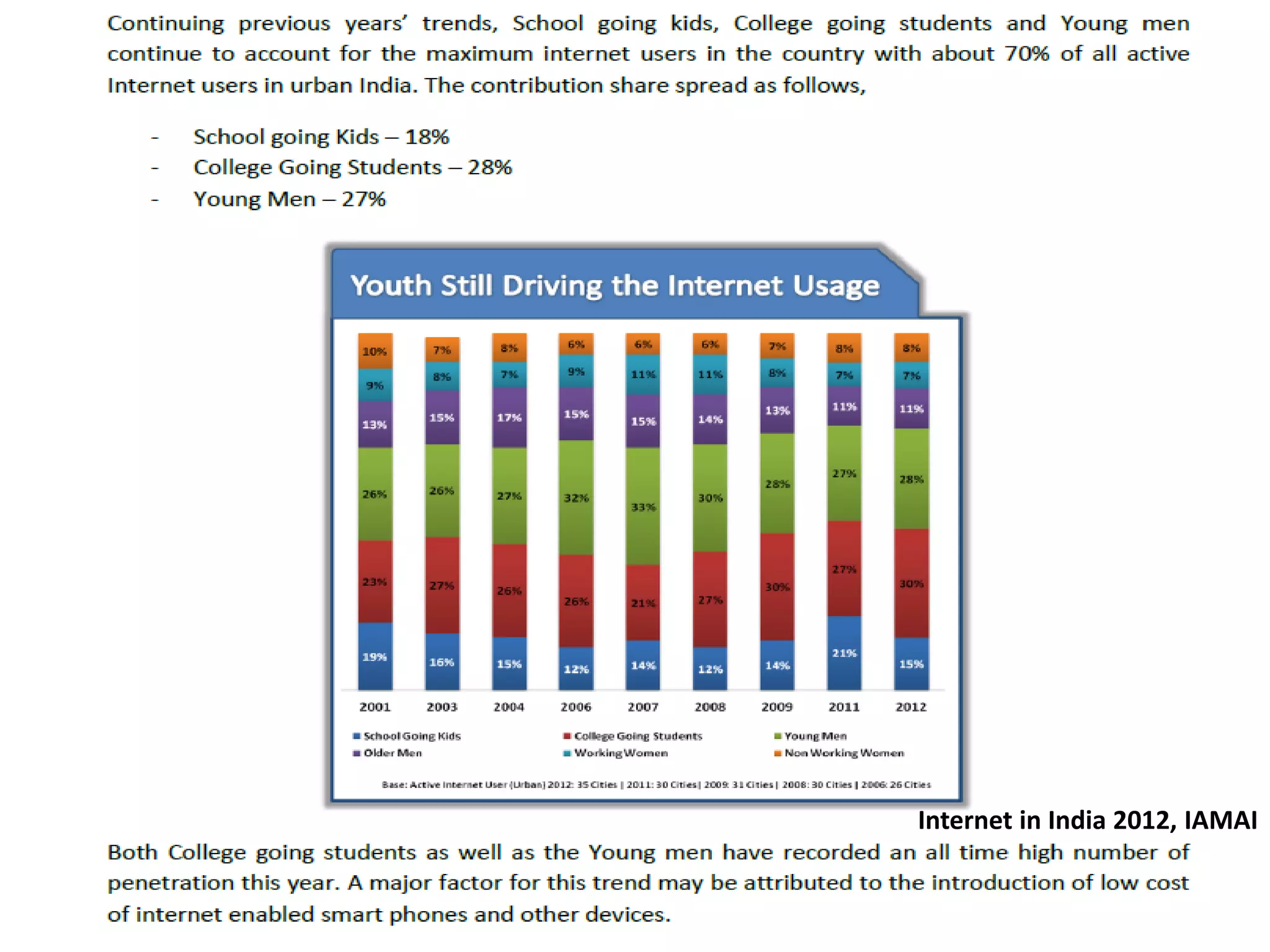
Internet in India 2012, IAMAI
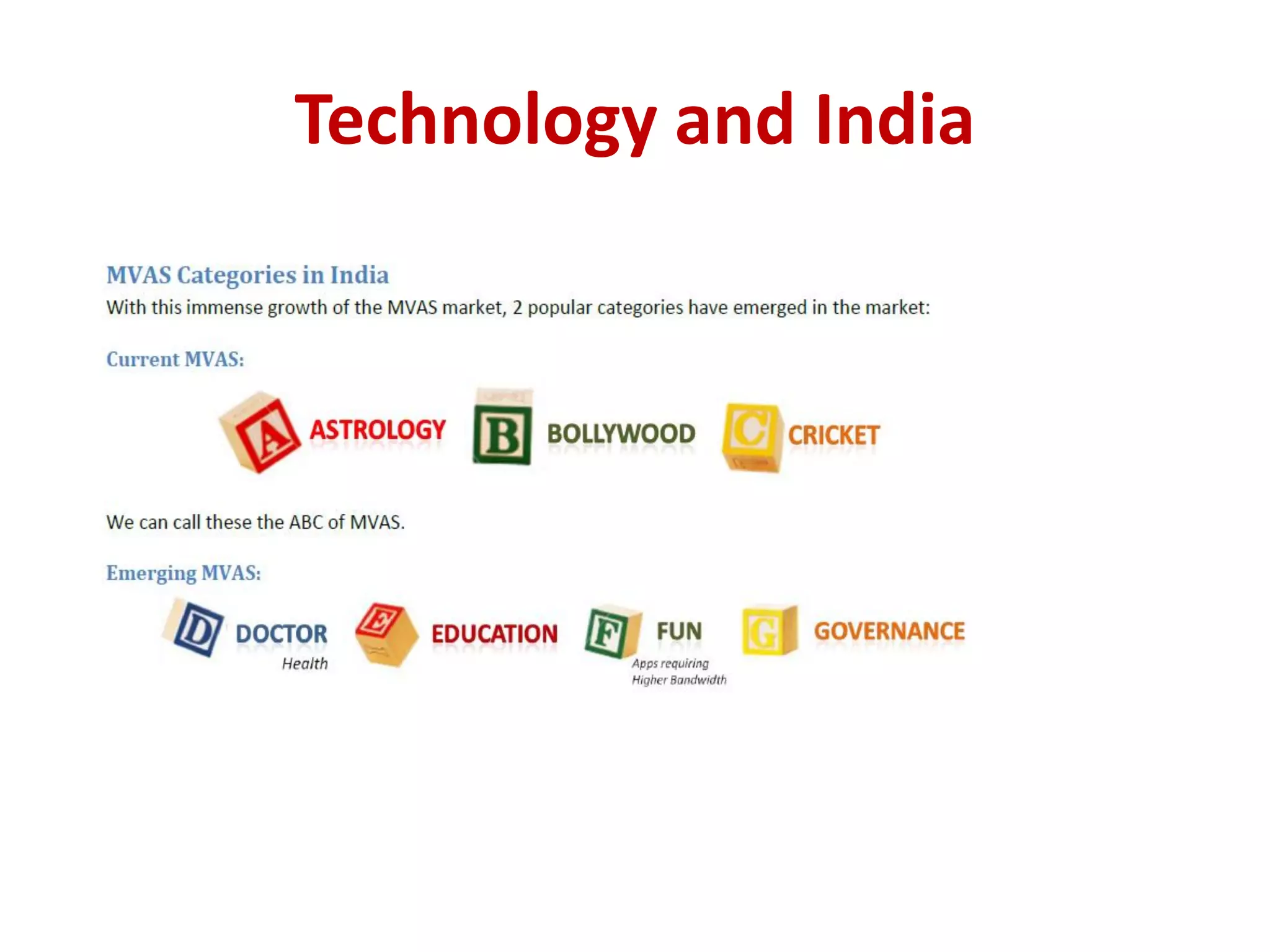
Technology and India
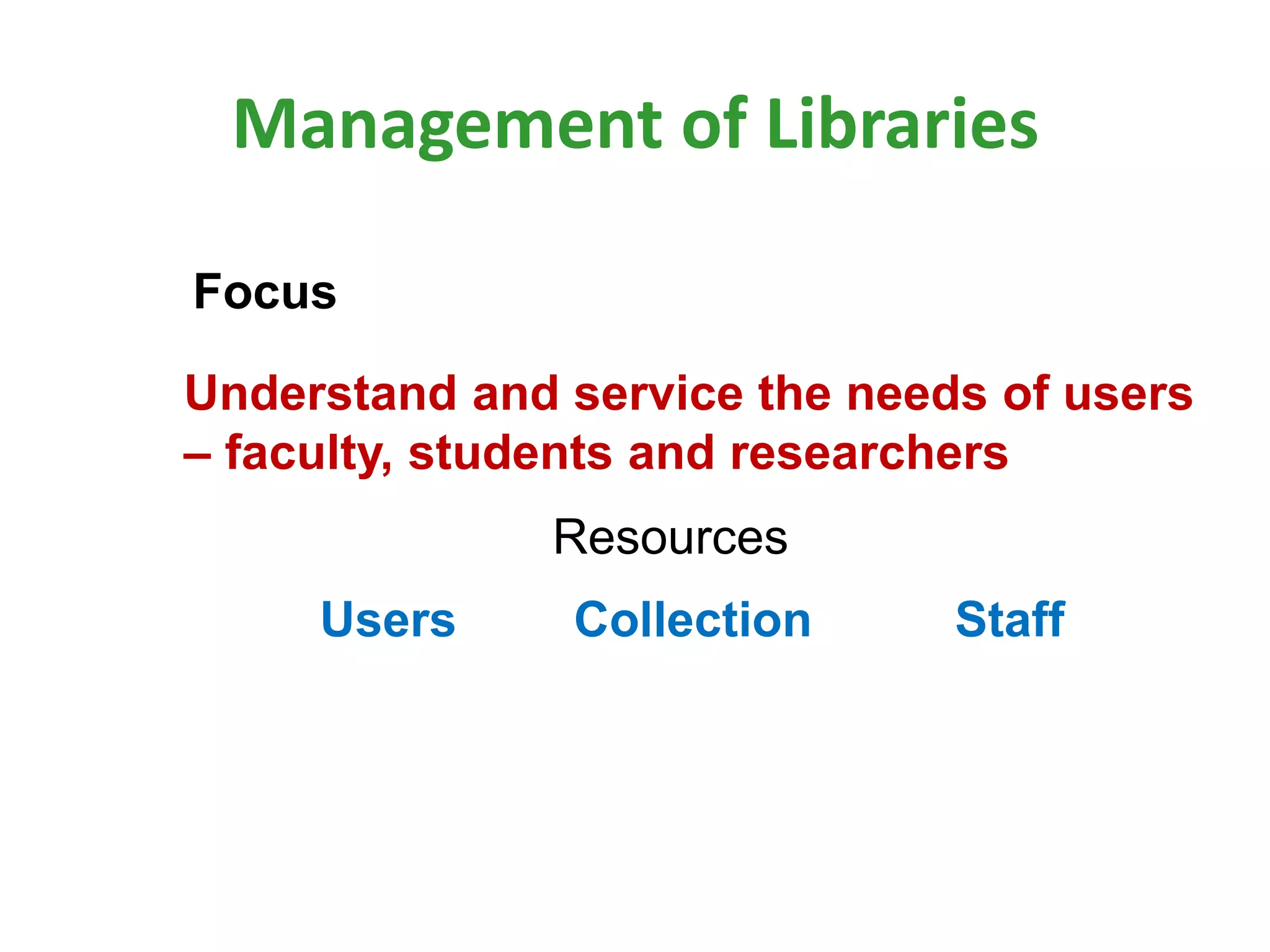
Management of Libraries
Users Collection Staff
Resources
Understand and service the needs of users
– faculty, students and researchers
Focus
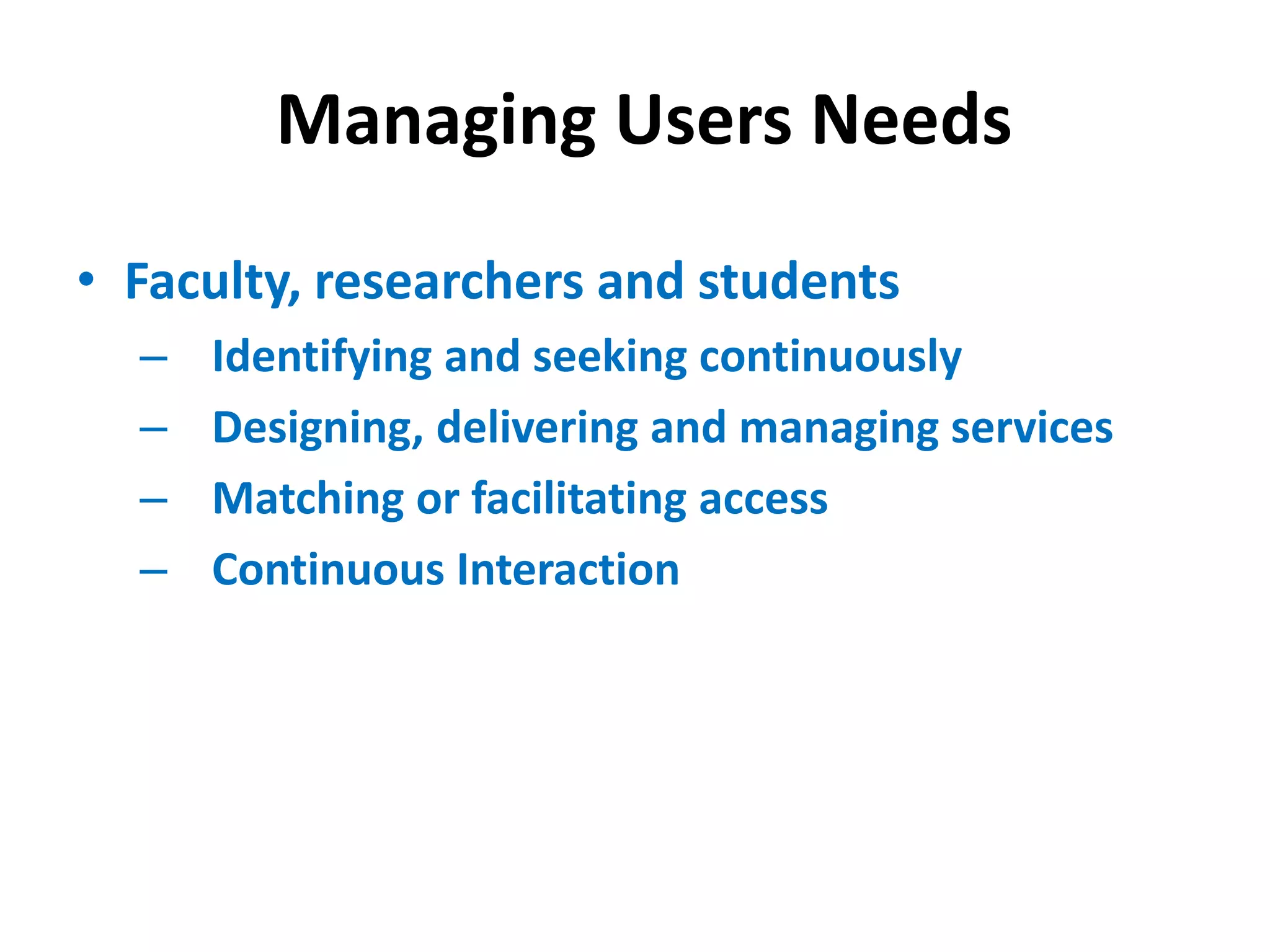
Managing Users Needs
• Faculty, researchers and students
– Identifying and seeking continuously
– Designing, delivering and managing services
– Matching or facilitating access
– Continuous Interaction
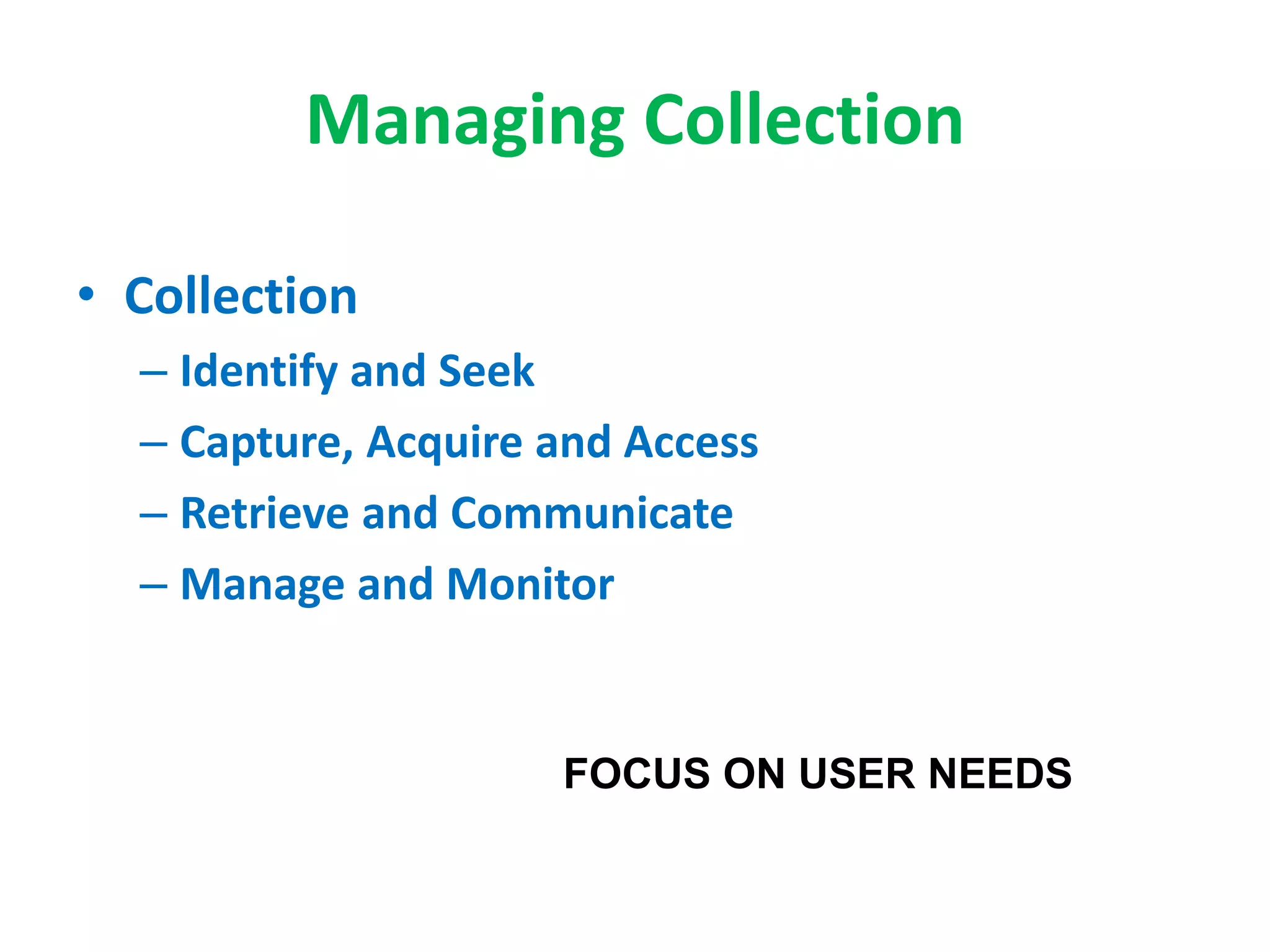
Managing Collection
• Collection
– Identify and Seek
– Capture, Acquire and Access
– Retrieve and Communicate
– Manage and Monitor
FOCUS ON USER NEEDS
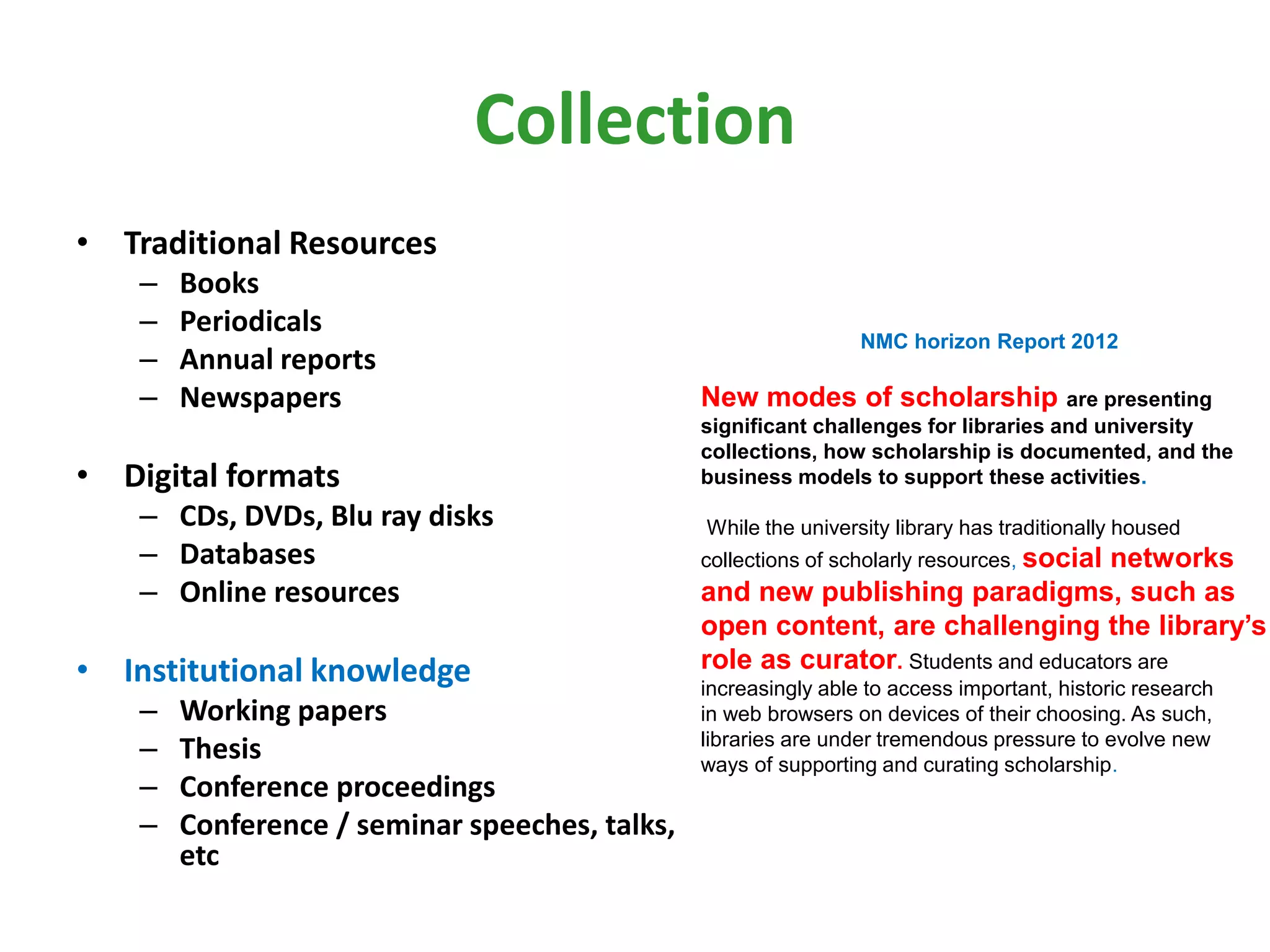
Collection
• Traditional Resources
– Books
– Periodicals
– Annual reports
– Newspapers
• Digital formats
– CDs, DVDs, Blu ray disks
– Databases
– Online resources
• Institutional knowledge
– Working papers
– Thesis
– Conference proceedings
– Conference / seminar speeches, talks,
etc
NMC horizon Report 2012
New modes of scholarship are presenting
significant challenges for libraries and university
collections, how scholarship is documented, and the
business models to support these activities.
While the university library has traditionally housed
collections of scholarly resources, social networks
and new publishing paradigms, such as
open content, are challenging the library’s
role as curator. Students and educators are
increasingly able to access important, historic research
in web browsers on devices of their choosing. As such,
libraries are under tremendous pressure to evolve new
ways of supporting and curating scholarship.
Managing Staff
– Understand their academic work
– Identify and Seek
– Recruit and train
– Facilitate, Manage and Understand
– Interact
VALUE TO THE USER
Looking Beyond Traditional Libraries
• Integration with curriculum and pedagogy
• Proactive in nature – topical displays, recommended readings, public lists, etc
• Look at the future needs and offer services
• Going beyond books – scholarly information, innovative services, etc
• A balance of best sellers, text books and must have books
• Facilitate a “good library experience” – user focus
Libraries: Gateways to Managing
Internal sources
• Student Projects
• Syllabus and course design
• Technical Notes
• Course Materials
• Student made Tools/Materials / Models
• News Paper Clippings (Jobs/Courses)
• Question papers
Libraries: Gateways to External
sources
• Commercial
– Books
– Videos / CDs
– Online resources
• Open Access
– Books
– Journals
– Educational Videos
– Educational courseware
Technologies in Libraries
• Library automation packages: Proprietary to OSS
• Storage: Devices to Cloud
• Identification: Barcode, Tattle-tape, RFID, Biometric, etc
• Information capture: Key board, Scanner, Digital Cameras,
Mobiles
• Network: Client-server, P2P, Internet
• Databases: Books, articles, reports, aggregators /publishers, IRs
Technologies in Libraries
• Information retrieval
– Simple OPAC to Federated searches to Discovery
– Seamless integration of various sources/formats
– Remote login / VPN
• User need not worry where the information is located
• Online Usage statistics
• User customized displays
• User Identification is simpler and secure
Technology environment
 Technologies that will enable the development of Collaboration
 Cloud
 Peer to Peer (P2P)
 Desktop Search
 Podcasting
 Really Simple Syndication (RSS)
 Blogging
 Wikis
 Users Information environment
 Instant messaging
 SMS / MMS
 Blogs
 Social networking sites
 Twitter
 All of this on the MOBILE!
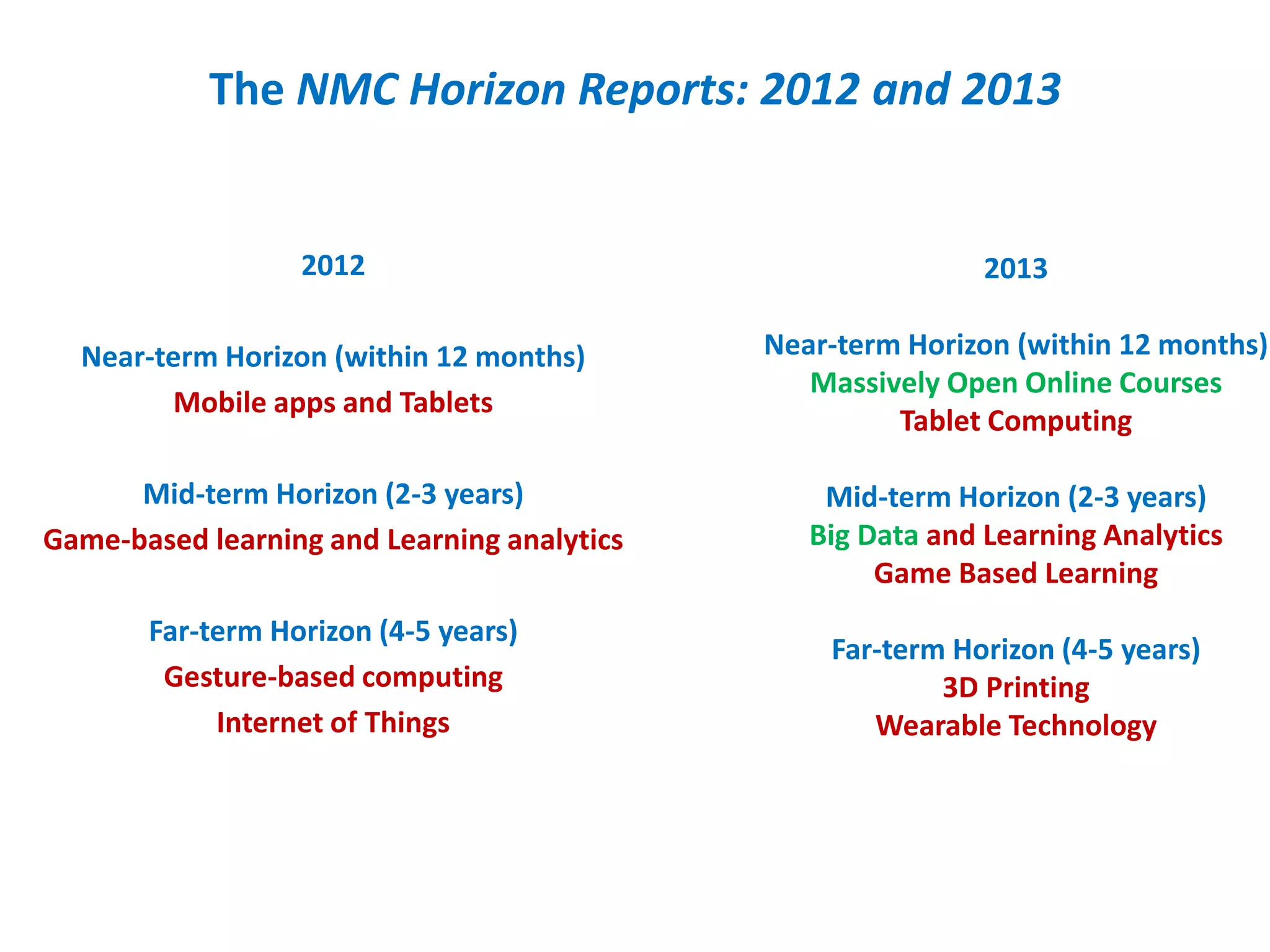
The NMC Horizon Reports: 2012 and 2013
2012
Near-term Horizon (within 12 months)
Mobile apps and Tablets
Mid-term Horizon (2-3 years)
Game-based learning and Learning analytics
Far-term Horizon (4-5 years)
Gesture-based computing
Internet of Things
2013
Near-term Horizon (within 12 months)
Massively Open Online Courses
Tablet Computing
Mid-term Horizon (2-3 years)
Big Data and Learning Analytics
Game Based Learning
Far-term Horizon (4-5 years)
3D Printing
Wearable Technology
The key is…
• User convenience
– whether it is …
• Book recommendation
• Remote login
• Federated search and discovery
• Access beyond our library - Union catalogue / ILL
• The future
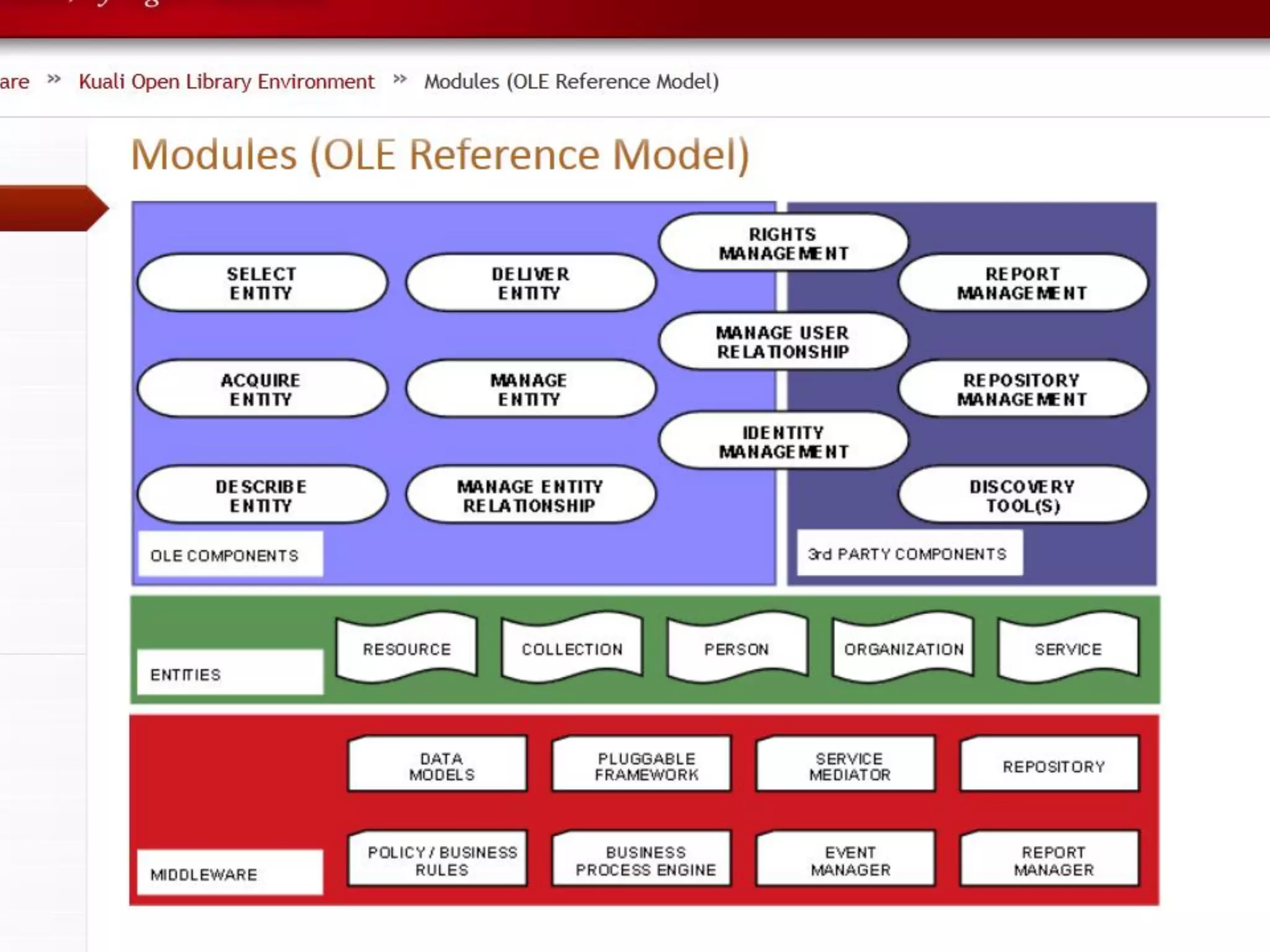
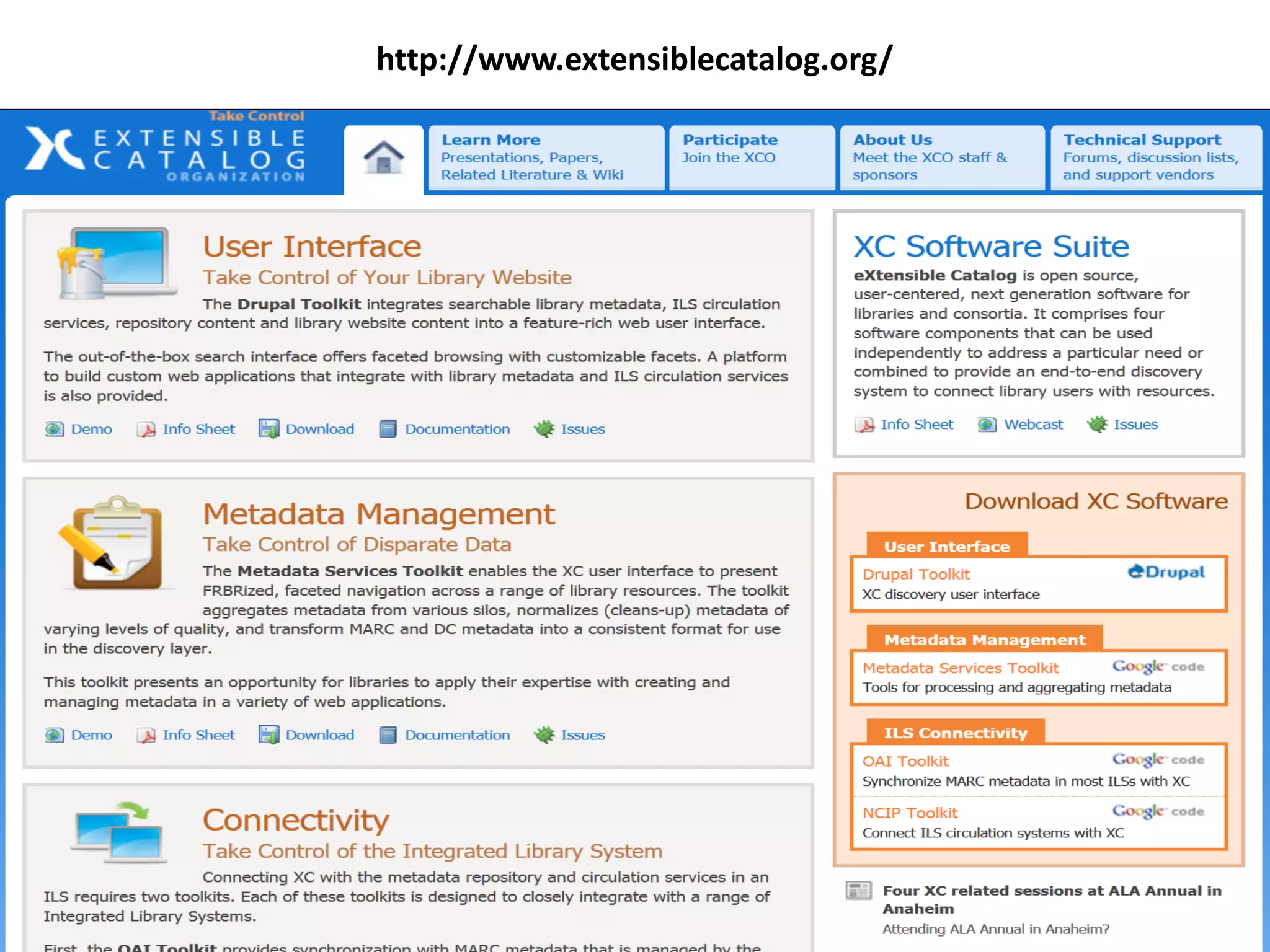
– Cloud, OSS, OLE, Extensible catalog, etc
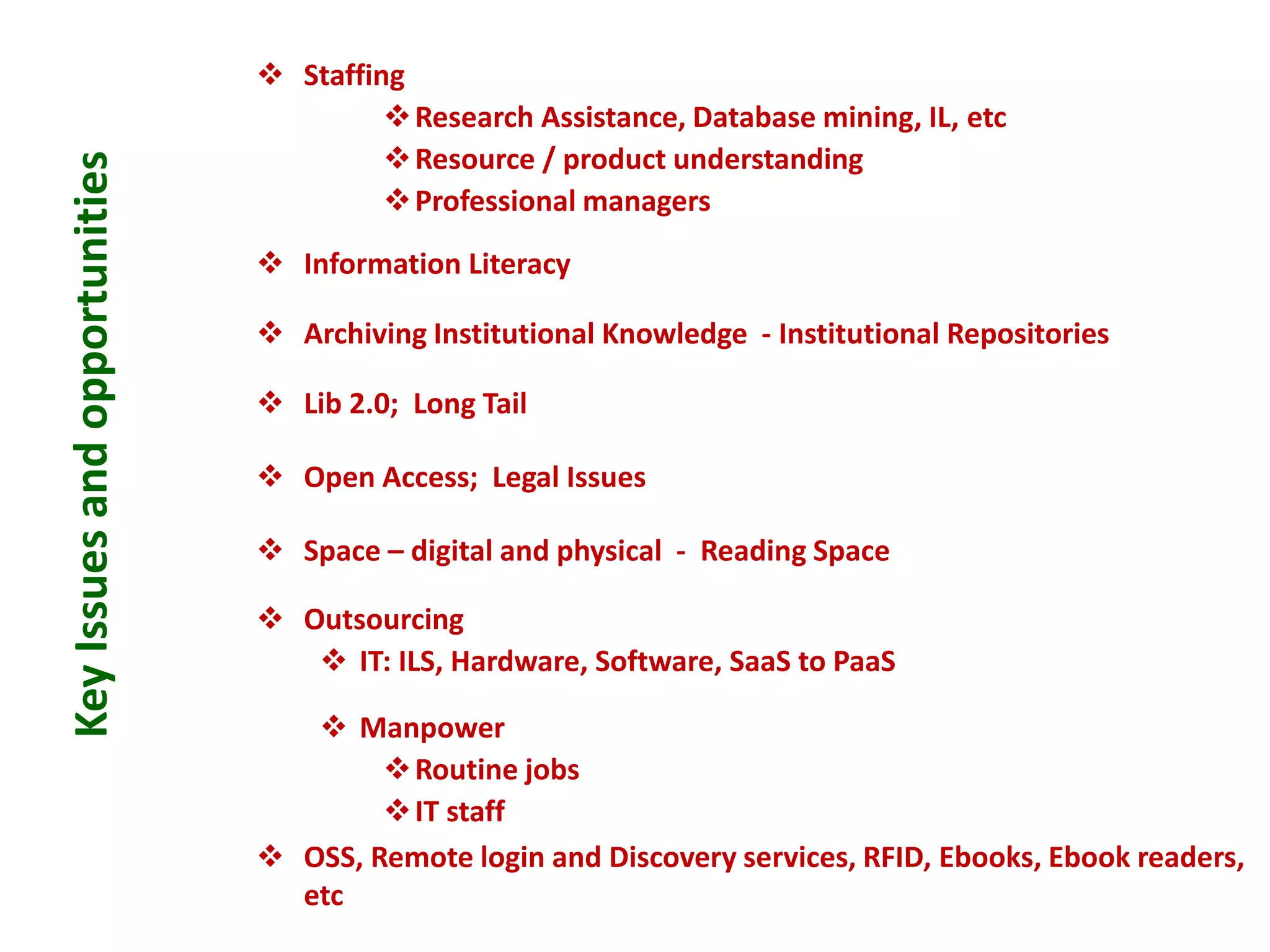
KeyIssuesandopportunities  Staffing
Research Assistance, Database mining, IL, etc
Resource / product understanding
Professional managers
 Information Literacy
 Archiving Institutional Knowledge - Institutional Repositories
 Lib 2.0; Long Tail
 Open Access; Legal Issues
 Space – digital and physical - Reading Space
 Outsourcing
 IT: ILS, Hardware, Software, SaaS to PaaS
 Manpower
Routine jobs
IT staff
 OSS, Remote login and Discovery services, RFID, Ebooks, Ebook readers,
etc
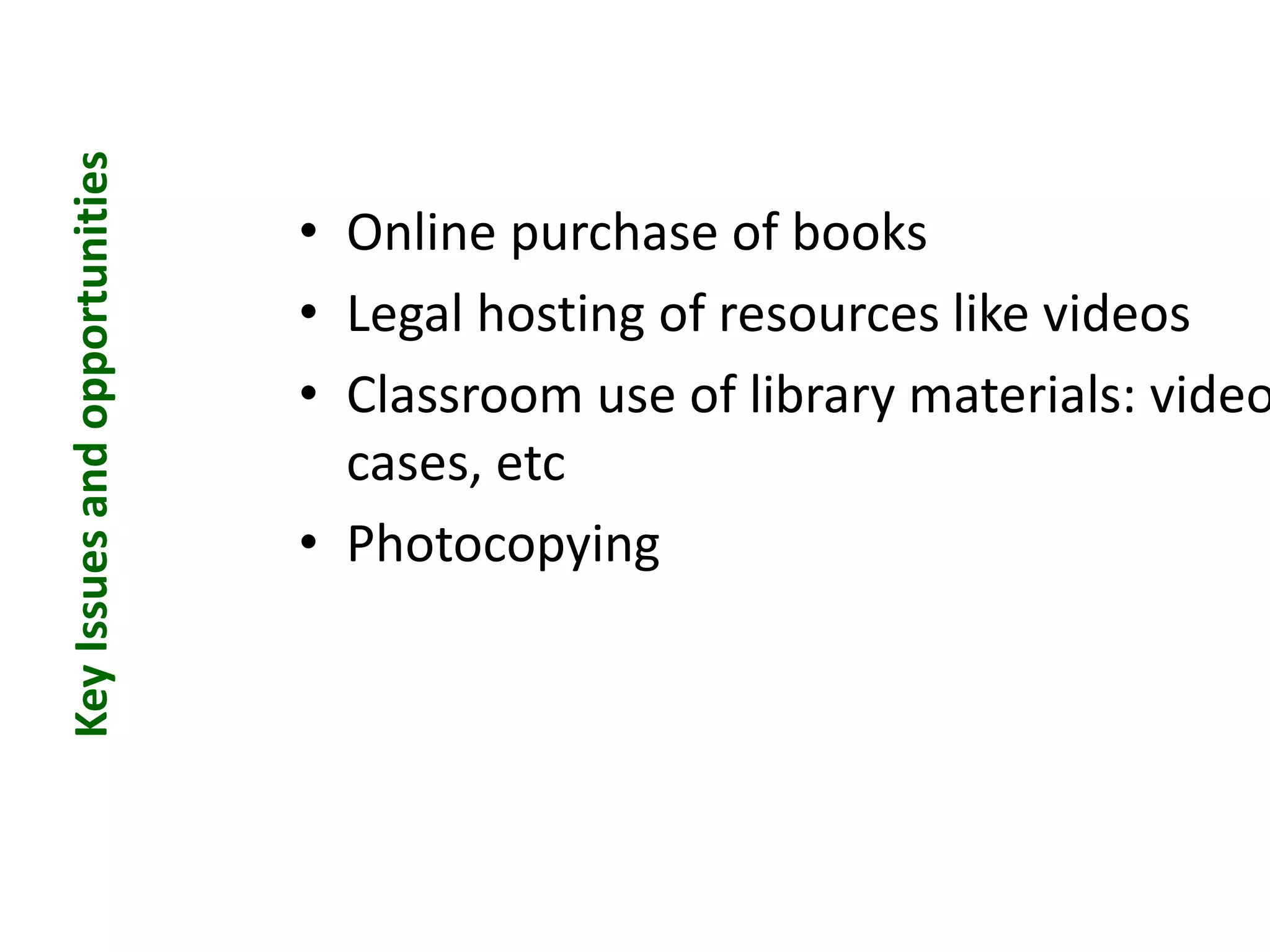
• Online purchase of books
• Legal hosting of resources like videos
• Classroom use of library materials: video
cases, etc
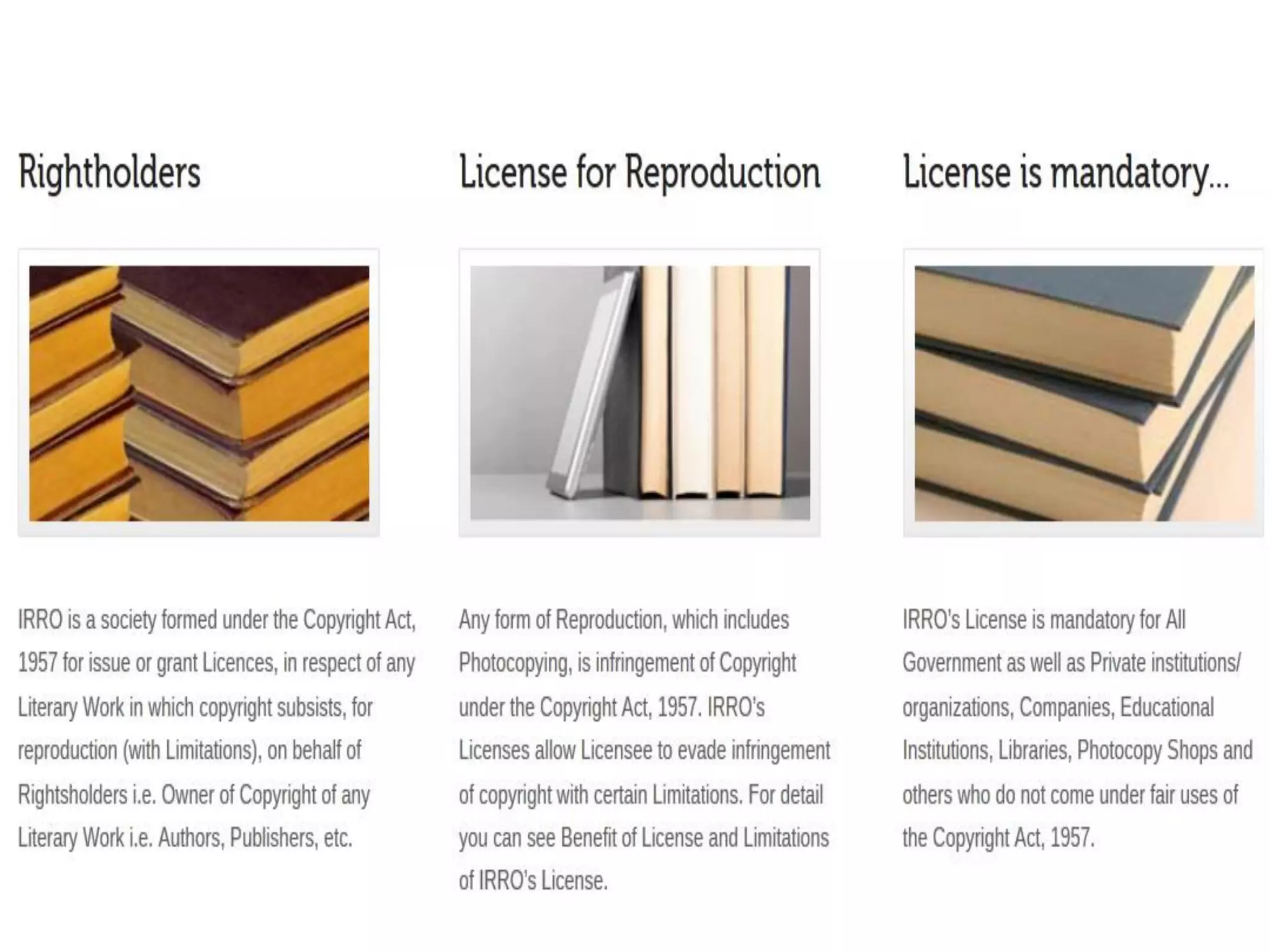
• Photocopying
KeyIssuesandopportunities
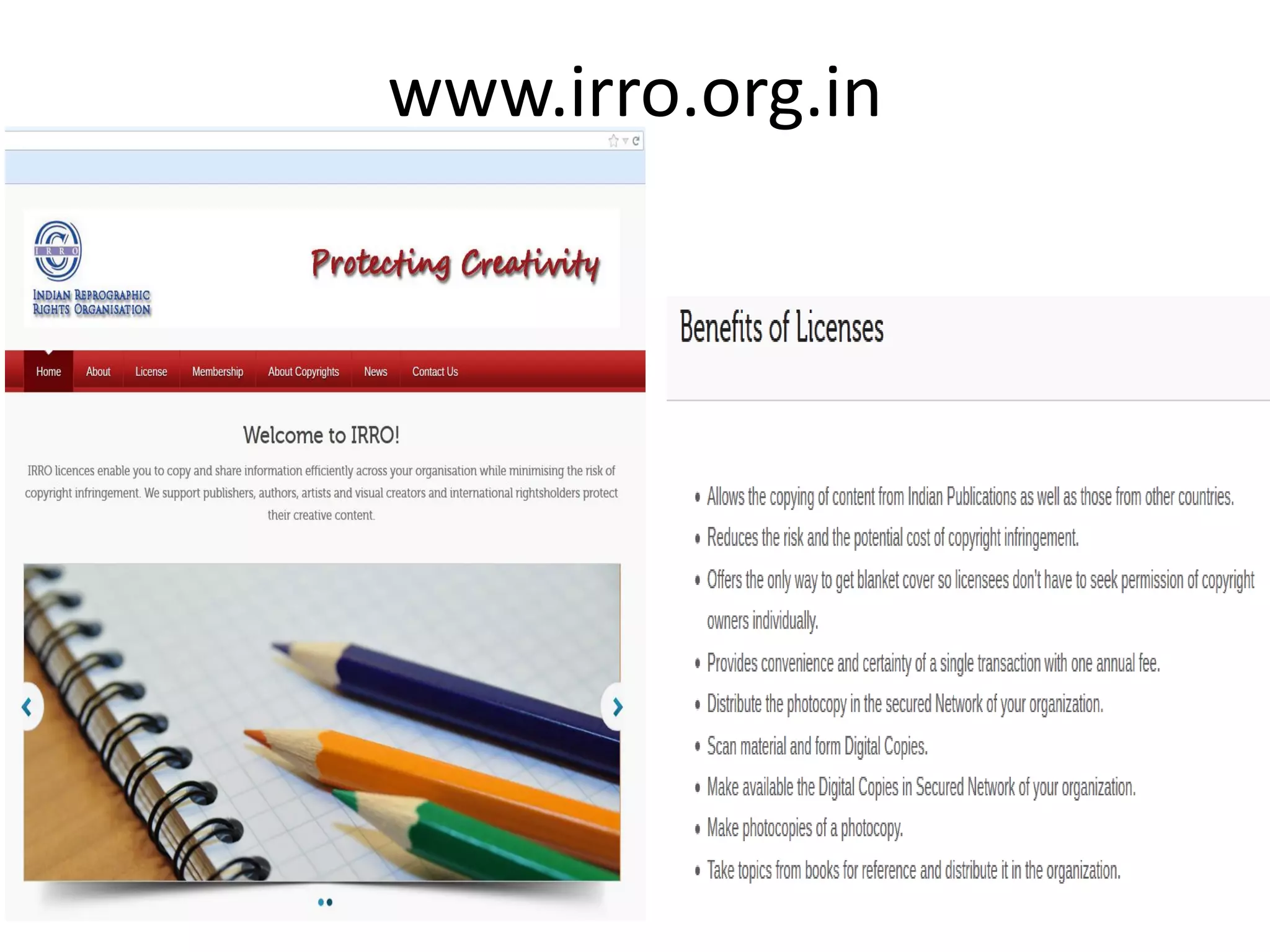
www.irro.org.in
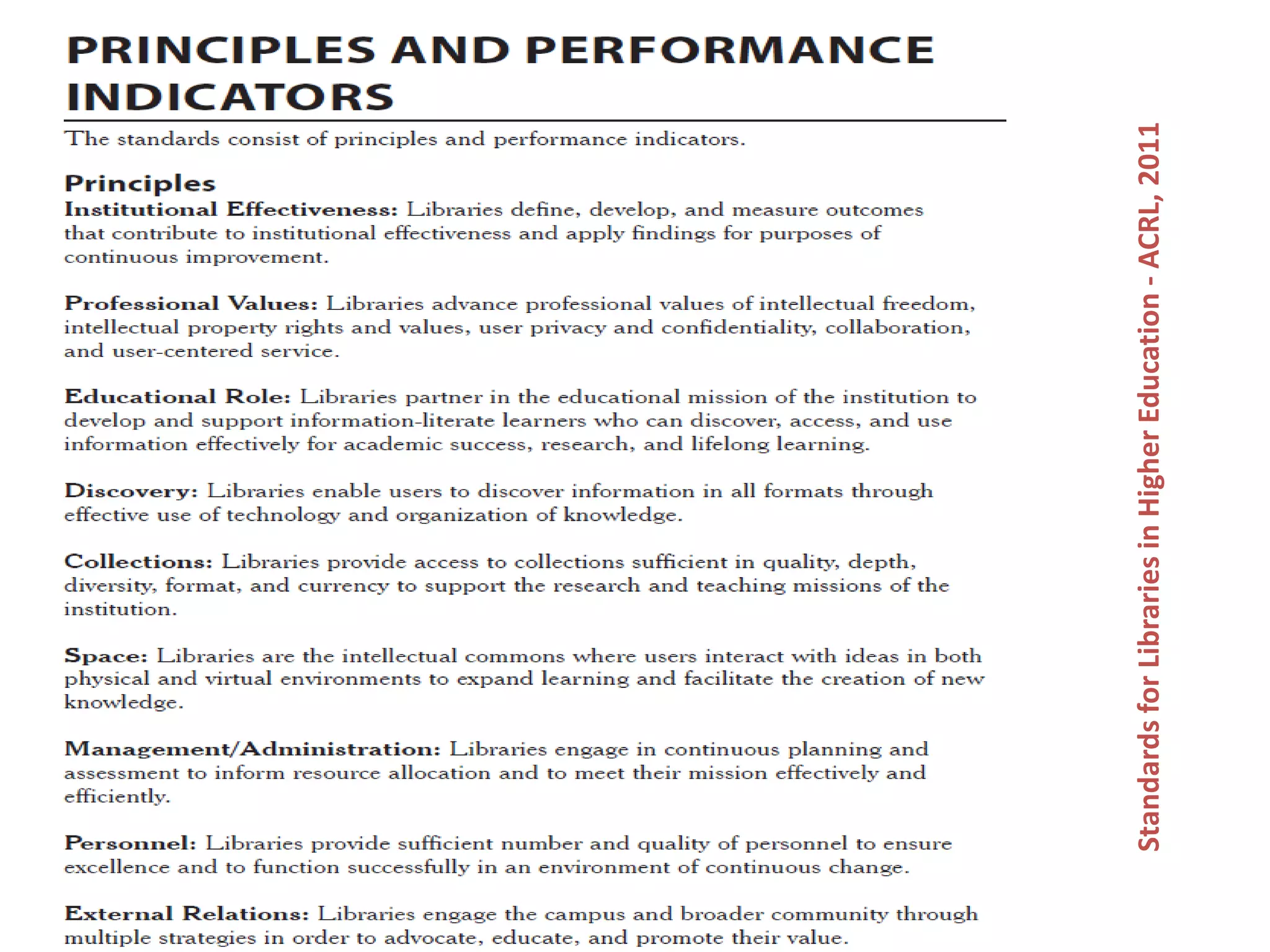
StandardsforLibrariesinHigherEducation-ACRL,2011
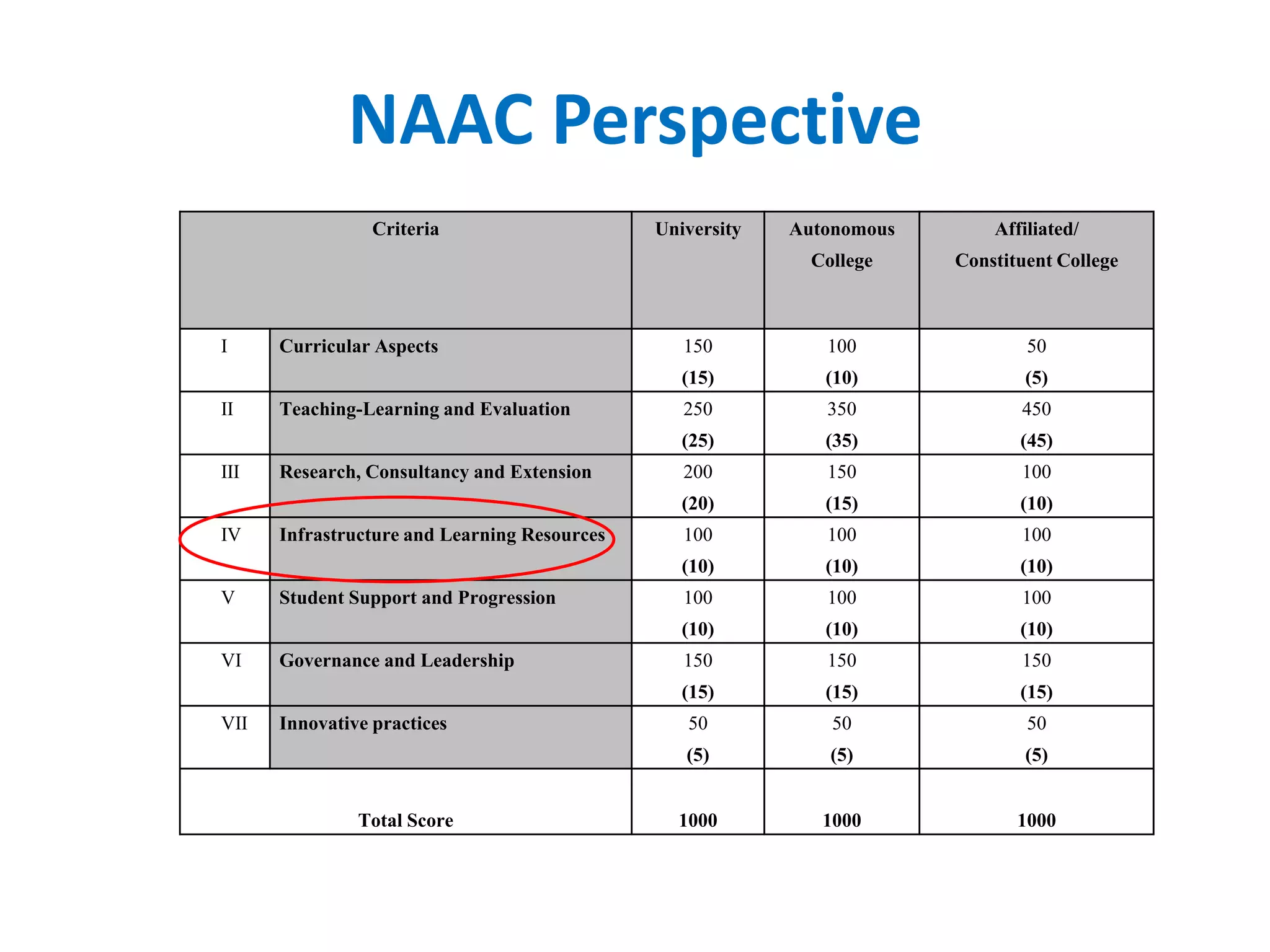
NAAC Perspective
Criteria University Autonomous
College
Affiliated/
Constituent College
I Curricular Aspects 150
(15)
100
(10)
50
(5)
II Teaching-Learning and Evaluation 250
(25)
350
(35)
450
(45)
III Research, Consultancy and Extension 200
(20)
150
(15)
100
(10)
IV Infrastructure and Learning Resources 100
(10)
100
(10)
100
(10)
V Student Support and Progression 100
(10)
100
(10)
100
(10)
VI Governance and Leadership 150
(15)
150
(15)
150
(15)
VII Innovative practices 50
(5)
50
(5)
50
(5)
Total Score 1000 1000 1000
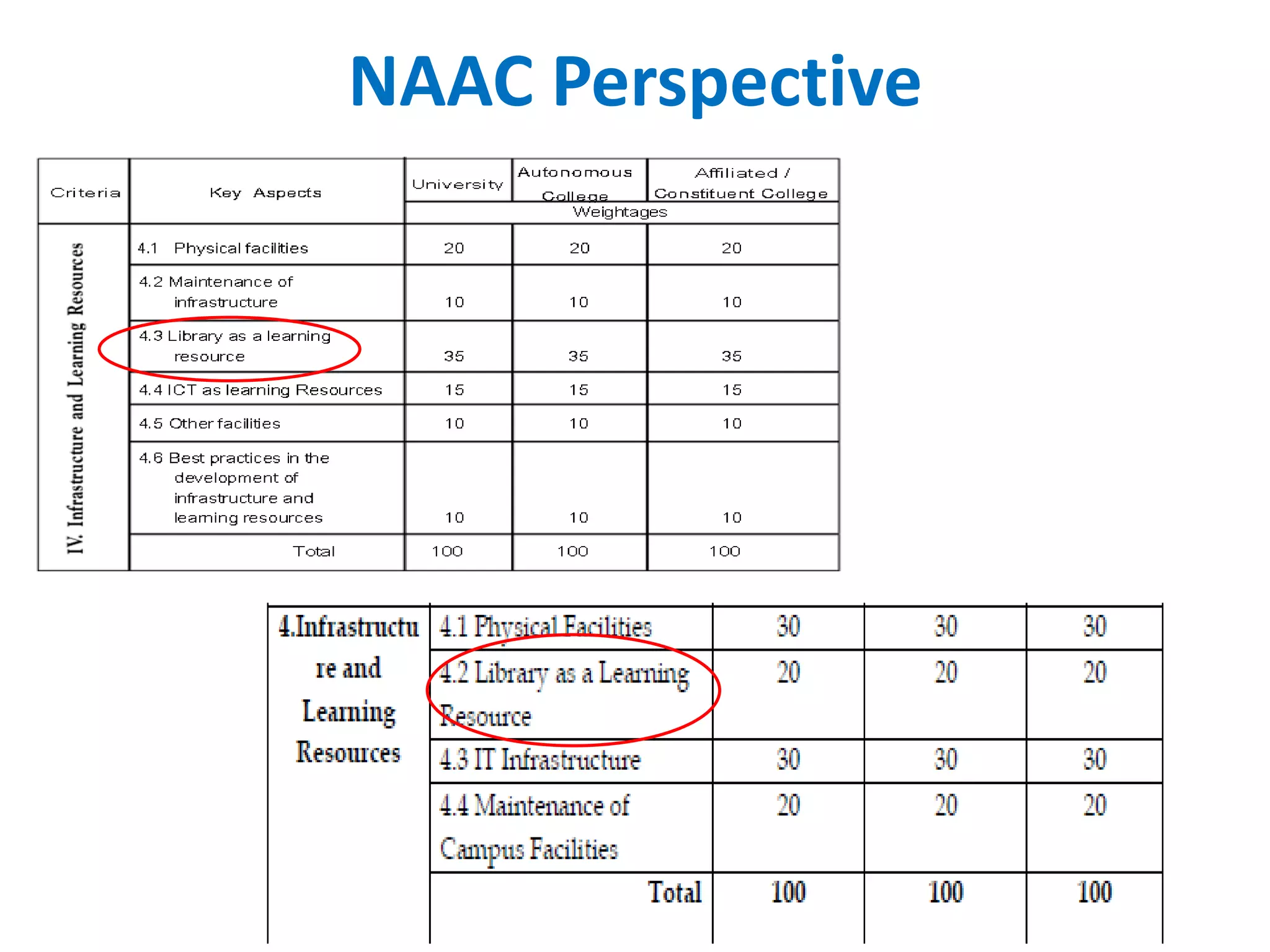
NAAC Perspective
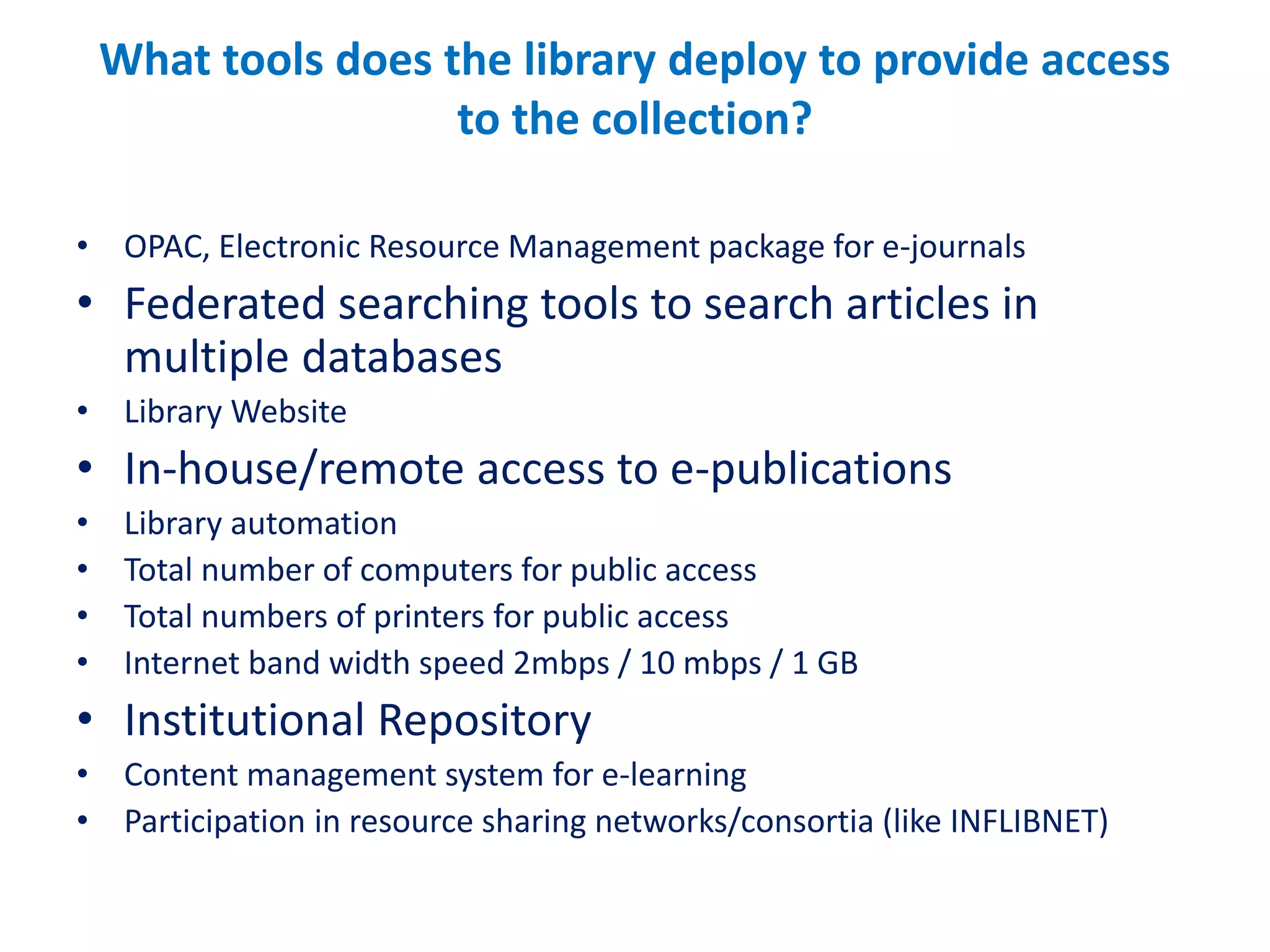
What tools does the library deploy to provide access
to the collection?
• OPAC, Electronic Resource Management package for e-journals
• Federated searching tools to search articles in
multiple databases
• Library Website
• In-house/remote access to e-publications
• Library automation
• Total number of computers for public access
• Total numbers of printers for public access
• Internet band width speed 2mbps / 10 mbps / 1 GB
• Institutional Repository
• Content management system for e-learning
• Participation in resource sharing networks/consortia (like INFLIBNET)
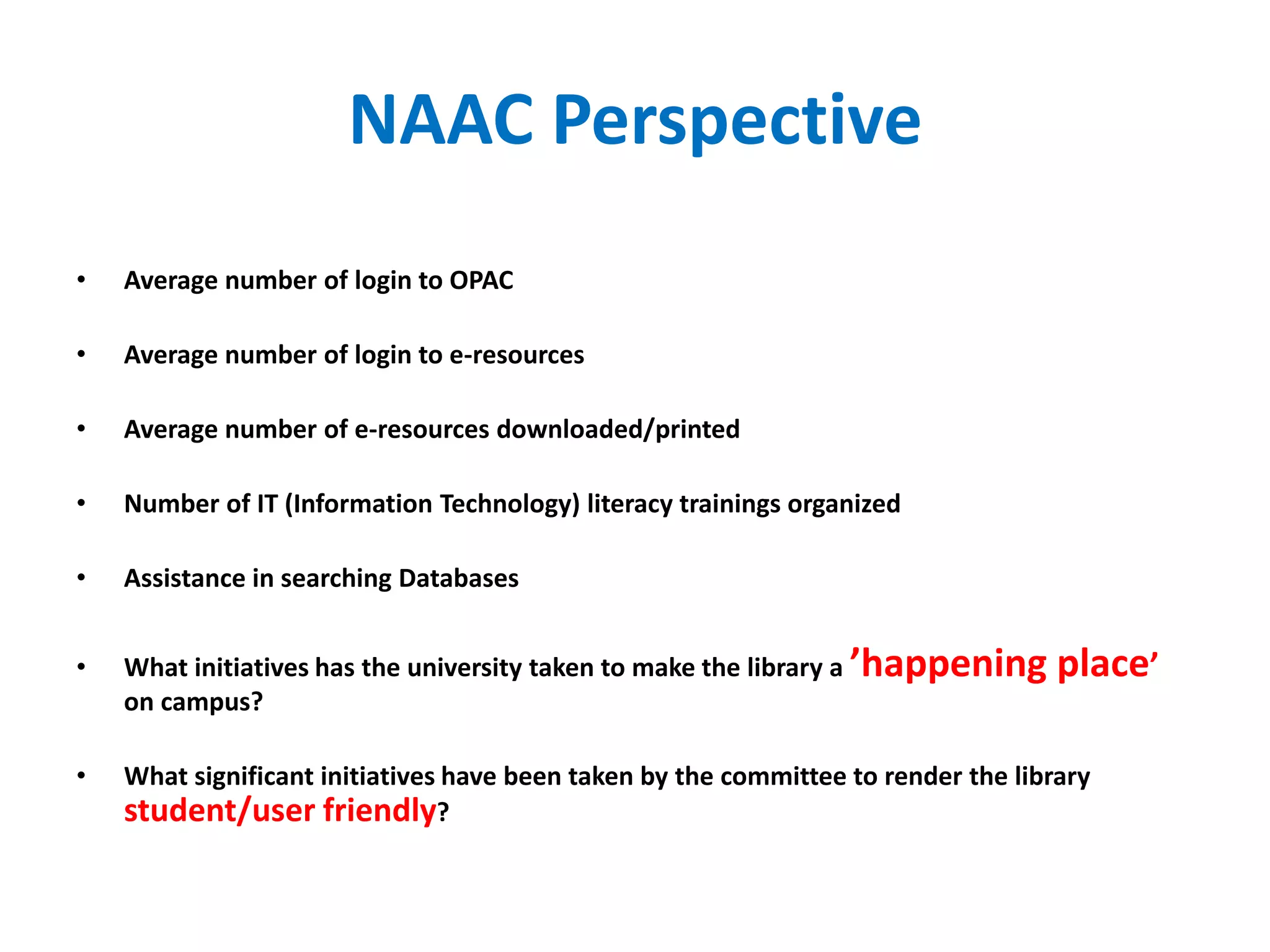
• Average number of login to OPAC
• Average number of login to e-resources
• Average number of e-resources downloaded/printed
• Number of IT (Information Technology) literacy trainings organized
• Assistance in searching Databases
• What initiatives has the university taken to make the library a ’happening place’
on campus?
• What significant initiatives have been taken by the committee to render the library
student/user friendly?
NAAC Perspective
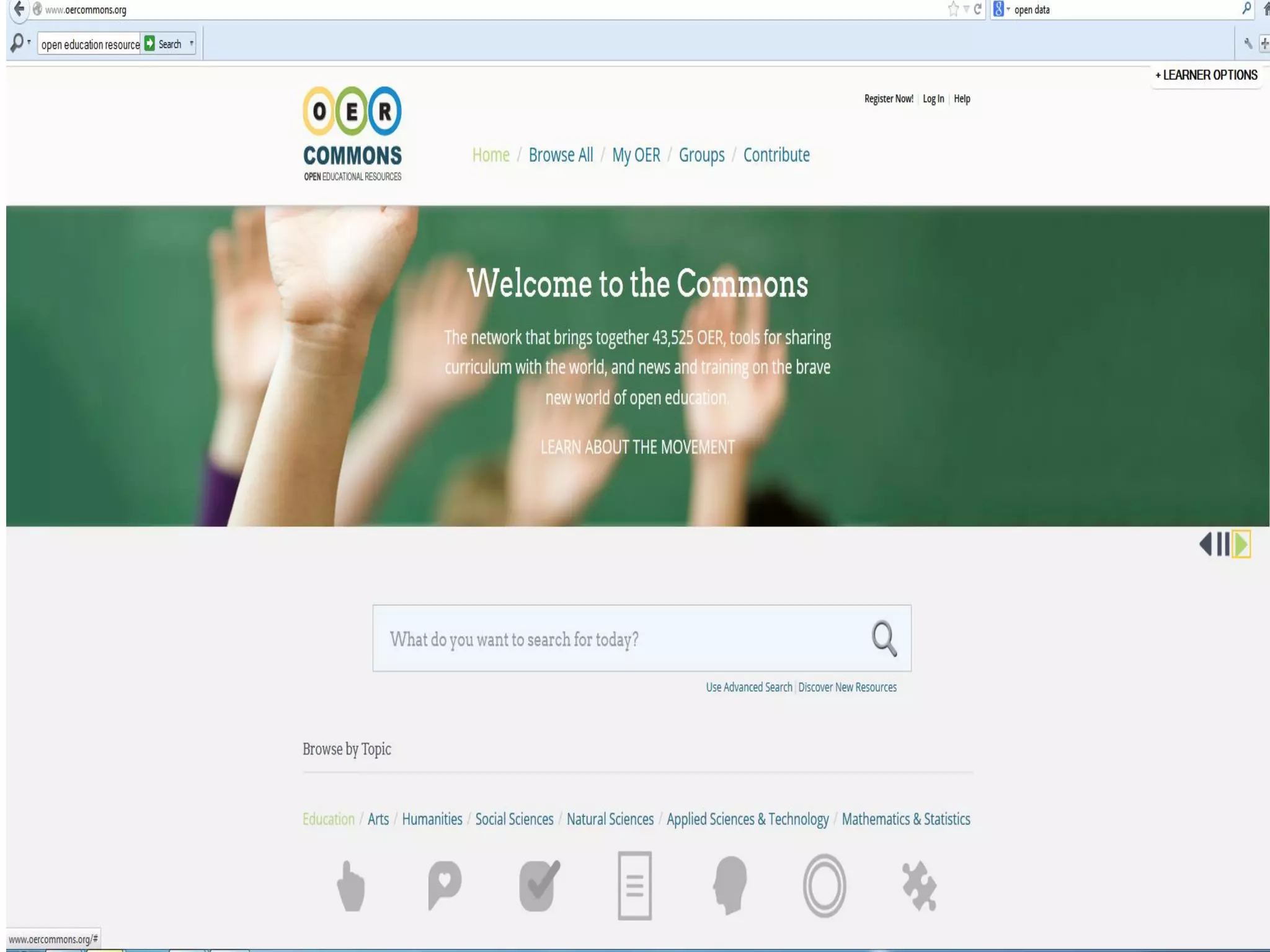
Open / Free resources
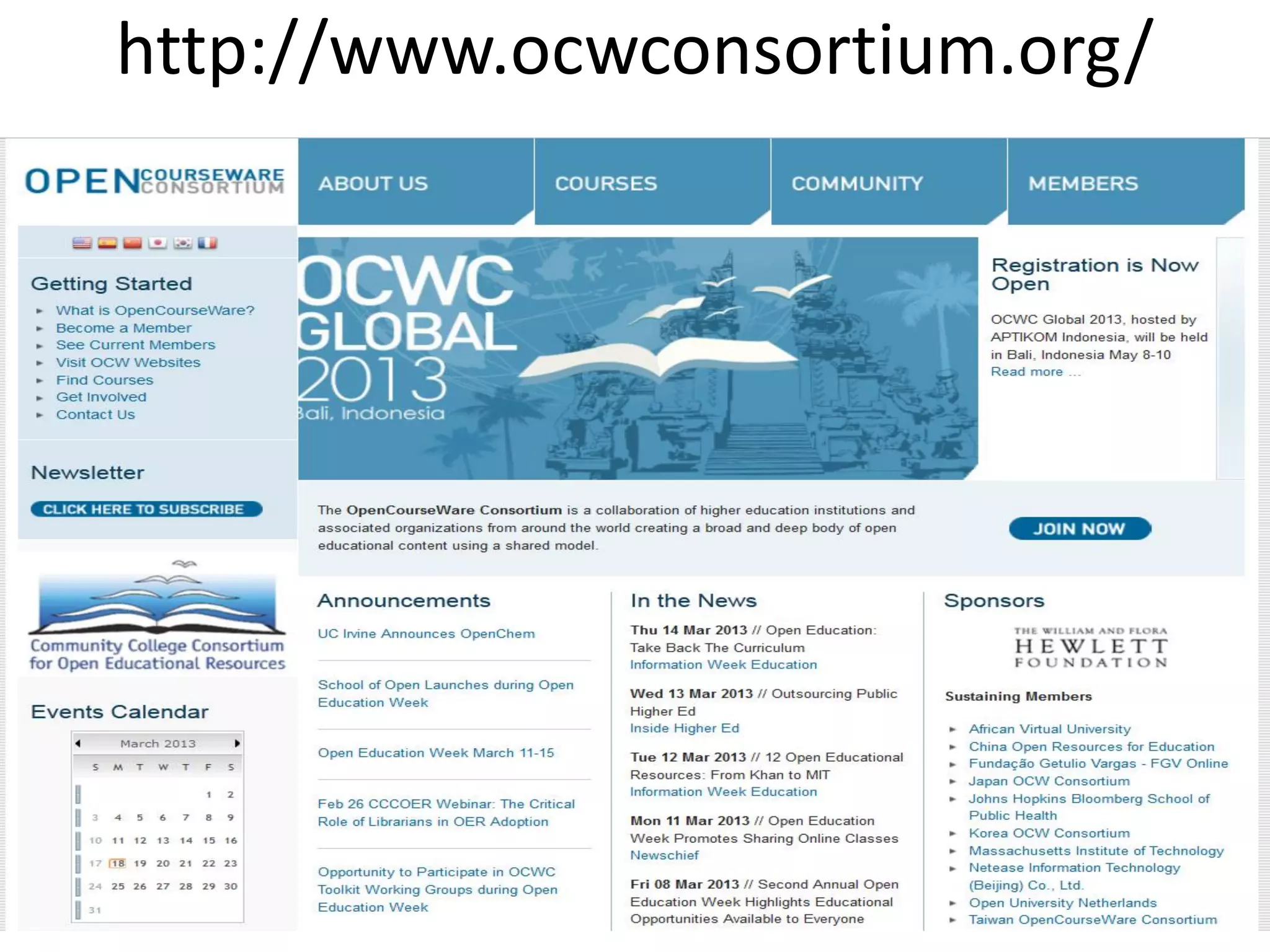
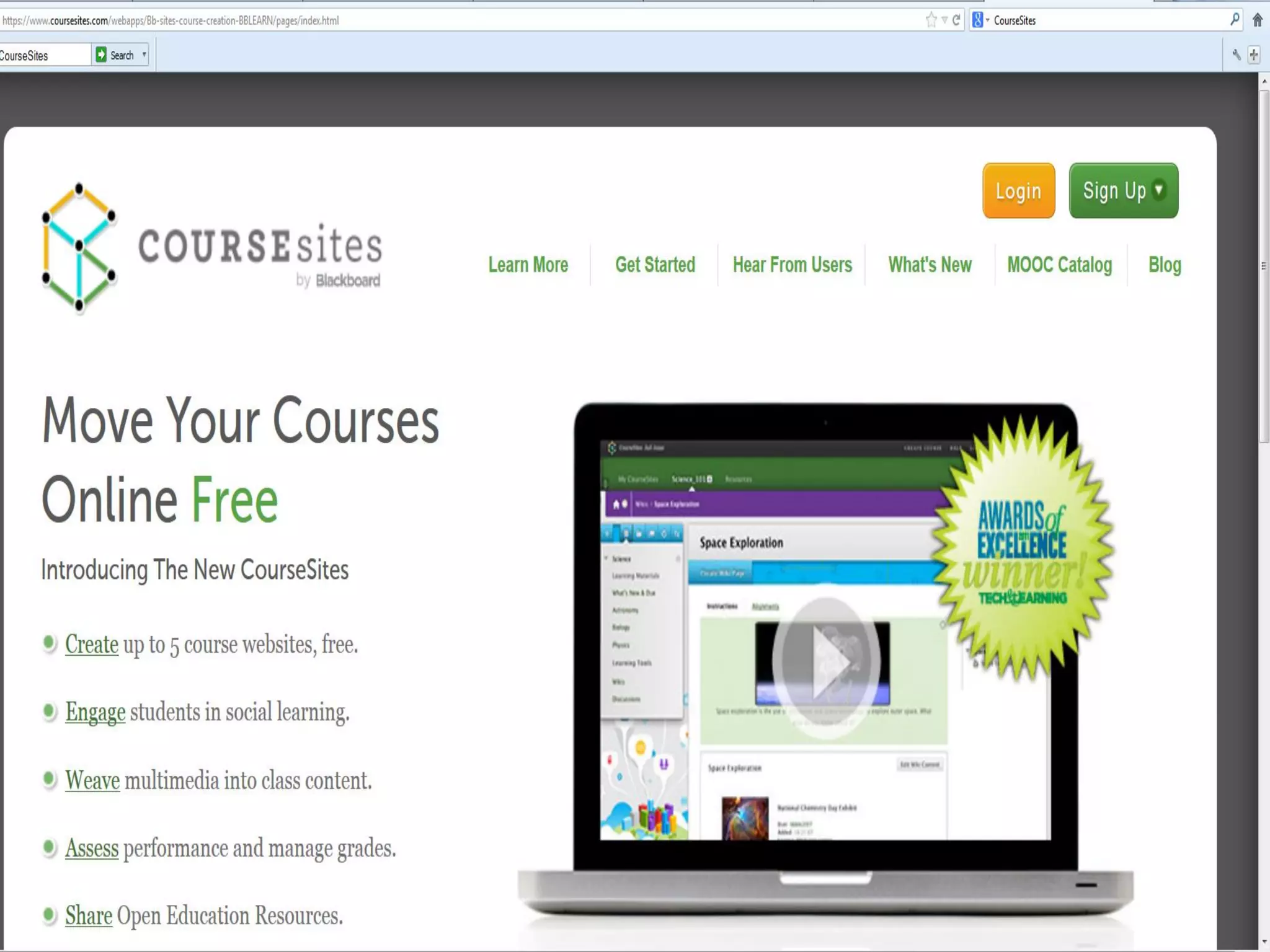
http://www.ocwconsortium.org/
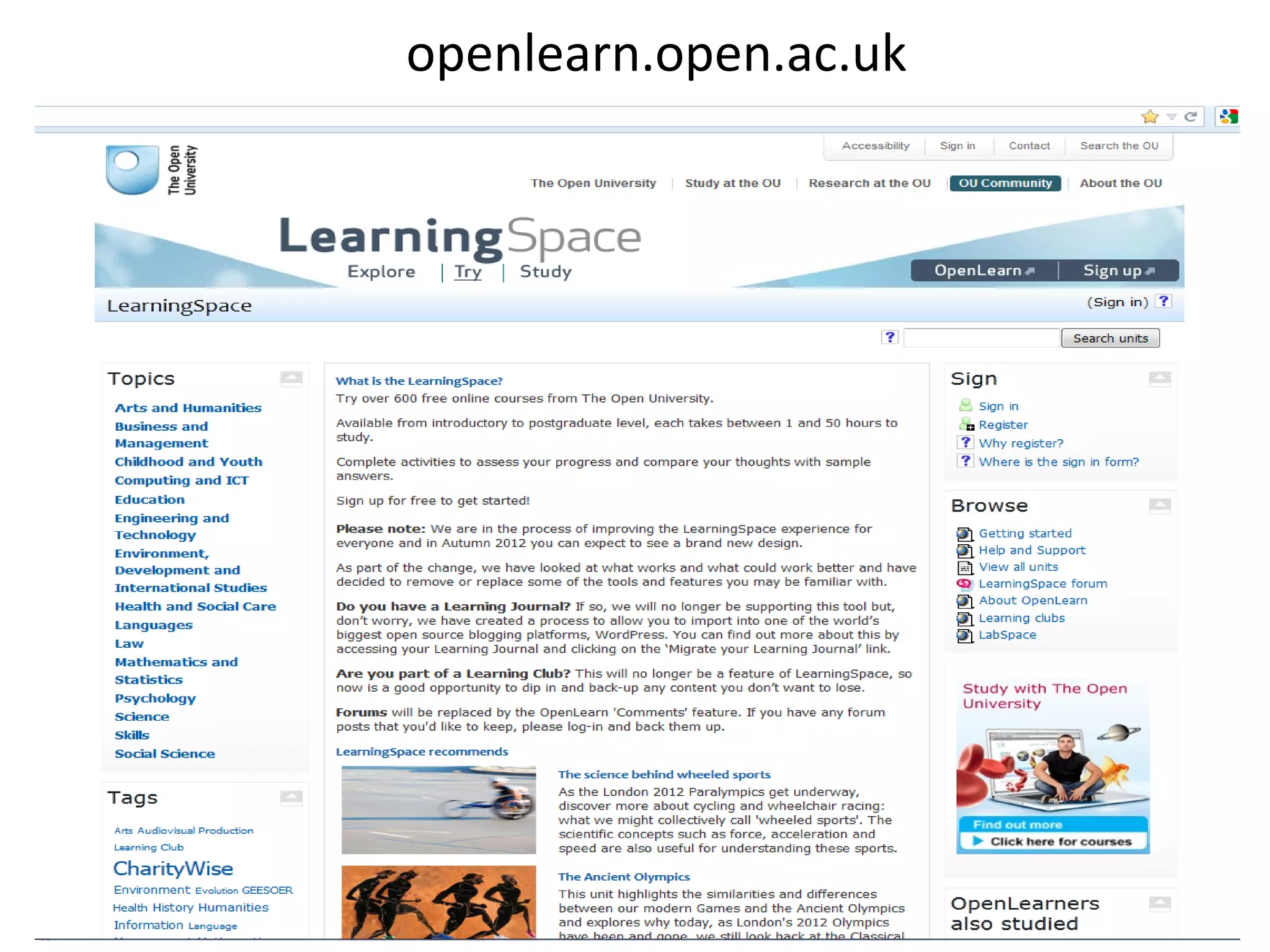
openlearn.open.ac.uk
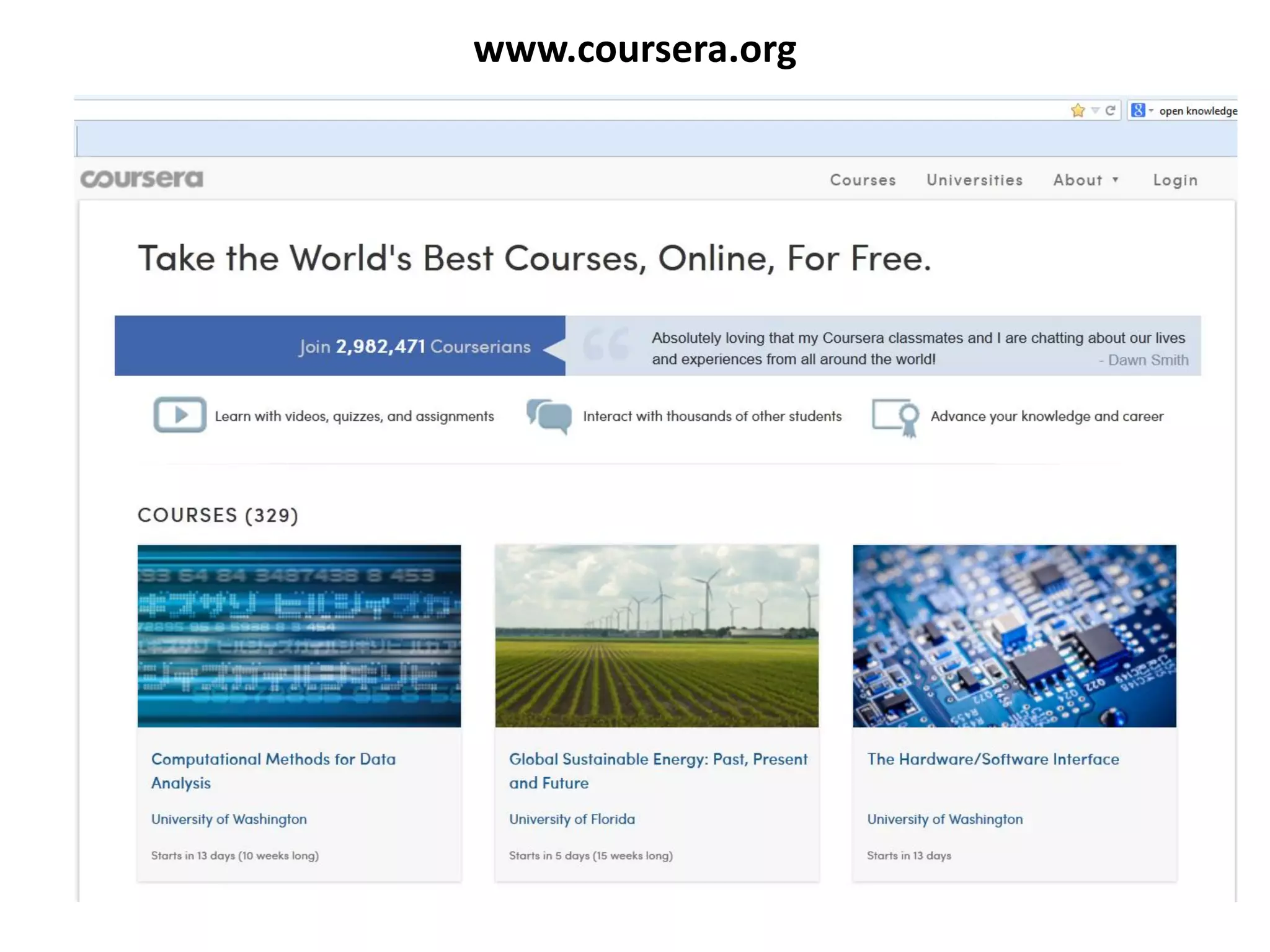
www.coursera.org
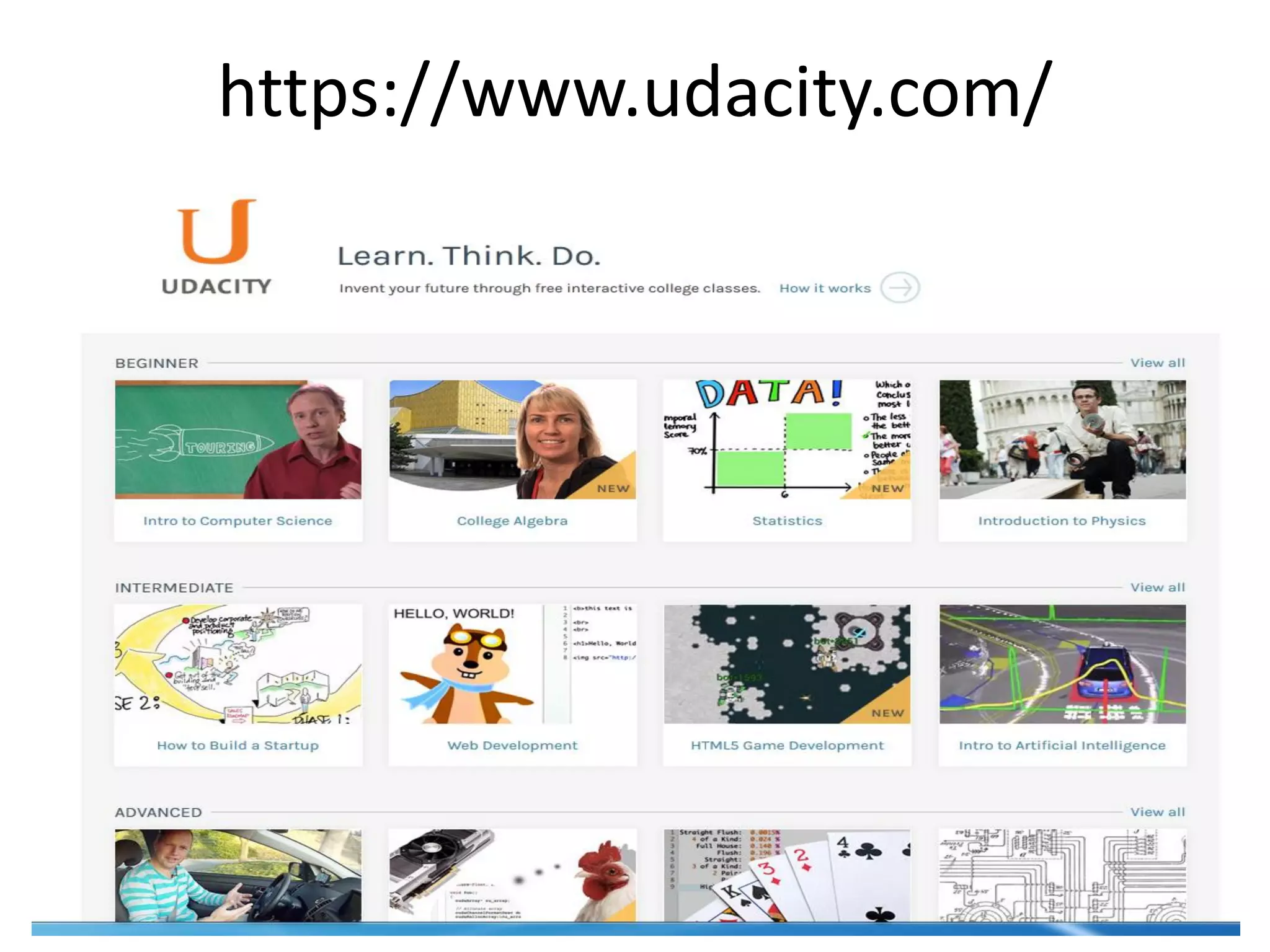
https://www.udacity.com/
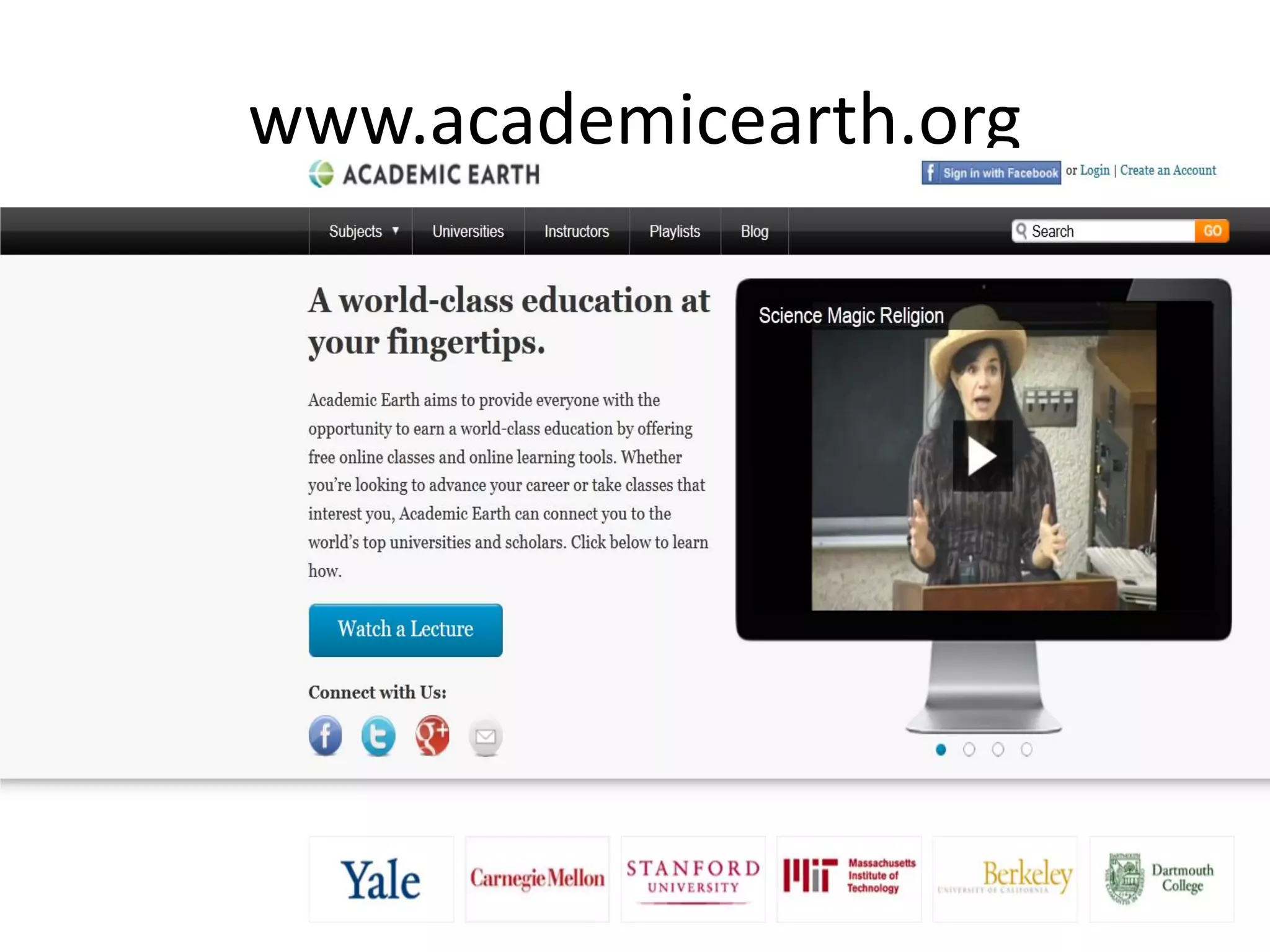
www.academicearth.org
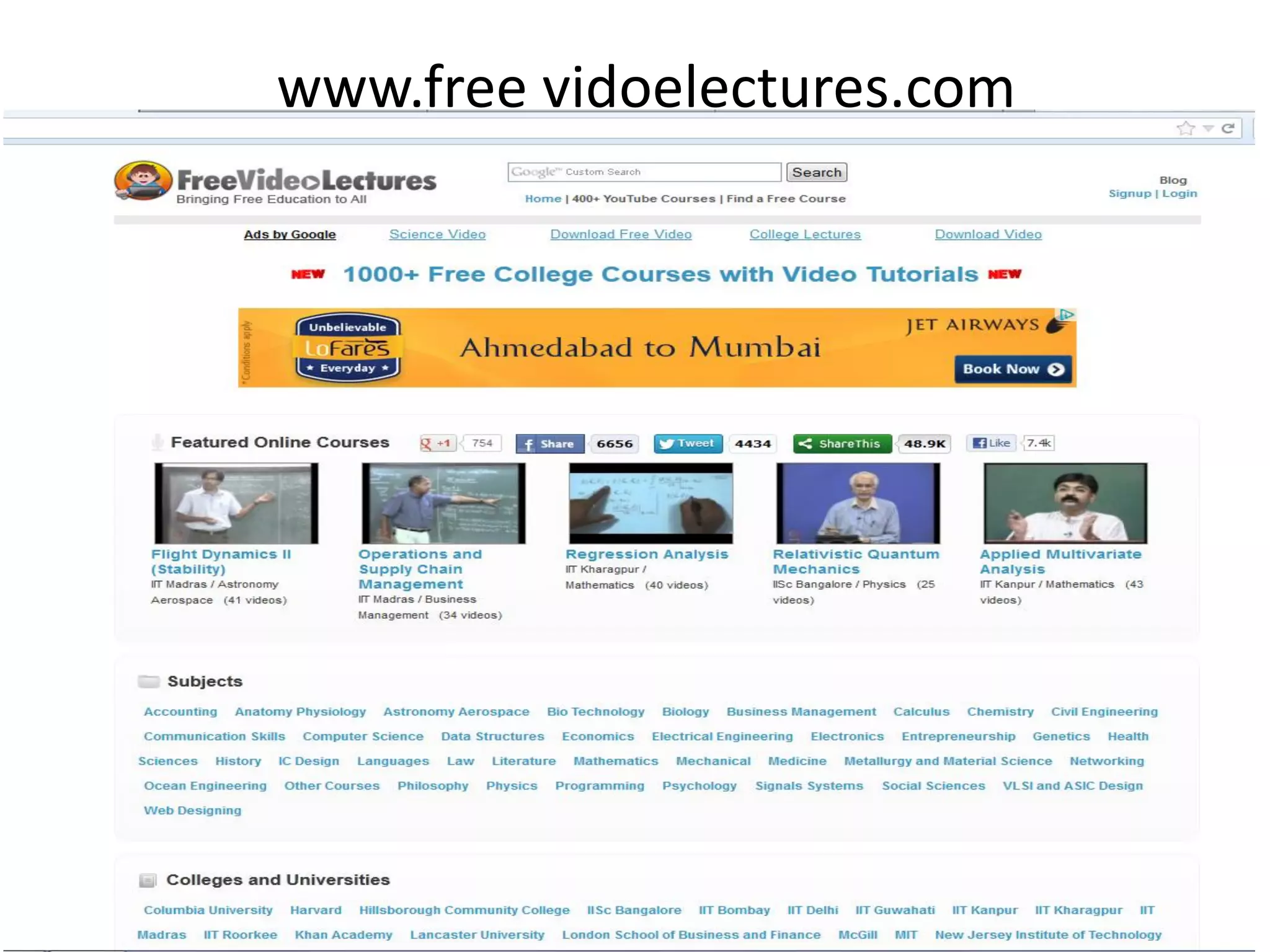
www.free vidoelectures.com
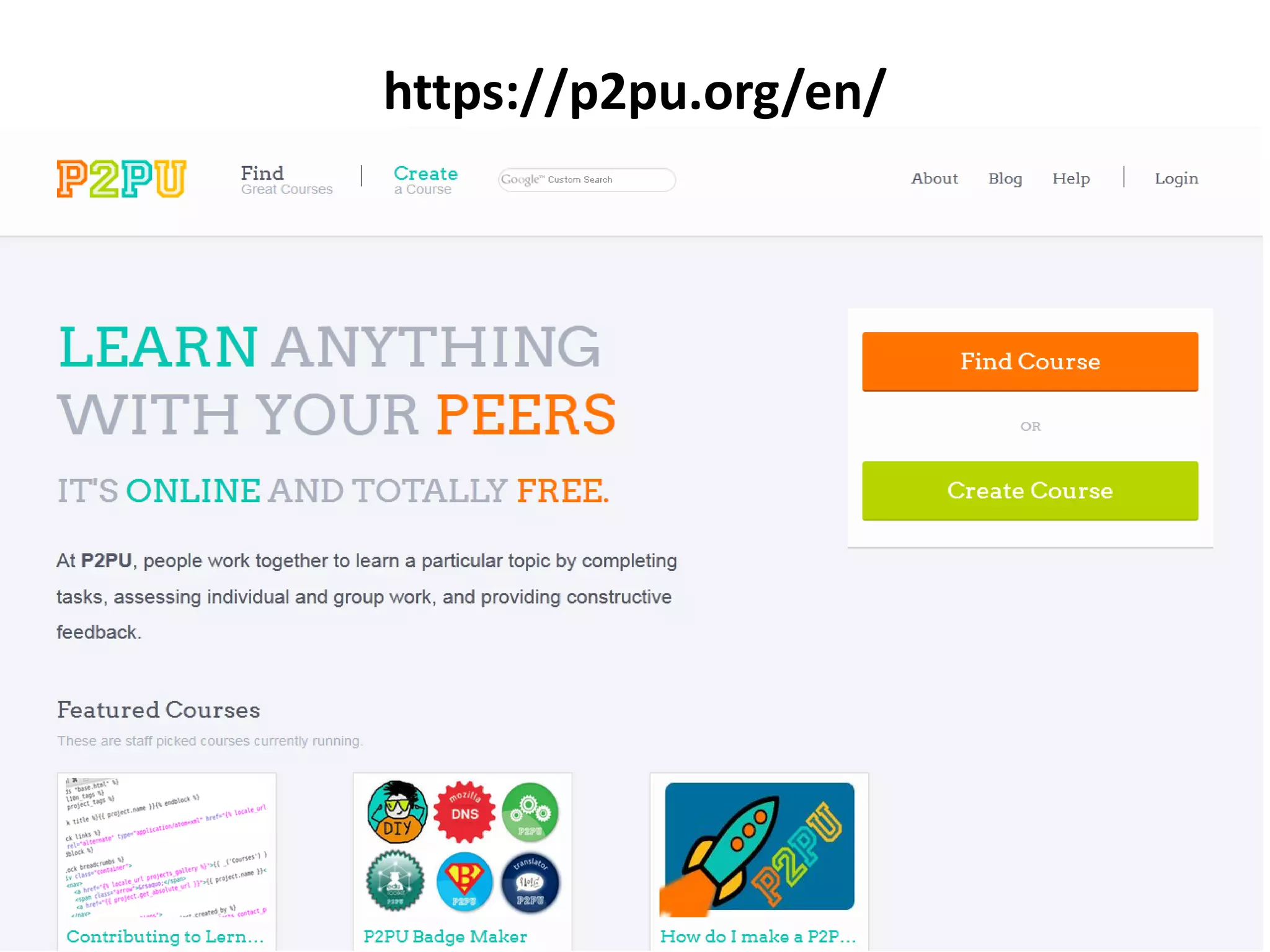
https://p2pu.org/en/
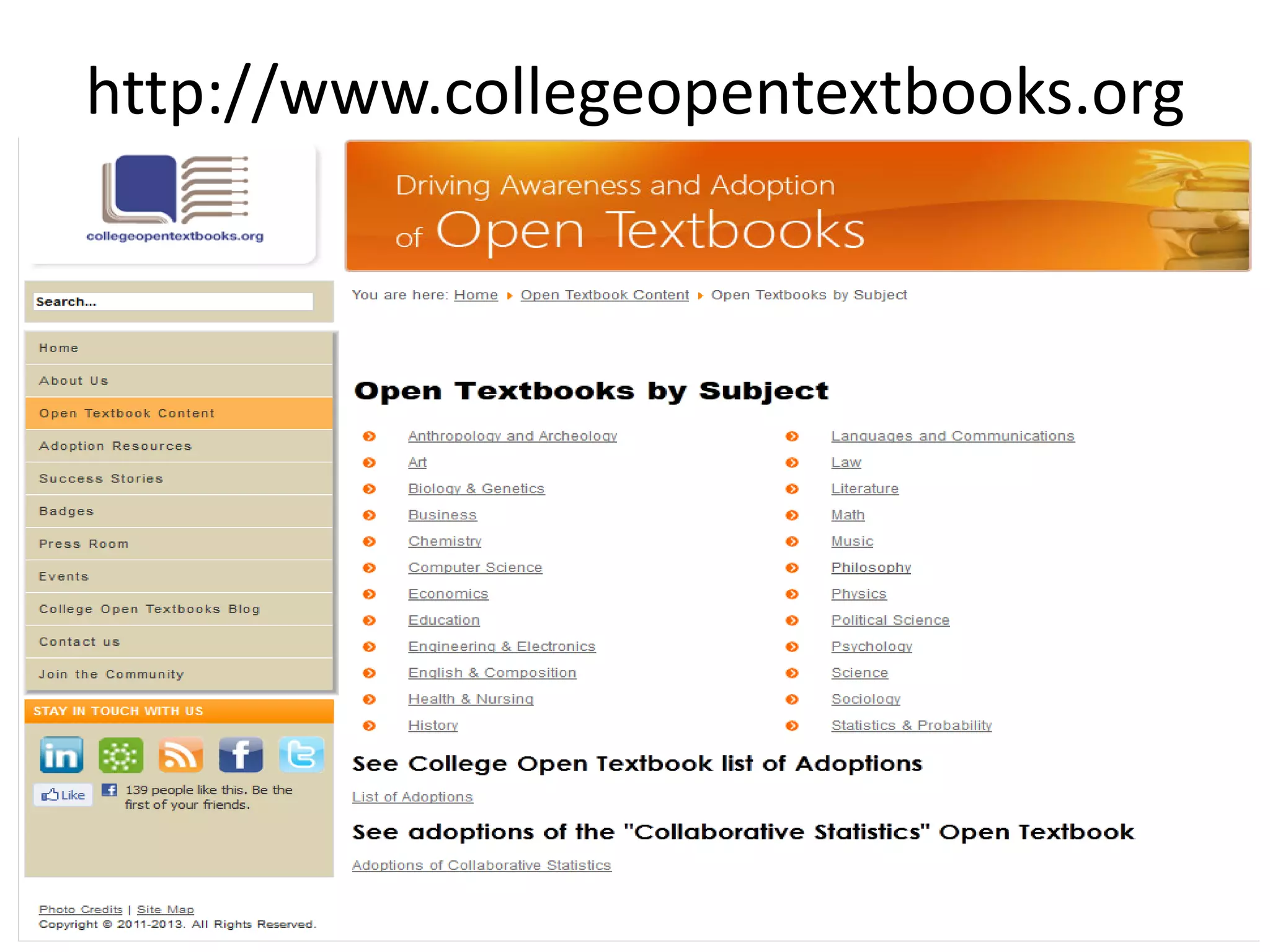
http://www.collegeopentextbooks.org
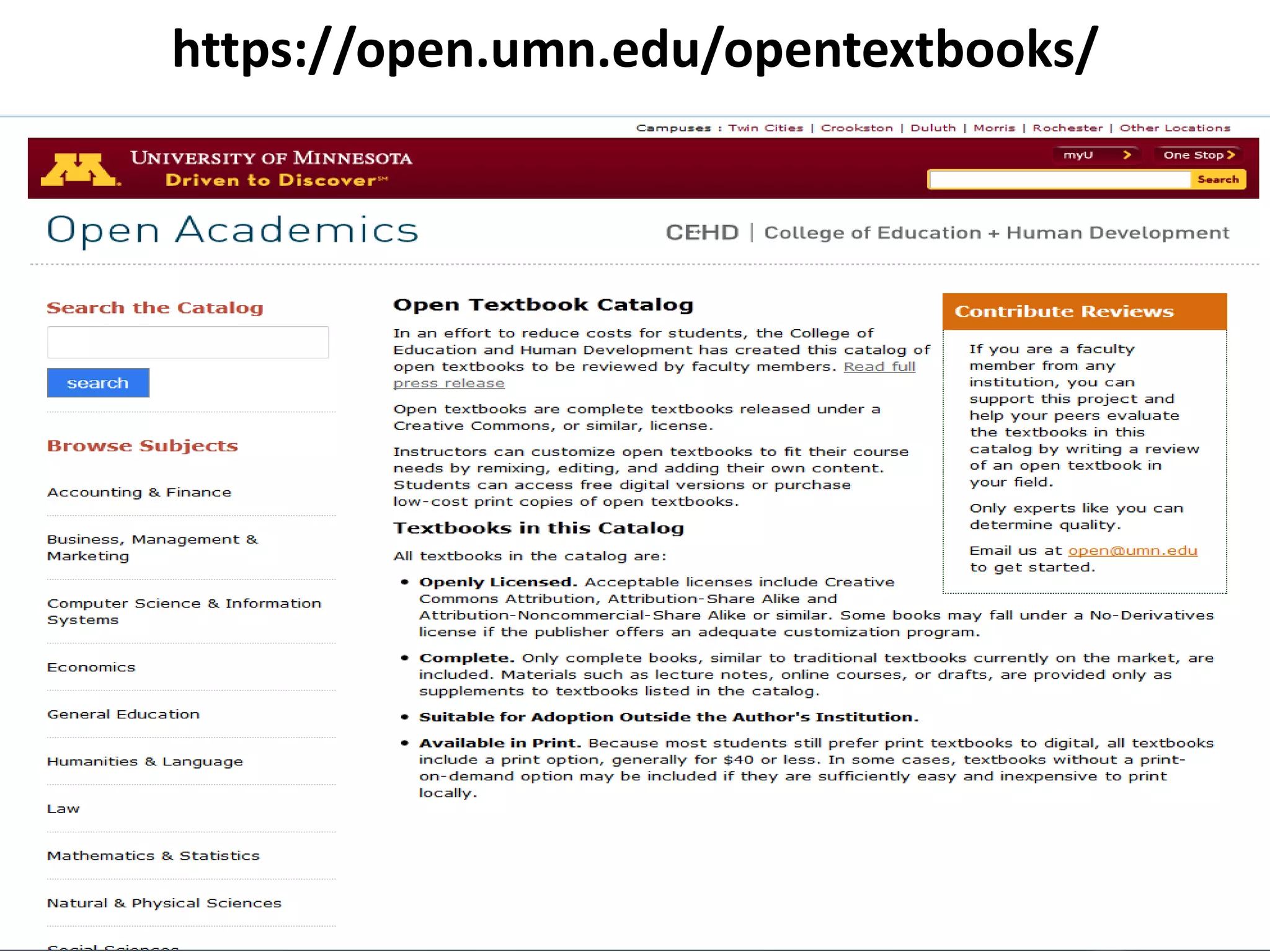
https://open.umn.edu/opentextbooks/
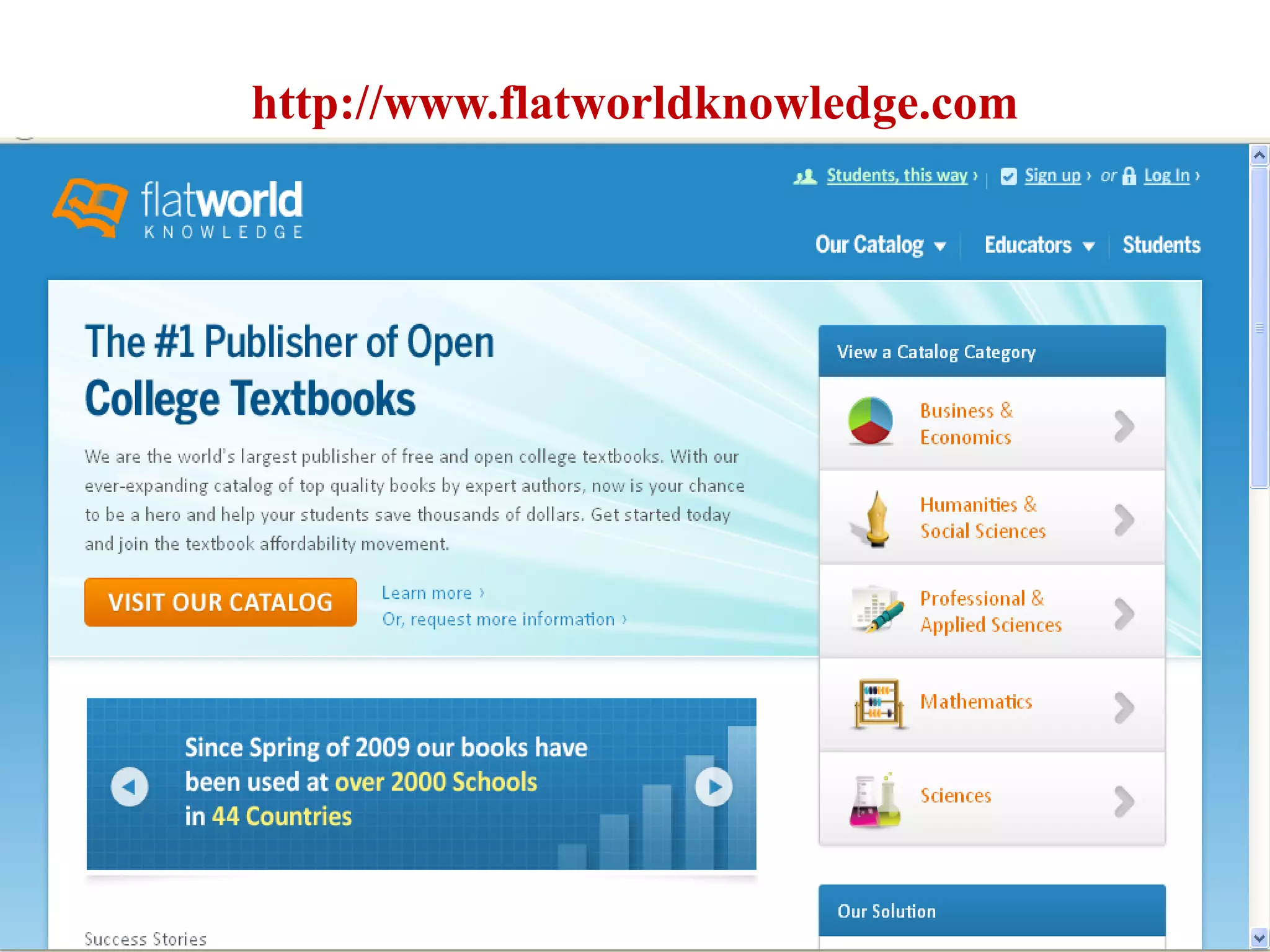
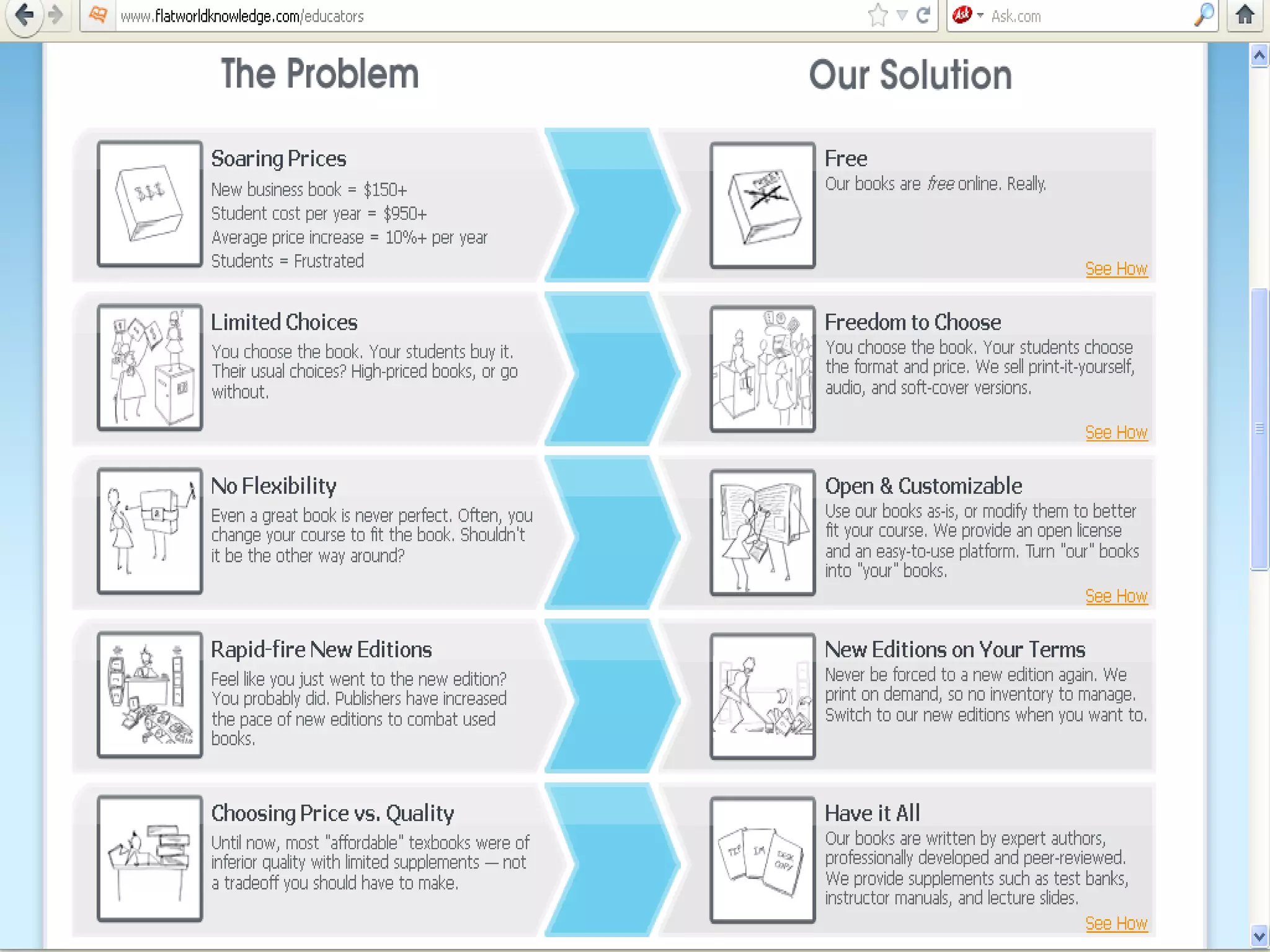
http://www.flatworldknowledge.com
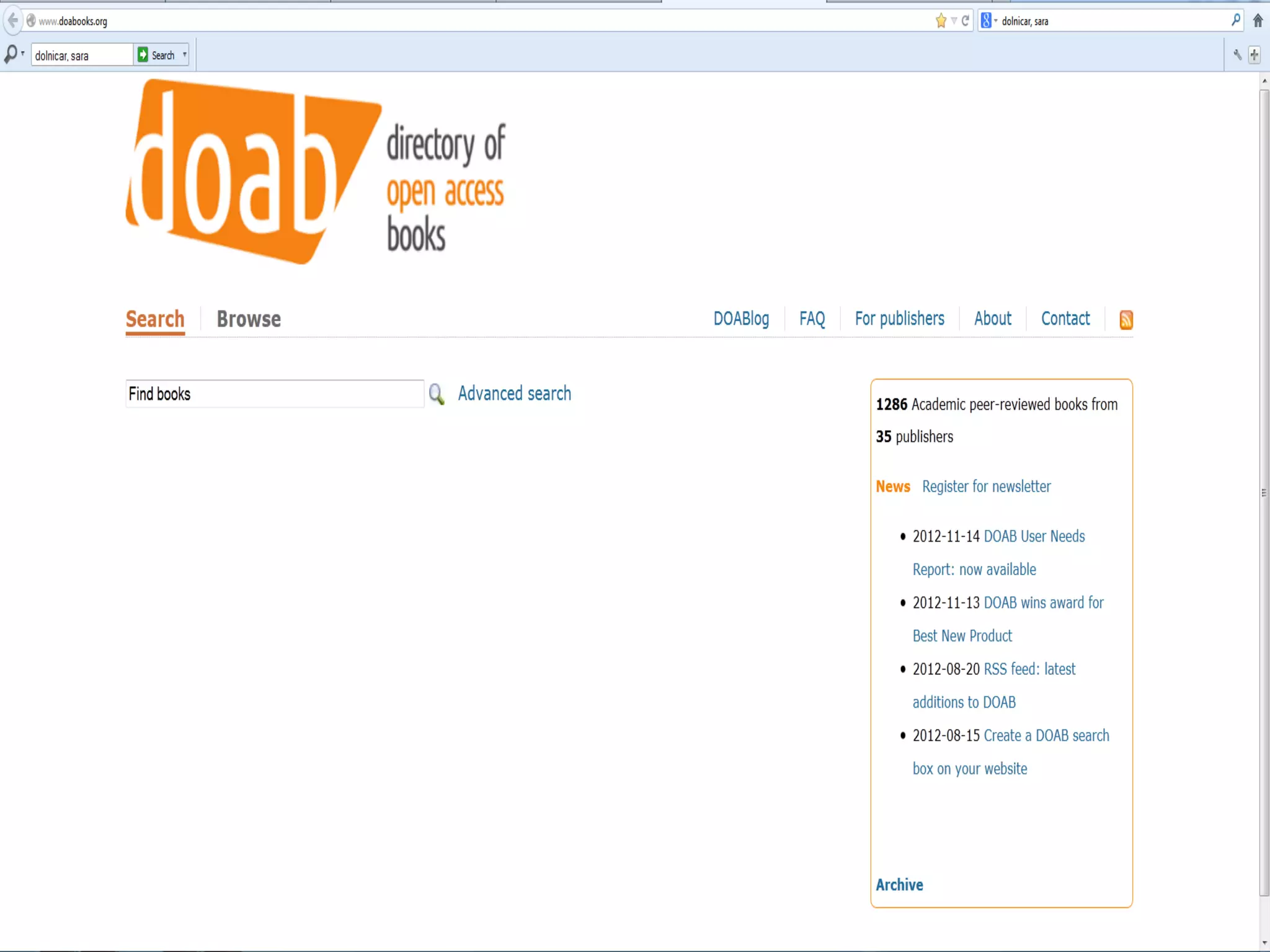
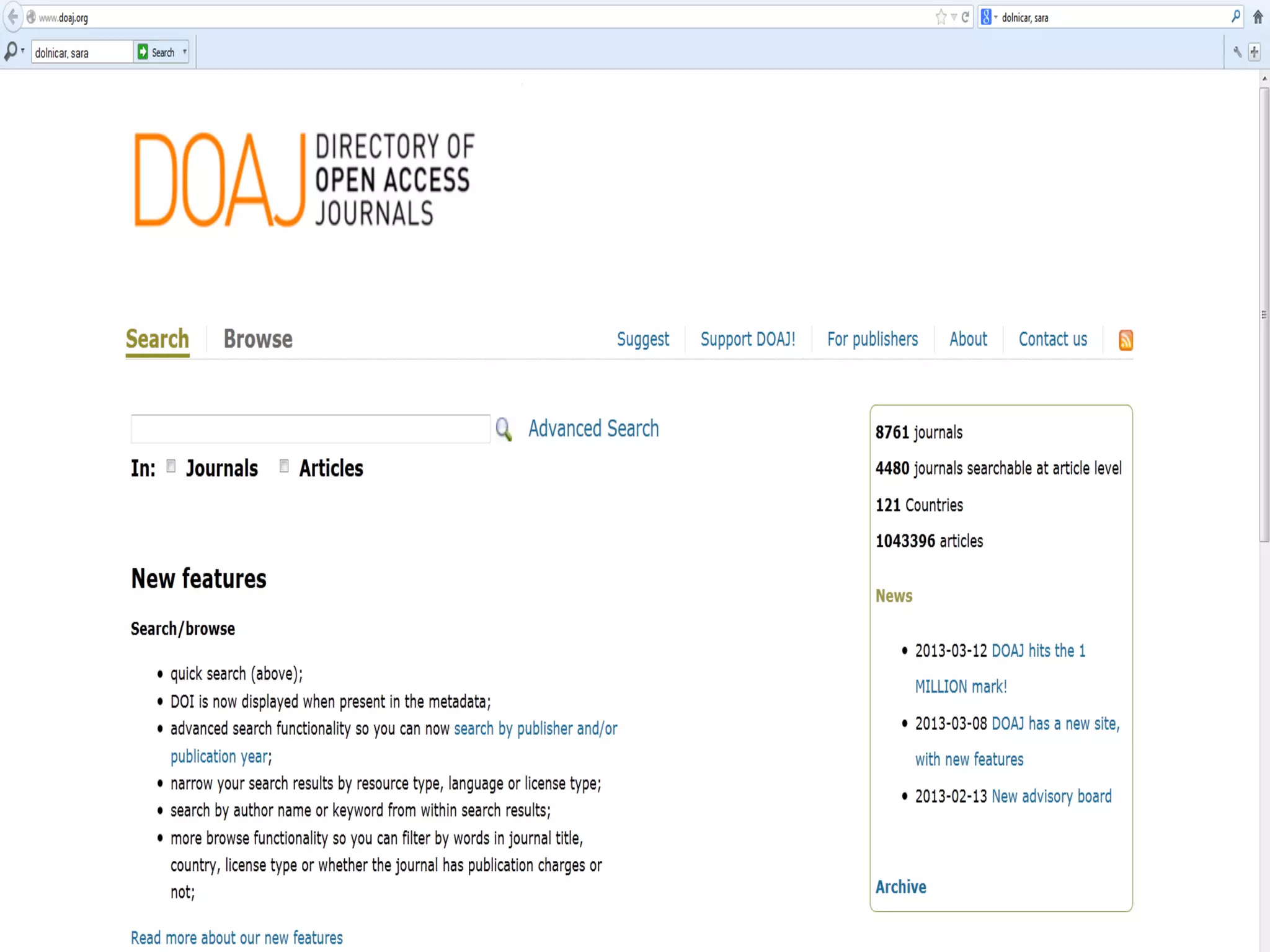
DOAJ AS OF TODAY
http://databib.org/
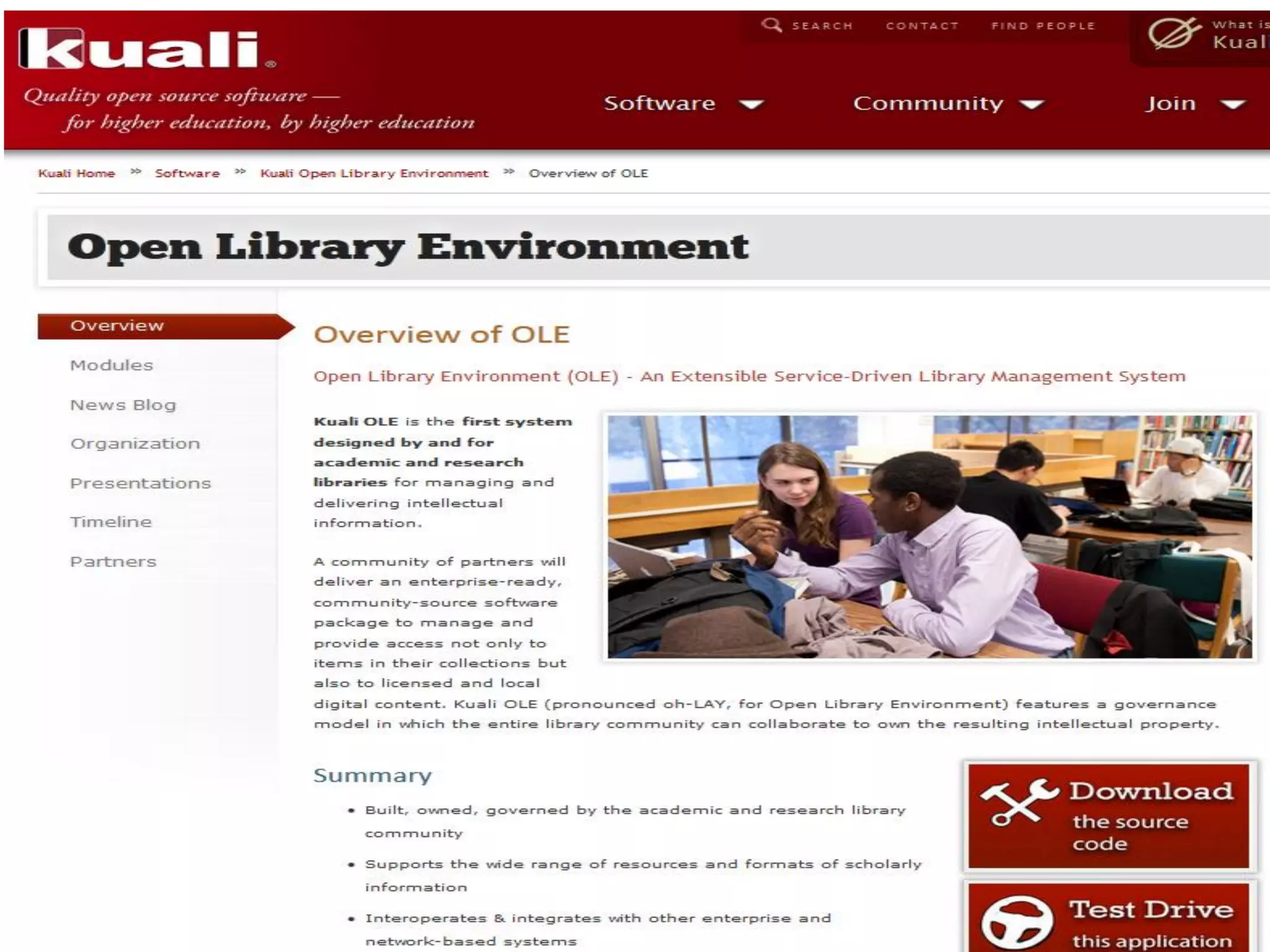
http://kuali.org
http://www.extensiblecatalog.org/
THANK YOU!
anilkumar@iimahd.ernet.in

Emerging Trends in Librarianship

  • 1.
    Emerging perspectives in librarianship H.Anil Kumar Librarian Indian Institute of Management Ahmedabad April 12, 2013
  • 2.
    Outline • India andhigher education • Higher education trends • Why do we need the libraries? • Trends in librarianship • Free / open resources
  • 3.
    India –population trend 2010 2030 2050 Figures:United Nations (2009) Source: Population Dynamics in India and Implications for Economic Growth by David E. Bloom (2011 ) PGDA Working Paper No. 65 http://www.hsph.harvard.edu/pgda/working.htm
  • 4.
    Government Initiatives inEducation • Improve Access – More institutions – Improve infrastructure – E-learning – Improve GER • Improve quality – Entry - admissions – Experience • Design - curriculum • Delivery – pedagogy • Choice based credits • Teacher training • Learning materials – Evaluation • Learning focus • Application orientation • Grades vs marks
  • 5.
    U21 Ranking ofNational Higher Education Systems A project sponsored by Universitas 21 University of Melbourne, May 2012
  • 6.
  • 7.
    Universities, ours andtheirs Krishna Kumar (in The Hindu, August 9, 2012) • Recruitment of faculty • Concept of teaching (periods) • Concept of knowledge – research • Library • The fourth critical difference lies in the library. In the West, even in the most ordinary universities, the library forms the centre of life, both for teachers and students. Librarians enjoy a high status as their contribution to academic life cuts across academic disciplines…..
  • 8.
    Emerging Landscape ofHigher Education • The abundance of resources and relationships made easily accessible via the Internet is increasingly challenging us to revisit our roles as educators. • Both formal and informal learning experiences are becoming increasingly important as college graduates continue to face a highly competitive workforce. • Education paradigms are shifting to include online learning, hybrid learning and collaborative models. • Massively open online courses are proliferating. • Open is a key trend in future education and publication, specifically in terms of open content, open educational resources, massively open online courses, and open access. Johnson et al : The NMC Horizon Report: 2013 Higher Education Edition
  • 9.
    - The abundanceof resources and relationships - easily accessible via the Internet - revisit our roles as educators • Institutions must consider the unique value that each adds to a world in which information is everywhere. In such a world, sense-making and the ability to assess the credibility of information are paramount. • Universities have always been seen as the gold standard for educational credentialing, but emerging certification programs from other sources are eroding the value of that mission daily.
  • 12.
    • Michael Ellsberg •The author of The Education of Millionaires: It’s Not What You Think and It’s Not Too Late. • He spent two years interviewing the nation’s most successful people who didn’t graduate college, and who instead majored in street smarts Read more: http://business.time.com/2012/07/12/t he-glorious-end-of-higher-educations- monopoly-on- credibility/#ixzz2D8AMYSQt
  • 13.
    Academically Adrift: LimitedLearning on College Campuses by Richard Arum and Josipa Roksa • in short supply — is learning that is academic rather than consumerist or market-driven. • a majority of students surveyed said “that they had not taken a single course . . . that required more than twenty pages of writing, and one third had not taken one that required even forty pages of reading per week”
  • 14.
    Learning and education •Formal methods – Classroom training – Laboratory training – On the job or apprenticeship • Non-formal methods – Self-study and Reading – Watching, seeing and trying • Sources – Institutes / schools / industries / employers – Libraries and laboratories – Internet
  • 15.
    Why go beyondformal methods? • The 95 Percent Solution: School is not where most Americans learn most of their science by John H. Falk and Lynn D. Dierking • Recent findings challenge the longstanding belief that the place for science knowledge acquisition is the classroom. • International comparisons of trends in science knowledge over lifetimes suggests that much if not most science knowledge is acquired outside of school. American Scientist: v. 98 (Nov-Dec), 2010
  • 16.
    The 95 PercentSolution School is not where most Americans learn most of their science John H. Falk and Lynn D. Dierking American Scientist, Volume 98 (Nov-Dec, 2010)
  • 18.
    Hole in thewall Self-Organized Learning Environments (SOLEs)
  • 19.
    Technology Advantages • Learnat your own pace and interest • Supplement learning in the classroom • Less dependency on formal support • Explore new ways of learning • Variety and wide range of topics
  • 20.
    Internet in India2012, IAMAI
  • 21.
    Internet in India2012, IAMAI
  • 22.
  • 23.
    Management of Libraries UsersCollection Staff Resources Understand and service the needs of users – faculty, students and researchers Focus
  • 24.
    Managing Users Needs •Faculty, researchers and students – Identifying and seeking continuously – Designing, delivering and managing services – Matching or facilitating access – Continuous Interaction
  • 25.
    Managing Collection • Collection –Identify and Seek – Capture, Acquire and Access – Retrieve and Communicate – Manage and Monitor FOCUS ON USER NEEDS
  • 26.
    Collection • Traditional Resources –Books – Periodicals – Annual reports – Newspapers • Digital formats – CDs, DVDs, Blu ray disks – Databases – Online resources • Institutional knowledge – Working papers – Thesis – Conference proceedings – Conference / seminar speeches, talks, etc NMC horizon Report 2012 New modes of scholarship are presenting significant challenges for libraries and university collections, how scholarship is documented, and the business models to support these activities. While the university library has traditionally housed collections of scholarly resources, social networks and new publishing paradigms, such as open content, are challenging the library’s role as curator. Students and educators are increasingly able to access important, historic research in web browsers on devices of their choosing. As such, libraries are under tremendous pressure to evolve new ways of supporting and curating scholarship.
  • 27.
    Managing Staff – Understandtheir academic work – Identify and Seek – Recruit and train – Facilitate, Manage and Understand – Interact VALUE TO THE USER
  • 28.
    Looking Beyond TraditionalLibraries • Integration with curriculum and pedagogy • Proactive in nature – topical displays, recommended readings, public lists, etc • Look at the future needs and offer services • Going beyond books – scholarly information, innovative services, etc • A balance of best sellers, text books and must have books • Facilitate a “good library experience” – user focus
  • 29.
    Libraries: Gateways toManaging Internal sources • Student Projects • Syllabus and course design • Technical Notes • Course Materials • Student made Tools/Materials / Models • News Paper Clippings (Jobs/Courses) • Question papers
  • 30.
    Libraries: Gateways toExternal sources • Commercial – Books – Videos / CDs – Online resources • Open Access – Books – Journals – Educational Videos – Educational courseware
  • 31.
    Technologies in Libraries •Library automation packages: Proprietary to OSS • Storage: Devices to Cloud • Identification: Barcode, Tattle-tape, RFID, Biometric, etc • Information capture: Key board, Scanner, Digital Cameras, Mobiles • Network: Client-server, P2P, Internet • Databases: Books, articles, reports, aggregators /publishers, IRs
  • 32.
    Technologies in Libraries •Information retrieval – Simple OPAC to Federated searches to Discovery – Seamless integration of various sources/formats – Remote login / VPN • User need not worry where the information is located • Online Usage statistics • User customized displays • User Identification is simpler and secure
  • 33.
    Technology environment  Technologiesthat will enable the development of Collaboration  Cloud  Peer to Peer (P2P)  Desktop Search  Podcasting  Really Simple Syndication (RSS)  Blogging  Wikis  Users Information environment  Instant messaging  SMS / MMS  Blogs  Social networking sites  Twitter  All of this on the MOBILE!
  • 34.
    The NMC HorizonReports: 2012 and 2013 2012 Near-term Horizon (within 12 months) Mobile apps and Tablets Mid-term Horizon (2-3 years) Game-based learning and Learning analytics Far-term Horizon (4-5 years) Gesture-based computing Internet of Things 2013 Near-term Horizon (within 12 months) Massively Open Online Courses Tablet Computing Mid-term Horizon (2-3 years) Big Data and Learning Analytics Game Based Learning Far-term Horizon (4-5 years) 3D Printing Wearable Technology
  • 35.
    The key is… •User convenience – whether it is … • Book recommendation • Remote login • Federated search and discovery • Access beyond our library - Union catalogue / ILL • The future – Cloud, OSS, OLE, Extensible catalog, etc
  • 36.
    KeyIssuesandopportunities  Staffing ResearchAssistance, Database mining, IL, etc Resource / product understanding Professional managers  Information Literacy  Archiving Institutional Knowledge - Institutional Repositories  Lib 2.0; Long Tail  Open Access; Legal Issues  Space – digital and physical - Reading Space  Outsourcing  IT: ILS, Hardware, Software, SaaS to PaaS  Manpower Routine jobs IT staff  OSS, Remote login and Discovery services, RFID, Ebooks, Ebook readers, etc
  • 37.
    • Online purchaseof books • Legal hosting of resources like videos • Classroom use of library materials: video cases, etc • Photocopying KeyIssuesandopportunities
  • 38.
  • 40.
  • 41.
    NAAC Perspective Criteria UniversityAutonomous College Affiliated/ Constituent College I Curricular Aspects 150 (15) 100 (10) 50 (5) II Teaching-Learning and Evaluation 250 (25) 350 (35) 450 (45) III Research, Consultancy and Extension 200 (20) 150 (15) 100 (10) IV Infrastructure and Learning Resources 100 (10) 100 (10) 100 (10) V Student Support and Progression 100 (10) 100 (10) 100 (10) VI Governance and Leadership 150 (15) 150 (15) 150 (15) VII Innovative practices 50 (5) 50 (5) 50 (5) Total Score 1000 1000 1000
  • 42.
  • 43.
    What tools doesthe library deploy to provide access to the collection? • OPAC, Electronic Resource Management package for e-journals • Federated searching tools to search articles in multiple databases • Library Website • In-house/remote access to e-publications • Library automation • Total number of computers for public access • Total numbers of printers for public access • Internet band width speed 2mbps / 10 mbps / 1 GB • Institutional Repository • Content management system for e-learning • Participation in resource sharing networks/consortia (like INFLIBNET)
  • 44.
    • Average numberof login to OPAC • Average number of login to e-resources • Average number of e-resources downloaded/printed • Number of IT (Information Technology) literacy trainings organized • Assistance in searching Databases • What initiatives has the university taken to make the library a ’happening place’ on campus? • What significant initiatives have been taken by the committee to render the library student/user friendly? NAAC Perspective
  • 45.
    Open / Freeresources
  • 46.
  • 47.
  • 48.
  • 49.
  • 51.
  • 53.
  • 54.
  • 55.
  • 56.
  • 57.
  • 61.
  • 62.
  • 63.
  • 66.
  • 67.