EMERGING CONTAMINANTS
And
PRECAUTIONARY PRINCIPLE
Marcello MossaVerre DG
Guido Spinelli DT
Michele Mazzetti
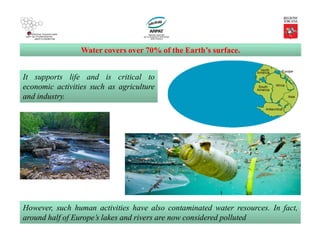
Water covers over 70% of the Earth’s surface.
However, such human activities have also contaminated water resources. In fact,
around half of Europe’s lakes and rivers are now considered polluted
It supports life and is critical to
economic activities such as agriculture
and industry.
3
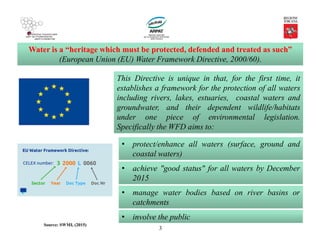
Water is a “heritage which must be protected, defended and treated as such”
(European Union (EU) Water Framework Directive, 2000/60).
This Directive is unique in that, for the first time, it
establishes a framework for the protection of all waters
including rivers, lakes, estuaries, coastal waters and
groundwater, and their dependent wildlife/habitats
under one piece of environmental legislation.
Specifically the WFD aims to:
(Source: SWMI, (2015)
• protect/enhance all waters (surface, ground and
coastal waters)
• achieve "good status" for all waters by December
2015
• manage water bodies based on river basins or
catchments
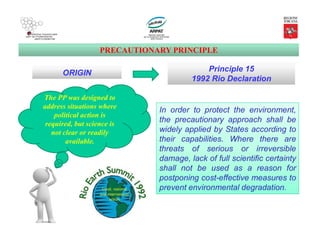
• involve the public
4
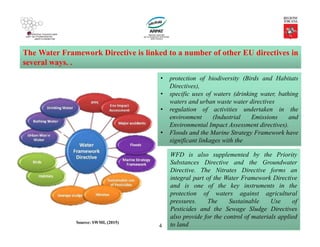
The Water Framework Directive is linked to a number of other EU directives in
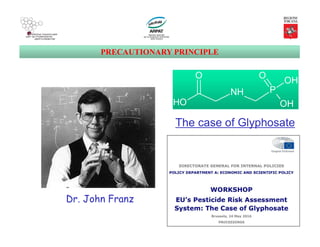
several ways. .
• protection of biodiversity (Birds and Habitats
Directives),
• specific uses of waters (drinking water, bathing
waters and urban waste water directives
• regulation of activities undertaken in the
environment (Industrial Emissions and
Environmental Impact Assessment directives).
• Floods and the Marine Strategy Framework have
significant linkages with the
(Source: SWMI, (2015)
WFD is also supplemented by the Priority
Substances Directive and the Groundwater
Directive. The Nitrates Directive forms an
integral part of the Water Framework Directive
and is one of the key instruments in the
protection of waters against agricultural
pressures. The Sustainable Use of
Pesticides and the Sewage Sludge Directives
also provide for the control of materials applied
to land
5
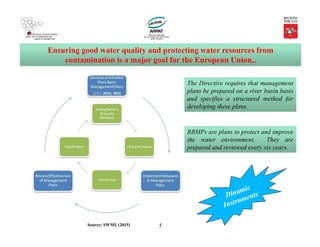
Ensuring good water quality and protecting water resources from
contamination is a major goal for the European Union..
The Directive requires that management
plans be prepared on a river basin basis
and specifies a structured method for
developing these plans.
(Source: SWMI, 2015)
RBMPs are plans to protect and improve
the water environment. They are
prepared and reviewed every six years.
(Source: SWMI, (2015)
6
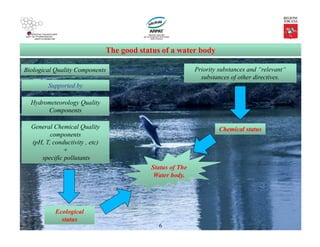
The good status of a water body
Priority substances and “relevant“
substances of other directives.
Hydrometeorology Quality
Components
Biological Quality Components
Supported by
General Chemical Quality
components
(pH, T, conductivity , etc)
+
specific pollutants
Ecological
status
Chemical status
Status of The
Water body.
7
Priority Substances and Certain Other Pollutants
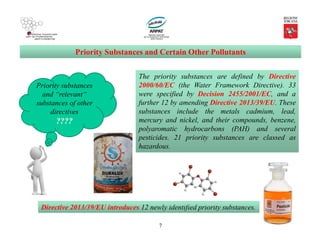
Priority substances
and “relevant“
substances of other
directives
????
The priority substances are defined by Directive
2000/60/EC (the Water Framework Directive). 33
were specified by Decision 2455/2001/EC, and a
further 12 by amending Directive 2013/39/EU. These
substances include the metals cadmium, lead,
mercury and nickel, and their compounds, benzene,
polyaromatic hydrocarbons (PAH) and several
pesticides. 21 priority substances are classed as
hazardous.
Directive 2013/39/EU introduces 12 newly identified priority substances.
8
Priority Substances and Certain Other Pollutants
Are there limits of
concentration of
these substances
????
In Directive 2008/105/EC are fixed the limits on the
concentration of the priority substances and eight other
pollutants in water (or biota), so called EQS, i.e. thresholds
which must not be exceeded if good chemical status is to be
met. Two types of water standard are proposed:
• A threshold for the average concentration of the
substance concerned calculated from measurements
over a one-year period. The purpose of this standard is
to ensure protection against long-term exposure to
pollutants in the aquatic environment;
• A maximum allowable concentration of the substance
concerned, i.e. the maximum for any single
measurement. The purpose of this standard is to ensure
protection against short-term exposure, i.e. pollution
peaks.
• Acute toxicological data (LC50, EC50)
• Chronic toxicological data (NOEC, EC10)
• Base set = 3 trophic levels (daphnia magna,
fish, algae)
• Deterministic and probabilistic method
based on the number and variety of data
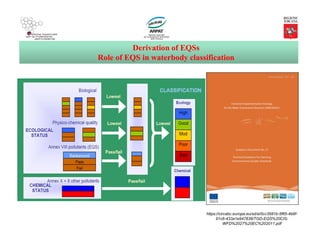
Derivation of EQSs
Calculation of AA-EQS and MAC-EQS for surface waters
Two main approaches are possible, the deterministic and
probabilistic methods. Essentially the deterministic
approach takes the lowest credible toxicity datum and
applies an AF (which may be as low as 1 or has high as
10000) to extrapolate to a QS, the AF allowing for the
uncertainties in the available data. Probabilistic
methods adopt species sensitivity distribution (SSD)
modelling in which all reliable toxicity (usually NOEC)
data are ranked and a model fitted. From this, the
concentration protection a certain proportion of species
(typically 95%) can be estimated (the HC5).
https://circabc.europa.eu/sd/a/0cc3581b-5f65-4b6f-
91c6-433a1e947838/TGD-EQS%20CIS-
WFD%2027%20EC%202011.pdf
Derivation of EQSs
Role of EQS in waterbody classification
https://circabc.europa.eu/sd/a/0cc3581b-5f65-4b6f-
91c6-433a1e947838/TGD-EQS%20CIS-
WFD%2027%20EC%202011.pdf
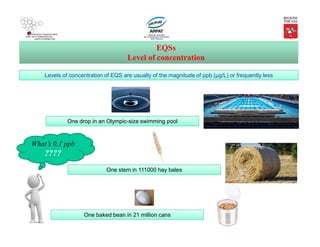
EQSs
Level of concentration
One drop in an Olympic-size swimming pool
One stem in 111000 hay bales
One baked bean in 21 million cans
Levels of concentration of EQS are usually of the magnitude of ppb (µg/L) or frequently less
What’s 0.1 ppb
????
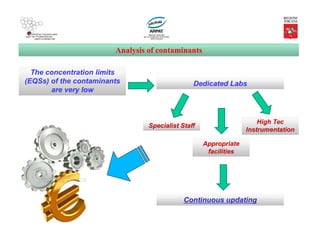
Analysis of contaminants
The concentration limits
(EQSs) of the contaminants
are very low
Dedicated Labs
Specialist Staff
Appropriate
facilities
High Tec
Instrumentation
Continuous updating
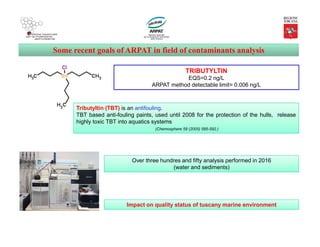
Some recent goals of ARPAT in field of contaminants analysis
TRIBUTYLTIN
EQS=0.2 ng/L
ARPAT method detectable limit= 0.006 ng/L
Tributyltin (TBT) is an antifouling.
TBT based anti-fouling paints, used until 2008 for the protection of the hulls, release
highly toxic TBT into aquatics systems
(Chemosphere 59 (2005) 585-592.)
Over three hundres and fifty analysis performed in 2016
(water and sediments)
Impact on quality status of tuscany marine environment
Some recent goals of ARPAT in field of contaminants analysis
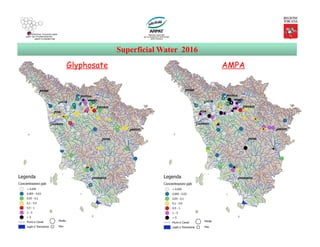
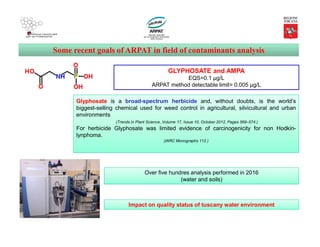
GLYPHOSATE and AMPA
EQS=0.1 µg/L
ARPAT method detectable limit= 0.005 µg/L
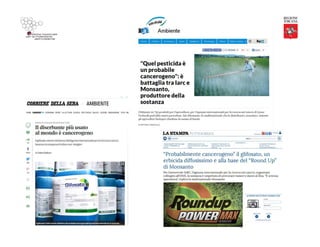
Glyphosate is a broad-spectrum herbicide and, without doubts, is the world’s
biggest-selling chemical used for weed control in agricultural, silvicultural and urban
environments
(Trends in Plant Science, Volume 17, Issue 10, October 2012, Pages 569–574.)
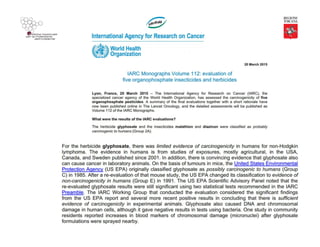
For herbicide Glyphosate was limited evidence of carcinogenicity for non Hodkin-
lynphoma.
(IARC Monographs 112 )
Over five hundres analysis performed in 2016
(water and soils)
Impact on quality status of tuscany water environment
Some recent goals of ARPAT in field of contaminants analysis
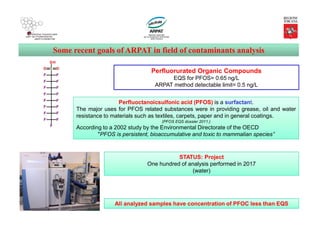
Perfluorurated Organic Compounds
EQS for PFOS= 0.65 ng/L
ARPAT method detectable limit= 0.5 ng/L
Perfluoctanoicsulfonic acid (PFOS) is a surfactant.
The major uses for PFOS related substances were in providing grease, oil and water
resistance to materials such as textiles, carpets, paper and in general coatings.
(PFOS EQS dossier 2011.)
According to a 2002 study by the Environmental Directorate of the OECD
"PFOS is persistent, bioaccumulative and toxic to mammalian species”
STATUS: Project
One hundred of analysis performed in 2017
(water)
All analyzed samples have concentration of PFOC less than EQS
16
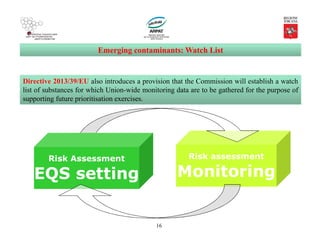
Emerging contaminants: Watch List
Directive 2013/39/EU also introduces a provision that the Commission will establish a watch
list of substances for which Union-wide monitoring data are to be gathered for the purpose of
supporting future prioritisation exercises.
Risk assessment
Monitoring
Risk Assessment
EQS setting
17
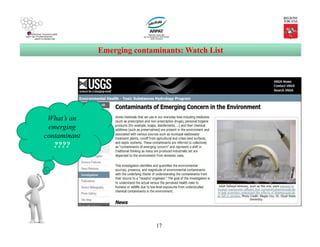
Emerging contaminants: Watch List
What’s an
emerging
contaminant
????
18
Emerging contaminants: Watch List
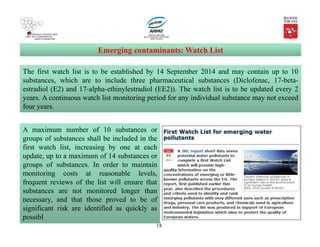
The first watch list is to be established by 14 September 2014 and may contain up to 10
substances, which are to include three pharmaceutical substances (Diclofenac, 17-beta-
estradiol (E2) and 17-alpha-ethinylestradiol (EE2)). The watch list is to be updated every 2
years. A continuous watch list monitoring period for any individual substance may not exceed
four years.
A maximum number of 10 substances or
groups of substances shall be included in the
first watch list, increasing by one at each
update, up to a maximum of 14 substances or
groups of substances. In order to maintain
monitoring costs at reasonable levels,
frequent reviews of the list will ensure that
substances are not monitored longer than
necessary, and that those proved to be of
significant risk are identified as quickly as
possibl
19
Emerging Polluttants: Watch List
Watch List
????
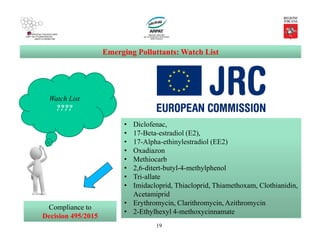
• Diclofenac,
• 17-Beta-estradiol (E2),
• 17-Alpha-ethinylestradiol (EE2)
• Oxadiazon
• Methiocarb
• 2,6-ditert-butyl-4-methylphenol
• Tri-allate
• Imidacloprid, Thiacloprid, Thiamethoxam, Clothianidin,
Acetamiprid
• Erythromycin, Clarithromycin, Azithromycin
• 2-Ethylhexyl 4-methoxycinnamate
Compliance to
Decision 495/2015
20
Emerging contaminants: Watch List
{2-[(2,6-Dichlorophenyl)amino]phenyl}acetic acid
DICLOFENAC
{2-[(2,6-Dichlorophenyl)amino]phenyl}acetic acid
Diclofenac is a widely used pharmaceutical that was reported as the
causal agent of outbreaks in populations of three species of vultures
(Gyps bengalensis, Gyps indicus, and Gyps tenuirostris), that have
declined by more than 97 % and are now classified as critically
endangered .
This example might will be the worst ever case of poisoning of wildlife
by a chemical (Sumpter, 2010).
The most direct entry of diclofenac to aquatic environments is through discharges of sewage treatment plants
(STPs) effluents.
Removal rates in STPs are highly variable (between 0-80%) (Jiskra, 2008)
The two major sinks identified for diclofenac are photodegradation and biodegradation (Santos et. Al 2010)
PEC
(µg/L)
MEC (µg/L) PNEC
(µg/L)
PEC/PNEC
0.05 0.08-1.4 0.01 5
A risk is expected because
PEC/PNEC > 1
Advanced oxidation processes
by means of combining
different highly oxidizing
agents, such as H2O2/ozone or
UV/ozone, can provide the best
removal rate for diclofenac
(99,9%).
21
Emerging contaminants: Watch List
{2-[(2,6-Dichlorophenyl)amino]phenyl}acetic acid
17-Beta-estradiol
(8R,9S,13S,14S,17S)-13-Methyl-7,8,9,11,12,13,14,15,16,17-decahydro-6H-cyclopenta[a]phenanthren-3,17-diol
Natural Hormone
Ethinylestradiol
(8R,9S,13S,14S,17R)-17-Ethinyl-13-methyl-7,8,9,11,12,13,14,15,16,17-decahydro-6H-cyclopenta[a]phenanthren-3,17-diol
Synthetic Hormone
Active substance in contraceptive pills
What are endocrine disruptors?
"An endocrine disruptor is an exogenous substance or
mixture that alters function(s) of the endocrine system
and consequently causes adverse health effects in an
intact organism, or its progeny, or (sub)populations"
ENDOCRINE DISRUPTORS
22
Emerging contaminants: Watch List
{2-[(2,6-Dichlorophenyl)amino]phenyl}acetic acid
OXADIAZON
{-(2,4-Dichloro-5-(1-methylethoxy)phenyl)-5-(1,1-dimethylethyl)-1,3,4-oxadiazol-2(3H)-one (9CI)
Oxadiazon is an oxadiazole herbicide used for pre-emergent control of grasses,
broadleaves, vines, brambles, bushes, and trees.
Oxadiazon inhibits the plant enzyme protoporphyrinogen oxidase.
Effect on soil fertility (beneficial soil microorganisms)
Reduction of the number of mycorrhizal
fungal spores
(Moorman, 1989)
Aquatic Non-target organisms
In one study, oxadiazon was found to
severely reduce algae growth.
(Ambrosi et al., 1978).
Non-target organisms
The herbicide oxadiazon is also toxic to
bees, which are pollinators.
(Washington State Department of Transportation, 1993).
Interdisc Toxicol. 2009; Vol. 2(1): 1–12.
23
Emerging contaminants: Watch List
{2-[(2,6-Dichlorophenyl)amino]phenyl}acetic acid
METHIOCARB
3,5-Dimethyl-4-(methylsulfanyl)phenyl methylcarbamate
Methiocarb is an acaricides (carbamate acaricides), bird repellents, insecticides
(phenyl methylcarbamate insecticides)
(http://www.alanwood.net/pesticides/index_cn_frame.html)
Hazards to non-target invertebrates
Formulated methiocarb has been found to
be toxic to a wide range of polyphagous
predators
Hazards to aquatic non-target organisms
Aquatic invertebrates appear to be more
sensitive to methiocarb than fish with
acute toxicity (96h-LC50) ranging between
0.0054 and 8.8 mg/L for a range of
species
(Marking and Chandler, 1981).
A. M.Giacomello et al. Centre for Ecology and Hydrology, Wallingford 2006
24
Emerging contaminants: Watch List
{2-[(2,6-Dichlorophenyl)amino]phenyl}acetic acid
2,6-DITERT-BUTYL-4-METHYLPHENOL
Butylated hydroxytoluene (BHT)
BHT is an antioxidant.
European and U.S. regulations allow small amounts to be used as a food
additive (E321) . In addition to this use, BHT is widely used to prevent oxidation
in fluids (e.g. fuel, oil) and other materials where free radicals must be
controlled.
(other informations in EFSA Journal 2012;10(3):2588
Triallate is an herbicides (thiocarbamate herbicides)
(http://www.alanwood.net/pesticides/index_cn_frame.html)
TRIALLATE
S-2,3,3-trichloroallyl diisopropyl(thiocarbamate)
Based on the available studies, tri-allate was considered very toxic to aquatic organisms.
25
Emerging contaminants: Watch List
{2-[(2,6-Dichlorophenyl)amino]phenyl}acetic acid
Imidacloprid, Thiacloprid, Thiamethoxam, Clothianidin, Acetamiprid
NEONICOTINOIDS INSECTICIDES
Example: Imidacloprid (E)-1-(6-chloro-3-pyridylmethyl)-N-nitroimidazolidin-2-
ylideneamine is an insecticide (nitroguanidine neonicotinoid insecticides;
pyridylmethylamine neonicotinoid insecticides)
(http://www.alanwood.net/pesticides/index_cn_frame.html)
Hazards to honeybees
Synergism in honeybees has also been reported with
neonicotinoids when combined with EBI fungicides
(ergosterol biosynthesis inhibitors) (Iwasa et al. 2004).
In one example, the toxicity of thiachloprid was reported to
have increased by up to several hundred-fold in the
presence of an EBI.
C. Walker “Ecotoxicology” 2014 by Taylor & Francis Group, LLC
Honeybees sub lethal effects
This type of insecticide is neurotoxic, and it is well
documented that they can have sublethal effects on bees,
including effects upon behavior (Thompson 2003).
Wagtail dance and navigation are negatively influenced
(Henry et al. 2012)
ARPAT: Over one thousand of analysis performed in 2016
(water)
26
Emerging contaminants: Watch List
{2-[(2,6-Dichlorophenyl)amino]phenyl}acetic acid
Erythromycin, Clarithromycin, Azithromycin
MACROLIDES ANTIBIOTICS
Example: Erythromycin is an antibiotic useful for the treatment of a number of
bacterial infections
27
Emerging contaminants: Watch List
{2-[(2,6-Dichlorophenyl)amino]phenyl}acetic acid
2-ETHYLHEXYL-4-METHOXYCINNAMATE
2-Ethylhexyl 4-methoxycinnamate is used as a light stabiliser in plastics (Ashford 1994), and as a UV-filter in a
wide variety of cosmetic products including sun-care, skin-care and hair-care products (Household Products
Database)
2-Ethylhexyl 4-methoxycinnamate is unlikely to meet the
EU PBT or vPvB criteria since it is predicted to be readily
biodegradable.
It should be noted, however, that the substance appears to
meet the bioaccumulative, very bioaccumulative and toxic
screening criteria (based on predicted data).
Based on this analysis, ethylhexyl ethoxycinnamate is a high
priority for further work
“UV-filters in cosmetics –prioritisation for environmental assessment”,
Environment Agency December 2008, www.environment-agency.gov.uk
Journal of Investigative Dermatology
Volume 113, Issue 4, October 1999, Pages 547-553
PRECAUTIONARY PRINCIPLE
ORIGIN Principle 15
1992 Rio Declaration
In order to protect the environment,
the precautionary approach shall be
widely applied by States according to
their capabilities. Where there are
threats of serious or irreversible
damage, lack of full scientific certainty
shall not be used as a reason for
postponing cost-effective measures to
prevent environmental degradation.
The PP was designed to
address situations where
political action is
required, but science is
not clear or readily
available.
PRECAUTIONARY PRINCIPLE
European
Union
Point 2
Union policy on the environment shall
aim at a high level of protection taking
into account the diversity of situations
in the various regions of the Union. It
shall be based on the precautionary
principle and on the principles that
preventive action should be taken,
that environmental damage should as
a priority be rectified at source and
that the polluter should pay
Article 174
Amsterdam Treaty
Article 130 R
Maastricht Treaty
Article 191
Treaty on the Functioning of the
European Union
PRECAUTIONARY PRINCIPLE
European
Union
Communication
(COM(2000) 1final)
on the precautionary principle
WHAT IS THE AIM
OF THE
COMMUNICATION?
• It explains the precautionary principle which
enables a rapid response to be given in the face
of a possible danger to human, animal or plant
health, or to protect the environment.
• In particular, where scientific data do not permit
a complete evaluation of the risk, recourse to
this principle may, for example, be used to stop
distribution or order withdrawal from the market
of products likely to be hazardous.
• It establishes common guidelines on the
application of the precautionary principle.
PRECAUTIONARY PRINCIPLE
O
OH
NH P
OH
O
OH
O
OH
NH P
OH
O
OH
The case of Glyphosate
Dr. John Franz
[
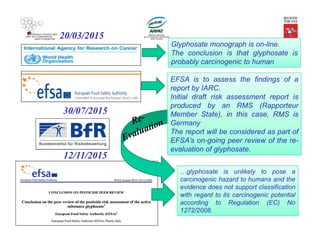
20/03/201520/03/2015
Glyphosate monograph is on-line.
The conclusion is that glyphosate is
probably carcinogenic to human
EFSA is to assess the findings of a
report by IARC.
Initial draft risk assessment report is
produced by an RMS (Rapporteur
Member State), in this case, RMS is
Germany
The report will be considered as part of
EFSA’s on-going peer review of the re-
evaluation of glyphosate.
…glyphosate is unlikely to pose a
carcinogenic hazard to humans and the
evidence does not support classification
with regard to its carcinogenic potential
according to Regulation (EC) No
1272/2008.
12/11/2015
30/07/201530/07/2015
12/11/201512/11/2015
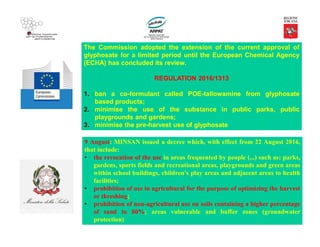
The Commission adopted the extension of the current approval of
glyphosate for a limited period until the European Chemical Agency
(ECHA) has concluded its review.
REGULATION 2016/1313
1. ban a co-formulant called POE-tallowamine from glyphosate
based products;
2. minimise the use of the substance in public parks, public
playgrounds and gardens;
3. minimise the pre-harvest use of glyphosate
9 August: MINSAN issued a decree which, with effect from 22 August 2016,
that include:
• the revocation of the use in areas frequented by people (...) such as: parks,
gardens, sports fields and recreational areas, playgrounds and green areas
within school buildings, children's play areas and adjacent areas to health
facilities;
• prohibition of use in agricultural for the purpose of optimizing the harvest
or threshing;
• prohibition of non-agricultural use on soils containing a higher percentage
of sand to 80%; areas vulnerable and buffer zones (groundwater
protection)
http://europa.eu/rapid/press
-release_MEMO-16-
2012_en.htm
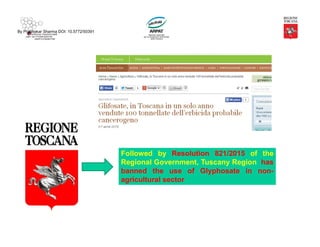
By Prabhakar Sharma DOI: 10.5772/50391
Followed by Resolution 821/2015 of the
Regional Government, Tuscany Region has
banned the use of Glyphosate in non-
agricultural sector
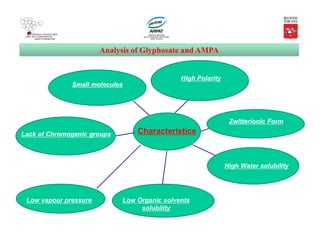
Analysis of Glyphosate and AMPA
Characteristics
Small molecules
High Polarity
Zwitterionic Form
High Water solubility
Low Organic solvents
solubility
Lack of Chromogenic groups
Low vapour pressure
AMPA
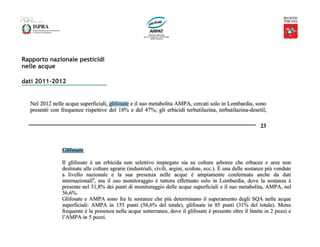
Superficial Water 2016
Glyphosate
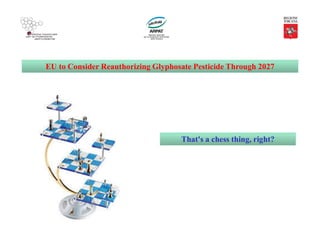
EU to Consider Reauthorizing Glyphosate Pesticide Through 2027
That's a chess thing, right?
Thanks

Emerging contaminants and precautionary principle

  • 1.
    EMERGING CONTAMINANTS And PRECAUTIONARY PRINCIPLE MarcelloMossaVerre DG Guido Spinelli DT Michele Mazzetti
  • 2.
    Water covers over70% of the Earth’s surface. However, such human activities have also contaminated water resources. In fact, around half of Europe’s lakes and rivers are now considered polluted It supports life and is critical to economic activities such as agriculture and industry.
  • 3.
    3 Water is a“heritage which must be protected, defended and treated as such” (European Union (EU) Water Framework Directive, 2000/60). This Directive is unique in that, for the first time, it establishes a framework for the protection of all waters including rivers, lakes, estuaries, coastal waters and groundwater, and their dependent wildlife/habitats under one piece of environmental legislation. Specifically the WFD aims to: (Source: SWMI, (2015) • protect/enhance all waters (surface, ground and coastal waters) • achieve "good status" for all waters by December 2015 • manage water bodies based on river basins or catchments • involve the public
  • 4.
    4 The Water FrameworkDirective is linked to a number of other EU directives in several ways. . • protection of biodiversity (Birds and Habitats Directives), • specific uses of waters (drinking water, bathing waters and urban waste water directives • regulation of activities undertaken in the environment (Industrial Emissions and Environmental Impact Assessment directives). • Floods and the Marine Strategy Framework have significant linkages with the (Source: SWMI, (2015) WFD is also supplemented by the Priority Substances Directive and the Groundwater Directive. The Nitrates Directive forms an integral part of the Water Framework Directive and is one of the key instruments in the protection of waters against agricultural pressures. The Sustainable Use of Pesticides and the Sewage Sludge Directives also provide for the control of materials applied to land
  • 5.
    5 Ensuring good waterquality and protecting water resources from contamination is a major goal for the European Union.. The Directive requires that management plans be prepared on a river basin basis and specifies a structured method for developing these plans. (Source: SWMI, 2015) RBMPs are plans to protect and improve the water environment. They are prepared and reviewed every six years. (Source: SWMI, (2015)
  • 6.
    6 The good statusof a water body Priority substances and “relevant“ substances of other directives. Hydrometeorology Quality Components Biological Quality Components Supported by General Chemical Quality components (pH, T, conductivity , etc) + specific pollutants Ecological status Chemical status Status of The Water body.
  • 7.
    7 Priority Substances andCertain Other Pollutants Priority substances and “relevant“ substances of other directives ???? The priority substances are defined by Directive 2000/60/EC (the Water Framework Directive). 33 were specified by Decision 2455/2001/EC, and a further 12 by amending Directive 2013/39/EU. These substances include the metals cadmium, lead, mercury and nickel, and their compounds, benzene, polyaromatic hydrocarbons (PAH) and several pesticides. 21 priority substances are classed as hazardous. Directive 2013/39/EU introduces 12 newly identified priority substances.
  • 8.
    8 Priority Substances andCertain Other Pollutants Are there limits of concentration of these substances ???? In Directive 2008/105/EC are fixed the limits on the concentration of the priority substances and eight other pollutants in water (or biota), so called EQS, i.e. thresholds which must not be exceeded if good chemical status is to be met. Two types of water standard are proposed: • A threshold for the average concentration of the substance concerned calculated from measurements over a one-year period. The purpose of this standard is to ensure protection against long-term exposure to pollutants in the aquatic environment; • A maximum allowable concentration of the substance concerned, i.e. the maximum for any single measurement. The purpose of this standard is to ensure protection against short-term exposure, i.e. pollution peaks.
  • 9.
    • Acute toxicologicaldata (LC50, EC50) • Chronic toxicological data (NOEC, EC10) • Base set = 3 trophic levels (daphnia magna, fish, algae) • Deterministic and probabilistic method based on the number and variety of data Derivation of EQSs Calculation of AA-EQS and MAC-EQS for surface waters Two main approaches are possible, the deterministic and probabilistic methods. Essentially the deterministic approach takes the lowest credible toxicity datum and applies an AF (which may be as low as 1 or has high as 10000) to extrapolate to a QS, the AF allowing for the uncertainties in the available data. Probabilistic methods adopt species sensitivity distribution (SSD) modelling in which all reliable toxicity (usually NOEC) data are ranked and a model fitted. From this, the concentration protection a certain proportion of species (typically 95%) can be estimated (the HC5). https://circabc.europa.eu/sd/a/0cc3581b-5f65-4b6f- 91c6-433a1e947838/TGD-EQS%20CIS- WFD%2027%20EC%202011.pdf
  • 10.
    Derivation of EQSs Roleof EQS in waterbody classification https://circabc.europa.eu/sd/a/0cc3581b-5f65-4b6f- 91c6-433a1e947838/TGD-EQS%20CIS- WFD%2027%20EC%202011.pdf
  • 11.
    EQSs Level of concentration Onedrop in an Olympic-size swimming pool One stem in 111000 hay bales One baked bean in 21 million cans Levels of concentration of EQS are usually of the magnitude of ppb (µg/L) or frequently less What’s 0.1 ppb ????
  • 12.
    Analysis of contaminants Theconcentration limits (EQSs) of the contaminants are very low Dedicated Labs Specialist Staff Appropriate facilities High Tec Instrumentation Continuous updating
  • 13.
    Some recent goalsof ARPAT in field of contaminants analysis TRIBUTYLTIN EQS=0.2 ng/L ARPAT method detectable limit= 0.006 ng/L Tributyltin (TBT) is an antifouling. TBT based anti-fouling paints, used until 2008 for the protection of the hulls, release highly toxic TBT into aquatics systems (Chemosphere 59 (2005) 585-592.) Over three hundres and fifty analysis performed in 2016 (water and sediments) Impact on quality status of tuscany marine environment
  • 14.
    Some recent goalsof ARPAT in field of contaminants analysis GLYPHOSATE and AMPA EQS=0.1 µg/L ARPAT method detectable limit= 0.005 µg/L Glyphosate is a broad-spectrum herbicide and, without doubts, is the world’s biggest-selling chemical used for weed control in agricultural, silvicultural and urban environments (Trends in Plant Science, Volume 17, Issue 10, October 2012, Pages 569–574.) For herbicide Glyphosate was limited evidence of carcinogenicity for non Hodkin- lynphoma. (IARC Monographs 112 ) Over five hundres analysis performed in 2016 (water and soils) Impact on quality status of tuscany water environment
  • 15.
    Some recent goalsof ARPAT in field of contaminants analysis Perfluorurated Organic Compounds EQS for PFOS= 0.65 ng/L ARPAT method detectable limit= 0.5 ng/L Perfluoctanoicsulfonic acid (PFOS) is a surfactant. The major uses for PFOS related substances were in providing grease, oil and water resistance to materials such as textiles, carpets, paper and in general coatings. (PFOS EQS dossier 2011.) According to a 2002 study by the Environmental Directorate of the OECD "PFOS is persistent, bioaccumulative and toxic to mammalian species” STATUS: Project One hundred of analysis performed in 2017 (water) All analyzed samples have concentration of PFOC less than EQS
  • 16.
    16 Emerging contaminants: WatchList Directive 2013/39/EU also introduces a provision that the Commission will establish a watch list of substances for which Union-wide monitoring data are to be gathered for the purpose of supporting future prioritisation exercises. Risk assessment Monitoring Risk Assessment EQS setting
  • 17.
    17 Emerging contaminants: WatchList What’s an emerging contaminant ????
  • 18.
    18 Emerging contaminants: WatchList The first watch list is to be established by 14 September 2014 and may contain up to 10 substances, which are to include three pharmaceutical substances (Diclofenac, 17-beta- estradiol (E2) and 17-alpha-ethinylestradiol (EE2)). The watch list is to be updated every 2 years. A continuous watch list monitoring period for any individual substance may not exceed four years. A maximum number of 10 substances or groups of substances shall be included in the first watch list, increasing by one at each update, up to a maximum of 14 substances or groups of substances. In order to maintain monitoring costs at reasonable levels, frequent reviews of the list will ensure that substances are not monitored longer than necessary, and that those proved to be of significant risk are identified as quickly as possibl
  • 19.
    19 Emerging Polluttants: WatchList Watch List ???? • Diclofenac, • 17-Beta-estradiol (E2), • 17-Alpha-ethinylestradiol (EE2) • Oxadiazon • Methiocarb • 2,6-ditert-butyl-4-methylphenol • Tri-allate • Imidacloprid, Thiacloprid, Thiamethoxam, Clothianidin, Acetamiprid • Erythromycin, Clarithromycin, Azithromycin • 2-Ethylhexyl 4-methoxycinnamate Compliance to Decision 495/2015
  • 20.
    20 Emerging contaminants: WatchList {2-[(2,6-Dichlorophenyl)amino]phenyl}acetic acid DICLOFENAC {2-[(2,6-Dichlorophenyl)amino]phenyl}acetic acid Diclofenac is a widely used pharmaceutical that was reported as the causal agent of outbreaks in populations of three species of vultures (Gyps bengalensis, Gyps indicus, and Gyps tenuirostris), that have declined by more than 97 % and are now classified as critically endangered . This example might will be the worst ever case of poisoning of wildlife by a chemical (Sumpter, 2010). The most direct entry of diclofenac to aquatic environments is through discharges of sewage treatment plants (STPs) effluents. Removal rates in STPs are highly variable (between 0-80%) (Jiskra, 2008) The two major sinks identified for diclofenac are photodegradation and biodegradation (Santos et. Al 2010) PEC (µg/L) MEC (µg/L) PNEC (µg/L) PEC/PNEC 0.05 0.08-1.4 0.01 5 A risk is expected because PEC/PNEC > 1 Advanced oxidation processes by means of combining different highly oxidizing agents, such as H2O2/ozone or UV/ozone, can provide the best removal rate for diclofenac (99,9%).
  • 21.
    21 Emerging contaminants: WatchList {2-[(2,6-Dichlorophenyl)amino]phenyl}acetic acid 17-Beta-estradiol (8R,9S,13S,14S,17S)-13-Methyl-7,8,9,11,12,13,14,15,16,17-decahydro-6H-cyclopenta[a]phenanthren-3,17-diol Natural Hormone Ethinylestradiol (8R,9S,13S,14S,17R)-17-Ethinyl-13-methyl-7,8,9,11,12,13,14,15,16,17-decahydro-6H-cyclopenta[a]phenanthren-3,17-diol Synthetic Hormone Active substance in contraceptive pills What are endocrine disruptors? "An endocrine disruptor is an exogenous substance or mixture that alters function(s) of the endocrine system and consequently causes adverse health effects in an intact organism, or its progeny, or (sub)populations" ENDOCRINE DISRUPTORS
  • 22.
    22 Emerging contaminants: WatchList {2-[(2,6-Dichlorophenyl)amino]phenyl}acetic acid OXADIAZON {-(2,4-Dichloro-5-(1-methylethoxy)phenyl)-5-(1,1-dimethylethyl)-1,3,4-oxadiazol-2(3H)-one (9CI) Oxadiazon is an oxadiazole herbicide used for pre-emergent control of grasses, broadleaves, vines, brambles, bushes, and trees. Oxadiazon inhibits the plant enzyme protoporphyrinogen oxidase. Effect on soil fertility (beneficial soil microorganisms) Reduction of the number of mycorrhizal fungal spores (Moorman, 1989) Aquatic Non-target organisms In one study, oxadiazon was found to severely reduce algae growth. (Ambrosi et al., 1978). Non-target organisms The herbicide oxadiazon is also toxic to bees, which are pollinators. (Washington State Department of Transportation, 1993). Interdisc Toxicol. 2009; Vol. 2(1): 1–12.
  • 23.
    23 Emerging contaminants: WatchList {2-[(2,6-Dichlorophenyl)amino]phenyl}acetic acid METHIOCARB 3,5-Dimethyl-4-(methylsulfanyl)phenyl methylcarbamate Methiocarb is an acaricides (carbamate acaricides), bird repellents, insecticides (phenyl methylcarbamate insecticides) (http://www.alanwood.net/pesticides/index_cn_frame.html) Hazards to non-target invertebrates Formulated methiocarb has been found to be toxic to a wide range of polyphagous predators Hazards to aquatic non-target organisms Aquatic invertebrates appear to be more sensitive to methiocarb than fish with acute toxicity (96h-LC50) ranging between 0.0054 and 8.8 mg/L for a range of species (Marking and Chandler, 1981). A. M.Giacomello et al. Centre for Ecology and Hydrology, Wallingford 2006
  • 24.
    24 Emerging contaminants: WatchList {2-[(2,6-Dichlorophenyl)amino]phenyl}acetic acid 2,6-DITERT-BUTYL-4-METHYLPHENOL Butylated hydroxytoluene (BHT) BHT is an antioxidant. European and U.S. regulations allow small amounts to be used as a food additive (E321) . In addition to this use, BHT is widely used to prevent oxidation in fluids (e.g. fuel, oil) and other materials where free radicals must be controlled. (other informations in EFSA Journal 2012;10(3):2588 Triallate is an herbicides (thiocarbamate herbicides) (http://www.alanwood.net/pesticides/index_cn_frame.html) TRIALLATE S-2,3,3-trichloroallyl diisopropyl(thiocarbamate) Based on the available studies, tri-allate was considered very toxic to aquatic organisms.
  • 25.
    25 Emerging contaminants: WatchList {2-[(2,6-Dichlorophenyl)amino]phenyl}acetic acid Imidacloprid, Thiacloprid, Thiamethoxam, Clothianidin, Acetamiprid NEONICOTINOIDS INSECTICIDES Example: Imidacloprid (E)-1-(6-chloro-3-pyridylmethyl)-N-nitroimidazolidin-2- ylideneamine is an insecticide (nitroguanidine neonicotinoid insecticides; pyridylmethylamine neonicotinoid insecticides) (http://www.alanwood.net/pesticides/index_cn_frame.html) Hazards to honeybees Synergism in honeybees has also been reported with neonicotinoids when combined with EBI fungicides (ergosterol biosynthesis inhibitors) (Iwasa et al. 2004). In one example, the toxicity of thiachloprid was reported to have increased by up to several hundred-fold in the presence of an EBI. C. Walker “Ecotoxicology” 2014 by Taylor & Francis Group, LLC Honeybees sub lethal effects This type of insecticide is neurotoxic, and it is well documented that they can have sublethal effects on bees, including effects upon behavior (Thompson 2003). Wagtail dance and navigation are negatively influenced (Henry et al. 2012) ARPAT: Over one thousand of analysis performed in 2016 (water)
  • 26.
    26 Emerging contaminants: WatchList {2-[(2,6-Dichlorophenyl)amino]phenyl}acetic acid Erythromycin, Clarithromycin, Azithromycin MACROLIDES ANTIBIOTICS Example: Erythromycin is an antibiotic useful for the treatment of a number of bacterial infections
  • 27.
    27 Emerging contaminants: WatchList {2-[(2,6-Dichlorophenyl)amino]phenyl}acetic acid 2-ETHYLHEXYL-4-METHOXYCINNAMATE 2-Ethylhexyl 4-methoxycinnamate is used as a light stabiliser in plastics (Ashford 1994), and as a UV-filter in a wide variety of cosmetic products including sun-care, skin-care and hair-care products (Household Products Database) 2-Ethylhexyl 4-methoxycinnamate is unlikely to meet the EU PBT or vPvB criteria since it is predicted to be readily biodegradable. It should be noted, however, that the substance appears to meet the bioaccumulative, very bioaccumulative and toxic screening criteria (based on predicted data). Based on this analysis, ethylhexyl ethoxycinnamate is a high priority for further work “UV-filters in cosmetics –prioritisation for environmental assessment”, Environment Agency December 2008, www.environment-agency.gov.uk Journal of Investigative Dermatology Volume 113, Issue 4, October 1999, Pages 547-553
  • 28.
    PRECAUTIONARY PRINCIPLE ORIGIN Principle15 1992 Rio Declaration In order to protect the environment, the precautionary approach shall be widely applied by States according to their capabilities. Where there are threats of serious or irreversible damage, lack of full scientific certainty shall not be used as a reason for postponing cost-effective measures to prevent environmental degradation. The PP was designed to address situations where political action is required, but science is not clear or readily available.
  • 29.
    PRECAUTIONARY PRINCIPLE European Union Point 2 Unionpolicy on the environment shall aim at a high level of protection taking into account the diversity of situations in the various regions of the Union. It shall be based on the precautionary principle and on the principles that preventive action should be taken, that environmental damage should as a priority be rectified at source and that the polluter should pay Article 174 Amsterdam Treaty Article 130 R Maastricht Treaty Article 191 Treaty on the Functioning of the European Union
  • 30.
    PRECAUTIONARY PRINCIPLE European Union Communication (COM(2000) 1final) onthe precautionary principle WHAT IS THE AIM OF THE COMMUNICATION? • It explains the precautionary principle which enables a rapid response to be given in the face of a possible danger to human, animal or plant health, or to protect the environment. • In particular, where scientific data do not permit a complete evaluation of the risk, recourse to this principle may, for example, be used to stop distribution or order withdrawal from the market of products likely to be hazardous. • It establishes common guidelines on the application of the precautionary principle.
  • 31.
    PRECAUTIONARY PRINCIPLE O OH NH P OH O OH O OH NHP OH O OH The case of Glyphosate Dr. John Franz
  • 32.
  • 34.
    20/03/201520/03/2015 Glyphosate monograph ison-line. The conclusion is that glyphosate is probably carcinogenic to human EFSA is to assess the findings of a report by IARC. Initial draft risk assessment report is produced by an RMS (Rapporteur Member State), in this case, RMS is Germany The report will be considered as part of EFSA’s on-going peer review of the re- evaluation of glyphosate. …glyphosate is unlikely to pose a carcinogenic hazard to humans and the evidence does not support classification with regard to its carcinogenic potential according to Regulation (EC) No 1272/2008. 12/11/2015 30/07/201530/07/2015 12/11/201512/11/2015
  • 35.
    The Commission adoptedthe extension of the current approval of glyphosate for a limited period until the European Chemical Agency (ECHA) has concluded its review. REGULATION 2016/1313 1. ban a co-formulant called POE-tallowamine from glyphosate based products; 2. minimise the use of the substance in public parks, public playgrounds and gardens; 3. minimise the pre-harvest use of glyphosate 9 August: MINSAN issued a decree which, with effect from 22 August 2016, that include: • the revocation of the use in areas frequented by people (...) such as: parks, gardens, sports fields and recreational areas, playgrounds and green areas within school buildings, children's play areas and adjacent areas to health facilities; • prohibition of use in agricultural for the purpose of optimizing the harvest or threshing; • prohibition of non-agricultural use on soils containing a higher percentage of sand to 80%; areas vulnerable and buffer zones (groundwater protection) http://europa.eu/rapid/press -release_MEMO-16- 2012_en.htm
  • 36.
    By Prabhakar SharmaDOI: 10.5772/50391 Followed by Resolution 821/2015 of the Regional Government, Tuscany Region has banned the use of Glyphosate in non- agricultural sector
  • 38.
    Analysis of Glyphosateand AMPA Characteristics Small molecules High Polarity Zwitterionic Form High Water solubility Low Organic solvents solubility Lack of Chromogenic groups Low vapour pressure
  • 40.
  • 41.
    EU to ConsiderReauthorizing Glyphosate Pesticide Through 2027 That's a chess thing, right?
  • 42.