TANNY R. MARTEL
Subject Teacher
Explain the major events and its
contribution that led to the
emergence of the social science
disciplines
“Anthropos”
-humankind-
“Logos”
- study -
ANTHROPOLGY
-the study of humanity’s origins,
customs, and beliefs, the holistic
“science of man.” science of the
totality of human existence.
How did it emerge?
ANTHROPOLGY
- it started in Europe during the Era of Imperialism
Imperialism – a season occupying different nations to extend their
glory and their power; a season of colonizing nations.
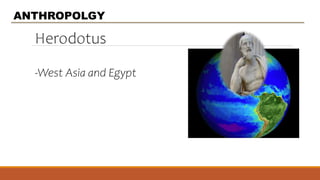
Herodotus
-West Asia and Egypt
ANTHROPOLGY
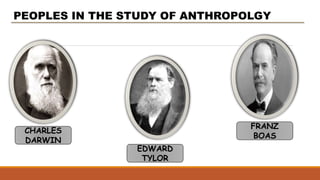
PEOPLES IN THE STUDY OF ANTHROPOLGY
CHARLES
DARWIN
EDWARD
TYLOR
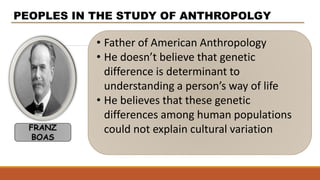
FRANZ
BOAS
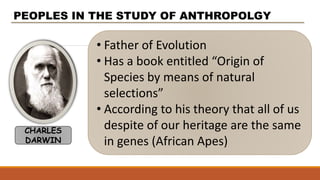
CHARLES
DARWIN
• Father of Evolution
• Has a book entitled “Origin of
Species by means of natural
selections”
• According to his theory that all of us
despite of our heritage are the same
in genes (African Apes)
PEOPLES IN THE STUDY OF ANTHROPOLGY
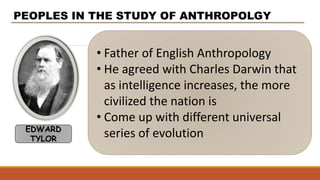
• Father of English Anthropology
• He agreed with Charles Darwin that
as intelligence increases, the more
civilized the nation is
• Come up with different universal
series of evolution
PEOPLES IN THE STUDY OF ANTHROPOLGY
EDWARD
TYLOR
• Father of American Anthropology
• He doesn’t believe that genetic
difference is determinant to
understanding a person’s way of life
• He believes that these genetic
differences among human populations
could not explain cultural variation
PEOPLES IN THE STUDY OF ANTHROPOLGY
FRANZ
BOAS
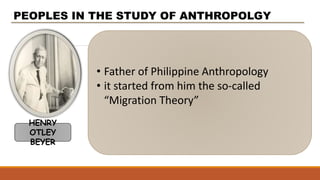
• Father of Philippine Anthropology
• it started from him the so-called
“Migration Theory”
PEOPLES IN THE STUDY OF ANTHROPOLGY
HENRY
OTLEY
BEYER
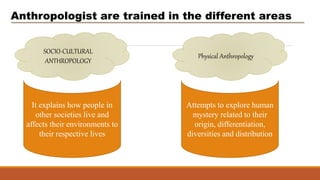
Anthropologist are trained in the different areas
SOCIO-CULTURAL
ANTHROPOLOGY
It explains how people in
other societies live and
affects their environments to
their respective lives
Physical Anthropology
Attempts to explore human
mystery related to their
origin, differentiation,
diversities and distribution
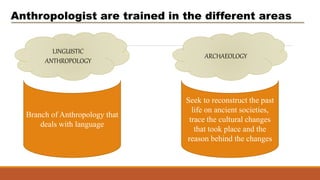
Anthropologist are trained in the different areas
LINGUISTIC
ANTHROPOLOGY
Branch of Anthropology that
deals with language
ARCHAEOLOGY
Seek to reconstruct the past
life on ancient societies,
trace the cultural changes
that took place and the
reason behind the changes
“oikos”
-home-
“nomos”
- management -
ECONOMICS
Analyses the production,
distribution, and consumption of
goods and services
• Father of Economics
• Wrote a book entitled “An Inquiry into
the Nature and Causes of the Wealth of
Nations (1776)
- contributed to the theory of price formation,
the relationship between market outcomes and public
interests, the role of the state in the economy, and the
sources of economic growth.
PEOPLES IN THE STUDY OF ECONOMICS
ADAMS
SMITH
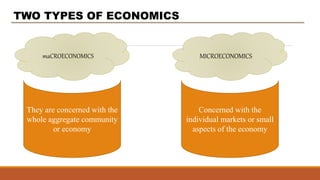
TWO TYPES OF ECONOMICS
maCROECONOMICS
They are concerned with the
whole aggregate community
or economy
MICROECONOMICS
Concerned with the
individual markets or small
aspects of the economy
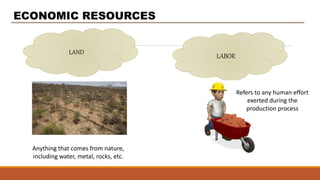
ECONOMIC RESOURCES
LAND
LABOR
Anything that comes from nature,
including water, metal, rocks, etc.
Refers to any human effort
exerted during the
production process
ECONOMIC RESOURCES
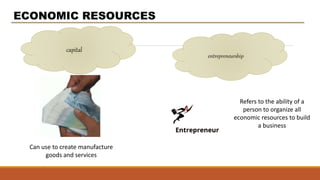
capital
entrepreneurship
Can use to create manufacture
goods and services
Refers to the ability of a
person to organize all
economic resources to build
a business
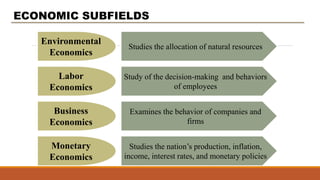
ECONOMIC SUBFIELDS
Environmental
Economics
Studies the allocation of natural resources
Labor
Economics
Study of the decision-making and behaviors
of employees
Business
Economics
Examines the behavior of companies and
firms
Monetary
Economics
Studies the nation’s production, inflation,
income, interest rates, and monetary policies
GEOGRAPHY
Science that deals with the
description, distribution, and
interaction of the diverse
physical, biological, and cultural
features of the earth’s surface
How did it emerge?
GEOGRAPHY
Came from ancient people (nomad) in order for them to
travel back and forth, they crafted or draw a map especially
in a Babylonian era to clearly identifies the location
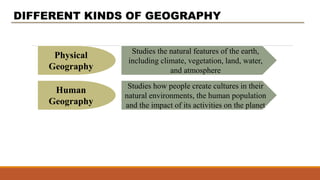
DIFFERENT KINDS OF GEOGRAPHY
Physical
Geography
Studies the natural features of the earth,
including climate, vegetation, land, water,
and atmosphere
Human
Geography
Studies how people create cultures in their
natural environments, the human population
and the impact of its activities on the planet
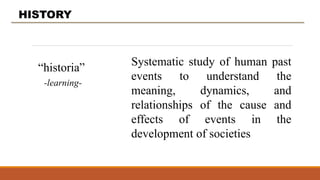
“historia”
-learning-
HISTORY
Systematic study of human past
events to understand the
meaning, dynamics, and
relationships of the cause and
effects of events in the
development of societies
How did it emerge?
HISTORY
Through writing an event
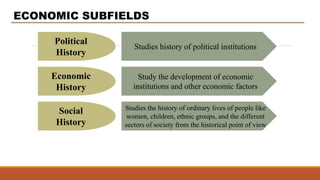
ECONOMIC SUBFIELDS
Political
History
Studies history of political institutions
Economic
History
Study the development of economic
institutions and other economic factors
Social
History
Studies the history of ordinary lives of people like
women, children, ethnic groups, and the different
sectors of society from the historical point of view
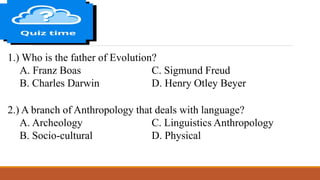
1.) Who is the father of Evolution?
A. Franz Boas C. Sigmund Freud
B. Charles Darwin D. Henry Otley Beyer
2.) A branch of Anthropology that deals with language?
A. Archeology C. Linguistics Anthropology
B. Socio-cultural D. Physical
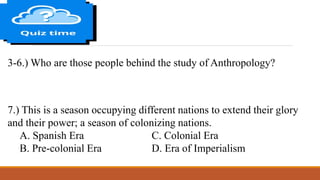
3-6.) Who are those people behind the study of Anthropology?
7.) This is a season occupying different nations to extend their glory
and their power; a season of colonizing nations.
A. Spanish Era C. Colonial Era
B. Pre-colonial Era D. Era of Imperialism
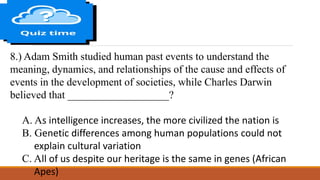
8.) Adam Smith studied human past events to understand the
meaning, dynamics, and relationships of the cause and effects of
events in the development of societies, while Charles Darwin
believed that ___________________?
A. As intelligence increases, the more civilized the nation is
B. Genetic differences among human populations could not
explain cultural variation
C. All of us despite our heritage is the same in genes (African
Apes)
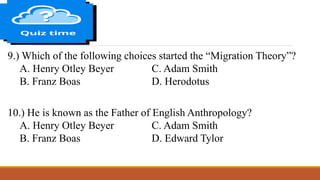
9.) Which of the following choices started the “Migration Theory”?
A. Henry Otley Beyer C. Adam Smith
B. Franz Boas D. Herodotus
10.) He is known as the Father of English Anthropology?
A. Henry Otley Beyer C. Adam Smith
B. Franz Boas D. Edward Tylor

Emergence-of-the-social-science-disciplines-W4.pptx

  • 1.
  • 2.
    Explain the majorevents and its contribution that led to the emergence of the social science disciplines
  • 3.
    “Anthropos” -humankind- “Logos” - study - ANTHROPOLGY -thestudy of humanity’s origins, customs, and beliefs, the holistic “science of man.” science of the totality of human existence.
  • 4.
    How did itemerge? ANTHROPOLGY - it started in Europe during the Era of Imperialism Imperialism – a season occupying different nations to extend their glory and their power; a season of colonizing nations.
  • 5.
    Herodotus -West Asia andEgypt ANTHROPOLGY
  • 6.
    PEOPLES IN THESTUDY OF ANTHROPOLGY CHARLES DARWIN EDWARD TYLOR FRANZ BOAS
  • 7.
    CHARLES DARWIN • Father ofEvolution • Has a book entitled “Origin of Species by means of natural selections” • According to his theory that all of us despite of our heritage are the same in genes (African Apes) PEOPLES IN THE STUDY OF ANTHROPOLGY
  • 8.
    • Father ofEnglish Anthropology • He agreed with Charles Darwin that as intelligence increases, the more civilized the nation is • Come up with different universal series of evolution PEOPLES IN THE STUDY OF ANTHROPOLGY EDWARD TYLOR
  • 9.
    • Father ofAmerican Anthropology • He doesn’t believe that genetic difference is determinant to understanding a person’s way of life • He believes that these genetic differences among human populations could not explain cultural variation PEOPLES IN THE STUDY OF ANTHROPOLGY FRANZ BOAS
  • 10.
    • Father ofPhilippine Anthropology • it started from him the so-called “Migration Theory” PEOPLES IN THE STUDY OF ANTHROPOLGY HENRY OTLEY BEYER
  • 11.
    Anthropologist are trainedin the different areas SOCIO-CULTURAL ANTHROPOLOGY It explains how people in other societies live and affects their environments to their respective lives Physical Anthropology Attempts to explore human mystery related to their origin, differentiation, diversities and distribution
  • 12.
    Anthropologist are trainedin the different areas LINGUISTIC ANTHROPOLOGY Branch of Anthropology that deals with language ARCHAEOLOGY Seek to reconstruct the past life on ancient societies, trace the cultural changes that took place and the reason behind the changes
  • 13.
    “oikos” -home- “nomos” - management - ECONOMICS Analysesthe production, distribution, and consumption of goods and services
  • 14.
    • Father ofEconomics • Wrote a book entitled “An Inquiry into the Nature and Causes of the Wealth of Nations (1776) - contributed to the theory of price formation, the relationship between market outcomes and public interests, the role of the state in the economy, and the sources of economic growth. PEOPLES IN THE STUDY OF ECONOMICS ADAMS SMITH
  • 15.
    TWO TYPES OFECONOMICS maCROECONOMICS They are concerned with the whole aggregate community or economy MICROECONOMICS Concerned with the individual markets or small aspects of the economy
  • 16.
    ECONOMIC RESOURCES LAND LABOR Anything thatcomes from nature, including water, metal, rocks, etc. Refers to any human effort exerted during the production process
  • 17.
    ECONOMIC RESOURCES capital entrepreneurship Can useto create manufacture goods and services Refers to the ability of a person to organize all economic resources to build a business
  • 18.
    ECONOMIC SUBFIELDS Environmental Economics Studies theallocation of natural resources Labor Economics Study of the decision-making and behaviors of employees Business Economics Examines the behavior of companies and firms Monetary Economics Studies the nation’s production, inflation, income, interest rates, and monetary policies
  • 19.
    GEOGRAPHY Science that dealswith the description, distribution, and interaction of the diverse physical, biological, and cultural features of the earth’s surface
  • 20.
    How did itemerge? GEOGRAPHY Came from ancient people (nomad) in order for them to travel back and forth, they crafted or draw a map especially in a Babylonian era to clearly identifies the location
  • 21.
    DIFFERENT KINDS OFGEOGRAPHY Physical Geography Studies the natural features of the earth, including climate, vegetation, land, water, and atmosphere Human Geography Studies how people create cultures in their natural environments, the human population and the impact of its activities on the planet
  • 22.
    “historia” -learning- HISTORY Systematic study ofhuman past events to understand the meaning, dynamics, and relationships of the cause and effects of events in the development of societies
  • 23.
    How did itemerge? HISTORY Through writing an event
  • 24.
    ECONOMIC SUBFIELDS Political History Studies historyof political institutions Economic History Study the development of economic institutions and other economic factors Social History Studies the history of ordinary lives of people like women, children, ethnic groups, and the different sectors of society from the historical point of view
  • 26.
    1.) Who isthe father of Evolution? A. Franz Boas C. Sigmund Freud B. Charles Darwin D. Henry Otley Beyer 2.) A branch of Anthropology that deals with language? A. Archeology C. Linguistics Anthropology B. Socio-cultural D. Physical
  • 27.
    3-6.) Who arethose people behind the study of Anthropology? 7.) This is a season occupying different nations to extend their glory and their power; a season of colonizing nations. A. Spanish Era C. Colonial Era B. Pre-colonial Era D. Era of Imperialism
  • 28.
    8.) Adam Smithstudied human past events to understand the meaning, dynamics, and relationships of the cause and effects of events in the development of societies, while Charles Darwin believed that ___________________? A. As intelligence increases, the more civilized the nation is B. Genetic differences among human populations could not explain cultural variation C. All of us despite our heritage is the same in genes (African Apes)
  • 29.
    9.) Which ofthe following choices started the “Migration Theory”? A. Henry Otley Beyer C. Adam Smith B. Franz Boas D. Herodotus 10.) He is known as the Father of English Anthropology? A. Henry Otley Beyer C. Adam Smith B. Franz Boas D. Edward Tylor