This document summarizes an elementary mathematics chapter that introduces fundamental counting techniques:
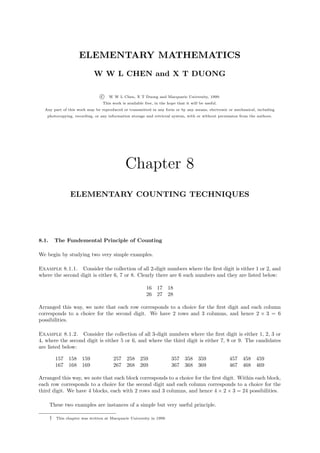
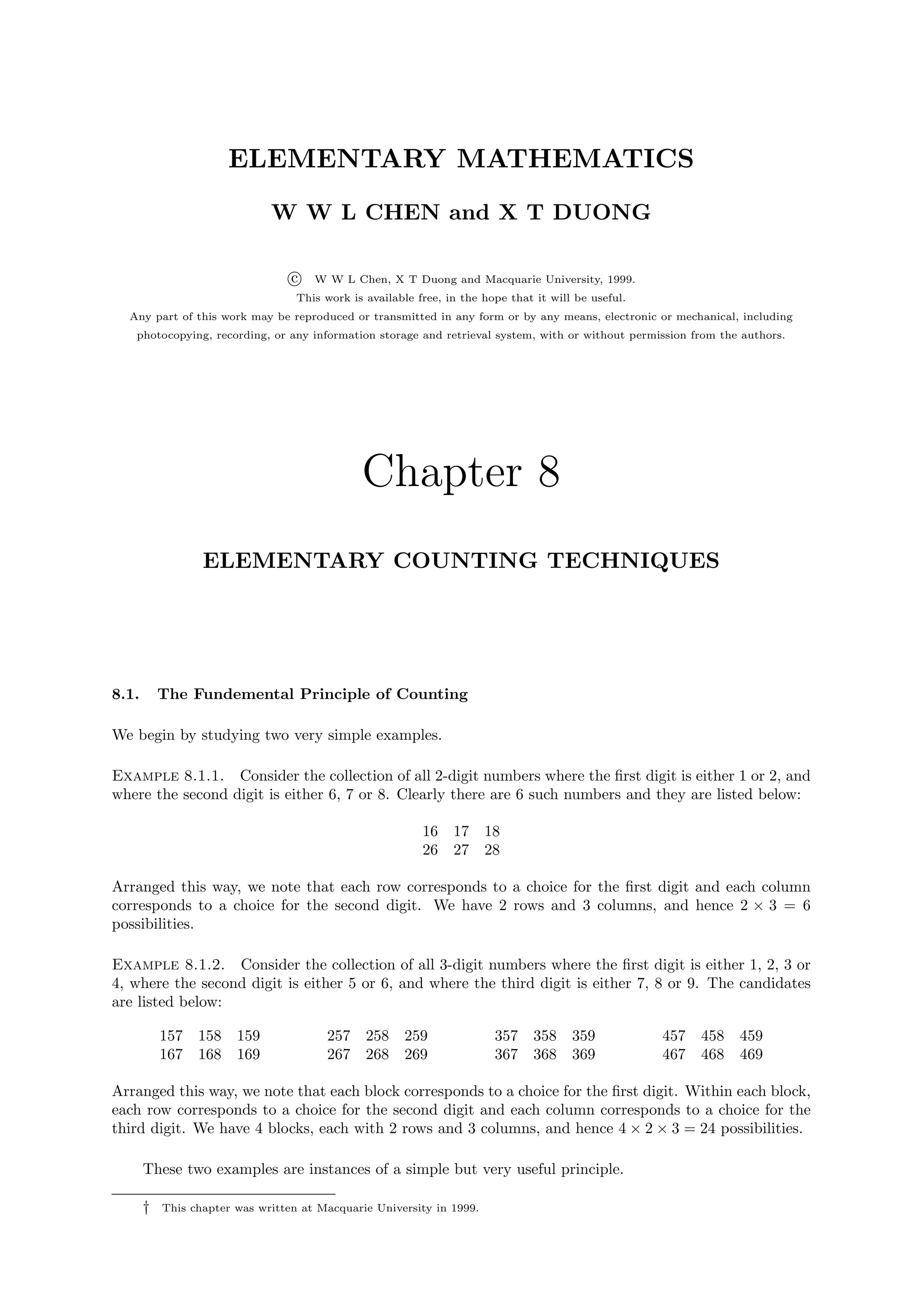
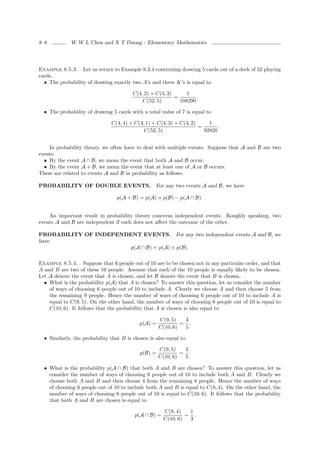
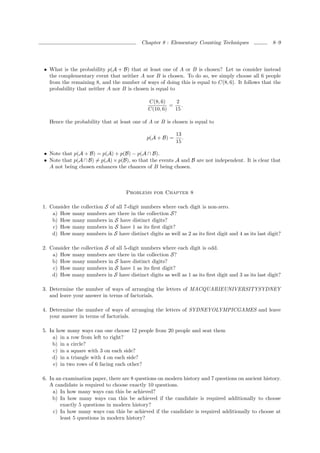
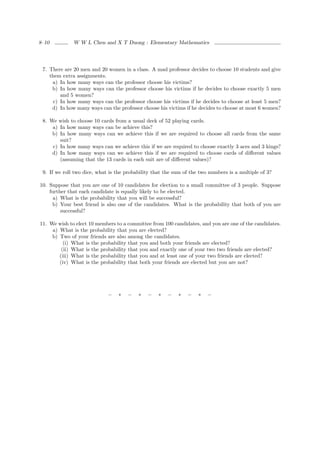
1) It explains the fundamental principle of counting - that if event 1 can occur in n1 ways and event 2 in n2 ways, then the total number of ways for the events to occur together is n1 × n2.
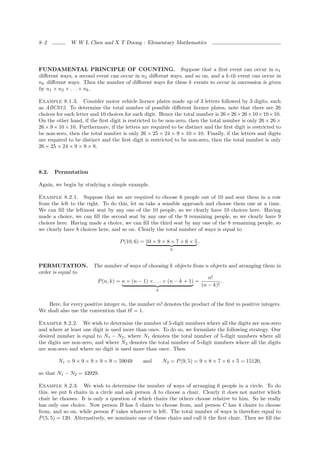
2) It defines permutation as the number of arrangements of k objects from n objects, which is equal to n!/(n-k)!. Examples show counting license plate and word arrangements.
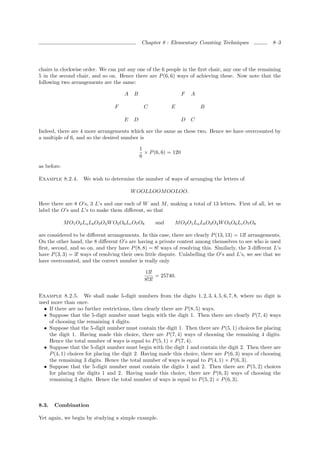
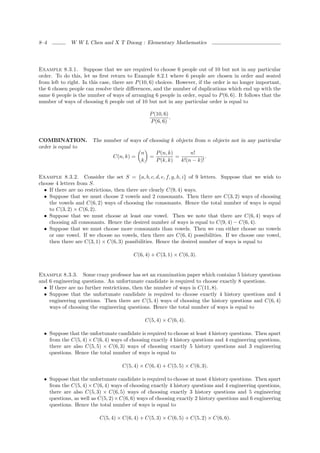
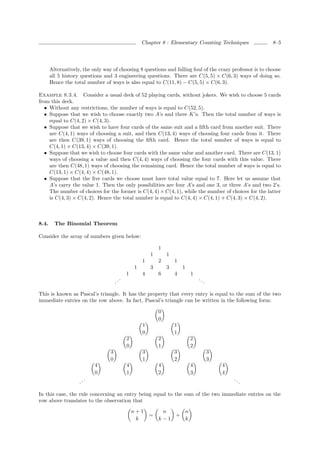
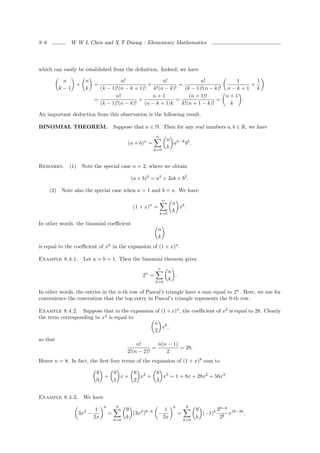
3) It defines combination as the number of choices of k unordered objects from n objects, which is equal to n!/k!(n-k)!. Examples show counting letter and exam question


![Counting Principles [AutosavedCounting Principles [Autosaved].pptx].pptx](https://cdn.slidesharecdn.com/ss_thumbnails/countingprinciplesautosaved-250402201201-33c3ef33-thumbnail.jpg?width=640&height=640&fit=bounds)


