
ELIMINATION DISORDERS
PREPARED BY- PRAVATHI KUMAR
PRAVATHI KUMAR 1
ENCOPRESIS
Pathology and Laboratory Examination
 Encopresis- Involuntary fecal soiling in adults & the
repeated passing of feces into places other than the toilet,
such as in underwear or on the floor. This behavior may or
may not be done on purpose.
 No specific test indicates a diagnosis of encopresis,
clinicians must rule out medical illnesses, such as
Hirschsprung's disease, before making a diagnosis.
 If it is unclear whether fecal retention is responsible for
encopresis with constipation and overflow incontinence, a
physical examination of the abdomen is indicated, and an
abdominal X-ray can help determine the degree of
constipation present.
PRAVATHI KUMAR 2
Differential Diagnosis
 In encopresis with constipation and overflow
incontinence, constipation can begin as early as
the child's first year and can peak between the
second and fourth years.
 Soiling usually begins at age 4. Frequent liquid
stools and hard fecal masses are found in the
colon and the rectum on abdominal palpation
and rectal examination.
Complications include impaction, megacolon, and
anal fissures.
PRAVATHI KUMAR 3
CONT……
 Encopresis with constipation and overflow
incontinence can be caused by faulty
nutrition;
Structural disease of the anus, rectum, and
colon; medicinal adverse effects; or
nongastrointestinal medical (endocrine or
neurological) disorders.
PRAVATHI KUMAR 4
Course and Prognosis
 The outcome of encopresis depends on the
cause, the chronicity of the symptoms, and
coexisting behavioral problems. In many cases,
encopresis is self-limiting, and it rarely continues
beyond middle adolescence.
 Encopresis in children who have contributing
physiological factors, such as poor gastric motility
and an inability to relax the anal sphincter
muscles, is more difficult to treat than that in
those with constipation but normal sphincter
tone.
PRAVATHI KUMAR 5
Treatment
 A typical treatment plan for a child with encopresis
includes an initial medical plan to address
constipation, in most cases, as well as an ongoing
behavioral intervention to enhance appropriate
bowel behavior and diminish anxiety related to
bowel movement.
PRAVATHI KUMAR 6
CONT……
 By the time a child is brought for treatment,
considerable family discord and distress are common.
 Supportive psychotherapy and relaxation techniques
may be useful in treating the anxieties and other
sequelae of children with encopresis, such as low self-
esteem and social isolation.
 Family interventions can be helpful for children who
have bowel control but continue to deposit their feces
in inappropriate locations.
PRAVATHI KUMAR 7
Enuresis
Epidemiology
 Bed-wetting: Involuntary discharge of urine, especially
while asleep.
 The prevalence of enuresis decreases with increasing age.
The diagnosis of enuresis is not made until the chronologic
and developmental age of 5 years, but enuretic behavior
nocturnally and during the daytime is common, with
reported prevalence from 2 percent to 5 percent among
school-aged children.
 Enuretic behavior is considered developmentally
appropriate among young toddlers, precluding diagnoses of
enuresis;
PRAVATHI KUMAR 8
CONT……
However, enuretic behavior occurs in-(a) 82
percent of 2-year-olds,
(b) 49 percent of 3-year-olds,
(c) 26 percent of 4-year-olds, and
(d) 7 percent of 5-year-olds on a regular basis.
Prevalence rates vary, however, on the basis of
the population studied and the tolerance for the
symptoms in various cultures and socioeconomic
groups.
PRAVATHI KUMAR 9
Etiology
 Most children with nocturnal enuresis do not exhibit
neurological conditions that account for the symptoms.
 Voiding dysfunction in the absence of a specific neurogenic
cause is believed to originate from behavioral factors that
affect normal voiding habits and inhibit the maturation of
normal voluntary control.
 The most severe form of dysfunctional voiding is called
Hinman's syndrome, and is thought of as a non-neurogenic
neurogenic bladder resulting from habitual, voluntary
tightening of the external sphincter during urges to urinate.
PRAVATHI KUMAR 10
CONT……
 Genetic factors are believed to play a role in the
expression of enuresis, given that the emergence
of enuresis has been found to be significantly
greater in first-degree relatives.
 A longitudinal study of child development found
that children with enuresis were about twice as
likely to have concomitant developmental delays
as those who did not have enuresis.
PRAVATHI KUMAR 11
Diagnosis and Clinical Features
 A child must exhibit a developmental or chronological age of at
least 5 years.
 According to DSM-IV-TR, the behavior must occur twice weekly for
a period of at least 3 months or must cause distress and
impairment in functioning to meet the diagnostic criteria. Children
with enuresis are at higher risk for ADHD compared with the
general population.
 They are also more likely to have comorbid encopresis.
 International Statistical Classification of Diseases and Related
Health Problems (ICD-10) break down the disorder into three types:
nocturnal only, diurnal only, and nocturnal and diurnal.
PRAVATHI KUMAR 12
TABLE
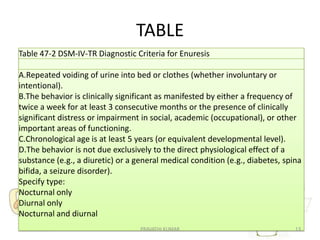
Table 47-2 DSM-IV-TR Diagnostic Criteria for Enuresis
A.Repeated voiding of urine into bed or clothes (whether involuntary or
intentional).
B.The behavior is clinically significant as manifested by either a frequency of
twice a week for at least 3 consecutive months or the presence of clinically
significant distress or impairment in social, academic (occupational), or other
important areas of functioning.
C.Chronological age is at least 5 years (or equivalent developmental level).
D.The behavior is not due exclusively to the direct physiological effect of a
substance (e.g., a diuretic) or a general medical condition (e.g., diabetes, spina
bifida, a seizure disorder).
Specify type:
Nocturnal only
Diurnal only
Nocturnal and diurnal
PRAVATHI KUMAR 13
THANK YOU!!!
PRAVATHI KUMAR 14

Elimination disorders pk

  • 1.
    ELIMINATION DISORDERS PREPARED BY-PRAVATHI KUMAR PRAVATHI KUMAR 1
  • 2.
    ENCOPRESIS Pathology and LaboratoryExamination  Encopresis- Involuntary fecal soiling in adults & the repeated passing of feces into places other than the toilet, such as in underwear or on the floor. This behavior may or may not be done on purpose.  No specific test indicates a diagnosis of encopresis, clinicians must rule out medical illnesses, such as Hirschsprung's disease, before making a diagnosis.  If it is unclear whether fecal retention is responsible for encopresis with constipation and overflow incontinence, a physical examination of the abdomen is indicated, and an abdominal X-ray can help determine the degree of constipation present. PRAVATHI KUMAR 2
  • 3.
    Differential Diagnosis  Inencopresis with constipation and overflow incontinence, constipation can begin as early as the child's first year and can peak between the second and fourth years.  Soiling usually begins at age 4. Frequent liquid stools and hard fecal masses are found in the colon and the rectum on abdominal palpation and rectal examination. Complications include impaction, megacolon, and anal fissures. PRAVATHI KUMAR 3
  • 4.
    CONT……  Encopresis withconstipation and overflow incontinence can be caused by faulty nutrition; Structural disease of the anus, rectum, and colon; medicinal adverse effects; or nongastrointestinal medical (endocrine or neurological) disorders. PRAVATHI KUMAR 4
  • 5.
    Course and Prognosis The outcome of encopresis depends on the cause, the chronicity of the symptoms, and coexisting behavioral problems. In many cases, encopresis is self-limiting, and it rarely continues beyond middle adolescence.  Encopresis in children who have contributing physiological factors, such as poor gastric motility and an inability to relax the anal sphincter muscles, is more difficult to treat than that in those with constipation but normal sphincter tone. PRAVATHI KUMAR 5
  • 6.
    Treatment  A typicaltreatment plan for a child with encopresis includes an initial medical plan to address constipation, in most cases, as well as an ongoing behavioral intervention to enhance appropriate bowel behavior and diminish anxiety related to bowel movement. PRAVATHI KUMAR 6
  • 7.
    CONT……  By thetime a child is brought for treatment, considerable family discord and distress are common.  Supportive psychotherapy and relaxation techniques may be useful in treating the anxieties and other sequelae of children with encopresis, such as low self- esteem and social isolation.  Family interventions can be helpful for children who have bowel control but continue to deposit their feces in inappropriate locations. PRAVATHI KUMAR 7
  • 8.
    Enuresis Epidemiology  Bed-wetting: Involuntarydischarge of urine, especially while asleep.  The prevalence of enuresis decreases with increasing age. The diagnosis of enuresis is not made until the chronologic and developmental age of 5 years, but enuretic behavior nocturnally and during the daytime is common, with reported prevalence from 2 percent to 5 percent among school-aged children.  Enuretic behavior is considered developmentally appropriate among young toddlers, precluding diagnoses of enuresis; PRAVATHI KUMAR 8
  • 9.
    CONT…… However, enuretic behavioroccurs in-(a) 82 percent of 2-year-olds, (b) 49 percent of 3-year-olds, (c) 26 percent of 4-year-olds, and (d) 7 percent of 5-year-olds on a regular basis. Prevalence rates vary, however, on the basis of the population studied and the tolerance for the symptoms in various cultures and socioeconomic groups. PRAVATHI KUMAR 9
  • 10.
    Etiology  Most childrenwith nocturnal enuresis do not exhibit neurological conditions that account for the symptoms.  Voiding dysfunction in the absence of a specific neurogenic cause is believed to originate from behavioral factors that affect normal voiding habits and inhibit the maturation of normal voluntary control.  The most severe form of dysfunctional voiding is called Hinman's syndrome, and is thought of as a non-neurogenic neurogenic bladder resulting from habitual, voluntary tightening of the external sphincter during urges to urinate. PRAVATHI KUMAR 10
  • 11.
    CONT……  Genetic factorsare believed to play a role in the expression of enuresis, given that the emergence of enuresis has been found to be significantly greater in first-degree relatives.  A longitudinal study of child development found that children with enuresis were about twice as likely to have concomitant developmental delays as those who did not have enuresis. PRAVATHI KUMAR 11
  • 12.
    Diagnosis and ClinicalFeatures  A child must exhibit a developmental or chronological age of at least 5 years.  According to DSM-IV-TR, the behavior must occur twice weekly for a period of at least 3 months or must cause distress and impairment in functioning to meet the diagnostic criteria. Children with enuresis are at higher risk for ADHD compared with the general population.  They are also more likely to have comorbid encopresis.  International Statistical Classification of Diseases and Related Health Problems (ICD-10) break down the disorder into three types: nocturnal only, diurnal only, and nocturnal and diurnal. PRAVATHI KUMAR 12
  • 13.
    TABLE Table 47-2 DSM-IV-TRDiagnostic Criteria for Enuresis A.Repeated voiding of urine into bed or clothes (whether involuntary or intentional). B.The behavior is clinically significant as manifested by either a frequency of twice a week for at least 3 consecutive months or the presence of clinically significant distress or impairment in social, academic (occupational), or other important areas of functioning. C.Chronological age is at least 5 years (or equivalent developmental level). D.The behavior is not due exclusively to the direct physiological effect of a substance (e.g., a diuretic) or a general medical condition (e.g., diabetes, spina bifida, a seizure disorder). Specify type: Nocturnal only Diurnal only Nocturnal and diurnal PRAVATHI KUMAR 13
  • 14.