Electronics
Sensors in IoT Applications
Leopoldo Armesto
Senior Lecturer
Universitat Politècnica de València
1
Outline
Light sensor
Temperature sensors
Moist sensor
Rain sensor
Gas sensors
Barometric pressure sensor
Radiation sensor
And more…
2
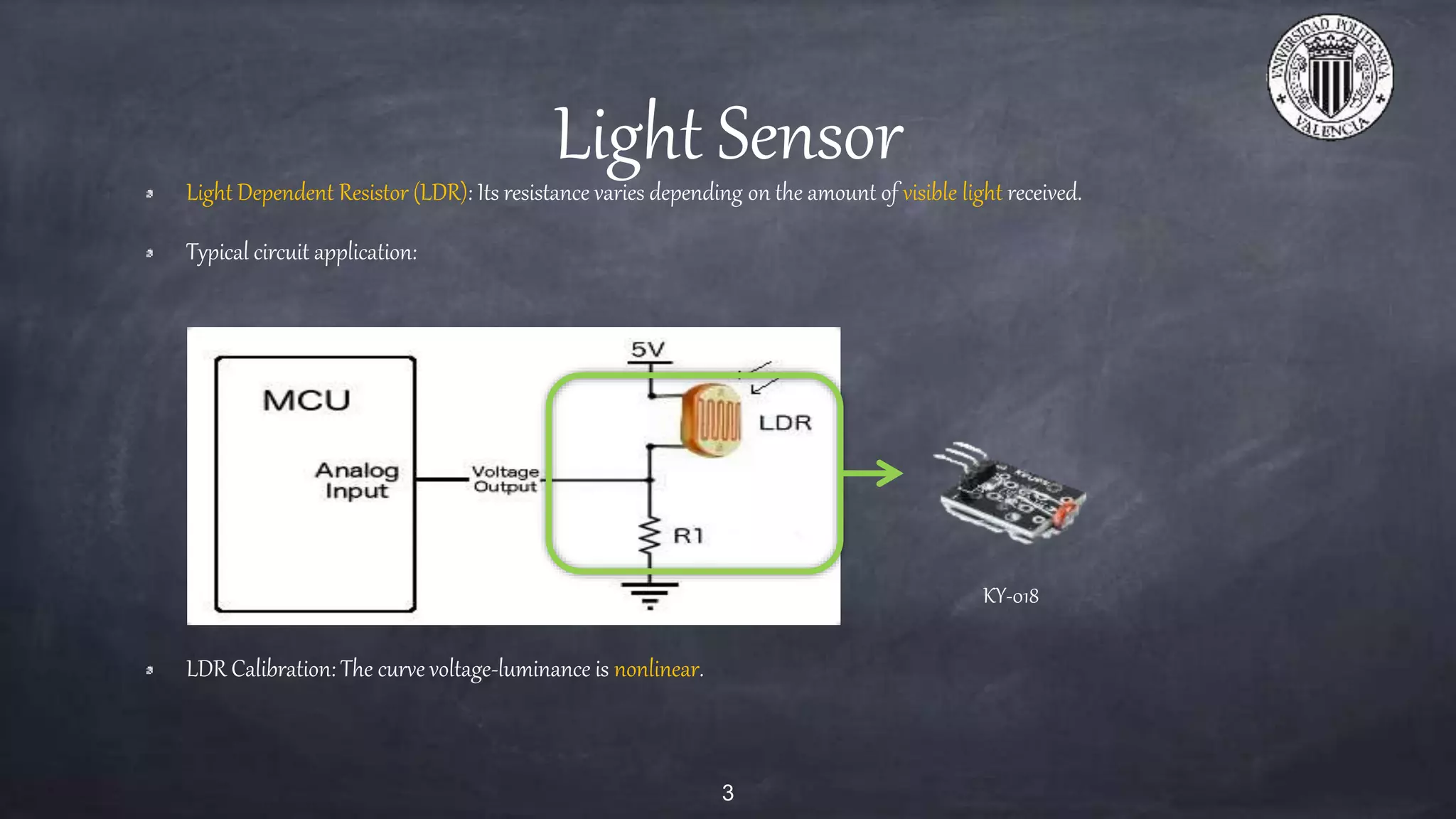
Light SensorLight Dependent Resistor (LDR): Its resistance varies depending on the amount of visible light received.
Typical circuit application:
LDR Calibration: The curve voltage-luminance is nonlinear.
3
KY-018
Digital Temperature Sensor
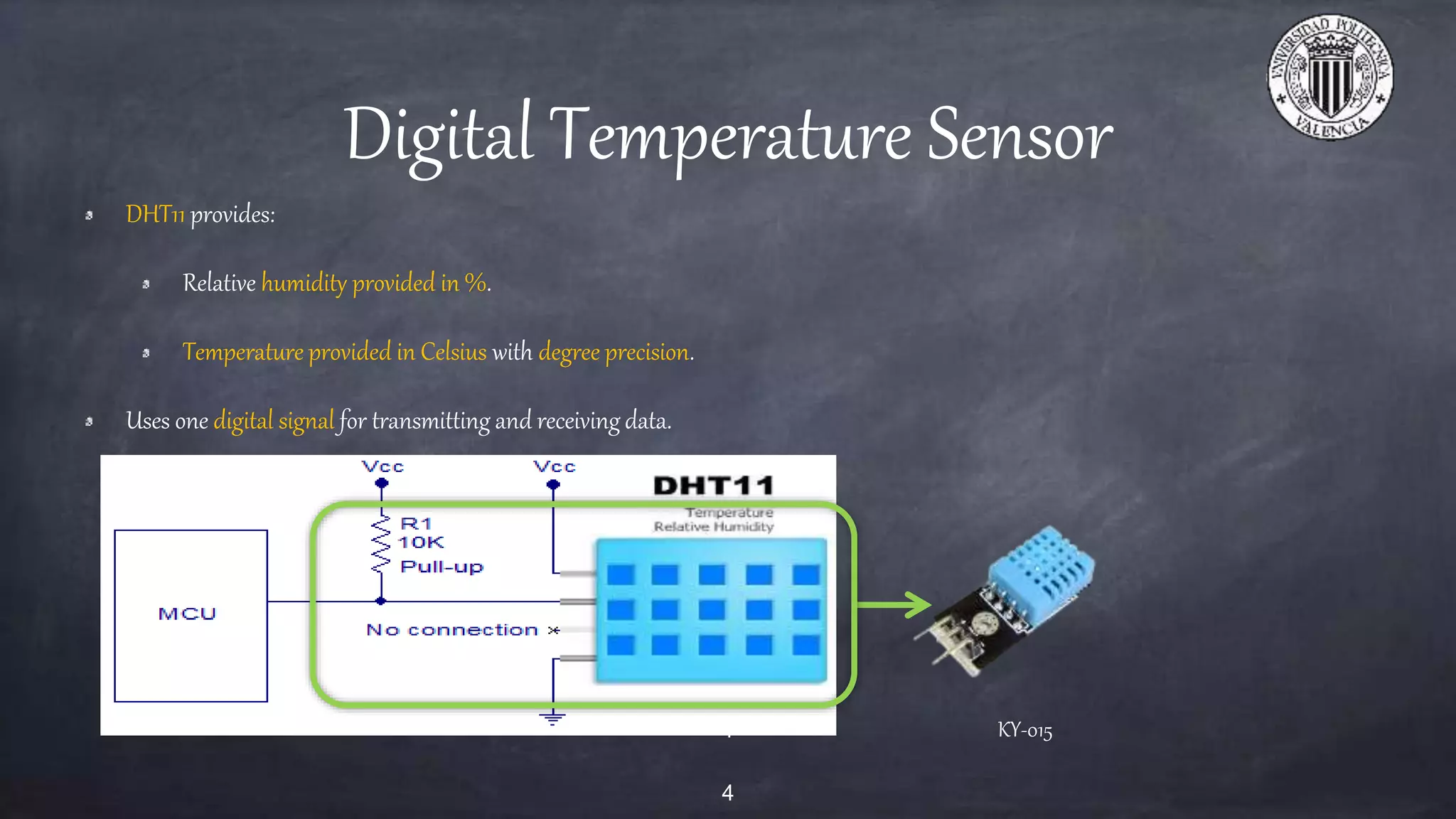
DHT11 provides:
Relative humidity provided in %.
Temperature provided in Celsius with degree precision.
Uses one digital signal for transmitting and receiving data.
4 KY-015
4
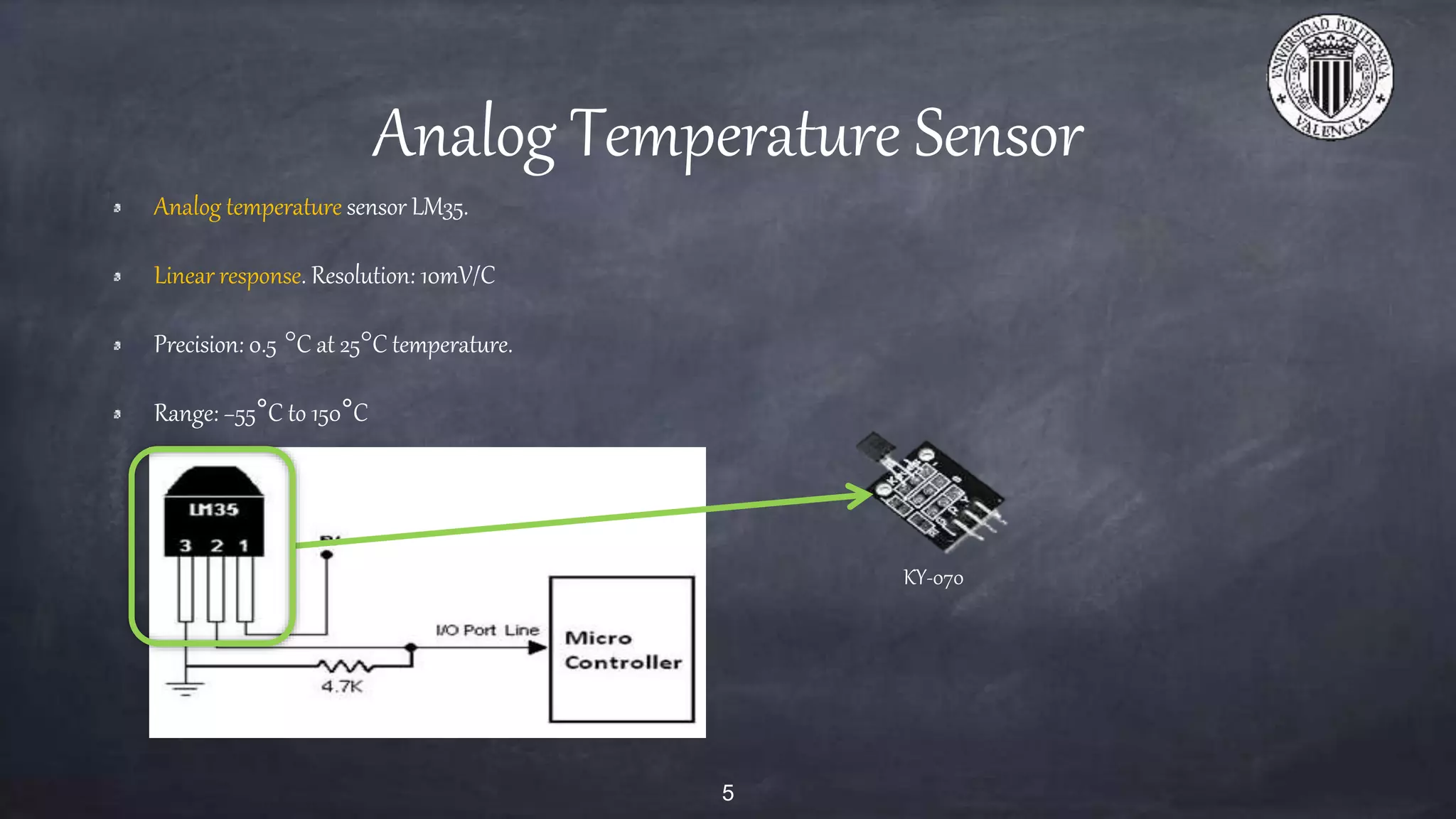
Analog Temperature Sensor
Analog temperature sensor LM35.
Linear response. Resolution: 10mV/C
Precision: 0.5C at 25C temperature.
Range: −55°C to 150°C
5
KY-070
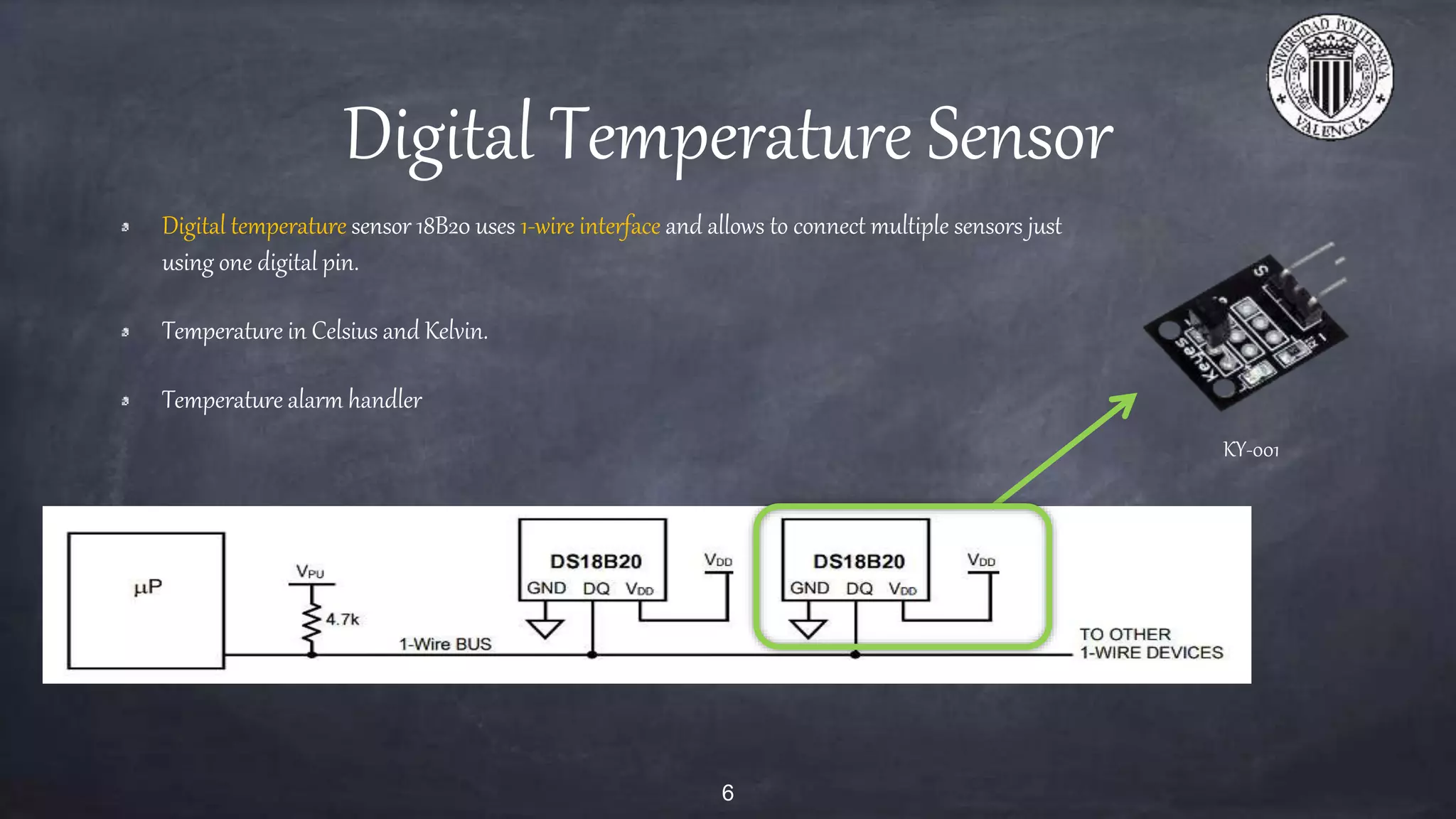
Digital Temperature Sensor
Digital temperature sensor 18B20 uses 1-wire interface and allows to connect multiple sensors just
using one digital pin.
Temperature in Celsius and Kelvin.
Temperature alarm handler
6
KY-001
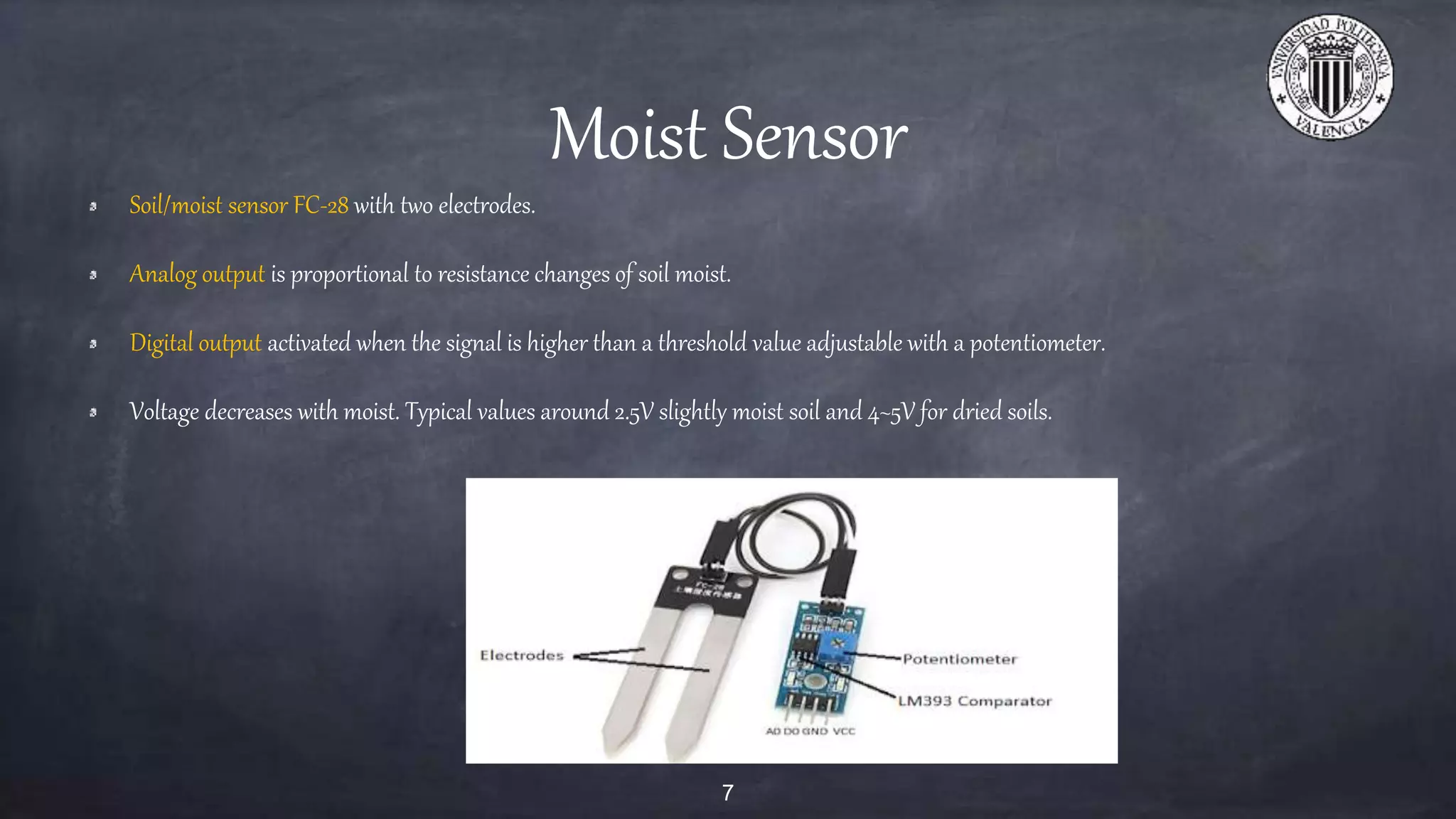
Moist Sensor
Soil/moist sensor FC-28 with two electrodes.
Analog output is proportional to resistance changes of soil moist.
Digital output activated when the signal is higher than a threshold value adjustable with a potentiometer.
Voltage decreases with moist. Typical values around 2.5V slightly moist soil and 4~5V for dried soils.
7
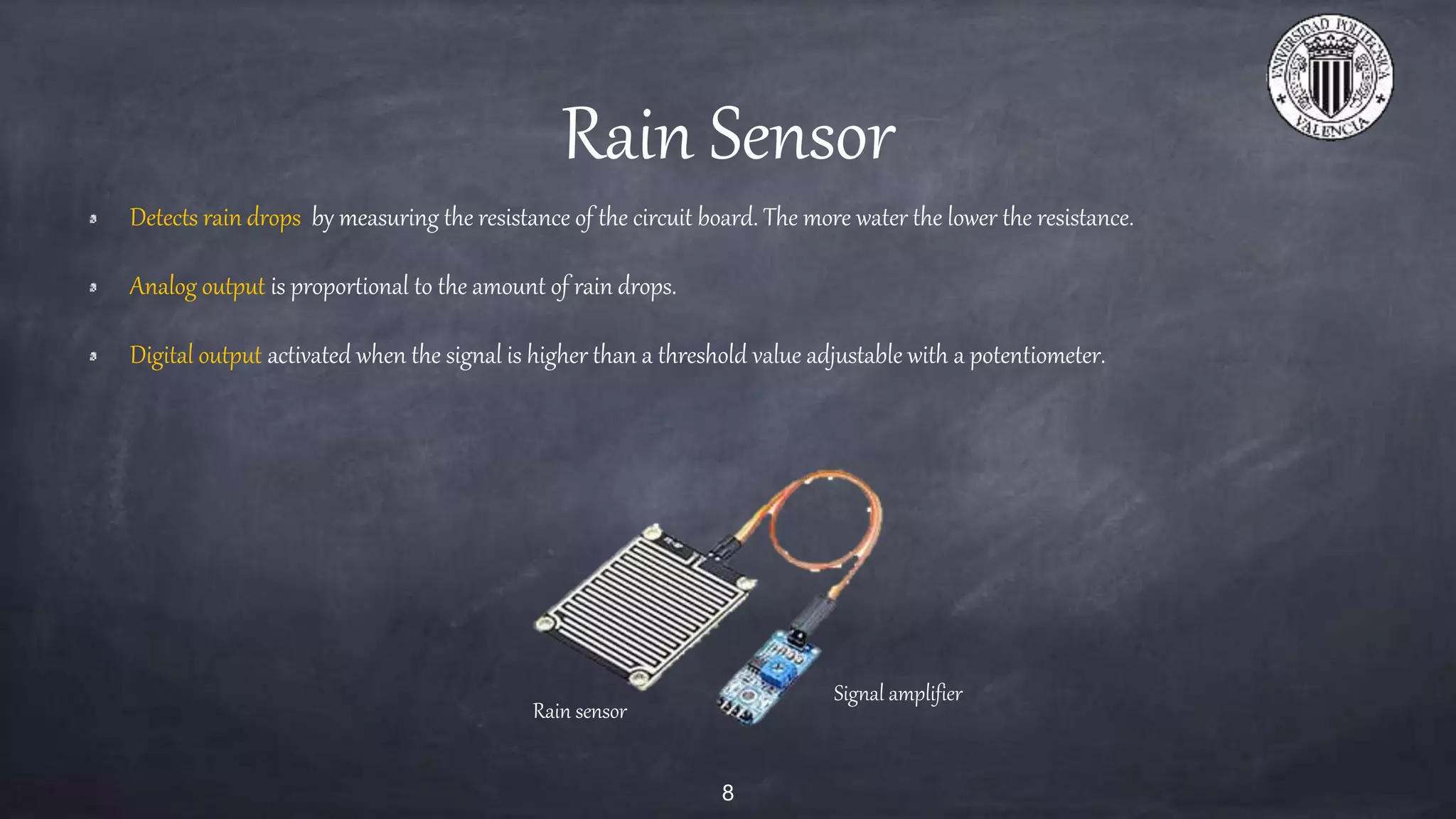
Rain Sensor
Detects rain drops by measuring the resistance of the circuit board. The more water the lower the resistance.
Analog output is proportional to the amount of rain drops.
Digital output activated when the signal is higher than a threshold value adjustable with a potentiometer.
8
Rain sensor
Signal amplifier
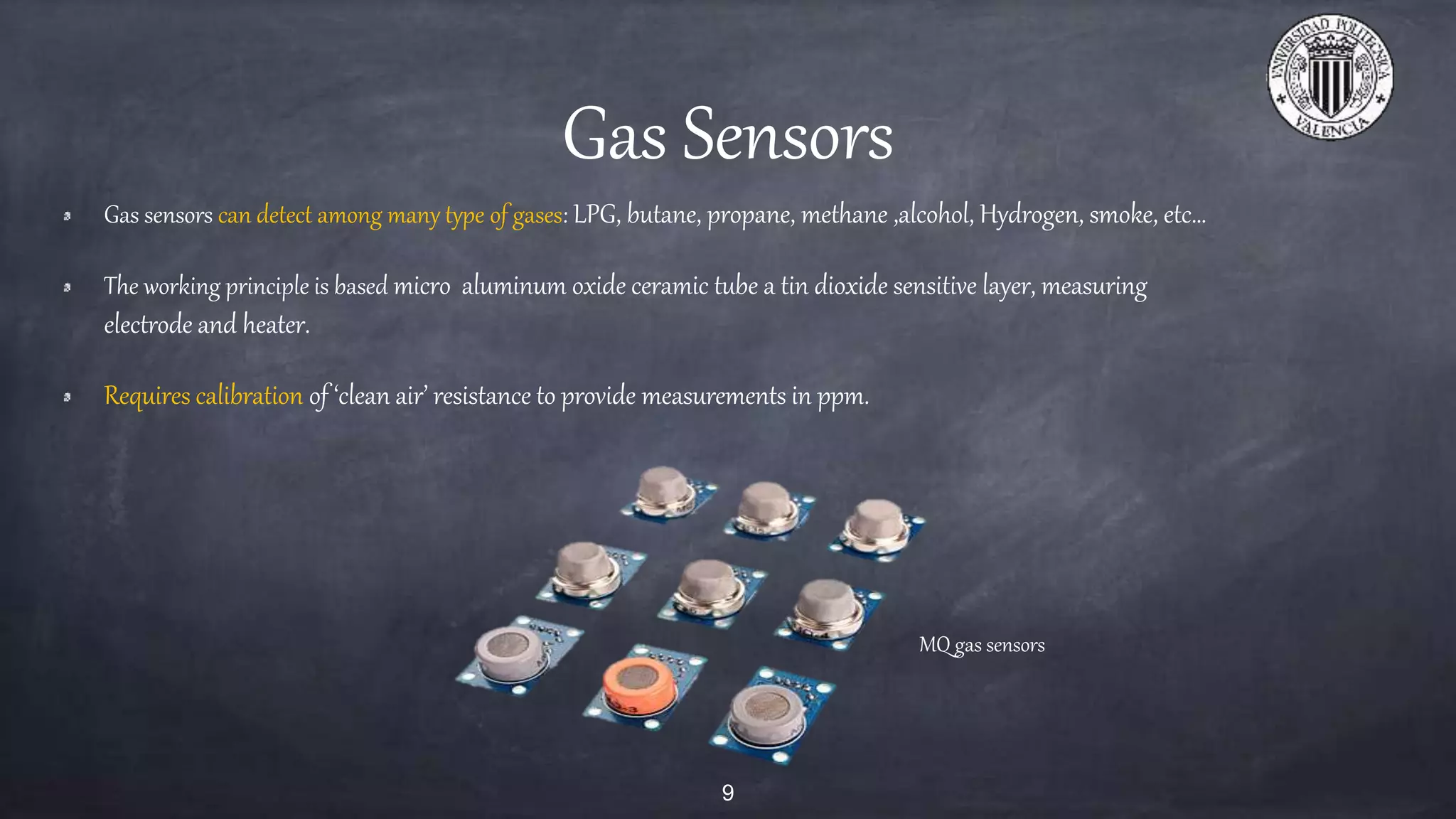
Gas Sensors
Gas sensors can detect among many type of gases: LPG, butane, propane, methane ,alcohol, Hydrogen, smoke, etc…
The working principle is based micro aluminum oxide ceramic tube a tin dioxide sensitive layer, measuring
electrode and heater.
Requires calibration of ‘clean air’ resistance to provide measurements in ppm.
9
MQ gas sensors
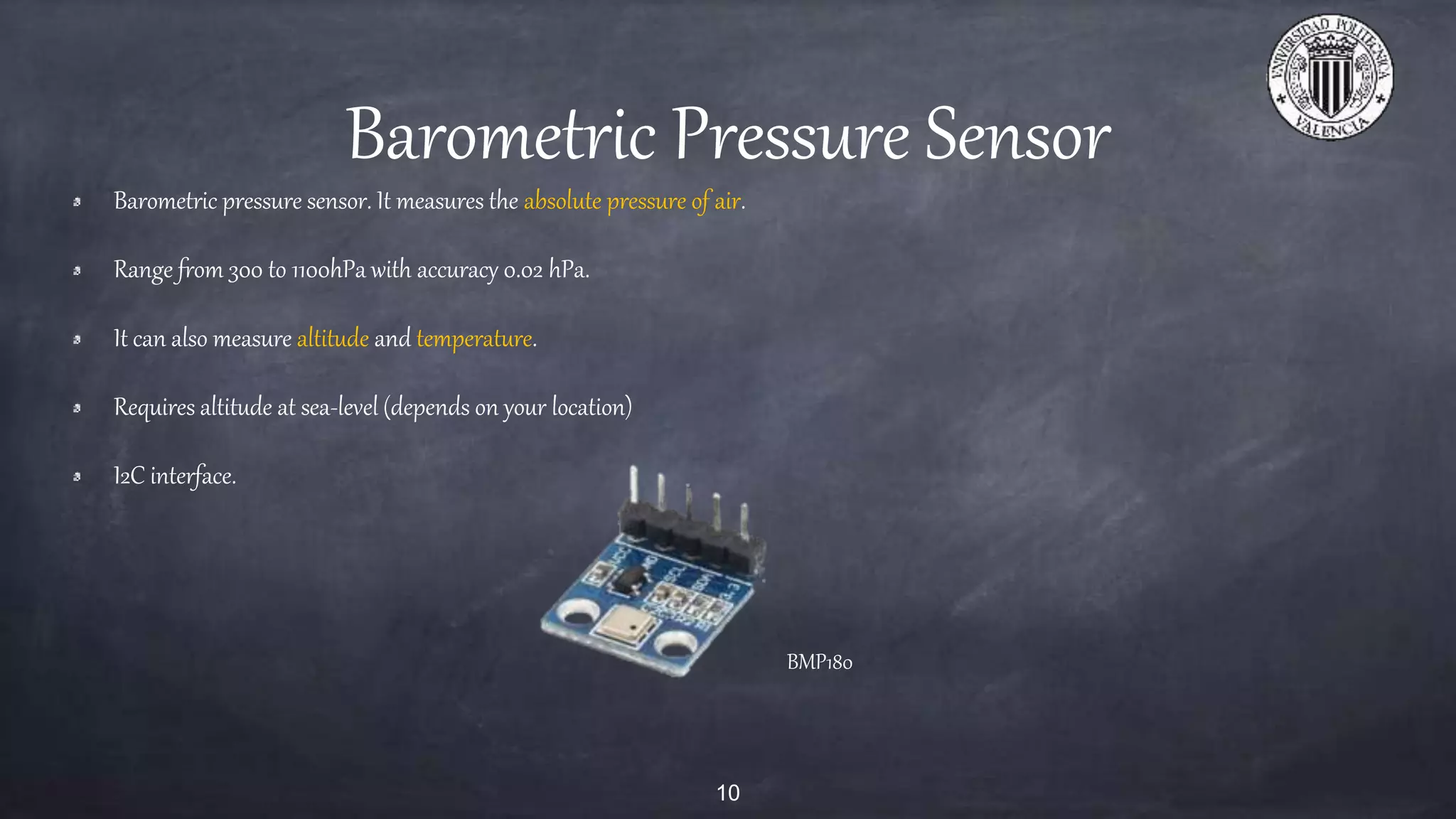
Barometric Pressure Sensor
Barometric pressure sensor. It measures the absolute pressure of air.
Range from 300 to 1100hPa with accuracy 0.02 hPa.
It can also measure altitude and temperature.
Requires altitude at sea-level (depends on your location)
I2C interface.
10
BMP180
Radiation Sensor
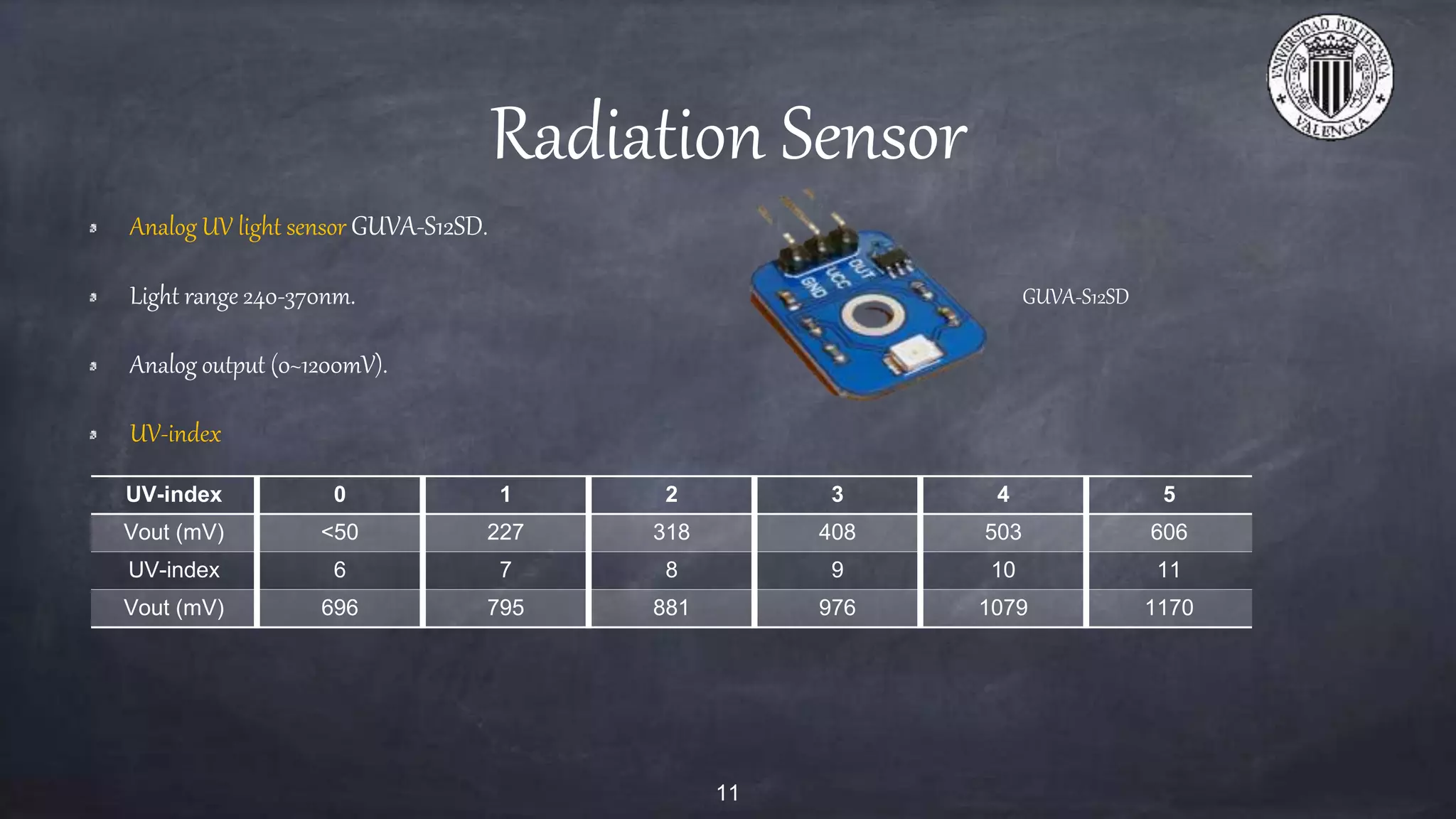
Analog UV light sensor GUVA-S12SD.
Light range 240-370nm.
Analog output (0~1200mV).
UV-index
11
UV-index 0 1 2 3 4 5
Vout (mV) <50 227 318 408 503 606
UV-index 6 7 8 9 10 11
Vout (mV) 696 795 881 976 1079 1170
GUVA-S12SD
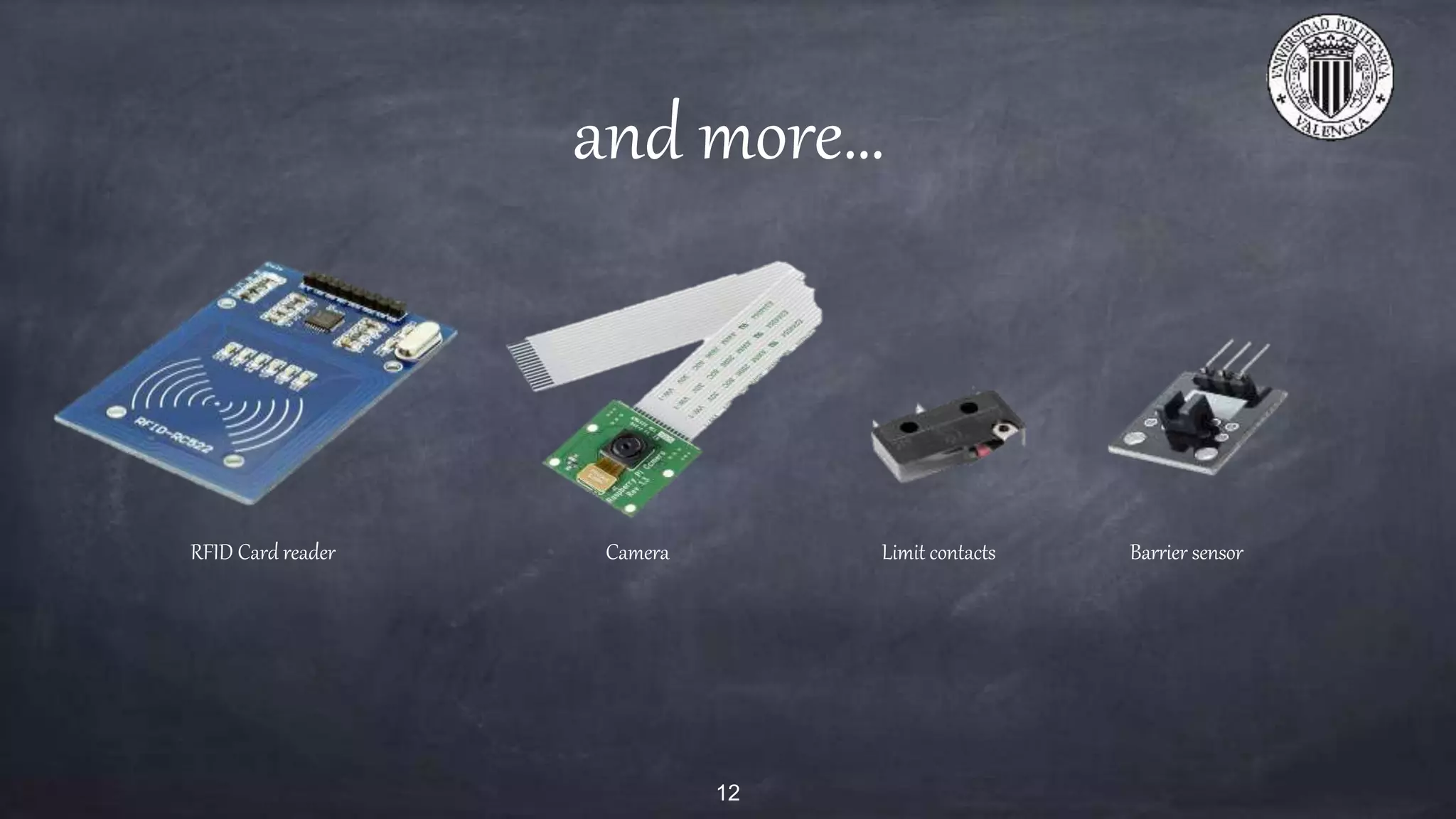
and more…
12
RFID Card reader Camera Barrier sensorLimit contacts
Electronics
Sensors in IoT Applications
Leopoldo Armesto
Senior Lecturer
Universitat Politècnica de València
13

Electronics sensors IoT applications

  • 1.
    Electronics Sensors in IoTApplications Leopoldo Armesto Senior Lecturer Universitat Politècnica de València 1
  • 2.
    Outline Light sensor Temperature sensors Moistsensor Rain sensor Gas sensors Barometric pressure sensor Radiation sensor And more… 2
  • 3.
    Light SensorLight DependentResistor (LDR): Its resistance varies depending on the amount of visible light received. Typical circuit application: LDR Calibration: The curve voltage-luminance is nonlinear. 3 KY-018
  • 4.
    Digital Temperature Sensor DHT11provides: Relative humidity provided in %. Temperature provided in Celsius with degree precision. Uses one digital signal for transmitting and receiving data. 4 KY-015 4
  • 5.
    Analog Temperature Sensor Analogtemperature sensor LM35. Linear response. Resolution: 10mV/C Precision: 0.5C at 25C temperature. Range: −55°C to 150°C 5 KY-070
  • 6.
    Digital Temperature Sensor Digitaltemperature sensor 18B20 uses 1-wire interface and allows to connect multiple sensors just using one digital pin. Temperature in Celsius and Kelvin. Temperature alarm handler 6 KY-001
  • 7.
    Moist Sensor Soil/moist sensorFC-28 with two electrodes. Analog output is proportional to resistance changes of soil moist. Digital output activated when the signal is higher than a threshold value adjustable with a potentiometer. Voltage decreases with moist. Typical values around 2.5V slightly moist soil and 4~5V for dried soils. 7
  • 8.
    Rain Sensor Detects raindrops by measuring the resistance of the circuit board. The more water the lower the resistance. Analog output is proportional to the amount of rain drops. Digital output activated when the signal is higher than a threshold value adjustable with a potentiometer. 8 Rain sensor Signal amplifier
  • 9.
    Gas Sensors Gas sensorscan detect among many type of gases: LPG, butane, propane, methane ,alcohol, Hydrogen, smoke, etc… The working principle is based micro aluminum oxide ceramic tube a tin dioxide sensitive layer, measuring electrode and heater. Requires calibration of ‘clean air’ resistance to provide measurements in ppm. 9 MQ gas sensors
  • 10.
    Barometric Pressure Sensor Barometricpressure sensor. It measures the absolute pressure of air. Range from 300 to 1100hPa with accuracy 0.02 hPa. It can also measure altitude and temperature. Requires altitude at sea-level (depends on your location) I2C interface. 10 BMP180
  • 11.
    Radiation Sensor Analog UVlight sensor GUVA-S12SD. Light range 240-370nm. Analog output (0~1200mV). UV-index 11 UV-index 0 1 2 3 4 5 Vout (mV) <50 227 318 408 503 606 UV-index 6 7 8 9 10 11 Vout (mV) 696 795 881 976 1079 1170 GUVA-S12SD
  • 12.
    and more… 12 RFID Cardreader Camera Barrier sensorLimit contacts
  • 13.
    Electronics Sensors in IoTApplications Leopoldo Armesto Senior Lecturer Universitat Politècnica de València 13