ELECTRICITY
First you have to know what an atom
is. An atom is the smallest part of
something. It is microscopic and
every thing is made up of atoms.
Electricity
Atoms are made up of three parts.
 Protons - these parts of an atom have a positive
charge. They are in the middle of the atom, called
the nucleus and they do not move.
 Neutrons - these parts of an atom have no charge.
They are neutral and part of the nucleus of an
atom with the protons.
 Electrons - these parts of the atom are very small
and weigh a lot less then the protons and
neutrons. Electrons are not part of the nucleus of
the atom, instead they move around in orbits
outside the nucleus.
So what does this have to do
with electricity?
Electricity is the flow of
moving electrons. When
the electrons flow it is
called an electrical
current.
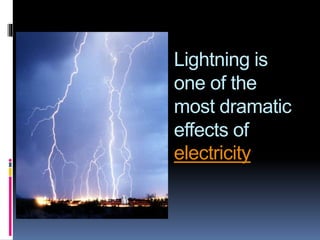
Lightning is
one of the
most dramatic
effects of
electricity
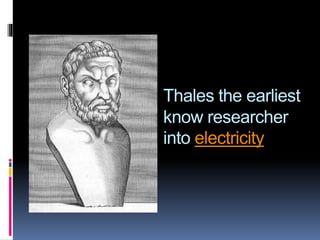
Thales the earliest
know researcher
into electricity
Benjamin Franklin
conducted extensive
research on electricity in
the 18th century, as
documented by Joseph
Priestly (1767) History
and Present. Status of
electricity, with whom
Franklin carried on
extended
correspondence.
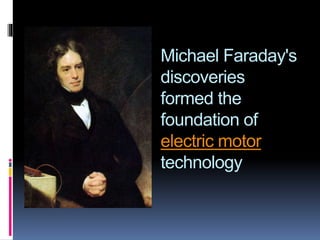
Michael Faraday's
discoveries
formed the
foundation of
electric motor
technology
Charge on a gold-
leaf electroscope
causes the leaves
to visibly repel
each other.
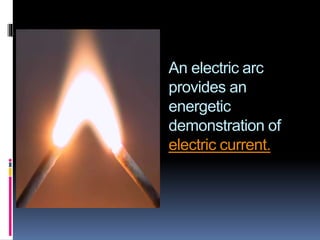
An electric arc
provides an
energetic
demonstration of
electric current.
Field lines
emanating from a
positive charge
above a plane
conductor.
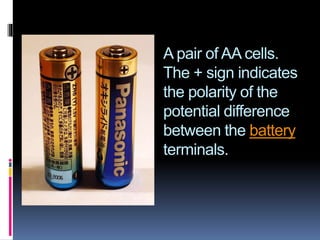
A pair of AA cells.
The + sign indicates
the polarity of the
potential difference
between the battery
terminals.
Magnetic field
- circles around a
current.
- existed around all
sides of a wire carrying
an electric current
indicated that there
was a direct
relationship between
electricity and
magnetism.
The electric motor
exploits an important
effect of
electromagnetism: a
current through a
magnetic field
experiences a force at
right angles to both the
field and current
Italian physicist
Alessandro Volta
showing his
"battery" to French
emperor Napoleon
Bonaparte in the
early 19th century.
A basic electric circuit.
The voltage source V on
the left drives a current I
around the circuit,
delivering electrical
energy into the resistor
R. From the resistor, the
current returns to the
source, completing the
circuit.
Electricity travels in closed loops, or circuits
(from the word circle).
Surface mount
electronic
components
Early 20th-century
alternator made in
Budapest, Hungary,
in the power
generating hall of a
hydroelectric station
(photograph by
Prokudin-Gorsky,
1905–1915).
Wind power is of
increasing
importance in
many countries
The light bulb, an
early application of
electricity, operates
by Joule heating: the
passage of current
through resistance
generating heat.
Wind Power
 is derived from the conversion of the
energy contained in wind into electricity.
 wind power, less than 1% of the nation's
electricity in 2007, is a rapidly growing
source of electricity.
 A wind turbine is similar to a typical wind
mill.
Electric Current
The power source causes the
electrical current that goes through
a circuit or a closed path, and the
appliance is connected to the
circuit so the electrons can move
through it and make the appliance
work.

Electricity

  • 1.
  • 2.
    First you haveto know what an atom is. An atom is the smallest part of something. It is microscopic and every thing is made up of atoms. Electricity
  • 3.
    Atoms are madeup of three parts.  Protons - these parts of an atom have a positive charge. They are in the middle of the atom, called the nucleus and they do not move.  Neutrons - these parts of an atom have no charge. They are neutral and part of the nucleus of an atom with the protons.  Electrons - these parts of the atom are very small and weigh a lot less then the protons and neutrons. Electrons are not part of the nucleus of the atom, instead they move around in orbits outside the nucleus.
  • 4.
    So what doesthis have to do with electricity? Electricity is the flow of moving electrons. When the electrons flow it is called an electrical current.
  • 5.
    Lightning is one ofthe most dramatic effects of electricity
  • 6.
    Thales the earliest knowresearcher into electricity
  • 7.
    Benjamin Franklin conducted extensive researchon electricity in the 18th century, as documented by Joseph Priestly (1767) History and Present. Status of electricity, with whom Franklin carried on extended correspondence.
  • 8.
  • 9.
    Charge on agold- leaf electroscope causes the leaves to visibly repel each other.
  • 10.
    An electric arc providesan energetic demonstration of electric current.
  • 11.
    Field lines emanating froma positive charge above a plane conductor.
  • 12.
    A pair ofAA cells. The + sign indicates the polarity of the potential difference between the battery terminals.
  • 13.
    Magnetic field - circlesaround a current. - existed around all sides of a wire carrying an electric current indicated that there was a direct relationship between electricity and magnetism.
  • 14.
    The electric motor exploitsan important effect of electromagnetism: a current through a magnetic field experiences a force at right angles to both the field and current
  • 15.
    Italian physicist Alessandro Volta showinghis "battery" to French emperor Napoleon Bonaparte in the early 19th century.
  • 16.
    A basic electriccircuit. The voltage source V on the left drives a current I around the circuit, delivering electrical energy into the resistor R. From the resistor, the current returns to the source, completing the circuit.
  • 17.
    Electricity travels inclosed loops, or circuits (from the word circle).
  • 18.
  • 19.
    Early 20th-century alternator madein Budapest, Hungary, in the power generating hall of a hydroelectric station (photograph by Prokudin-Gorsky, 1905–1915).
  • 20.
    Wind power isof increasing importance in many countries
  • 21.
    The light bulb,an early application of electricity, operates by Joule heating: the passage of current through resistance generating heat.
  • 22.
    Wind Power  isderived from the conversion of the energy contained in wind into electricity.  wind power, less than 1% of the nation's electricity in 2007, is a rapidly growing source of electricity.  A wind turbine is similar to a typical wind mill.
  • 23.
    Electric Current The powersource causes the electrical current that goes through a circuit or a closed path, and the appliance is connected to the circuit so the electrons can move through it and make the appliance work.