Properties of Materials
AICLE Unit – Materials & Tools
Technology 2nd ESO
Javier Guerra Jiménez
Material Properties
 How can we choose what material
should we use?
 Physical Properties
 Chemical Properties
 Ecological Properties
Physical Properties
 How they react to external stimuli?
 Physical Properties:
 Electrical
 Thermal
 Acoustic
 Magnetic
 Optical
 Mechanical
 Other properties
Electrical Properties
 We can distinguish between:
 Electrical conductivity: metals.
 Electrical insulation: plastic, wood,
stone, ceramics
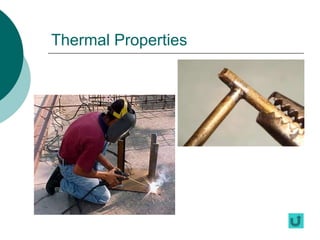
Thermal Properties
 How do materials behave when
heated?
 Thermal conductors: metals
 Thermal insulators: wood and plastic
 Fusibility: Metals, some plastics and
glass.
 Welding: Metals, e.g. Tin.
Thermal Properties
Thermal Properties
Thermal Properties
Acoustic Properties
 Can you hear sound through a
material?
 Acoustic conductors.
 Acoustic insulators: glass, cork &
plastics
Magnetic Properties
 Does a magnet attract the material?
 Magnetism: Ferrous metals (steel).
Optical Properties
 Can you see light through a
material?
 Opaque: Light don’t pass. Wood &
Metals.
 Translucent: Light passes, but we
cannot see objects behind them clearly.
Some types of glass and plastic.
 Transparent: We can see perfectly
through them: Glass and some plastics.
Optical Properties
Opaque
Translucent
Transparent
Mechanical Properties
 Mechanical Strength. How the material resists
the action of forces.
 Elasticity. The material returns to its original
form after a force that has changed its shape is
removed.
 Plasticity. The material is permanently deformed
after a force is applied.
 Malleability: Allows a material to be spread into
sheets or films.
 Ductility: Allows a material to be formed into
filaments or wires
Other Physical Properties
 Density. Relation between mass of
an object and its volume.
 Permeability: Allows water or
other liquids to filter through them.
 Impermeability: Doesn’t allow
water or other liquids to filter
through them.
Chemical Properties
 When the chemical composition of a
material changes because it
interacts with other substances.
 Oxidation. The material reacts with
the oxygen in the air or water. This
happens with metals, producing
rust.
Ecological Properties
 Recyclable materials. They can be
reused (Glass, paper, cardboard, metal,
plastics).
 Toxic materials. Harmful and sometimes
poisonous (Mercury, heavy metals,
petroleum).
 Biodegradable materials. They
decompose naturally and don’t damage
the environment (paper, bioplastics,…)
Thank you
very much
for your attention!

Material.properties technology2nd eso

  • 1.
    Properties of Materials AICLEUnit – Materials & Tools Technology 2nd ESO Javier Guerra Jiménez
  • 2.
    Material Properties  Howcan we choose what material should we use?  Physical Properties  Chemical Properties  Ecological Properties
  • 3.
    Physical Properties  Howthey react to external stimuli?  Physical Properties:  Electrical  Thermal  Acoustic  Magnetic  Optical  Mechanical  Other properties
  • 4.
    Electrical Properties  Wecan distinguish between:  Electrical conductivity: metals.  Electrical insulation: plastic, wood, stone, ceramics
  • 5.
    Thermal Properties  Howdo materials behave when heated?  Thermal conductors: metals  Thermal insulators: wood and plastic  Fusibility: Metals, some plastics and glass.  Welding: Metals, e.g. Tin.
  • 6.
  • 7.
  • 8.
  • 9.
    Acoustic Properties  Canyou hear sound through a material?  Acoustic conductors.  Acoustic insulators: glass, cork & plastics
  • 10.
    Magnetic Properties  Doesa magnet attract the material?  Magnetism: Ferrous metals (steel).
  • 11.
    Optical Properties  Canyou see light through a material?  Opaque: Light don’t pass. Wood & Metals.  Translucent: Light passes, but we cannot see objects behind them clearly. Some types of glass and plastic.  Transparent: We can see perfectly through them: Glass and some plastics.
  • 12.
  • 13.
    Mechanical Properties  MechanicalStrength. How the material resists the action of forces.  Elasticity. The material returns to its original form after a force that has changed its shape is removed.  Plasticity. The material is permanently deformed after a force is applied.  Malleability: Allows a material to be spread into sheets or films.  Ductility: Allows a material to be formed into filaments or wires
  • 14.
    Other Physical Properties Density. Relation between mass of an object and its volume.  Permeability: Allows water or other liquids to filter through them.  Impermeability: Doesn’t allow water or other liquids to filter through them.
  • 15.
    Chemical Properties  Whenthe chemical composition of a material changes because it interacts with other substances.  Oxidation. The material reacts with the oxygen in the air or water. This happens with metals, producing rust.
  • 16.
    Ecological Properties  Recyclablematerials. They can be reused (Glass, paper, cardboard, metal, plastics).  Toxic materials. Harmful and sometimes poisonous (Mercury, heavy metals, petroleum).  Biodegradable materials. They decompose naturally and don’t damage the environment (paper, bioplastics,…)
  • 17.
    Thank you very much foryour attention!