IMPLEMENTATION OF SAFE ELECTRICAL ISOLATION
PROCEDURE ONBOARD SHIP
By
SHOAIB AHMED
DEPARTMENT OF MARINE ENGINEERING
BANGLADESH MARINE ACADEMY, CHATTOGRAM-4206
CONTENT
q BACKGROUND OF THE STUDY
q PROBLEM STATEMENT
q OBJECTIVE OF THE STUDY
q OVERVIEW OF ELECTRICAL ISOLATION
q SHIPBOARD COMMON ELECTRICAL INCIDENTS
q DEFICIENCIES AND REPORTED INCIDENTS
q HAZARDS AND RISK
q SAFE WORKING METHODS
q LO/TO PROCEDURE
q SAFETY REGULATIONS
q DATA ANALYSIS
q SUMMERY OF RESEARCH FINDINGS
q CONCLUSION
q RECOMMENDATION
BACKGROUND OF THE STUDY
Like land-based industrial power systems,
increasingly of the generated power is fed
on with the aid of using electronic
equipment on the ship.
§ To minimize the electrical accident on
board ship
§ To develop a safe electrical working
environment on board ship
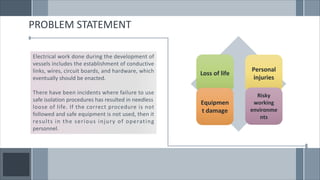
PROBLEM STATEMENT
Electrical work done during the development of
vessels includes the establishment of conductive
links, wires, circuit boards, and hardware, which
eventually should be enacted.
There have been incidents where failure to use
safe isolation procedures has resulted in needless
loose of life. If the correct procedure is not
followed and safe equipment is not used, then it
results in the serious injury of operating
personnel.
Loss of life
Personal
injuries
Equipmen
t damage
Risky
working
environme
nts
OBJECTIVE OF THE STUDY
§ provide a comprehensive review of the implementation
of safe electrical isolation procedures
§ determine the importance & essence of a safe working
environment.
§ Illustrate the current status of specific legislative duties
§ Identify how to make sure the workplace strictly
follows isolation procedures.
§ Find reasons for its slow adoption by identifying the
cause.
§ Identify how to provide information, instruction and
training to workers
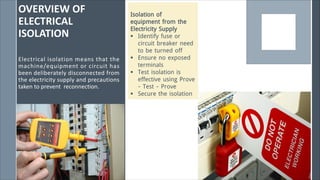
OVERVIEW OF
ELECTRICAL
ISOLATION
Electrical isolation means that the
machine/equipment or circuit has
been deliberately disconnected from
the electricity supply and precautions
taken to prevent reconnection.
Isolation of
equipment from the
Electricity Supply
§ Identify fuse or
circuit breaker need
to be turned off
§ Ensure no exposed
terminals
§ Test isolation is
effective using Prove
– Test - Prove
§ Secure the isolation
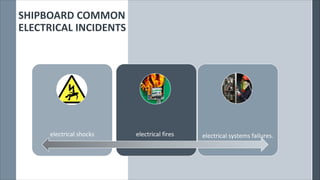
SHIPBOARD COMMON
ELECTRICAL INCIDENTS
electrical shocks electrical fires electrical systems failures.
DEFICIENCIES AND
REPORTED INCIDENTS
Source: AMSA ( AUSTRALIAN
MARITIME SAFETY AUTHORITY)
During 2011 to 2015 at about
87 electrical related cases
accounted to AMSA.
In this period total 1325
electrical related deficiencies
found by the PSC/FSC; which
are gathered by AMSA.
outcome
s of
electrical
-related
incidents
reported,
2011-15
(source:
AMSA)
Electrical
related
PSC/FSC
deficienci
es and
reported
incident
data,
2011-
2015
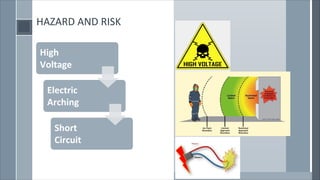
HAZARD AND RISK
High
Voltage
Electric
Arching
Short
Circuit
SAFE WORKING METHOD
Tool Box Meeting
Fill Up Checklist
Risk Assesment
General Requirements for Electrical Work
Personal Protection Aids
Measuring live voltage is with test lead
contact
Energy Isolation
Lock Out and Tag Out procedures
1.
2.
3.
4.
5.
6.
7.
8.
TOOLS AND SAFETY GEARS
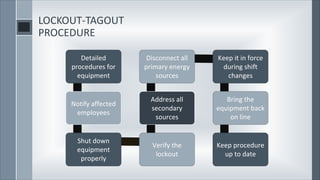
LOCKOUT-TAGOUT
PROCEDURE
Detailed
procedures for
equipment
Notify affected
employees
Shut down
equipment
properly
Verify the
lockout
Address all
secondary
sources
Disconnect all
primary energy
sources
Keep it in force
during shift
changes
Bring the
equipment back
on line
Keep procedure
up to date
SAFETY REGULATIONS
Chapter II-1
–
Construction
– Structure,
subdivision
and stability,
machinery,
and electrical
installations
SOLAS –
International
Convention
for the Safety
of Life at Sea,
Part- D Electrical Installations
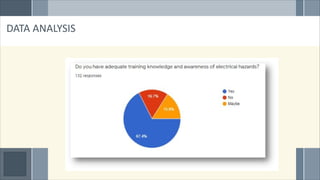
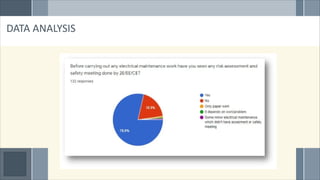
DATA ANALYSIS
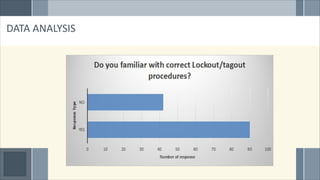
DATA ANALYSIS
DATA ANALYSIS
DATA ANALYSIS
SUMMARY OF RESEARCH FINDINGS
Companies should provide proper physical and mental
health support for the seafarers on board
Human error and lack of knowledge or deficiency in skill
are the main reasons behind the shipboard electrical
accidents
Usage of a safe electrical system onboard ships can
reduce the shipping accidents
Keep available user manuals for every equipment of ship and
need to maintain proper risk assessment
Most of the time, accidents occur due to fatigue, mental
and emotional health condition of the working personnel
As this study is one of the first studies on this topic in
Bangladeshi maritime society, this paper is recommended to be
consulted for further research on this topic.
ESSENTIAL LIST WHILE WORKING
ONBOARD
NEED TO DO ON SHIP-
§ Know the ship’s electrical system and equipment
§ Write down the information on a note book
§ Become familiar with the normal indication on switchboard instruments
§ Operate equipment according to manufacturer’s recommendations
§ Ensure all guards, covers and doors are securely fitted
§ Switch off and lock off supplies, remove fuses and display warning notice
before commencing maintenance work
§ Before touching conductors and terminals confirm circuits are dead
DO NOT-
§ Touch live conductors under any pretext
§ Touch rotating parts
§ Overload equipment
§ Neglect equipment
CONCLUSION
To find out the real scenario of
electrical isolation procedures on
board ship
Conducted for the scope to support
the implementation of electrical
isolation procedures in the
merchant's vessels
To realize the importance of a safe
working environment to eliminate
shipboard electrical accidents
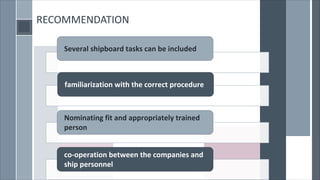
RECOMMENDATION
Several shipboard tasks can be included
familiarization with the correct procedure
Nominating fit and appropriately trained
person
co-operation between the companies and
ship personnel
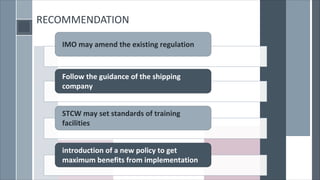
RECOMMENDATION
IMO may amend the existing regulation
Follow the guidance of the shipping
company
STCW may set standards of training
facilities
introduction of a new policy to get
maximum benefits from implementation
Electrical Isolation procedure onboard ship

Electrical Isolation procedure onboard ship

  • 1.
    IMPLEMENTATION OF SAFEELECTRICAL ISOLATION PROCEDURE ONBOARD SHIP By SHOAIB AHMED DEPARTMENT OF MARINE ENGINEERING BANGLADESH MARINE ACADEMY, CHATTOGRAM-4206
  • 2.
    CONTENT q BACKGROUND OFTHE STUDY q PROBLEM STATEMENT q OBJECTIVE OF THE STUDY q OVERVIEW OF ELECTRICAL ISOLATION q SHIPBOARD COMMON ELECTRICAL INCIDENTS q DEFICIENCIES AND REPORTED INCIDENTS q HAZARDS AND RISK q SAFE WORKING METHODS q LO/TO PROCEDURE q SAFETY REGULATIONS q DATA ANALYSIS q SUMMERY OF RESEARCH FINDINGS q CONCLUSION q RECOMMENDATION
  • 3.
    BACKGROUND OF THESTUDY Like land-based industrial power systems, increasingly of the generated power is fed on with the aid of using electronic equipment on the ship. § To minimize the electrical accident on board ship § To develop a safe electrical working environment on board ship
  • 4.
    PROBLEM STATEMENT Electrical workdone during the development of vessels includes the establishment of conductive links, wires, circuit boards, and hardware, which eventually should be enacted. There have been incidents where failure to use safe isolation procedures has resulted in needless loose of life. If the correct procedure is not followed and safe equipment is not used, then it results in the serious injury of operating personnel. Loss of life Personal injuries Equipmen t damage Risky working environme nts
  • 5.
    OBJECTIVE OF THESTUDY § provide a comprehensive review of the implementation of safe electrical isolation procedures § determine the importance & essence of a safe working environment. § Illustrate the current status of specific legislative duties § Identify how to make sure the workplace strictly follows isolation procedures. § Find reasons for its slow adoption by identifying the cause. § Identify how to provide information, instruction and training to workers
  • 6.
    OVERVIEW OF ELECTRICAL ISOLATION Electrical isolationmeans that the machine/equipment or circuit has been deliberately disconnected from the electricity supply and precautions taken to prevent reconnection. Isolation of equipment from the Electricity Supply § Identify fuse or circuit breaker need to be turned off § Ensure no exposed terminals § Test isolation is effective using Prove – Test - Prove § Secure the isolation
  • 7.
    SHIPBOARD COMMON ELECTRICAL INCIDENTS electricalshocks electrical fires electrical systems failures.
  • 8.
    DEFICIENCIES AND REPORTED INCIDENTS Source:AMSA ( AUSTRALIAN MARITIME SAFETY AUTHORITY) During 2011 to 2015 at about 87 electrical related cases accounted to AMSA. In this period total 1325 electrical related deficiencies found by the PSC/FSC; which are gathered by AMSA. outcome s of electrical -related incidents reported, 2011-15 (source: AMSA) Electrical related PSC/FSC deficienci es and reported incident data, 2011- 2015
  • 9.
  • 10.
    SAFE WORKING METHOD ToolBox Meeting Fill Up Checklist Risk Assesment General Requirements for Electrical Work Personal Protection Aids Measuring live voltage is with test lead contact Energy Isolation Lock Out and Tag Out procedures 1. 2. 3. 4. 5. 6. 7. 8.
  • 11.
  • 12.
    LOCKOUT-TAGOUT PROCEDURE Detailed procedures for equipment Notify affected employees Shutdown equipment properly Verify the lockout Address all secondary sources Disconnect all primary energy sources Keep it in force during shift changes Bring the equipment back on line Keep procedure up to date
  • 13.
    SAFETY REGULATIONS Chapter II-1 – Construction –Structure, subdivision and stability, machinery, and electrical installations SOLAS – International Convention for the Safety of Life at Sea, Part- D Electrical Installations
  • 14.
  • 15.
  • 16.
  • 17.
  • 18.
    SUMMARY OF RESEARCHFINDINGS Companies should provide proper physical and mental health support for the seafarers on board Human error and lack of knowledge or deficiency in skill are the main reasons behind the shipboard electrical accidents Usage of a safe electrical system onboard ships can reduce the shipping accidents Keep available user manuals for every equipment of ship and need to maintain proper risk assessment Most of the time, accidents occur due to fatigue, mental and emotional health condition of the working personnel As this study is one of the first studies on this topic in Bangladeshi maritime society, this paper is recommended to be consulted for further research on this topic.
  • 19.
    ESSENTIAL LIST WHILEWORKING ONBOARD NEED TO DO ON SHIP- § Know the ship’s electrical system and equipment § Write down the information on a note book § Become familiar with the normal indication on switchboard instruments § Operate equipment according to manufacturer’s recommendations § Ensure all guards, covers and doors are securely fitted § Switch off and lock off supplies, remove fuses and display warning notice before commencing maintenance work § Before touching conductors and terminals confirm circuits are dead DO NOT- § Touch live conductors under any pretext § Touch rotating parts § Overload equipment § Neglect equipment
  • 20.
    CONCLUSION To find outthe real scenario of electrical isolation procedures on board ship Conducted for the scope to support the implementation of electrical isolation procedures in the merchant's vessels To realize the importance of a safe working environment to eliminate shipboard electrical accidents
  • 21.
    RECOMMENDATION Several shipboard taskscan be included familiarization with the correct procedure Nominating fit and appropriately trained person co-operation between the companies and ship personnel
  • 22.
    RECOMMENDATION IMO may amendthe existing regulation Follow the guidance of the shipping company STCW may set standards of training facilities introduction of a new policy to get maximum benefits from implementation