Geethanjali college of engineering and technology
TECHNICAL SEMINAR
ON
ELECTRIC TRACTION SYSTEM
BY
D. SAIKUMAR REDDY
contents
 INTRODUCTION
 TYPES OF ELECTRIC TRACTION
 MAJOR COMPONENTS
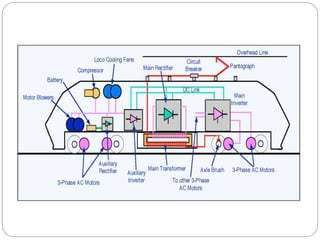
 BLOCK DIAGRAM OF LOCOMOTIVE
 CONCLUSION
INTRODUCTION
 The process of moving any vehicle is called traction .
If the electric energy is use in this process is called
electric traction.
 Classified broadly into groups namely:
 Non-Electric traction system/Mechanical traction
system:-
 Traction system which do not involve the use of
electricity such as steam engine drive, IC engine
drive etc.
 Electric traction system :-
 The system which use electrical power for traction
system i.e. for railways, trams, trolleys, etc. is called
electrical traction.
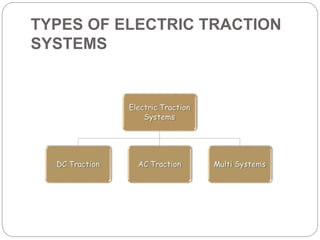
TYPES OF ELECTRIC TRACTION
SYSTEMS
DC TRACTION
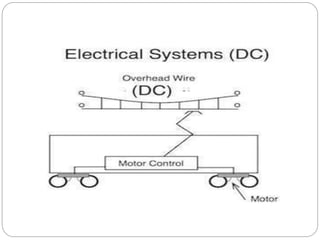
 DC traction units use direct current drawn from
conductor rail or an overhead line.
 The most popular line voltages for overhead wire
supply systems – 15kV DC and 30kV DC.
 600V - 750V DC volt range is used for third rail
systems (additional rail is provided for supplying
electricity to train and is called conductor rail).
 Disadvantages :-
 Expensive substations are required at frequent
intervals.
 The overhead wire or third rail must be relatively large
and heavy.
 Voltage goes on decreasing with increase in length.
AC TRACTION
 AC Traction units draw alternating current from an
overhead line.
 Typical Voltages Used are:-
 25 kV AC, 50 Hz
 25 kV AC, 60 Hz
Advantages :-
 Fewer substations are required.
 Lighter overhead current supply wire can be used.
 Reduced weight of support structure.
 Reduced capital cost of electrification.
Multi Systems
 Multi-system trains are used to provide
continuous journeys along routes that are
electrified using more than one system.
 One way to accomplish this is by changing
locomotives at the switching stations.
 These stations have overhead wires that can be
switched from one voltage to another.
 Another way is to use multi-system locomotives
that can operate under several different voltages
and current types.
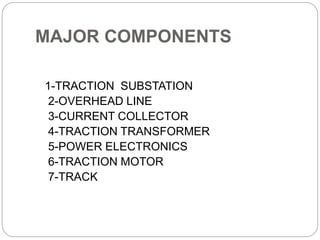
MAJOR COMPONENTS
1-TRACTION SUBSTATION
2-OVERHEAD LINE
3-CURRENT COLLECTOR
4-TRACTION TRANSFORMER
5-POWER ELECTRONICS
6-TRACTION MOTOR
7-TRACK
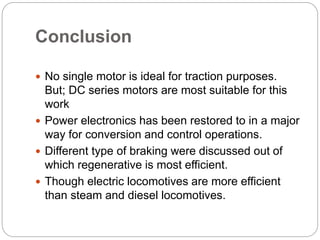
Conclusion
 No single motor is ideal for traction purposes.
But; DC series motors are most suitable for this
work
 Power electronics has been restored to in a major
way for conversion and control operations.
 Different type of braking were discussed out of
which regenerative is most efficient.
 Though electric locomotives are more efficient
than steam and diesel locomotives.
ELECTRIC TRACTION SYSTEM

ELECTRIC TRACTION SYSTEM

  • 1.
    Geethanjali college ofengineering and technology TECHNICAL SEMINAR ON ELECTRIC TRACTION SYSTEM BY D. SAIKUMAR REDDY
  • 2.
    contents  INTRODUCTION  TYPESOF ELECTRIC TRACTION  MAJOR COMPONENTS  BLOCK DIAGRAM OF LOCOMOTIVE  CONCLUSION
  • 3.
    INTRODUCTION  The processof moving any vehicle is called traction . If the electric energy is use in this process is called electric traction.  Classified broadly into groups namely:  Non-Electric traction system/Mechanical traction system:-  Traction system which do not involve the use of electricity such as steam engine drive, IC engine drive etc.  Electric traction system :-  The system which use electrical power for traction system i.e. for railways, trams, trolleys, etc. is called electrical traction.
  • 4.
    TYPES OF ELECTRICTRACTION SYSTEMS
  • 5.
    DC TRACTION  DCtraction units use direct current drawn from conductor rail or an overhead line.  The most popular line voltages for overhead wire supply systems – 15kV DC and 30kV DC.  600V - 750V DC volt range is used for third rail systems (additional rail is provided for supplying electricity to train and is called conductor rail).  Disadvantages :-  Expensive substations are required at frequent intervals.  The overhead wire or third rail must be relatively large and heavy.  Voltage goes on decreasing with increase in length.
  • 7.
    AC TRACTION  ACTraction units draw alternating current from an overhead line.  Typical Voltages Used are:-  25 kV AC, 50 Hz  25 kV AC, 60 Hz Advantages :-  Fewer substations are required.  Lighter overhead current supply wire can be used.  Reduced weight of support structure.  Reduced capital cost of electrification.
  • 9.
    Multi Systems  Multi-systemtrains are used to provide continuous journeys along routes that are electrified using more than one system.  One way to accomplish this is by changing locomotives at the switching stations.  These stations have overhead wires that can be switched from one voltage to another.  Another way is to use multi-system locomotives that can operate under several different voltages and current types.
  • 10.
    MAJOR COMPONENTS 1-TRACTION SUBSTATION 2-OVERHEADLINE 3-CURRENT COLLECTOR 4-TRACTION TRANSFORMER 5-POWER ELECTRONICS 6-TRACTION MOTOR 7-TRACK
  • 12.
    Conclusion  No singlemotor is ideal for traction purposes. But; DC series motors are most suitable for this work  Power electronics has been restored to in a major way for conversion and control operations.  Different type of braking were discussed out of which regenerative is most efficient.  Though electric locomotives are more efficient than steam and diesel locomotives.